

Vatican
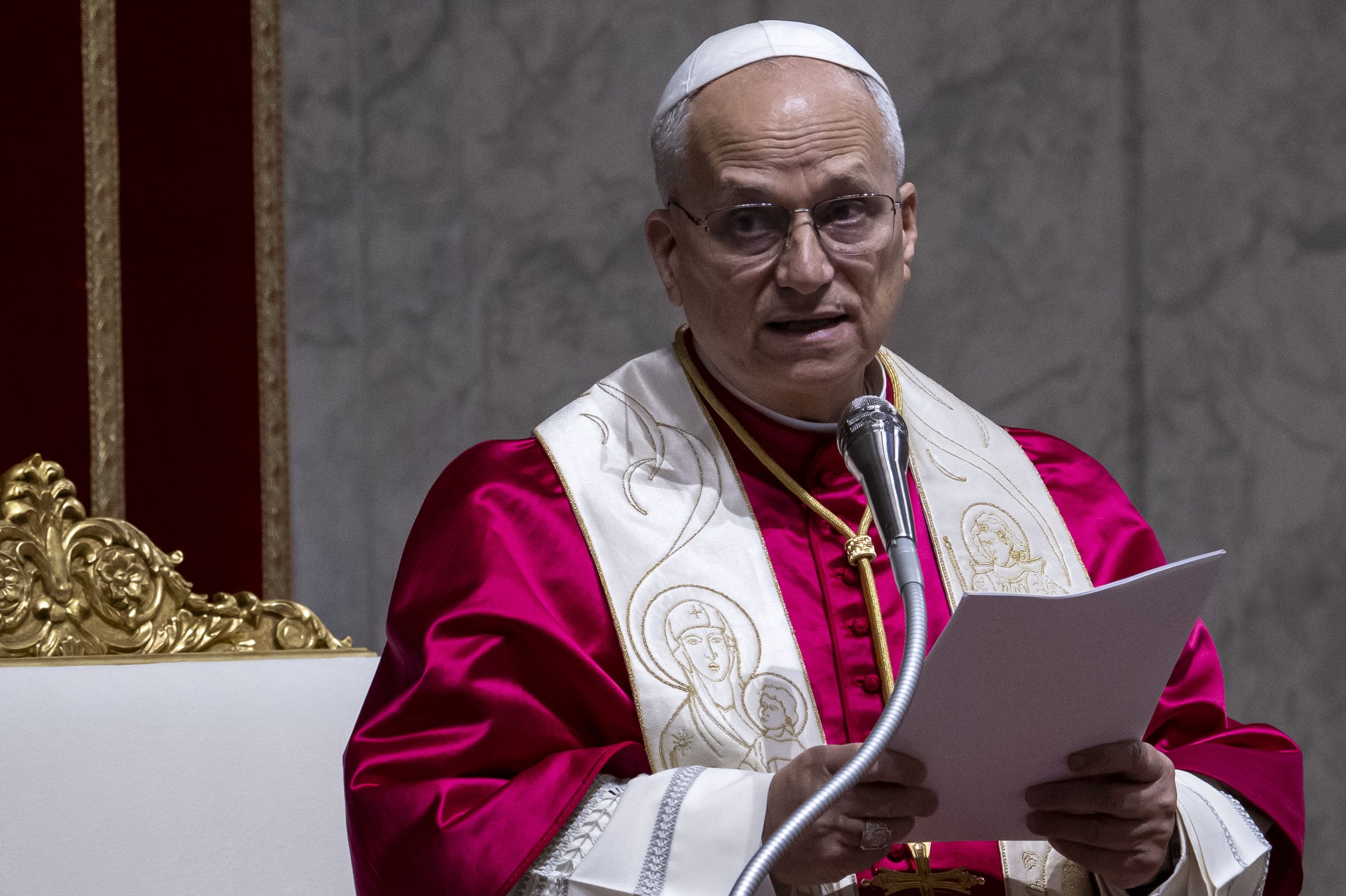
Pope Leo XIV’s first encyclical set for May 15 release
Pope Leo XIV is expected to publish his first encyclical on May 15, aligning it with landmark social teaching documents. The provisional text, Magnifica humanitas, is set to address artificial intelligence, global instability and the state of international law Pope Leo XIV’s first encyclical is expected to be signed and published soon, placing its release close to a date long associated with landmark papal social teaching documents. According to reports from the German Catholic news agency KNA, it will be signed on May 15. The text will be the first major teaching document of his pontificate. Circulating under the provisional title Magnifica humanitas , it is expected to address a range of issues, including artificial intelligence, international peace and what sources describe as a crisis in international law. Previous reports indicate that the document will set out the Pope’s initial response to these questions within the framework of Catholic social teaching. The encyclical follows earlier indications that the Holy See had been preparing a document focused specifically on artificial intelligence. At the beginning of February, reports pointed to work under way on a text examining the ethical and anthropological implications of emerging technologies. Pope Leo XIV has already spoken about the risks associated with technological development, warning of the dangers posed by “uncontrolled technology” and the importance of safeguarding human dignity. According to the same reports, the encyclical will also address geopolitical instability and the perceived weakening of international legal structures. By doing this, the document is expected to set out the Vatican’s response to the principal challenges facing humanity in the 21st century. The anticipated date of May 15 places the encyclical within a well-established tradition. On May 15, 1891, Pope Leo XIII issued Rerum Novarum , the foundational text of modern Catholic social doctrine, addressing the condition of workers during the industrial age. The same date was chosen in 1931 by Pope Pius XI for Quadragesimo Anno , which developed the Church’s teaching on social order and introduced the principle of subsidiarity. Thirty years later, on May 15, 1961, Pope John XXIII promulgated Mater et Magistra , focusing on economic justice and social development. The expected treatment of artificial intelligence would build on recent Vatican teaching. In January 2025, the Dicastery for the Doctrine of the Faith and the Dicastery for Culture and Education issued Antiqua et Nova , a joint note on “the relationship between artificial intelligence and human intelligence”. The document said AI could bring “important innovations” but warned that it also carried the danger of deepening inequality, manipulating public opinion and expanding “the instruments of war well beyond the scope of human oversight”. It added that artificial intelligence “should not be seen as an artificial form of human intelligence, but as a product of it”, and insisted that it “should be used only as a tool to complement human intelligence rather than replace its richness”. No official text has yet been released, and the title Magnifica humanitas remains provisional.
May 4, 2026
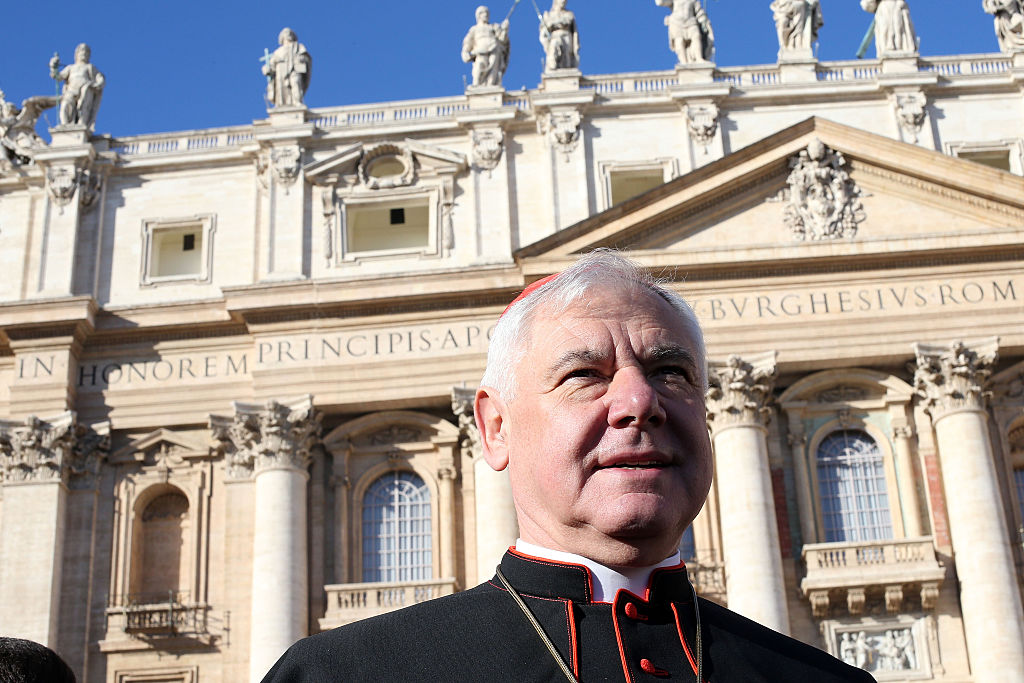
Cardinal Müller rejects claims Vatican finances influenced election of Pope Leo XIV
Cardinal Müller has dismissed speculation that financial concerns shaped the election of Pope Leo XIV Cardinal Gerhard Ludwig Müller has rejected claims that the Vatican’s financial situation influenced the election of Pope Leo XIV. The German cardinal made his remarks in Rome during the presentation of the new book Papi, Dollari e Guerre by the renowned Italian Vaticanista Massimo Franco, which examines the historical relationship between the United States and the Holy See. Speaking at the event, Cardinal Müller addressed speculation that concerns over Vatican finances may have played a decisive role in the election of the first American pope. “Although Cardinal Reinhard Marx dedicated a full day to discussing the Holy See’s finances in the pre-conclave, this did not influence the final decision,” Cardinal Müller said. His Eminence added that the choice of a pope “is based on different criteria.” The intervention comes one year after the conclave that elected Pope Leo XIV, a historic event given the longstanding assumption that a pontiff from the United States was unlikely. Cardinal Marx, who has been closely associated with Vatican economic reform and oversight, reportedly led a full day of discussions on financial issues during the general congregations preceding the conclave. These meetings, which take place before the formal voting begins, allow cardinals to exchange views on the challenges facing the Church. Despite the prominence of those discussions, Cardinal Müller insisted that they did not shape the final outcome. His remarks appeared to counter interpretations that the election reflected a strategic response to financial pressures or a desire to strengthen ties with American Catholic institutions. Franco’s book, presented at the same event, sets out the historical context of relations between the Vatican and the United States, including financial links that have developed over more than a century. According to the publisher’s summary, the work traces the role of American Catholic influence from the early twentieth century to the present day, using archival material and previously unpublished testimonies. The book refers to financial contributions from American benefactors during the pontificates of Pius XI and Pius XII, as well as support provided during and after the Second World War. It also examines the role of institutions such as the Papal Foundation, established during the pontificate of John Paul II, and the continuing presence of major Catholic organisations in the United States. The summary further notes that the most recent conclave marked “the end of Eurocentrism in an impoverished and divided Vatican”, while suggesting that the election of Pope Leo XIV should be understood within a broader historical and geopolitical framework. It also points to the significance of the Pontifical North American College in Rome, where it is claimed discussions among American cardinals took place prior to the conclave. Among those present at the book presentation were several figures from ecclesiastical, political and journalistic circles, including Archbishop Antonio Mennini and the former Italian prime minister Romano Prodi. Massimo Franco, the author, is a political journalist and commentator for Corriere della Sera . He has previously written on Italian and Vatican politics and has contributed to a range of international publications. His latest work continues that focus, examining the intersection of religion, diplomacy and finance.
May 1, 2026
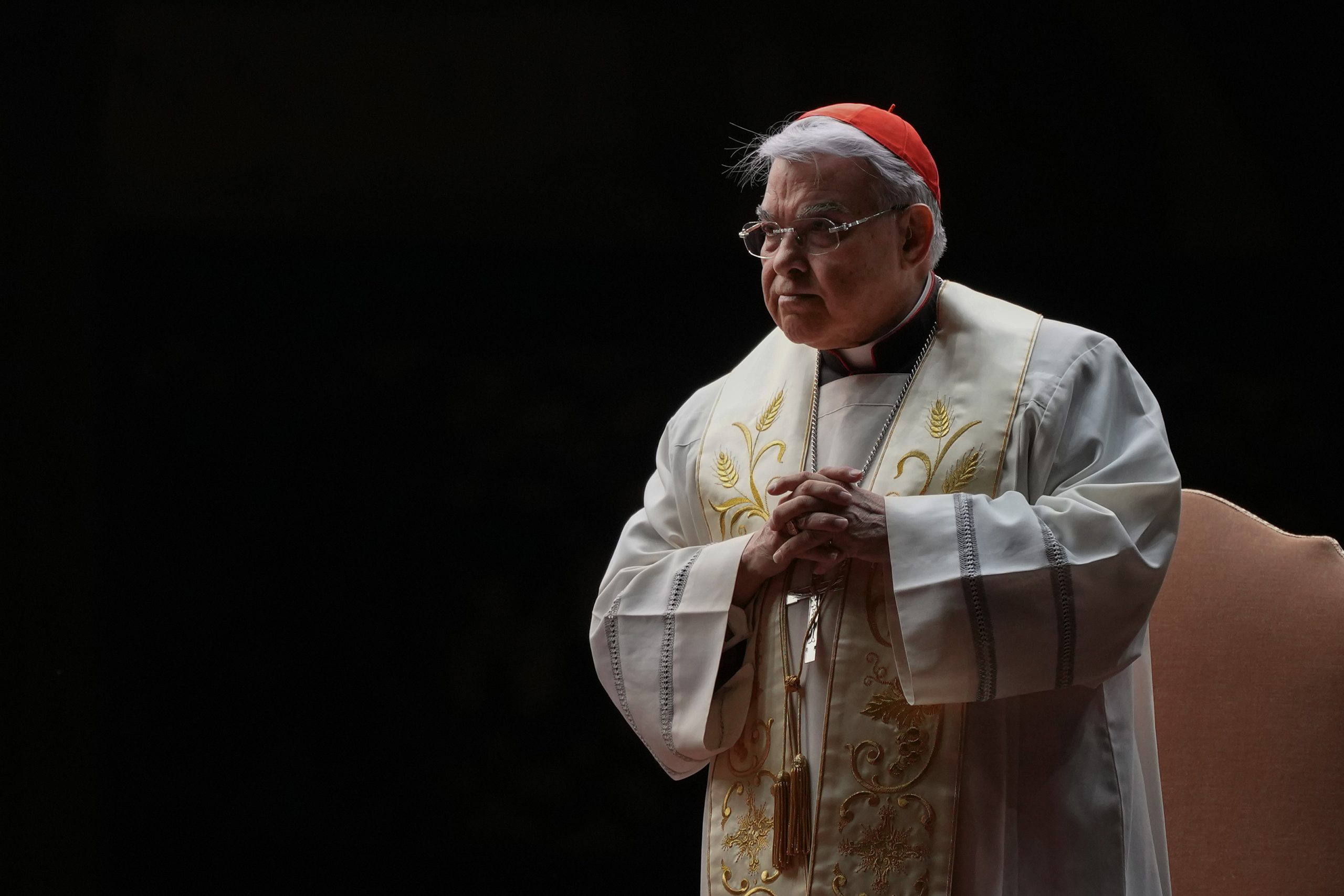
Inside the Vatican’s canonisation process with Cardinal Semeraro
Cardinal Semeraro explains how the Vatican examines miracles, martyrdom and heroic virtue, defending the rigour of the canonisation process against criticism that it has become too fast In a quiet office in Rome, far from the crowds that gather in St Peter’s Square below, the Church’s understanding of holiness is subjected to some of its most exacting tests. Here, within the Dicastery for the Causes of Saints, reputations are sifted and claims of miracles scrutinised with a care and precision that belie the recent perception of swift modern canonisations. The prefect in charge, Cardinal Marcello Semeraro, soft spoken and clearly at ease with the weight of his responsibilities, has spent years at the centre of this process. Though prefect only since 2020, he brings with him more than a decade as a member of the dicastery. The cardinal is keen to stress the deep historical roots of his work. The procedures stretch back centuries, shaped significantly by reforms following the Council of Trent and later refined under Pope Paul VI and Pope John Paul II. Cardinal Semeraro described the most recent reforms of the procedures as “in the very last phase”, explaining that there was a need to streamline a process “that had become very problematic, very complicated, very complex”. He presented this streamlining not as a lowering of standards but as a practical correction to a system that had grown excessively burdensome, while insisting that the core nature of the work remains unchanged: “a long procedure in which one goes in search of the truth”. Earlier centuries placed heavy emphasis on miracles, as well as on widespread popular devotion. Over time, however, the Church shifted its focus. Today, the decisive criterion is what the cardinal called “heroic virtue”, a life lived in a way that stands out, not as theatrical heroism, but as a sustained and exemplary fidelity to the Christian life. “‘Heroic’ can be misunderstood,” he noted. “It simply means something beyond the ordinary. Something worthy of imitation.” The cardinal explained that before the Council of Trent the evaluation of sanctity rested above all on “the abundance of miracles” and widespread popular recognition, but after Trent the focus moved decisively to “the presence of a Christian life verified through the virtues, the theological virtues and the cardinal virtues”. Even though the miracle requirement and the esteem of the people of God remain necessary, the real work of the dicastery now centres on verifying this heroic virtue, a life that is “outside the ordinary, that is, a bit more than the others, in such a way that it can be imitated”. One of the most common criticisms of the modern canonisation process is that it has become too fast. The relatively swift canonisations of figures such as Pope St John Paul II or of younger figures like Carlo Acutis have fuelled this perception. The cardinal rejects the idea that speed has replaced rigour. The five year waiting period after death – it used to be 50 years, as laid out by Urban VIII in the 17th century, but was reduced after the Second Vatican Council – is not, he insists, about haste but about preserving evidence. “If we wait too long, witnesses die and memory fades. The process depends on living testimony.” On the much criticised shortening of the waiting period, Cardinal Semeraro was emphatic: historically it was necessary that “50 years had passed from death to begin the process”, but today “to begin the process it is required that the person has been dead at least five years”. Far from being rushed, the cardinal insists, many causes take decades. And while the formal office of the “devil’s advocate”, a Vatican official formerly mandated to argue against a candidate’s cause, has been abolished, its function has not disappeared. Instead, it has been expanded. “Today,” he explained, “we have entire commissions of historians and theologians whose task is precisely to test, to challenge, to falsify.” If even a single serious doubt emerges, the process halts until it can be resolved. If heroic virtue forms one path to sainthood, martyrdom remains its most ancient and, in many ways, most revered form. “The first saints were martyrs,” the cardinal said. “And in a sense, all sanctity is a participation in martyrdom.” Yet even here, the Church proceeds cautiously. Martyrdom, in its strict sense, requires death inflicted out of hatred for the faith: odium fidei. But modern cases are often more complex. Take Óscar Romero, whose assassination in 1980 raised questions about whether he died for political or religious reasons. The cardinal acknowledged the difficulty: “Often the motivations are mixed. But if the Christian witness is essential to the act, then martyrdom can be recognised.” His Eminence insisted on the classical, strict understanding of martyrdom: “We use the word martyrdom in the strictest, classical sense, where life is taken for a motive of the faith or strictly linked to the faith, because he is a Christian.” He gave concrete examples, the Ulma family in Poland, killed for sheltering Jews, and the Sicilian judge Rosario Livatino, killed because his Christian integrity made him incorruptible, to illustrate that even when the immediate trigger is not an explicit demand to renounce the faith, the act must still be “linked to the faith”. Anything less does not qualify. At the same time, the Church has developed new categories. Under Pope Francis, the notion of the offering of life, where a person freely gives their life for others without being killed explicitly for the faith, has been formally recognised. It reflects a broader attempt to capture the realities of modern witness. One of the more delicate issues for the dicastery is the status of non Catholic martyrs. Figures such as Dietrich Bonhoeffer are widely regarded as witnesses to Christ, yet cannot be canonised in the Catholic Church. “The Church recognises holiness outside her visible boundaries,” the cardinal said carefully. “But canonisation is an act for her own faithful. It is not within her competence to declare saints for other communities.” Nevertheless, there have been gestures towards broader recognition. Initiatives begun during the Great Jubilee of 2000 and renewed under Pope Francis have commemorated “new martyrs” from across Christian traditions. It remains, however, an acknowledgment rather than a formal declaration. If martyrdom is one path to sainthood, miracles remain another essential requirement, particularly for beatification and canonisation outside martyrdom cases. Here, the dicastery’s methods are strikingly empirical. Claims must be supported by rigorous medical documentation and are examined by panels of specialists, often seven or more doctors, whose task is not to prove divine intervention but to exclude any natural explanation. “The doctors must say only this,” the cardinal explained: “that, according to current medical knowledge, there is no explanation.” Advances in science have, if anything, made the process more demanding. Conditions once considered incurable may now have treatments, raising the bar for what counts as miraculous. Cases are debated intensely; some discussions, he noted, can last hours. What happens when troubling information emerges about a candidate for sainthood? The answer, again, is caution. Every cause undergoes exhaustive historical scrutiny. If credible doubts arise, whether about moral conduct or factual claims, the process is suspended. “Not cancelled,” the cardinal emphasised, “but stopped until clarity is reached.” Even after canonisation, the Church does not reverse its decisions. But the cardinal insisted that the thoroughness of the process makes serious errors exceedingly unlikely. The conversation turned to politics and whether someone with controversial political views could be canonised. Here, the cardinal distinguishes between political positions and ideologies. While the former do not in themselves exclude a candidate, ideologies fundamentally opposed to Christianity pose a deeper problem. “The question is always the person,” he said. “Their life, their conversion, their witness.” When asked if his dicastery would ever canonise a fascist, for example, the cardinal shook his head. Cardinal Semeraro replied that such a cause “can be technically excluded from the canonisation process”. He explained that Nazism and Fascism are not ordinary political parties but “an ideology, not a party”. For Cardinal Semeraro, ideologies such as Nazism, Fascism and Communism “are now considered de facto anti Christian”. Therefore, belonging to an ideology fundamentally opposed to Christianity constitutes a genuine obstacle to the recognition of heroic virtue. Looking ahead, Cardinal Semeraro has a strong sense of the kind of men and women he would like to see canonised. “What we need today,” he said, “are not figures who simply comfort us, but figures who make people ask: why do they live like this?” With more than 1,500 causes under examination, including some dating from the 15th century, the cardinal will have plenty to choose from.
May 1, 2026
Cardinal Farrell warns of global collapse in Catholic baptisms and marriages
Cardinal Kevin Farrell, prefect of the Dicastery for the Laity, Family and Life, says baptisms of young children have fallen by 31.1 per cent and Catholic marriages by 48 per cent since 1991, warning of a weakening transmission of the faith within families Cardinal Kevin Farrell has warned of a sharp global decline in Catholic baptisms and marriages, pointing to figures showing a sustained weakening in the transmission of the faith within families over the past three decades. Speaking at a Vatican study seminar on marriage formation held in the Vatican Gardens on April 28, the prefect of the Dicastery for Laity, Family and Life cited data from the Annuarium Statisticum Ecclesiae 2021 indicating that between 1991 and 2021 the number of baptisms administered worldwide to children under the age of seven fell by 31.1 per cent, while Catholic marriages declined by 48 per cent. “The transmission of faith within families is weaker now than in the past,” Cardinal Farrell said. “According to the Annuarium Statisticum Ecclesiae 2021 , between 1991 and 2021, the number of baptisms administered worldwide to children under the age of seven declined by 31.1 per cent, and Catholic marriages by 48 per cent.” The cardinal added: “Faced with these figures, we must not lose heart; rather, we must remain fully aware of them so as to transform this situation into an opportunity for ecclesial renewal.” The remarks were delivered during a study day entitled The Sacrament of Marriage, Faith, and the Munus Docendi , which brought together representatives of the Roman Curia, seminary rectors, theologians and those involved in priestly formation. The gathering focused on how future priests are trained to teach and accompany families in a rapidly changing cultural environment. In a text published in L’Osservatore Romano , Cardinal Farrell said that “profound cultural transformations have redefined the processes of family formation”, noting that the bond between couples is “increasingly seen as an individual experiment, less and less as a definitive bond”. “Marriage is no longer considered necessary for the formation of a family alliance,” he said, adding that cohabitation has become “the choice, now considered almost obligatory by many, to test the couple’s stability with a view, though not always, to a stronger future bond”. He said these developments pose “urgent” challenges for the Church, particularly in youth and family ministry, and pointed to reports from bishops during their ad limina visits describing “enormous difficulties in reaching the families of baptised faithful who no longer come to the Church”. The cardinal asked how the Church might make its teaching mission more effective so that “new generations of priests can raise children and young people in the faith, cultivate in them the Christian vocation of marriage, and accompany families in the value-based challenges of our time”. The seminar also heard from Fr Andrea Bozzolo, rector of the Pontifical Salesian University, who emphasised the need for “pastoral guidance” that combines biblical and theological formation with an understanding of contemporary cultural realities and “listening to concrete family experiences”, with particular attention to “the emotional and sexual education of adolescents and young people”. Fr Fabio Rosini, a biblical scholar and professor of homiletics and pastoral theology, warned against a model of priestly formation that remains detached from lived experience. “If we continue to train priests to be producers of a penultimate life, it won’t be of much use to sacramentally married couples, and it won’t matter what they have to say,” he said. “We run the risk of continuing to sell the world to the world.” He added that “after centuries of parenthetical language, after the conciliar revival of kerygmatic language, given the need to proceed with the pedagogy that leads to Baptism, the time has come to return to didactic-instructive language”. Cardinal Farrell said that while many seminaries and pontifical universities provide solid theological teaching on the sacrament of marriage, this “risks remaining theoretical” if it is not connected to the realities of family life and the cultural conditions in which people live. “This makes it difficult for many pastors to effectively engage with the world of young people and families as it presents itself today,” he said, referring to “families marked by processes of de-Christianisation, young people disinterested in marriage, or coming from fragile and discontinuous family situations”. He added that requests for Church weddings often “do not reflect a mature faith, nor an awareness of the ecclesial and sacramental significance of what is being requested”, and that in some cases “even a trace of predisposition to faith is lacking”. The cardinal said this helps explain “the high number of couples in crisis who choose to separate, unable to find the grace to save their marriage in the sacrament”. “At the pastoral level, it cannot be reduced to the simple transmission to the laity, in didactic and theoretical form, of what the Church teaches and requires regarding marriage,” he said. “Rather, it requires the ability to accompany those intending to marry on a path of experiential maturation, preparing them to welcome the grace of Christ, enabling them to live a Christian life.” Quoting the Pope, the cardinal said: “In the family, faith is transmitted together with life, from generation to generation,” and added that “since families struggle to transmit the faith and could be tempted to shirk this task, we must try to stand alongside them without replacing them”. He said the aim of the current reflection is to promote a form of priestly formation “more closely aligned with pastoral practice and capable of generating new Christian families in the faith”. The study day concluded with a call for continued discernment on how best to proclaim, protect and accompany the vocation to marriage in contemporary society, with an emphasis on forming “teachers of the faith and authentic spiritual fathers to foster Christian families”.
Apr. 30, 2026
Switzerland drops case against Crasso in setback for Vatican ‘trial of the century’
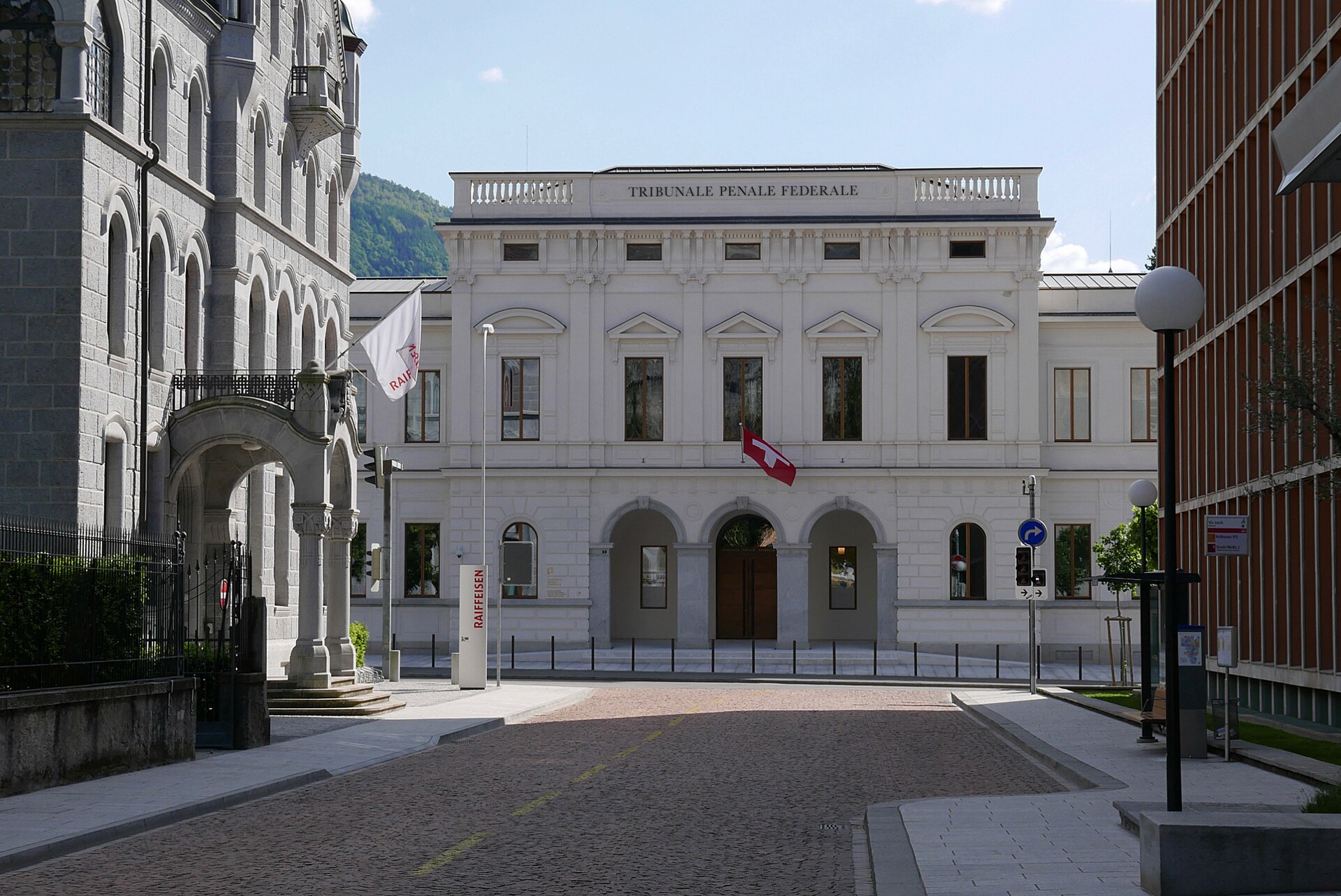
Swiss prosecutors have dismissed proceedings against Enrico Crasso, rejecting Vatican claims over fund mismanagement and criticising the Secretariat of State’s lack of cooperation Switzerland has dismissed criminal proceedings against Enrico Crasso, the former financial adviser to the Secretariat of State, concluding that no offences were committed in relation to the management of Vatican funds, delivering a further blow to the Holy See’s “Trial of the Century”. First reported by Nico Spuntoni, Vatican correspondent of Il Giornale , the decision was issued by Federal Prosecutor Annina Scherrer in Lugano following an investigation opened in June 2020 after a complaint by the Secretariat of State. The Vatican Secretariat of State had alleged criminal mismanagement in connection with investments made through the Centurion Global Fund, as well as raising accusations of fraud and corruption. The Swiss authorities found no evidence to support those claims. In her decree, Federal Prosecutor Scherrer determined that there had been no mismanagement or embezzlement on the part of Crasso in his role as a financial consultant. The ruling explicitly states that the Secretariat of State “must be considered an experienced investor, fully aware of the provisions to which it adhered”, rejecting the suggestion that it had been misled in its dealings. The case centred on investments managed by Crasso through his company, Sogenel Capital Investment, under a mandate from the Secretariat of State. These financial arrangements had already formed part of the broader Vatican investigation into the purchase of a London property in Sloane Avenue, a transaction that triggered one of the most significant financial trials in the history of the Holy See. The Swiss proceedings ran in parallel to the Vatican’s own judicial process. In the first-instance Vatican trial, Crasso had been sentenced to seven years’ imprisonment for embezzlement and self-laundering. However, he had been acquitted of charges specifically related to the management of the Centurion Fund. That distinction was noted in the Swiss prosecutor’s findings. The credibility of the Vatican trial has already been called into question after the Court of Appeal declared parts of the proceedings null. The Swiss ruling adds to the difficulties facing the prosecution’s case. However, the decree from Lugano contains direct criticism of the Vatican’s conduct during the investigation. Despite being the complainant, the Secretariat of State did not comply with requests from Swiss authorities to facilitate interviews with key figures connected to the case. According to the decree, Swiss investigators sought to question several individuals, including Monsignor Alberto Perlasca and Archbishop Edgar Peña Parra, through formal letters rogatory. These requests were not executed. In a note dated November 30, 2023, the Secretariat of State responded: “These are jurisdictional acts that cannot be performed by state authorities in the territory of another state,” adding that it would consider “the appropriateness of Swiss magistrates sending the tribunal the questions to be asked or the facts requested for examination.” Scherrer highlighted this refusal in her findings, describing the situation as paradoxical given that the Vatican itself had initiated the complaint. The decree records that the Swiss authorities received the response “not without surprise” and concluded that the lack of cooperation hindered the investigation. The prosecutor further observed that “interrogating the persons informed of the facts (…) would have been of fundamental importance to verifying the veracity” of the allegations. In light of the Vatican’s position, the Swiss authorities declined to proceed by submitting questions through the Vatican tribunal, citing concerns over the integrity of the process. The decree also points to what Scherrer described as “the influence of the private accuser and whistleblower within the Vatican State”, suggesting that internal dynamics may have affected the handling of the case. The refusal to allow direct questioning of witnesses was regarded as a significant obstacle to establishing the facts. The outcome leaves the Secretariat of State without recourse in the Swiss jurisdiction and raises further questions about the coherence of the wider legal strategy pursued by the Holy See. It follows earlier setbacks in other jurisdictions, including proceedings in England related to the London property deal. The Secretariat of State has not publicly responded in detail to the Swiss decision. The case nevertheless marks another stage in a protracted process that has tested the Holy See’s judicial structures and its approach to financial governance.
Apr. 30, 2026
Vatican sets out next phase of Synod on Synodality
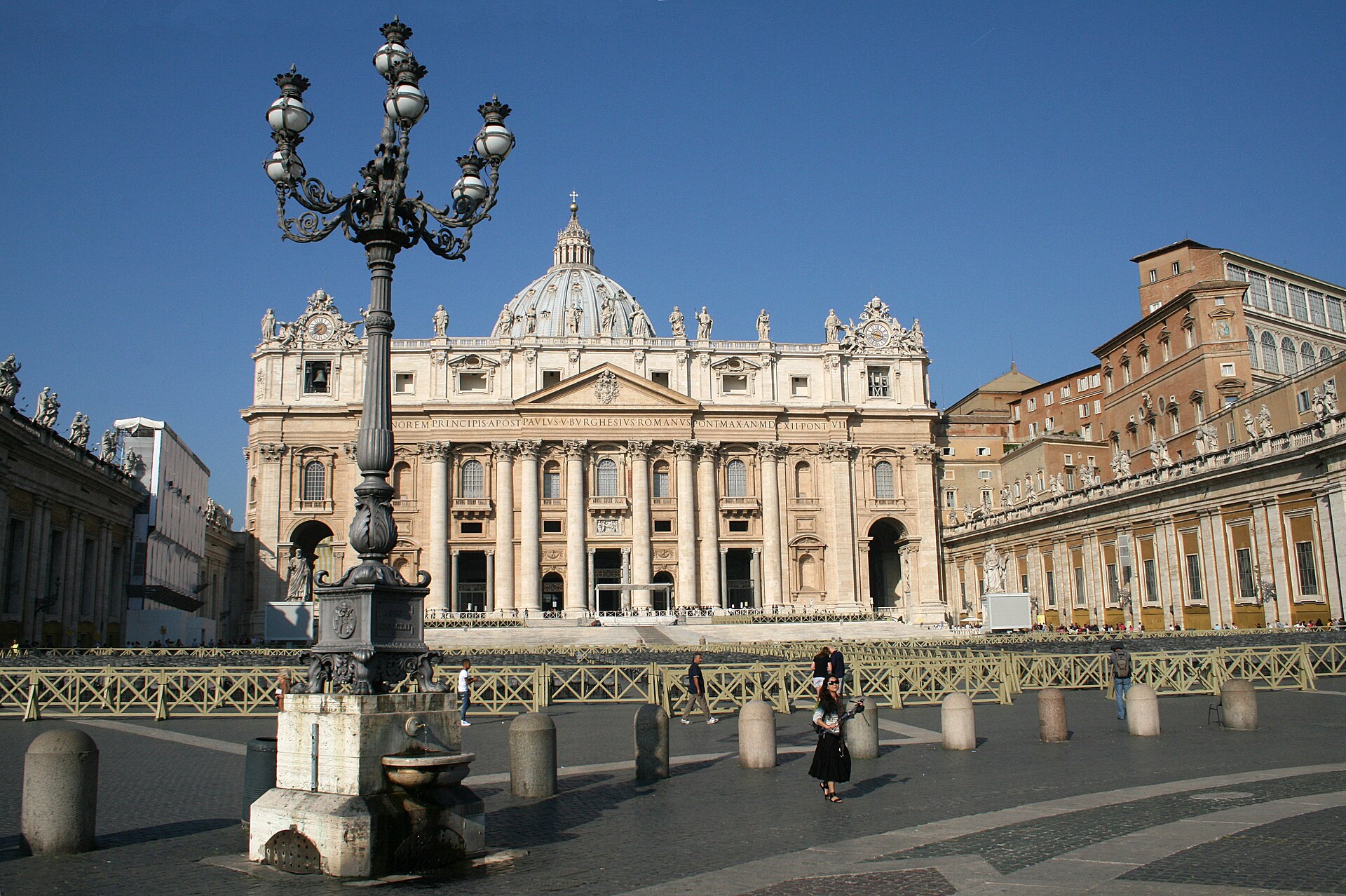
The Vatican has confirmed the next stage of the Synod on Synodality, with a series of international meetings planned through to 2028 The Vatican has outlined the next stage of the Synod on Synodality, confirming that a series of international meetings will take place over the coming two years. In a statement issued on April 17, the General Secretariat of the Synod said it had convened the XVI Ordinary Council in an online session chaired by Cardinal Mario Grech. The meeting opened “with a moment of prayer led by Sr Nathalie Becquart”, before turning to what the Secretariat described as “the current phase of implementation of the Final Document of the XVI Assembly”. It forms part of what it describes as the “implementation phase” of the 2024 assembly. The statement said that the Secretary General “opened the session with several communications concerning the current phase of implementation of the Final Document of the XVI Assembly, the work of the Study Groups, whose final reports are in the process of being published, and the forthcoming organisation of two meetings”. Among the key developments is the convocation of a preparatory gathering at the Vatican from June 23 to 25. According to the Secretariat, this meeting will serve to prepare the continental evaluation assemblies scheduled for the first months of 2028. Those invited include “one representative of the Patriarchs of the Council of the Patriarchs of the Eastern Churches, the Presidents of the International Meetings of Episcopal Conferences, as well as the Presidents of the Episcopal Conferences of the United States and Canada, each accompanied by the Coordinator of the Synodal Team of the respective body”. The statement added: “The Holy Father Leo XIV will take part in a specific working session.” The June meeting forms part of a wider timetable which will see the synodal process continue through to 2028, when continental assemblies will assess the reception and application of the Synod’s conclusions. A global assembly in Rome is expected to follow later that year. The Secretariat also confirmed that a further document to guide this phase is in preparation. During the April 17 session, Fr Giacomo Costa presented “a proposal for a document for the implementation phase of the Synod, particularly concerning the organisation of the evaluation assemblies”. The Council, it said, “discussed the document at length and approved its general structure”. It added that the final version, intended as a complement to the “Pathways for the Implementation Phase” published in June 2025, “will be revised by the Ordinary Council and published by the beginning of summer”. In a separate development, the Vatican provided new details of a meeting of bishops’ conference presidents to be held in Rome from October 7 to 14, focusing on Amoris laetitia. The gathering had previously been announced by Pope Leo XIV in a message marking the tenth anniversary of the document’s publication. According to the Secretariat, the October meeting “will be organised by the Dicastery for the Laity, the Family and Life”, with the General Secretariat of the Synod providing “organisational and methodological support”. It stressed that “this is not a synodal assembly, but a consultative meeting of the Holy Father with the Presidents of the Episcopal Conferences and of the Synods of the Eastern Catholic Churches sui iuris”. In his March 19 message, Pope Leo XIV said the purpose of the gathering would be “to proceed, in mutual listening, to a synodal discernment on the steps to be taken in order to proclaim the Gospel to families today […] and taking into account what is currently being done in the local Churches”. The April 17 statement concluded with a note of thanks to Bishop Luis Marín de San Martín for his service to the Secretariat, stating that members had asked Cardinal Grech “to convey to H.E. Msgr Luis Marín de San Martín their gratitude for his years of service”, and assuring him of their prayers following his appointment as Almoner of His Holiness and Prefect of the Dicastery for the Service of Charity. The Vatican’s latest moves on the Synod on Synodality indicate that the process has been established as a continuing feature of Church governance and, under Pope Leo XIV, it is acquiring a firmer institutional shape. What is now emerging is a phase of consolidation, with the Holy See proceeding in a measured manner. There has been no pause or quiet shelving of a process associated with Pope Francis. On the contrary, it is moving forward with precision, as the promised roadmap, due in early summer, will formalise a multi-year implementation phase running through to 2028. This continuity indicates that synodality is now treated as a structural principle. The Synod of Bishops, established by Pope Paul VI in 1965, was conceived as a consultative body assisting the Roman Pontiff. What has since developed is an expansion of its process, including a prolonged phase of reception and evaluation. The personal involvement of Pope Leo XIV is also notable, as the Secretariat has confirmed that he will take part in a specific working session during the June meeting. Popes do not routinely participate in mid-level preparatory gatherings, which suggests a direct interest in shaping the outcome. The explicit inclusion of the presidents of the United States and Canadian episcopal conferences, named alongside their synodal coordinators, is also notable. Other regions are referenced more generally through continental bodies such as CELAM, CCEE and SECAM. This level of specificity suggests continued attention to the reception of synodality in the English-speaking world, particularly in North America. During the 2023–2024 assemblies, several bishops from the United States were among those who raised concerns about doctrinal clarity and safeguards. The forthcoming June meeting can therefore be understood as part of an effort to ensure alignment ahead of the evaluation stage beginning in 2028. A similar approach is evident in the handling of the October meeting on Amoris laetitia. The Vatican has made clear that this will not be a synodal assembly but a consultative meeting organised by the Dicastery for the Laity, the Family and Life, with support from the Synod Secretariat. A decade after its publication, the document’s treatment of the divorced and remarried remains contested. Holding the meeting outside the formal synodal framework appears intended to manage the tone of the discussion. This dual approach, advancing synodality while containing its more contentious applications, indicates that Pope Leo XIV is maintaining the trajectory set by Pope Francis while seeking to give it a more stable institutional form.
Apr. 23, 2026