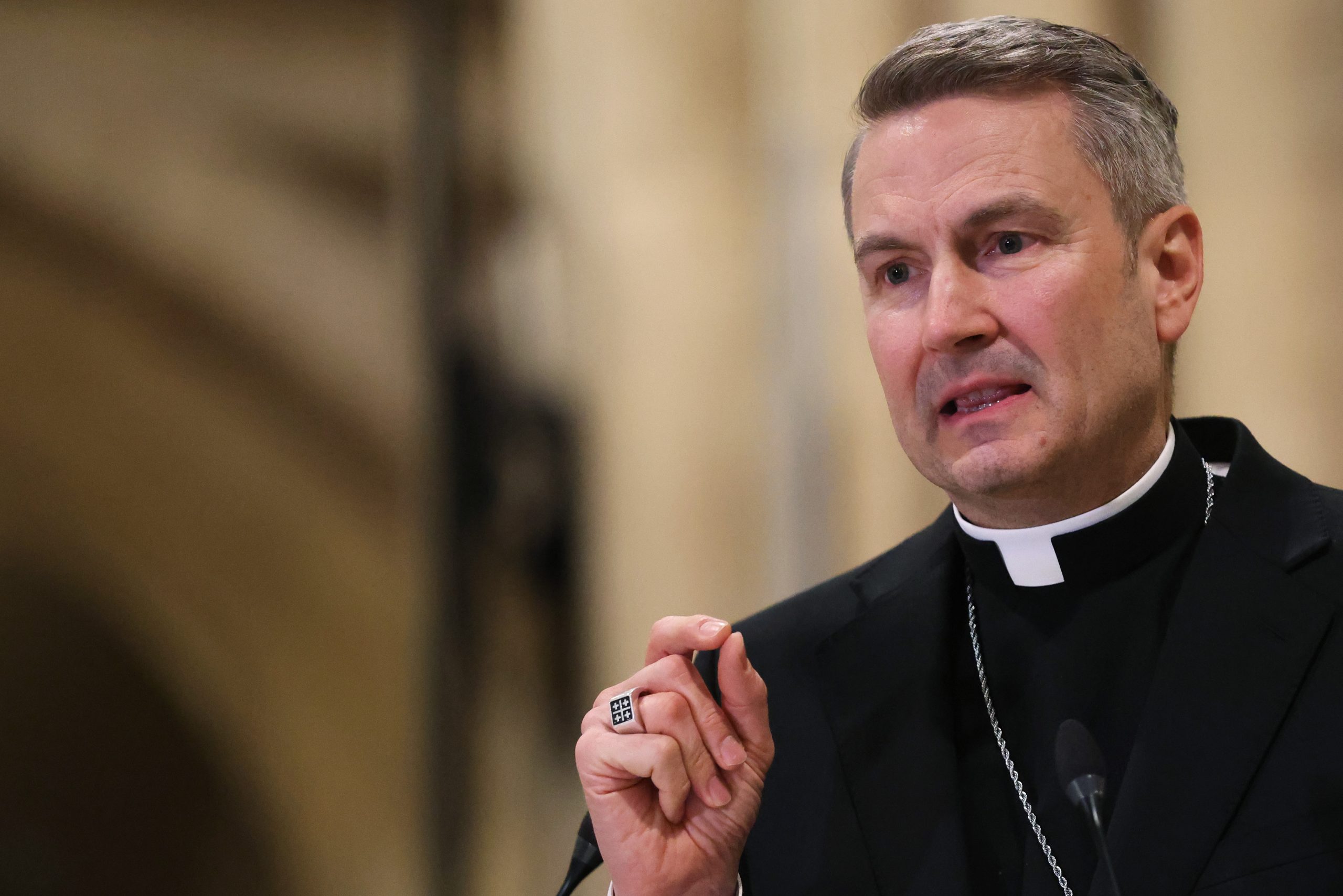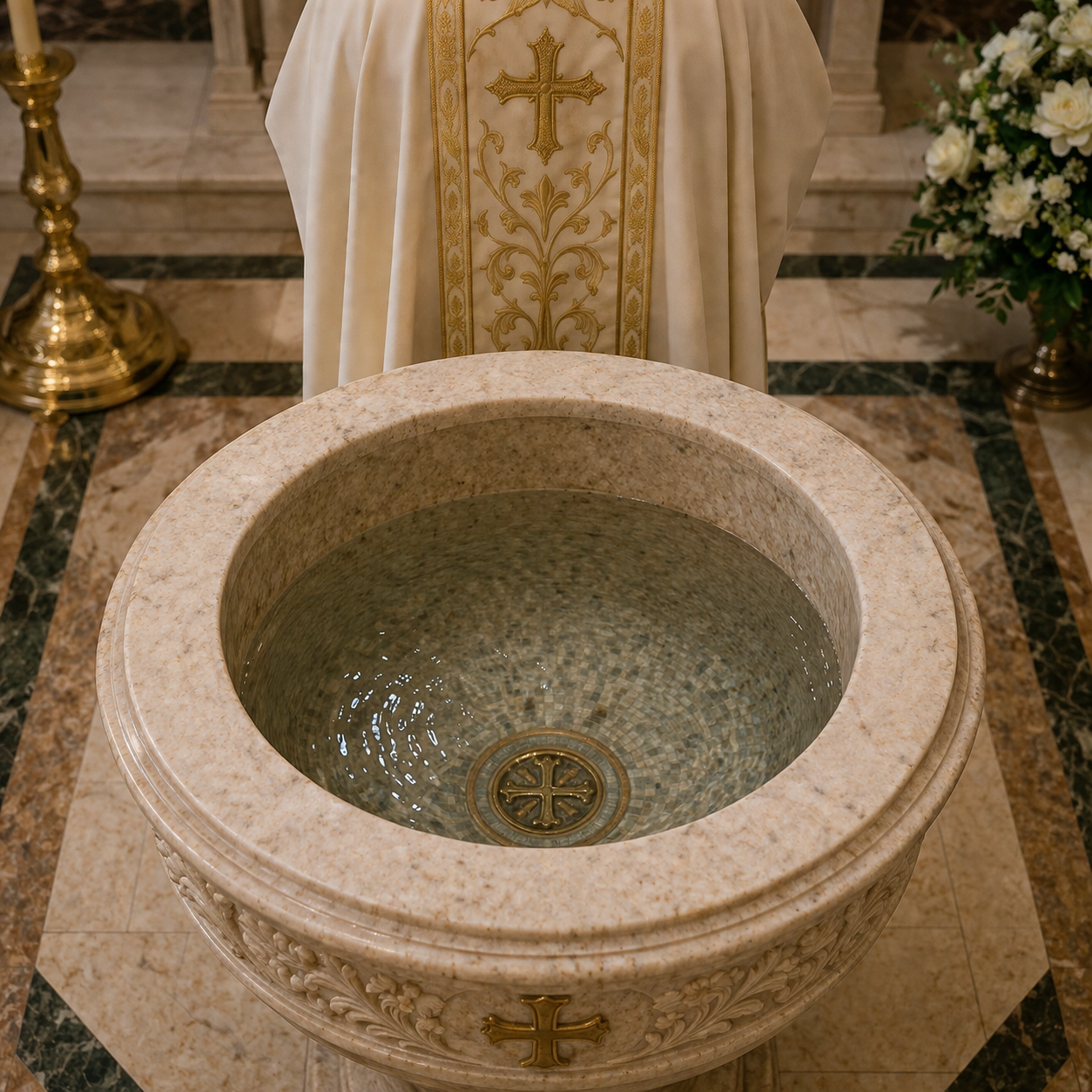
Cardinal Kevin Farrell has warned of a sharp global decline in Catholic baptisms and marriages, pointing to figures showing a sustained weakening in the transmission of the faith within families over the past three decades.
Speaking at a Vatican study seminar on marriage formation held in the Vatican Gardens on April 28, the prefect of the Dicastery for Laity, Family and Life cited data from the Annuarium Statisticum Ecclesiae 2021 indicating that between 1991 and 2021 the number of baptisms administered worldwide to children under the age of seven fell by 31.1 per cent, while Catholic marriages declined by 48 per cent.
“The transmission of faith within families is weaker now than in the past,” Cardinal Farrell said. “According to the Annuarium Statisticum Ecclesiae 2021, between 1991 and 2021, the number of baptisms administered worldwide to children under the age of seven declined by 31.1 per cent, and Catholic marriages by 48 per cent.”
The cardinal added: “Faced with these figures, we must not lose heart; rather, we must remain fully aware of them so as to transform this situation into an opportunity for ecclesial renewal.”
The remarks were delivered during a study day entitled The Sacrament of Marriage, Faith, and the Munus Docendi, which brought together representatives of the Roman Curia, seminary rectors, theologians and those involved in priestly formation. The gathering focused on how future priests are trained to teach and accompany families in a rapidly changing cultural environment.
In a text published in L’Osservatore Romano, Cardinal Farrell said that “profound cultural transformations have redefined the processes of family formation”, noting that the bond between couples is “increasingly seen as an individual experiment, less and less as a definitive bond”.
“Marriage is no longer considered necessary for the formation of a family alliance,” he said, adding that cohabitation has become “the choice, now considered almost obligatory by many, to test the couple’s stability with a view, though not always, to a stronger future bond”.
He said these developments pose “urgent” challenges for the Church, particularly in youth and family ministry, and pointed to reports from bishops during their ad limina visits describing “enormous difficulties in reaching the families of baptised faithful who no longer come to the Church”.
The cardinal asked how the Church might make its teaching mission more effective so that “new generations of priests can raise children and young people in the faith, cultivate in them the Christian vocation of marriage, and accompany families in the value-based challenges of our time”.
The seminar also heard from Fr Andrea Bozzolo, rector of the Pontifical Salesian University, who emphasised the need for “pastoral guidance” that combines biblical and theological formation with an understanding of contemporary cultural realities and “listening to concrete family experiences”, with particular attention to “the emotional and sexual education of adolescents and young people”.
Fr Fabio Rosini, a biblical scholar and professor of homiletics and pastoral theology, warned against a model of priestly formation that remains detached from lived experience. “If we continue to train priests to be producers of a penultimate life, it won’t be of much use to sacramentally married couples, and it won’t matter what they have to say,” he said. “We run the risk of continuing to sell the world to the world.”
He added that “after centuries of parenthetical language, after the conciliar revival of kerygmatic language, given the need to proceed with the pedagogy that leads to Baptism, the time has come to return to didactic-instructive language”.
Cardinal Farrell said that while many seminaries and pontifical universities provide solid theological teaching on the sacrament of marriage, this “risks remaining theoretical” if it is not connected to the realities of family life and the cultural conditions in which people live.
“This makes it difficult for many pastors to effectively engage with the world of young people and families as it presents itself today,” he said, referring to “families marked by processes of de-Christianisation, young people disinterested in marriage, or coming from fragile and discontinuous family situations”.
He added that requests for Church weddings often “do not reflect a mature faith, nor an awareness of the ecclesial and sacramental significance of what is being requested”, and that in some cases “even a trace of predisposition to faith is lacking”.
The cardinal said this helps explain “the high number of couples in crisis who choose to separate, unable to find the grace to save their marriage in the sacrament”.
“At the pastoral level, it cannot be reduced to the simple transmission to the laity, in didactic and theoretical form, of what the Church teaches and requires regarding marriage,” he said. “Rather, it requires the ability to accompany those intending to marry on a path of experiential maturation, preparing them to welcome the grace of Christ, enabling them to live a Christian life.”
Quoting the Pope, the cardinal said: “In the family, faith is transmitted together with life, from generation to generation,” and added that “since families struggle to transmit the faith and could be tempted to shirk this task, we must try to stand alongside them without replacing them”.
He said the aim of the current reflection is to promote a form of priestly formation “more closely aligned with pastoral practice and capable of generating new Christian families in the faith”.
The study day concluded with a call for continued discernment on how best to proclaim, protect and accompany the vocation to marriage in contemporary society, with an emphasis on forming “teachers of the faith and authentic spiritual fathers to foster Christian families”.