

Latest
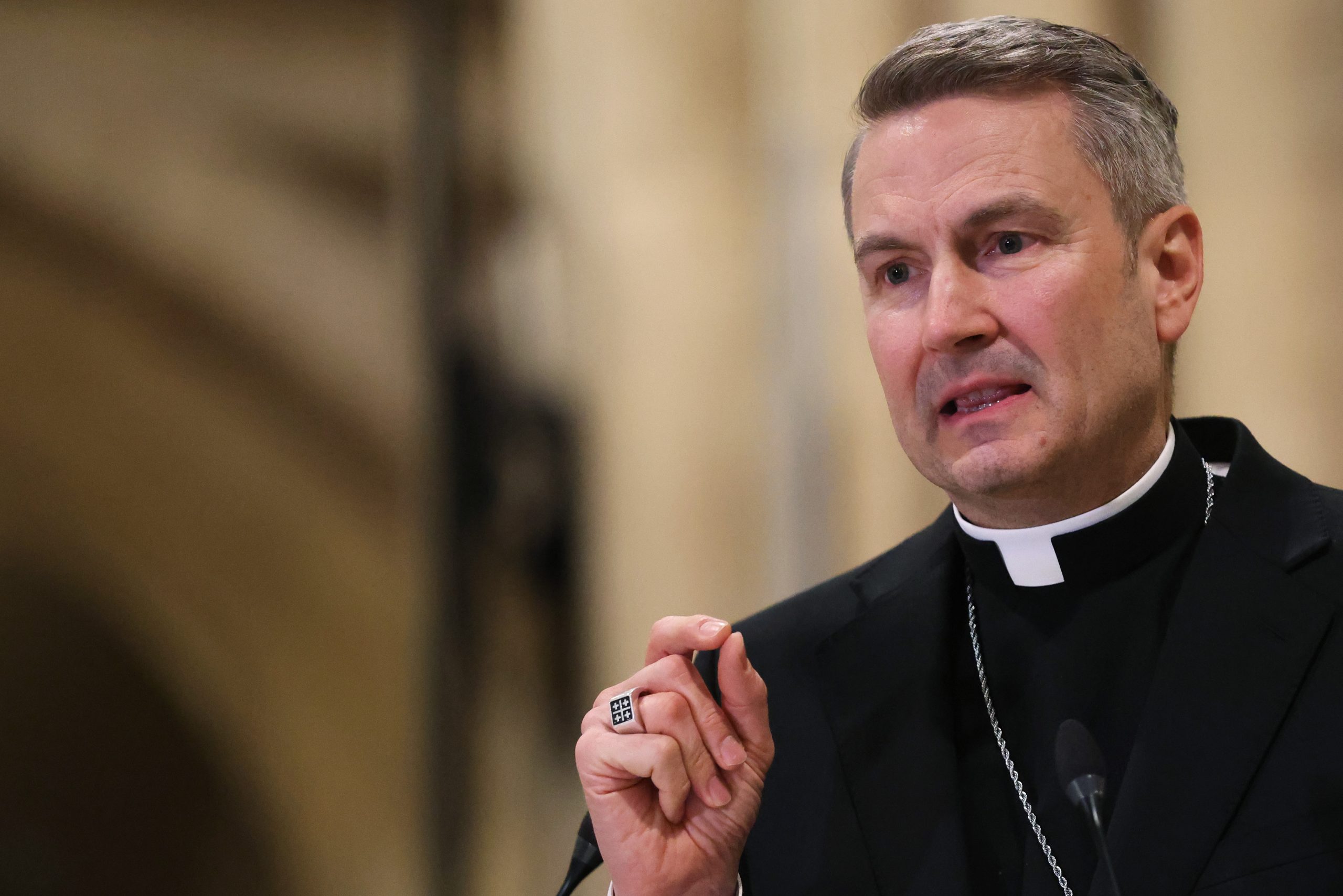
Archbishop Hicks warns New York assisted suicide law begins a “frightening era”
New York’s assisted suicide law will come into force on 5 August. Archbishop Ronald Hicks has warned it marks the beginning of a “new and frightening era” and questioned whether safeguards will remain in place over time The Archbishop of New York has warned that a “new and frightening era” will begin when the state’s assisted suicide law comes into force in August. Archbishop Ronald Hicks issued the warning as New York prepares to implement the Medical Aid in Dying Act on 5 August, allowing terminally ill adults who have been given six months or less to live to obtain life-ending drugs from a physician. Writing in First Things , Archbishop Hicks described the legislation as “the latest assault on human life” and questioned whether the measure would remain limited to the terminally ill. “When this law becomes effective, a new and frightening era begins in New York,” the archbishop wrote. “How long before this so-called ‘compassion’ for the terminally ill evolves from a ‘choice’ into an expectation to kill oneself for all sorts of vulnerable individuals, including those with disabilities, the elderly, and those in impoverished and medically underserved communities?” The law was passed by the New York legislature last year and signed by Governor Kathy Hochul in February. New York will become the latest American state to permit physician-assisted suicide, joining 11 states that have made provision for assisted suicide. The final version of the law includes a series of safeguards, including requirements that patients be assessed by two doctors, undergo a mental health evaluation, and observe a waiting period before receiving a prescription. However, these safeguards rarely work and are often later liberalised, with Vermont`s 2023 removal of in person consultations being a clear example. Opposition to New York’s legislation has been led by Catholic leaders and pro-life groups, who argue that legalising assisted suicide places pressure on vulnerable people and undermines respect for human life. Archbishop Hicks pointed to Canada as a warning of how such laws can expand beyond their original purpose. “In Canada, legislation that was allegedly intended only for the dying was quickly broadened to cover those with ‘chronic’ but not life-threatening illnesses, such as arthritis, who wish to seek a doctor’s help in killing themselves,” he wrote. The archbishop also criticised what he described as a contradiction between efforts to prevent suicide and the legalisation of physician-assisted death. “Admirably, New York State devotes tremendous resources to suicide prevention among our young people,” he wrote. “So too, many of our bridges and train crossings have signs reminding people that ‘life is worth living’, along with numbers to call for help. How at odds this is with the rush to help others end their lives.” Archbishop Hicks said there was a danger that assisted suicide could become influenced by outside pressures. “What begins as a personal choice could lead to situations where external forces, such as government agencies or insurance companies, begin to influence or even dictate end-of-life decisions,” he wrote. “This shift could undermine the respect and protection due to every human life.” The archbishop instead highlighted the role of palliative care and hospice services for those approaching death. He cited the example of Calvary Hospital and the Dominican Sisters of Hawthorne, which provide care for the terminally ill, and drew attention to guidance published by the New York State Catholic Conference on end-of-life decisions. Archbishop Hicks concluded by reaffirming Catholic teaching on the sanctity of life. “Our lives belong to God, and it is incumbent upon us to respect and protect our own lives, just as we rightly demand respect and protection for all human life, from conception until natural death,” he wrote. The Catholic Church has consistently opposed assisted suicide, teaching that the deliberate ending of human life is morally unacceptable and that the sick and dying should instead be accompanied through compassionate care.
Jun. 4, 2026
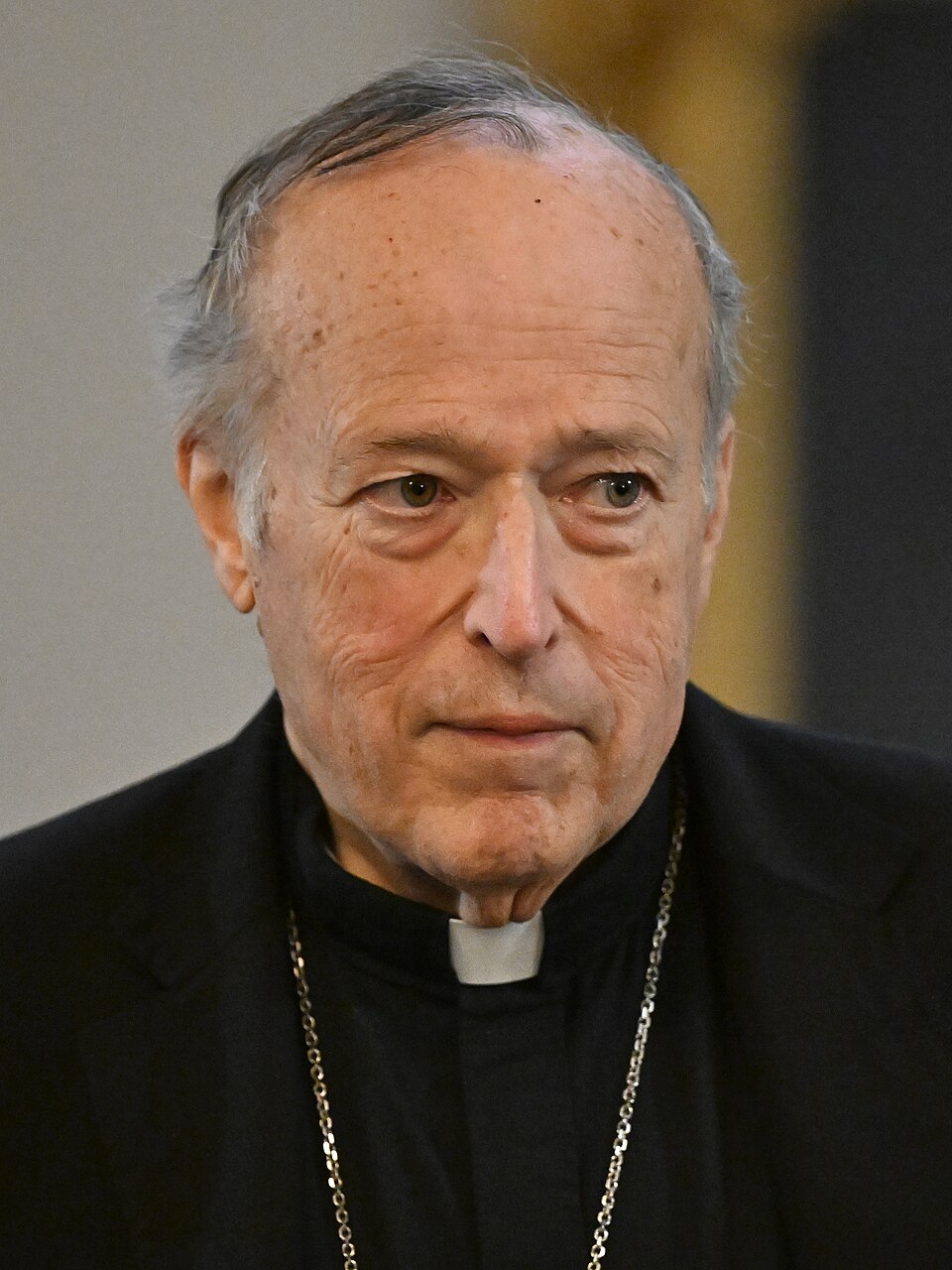
Cardinal McElroy removes Monsignor Rossetti as exorcist after UFO comments
Cardinal Robert McElroy has removed Monsignor Stephen Rossetti as an exorcist for the Archdiocese of Washington after the priest suggested that many reported UFO sightings could be demonic manifestations. The archdiocese also ended its affiliation with the Saint Michael Center for Spiritual Renewal Cardinal Robert McElroy has removed Monsignor Stephen Rossetti as an exorcist for the Archdiocese of Washington after the priest publicly suggested that many reported UFO sightings could be demonic manifestations. The Archdiocese of Washington announced that Cardinal McElroy had also ended all affiliation between the archdiocese and the Saint Michael Center for Spiritual Renewal in Washington, D.C., which is directed by Monsignor Rossetti. In a statement released by the archdiocese, Cardinal McElroy said that comments made by the priest linking unidentified flying objects to demonic activity, together with the centre’s recent use of social media, “gravely undermine the Church’s very precise teaching on the devil, demons and exorcism”. The move follows remarks made by Monsignor Rossetti during a YouTube video published on 29 May in which he discussed reports of unidentified aerial phenomena. “Probably many, if not most, UFO sightings are in fact demons,” Monsignor Rossetti said. The priest, who has long been associated with exorcism ministry in the United States, added that he personally does not believe intelligent life exists on other planets and argued that some reported UFO encounters resembled experiences he had witnessed during exorcisms. According to Monsignor Rossetti, demons ordinarily remain hidden but can sometimes manifest themselves in unusual ways. He pointed to reports of shadowy figures, unexplained lights and mysterious orbs, claiming that such phenomena often mirrored accounts heard during deliverance ministry. He also recounted a case involving a woman who identified a photograph of a UFO as depicting a demonic presence. Monsignor Rossetti, 74, is a priest of the Diocese of Syracuse in New York and has spent much of his ministry working in the fields of psychology, priestly formation and spiritual renewal. A graduate of the United States Air Force Academy, he served in Air Force intelligence before entering seminary and being ordained a priest in 1984. He later earned a doctorate in counselling psychology from Boston College and became one of the best-known American priests working at the intersection of psychology and Catholic pastoral ministry. From 1996 until 2009, he served as president and chief executive of Saint Luke Institute in Maryland, a treatment and education centre specialising in the psychological and spiritual wellbeing of clergy and religious. He subsequently joined the faculty of The Catholic University of America in Washington. The Archdiocese of Washington has not indicated whether a successor will be appointed to fulfil the role previously held by Monsignor Rossetti. The statement issued by Cardinal McElroy did not elaborate further on the decision beyond citing the priest’s remarks on UFOs and concerns about the centre’s social media activity. While Catholic teaching affirms the existence of the devil and permits the practice of exorcism under strict ecclesiastical regulation, the Church has generally urged caution regarding alleged supernatural phenomena and has not endorsed theories linking reports of UFOs to demonic manifestations.
Jun. 4, 2026
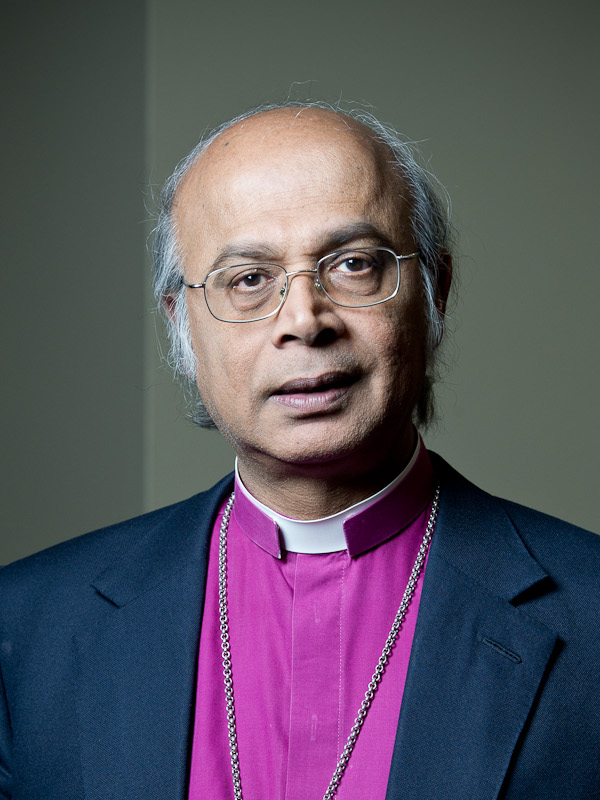
Monsignor Nazir-Ali: Henry Nowak case shows Britain has lost its moral compass
Monsignor Michael Nazir-Ali has told AdVaticanum that the murder of Henry Nowak and the police response point to a wider “loss of a moral compass in society”, warning against political correctness, rule-book policing and the abandonment of conscience Monsignor Michael Nazir-Ali has described the murder of Henry Nowak and the police’s failure to attend to the victim as a result of a “loss of a moral compass in society”. Speaking to AdVaticanum , the Pakistani-born British Catholic priest and former Anglican bishop said that this loss had imposed a “necessity, therefore, of going by the rule book rather than using one’s conscience”. He also lamented “political correctness”, which has caused an “inability to use our common sense” and a reliance on “‘woke’ nostrums”. The murder of Henry Nowak has sent shock waves through Britain and beyond, particularly because of the police’s treatment of the 18-year-old in the final moments of his life. Nowak was stabbed by Vickrum Digwa five times on his return from a night out in Southampton at the end of last year. Digwa’s brother, Gurpreet Digwa, called the emergency services, where he lied to the police and repeatedly told them that Digwa had been the victim of a racial attack. Digwa then contacted his parents and hid the knife used to kill Nowak with his mother. When police arrived, they spoke with Digwa before attending to Nowak. They then arrested Nowak and handcuffed him. Nowak repeatedly told the officers, “I can’t breathe”, and said nine times that he had been stabbed. One of the arresting officers responded by saying, “I don’t think you have, mate.” Nowak stopped responding before officers called emergency services, a call made two minutes and 48 seconds into the body-camera recording depicting the events. While many have called for calm in the wake of the murder, questions have been raised about what led to Nowak’s death, particularly police guidance on responding to issues relating to race relations. Under particular scrutiny is a document produced by the National Police Chiefs’ Council which says that “producing equality of policing outcomes… does not mean treating everyone ‘the same’”. Hampshire Police, responsible for policing Southampton, has also come under scrutiny. In 2020, the force spent nearly £1 million ($1.34 million) on compulsory race training. Hampshire Police also published its own Race Action Plan covering 2024 to 2026. The criticism centres on the idea that police may have been quicker to appear “anti-racist” than to assess the realities of the crime, and that they may have taken Digwa and his family’s allegations of racism more seriously than Nowak’s fatal injuries. The Prime Minister, Sir Keir Starmer, has refuted the idea that “two-tier policing”, where police give preferential treatment to ethnic minorities, exists. He has also called for the words of Henry’s father, Mark Nowak, to be respected. After the sentencing of Digwa, Mark Nowak stated that “we do not want his death to be used to create further division, hatred or tension. We want his story to make our streets safer for everyone.” Another controversy surrounding the case is Digwa being in possession of a kirpan, a Sikh ceremonial knife that is one of the five articles of faith for practising Sikhs. Digwa was carrying two knives: a small one, which most would reasonably describe as a kirpan, and a 21-centimetre dagger, which was used to kill Nowak. Digwa described both as kirpans, but leaders of the Sikh community, who have unanimously condemned the murder, said the second blade was not a kirpan. Under UK law, a kirpan may be carried for religious, ceremonial, sporting or historical reasons. However, a kirpan can become an offensive weapon if it is used unlawfully, with the decision over appropriateness resting with the courts. Responding to the controversy surrounding the possession of a kirpan , Monsignor Nazir-Ali said: “The Sikh community is rightly appalled by what this person may have brought down upon them.” He continued: “They have disowned his actions, but they now need to make sure that their religious obligation to wear a kirpan is carried out in such a way as to render the religious object harmless to others.” Monsignor Nazir-Ali is well known for his ability to address contentious issues with finesse and common sense. He has worked to promote positive relations between Islam and Christianity, while also warning that some extremist Muslims seek both “victimhood and domination”. He has also described multiculturalism as “newfangled and insecurely founded”. Much of his ability to address controversial issues centres on his deep understanding of different cultures. Born in Pakistan, just two years after the Partition of India, he was raised in both Christian and Muslim contexts. At 15, he began to identify as a Christian and was received into the Anglican Church of Pakistan at the age of 20. He studied for Anglican ministry at Cambridge and married a Scottish woman, Valerie Cree, in 1970. He is a hyperpolyglot, with knowledge of English, Arabic, Persian, Punjabi, Urdu, Hindi, Greek, Hebrew, Aramaic, Syriac and Latin. Monsignor Nazir-Ali was received into the Catholic Church by the then Ordinary of the Personal Ordinariate of Our Lady of Walsingham, Monsignor Keith Newton, on 29 September 2021. He was ordained priest by Cardinal Vincent Nichols on 30 October 2021 at Our Lady of the Assumption and St Gregory Catholic Church in London. He was made a Monsignor in 2022 by Pope Francis. Image credit: Oxtrad – Own work, CC BY-SA 4.0, https://commons.wikimedia.org/w/index.php?curid=79306197
Jun. 4, 2026
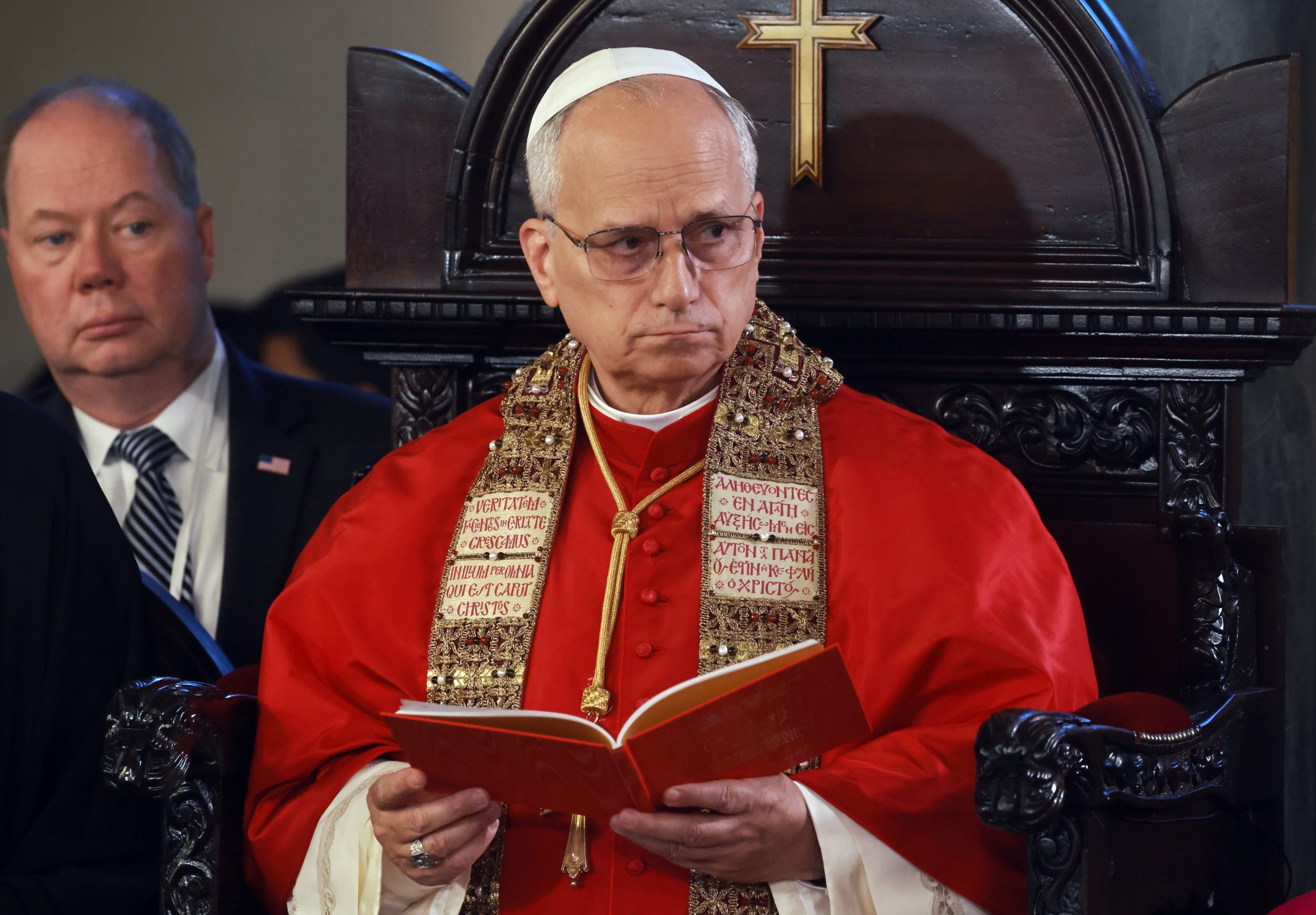
Pope Leo leaves liturgy off agenda for June consistory
Pope Leo XIV will ask the world’s cardinals to discuss war, peace and the future of the Synod on Synodality at an Extraordinary Consistory on 26 and 27 June. The agenda includes the international situation and Magnifica Humanitas, but makes no provision for discussion of the liturgy Pope Leo has decided not to include the liturgy in the agenda for the upcoming June consistory. The pontiff will instead ask the world’s cardinals to discuss war, peace and the future of the Synod on Synodality when they gather in Rome later this month for an Extraordinary Consistory. Details of the agenda emerged after a letter sent to cardinals by Cardinal Giovanni Battista Re, Dean of the College of Cardinals, was published by the Italian blog Messa in Latino. According to Diane Montagna, the meeting, which will take place on 26 and 27 June, will focus on the international situation, Pope Leo’s encyclical Magnifica Humanitas and the implementation of the Synod on Synodality. Cardinal Re said the gathering was intended to provide “a space for mutual listening, discernment, and shared reflection on certain matters of importance for the life and mission of the Church at the present time”. He wrote that Pope Leo wished “to draw upon the experience and counsel of the members of the College of Cardinals” and to count on “the active assistance and support of each one in the various places and responsibilities in which he serves the Church”. The first session will be dedicated to the situation facing the Church and the world. Cardinals will be invited to reflect on “what sufferings, tensions, and questions are today affecting with greatest force the peoples and ecclesial communities entrusted to your care” and to identify “signs of hope, fidelity to the Gospel and possible reconciliation” that should be brought before the College and the Pope. Two sessions will then be devoted to Magnifica Humanitas , Pope Leo’s first encyclical. One discussion will centre on Chapter Five of the document, titled The Culture of Power and the Civilisation of Love , with particular attention given to questions of war and peace. Cardinal Re noted that the encyclical teaches that “peace is not simply one issue among others, but a prerequisite for the universal common good and a test of the moral maturity of peoples”. The cardinals will be asked to consider how best to reaffirm the encyclical’s assertion “that the ‘just war’ theory, which has all too often been used to justify any kind of war, is now outdated”, and to discuss “what concrete paths might help peoples and Christian communities to safeguard and build peace”. A further session will examine the encyclical’s call to interpret contemporary social and cultural changes in the light of the Gospel and to direct the search for happiness and fulfilment towards what the document describes as integral human development. The final working session will focus on the next stage of the Synod on Synodality, the worldwide consultation process launched under Pope Francis. Cardinals will receive an update on preparations for the assemblies planned for 2027 and 2028 following the publication of the document Toward the Assemblies 2027–2028: Stages, Criteria, and Tools for Preparation . The update will be followed by a period of open discussion with Pope Leo. According to Cardinal Re’s letter, interventions from members of the College will be limited to three minutes each. The consistory will conclude on 29 June, the Solemnity of Saints Peter and Paul, when Pope Leo celebrates Mass in St Peter’s Basilica and imposes the pallium on newly appointed metropolitan archbishops.
Jun. 4, 2026
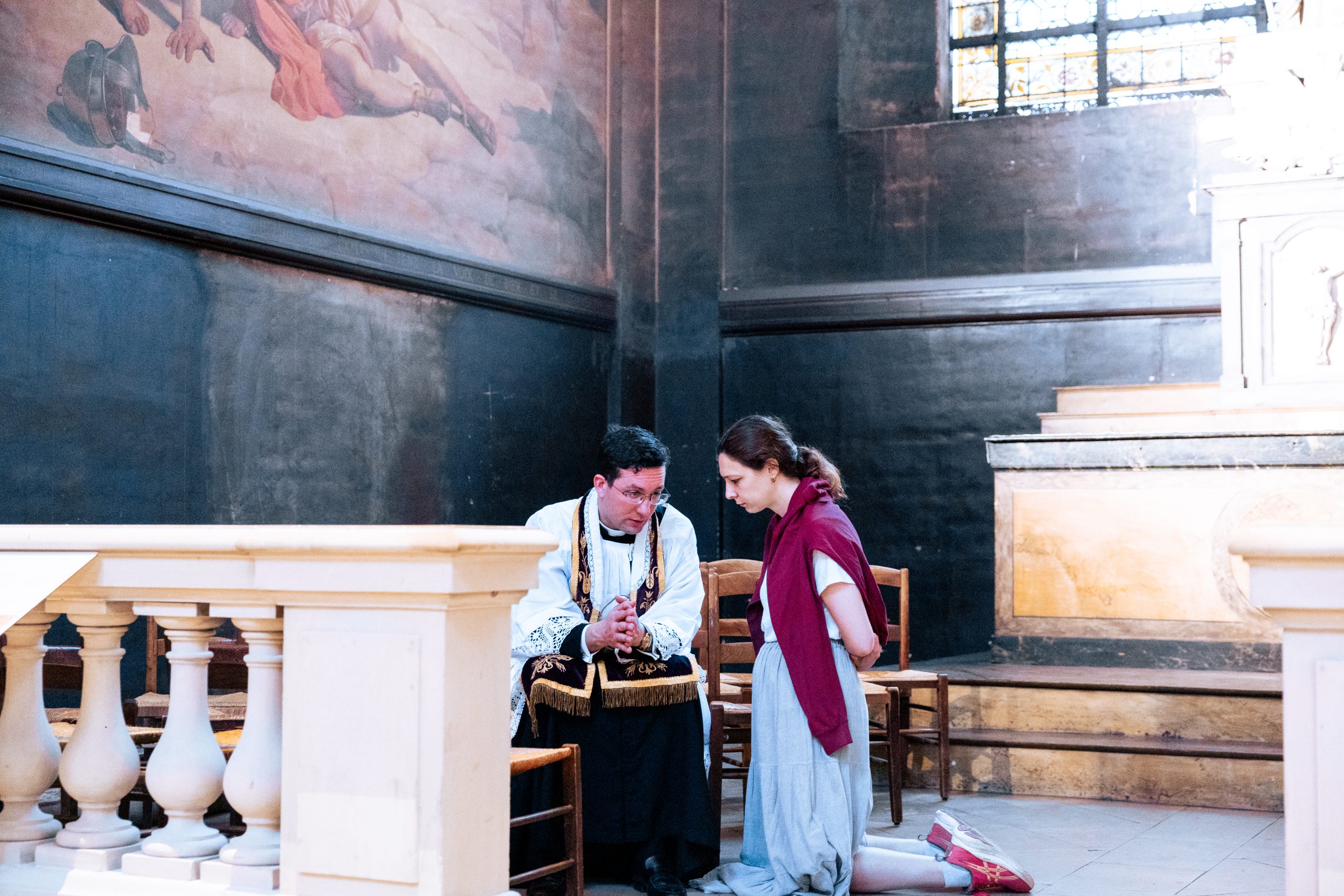
France drops plan to force priests to break seal of confession
France’s parliament has abandoned plans that would have required Catholic priests to report information heard in confession. The controversial proposal was removed from a child protection bill after opposition from bishops and concerns over religious freedom France’s parliament has abandoned controversial plans that would have forced Catholic priests to reveal information heard in the confessional. The National Assembly unanimously adopted the legislation on 1 June following weeks of debate over proposals to strengthen safeguarding measures in schools and extracurricular activities in the wake of the Bétharram abuse scandal. The affair, centred on the Notre-Dame de Bétharram school in south-west France, led to hundreds of allegations of physical, sexual and psychological abuse and intensified demands for stronger protections for children. While the bill ultimately passed with cross-party support, lawmakers removed a provision that had provoked strong opposition from the Catholic Church and concerns among legal experts over religious freedom. The original text would have required ministers of religion to report abuse against minors even when the information was obtained during sacramental confession. It stated that ministers of religion were subject to reporting obligations for information acquired “in the exercise of their ministry” and that no appeal to the seal of confession could exempt them from that duty. The French bishops mounted a public campaign against the proposal before it reached the Assembly chamber, warning that it threatened fundamental liberties protected by French law. In a statement issued ahead of the debate, the Conference of Bishops of France said it shared the determination of public authorities to combat violence against children but expressed “great concern” about elements of the legislation. The bishops said the text called into question “several fundamental freedoms”, including “freedom of conscience, professional secrecy, freedom of education or freedom of religion”. Bishop Jean-Marc Eychenne of Grenoble emerged as one of the leading critics of the measure. “The secrecy of confession is not a privilege for priests, but a right for the faithful,” the bishop said. After intense parliamentary discussions, deputies withdrew the clause before the final vote, allowing the wider legislation to proceed without the measure targeting the seal of confession. Lawmakers also removed a separate proposal that would have tightened state oversight of private schools operating under contract with the government, including many Catholic institutions. The outcome was welcomed by Church leaders, who stressed that their opposition was directed at the confessional provision rather than efforts to improve safeguarding. Bishop Matthieu Rougé of Nanterre said he was “very happy” that parliament had focused on what he described as the “real objectives” of protecting minors and combating violence in educational settings. Referring to the confession controversy, he suggested the issue had entered the debate in a “somewhat parasitic” way. The dispute nevertheless reopened a long-running argument in France over the relationship between Church teaching and state authority. Under Catholic canon law, the seal of confession is absolute. Canon 983 states that “the sacramental seal is inviolable”, and any priest who directly violates it incurs automatic excommunication. The Church teaches that a confessor can never reveal what has been disclosed during the sacrament, regardless of the circumstances. The principle has been formally protected since the Fourth Lateran Council in 1215 and has survived centuries of political upheaval, including the French Revolution and later anti-clerical campaigns that sought to remove the influence of the Church. Photo credit: Notre-Dame de Chrétienté
Jun. 3, 2026
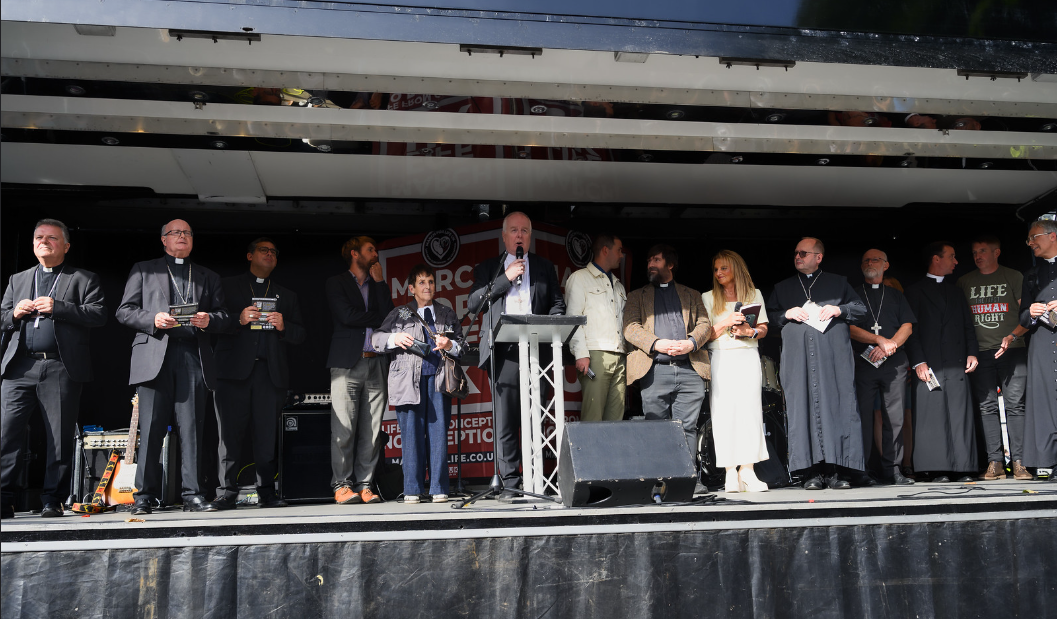
Fourteen Catholic bishops set to attend UK’s March for Life
Fourteen Catholic bishops will attend this year’s UK’s March for Life, double the number seen in previous years Fourteen Catholic bishops are expected to attend this year’s March for Life UK in London in what organisers believe will be one of the largest displays of episcopal support for the annual pro-life event since it was founded. Isabel Vaughan-Spruce, co-director of March for Life UK, revealed the names of the bishops expected at the 5 September march as the UK’s pro-life movement prepares for its annual witness to the value of human life. The bishops include Archbishop Richard Moth of Westminster, Archbishop Bernard Longley of Birmingham and Archbishop John Wilson of Southwark, alongside Bishops David Evans, Paul Mason, Peter Collins, Philip Egan, David Waller, Paul Hendricks, Frank Dougan, John Arnold, John Keenan, Paul Swarbrick and Bosco MacDonald. The announcement follows a turbulent year for the pro-life movement after MPs backed measures that would effectively decriminalise abortion at any stage of pregnancy in England and Wales. Archbishop Wilson emerged as one of the strongest episcopal critics of the proposals. Responding after Parliament approved the changes, he said: “This is a truly tragic moment for our nation.” Archbishop Wilson continued: “How can this frightening legislation, which, following Royal Assent, will permit the abortion of children right up until the moment of birth for any reason, have any place in a civilised society?” He added: “There is, however, another life involved which is now to be ignored and silenced. There are also serious concerns for the safety of women.” “While there is an even more difficult journey now to protect the unborn child, we must continue to speak up for the voiceless, support women in crisis pregnancies and witness to the sanctity of every human life.” Other bishops expected to attend have also been prominent defenders of Catholic teaching on abortion. Bishop Philip Egan of Portsmouth previously criticised proposals to expand abortion access in Guernsey, warning they would permit abortions “much later in pregnancy”, with less regulation and “right up to birth for a disabled child”. He said: “But what procedure can justify any professional termination of the life of an innocent baby?” Describing the proposals as “fundamentally detestable”, he urged Catholics to oppose any further liberalisation of abortion laws. Bishop David Waller, the Ordinary of the Personal Ordinariate of Our Lady of Walsingham, has regularly attended March for Life events and has spoken of the need to uphold the dignity of every human person. Addressing a previous rally, he said: “It’s so wonderful because ultimately those who come on this march are already living in this profound truth that human life is sacred.” He added: “It’s not just about the unborn child; there are all sorts of issues in our society, but if the unborn child isn’t sacred, then really everything falls from there.” He concluded: “It’s not about hating people who have turned to abortion, because their lives, too, are holy and sacred. It’s about the fundamental dignity of human life.” Among those travelling from Scotland is Bishop John Keenan of Paisley, one of the country’s most outspoken pro-life advocates. He has repeatedly criticised attempts to exclude pro-life voices from public debate and has called abortion the “greatest human rights issue of all time”. Bishop Paul Swarbrick of Lancaster, another regular supporter of the event, told participants at a previous March for Life rally: “I don’t need to be a Catholic bishop to know abortion isn’t the way it should be.” March for Life UK was established in 2012 and has grown into the largest annual pro-life demonstration in the United Kingdom. Thousands of participants are expected to gather in central London this year for a day of prayer, speeches and public witness. The attendance of 14 bishops is double the number who have attended in previous years. While this year has certainly brought another attack on the unborn by the state, there have also been major pro-life victories. Both the Scottish and Welsh Parliaments rejected outright the introduction of assisted suicide into the National Health Service. Similarly, the House of Lords identified so many faults in Kim Leadbeater’s rushed attempt to impose assisted suicide that the bill fell. With increasing numbers of MPs switching from support to opposition, alongside a shift in public opinion, it is unlikely that another attempt will be made during this Parliament. The bishops’ show of support acknowledges both the challenges and the victories experienced recently by the UK’s pro-life movement.
Jun. 3, 2026