

Latest
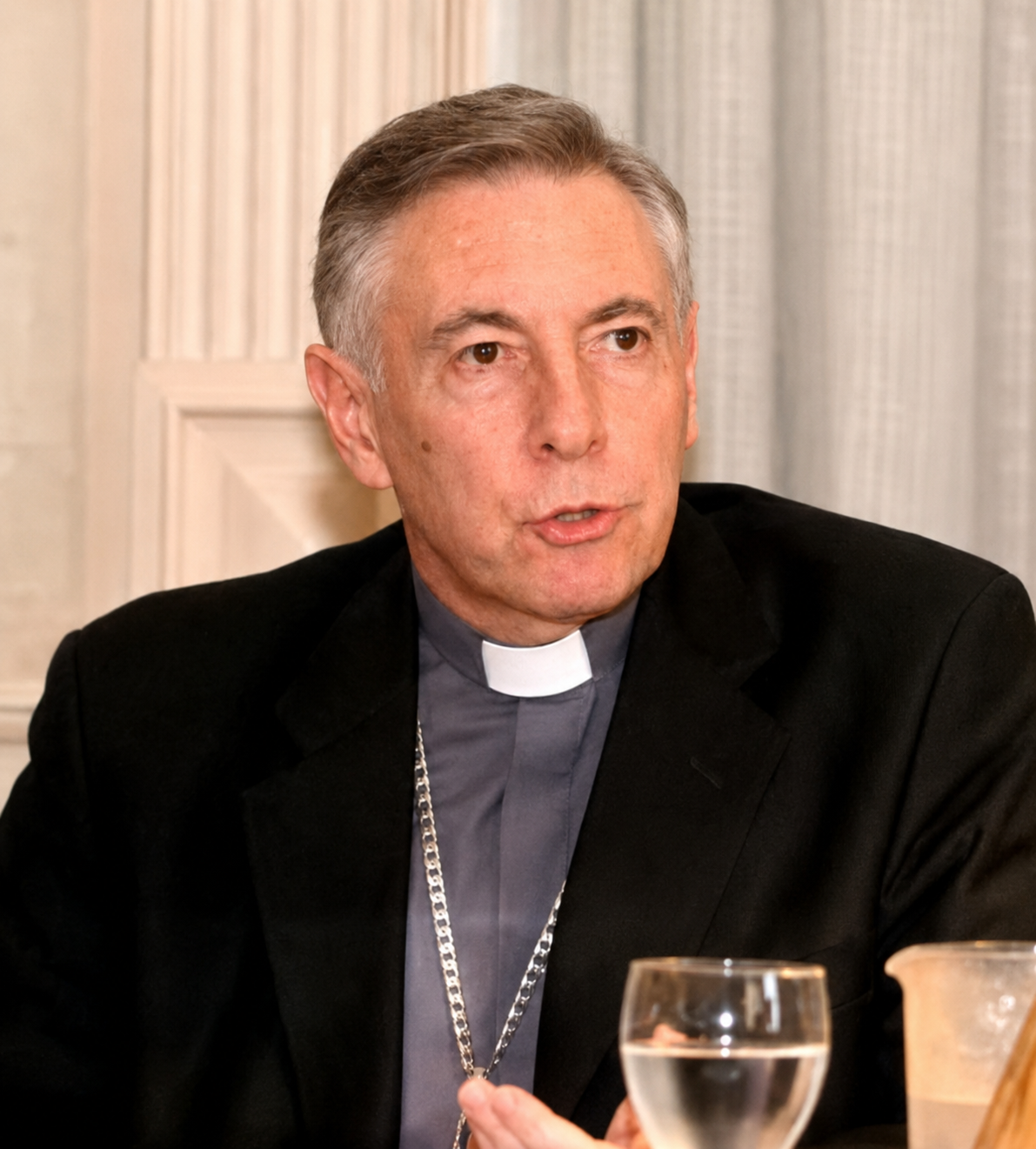
Archbishop Agüer praises Chartres pilgrimage and revives Bugnini Freemason allegations
Retired Argentine Archbishop Héctor Agüer has praised the growing popularity of the Paris-Chartres pilgrimage among young Catholics. In the same essay, he renewed longstanding allegations that Archbishop Annibale Bugnini, a central figure in the post-Vatican II liturgical reforms, was a Freemason Retired Argentine Archbishop Héctor Agüer has praised the growing popularity of the Traditional Latin Mass among young Catholics. The former Archbishop of La Plata said the revival of traditional pilgrimages and devotional practices demonstrates that “orthodoxy and Tradition are in good health and are a guarantee for the future”. The comments were made in an essay published on 1 June by Rorate Caeli, in which he reflected on the Traditional Latin Mass, the liturgical reforms introduced after the Second Vatican Council and the renewed interest in traditional Catholic worship, particularly among younger generations. “The media and, especially, social networks point out that in several European countries, particularly among young people, the ‘Traditional Mass’ is being lived with fervour, accompanied by numerous processions and pilgrimages. “The youthful crowds that revived the traditional Paris-Chartres pilgrimage have drawn widespread attention, with an average age of 22. It is a recovery of Catholic tradition, which had been suffocated in those countries by liberalism, progressivism and atheism,” Archbishop Agüer wrote. The archbishop emeritus pointed to several traditional pilgrimages that have attracted growing numbers of participants in recent years, including the annual Paris-Chartres pilgrimage in France, the Oviedo-Covadonga pilgrimage in Spain, the Rome-Subiaco pilgrimage in Italy and the Rawson-Luján pilgrimage in Argentina. “Pilgrimages like Paris-Chartres, and those of Rawson-Luján (Argentina), Oviedo-Covadonga (Spain), Rome-Subiaco (Italy), and others that are emerging here and there, speak to us of something undeniable: orthodoxy and Tradition are in good health and are a guarantee for the future.” Archbishop Agüer said the traditional liturgy remained closely connected to the Church’s historic understanding of the Mass as the sacramental representation of Christ’s sacrifice on Calvary. “The ‘Traditional Mass’ can be called that because it dates back to the seventh and eighth centuries and remained in effect for centuries until at least the Council of Trent, which revised and reissued it so that it would reach our days. Essential to it is its identification with the Sacrifice of the Cross, established as the Sacrament of the Sacrifice at the Last Supper of Jesus with His Apostles. “This Sacrament is the mystery of the Passion and Resurrection, consecrated by the Holy Spirit. The Mass is directed to the glory of the Triune God, to whom it offers the Sacrifice of Jesus,” the retired archbishop wrote. Archbishop Agüer contrasted the older liturgy with the Mass promulgated by Pope Paul VI following the Second Vatican Council, saying: “The Mass defined Catholicism from the Council of Trent to Vatican II. During the pontificate of Paul VI (Giovanni Battista Montini), who succeeded the brief pontificate of John XXIII, a new Mass was invented.” However, he added: “A few modifications here and there could have been introduced to the ‘Traditional Mass’, as had been done during its multi-century existence. But no; Vatican II sought to retouch everything, and a new Mass was meant to spring from its spirit.” Archbishop Agüer also repeated claims concerning Archbishop Annibale Bugnini, the principal architect of the post-conciliar liturgical reforms. “The author of the new Mass was Archbishop Annibale Bugnini, recognised as a Freemason according to undeniable documents, though secret in accordance with the nature of Freemasonry,” he wrote. Archbishop Bugnini, who served as secretary of the Consilium responsible for implementing the Constitution on the Sacred Liturgy, played a central role in the reform of the Roman Rite after the council. Allegations that he was a Freemason have circulated for decades. The former Archbishop of La Plata also highlighted several differences between the traditional liturgy and the reformed rite, including celebration facing the people, the expanded cycle of Scripture readings and the introduction of additional Eucharistic Prayers. “In it, the priest stands facing the people; biblical readings are multiplied, and over time several Eucharistic Prayers were authorised, which recreate the single Canon of the ‘Traditional Mass’.” The archbishop added: “It would seem that in the Mass of Paul VI and Bugnini, the priest offering the rite must strive to direct himself to God and ensure that the faithful do not become confused.” The archbishop emeritus noted that he celebrates the post-conciliar liturgy and was ordained according to the liturgical books that preceded the reforms. He said: “This Mass is the one I celebrate, in which I was ordained nearly 54 years ago; I do so with the greatest devotion I can. But I remember that in my childhood, as an altar boy, I regularly attended the ‘Traditional Mass’, a rite that was never invalidated and has accompanied that of Paul VI until today, and which, as I said at the beginning, is being rediscovered with enthusiasm by youth.” Turning to liturgical abuses, Archbishop Agüer wrote: “Note should be taken, for example, of a certain bishop who entered Mass on a skateboard, or some priests who dress up as clowns when celebrating. Such outrages can only trigger a stampede effect.” Ordained a priest for the Archdiocese of Buenos Aires in November 1972 by Cardinal Juan Carlos Aramburu, Archbishop Agüer served in parish ministry and theological education before being appointed auxiliary bishop of Buenos Aires by Pope John Paul II in 1992. He later became coadjutor bishop of La Plata and succeeded Archbishop Carlos Galán as archbishop in 2000, leading one of Argentina’s most important dioceses until his retirement in 2018. During his episcopal ministry, he became known a prominent conservative voice in the Argentine Church, frequently speaking on liturgical matters, Catholic education, abortion, marriage and secularisation. He also served on several Vatican bodies, including the Pontifical Council for Justice and Peace and the Pontifical Council for Culture, and was a consultant to the Pontifical Commission for Latin America.
Jun. 3, 2026
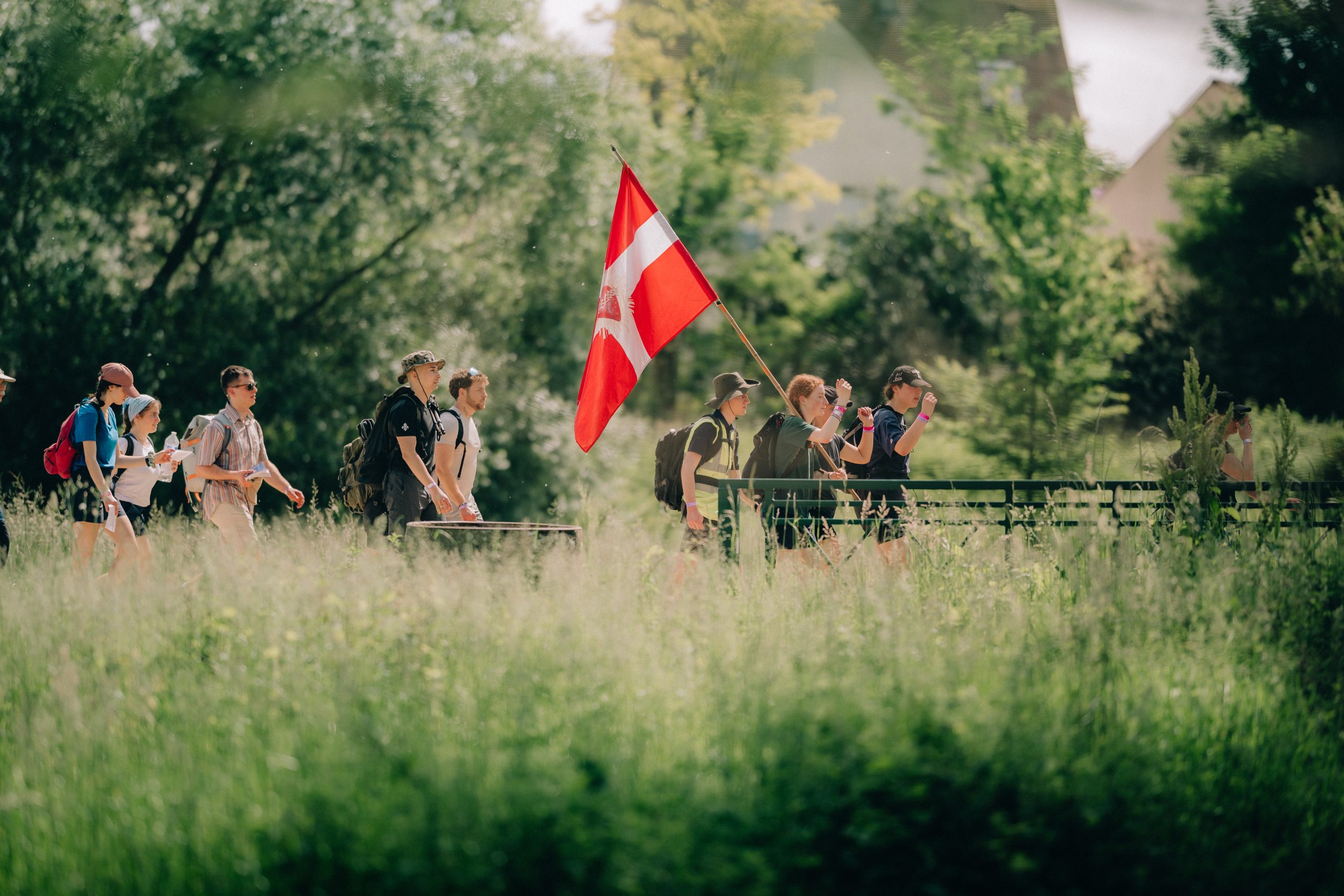
Walking to Chartres: the revival of Catholic France
France has seen a surge in adult baptisms. At the same time, more than 20,000 pilgrims completed the three-day pilgrimage to Chartres, the flagship event of the Traditional Latin Mass movement in France. This is the story behind its remarkable growth This year’s annual Notre-Dame de Chrétienté pilgrimage saw more than 20,000, mostly young people make their way from Paris to Chartres amid a Europe-wide heatwave. It is another record-breaking year for the event, which is supported by a further 6,000 volunteers. Like much that is found in the traditional wing of the Church, the pilgrimage is both old and new. New in the sense that it has a vitality brought about by its young attendees. Old in the sense that its origins are medieval. The city of Chartres owes its association with pilgrimage to the Sancta Camisa, a piece of silk worn by Our Lady during the Nativity. Depending on the account, Charlemagne either stole the relic in Constantinople, or was given it by the Byzantine imperial family, and then in turn gave it to his grandson Charles II, also known as Charles the Bald, who presented it to Chartres Cathedral in 876. The Sancta Camisa came to prominence in 911, when Chartres was subjected to a Viking raid. Gantelme, the bishop and military leader of Chartres, is reported to have displayed the relic above the town gate. This is said to have emboldened the defenders of Chartres and terrified the pagan army, resulting in the town withstanding the attack. The episode led to the conversion of Rollo, the Viking leader, his pledge of allegiance to Charles the Simple, more charitably known as Charles III, and the establishment of the Duchy of Normandy, with Rollo as its first duke. Just over a century and a half later, that duchy would successfully invade England, a feat no one has yet matched. Over the ensuing centuries, the cathedral was subjected to successive fires. After each one, however, the people of Chartres rebuilt it in ever more splendid forms. The “Cult of the Carts”, a medieval devotion in which lay people harnessed themselves to carts in place of oxen to transport building materials, finds one of its most famous examples in Chartres. In a letter written by Abbot Haymo of Saint-Pierre-sur-Dives to the monks of Tutbury Abbey in England, Haymo described people of all social classes dragging materials to Chartres catherdral as an act of piety and penance. During the late Middle Ages and the Renaissance, Chartres became a major centre of Christian pilgrimage. Great fairs were held for the Presentation, the Annunciation, the Assumption and the Nativity, with pilgrims arriving in time to join the festivities. The area surrounding the cathedral functioned as a free-trade zone, exempt from state taxation and governed instead by cathedral authorities. On 7 August 1773, the high altar designed by Charles-Antoine Bridan, depicting the Blessed Virgin Mary’s Assumption into Heaven, was consecrated. Today it remains one of the most iconic features of the medieval cathedral, alongside its celebrated stained-glass windows. More than a century later, another Charles became synonymous with the cathedral. Charles Péguy, the French poet and essayist, helped keep the pilgrimage to Chartres alive by establishing the Paris route. Péguy spent much of his early life detached from religion and would probably have identified more as a Dreyfusard than anything else. Yet his growing nationalism ultimately led him back to France’s Catholic heritage, perhaps most clearly expressed in Le Mystère de la charité de Jeanne d’Arc ( The Mystery of the Charity of Joan of Arc ), first published in 1910. In 1911, at the deathbed of his son Pierre, he made a promise that if his son recovered, he would make a pilgrimage to Chartres beginning in Paris. In 1912, he completed the journey, which left him transformed. He took his students on the pilgrimage and, when he was killed in battle in 1914, they continued the pilgrimage in his honour. Péguy’s faith was complicated. He was married to a divorcee and was never able to be sacramentally reconciled with the Church. However, his Catholicism by conviction bears considerable witness to the power of the Church to draw people in, no matter the obstacles in their path. Like many good traditions, Chartres fell out of use in the years of liturgical upheaval that followed the Second Vatican Council. The Paris to Chartres route, etched into Catholic intellectual France by Péguy, ceased to exist and it was not until 1982 that it resurfaced. It is now associated with the traditionalist movement within the Church. In 1988, after Archbishop Marcel Lefebvre was excommunicated following the illicit episcopal consecrations at Écône, a reality sadly familiar for this year’s pilgrimage, the Society of Saint Pius X began to walk the route in reverse, starting in Chartres and finishing in Paris, a journey it makes to this day. Organised by Notre-Dame de Chrétienté, the pilgrimage has grown at a staggering rate. In 2010, attendance reached 10,000. By 2023, organisers had to close registration early and limit attendance to 16,000, with this year’s numbers exceeding 20,000. This year’s journey started on Saturday 23 May, with Holy Mass at Saint-Sulpice, Paris’s second-largest church, where pilgrims gathered from 5 a.m., filling the surrounding streets. A military-style operation enabled pilgrims to drop off their tents and bags before being escorted through the Saturday morning streets of Paris. Priests process into Saint-Sulpice for the opening Mass of the pilgrimage Walking through the streets of Paris, pilgrims sang hymns while carrying banners displaying saints to whom they are devoted. More than 4,000 religious and priests accompanied the groups, with the short distances between chapters providing opportunities for confession. Pilgrims walk through the French countryside At the end of the first day, pilgrims camped at a vast campsite in Senlisse. Tents were erected for the night, with special areas for priests to celebrate individual Masses from 4 a.m. The following day, at 5.30 a.m., pilgrims were woken for what was potentially the most arduous day of the journey because of the heat and sun exposure, making their way to an open field en route for Pentecost Sunday Mass celebrated by Father Antonius Maria Mamsery, Superior General of the Missionaries of the Holy Cross, a community devoted to the Traditional Latin Mass. Speaking to AdVaticanum after Mass, Father Antonius described the pilgrimage as the “hope of Europe” and “the hope of the revival of the faith and of Catholicism as it once was”. After another evening in a specially erected campsite, the final leg of the journey was completed on Pentecost Monday, a national holiday in France. The crowds arrived singing “Chartres sonne, Chartres t’appelle” (“Chartres rings, Chartres calls you”), before a Solemn Pontifical High Mass celebrated by Cardinal Raymond Burke. His Eminence Cardinal Raymond Burke blesses pilgrims before celebrating a Solemn Pontifical High Mass at the conclusion of the Notre-Dame de Chrétienté pilgrimage in Chartres. Today the pilgrimage has an international character, with pilgrims travelling from as far afield as Australia and South America. However, it remains predominantly French. France is currently experiencing a revival in Catholic devotion, with more than 13,000 adult baptisms this year, a 270 per cent increase in just five years, with the largest cohort, 42 per cent, aged between 18 and 26. The combined number of adult and adolescent baptisms exceeds 20,000, roughly equivalent to the number of pilgrims who took part in this year’s pilgrimage. It is therefore no coincidence that this year’s pilgrimage theme is mission. Organisers said the event stands “at the heart of this spiritual awakening in France, for which prayers have been offered for 44 years”, and it was notable that passers-by were handed leaflets as the pilgrimage passed through towns and villages. The Bishop of Chartres, Bishop Philippe Christory, who gladly welcomes the throngs of pilgrims to his cathedral each year, acknowledged that although the increase in baptisms is significant, “so many are still so far away from the Church”. Speaking to AdVaticanum, he said: “We have to love. Love is the key, the door and the way. Otherwise, this is all nonsense, if it is not for love of God and love for our brothers.” A cynic might judge the turnout to be relatively small compared with the millions who gather for World Youth Day. But the pilgrimage exists without extensive promotion from the Church’s hierarchy, and it is a journey made entirely on foot. It is a pilgrimage of penance and mortification that requires a level of commitment and physical endurance beyond that of a typical pilgrimage. Perhaps a fairer comparison would be Rome’s annual marathon, which 22,000 people completed in 2025 in cooler weather and over less than half the distance. What is increasingly clear is that Chartres represents a phenomenon that it is now impossible for the Church hierarchy to ignore: a younger generation of Catholics is devoted to the Traditional Latin Mass in substantial numbers, and that this devotion will persevere through any restrictions imposed upon it. The first signs of this acknowledgement are becoming apparent, notably in Pope Leo’s request earlier this year that the French bishops show charity towards those attached to the traditional form of the Mass. Brother João, a member of the Fraternity of St Joseph the Guardian, a community that offers the Traditional Latin Mass in the Diocese of Fréjus-Toulon to re-evangelise France, put it succinctly when he told AdVaticanum: “Chartres is a testimony.” With a younger generation of clergy also rising through the Church’s hierarchical ranks who share the same devotion, it remains only a question of time before that testimony leads to concrete action and the promotion, rather than the penalisation, of the Church’s most ancient and edifying liturgical expression. Photo credit: Notre-Dame de Chrétienté
Jun. 3, 2026
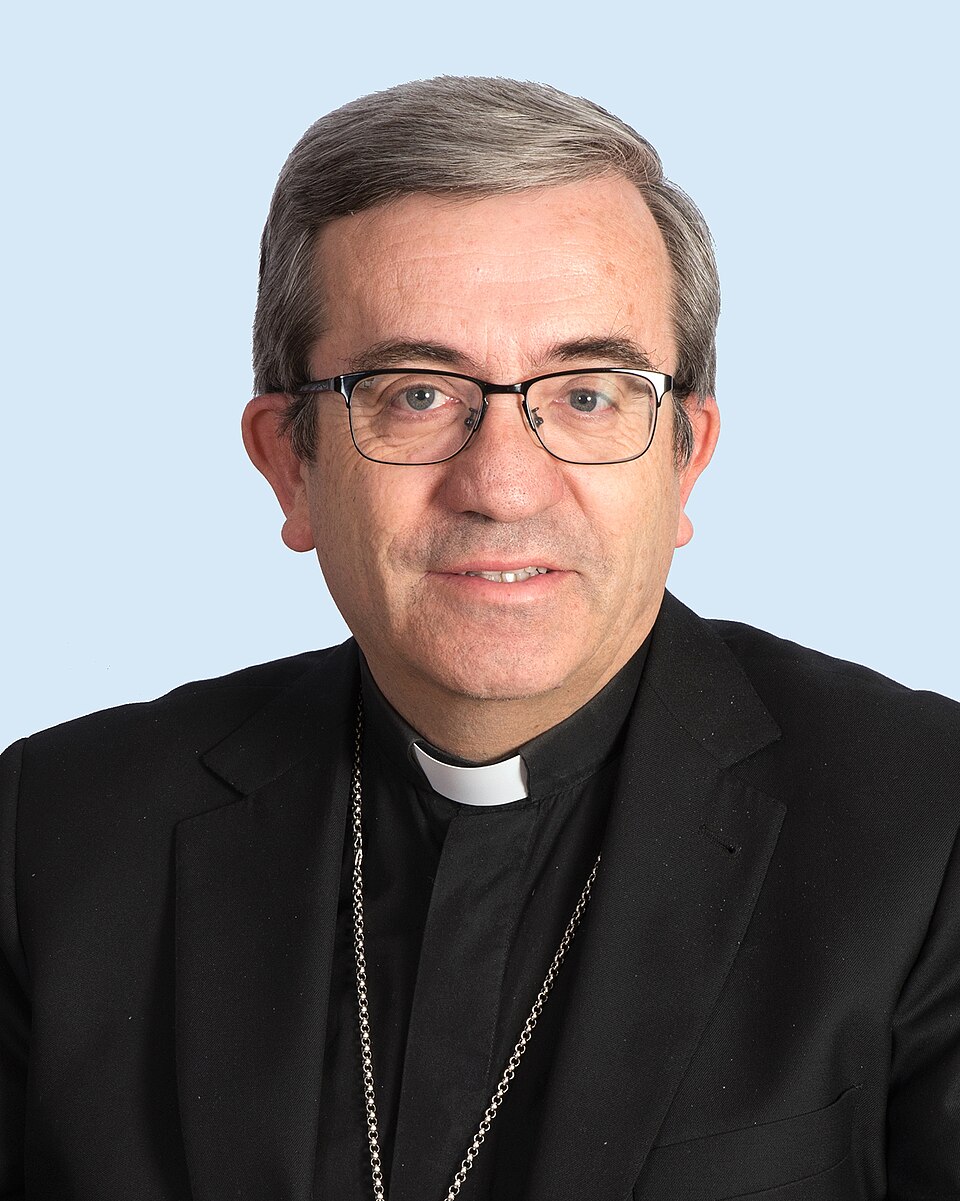
Archbishop Argüello issues Corpus Christi reminder on who may receive Communion
Archbishop Luis Argüello, president of the Spanish Bishops’ Conference, has reiterated that Catholics living in a new conjugal relationship following the breakdown of a valid sacramental marriage cannot receive Holy Communion The president of the Spanish Bishops’ Conference has reminded Catholics that those living in a new conjugal relationship following the breakdown of a valid marriage cannot receive Holy Communion. Archbishop Luis Argüello of Valladolid made the remarks in a pastoral message for Corpus Christi in which he reflected on the Eucharist and the dispositions required to receive it worthily. “When a marital relationship has broken down and those who were part of that marriage are living a new conjugal relationship,” Communion cannot be received, the archbishop said. Archbishop Argüello said those in such circumstances remained members of the Church, but that “this breaking of the Sacrament of the Covenant prevents Eucharistic communion”. “They may participate in the celebration, as well as in the life of the Church in many ways, but receiving Holy Communion is not possible,” the president of the Bishops’ Conference said. The Archbishop of Valladolid issued the message as Catholics in Spain prepare to celebrate Corpus Christi later this month. In the reflection, published as part of his diocesan pastoral programme for the first half of June, Argüello also referred to other situations which he said were incompatible with receiving Communion. These included “participating in a sinful relationship”, as well as abuses committed against others “whether in the economic or labour sphere, or in the psychological or emotional sphere”. He also referred to those publicly defending positions contrary to Christian morality. “In those cases, we cannot approach Communion without a firm decision to change our lives, making reparation for the damage caused by our situation of sin,” the archbishop said. Archbishop Argüello said the inability to receive Communion should encourage Catholics to seek a resolution consistent with the Church’s teaching on both marriage and the Eucharist. “The pain of not receiving Communion should awaken the desire to seek a solution that respects the meaning of the two sacraments at stake: Matrimony and the Eucharist,” Archbishop Argüello said. The intervention comes as Archbishop Luis Argüello prepares to accompany Pope Leo XIV during the pontiff’s apostolic visit to Spain from 6 to 12 June. Archbishop Argüello, who was elected president of the Spanish Bishops’ Conference in 2024, has become one of the most prominent voices in the Spanish Church. His election was widely viewed as signalling a more doctrinally direct approach from the episcopal conference following the presidency of Cardinal Juan José Omella. Catholic teaching holds that a valid sacramental marriage is indissoluble. For that reason, those who enter a new conjugal relationship while a previous sacramental marriage remains valid are ordinarily unable to receive the Eucharist. The issue received renewed attention during and after the Synods on the Family convened by Pope Francis and following the publication of the apostolic exhortation Amoris Laetitia in 2016. Archbishop Argüello’s latest remarks, however, amounted to a straightforward restatement of the Church’s doctrine.
Jun. 2, 2026

Pope Leo XIV appoints EWTN COO as first lay woman prefect
Maria Montserrat Alvarado, president and chief operating officer of EWTN News, has been appointed Prefect of the Dicastery for Communication by Pope Leo XIV, becoming the first lay woman to head a department of the Roman Curia. She will take up the role on 1 November, succeeding Paolo Ruffini Pope Leo XIV has appointed Maria Montserrat Alvarado, president and chief operating officer of EWTN News, as Prefect of the Dicastery for Communication, making her the first lay woman to head a department of the Roman Curia. The Vatican announced that the Mexican-born media executive will assume office on 1 November, succeeding Paolo Ruffini, who was himself a trailblazer when he became the first lay prefect of a Vatican dicastery in 2018. Dr Alvarado has led EWTN News since 2023, overseeing the Catholic broadcaster’s global news operations across television, radio, print and digital media in seven languages. Prior to joining EWTN, she spent 14 years in senior roles at the Becket Fund for Religious Liberty, the Washington-based legal organisation known for defending religious freedom cases before courts in the United States and internationally. Her appointment places one of the most prominent figures in Catholic media at the head of the Holy See’s vast communications apparatus, which includes Vatican News, Vatican Radio, Vatican Media, L’Osservatore Romano, the Holy See Press Office and the Vatican publishing house. The decision also marks a significant milestone in the increasing involvement of lay people, and particularly women, in senior Vatican leadership positions. In a statement released following the announcement and provided to EWTN, Alvarado said she had received the news “with deep gratitude, humility, and trust in the Lord”. She added that her years working alongside colleagues at EWTN had strengthened her faith and prepared her for the new responsibility entrusted to her by the Pope. Michael Warsaw, chairman and chief executive of EWTN, praised her leadership and described her as having helped shape the network’s international outreach during a period of rapid expansion into digital media. “Montse’s background in international media, public affairs, and Church engagement has helped shape EWTN’s outreach at a critical moment in the history of our apostolate: the pivot into a deeper engagement with the digital space,” he said. “Just as importantly, she has remained deeply committed to the mission that defines EWTN: proclaiming the truth of Jesus Christ and the teachings of His Church with clarity, fidelity, and charity.” Ruffini, who will work alongside his successor during the transition period, said he had come to know Alvarado over recent years and looked forward to assisting her in the months ahead “in the spirit of communion that unites us in the Church”. The Dicastery for Communication was created by Pope Francis in 2015 as part of his wider reform of the Roman Curia. The restructuring merged a collection of previously separate Vatican media institutions into a single department intended to coordinate the Church’s global communications strategy and modernise its engagement with contemporary media. While women religious have held influential offices within the Roman Curia, Alvarado becomes the first woman who is neither a nun nor a member of a religious order to be appointed prefect of a dicastery. Born in Mexico City, she studied at Florida International University and George Washington University before building a career focused on public policy, religious liberty and Catholic communications. Her writings and commentary have appeared across a range of international media outlets, and she has received recognition for her work promoting religious freedom. The appointment places her among the most senior lay officials in the Vatican and gives her responsibility for shaping how the Holy See communicates with more than 1.4 billion Catholics around the world. Although Ruffini had been expected to leave office later this year at the conclusion of his mandate, Pope Leo has effectively brought forward that transition by naming his successor several months in advance, allowing for an extended handover before Alvarado formally takes up the post on 1 November.
Jun. 2, 2026
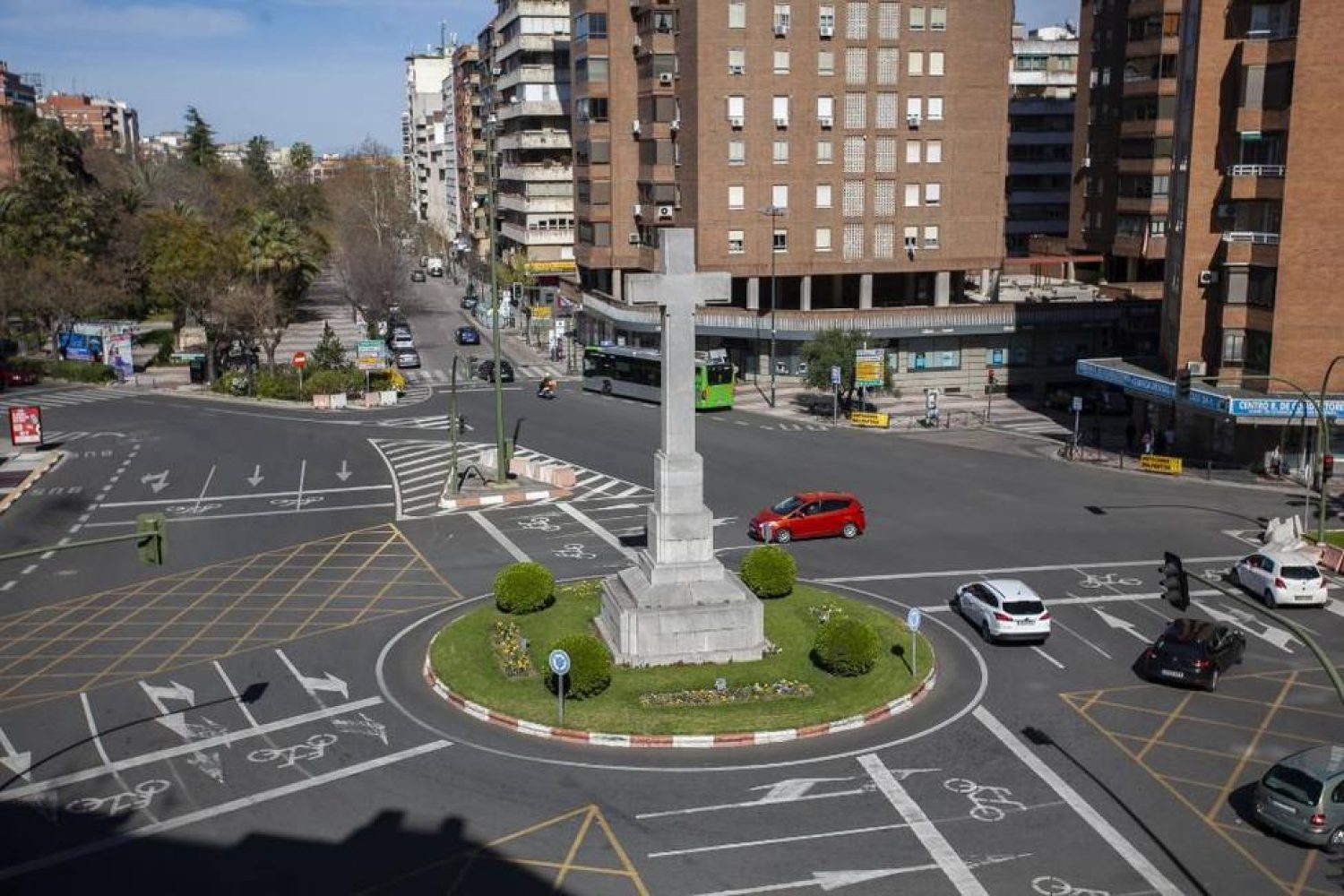
Spanish government orders removal of Cáceres Civil War cross amid heritage battle
The Spanish government has given Cáceres three months to remove the Cross of the Fallen, arguing it is a Francoist symbol incompatible with Spain’s Democratic Memory Law. Local and regional authorities are challenging the order in court and seeking heritage protection for the monument The Spanish government has given the city of Cáceres three months to remove a prominent Civil War-era cross after formally designating the monument as a symbol contrary to Spain’s democratic memory laws. The Cross of the Fallen, which stands in Plaza de América in the western city of Cáceres, was added in April to the national catalogue of symbols and elements considered incompatible with the principles of Spain’s 2022 Democratic Memory Law. The measure was accompanied by an order requiring its removal from public space, with the government arguing that the monument constitutes a Francoist symbol and lacks the artistic or historical significance necessary to justify an exemption. The decision has been fiercely opposed by local and regional authorities, who insist the cross is primarily a religious monument and forms part of the city’s historic landscape rather than a political statement. Rafael Mateos, the Popular Party mayor of Cáceres, has pledged to challenge the order through the courts. The city council argues that the monument has long since ceased to function as an instrument of political exaltation and that its presence in the city centre is now understood in a broader historical and cultural context. Municipal officials have also raised procedural objections. According to the council, the original removal order issued in April was signed by an authority that lacked the legal competence to do so. Although the government later issued a fresh resolution in May, the city intends to contest that decision as well and seek a suspension of the deadline while legal proceedings are underway. The dispute has drawn in the regional government of Extremadura, which has begun proceedings to grant the monument Bien de Interés Cultural status, Spain’s highest form of heritage protection. Such a designation would strengthen the case for preserving the cross and could complicate attempts to remove it. Laureano León, Extremadura’s regional minister for culture, tourism and sport, has indicated that he believes the monument fulfils the criteria required for heritage protection. Speaking to journalists before appearing before the regional parliament’s culture committee, León said the designation process was already under way and would continue through the normal administrative channels. “Certainly, my opinion is that it meets the conditions,” he said, while adding that the final determination would depend on technical reports produced during the process. The controversy has also become a flashpoint in wider political tensions between Madrid and Extremadura. The regional administration is governed by the Popular Party with the support of Vox, and both parties have defended the monument’s continued presence. Álvaro Sánchez-Ocaña Vara, Vox’s deputy spokesman in the Extremadura Assembly, accused the central government of targeting the cross for political reasons and linked the dispute to the governing arrangement between Vox and regional president María Guardiola. “The Cross is not to be touched,” Sánchez-Ocaña told reporters in Mérida. He described the government’s resolution as “an outrage” and “political persecution”, arguing that the monument is “inherently religious, but above all historical and devoid of any political exaltation”. Sánchez-Ocaña further maintained that the legal justification for removing the cross was flawed because the monument no longer serves any ideological purpose. He called on the government to allow the structure to remain in place while appeals are considered. “We demand that the central government, until the appeal is resolved, leave the Cross where it is,” he said. “The Cross is the heritage of the people of Cáceres and it must remain so.” The dispute centres on competing interpretations of the monument’s meaning nearly nine decades after it was erected. The cross was built in 1938 during the Spanish Civil War, a conflict that claimed hundreds of thousands of lives and culminated in the victory of General Francisco Franco’s Nationalist forces. Throughout Spain, monuments dedicated to the “fallen” were erected during and after the war, often commemorating those who died fighting for the Nationalist cause. Many of these memorials incorporated overt political symbolism linked to Franco’s regime, while others took the form of large Christian crosses that remained in public spaces long after Spain’s transition to democracy. Since the end of the Franco dictatorship, Spanish governments have grappled with how to address such monuments. Efforts to remove Francoist symbols accelerated under the Historical Memory Law of 2007 and were expanded significantly through the Democratic Memory Law adopted in 2022. The legal challenge now being prepared by the city council is likely to determine whether the monument remains in Plaza de América or becomes the latest casualty of Spain’s long-running reckoning with the legacy of the Civil War and the Franco era.
Jun. 1, 2026
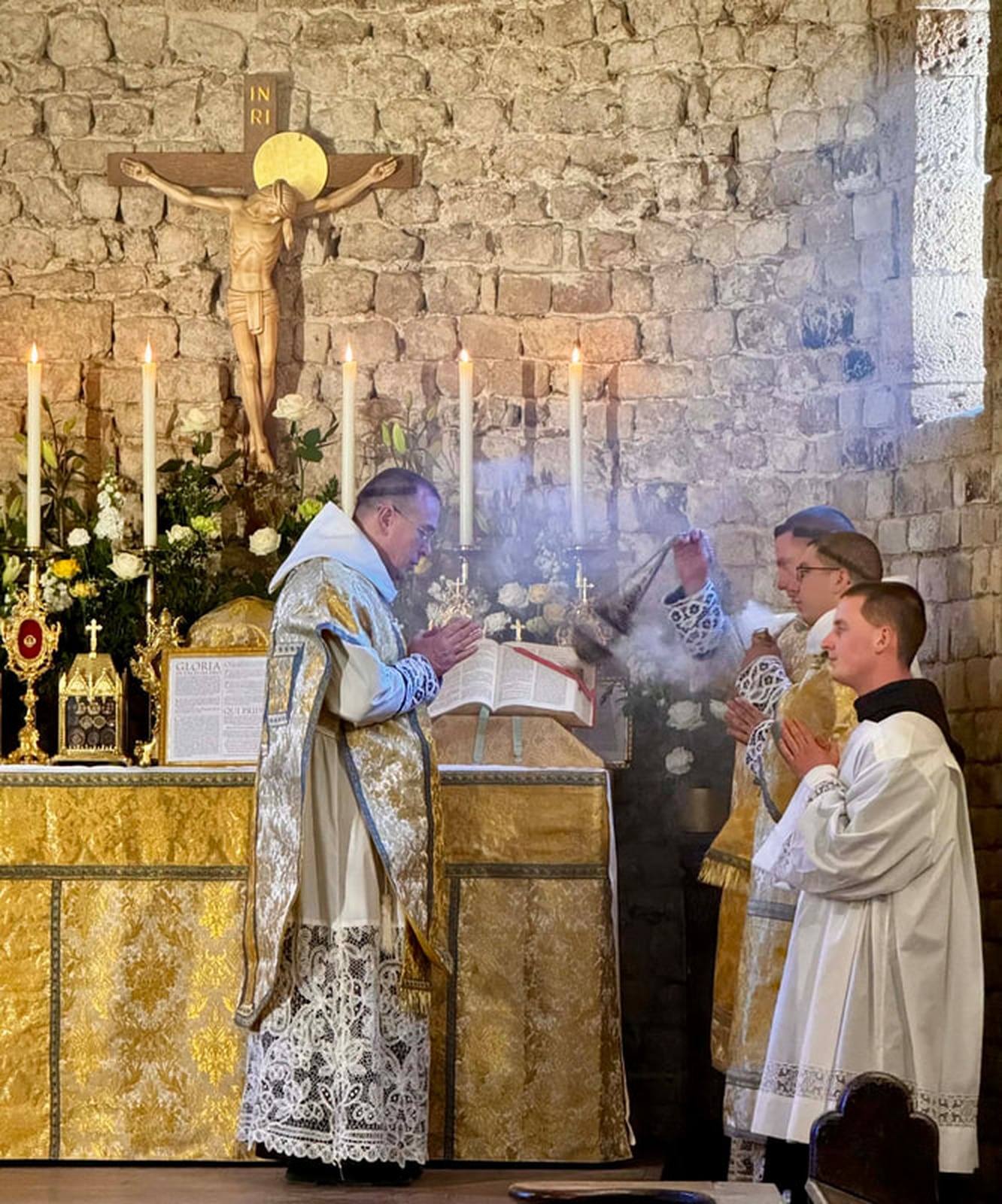
Dom Alcuin Reid calls for month of prayer for the unity of the Church as SSPX consecrations approach
Dom Alcuin Reid, prior of the Monastère Saint-Benoît in France, has called on Catholics to make June a month of prayer and fasting for the unity of the Church ahead of the SSPX’s planned episcopal consecrations on 1 July. He has urged prayers for Pope Leo XIV, his advisers and the Society of St Pius X Monastère Saint-Benoît, an international English-speaking traditional Benedictine monastery in the Diocese of Fréjus-Toulon, France, has called on Catholics to make June a month of prayer for the unity of the Church. The monastery’s prior, Dom Alcuin Reid, explained that “the Church faces the possibility of the hardening of divisions through the positions held by various parties in respect of the episcopal consecrations announced for 1 July by the Society of St Pius X.” The monk also drew on reflections made by Pope Benedict XVI in 2007, in which he stated that, “looking back over the past, to the divisions which in the course of the centuries have rent the Body of Christ, one continually has the impression that, at critical moments when divisions were coming about, not enough was done by the Church’s leaders to maintain or regain reconciliation and unity.” With this in mind, he appealed to Catholics to “make the month of June a time of earnest prayer and fasting for the unity of the Church, praying in particular for the Holy Father and his advisers as well as the leaders of the Society of St Pius X.” For its part, the monastery will offer up one day a week in particular for the intention. Dom Reid stated: “The monastery will observe one day each week as a day of particular prayer and fasting: Wednesdays, June 3, 10 and 17, and Friday, June 26 (respecting the feasts of the Sacred Heart and St John the Baptist). On these days the Conventual Mass will be a votive Mass Pro unitate Ecclesiae, and a Holy Hour of adoration will be offered before the Most Blessed Sacrament from the Office of Sext, concluding with Benediction of the Most Blessed Sacrament.” Dom Alcuin Reid is a renowned liturgical scholar whose 2004 book, The Organic Development of the Liturgy , featured a foreword by the then Cardinal Joseph Ratzinger. In 2011, he went on to found the Monastère Saint-Benoît at the invitation of the then Bishop of Fréjus-Toulon, Bishop Dominique Rey. The monastery seeks to live a classical Benedictine life, celebrating the sacred liturgy in all its fullness according to the older traditional Latin forms of the Roman and monastic rites.
Jun. 1, 2026