

Traditional Latin Mass
Archbishop Agüer praises Chartres pilgrimage and revives Bugnini Freemason allegations
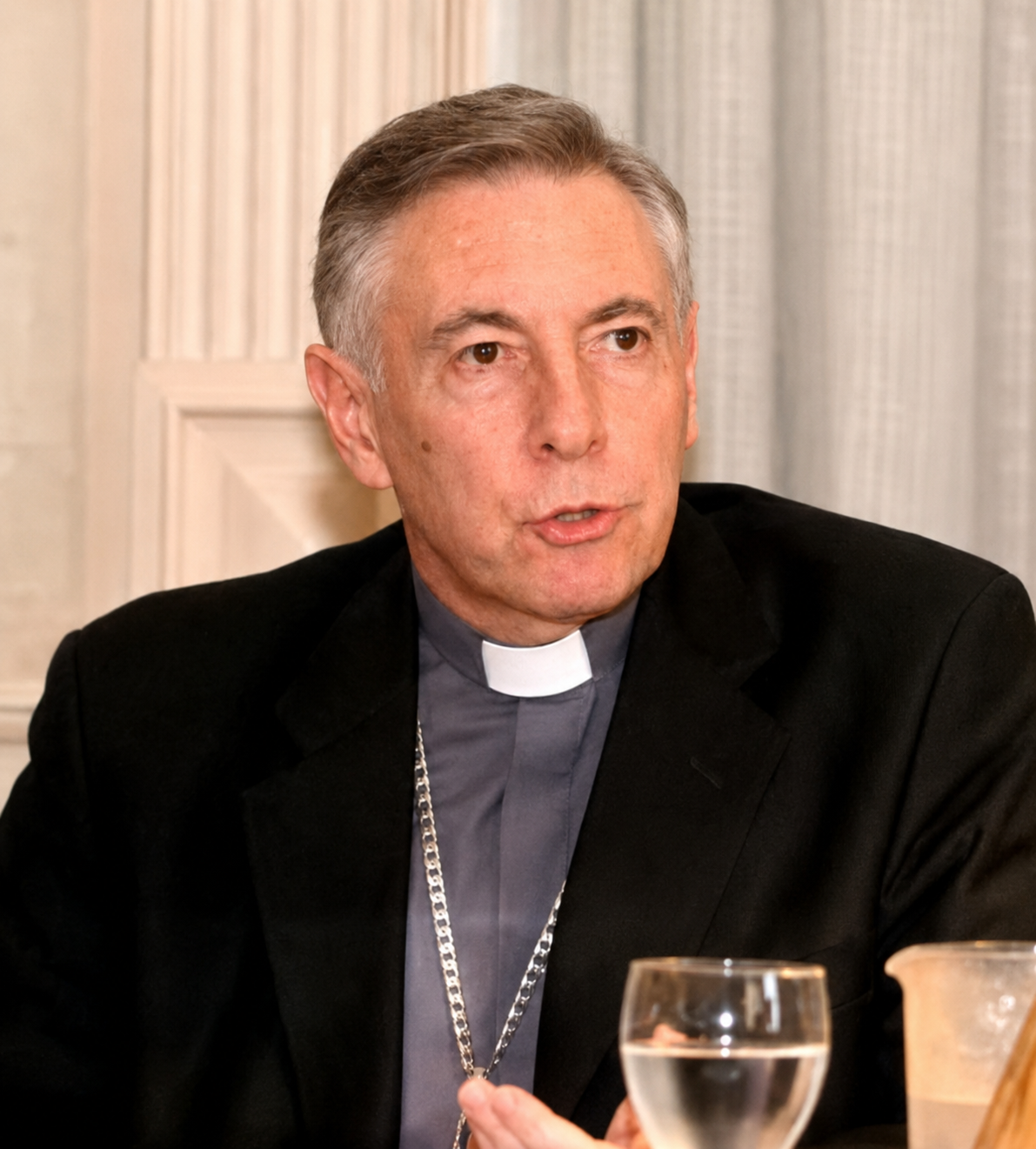
Retired Argentine Archbishop Héctor Agüer has praised the growing popularity of the Paris-Chartres pilgrimage among young Catholics. In the same essay, he renewed longstanding allegations that Archbishop Annibale Bugnini, a central figure in the post-Vatican II liturgical reforms, was a Freemason Retired Argentine Archbishop Héctor Agüer has praised the growing popularity of the Traditional Latin Mass among young Catholics. The former Archbishop of La Plata said the revival of traditional pilgrimages and devotional practices demonstrates that “orthodoxy and Tradition are in good health and are a guarantee for the future”. The comments were made in an essay published on 1 June by Rorate Caeli, in which he reflected on the Traditional Latin Mass, the liturgical reforms introduced after the Second Vatican Council and the renewed interest in traditional Catholic worship, particularly among younger generations. “The media and, especially, social networks point out that in several European countries, particularly among young people, the ‘Traditional Mass’ is being lived with fervour, accompanied by numerous processions and pilgrimages. “The youthful crowds that revived the traditional Paris-Chartres pilgrimage have drawn widespread attention, with an average age of 22. It is a recovery of Catholic tradition, which had been suffocated in those countries by liberalism, progressivism and atheism,” Archbishop Agüer wrote. The archbishop emeritus pointed to several traditional pilgrimages that have attracted growing numbers of participants in recent years, including the annual Paris-Chartres pilgrimage in France, the Oviedo-Covadonga pilgrimage in Spain, the Rome-Subiaco pilgrimage in Italy and the Rawson-Luján pilgrimage in Argentina. “Pilgrimages like Paris-Chartres, and those of Rawson-Luján (Argentina), Oviedo-Covadonga (Spain), Rome-Subiaco (Italy), and others that are emerging here and there, speak to us of something undeniable: orthodoxy and Tradition are in good health and are a guarantee for the future.” Archbishop Agüer said the traditional liturgy remained closely connected to the Church’s historic understanding of the Mass as the sacramental representation of Christ’s sacrifice on Calvary. “The ‘Traditional Mass’ can be called that because it dates back to the seventh and eighth centuries and remained in effect for centuries until at least the Council of Trent, which revised and reissued it so that it would reach our days. Essential to it is its identification with the Sacrifice of the Cross, established as the Sacrament of the Sacrifice at the Last Supper of Jesus with His Apostles. “This Sacrament is the mystery of the Passion and Resurrection, consecrated by the Holy Spirit. The Mass is directed to the glory of the Triune God, to whom it offers the Sacrifice of Jesus,” the retired archbishop wrote. Archbishop Agüer contrasted the older liturgy with the Mass promulgated by Pope Paul VI following the Second Vatican Council, saying: “The Mass defined Catholicism from the Council of Trent to Vatican II. During the pontificate of Paul VI (Giovanni Battista Montini), who succeeded the brief pontificate of John XXIII, a new Mass was invented.” However, he added: “A few modifications here and there could have been introduced to the ‘Traditional Mass’, as had been done during its multi-century existence. But no; Vatican II sought to retouch everything, and a new Mass was meant to spring from its spirit.” Archbishop Agüer also repeated claims concerning Archbishop Annibale Bugnini, the principal architect of the post-conciliar liturgical reforms. “The author of the new Mass was Archbishop Annibale Bugnini, recognised as a Freemason according to undeniable documents, though secret in accordance with the nature of Freemasonry,” he wrote. Archbishop Bugnini, who served as secretary of the Consilium responsible for implementing the Constitution on the Sacred Liturgy, played a central role in the reform of the Roman Rite after the council. Allegations that he was a Freemason have circulated for decades. The former Archbishop of La Plata also highlighted several differences between the traditional liturgy and the reformed rite, including celebration facing the people, the expanded cycle of Scripture readings and the introduction of additional Eucharistic Prayers. “In it, the priest stands facing the people; biblical readings are multiplied, and over time several Eucharistic Prayers were authorised, which recreate the single Canon of the ‘Traditional Mass’.” The archbishop added: “It would seem that in the Mass of Paul VI and Bugnini, the priest offering the rite must strive to direct himself to God and ensure that the faithful do not become confused.” The archbishop emeritus noted that he celebrates the post-conciliar liturgy and was ordained according to the liturgical books that preceded the reforms. He said: “This Mass is the one I celebrate, in which I was ordained nearly 54 years ago; I do so with the greatest devotion I can. But I remember that in my childhood, as an altar boy, I regularly attended the ‘Traditional Mass’, a rite that was never invalidated and has accompanied that of Paul VI until today, and which, as I said at the beginning, is being rediscovered with enthusiasm by youth.” Turning to liturgical abuses, Archbishop Agüer wrote: “Note should be taken, for example, of a certain bishop who entered Mass on a skateboard, or some priests who dress up as clowns when celebrating. Such outrages can only trigger a stampede effect.” Ordained a priest for the Archdiocese of Buenos Aires in November 1972 by Cardinal Juan Carlos Aramburu, Archbishop Agüer served in parish ministry and theological education before being appointed auxiliary bishop of Buenos Aires by Pope John Paul II in 1992. He later became coadjutor bishop of La Plata and succeeded Archbishop Carlos Galán as archbishop in 2000, leading one of Argentina’s most important dioceses until his retirement in 2018. During his episcopal ministry, he became known a prominent conservative voice in the Argentine Church, frequently speaking on liturgical matters, Catholic education, abortion, marriage and secularisation. He also served on several Vatican bodies, including the Pontifical Council for Justice and Peace and the Pontifical Council for Culture, and was a consultant to the Pontifical Commission for Latin America.
Jun. 3, 2026
Walking to Chartres: the revival of Catholic France
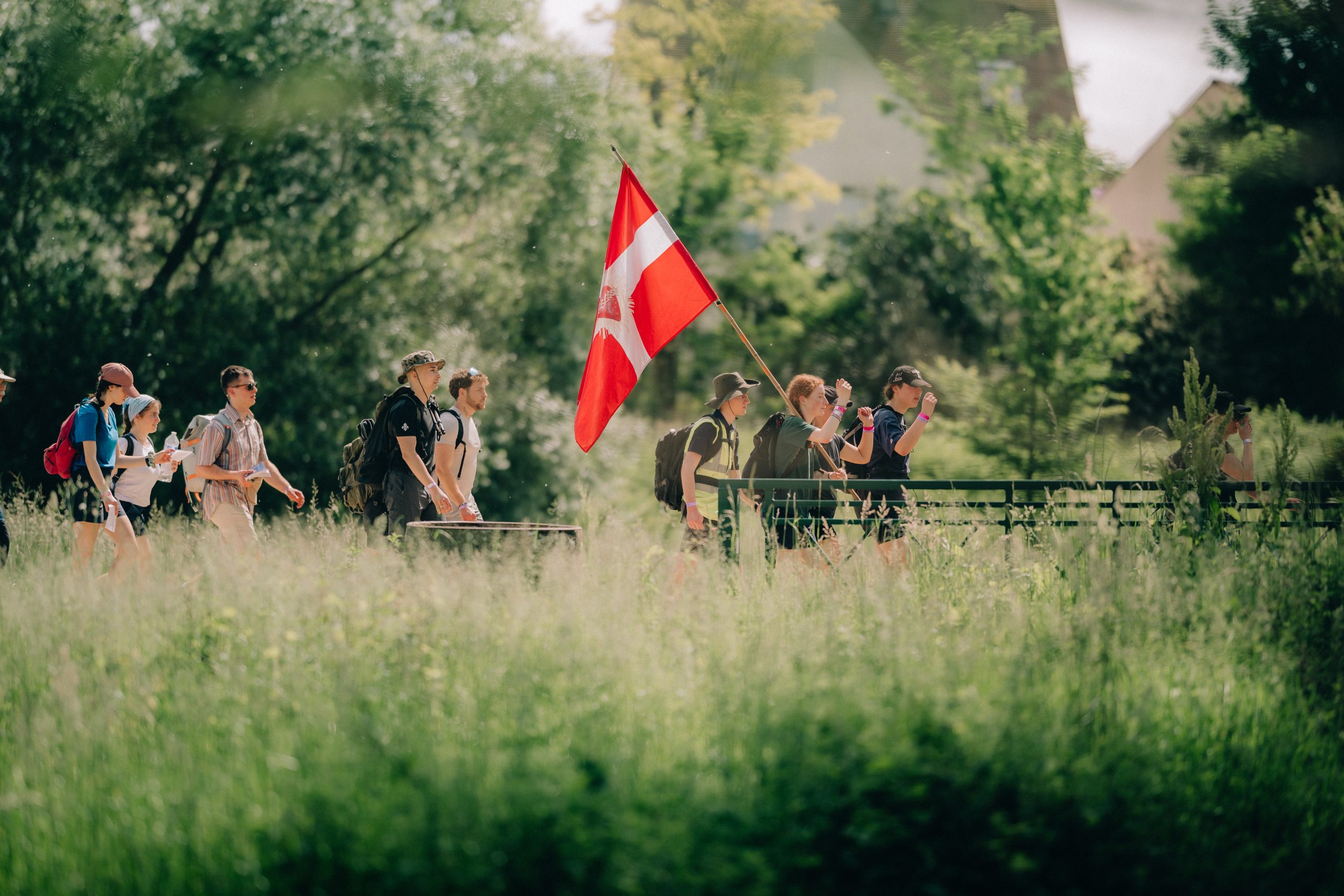
France has seen a surge in adult baptisms. At the same time, more than 20,000 pilgrims completed the three-day pilgrimage to Chartres, the flagship event of the Traditional Latin Mass movement in France. This is the story behind its remarkable growth This year’s annual Notre-Dame de Chrétienté pilgrimage saw more than 20,000, mostly young people make their way from Paris to Chartres amid a Europe-wide heatwave. It is another record-breaking year for the event, which is supported by a further 6,000 volunteers. Like much that is found in the traditional wing of the Church, the pilgrimage is both old and new. New in the sense that it has a vitality brought about by its young attendees. Old in the sense that its origins are medieval. The city of Chartres owes its association with pilgrimage to the Sancta Camisa, a piece of silk worn by Our Lady during the Nativity. Depending on the account, Charlemagne either stole the relic in Constantinople, or was given it by the Byzantine imperial family, and then in turn gave it to his grandson Charles II, also known as Charles the Bald, who presented it to Chartres Cathedral in 876. The Sancta Camisa came to prominence in 911, when Chartres was subjected to a Viking raid. Gantelme, the bishop and military leader of Chartres, is reported to have displayed the relic above the town gate. This is said to have emboldened the defenders of Chartres and terrified the pagan army, resulting in the town withstanding the attack. The episode led to the conversion of Rollo, the Viking leader, his pledge of allegiance to Charles the Simple, more charitably known as Charles III, and the establishment of the Duchy of Normandy, with Rollo as its first duke. Just over a century and a half later, that duchy would successfully invade England, a feat no one has yet matched. Over the ensuing centuries, the cathedral was subjected to successive fires. After each one, however, the people of Chartres rebuilt it in ever more splendid forms. The “Cult of the Carts”, a medieval devotion in which lay people harnessed themselves to carts in place of oxen to transport building materials, finds one of its most famous examples in Chartres. In a letter written by Abbot Haymo of Saint-Pierre-sur-Dives to the monks of Tutbury Abbey in England, Haymo described people of all social classes dragging materials to Chartres catherdral as an act of piety and penance. During the late Middle Ages and the Renaissance, Chartres became a major centre of Christian pilgrimage. Great fairs were held for the Presentation, the Annunciation, the Assumption and the Nativity, with pilgrims arriving in time to join the festivities. The area surrounding the cathedral functioned as a free-trade zone, exempt from state taxation and governed instead by cathedral authorities. On 7 August 1773, the high altar designed by Charles-Antoine Bridan, depicting the Blessed Virgin Mary’s Assumption into Heaven, was consecrated. Today it remains one of the most iconic features of the medieval cathedral, alongside its celebrated stained-glass windows. More than a century later, another Charles became synonymous with the cathedral. Charles Péguy, the French poet and essayist, helped keep the pilgrimage to Chartres alive by establishing the Paris route. Péguy spent much of his early life detached from religion and would probably have identified more as a Dreyfusard than anything else. Yet his growing nationalism ultimately led him back to France’s Catholic heritage, perhaps most clearly expressed in Le Mystère de la charité de Jeanne d’Arc ( The Mystery of the Charity of Joan of Arc ), first published in 1910. In 1911, at the deathbed of his son Pierre, he made a promise that if his son recovered, he would make a pilgrimage to Chartres beginning in Paris. In 1912, he completed the journey, which left him transformed. He took his students on the pilgrimage and, when he was killed in battle in 1914, they continued the pilgrimage in his honour. Péguy’s faith was complicated. He was married to a divorcee and was never able to be sacramentally reconciled with the Church. However, his Catholicism by conviction bears considerable witness to the power of the Church to draw people in, no matter the obstacles in their path. Like many good traditions, Chartres fell out of use in the years of liturgical upheaval that followed the Second Vatican Council. The Paris to Chartres route, etched into Catholic intellectual France by Péguy, ceased to exist and it was not until 1982 that it resurfaced. It is now associated with the traditionalist movement within the Church. In 1988, after Archbishop Marcel Lefebvre was excommunicated following the illicit episcopal consecrations at Écône, a reality sadly familiar for this year’s pilgrimage, the Society of Saint Pius X began to walk the route in reverse, starting in Chartres and finishing in Paris, a journey it makes to this day. Organised by Notre-Dame de Chrétienté, the pilgrimage has grown at a staggering rate. In 2010, attendance reached 10,000. By 2023, organisers had to close registration early and limit attendance to 16,000, with this year’s numbers exceeding 20,000. This year’s journey started on Saturday 23 May, with Holy Mass at Saint-Sulpice, Paris’s second-largest church, where pilgrims gathered from 5 a.m., filling the surrounding streets. A military-style operation enabled pilgrims to drop off their tents and bags before being escorted through the Saturday morning streets of Paris. Priests process into Saint-Sulpice for the opening Mass of the pilgrimage Walking through the streets of Paris, pilgrims sang hymns while carrying banners displaying saints to whom they are devoted. More than 4,000 religious and priests accompanied the groups, with the short distances between chapters providing opportunities for confession. Pilgrims walk through the French countryside At the end of the first day, pilgrims camped at a vast campsite in Senlisse. Tents were erected for the night, with special areas for priests to celebrate individual Masses from 4 a.m. The following day, at 5.30 a.m., pilgrims were woken for what was potentially the most arduous day of the journey because of the heat and sun exposure, making their way to an open field en route for Pentecost Sunday Mass celebrated by Father Antonius Maria Mamsery, Superior General of the Missionaries of the Holy Cross, a community devoted to the Traditional Latin Mass. Speaking to AdVaticanum after Mass, Father Antonius described the pilgrimage as the “hope of Europe” and “the hope of the revival of the faith and of Catholicism as it once was”. After another evening in a specially erected campsite, the final leg of the journey was completed on Pentecost Monday, a national holiday in France. The crowds arrived singing “Chartres sonne, Chartres t’appelle” (“Chartres rings, Chartres calls you”), before a Solemn Pontifical High Mass celebrated by Cardinal Raymond Burke. His Eminence Cardinal Raymond Burke blesses pilgrims before celebrating a Solemn Pontifical High Mass at the conclusion of the Notre-Dame de Chrétienté pilgrimage in Chartres. Today the pilgrimage has an international character, with pilgrims travelling from as far afield as Australia and South America. However, it remains predominantly French. France is currently experiencing a revival in Catholic devotion, with more than 13,000 adult baptisms this year, a 270 per cent increase in just five years, with the largest cohort, 42 per cent, aged between 18 and 26. The combined number of adult and adolescent baptisms exceeds 20,000, roughly equivalent to the number of pilgrims who took part in this year’s pilgrimage. It is therefore no coincidence that this year’s pilgrimage theme is mission. Organisers said the event stands “at the heart of this spiritual awakening in France, for which prayers have been offered for 44 years”, and it was notable that passers-by were handed leaflets as the pilgrimage passed through towns and villages. The Bishop of Chartres, Bishop Philippe Christory, who gladly welcomes the throngs of pilgrims to his cathedral each year, acknowledged that although the increase in baptisms is significant, “so many are still so far away from the Church”. Speaking to AdVaticanum, he said: “We have to love. Love is the key, the door and the way. Otherwise, this is all nonsense, if it is not for love of God and love for our brothers.” A cynic might judge the turnout to be relatively small compared with the millions who gather for World Youth Day. But the pilgrimage exists without extensive promotion from the Church’s hierarchy, and it is a journey made entirely on foot. It is a pilgrimage of penance and mortification that requires a level of commitment and physical endurance beyond that of a typical pilgrimage. Perhaps a fairer comparison would be Rome’s annual marathon, which 22,000 people completed in 2025 in cooler weather and over less than half the distance. What is increasingly clear is that Chartres represents a phenomenon that it is now impossible for the Church hierarchy to ignore: a younger generation of Catholics is devoted to the Traditional Latin Mass in substantial numbers, and that this devotion will persevere through any restrictions imposed upon it. The first signs of this acknowledgement are becoming apparent, notably in Pope Leo’s request earlier this year that the French bishops show charity towards those attached to the traditional form of the Mass. Brother João, a member of the Fraternity of St Joseph the Guardian, a community that offers the Traditional Latin Mass in the Diocese of Fréjus-Toulon to re-evangelise France, put it succinctly when he told AdVaticanum: “Chartres is a testimony.” With a younger generation of clergy also rising through the Church’s hierarchical ranks who share the same devotion, it remains only a question of time before that testimony leads to concrete action and the promotion, rather than the penalisation, of the Church’s most ancient and edifying liturgical expression. Photo credit: Notre-Dame de Chrétienté
Jun. 3, 2026
Why I built an app to pray the Latin Mass
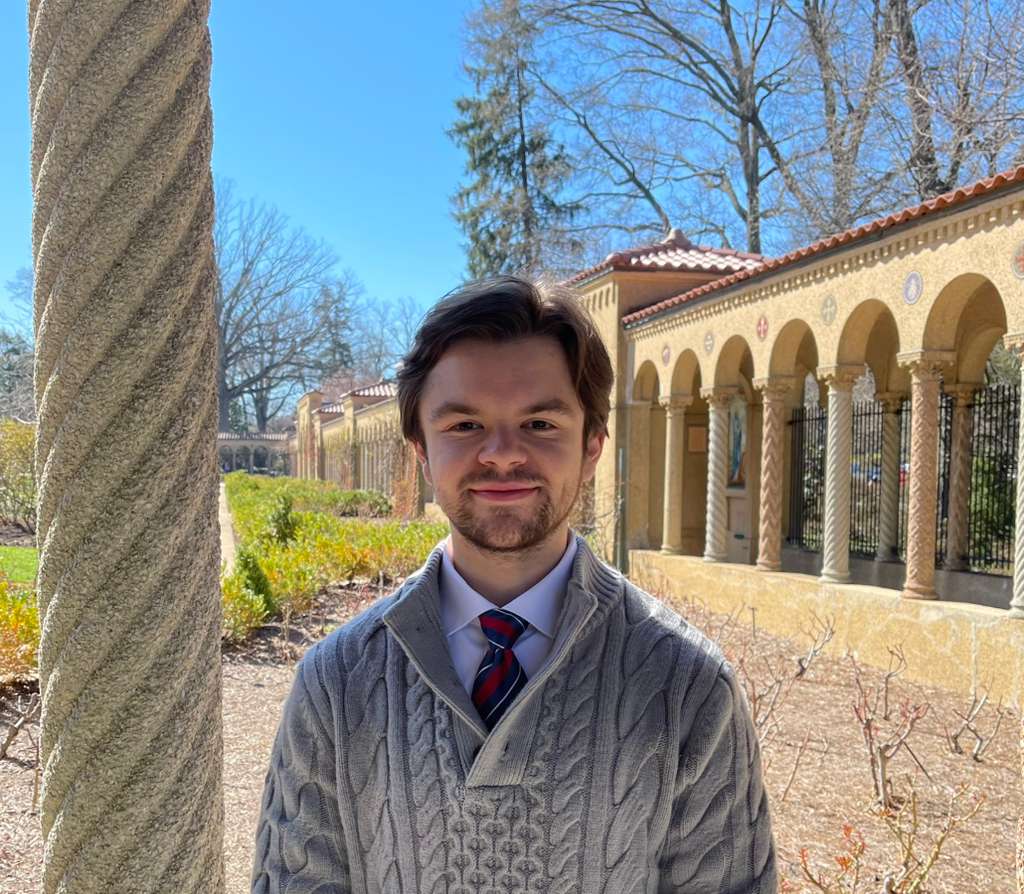
Just three years after entering the Catholic Church, Holden Cole built Introibo, an app designed to help Catholics pray the Mass, Office and Rosary in Latin. Here, he explains why Introibo began with a problem. I wanted a single place to pray the Mass, the Office and the Rosary in Latin, and to follow the liturgical year as the Church has prayed it for centuries. I could not find exactly what I was looking for, so I built it myself. The reason I wanted those things, however, goes back much further. I was raised Methodist, though “raised” is a generous word for what we actually did. We prayed at home sometimes. We almost never went to church. What I had instead of a churchgoing childhood was my grandmother’s house. She was Catholic, and her home was filled with statues of Our Lady, so I grew up without much religion but also without the anti-Catholic streak that a lot of Protestants pick up early. Mary was just there. In the corner of the living room, the way other people grow up with a piano nobody plays, Our Blessed Mother stood watching over us. By the time I got to college, I would have called myself agnostic. I was not hostile towards Christianity; I was bored by it. I started seeing the bulletins around campus for Bible studies and St Mary’s Catholic Center and something called RCIA, and I would notice them and keep walking. I was a freshman in 2020, which meant my first year of college took place on a laptop on the desk in my bedroom. Like a lot of people that year, I felt hollowed out, and I started to wonder whether this was really all there was. One afternoon I was low. Not depressed exactly, but close enough that the difference did not matter. I was at my desk. Then I prayed, just once, figuring it could not hurt. I cannot remember whether I said the words out loud or just in my head. I have struggled ever since to describe what happened next. The best I can say is that there had been a hole in my chest, or maybe in my soul, and it was filled almost instantly. What filled it was not physical, though I felt it in my body. It was a kind of warmth and presence and peace that I had not asked for. I do not want to oversell what happened. There was no vision and no voice and nothing dramatic about it. But it was real, and it was enough to make me want to know what had just happened to me. For the next two years I read. I read about every religion I could find, beginning with the dead ones and working my way slowly inward towards the ones that were still alive, and from there through history and theology towards Christianity. I read the early Church Fathers. From Justin Martyr to Ignatius of Antioch and on through the rest of them, I saw something I had not expected. There was one Church, the same Church, that ran in an unbroken line from the Apostles down through the centuries and was still here. The Catholic Church was not a later development that had drifted from a purer original. It was the original. I joined RCIA at St Mary’s Catholic Center in my senior year at Texas A&M. I told myself, and I meant it at the time, that I was only there to learn and that I was not going to convert under any circumstances, that I was there to find the holes in the story and walk away. Halfway through, I had to admit there were none. The objections I had carried in from a Protestant frame of mind, the Real Presence, praying to the saints, all of it, kept dissolving the more I read. Aquinas helped me. The Fathers helped me more, and at some point I became the main obstacle. I had to admit that there is no faith without doubt, and that I was not going to know everything in this life with the certainty I wanted. I had to trust the Church. I had to trust the men and women who had been working through these questions for centuries before I was born, who were, frankly, wiser than I am. That kind of trust is humility, not a failure of reason. RCIA usually takes a full year, but I was about to graduate and move to Washington for graduate school, so I completed both parts at once. I was received into the Church on Wednesday of the Sixth Week of Easter, 17 May 2023. That day is also a Minor Rogation Day, one of three the Church has set aside for centuries to fast and beg God for His mercy in the days before the Ascension. Rogare , in Latin, means to ask or to beg. It is perhaps providential that my journey, which started three years earlier with asking, should result in my being received into the Church on a Rogation Day. For the first two years after my confirmation I went to the Novus Ordo and I was happy, because I was a Catholic and I was not looking for anything else. Then I went home to Florida to visit my mother and visited an FSSP chapel where the Traditional Latin Mass was offered. I did not like it the first time. I could not follow what was happening. I did not know when to stand or kneel. I felt as though I had wandered into someone else’s prayer by mistake, and I almost wrote the whole thing off as a bad experience. I went back because I had heard too many people I respected speak about the old Mass with too much love for me to dismiss it after one visit. The second time it was different, and by the third time something had given way in me. What drew me in was the reverence, from the Gregorian chant to the incense, from kneeling at the rail to receive Our Lord to the prayers at the foot of the altar and the dozens of smaller prayers along the way that I had not even known existed. I came to love Low Mass especially. The long silences gave me room to be quiet before God, and to let Him be quiet in return. Somewhere in those weeks I realised that the old Mass was the same discovery I had already made in my reading, only now I was making it on my knees. The continuity I had followed into the Church through Justin Martyr and Ignatius of Antioch was the same continuity I was kneeling within in that little chapel. The Roman Rite as I was praying it is one of the oldest continuously prayed liturgies anywhere in the world, with a Canon whose words were already ancient when St Gregory the Great put his hand to them at the end of the sixth century. Almost every saint I had ever read about or loved had been formed by this Mass. My grandmother’s favourite, Padre Pio, offered it every morning of his priestly life, and offered it so slowly and so seriously that people travelled from across Europe to watch him. St Thérèse of Lisieux, whose Story of a Soul I had read more than once and whose Little Way had quietly reshaped the way I thought about holiness, had heard this Mass throughout her short life and had been sanctified within it. To kneel at the same rail and to hear the same Latin and to pray the same Canon they had prayed was to pray with them. I started going every Sunday I could, and as I prayed I found that I wanted, more and more, to understand what I was actually praying. I wanted to follow the propers for the day. I wanted to know the feast and its rank and the season of the liturgical year. I wanted to learn the Latin, not as a performance and not to show anyone anything, but because the prayers themselves are old and beautiful and mean something exact that the English does not quite capture. What I wanted, in short, was one thing that put it all in one place: the Mass with the day’s propers, the Office, the Rosary in Latin, the texts side by side so that I could actually read what I was hearing. I looked. I could not quite find what I was looking for, so I built one for myself. I called it Introibo, after the first word of the prayers at the foot of the altar. Introibo ad altare Dei . “I will go in to the altar of God.” I built it because St Carlo Acutis used what he had for the love of God, and I wanted to use what I had in the same way. I would have been content if no one else in the world had ever downloaded it, because it is the app I use every day. It opens each morning to the liturgical day itself, and from there to the Mass, the Office, the Rosary and the Stations of the Cross in Latin, an examination of conscience, a library of traditional prayers, a small school for learning ecclesiastical Latin through the prayers themselves, and the practices of the saints to follow throughout the year. It is free. It works fully offline. There are no adverts, no accounts and no tracking of any kind. I had never built an app before this one. I am not a developer. My undergraduate degree from Texas A&M is in business and my master’s degree from Georgetown University is in finance, and the closest I had come was a few tools I had put together for work and school over the years, none of which had ever lived on anybody’s phone. Three years on from my confirmation, the Catholic faith is the most important thing in my life and I do not know who or what I would be without it. Everything I want now comes from one thing, which is to serve God and to follow His will in whatever way He gives me to do it. The app is a small part of that, and the Mass is a far larger part, but all of it traces back, in the end, to the same small prayer I prayed by accident in my dorm room six years ago, when I did not know what I was doing, and it turned out not to matter, because Someone was already listening.
May 31, 2026
‘Chartres is the hope of Europe’: interview with Father Antonius Maria Mamsery
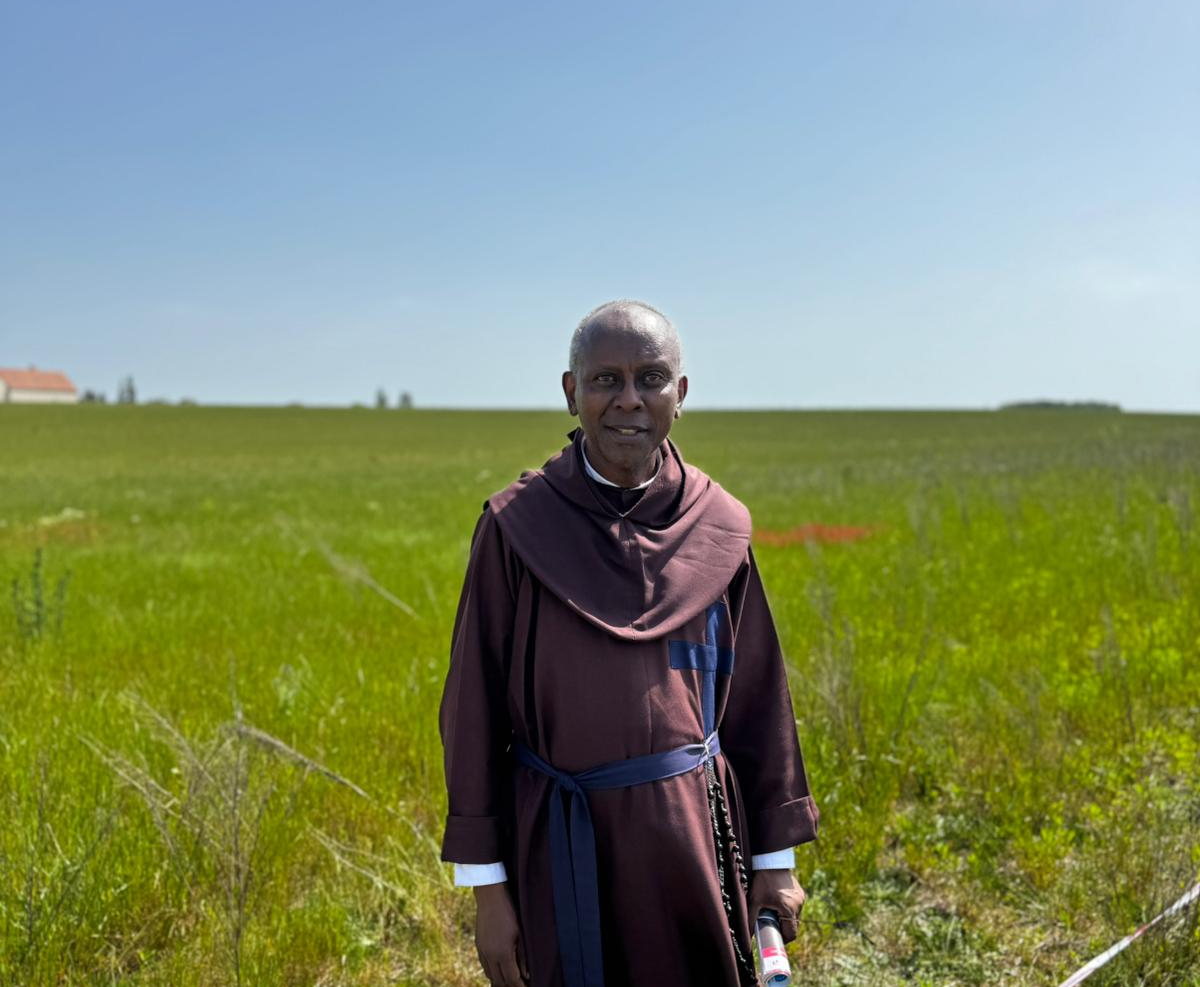
In an exclusive interview with AdVaticanum, Father Antonius Maria Mamsery, Superior General of the Missionaries of the Holy Cross, describes the Chartres pilgrimage as the “hope of Europe” and speaks about the revival of the Traditional Latin Mass, Africa’s growing vocations, and the future of the Church in Europe This year’s annual Pèlerinage de Chrétienté saw more than 20,000 people walk from Paris to the medieval cathedral city of Chartres. On Sunday, the pilgrims arrived in a field just outside Rambouillet, Yvelines, for Pentecost Sunday Solemn High Mass. The celebrant was Father Antonius Maria Mamsery, a Tanzanian priest and Superior General of the Missionaries of the Holy Cross (MSC). Chief celebrant of the 2023 Summorum Pontificum pilgrimage, Fr Antonius is well known for his attachment to the Tridentine Mass. Indeed, his community’s charism is to offer the traditional Mass, particularly in parts of the world where it is not readily available. After Holy Mass, Fr Antonius was kind enough to sit down with AdVaticanum and share his thoughts on the Church in Africa and Europe, the Traditional Latin Mass, and his impressions of the Pèlerinage de Chrétienté, which he was attending for the first time. AV: Father Antonio, could you share the story of your vocation to the priesthood and how you came to be superior of your community? AM: My vocation began when I was very young. My parents used to tell me that when I was around eight years old I was already teaching my brothers how to say Dominus Vobiscum , and sometimes I would cut up apples and distribute them to them like Communion. Later, I entered a minor seminary in the Kilimanjaro region of Tanzania. Then I discovered the beginnings of my congregation and moved from the seminary into the congregation in 1985. I joined this congregation then and have remained in it until now. My community was received by Saint John Paul II as one of the Ecclesia Dei communities from the beginning of the department’s establishment in 1988. We are one of those groups that preserved tradition without any negativity towards the Church. AV: As a native Tanzanian priest, what have you observed about the growth of the Traditional Latin Mass and the future of the Church in Africa? AM: When the liturgical changes were introduced, the natives were very obedient. They obeyed the hierarchy, but they still had this nostalgia. They were still searching for something. So, when we present to them the traditional liturgy, they sometimes have this very touching expression: “Oh, the Mass returned!” It is wonderful. They knew something was lost because they were faithful to the tradition. In Africa, devotion to the traditional Mass is growing. People are searching for it in countries like Uganda, Tanzania and parts of North Africa. Now I receive calls from young people from Mozambique, Angola and South Africa who want to know the traditional Mass. I have visited some of these groups and they are very enthusiastic. They want to know more about it. AV: The media has often reported that the Church in Africa is experiencing significant growth, while the Church in Europe is in a state of decline. Do you think this accurately represents the state of the Church? AM: I think that is quite accurate. But for me, Chartres has been very impressive. There are so many children here and I had never seen such a large group of children and young people in Europe. When you go to church, normally there are people from everywhere, in Germany, in Italy, in England, where I have visited, but in the traditional communities there are many young people. Traditional families are numerous, so they can be the future of the countries in Europe. AV: Do you think there will be a future when Africa, especially in the form of priests, will be the continent to re-evangelise Europe? AM: Yes. There are many vocations in Africa and there are many major seminaries. In my country, we had three major seminaries, but now there are at least seven and they are completely full. The numbers range from 300 to 400 in the major seminaries. If many of them are ordained, they can be sent to re-evangelise or help bishops who do not have vocations in their dioceses. In some parts of Europe there are dioceses that have only one seminarian or two, and they will need priests. There are men in Africa and Asia who are being formed for the priesthood and will be able to help others. Yesterday evening I was speaking with someone who told me that here in France a large number of diocesan priests are from Africa because the lack of priests in Europe is now very great. AV: In your homeland, there are a large number of communities where Catholics and Muslims live alongside one another. How does the Church interact with followers of Islam living amongst them? AM: Many Muslims are converting to Christianity. For example, during this Easter season many have been baptised. They come for catechism, they bring their children and they come to our schools. In Zanzibar, which is predominantly Muslim, we have various schools and many of those who register are Muslim families who learn about the Christian religion peacefully. There are not the fanatics that can sometimes be found in North Africa, where there are conflicts. In Tanzania there is peace between the two religions. We are friendly, we share our cultures and many other things. AV: What is your impression of this Pentecost pilgrimage to Chartres and the movement around it? AM: Well, this is my first time in Chartres. It is the hope of Europe, the hope of Christian culture, the hope of the revival of the faith and of Catholicism as it once was. The people are making sacrifices, walking in peace, praying and singing. The priests are hearing confessions, blessing people and offering guidance. You would not expect this in our time. You would expect people to be busy with their phones or television. But now they have left their homes to walk this hundred-kilometre pilgrimage. This is a revival of the faith. That is wonderful. AV: One of the characteristics of Chartres is the respect and devotion shown to priests. Why do you think this is? AM: Catholics and society itself respect priests when they live as priests. If priests in some way abandon themselves, so will be the response. But these priests of the traditional groups are trying their best to live their priesthood well. That is why people are so open to them. Young people see them and discover they have a vocation as well. They see the priest and think: “I want to be like that.” Young families will look and say: “How can my son become like that priest?” They often come from large Catholic families and their parents want them to be open to becoming a priest. AV: And finally, Father, how can people support your mission? AM: My community is growing rapidly. We have a great need for more space. I have started a minor seminary for early vocations. Initially we only had 17 young people, so I thought perhaps I had to offer a structure that could support up to 50, and suddenly we had 300. We need support so that we can provide the boys with board, classes and more. When they finish high school, we now have to offer them the opportunity to continue their philosophy and theology studies at a major seminary. So, if there are good people who want to help so that we have the possibility to grow, we will be very grateful. One of our men was recently ordained a priest in the Philippines and we had many young men saying: “Can I come? Can I come?” So we need the means to expand.
May 26, 2026
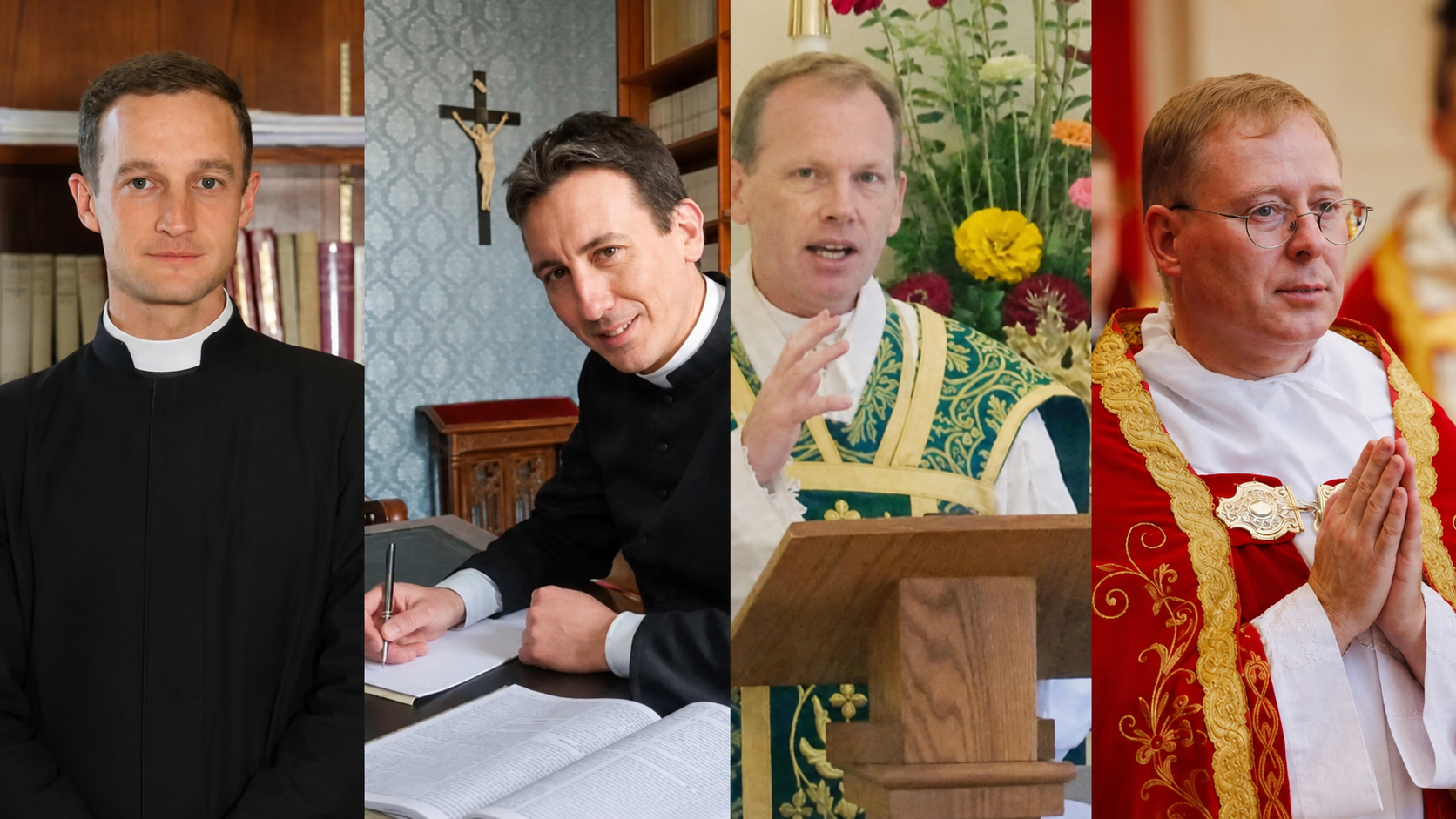
SSPX announces names of four priests to be consecrated bishops at Écône
The SSPX has announced the names of four priests who will be consecrated bishops at Écône on July 1, saying the move is intended to preserve the traditional sacraments during what it described as an “unprecedented crisis of the Faith” The Society of Saint Pius X has announced the names of the priests who will be consecrated bishops at Écône on July 1. In a communiqué issued from the SSPX General House in Menzingen on May 26, Father Davide Pagliarani, the Superior General of the society, said the names of the four priests had been presented to Pope Leo XIV “together with certain explanations necessary for a proper understanding of this step”. The statement said the episcopal consecrations would take place “in a spirit of respect towards the supreme authority of the universal Church” and insisted that the move did not represent “a denial of, refusal of, or challenge to the supreme, full, and immediate power of jurisdiction of the Vicar of Christ over the universal Church”. “The ceremony of July 1st will have no other purpose than to ensure the continued administration of the sacraments of Holy Orders and Confirmation, together with those sacramentals reserved to bishops, according to the traditional rite of the Holy Roman Church and the immemorial Faith,” the communiqué said. It added: “The episcopacy to be received by these priests is therefore conceived solely as a service rendered to souls and to the Church during this unprecedented crisis of the Faith.” The four priests named for consecration are Father Pascal Schreiber, rector of the SSPX seminary in Zaitzkofen, Germany; Father Michael Goldade, rector of St Thomas Aquinas Seminary in Dillwyn, Virginia; Father Michel Poinsinet de Sivry, Superior of the Benelux District; and Father Marc Hanappier, professor of theology at the society’s American seminary. Father Schreiber, 53, was born in Switzerland and ordained in 1998 after studies at the seminaries of Zaitzkofen and Écône. After assignments in Germany and Switzerland, he spent more than a decade directing SSPX schools before becoming Swiss District Superior in 2016. Since 2020 he has served as rector of the German seminary. Father Goldade, 45, comes from St Marys, Kansas, one of the principal centres of the SSPX in the United States. Ordained in 2004, he worked in Michigan and Connecticut before becoming prior of the large Kansas City apostolate. He was appointed rector of St Thomas Aquinas Seminary in Virginia in 2023. Father Poinsinet de Sivry, 42, was ordained in 2008 and worked in schools and apostolates in France before being appointed head of the Benelux District in 2022. The communiqué noted his work at Saint Nicolas du Chardonnet in Paris, the church occupied by traditionalists since 1977. The youngest of the four, Father Hanappier, 36, was ordained in 2013 and currently teaches metaphysics and dogmatic theology in Virginia. Before joining the seminary faculty he worked in schools in France and spent a year in Scotland improving his English while assisting in parish ministry. The SSPX was founded in 1970 by Archbishop Lefebvre, the former Superior General of the Holy Ghost Fathers, after disputes over the reforms which followed the Second Vatican Council. Tensions with Rome escalated throughout the 1970s and 1980s, culminating in the consecration of four bishops at Écône on June 30, 1988. Pope John Paul II declared at the time that the consecrations constituted “a schismatic act”, and Lefebvre and the four bishops incurred automatic excommunication. Archbishop Lefebvre defended his actions by arguing that extraordinary measures were necessary to preserve the traditional priesthood and sacraments. Relations between Rome and the SSPX improved under Pope Emeritus Benedict XVI, who lifted the excommunications of the surviving bishops in 2009 and opened doctrinal talks with the society. Pope Francis later granted SSPX priests faculties to validly hear confessions and allowed local bishops to delegate them to witness marriages under certain conditions. Image: The four priests to be ordained bishop by the Society of St Pius X. From left to right: Father Marc Hanappier, Father Michel Poinsinet de Sivry, Father Michael Goldade and Father Pascal Schreiber. Image: The four priests to be consecrated bishops by the Society of Saint Pius X. From left to right: Father Marc Hanappier, Father Michel Poinsinet de Sivry, Father Michael Goldade and Father Pascal Schreiber.
May 26, 2026
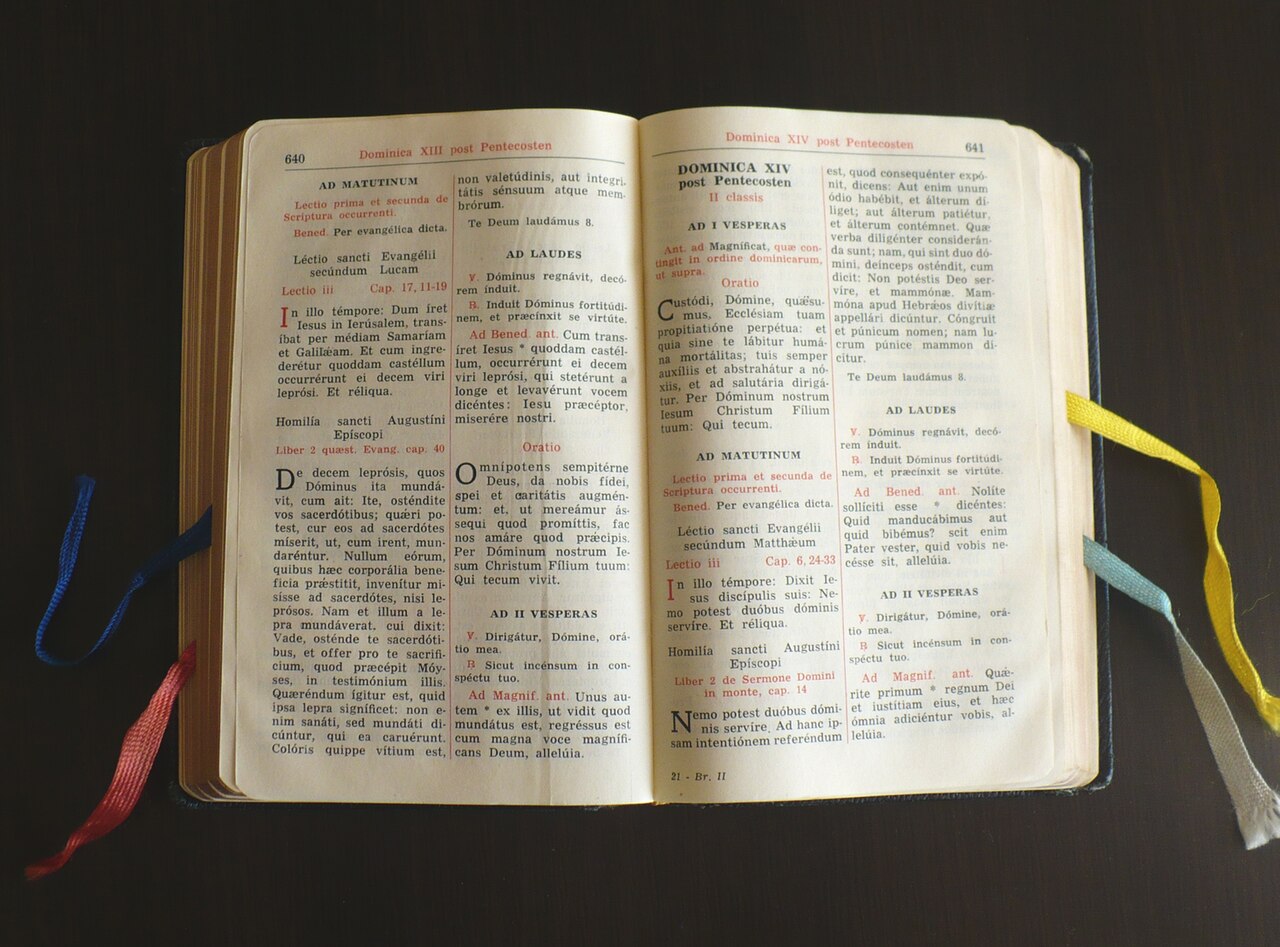
Inside Introíbo: the free Latin Mass app turning phones into missals
A new app designed to help Catholics navigate the Traditional Latin Mass has been downloaded thousands of times within days of launch. Built by convert Holden Cole, Introíbo includes the full 1962 Missal, Divine Office, rosary, traditional calendar and more, all completely free and available offline In recent years there has been a sustained and growing interest in the Traditional Latin Mass. Cradle Catholics and converts alike have found a depth and beauty in the older form of the liturgy that stands in contrast to the perhaps well-intentioned, if misguided, reforms erroneously inspired by the Second Vatican Council which have, in some places, turned liturgy into entertainment. This transformation of the liturgy into entertainment is an attempt to be “relevant” in the modern world. However, relevance, meaning to be closely connected or associated with modernity, is precisely what many people crossing the threshold of a church seek to avoid. There is little attraction in getting up on a Sunday morning to hear more of the contemporary culture that is corrosive to the human heart. If schools, media and workplaces already provide a steady diet of “progressiveness”, why would people want to go to church for more of the same? For many, the Latin Mass is the antithesis of this progressiveness. However, those who begin attending the Latin Mass often find themselves plunged into something radically different. The ancient, yet new, liturgy can be difficult to follow, conducted in another language and according to a different calendar. While the mystery and subtlety entice the would-be Mass attender, the sound catechesis that once helped the faithful enter into these mysteries has been lost through generational neglect. Fortunately, the new generation of converts to the ancient liturgy has brought with it a healthy dose of convert’s zeal, inspiring new ways of introducing the Traditional Latin Mass to the next generation. One such example is the app Introíbo , which offers users the complete 1962 Missal, the Divine Office, the rosary in Latin, the Stations of the Cross and the traditional calendar all in one place. Designed for practical use, the app automatically opens each day to the liturgical feast and its rank, the season, the properly observed traditional calendar, the day’s penitential observance and a psalm verse in both Latin and English. From there, users can access the Mass, including the full Ordinary of the 1962 Roman Missal with the proper texts for every day of the liturgical year, alongside the Roman Canon in parallel Latin and English text. The app also includes an examination of conscience and a library of traditional prayers. There is even a small school for learning ecclesiastical Latin through the prayers themselves, as well as spiritual practices drawn from the saints. Holden Cole, the app’s creator, is himself a convert, having recently celebrated three years since his reception into the Church. Initially attending a Novus Ordo Mass, he was first introduced to the older form of the liturgy by the Priestly Fraternity of St Peter in Florida. “I completely fell in love with the Latin Mass,” Cole explains. “Since then I’ve gone every Sunday, sometimes several times a week if I can. It is the thing that has most deepened my Catholic faith.” His motivation for building the app was born primarily out of necessity. “I was looking for something useful, something that had the Mass prayers on a phone and could help me appreciate the Latin more deeply.” Despite having no publicity team behind him, Cole’s app has been an immediate success, having been downloaded 3,500 times in its first week. He remains ambitious about its future and is keen to continue devoting his time to the project. “It doesn’t feel like work when I’m doing it. It’s more a labour of love.” There is still more he hopes to add, explaining: “The app is still a work in progress. I still have a roadmap I’m working through with ideas for future features.” Perhaps most remarkably, Cole has kept the app free, with no adverts or tracking, and has made it fully available offline. His hope is simply that others might have their faith enriched by the ancient liturgy that has so enriched his own. Readers who wish to find out more or download the app themselves should visit: introiboapp.com
May 20, 2026