

Traditional Latin Mass
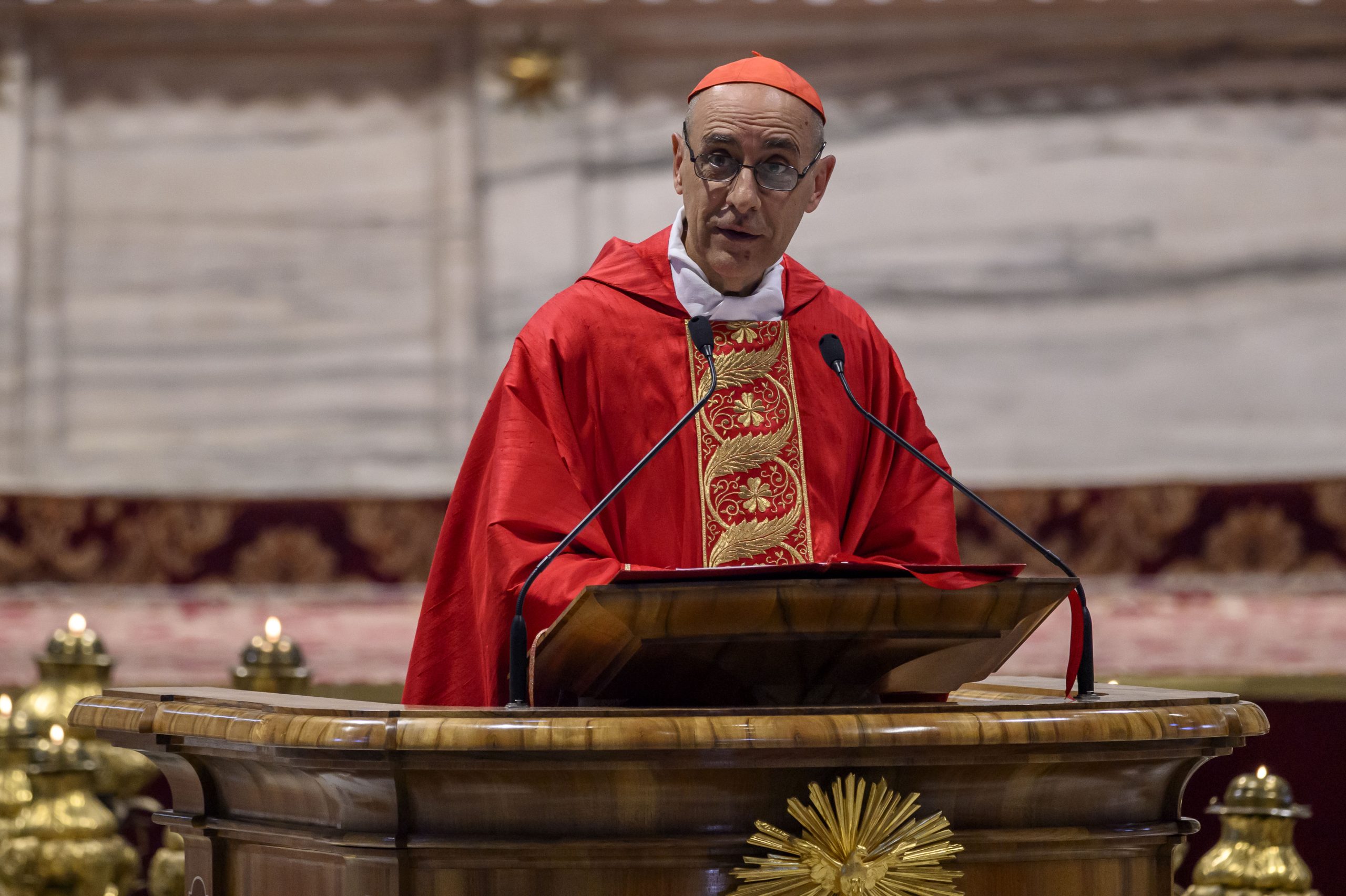
Cardinal Fernández releases statement on SSPX episcopal consecrations
Cardinal Víctor Manuel Fernández, Prefect of the Dicastery for the Doctrine of the Faith, has released a statement warning that planned episcopal consecrations by the Society of St Pius X risk constituting “a schismatic act” Cardinal Víctor Manuel Fernández has warned that the Society of St Pius X risks committing “a schismatic act” through episcopal consecrations without papal approval, in the first public intervention since the meeting with the SSPX on 12 February. In a statement released by the Dicastery for the Doctrine of the Faith on 13 May, the prefect said the planned SSPX episcopal ordinations “do not have the corresponding pontifical mandate” and reiterated the penalties attached under canon law to such an action. “The episcopal ordinations announced by the Priestly Society of Saint Pius X do not have the corresponding pontifical mandate,” Cardinal Fernández said. “This gesture will constitute ‘a schismatic act’ (John Paul II, Ecclesia Dei , n. 3), and ‘formal adherence to the schism constitutes a grave offense against God and entails the excommunication established by Church law’ ( ibid ., 5c; cf. Pontifical Council for Legislative Texts, Explanatory Note , 24 August 1996).” The statement concluded: “The Holy Father continues in his prayers to ask the Holy Spirit to enlighten the leaders of the Priestly Society of Saint Pius X so that they retrace their steps regarding the very serious decision they have taken.” The intervention followed reports earlier on Wednesday morning by Vatican correspondent Nico Spuntoni in the Italian newspaper Il Giornale that the Dicastery for the Doctrine of the Faith was preparing a text concerning the Society and the limits of its relationship with Rome. While no formal canonical decree has yet been issued, Cardinal Fernández’s statement closely resembles the warning sent to Archbishop Marcel Lefebvre shortly before the episcopal consecrations at Écône in 1988. On 17 June 1988, Cardinal Bernardin Gantin, prefect of the Congregation for Bishops, issued a public canonical warning to Lefebvre after the French archbishop announced that he intended to consecrate four bishops without pontifical mandate. “Since on June 15, 1988 you stated that you intended to ordain four priests to the episcopate without having obtained the mandate of the Supreme Pontiff as required by Canon 1013 of the 1983 Code of Canon Law, I myself convey to you this public canonical warning,” Cardinal Gantin wrote. His Eminence continued: “If you should carry out your intention as stated above, you yourself and also the bishops ordained by you shall incur ipso facto excommunication latae sententiae reserved to the Apostolic See in accordance with Canon 1382.” The letter concluded with a direct appeal to Lefebvre “in the name of Jesus Christ” to reconsider what it described as a grave act against the unity of the Church. Furthermore, the statement’s citation of a 1996 explanatory note issued by the Pontifical Council for the Interpretation of Legislative Texts recalls one of the strongest Vatican texts ever published on the canonical status of the SSPX. The 1996 document stated that the 1988 consecrations represented “the consummation of a progressive global situation of a schismatic character” and said that “the whole Lefebvrian movement is to be held schismatic”. It added: “As long as there are no changes which may lead to the re-establishment of this necessary communion, the whole Lefebvrian movement is to be held schismatic, in view of the existence of a formal declaration by the Supreme Authority on this matter.” The explanatory note also addressed Catholics attending SSPX chapels and clergy belonging to the Society. It distinguished between occasional attendance at SSPX liturgies and what it called “formal adherence to the schism”. According to the document, such adherence involved “a free and informed agreement with the substance of the schism” together with an external manifestation of separation from ecclesial communion. The text said that in the case of SSPX priests and deacons “there seems no doubt that their ministerial activity in the ambit of the schismatic movement is a more than evident sign” of formal adherence. The SSPX was founded in 1970 by Archbishop Lefebvre, a former superior general of the Holy Ghost Fathers and one of the leading conservative critics of Vatican II. Tensions between the Society and Rome escalated throughout the 1970s and 1980s over liturgical reform, ecumenism, collegiality and religious liberty. The crisis culminated on 30 June 1988 when Lefebvre consecrated four bishops at Écône without papal approval. The Holy See responded by declaring that Lefebvre, Bishop Antônio de Castro Mayer and the four newly consecrated bishops had incurred automatic excommunication. Two days after the consecrations, Pope St John Paul II issued the motu proprio Ecclesia Dei adflicta , describing the consecrations as “a schismatic act”. Relations improved significantly under Pope Emeritus Benedict XVI. In 2009 he lifted the excommunications of the four bishops as part of an attempt to facilitate reconciliation, though the Society’s canonical status remained unresolved. Pope Francis later granted SSPX priests faculties to validly hear confessions during the Year of Mercy, later extending the provision indefinitely. Local bishops were also authorised under certain conditions to delegate SSPX priests to witness marriages. Despite those concessions, doctrinal discussions between Rome and the Society have remained stalled for years, particularly over the interpretation of Vatican II and the authority of post-conciliar reforms. The Vatican statement issued on Wednesday is the first direct intervention from the doctrinal dicastery since the 12 February meeting with SSPX superior Fr Davide Pagliarani, which the dicastery described as “cordial and sincere”. The DDF reiterated that the ordination of bishops without a mandate from the Roman Pontiff would entail “a decisive rupture of ecclesial communion”, namely “a schism”, with “grave consequences for the Society as a whole”, the dicastery noted. For that reason, it proposed suspending the episcopal ordinations announced for 1 July 2026, which had been declared without papal approval. However, the SSPX rejected the proposal in a communiqué and decided to proceed with the episcopal consecrations.
May 13, 2026
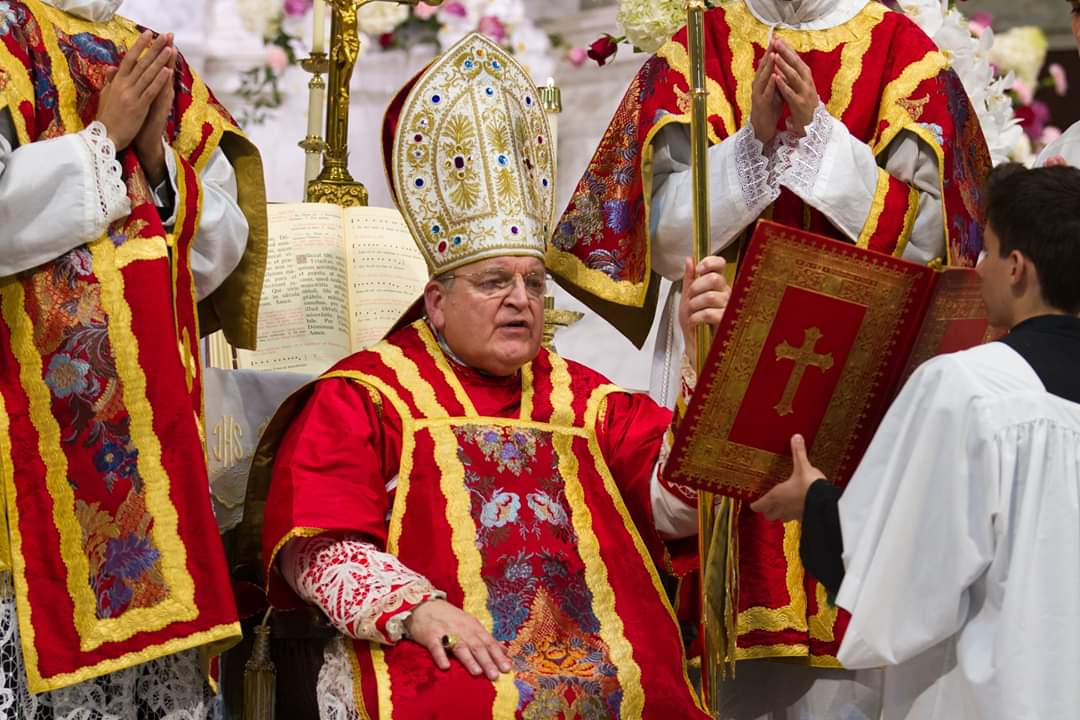
Cardinal Burke to celebrate closing Pontifical High Mass of Chartres pilgrimage
Cardinal Raymond Burke will celebrate the closing Pontifical High Mass of this year’s Chartres pilgrimage as more than 20,000 pilgrims prepare to walk from Paris to Chartres Cardinal Raymond Burke has been confirmed as the celebrant for the Pontifical High Mass at the concluding celebration of the Chartres pilgrimage this year. The American cardinal will celebrate Mass inside Chartres Cathedral on Pentecost Monday for pilgrims arriving on foot from Paris. More than 20,000 pilgrims are registered to take part in the 44th Pèlerinage de Chrétienté , the highest number yet. The theme of this year’s pilgrimage is “You will be my witnesses to the ends of the earth”, with a particular focus on mission, inspired by the resurgence of interest in Christianity across France and other parts of western Europe. More than 13,000 adults were baptised into the Church in France this Easter, a 20 per cent increase on the previous record high in 2025 and a 220 per cent increase on 2016. The largest cohort is made up of 18 to 26-year-olds, who account for 42 per cent of the total, while 82 per cent are aged 40 or under. When teenagers are included, the total rises to more than 20,000. Across the United Kingdom, significant increases were also reported, with Westminster Diocese in London receiving double the number of adults into the Church compared with just two years ago. Explaining the rationale, the Association of Notre-Dame de Chrétienté, which organises the pilgrimage, said the event stands “at the heart of this spiritual awakening in France, for which prayers have been offered for 44 years”, and encouraged Catholics to “show boldness and renew their approach to mission”. Founded in 1983 in response to what its organisers describe as the doctrinal and liturgical crisis of the post-conciliar Church, the Pèlerinage de Chrétienté sees participants walk the 100km journey from Paris to Chartres. In doing so, they revive a medieval tradition and follow in the footsteps of Charles Péguy, the French essayist who helped popularise the pilgrimage at the beginning of the 20th century. Pilgrims are scheduled to meet at Saint-Sulpice, Paris’s second-largest church, at 6.50am on Saturday, May 23 for Mass, before beginning a 35km walk to Choisel, where Mass will be celebrated at 7.30pm. On Pentecost Sunday, a Pontifical Mass will be celebrated at Les Courlis at midday, after which pilgrims will continue walking to Gas, where there will be Benediction of the Blessed Sacrament and all-night adoration. Alongside Cardinal Burke, other celebrants and preachers are scheduled to include Mgr Patrick Chauvet, former rector-archpriest of Notre-Dame Cathedral in Paris, Fr Antonius Maria Mamsery, Superior General of the Missionaries of the Holy Cross, and the Dominican Fr Serge-Thomas Bonino. Also in attendance will be Fr Fabrice Loiseau, a former seminarian of the Society of St Pius X who left before the 1988 episcopal consecrations to join the Fraternity of St Peter at its foundation. Fr Loiseau later founded the Society of Missionaries of Divine Mercy with the support of the then bishop of Fréjus-Toulon, Dominique Rey. The community, whose charism is to live by mercy through the Eucharist and proclaim it to the world, celebrates Mass exclusively according to the Tridentine rite. Cardinal Burke, a long-time advocate of the Traditional Latin Mass, also celebrated the closing Mass for the pilgrimage in 2017. Other notable prelates who have celebrated Mass during the pilgrimage include Bishop Athanasius Schneider, Cardinal Gerhard Müller and Cardinal Robert Sarah. Imagre credit: Di Abraxham03 – Opera propria, CC BY-SA 4.0, https://commons.wikimedia.org/w/index.php?curid=81254560
May 13, 2026
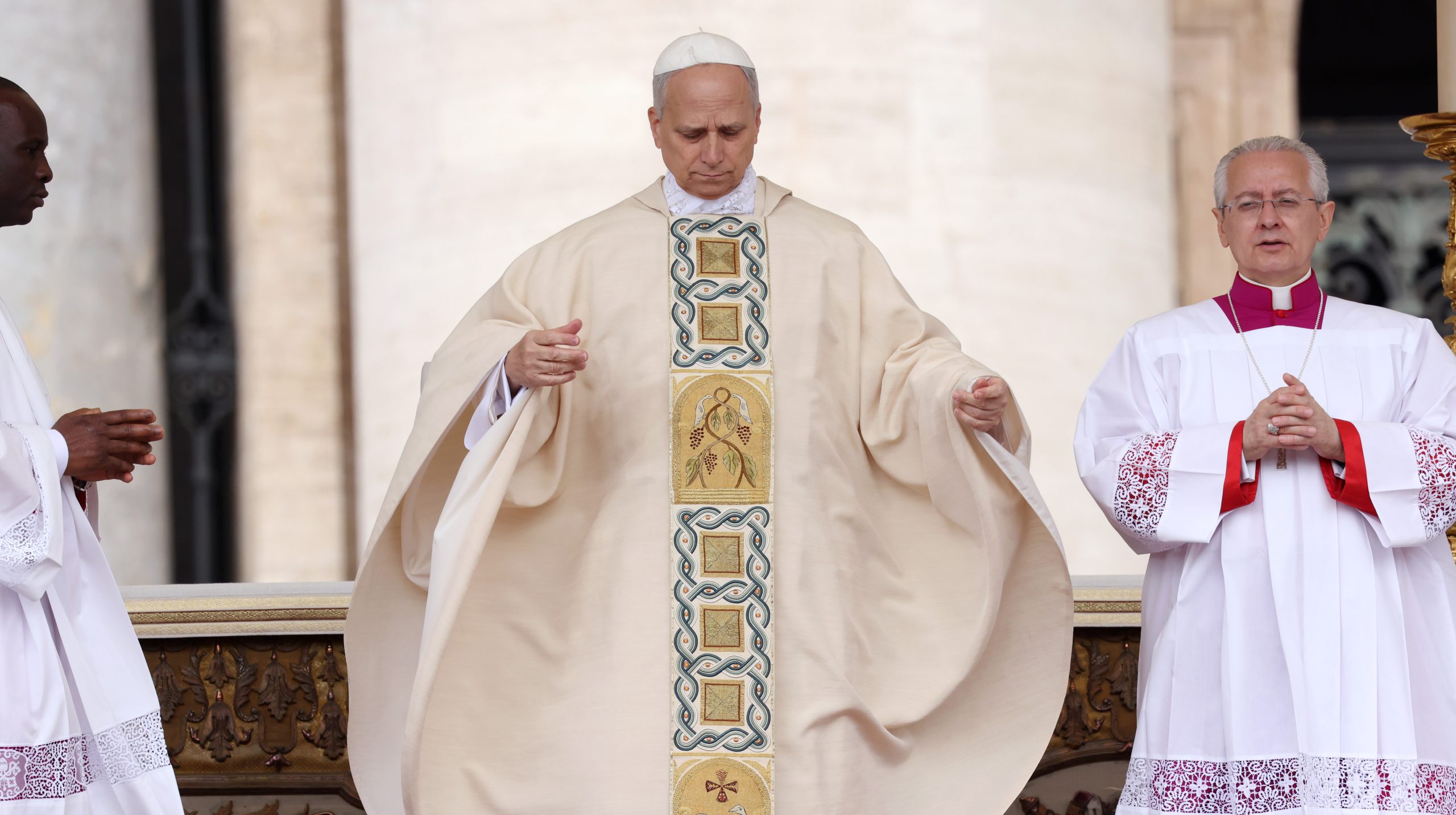
Pope Leo XIV’s first year and the future of the Traditional Mass
Dr Joseph Shaw, philosopher and chairman of the Latin Mass Society, examines Pope Leo XIV’s approach to the Traditional Mass, Traditionis Custodes and the question of the SSPX a year after the Pope’s election. The first question for the Catholic press about a new pope is inevitably where he sits on the ideological spectrum: will he support readers’ causes and punish their opponents? Popes are complicated figures, however, and do not arrive neatly labelled. The first indication of the Holy Father’s ideological allegiance came before his election, when the journalist Jaime Gurpegui encountered Austin Ivereigh and Fr James Martin SJ in a street in Rome. It was a moment when Cardinal Prevost’s handling of a clerical abuse case in his former diocese in Peru was being discussed in the media, and Ivereigh was upset about this. The encounter suggested that two of the best-known supporters of Pope Francis regarded Prevost as “their man”. His election a few days later was indeed welcomed by many who had been looking for a “continuity candidate” to continue the work of Pope Francis. What we have been told about the conclave suggests a more complicated story, however. The progressives’ candidate was Cardinal Pietro Parolin, the Secretary of State; conservative cardinals had backed the Hungarian Cardinal Péter Erdő. The story appears to be that the conservative bloc of votes went to Prevost, as a compromise candidate, after the initial ballots, before Parolin’s supporters accepted the inevitable. There are many possible explanations for why Fr Martin’s favoured candidate did not immediately secure the support of the largest bloc of more liberal cardinals, and we will never know all the factors involved. Now he is Pope, we can more usefully judge him by his actions. The very first thing we saw of the newly elected Pope Leo when he appeared on the balcony and greeted the people was that he was wearing the traditional red papal mozzetta, a garment worn by all the modern popes except Pope Francis. Indeed, Leo wears it frequently on formal occasions, for example when first meeting the President of Italy. To read this as a rebuke to Francis might be too strong, but it adjusts the dial of formality, a dial that every pope can turn as he sees fit. In the same spirit, he has restored the throne used at public Masses by Pope Benedict and rejected by Pope Francis. Pope Leo has also undone a series of decisions made by Pope Francis. The issues involved are not headline-grabbing: a reorganisation of the Diocese of Rome; the rent charged to cardinals and others in housing owned by the Vatican; the role of the Vatican Bank in regulating financial matters; and a commission to promote fundraising. If there is a political angle to these, it may have more to do with personalities than deep theological principles. Nevertheless, it reminds us that what one pope does, another can undo: a reality demonstrated by Pope Francis himself when he overturned the legal framework established by his predecessor, Pope Benedict XVI, for the Vetus Ordo. One rumour that circulated around Pope Leo when he was first elected was that he himself had celebrated the Traditional Mass. No witness to these celebrations was willing to be identified, however, and the rumour now appears to be untrue. What he has done, on the subject of the Traditional Mass, is give permission for its celebration by Cardinal Raymond Burke in St Peter’s in October 2025, as the centrepiece of the annual traditionalist Ad Petri Sedem pilgrimage. It is unclear whether he will grant permission again this year. He may have been displeased by the triumphalist tone of some of the media coverage of last year’s Mass, which was attended by an overflowing congregation. Nevertheless, he has continued his series of private audiences with supporters and representatives of the Vetus Ordo, including Cardinal Raymond Burke, the most powerful and consistent supporter of the ancient liturgy in the Curia; Bishop Athanasius Schneider of Kazakhstan, its best-known episcopal supporter; Fr John Berg, the Superior General of the traditionalist Fraternity of St Peter; and Prof Stephen Bullivant, a sociologist of religion whose most recent research, soon to be published, concerns Catholics attached to the Traditional Mass in the United States. Unsurprisingly, Pope Leo has also seen many people from other parts of the spectrum of opinion, including the ubiquitous James Martin SJ, but he has not found time to see Fr Davide Pagliarani, Superior General of the traditionalist but canonically irregular Society of St Pius X. No one could begrudge Pope Leo speaking to people on all sides of the argument in order to inform himself, but excluding Fr Pagliarani is not easy to understand. The SSPX is planning to carry out the consecration of new bishops without the permission of the Holy See, an act that would incur automatic excommunication for those most directly involved and, it is widely argued, would trigger a formal schism. These consecrations are scheduled for July 1 and inevitably form a backdrop to everything else connected with the traditional liturgy. The founder of the SSPX, the French Archbishop Marcel Lefebvre, carried out such consecrations in 1988. This led to the excommunication of the consecrators and those consecrated, but was also the occasion for Pope St John Paul II to approve new priestly institutes dedicated to the Traditional Mass which distanced themselves from Lefebvre. Pope St John Paul II was at pains to distinguish the question of the liturgy from the question of obedience, writing in his Apostolic Letter Ecclesia Dei that traditional Catholics had a “rightful aspiration” to the ancient Mass, an aspiration that should be met in the context of healthy liturgical pluralism. Pope Francis appeared to merge the two issues in 2021, in his own Apostolic Letter Traditionis Custodes and the accompanying letter, when he suggested that the Vetus Ordo and liturgical pluralism were intrinsically problematic. The closest we have yet come to a fresh statement of policy from Pope Leo is his message to the bishops of France, conveyed to a meeting of their Episcopal Conference in a letter from Cardinal Parolin. This asked them to look for “practical solutions” to the question, with a view to “the generous inclusion of persons sincerely attached to the Vetus Ordo”. The irony of this letter is that what is stopping bishops finding practical solutions is papal legislation – Traditionis Custodes – which prevents them from setting up personal parishes, recognising new “groups” of the faithful attached to the Traditional Mass, allowing recently ordained priests to celebrate the Vetus Ordo publicly, and fostering long-standing celebrations in parishes without permission from the Dicastery for Divine Worship: a permission that has not always been forthcoming. There are many ways in which Traditionis Custodes could be neutralised, not all of which require a humiliating public renunciation of Pope Francis’s thinking. One indication of a change in the way the law is being applied was given when Britain’s papal nuncio told the bishops of England and Wales that permissions would be granted for the celebration of the Traditional Mass in parish churches. This would be enough to relieve many local frustrations and conflicts, but it would not be enough to rebuild trust with the SSPX. If Pope Leo wants to begin doing that, something more public and dramatic will be required. Now that a full year has passed since his election, we may see some bolder moves from the Holy Father, such as changes of personnel: for example, the Prefect of the Dicastery for Divine Worship, Cardinal Arthur Roche, has so far been kept in post despite being past retirement age. On the SSPX, it would be surprising if any pope watched a group move into schism with indifference: we will see whether Pope Leo finds his inner John Paul II.
May 8, 2026
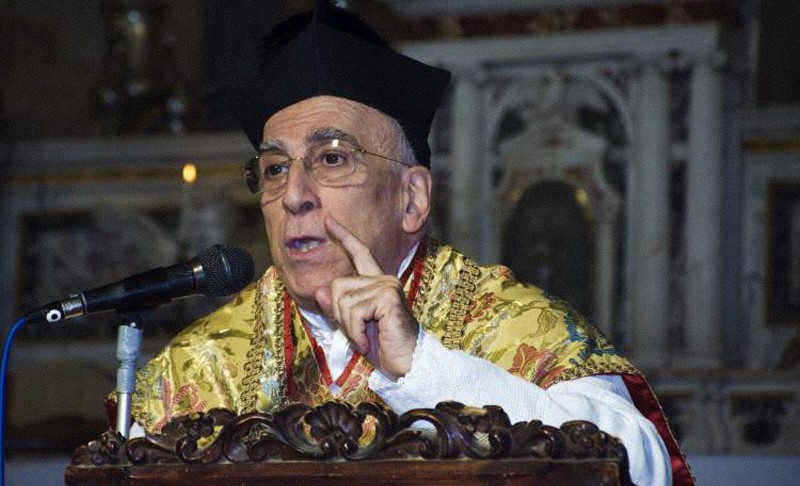
Monsignor Bux: ‘The crisis of the liturgy is the crisis of the Church’
Monsignor Nicola Bux speaks to AdVaticanum about the SSPX, Traditionis Custodes, the “reform of the reform”, women’s ordination, Anglicanism and what he describes as the Church’s liturgical and doctrinal crisis under the post-conciliar era Monsignor Nicholas Bux is a priest and theologian whose work has spanned academia, pastoral ministry and service to the Roman Curia. Born in Bari, southern Italy, in 1947 into a modest family, he studied at the Pontifical Gregorian University before being ordained in 1975 by Archbishop Anastasio Ballestrero, the Discalced Carmelite archbishop later known for overseeing the first modern scientific examination of the Shroud of Turin in 1978. A specialist in Eastern liturgy and sacramental theology, he obtained a doctorate at the Pontifical Oriental Institute and went on to teach in his native Bari, Jerusalem and Rome. His service to the Holy See began under Pope John Paul II, who appointed him a consultant to the Congregation for the Causes of Saints and the Congregation for the Doctrine of the Faith. A collaborator of Cardinal Joseph Ratzinger, later Pope Benedict XVI, he contributed to synodal preparations and Eucharistic texts, and later served during Benedict XVI’s pontificate in roles connected to synodal assemblies and papal liturgies. AV: Monsignor Bux, since leaving Rome and your responsibilities in the Roman Curia, what have you been doing? How have you been spending your time? Are there any particular projects, writings or pastoral activities you are currently working on? How did your work and apostolate develop following the resignation of Pope Benedict XVI, particularly during the pontificate of Pope Francis? Monsignor Nicholas Bux: After concluding my collaboration with the Congregation for the Doctrine of the Faith and the Office for the Liturgical Celebrations of the Supreme Pontiff upon Benedict XVI’s resignation, I continued working until 2019 with the Congregation for the Causes of Saints and until 2021 with the Congregation for Divine Worship. Having reached the age limit for teaching theology in a faculty, I have continued giving conferences in Italy and abroad, and publishing on topics related to Eastern liturgy, ecclesiology and ecumenism. During the pontificate of Pope Francis, in which the Magisterium experienced a serious crisis, I devoted myself to explaining the reasons why one must remain in the Church, resisting despotic forms and avoiding the mistake of placing oneself outside it. By dying within the Church – like the grain of wheat that falls to the earth – one contributes to overcoming the crisis and renewing it. Together with theologian friends, we promoted the Scuola Ecclesia Mater, an Italian network of clerics and laity, with study sessions and spiritual exercises. Along with Cardinals Caffarra, Brandmüller, Burke and Sarah, we continue to advance the idea and practice of the “reform of the reform” of the liturgy and the Church according to the thought of Pope Benedict, as well as the international Summorum Pontificum pilgrimage at the end of October in Rome. I can say, in light of the Pope’s latest address to the French bishops, that we were right. AV: Looking back on the years spent in the Curia, particularly your service at the Dicastery for Divine Worship and the Discipline of the Sacraments, what were the most significant challenges or moments you faced? NB: In 2009, after a plenary meeting of the Congregation that had decided to propose to the Pope the inclusion in the Missal of certain rites from the Vetus Ordo Missae – for example, the Offertory, to be used ad libitum – the news was leaked by someone, and an alarm was sounded by those who feared an attack on the post-conciliar liturgical reform, so everything was stopped. Another issue we began to address was that of mega-concelebrations. The rite of concelebration promulgated by Paul VI in 1965 prescribed no more than 50 concelebrants so that they could “stand around the altar”, even if not all could immediately touch the altar table and pronounce the words of consecration over the bread and wine. These are the intention and external action required for a true concelebration and simultaneous consecration. Otherwise, saying “This is my body … this is the chalice …” does not correspond – to use the liturgists’ terms – to the truth of the sign, because one should say “That is my body …” These are the conditions for the validity of a concelebrated Mass, so that it is sacramental and not merely a ceremony, as Pius XII affirmed. The limit set by Paul VI has disappeared in the current Missal, so doubts arise about the validity of the celebration when the number of concelebrants overflows the presbyteral area or when it takes place outdoors in enormous spaces, where non-liturgical equipment of the concelebrants is added – hats, sunglasses, water bottles and cameras. AD: You were in the Curia during the period of negotiations with the Priestly Society of Saint Pius X (SSPX). In light of the Society’s recent decision to proceed with episcopal consecrations without a papal mandate, what is your current judgment on the SSPX? NB: Setting aside the good intentions of individuals, over time the Society has lost the vital sap of Catholic thought, as already happened with the Orthodox. Catholic thought flows only if one remains united to the main tree, despite the weakening of the Magisterium. Otherwise, one arrives at a museum-like conception of Tradition. One can understand the fears, but it is not justified to remove oneself from the Church in order to self-preserve. The organic development of doctrine, to use the expression of the new Doctor Saint John Henry Newman, is thus lacking. The Church is a mother and one must allow oneself to be corrected, because a true Christian must accept dying, and at the time established by God, will be reborn to new life, as has happened with the charisms of the Saints. Where Peter is, there is the Church: one cannot disregard this visible principle of unity willed by Jesus Christ, in relation to the invisible one, which is the Holy Spirit. AV: Pope Leo XIV recently sent a letter, through Cardinal Parolin, to the French bishops, urging them to find “generous” pastoral solutions for communities attached to the Traditional Latin Mass ahead of their plenary assembly. What does this letter indicate about the current pontificate’s approach to the Traditional Latin Mass, and how do you interpret its tone in light of Traditionis Custodes? NB: The antiquior usus of the Mass has resisted for over sixty years; this is the reality and we must take note of it, just as Saint Pius V did with rites that were over two hundred years old at the time of the Tridentine reform. With this realism, Benedict XVI stated: “What earlier generations held as sacred, remains sacred and great for us too, and it cannot be all of a sudden entirely forbidden or even considered harmful. It behooves all of us to preserve the riches which have grown in the faith and prayer of the Church, and to give them their proper place” (Summorum Pontificum, 10). It seems to me that Pope Leo wants to recover this “gaze” and has invited the French bishops and the faithful of Christian communities – traditional or not – to look at each other fraternally. It seems to me that the Pope wants, in an Augustinian way, to let consensus mature from within the ecclesial community: bishops, priests and faithful. I am certain that gradually, in this way, the other episcopates will be led to do the same in their dioceses. AV: Does accepting the Second Vatican Council require Catholics to accept the post-Vatican II liturgical reform in its current form? NB: The liturgy is the epiphany of the Church, which gathered solemnly in the Second Vatican Council, celebrated it constantly in the form then in force during its sessions, thus becoming an integral part of that infallible Magisterium, as stated in the Catechism of the Catholic Church (cf. 891). When the Church gathers in Council, it performs a liturgical act because it places itself in adoring listening to God. For this reason, Benedict XVI, in his address to the Roman Curia on December 22, 2005, invited us to read the event as “reform in the continuity of the one subject Church.” With this gaze towards God, the Council elaborated as its first document the liturgical constitution Sacrosanctum Concilium, and Paul VI established a Consilium to implement it. However, one cannot identify the Council tout court with the work of the Consilium, because it was not without defects. Cardinal Ratzinger observed: “Anyone who thinks that not everything in this reform has been successful, and that some things are modifiable or even need revision, is not for that reason an enemy of the Council.” Therefore, the equation does not hold: accepting the validity of the Second Vatican Council means accepting the liturgical reform that would express the reality of the liturgy intimately linked to the vision of the Church in Lumen Gentium, as the text distributed by Cardinal Roche at the Consistory last January seems to suggest. Instead, Benedict XVI intended to apply the Liturgical Constitution, safeguarding “legitimate diversities” – that is, the pluralism of rites – and, at the same time, “the substantial unity of the Roman rite” (SC 38). With the motu proprio Summorum Pontificum, he restored the ancient Roman rite, which had never been juridically abrogated. AV: How do you assess the current liturgical crisis in the Church, and what steps do you believe are necessary for authentic liturgical renewal and a true “reform of the reform”? NB: The Holy Father placed the Liturgy on the agenda of the Consistory, proposing to the Cardinals an in-depth historical, theological and pastoral reflection “to preserve the healthy tradition and yet open the way to legitimate progress” (SC 23). To preserve tradition and progress legitimately, one must understand the nature of the liturgy. “The crisis of the Liturgy, and therefore of the Church, in which we continue to find ourselves,” affirmed Benedict XVI, “is due only to a minimal extent to the difference between the old and new liturgical books.” It is becoming ever clearer that, behind all the controversies, a profound dissent has emerged concerning the essence of liturgical celebration, its derivation, its representative and its correct form. At first, Paul VI was convinced that the liturgical reform had translated and supported the indications of the Liturgical Constitution. But arbitrary experimentation continued, which sharpened the nostalgia for the ancient rite. Thus, in the Bull Apostolorum Limina for the proclamation of the 1975 Holy Year, regarding liturgical renewal, he stated: “We consider it extremely opportune that this work be re-examined and receive new developments.” John Paul II, in the apostolic letter Vicesimus quintus annus of 1988, spoke openly of “erroneous applications.” Now, the Dicastery, before anything else, if it wants to render a service to all Catholics, must have the courage to clarify the causes, promoting the study and full publication of the documents of the Consilium for the implementation of the Constitution on the Sacred Liturgy, preserved in its archive. This is a wish addressed to the Holy Father in the book La liturgia non è uno spettacolo, co-authored by myself and Saverio Gaeta. I believe we must proceed with the “reform of the reform” proposed several times by Joseph Ratzinger, which begins “from the presence of the sacred in hearts, from the liturgy and its mystery”. In truth, there are already signs: the spread of Eucharistic adoration, receiving Communion kneeling and on the tongue, rediscovering the traditional liturgy in which silence and the Mystery of the Lord’s Presence in His Church prevail, beginning from its heart, which is the Eucharist, the Divine and indeed “Sacred Liturgy”. What would happen if the priest’s orientation ad Deum or towards the Cross were permitted during the Eucharistic Liturgy of the Mass, as the clearest sign of continuity with the apostolic tradition and that of the East? This rebirth of the sacred is the condition for the renewal of the Church. Monsignor Bux and John Paul II AV: Turning to ecumenism, the Church of England has just installed Sarah Mullally as the first female Archbishop of Canterbury. In your view, what does this development mean for today’s Catholic-Anglican relations, especially regarding apostolic succession, the ordination of women and the possibility of true theological convergence? NB: There is a contradiction: on the one hand, at least 700 Anglican pastors are welcomed into the Catholic Church – a sign of the profound crisis of the Anglican Communion, which in Great Britain records only 2 per cent Sunday attendance – while on the other hand, a congratulatory message from the Pope is sent for the installation of the so-called primate Sarah Mullally. “So-called” first of all because her office is null, as she is a woman who, according to Catholic teaching, cannot be ordained to the priesthood; then, as a member of the Anglican Communion, her ordination is invalid – otherwise one would not understand why we established Ordinariates to re-ordain bishops and priests coming from it. Finally, because she is not effectively the Primate of Canterbury, since two-thirds of Anglicans do not recognise her as such. It is true that, as Christians, we are united in baptism, but we do not agree on everything that belongs to Christ, John Paul II said to German Protestants in November 1980, primarily on the sacraments. Has no one at the Council for Christian Unity noticed this and told the Pope? Do they not realise that, with such behaviour, many Catholic faithful are scandalised? If one really did not want to tell the truth, it would have been better not to send any message at all. AD: The Church continues to face a serious vocation crisis in many parts of the West. A common response has been the creation of “pastoral units” or groupings of parishes to address the shortage of priests. Do you see this as a real solution, or does it risk becoming an illusion that simply masks a strategic retreat from the traditional understanding of priestly ministry in the Church? NB: Since the post-conciliar period, the number of priests has decreased dramatically, and today in Europe about 10 per cent of the baptised go to Mass. Among the causes are the crisis of the family and the failure to transmit Catholic thought in catechesis to the younger generations. It was also a mistake to admit girls to altar service in place of the “little clergy”, the nursery of vocations. Then, despite the immense paper production by the Italian Bishops’ Conference on the urgency of announcing the Gospel to those far away, instead of strengthening capillary presence in the territories, they invented “pastoral units” – a fig leaf to cover the strategic retreat due to the shortage of priests. When will it be understood that so-called “pastoral care” begins from the deep unity of the Church, which in turn is nourished by the diversity and identity of individuals and groups that together constitute Tradition – and that innovation occurs only from within it? Isn’t that precisely what the word “Tradition” indicates? AV: In contemporary debate, there is often talk of adapting the liturgy and ecclesial institutions “to man” and “to the times”, but these expressions are rarely accompanied by a clear explanation of what is really meant by “man” or “times” in light of the Church’s perennial mission and the deposit of faith. What is your theological evaluation of this approach? NB: In the Second Vatican Council’s liturgical constitution (SC 48), there is mention of the need to adapt the liturgy to the needs of our times (cf. also 1, 4, 107, 110), but it is never explained exactly what these are. The discussions among the conciliar fathers in the three drafts leading to the final version provide no further information on these expressions. In a positive sense, it could mean that we need to present the Gospel in ever new ways in every age. In a negative sense, it could mean that our age is so unique that we must adapt the Gospel and divine worship to it – that is, to ourselves. Perhaps, in the post-conciliar liturgical reform, this second interpretation prevailed, but without reflection, as if it were something obvious and therefore required no explanation. Thus, the “legitimate progress” that was to be balanced by “healthy tradition” (SC 23) has become a “pathological search for novelty”, just as Cardinal Roche notes in the text distributed at the Consistory. AV: Monsignor Bux, thank you very much for being so generous with your time and for your years of priestly ministry.
May 7, 2026
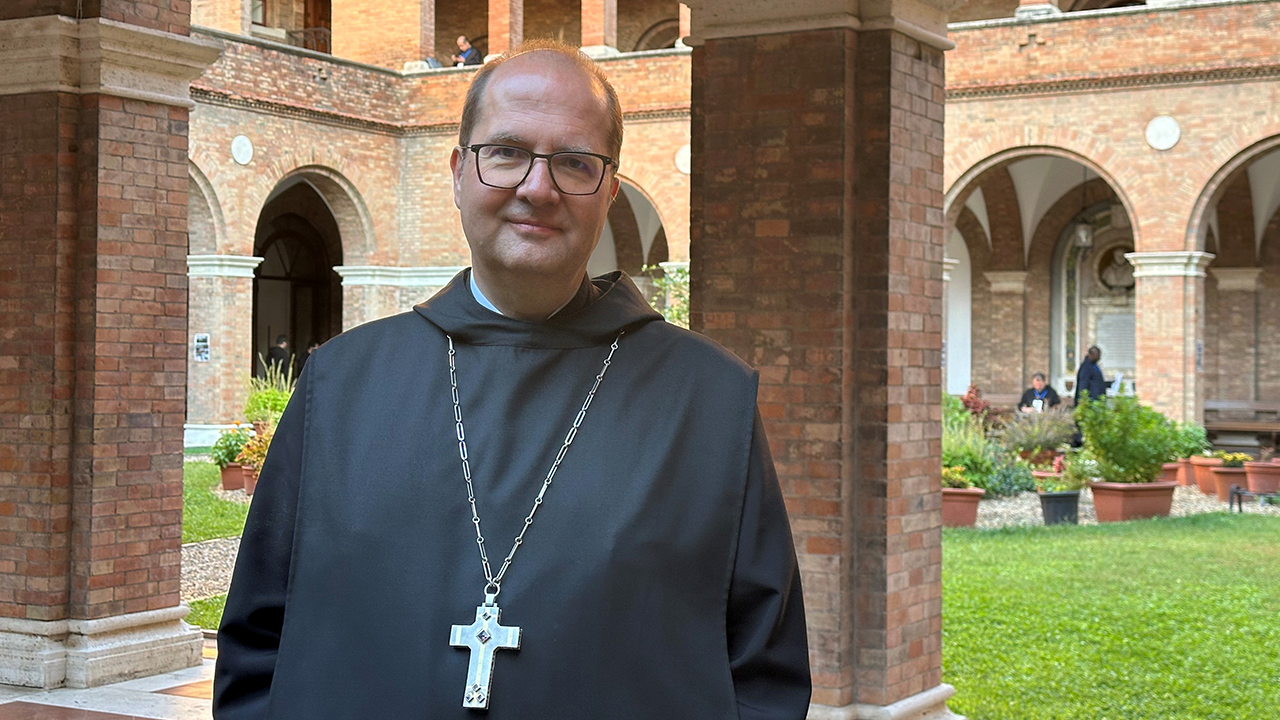
Benedictine Abbot Primate says the Latin Mass has a ‘lasting place’ in the Church
The Abbot Primate of the Benedictines has said the Traditional Latin Mass has secured a lasting place in the Church and should be permitted in some areas The Abbot Primate of the Benedictines has said that the TLM has acquired a lasting place within the Church and “should be permitted, at least in some areas”. Fr Abbot Jeremias Schröder, who has held the office since September 2024, made the remarks while reflecting on developments in monastic life at Rome’s Sant’Anselmo. He pointed to the lived experience of Benedictine communities, where the older and newer forms of the liturgy continue to exist side by side. “Among us Benedictines, traditional liturgy and modern liturgy coexist in a very harmonious way,” Abbot Schröder said. Abbot Schröder added that within the Confederation there are “about ten abbeys that celebrate according to the old rite, most of them in France”, many belonging to the Solesmes Congregation, where the majority nevertheless use the post-conciliar missal. He also referred to the group of monasteries associated with the Abbey of Fontgombault, as well as Le Barroux and its daughter houses, noting their full integration within the wider Benedictine family. Reflecting on the broader question, he said: “After Pope Benedict opened doors here, it will no longer be possible to completely eradicate the old form. We have brothers and sisters who have built their religious lives on this form of prayer and Mass. This has now also gained a place in the Church and should be permitted, at least in some areas.” His remarks came as he described monastic life as marked by contrasting trends across different regions. Some communities, he said, are in visible decline, while others have experienced unexpected renewal. “We’re dealing with two opposing movements,” he said. “On the one hand, there are indeed communities that are slowly dying out, and managing this transition well is a major challenge. And then there are others that had already been written off but are managing to recover.” He cited the case of Georgenberg Monastery in Tyrol, where a planned winding down did not take place after new members joined the community. “I was actually supposed to wind it down, so to speak, but then a few new members joined, and the community is now vibrant again,” he said. Asked whether stricter observance plays a decisive role in the survival of religious houses, he rejected a simple distinction. “I don’t know if strictness is the right distinguishing criterion,” he said, instead pointing to continuity and the internal life of communities as more significant factors. “If there are no new members for a long time, something breaks down. The quality of community life is very important. You can sense whether there are shared goals and a good sense of togetherness. Such monasteries always attract people,” he said, adding: “I am confident that this way of life will not die out.” On practical questions affecting contemporary monastic life, he said that the use of smartphones and social media is handled at the level of individual monasteries. “Each monastery decides that for itself,” he said, though he stressed that the issue must be addressed during formation. “It absolutely has to be a topic in novitiate training, and renunciation has to be practised,” Abbot Schröder said, noting that in some cases this includes handing in mobile phones during the novitiate. The extent of restrictions, he added, varies according to the character of each community, with more contemplative houses likely to adopt stricter approaches than those engaged in pastoral or educational work. He also referred to the growing use of artificial intelligence within ecclesiastical settings, particularly in multilingual contexts. “This applies especially to simultaneous interpretation at synods and assemblies,” Abbot Schröder said. “And I must say, simultaneous interpretation via AI works really well.” Abbot Jeremias Schröder joined St Ottilien Archabbey in Germany as a novice in 1984. In October 2000 he was elected archabot. In 2015, he was selected to take part at the Fourteenth Ordinary General Assembly of the Synod of Bishops as one of the elected representatives of the International Union of Superiors General. In 2024 he was elected as Abbot Primate of the Benedictine Confederation.
May 5, 2026
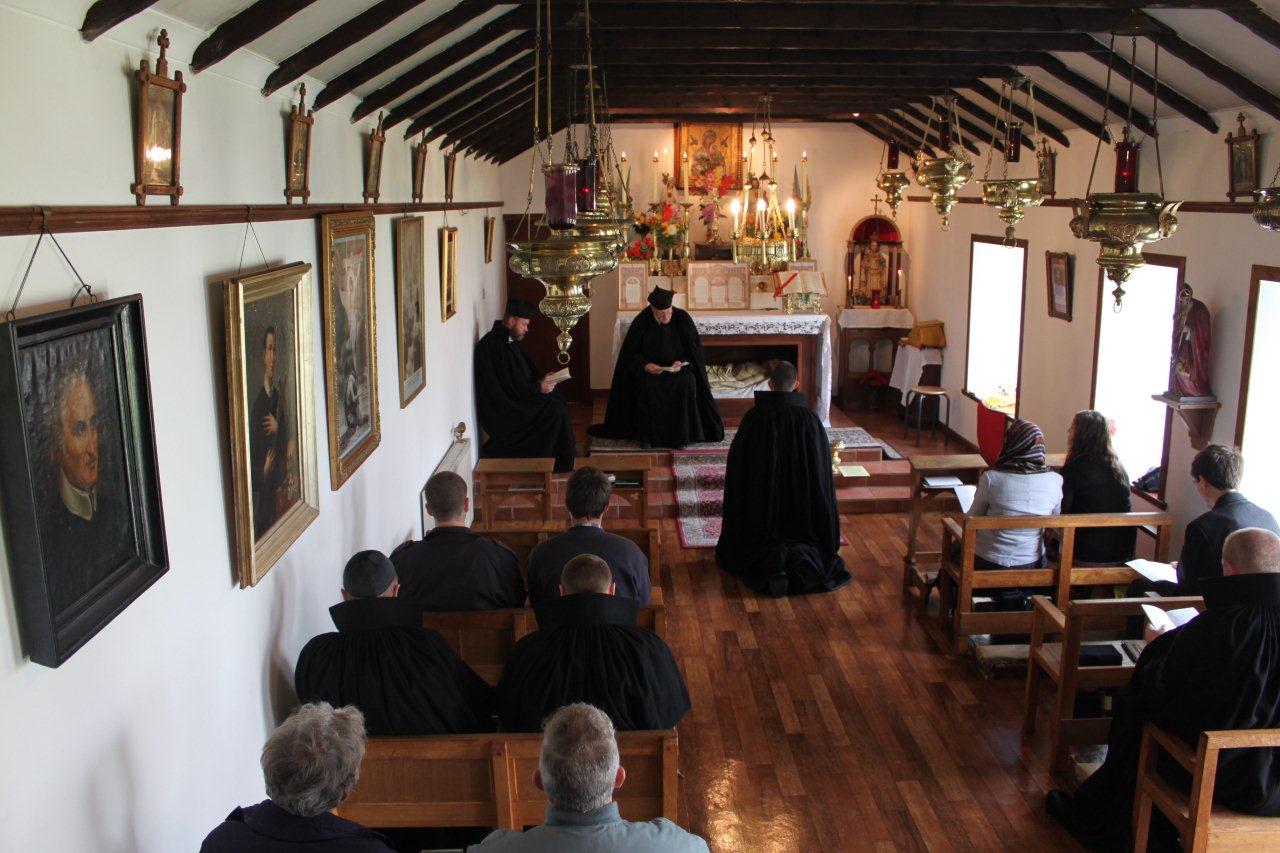
Sons of the Most Holy Redeemer declare new position on the papacy
The Sons of the Most Holy Redeemer, a traditionalist community previously associated with the SSPX and later reconciled with Rome, has formally rejected the current papacy and called for an “imperfect general council” The Sons of the Most Holy Redeemer (FSSR) have publicly rejected the validity of the current papacy in a 21-page letter which describes a “spiritual catastrophe” in the Church since the Second Vatican Council. The community issued the document on 2 May, setting out a sustained critique of developments in doctrine, liturgy and governance in the Catholic Church over recent decades. In the letter, addressed to the faithful, the priests and brothers claim that the crisis stems from a long-term infiltration within the Church’s structures. “The problem is, as St Pius X warned, that the structures of the Catholic Church have been infiltrated by men of a different non-Catholic religion,” they wrote. “They use the Catholic name, they occupy the Catholic buildings, they know the Catholic culture. From the outside they look to be Catholics, but they do not profess the Catholic Faith as taught through the centuries.” The statement continues: “In reality, they have been formed as revolutionaries committed to the condemned Freemasonic heresies of Religious Liberty, Religious Indifference and False Ecumenism. Their infiltration has struck a lethal wound to the Catholic religion; they have brought about a major schism from the Mystical Body. We must stand firmly with the Catholic Church and move well away from the camouflage of its counterfeit.” The community argues that the effects of this alleged infiltration became fully visible in the period following the Second Vatican Council, held between 1962 and 1965. “Since the Second Vatican Council, the apparent Popes have caused a spiritual catastrophe of the greatest imaginable proportions,” the letter states. It adds that “new doctrinal, moral, liturgical, and disciplinary decisions since Vatican II cannot be accepted because they contradict what came before.” Despite the severity of its criticisms, the community insists that it does not consider itself to be separating from the Church. “Our Faith has not changed. Holding the True Faith of our Fathers, we will continue to offer the True Mass. We will worship the True God. And we will work for an Imperfect General Council to bring about the triumph of Christ’s One, Holy, Catholic and Apostolic Church,” the letter states. The monks further emphasise this point, writing: “We are not saying that we should leave the Catholic Church. The Catholic Church is the Ark of Salvation, the Mystical Body of Christ, the Bride without spot or wrinkle. We cling to her with all our strength. But we must recognise that the institutional structures that claim to be the Catholic Church have been infiltrated.” The declaration goes on to set out practical conclusions drawn from these claims, including a refusal to recognise the authority of the current pontiff. “We must do what Catholics have always done in times of crisis: we must hold fast to the Faith as it has always been taught. We must give no juridical recognition to those who have departed from it, including Leo XIV and his bishops,” the text states. Since 1999, the FSSR community has been based on Papa Stronsay, a small island in the Orkney archipelago off the north coast of Scotland. They also have one house in the United States and previously had another in New Zealand. The group traces its origins to the Society of St Pius X, itself founded in 1970 by Archbishop Marcel Lefebvre amid disputes over the interpretation and implementation of the Second Vatican Council. In 2008, the community sought reconciliation with Rome and was received into full communion during the pontificate of Pope Emeritus Benedict XVI. The declaration issued by the Sons of the Most Holy Redeemer on Papa Stronsay is the culmination of a trajectory that has been evident for some time. On 16 October last year, the group published “An Open Letter to the Catholic Bishops, Priests, Religious and Faithful” which took issue with various actions taken by Rome under Pope Francis, including Amoris Laetitia , Traditionis Custodes and Fiducia Supplicans . The recent letter marks a decisive break and makes the prospect of reconciliation considerably more difficult. Leaving little ambiguity, it states: “Since the Second Vatican Council, the apparent Popes have caused a spiritual catastrophe of the greatest imaginable proportions,” the priests and brothers write, adding that “new doctrinal, moral, liturgical, and disciplinary decisions since Vatican II cannot be accepted because they contradict what came before.” They conclude by saying: “We must give no juridical recognition to those who have departed from it, including Leo XIV and his bishops.” What has now emerged publicly confirms what some had already suspected. The community’s current position goes beyond that of the Society of St Pius X, which, despite its longstanding criticisms of Vatican II, has consistently stopped short of denying the legitimacy of the Pope. The Papa Stronsay declaration represents a further step, one that places the group closer to sedevacantist or quasi-sedevacantist currents. This shift had been anticipated in reporting from within traditionalist circles. It was unlikely that the Transalpine Redemptorists would rejoin the Society of St Pius X. Instead, sources within the Society suggested that the community was moving towards a more radical alignment, potentially situating itself within what has sometimes been described as the “sedevacantist” orbit. It is also believed that the group has received conditional ordinations from Bishop Pierre Roy, a former priest of the Society of St Pius X who is now a sedevacantist bishop. Bishop Roy himself has advocated the convocation of an ‘Imperfect General Council’ to resolve what he perceives to be a crisis in the Church. The community has explicitly called for an ‘Imperfect General Council’, a gathering of bishops who, in their view, have preserved the true faith. The idea has been referenced in external interviews. In remarks to a New Zealand outlet, Father Michael Mary indicated support for such a proposal, suggesting that the community sees this as a practical path forward in the absence of recognised ecclesial authority.
May 3, 2026