

Traditional Latin Mass
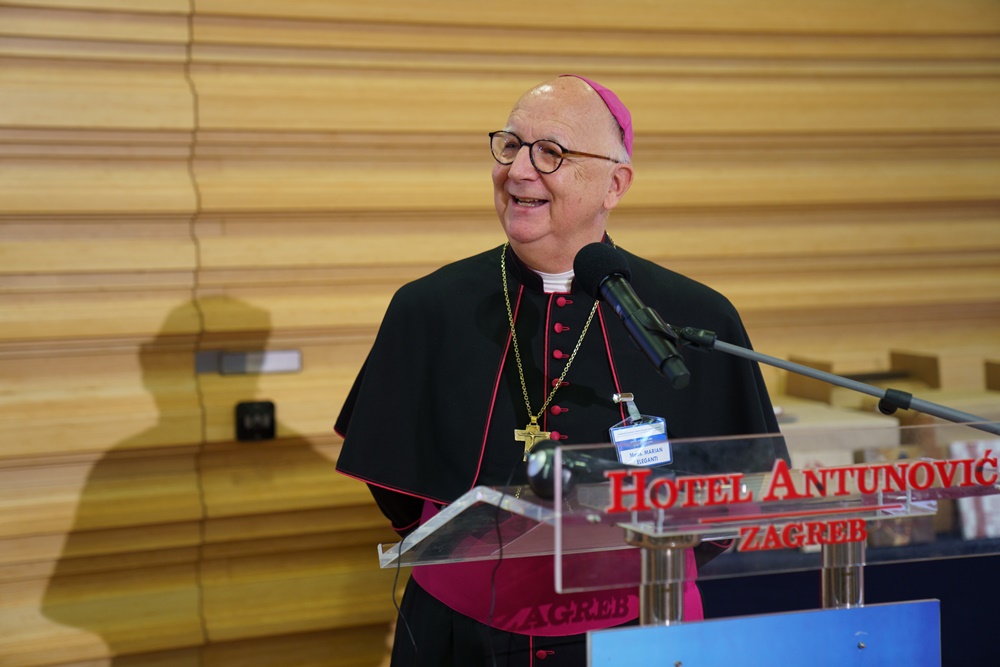
Bishop Eleganti on the old rite, Islam and the future of the Church
Bishop Marian Eleganti speaks to AdVaticanum on the appeal of the traditional liturgy, Islam and the Society of St Pius X. Eleganti addresses the fallout of the Second Vatican Council, the place of the old rite and the pertinent questions facing the Church in the West The Benedictine Bishop Marian Eleganti, former Abbot of St Otmarsberg Abbey and auxiliary bishop of the Diocese of Chur until 2021, is well known for his defence of the truth and beauty of Catholicism in the face of an increasingly hostile West. A principled churchman, he has often paid the price for adhering to his conscience, stepping down as the Swiss bishops’ youth bishop in 2018 due to disagreements with other bishops at the 2018 Youth Synod and offering his resignation in 2021 at the age of 65, a full ten years before the mandatory retirement age for bishops. In this interview, he sits down with AdVaticanum to reflect on his years of priestly ministry and to offer his erudite analysis of the challenges facing the Church in the twenty-first century. He addresses Islam, the Society of St Pius X, the liturgy and the fallout of the Second Vatican Council with the characteristic clarity that has made him a much respected voice within the Church. AV: Your Excellency, you were born in 1955 and have recounted serving as an enthusiastic altar boy in the traditional rite in your childhood before being retrained for the Novus Ordo. You have described the post-conciliar liturgical intervention as “a rather violent, provisional reconstruction of the Holy Mass… associated with great losses that need to be addressed”, noting differences especially in the prayers, postures, and ad orientem orientation. Young Catholics today, who often know little about the texts of Vatican II, are increasingly drawn to the Tridentine rite for its beauty and transcendence. In your view, what specific elements of the ancient liturgy address the spiritual hunger of this generation, and how would you respond to claims that restricting the Traditional Latin Mass is necessary for ecclesial unity? +ME: I believe that the appeal of the Old Liturgy for young people lies primarily in several key aspects. Firstly, its focus, and the centrality, on God or Christ, rather than on the community. The general orientation of everyone (the congregation and the priest) is towards Him. Another is the palpable reverence associated with the encounter with the transcendent God or the present Christ. There is also the stillness and silence, reminiscent of the worship of the Lamb in the Book of Revelation. I believe people are also drawn to the solemnity and dignity of the vestments, liturgical objects, and the altar, as well as the overall design of the sanctuary. Finally, Gregorian chant, which has been a trend for some time, even in secular circles. Reverence, faith, prayer, love, and inner devotion or participation have their roots in the heart. They can be found just as easily in the Novus Ordo. I am the same person in any rite. How I stand before God and celebrate Him is decided within me. It is not the form that makes me devout. Devotion is either present or it is not, regardless of the form. The inner self then also takes on the proper mode of expression; it does not work the other way around. I kneel because I am devout; I am not devout because I kneel. If a form becomes associated with false thinking, it can become a divisive force and a question of “to be or not to be”, which a rite never is. Every form has advantages and disadvantages, and the wise person distinguishes without doing wrong. Why did Jesus call the outwardly righteous Pharisees whitewashed tombs? The discrepancy between what is inside and what is outside can be very great, whatever form it takes. AV: Building on your recent calls (including in early 2026 reflections) for renewed study of the liturgical crisis under a new pontificate, such as the marginalisation of the tabernacle and overemphasis on the “meal character”, do you see a path for restoring wider access to the Tridentine rite beyond the restrictions of Traditionis Custodes? What concrete pastoral measures would you recommend to bishops to allow the old liturgy to flourish again as a living treasure? +ME: We have so many rites in the Catholic Church. We should accept them for what they are: mere rites. We must infuse every rite with love and devotion; otherwise, it misses its mark. The Old and New Rites, as such, have nothing to do with whether we recognise the Council or not, or how we deal with its texts or reforms. These questions are not to be resolved at the level of the rites. Whether the New Mass corresponds to the vision of the Council Fathers who inspired it is a historical question. The answer may vary. Why don’t we simply give hearts the freedom to pray as they wish and to honour God as they like, without disqualifying any person or rite? The Church must set the framework for this. That is not a problem. Rites are not absolute. In a validly administered sacrament, the believer always finds God, regardless of the rite, provided, of course, that the sacraments are celebrated as the Church prescribes and with the inner attitude and dignity I have described above. AV: Your Excellency, you have described the post-Vatican II era as bringing “an indescribable decline in the practice and knowledge of the faith, widespread liturgical formlessness and arbitrariness” instead of the expected “springtime”. Official statistics from the Annuario Pontificio 2026 and Annuarium Statisticum Ecclesiae 2024 confirm a 13-year decline in priestly vocations that has accelerated recently, with major seminarians worldwide falling from 106,495 in 2023 to 103,604 in 2024 (a 2.72% drop), following prior yearly declines, with Europe seeing particularly sharp losses and a net global priest decrease of 734 between 2022 and 2023 despite Catholic population growth. What, in your view, are the specific post-conciliar developments or practices that have contributed to the excesses and loss of the sacred, and how should they now be corrected within the life of the Church? +ME: On the topic of the Old Rite, we must remember the causes of this phenomenon do not lie in the Novus Ordo. The Council Fathers had intended a modest liturgical reform. Excesses, lack of form, trivialisation of the sacred, liturgical disobedience, community-centredness, the absence of priests, or even a hostility towards priests, are phenomena of the post-conciliar era that cannot be attributed to the Council’s texts, any more than post-conciliar heretical tendencies can. The worst of all evils is the practical irrelevance of God in our society and the turning away from Christianity, which has been replaced by ideologies or other forces that have an extremely destructive effect on everything that was once sacred to the so-called Christian West. Nothing better has taken its place. This is becoming increasingly clear. AV: Specifically, focusing on vocations, this multi-year decline has hit Europe and the Americas hardest, with empty seminaries and ageing clergy in many places, while Africa and Asia show some growth. What would you propose to reverse it? +ME: There are many young converts and those seeking baptism. They want to build Christian marriages and families. This is where we need to invest our efforts. We must impart knowledge of the faith to children and young people, provide them with support, and introduce them to the sacraments; we must accompany young families. As a parish priest, I would begin by celebrating Holy Mass as deeply and beautifully as possible, accompanied by brief catechesis. Following the liturgy: fellowship, love, and joy; parents forming friendships, children getting to know one another and playing together. People and charisms gather around every devout priest. With Holy Mass at the centre of life, the Church begins to renew itself. If the priest is a bride in love, the community he gathers around him will soon be the same. This brings an unimaginable momentum. AV: In your October 2025 article “Homosexuality in Society and in the Church: An Elephant in the Room”, you identified the “widespread homosexuality in the clergy and its significance in the abuse crisis” as the ignored “elephant in the room”, calling it a phenomenon sui generis with negative consequences that must be named, while noting that silence renders other prevention efforts incomplete. What pastoral experience or observations led you to this conclusion, and do you think enough is being addressed openly despite earlier calls for psychological screening? +ME: This is not a matter of my own subjective impressions or pastoral experience, but of pure statistics. I wrote to Pope Leo XIV about this. All Church studies on abuse show a disproportionately high number of male victims. It does little good to turn a blind eye to this. There is a factual correlation, without implying that clergy with a homosexual orientation are predestined to commit abuse because of their orientation. The same applies to heterosexuals. There are also many cases of sexual abuse outside the Church, but society primarily focuses on and is scandalised by those within the clergy. To sin means: I could have acted differently, but everyone has their own preferences. AV: As auxiliary bishop emeritus of the Church in Switzerland, you have witnessed the challenges of secularisation in the country. What is your current assessment of the state of the faith in Switzerland, and are there any emerging Swiss “hotspots” of renewal among younger generations rediscovering the faith? +ME: Generally speaking, I give the Swiss very poor marks when it comes to their spiritual life and their connection to the Church. While most of them have been baptised, they have never truly become disciples of Jesus. I say this merely as an observation. It may not necessarily be their own fault. That said, there are genuine hotspots of faith. As the bishop for youth, I was right in the thick of it. Even today, I rejoice in the growth of these hotspots. AV: Your Excellency, you have been clear in your statements that the SSPX’s planned episcopal consecrations on 1 July 2026, without papal mandate, would constitute a “schismatic act” rupturing visible unity with the Pope, citing issues of autonomy, non-incardinated priests, and self-positioning as the true Church. What is the current attitude towards the SSPX within Switzerland? Do you perceive growing support for the SSPX among the faithful? +ME: The Society of St Pius X has gone to great lengths to justify its decision, both internally and externally. Many faithful simply love the traditional liturgy without truly identifying with the Society’s ideology. They are, in fact, often put off by what they sometimes encounter in parishes. I would not say that there is growing support for the Society of St Pius X among the faithful. AV: On the broader European scene, Cardinal Gerhard Müller has recently described mass migration from Islamic countries into Europe as posing significant challenges to integration, warning of risks such as cultural strain, potential social conflict, and growing Muslim influence in public life if not managed carefully. Your Grace, how do you assess the compatibility of large-scale Islamic immigration with preserving Europe’s Christian identity? What role should the Catholic Church play in addressing this, balancing the Gospel’s call to charity and welcome with a realistic consideration of the demographic, religious, and social shifts underway? +ME: Islam, not just so-called Islamism, is, by its very nature, an anti-Christian religion, in theory and in practice. Christianity has never fared well under Islamic rule. This remains true today. Wherever Islam holds sway, Christianity is being decimated to the point of near extinction. I consider Islam incompatible with the Western idea of freedom and the secular state. Ultimately, only the numerical balance will decide which of the two, Christianity or Islam, will disappear and perish or remain in a state of tolerance. Even secular political entities like the European Union exhibit anti-Christian traits today. Due to Islam’s incompatibility with the Christian idea of the separation of state and politics and church and religion (“Render unto Caesar what is Caesar’s, and unto God what is God’s”), I consider Islam to be incompatible with the Judeo-Christian tradition of the West, which still strongly shapes our thinking and political system. The more Muslims are naturalised into our societies, the worse it could become unless Christ converts them and sets them free. AV: And finally, Your Excellency, could you offer your thoughts on the recent scandal in the Diocese of Chur, Switzerland, where three people shared the Eucharist with their pets? +ME: I cannot understand why the Holy Eucharist is celebrated in connection with the blessing of animals. Animals do not belong in a sacred space. They can be blessed outside the church, if one wishes. It is simply terrible that the sacraments, above all the Holy Mass, are no longer understood. The Holy Eucharist is viewed by many as a mere symbol and treated accordingly. But it is the Body of Christ, that is, the living, mysteriously present Person of the Lord. It causes me great pain to hear of such profanations. AV: Thank you, Your Excellency, for your continued dedication to the Church.
Apr. 30, 2026
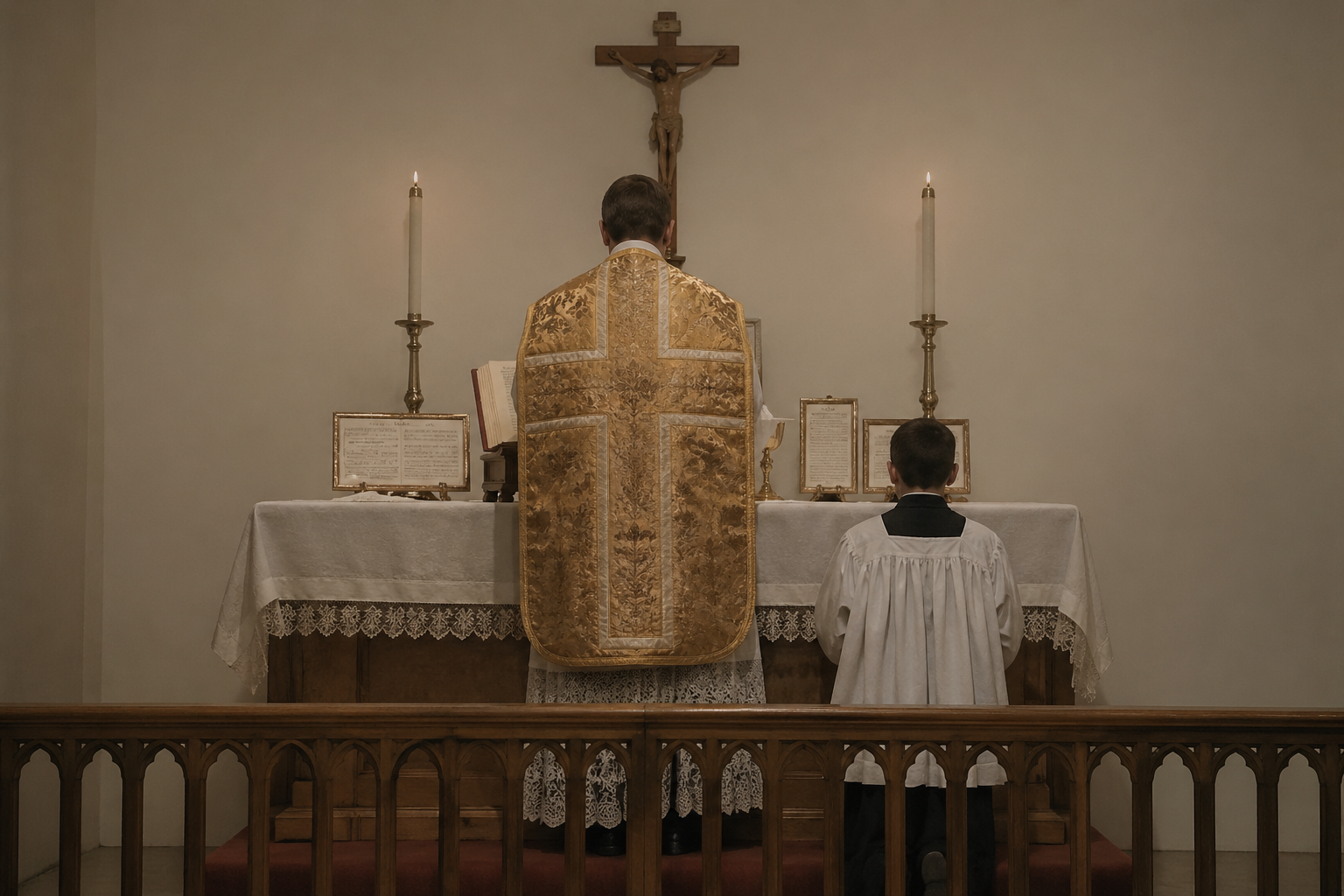
Vatican examines appeal over Charlotte liturgical restrictions
The Vatican has confirmed it is reviewing a formal appeal over liturgical decisions in the Diocese of Charlotte, including restrictions placed on the Traditional Latin Mass The Vatican has confirmed that it is reviewing a formal appeal concerning liturgical decisions taken by Bishop Michael Martin in the Diocese of Charlotte, according to a letter issued by the Dicastery for Divine Worship and the Discipline of the Sacraments. The letter, dated 16 February, states that the dicastery has “received a hierarchical recourse” regarding the bishop’s “apparent refusal” to respond to “requests concerning liturgical matters”. It adds: “The Dicastery will proceed to examine the Acta, which have been assigned protocol number 369/25.” The appeal itself was filed on 9 February. The acknowledgement confirms that the case has formally entered the Vatican’s administrative process, though no indication has been given as to how long the review may take or what outcome may follow. The appeal arises after a series of liturgical measures introduced in Charlotte over the past year. Most notably, Bishop Martin ordered that the Traditional Latin Mass be discontinued at parish churches in the diocese and restricted to a single location outside the city. Changes have also been implemented at parish level. Directives issued within the diocese have included the removal of altar rails and kneelers used for the reception of Holy Communion. These measures prompted concern among clergy, and in January a group of diocesan priests submitted a dubia to the Dicastery for Legislative Texts, questioning the legal basis of the restrictions. Additional controversy followed the circulation of draft liturgical norms, which proposed limits on the use of Latin, the celebration of Mass ad orientem, and certain traditional vestments and practices. The Diocese of Charlotte later stated that the text was a draft and had been revised after feedback. The Vatican body now examining the recourse is headed by Cardinal Arthur Roche, who has overseen the implementation of liturgical policy following Traditionis Custodes. The dicastery’s role includes adjudicating disputes concerning the application of liturgical law and responding to appeals submitted through hierarchical recourse. Such recourse allows clergy or lay faithful to challenge administrative acts they believe have been improperly handled or insufficiently addressed at diocesan level. The procedure involves the submission of documentation, which is then reviewed by the competent dicastery in Rome. No further details about the substance of the appeal have been released beyond the brief description contained in the Vatican letter. The document has, however, circulated widely in recent days. The Diocese of Charlotte has not issued a further statement in response to the Vatican’s acknowledgement of the case.
Apr. 29, 2026
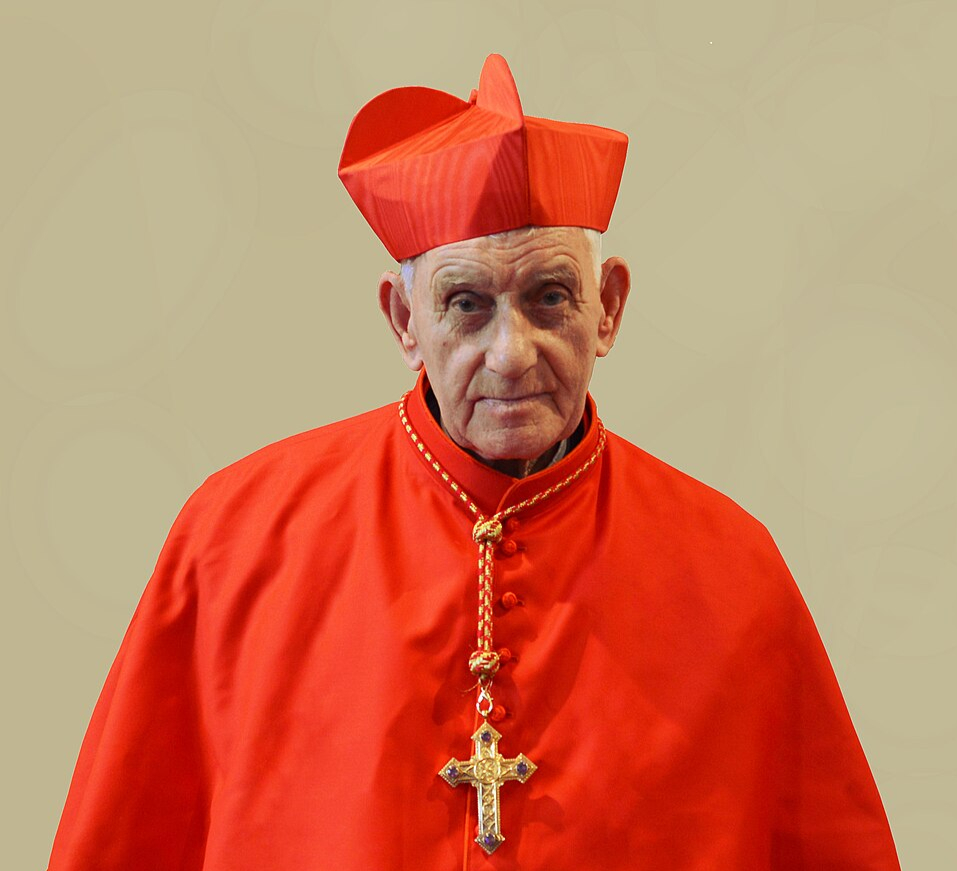
Pope Leo receives Cardinal Simoni in private Vatican audience after Easter appearance
Pope Leo received Cardinal Ernest Simoni in a private Vatican audience on April 27, marking their second meeting since Easter Sunday. The Albanian cardinal, once sentenced to death under communism, presented a relic the Albanian martyrs Pope Leo received Cardinal Ernest Simoni in a private audience at the Vatican on April 27, less than a month after their appearance together on Easter Sunday. The audience took place in the Hall of Popes and included around 40 members of the cardinal’s family. It marked the second notable encounter between the two men in recent weeks, following the Easter Sunday Urbi et Orbi blessing on April 5, when Cardinal Simoni stood alongside the cardinal protodeacon during the papal appearance from the central loggia of St Peter’s Basilica. Speaking afterwards to Vatican Media, Cardinal Simoni described the meeting in direct and emphatic terms. “All joy, all hope,” he said, describing the atmosphere of the encounter. He added: “It was an atmosphere of all joy, all hope, gazing upon the face of the Holy Father, which represents the face of Jesus, to proclaim to all men the news of Heaven, of peace, of brotherhood and of love for all the peoples of the world.” “Let us proclaim together for all the peoples of the world the peace that comes from Heaven,” Cardinal Simoni said. At the conclusion of the audience, Cardinal Simoni presented Pope Leo with a gift connected to the history of Catholic persecution in Albania. “Coming to Italy from Albania, my thoughts are with the martyrs,” he said, before offering “the cross and a relic of the Albanian martyrs who gave their lives for fidelity, for the love of Jesus, for the salvation of the Albanian people, to see all men smile upon Heaven”. A priest of the Archdiocese of Shkodra-Pult, he marked the 70th anniversary of his ordination earlier this month, on April 7, a milestone reached after a lifetime marked by persecution under Albania’s communist regime. Arrested on Christmas Eve 1963 for celebrating a Mass deemed illegal by the authorities, he was initially sentenced to death before the penalty was commuted to 25 years of forced labour. Released in 1981, he remained under suspicion and was still regarded by the regime as an “enemy of the people” until the collapse of communism in 1990 allowed him to resume public ministry. His testimony later came to wider attention during the papal visit to Albania in 2014, when Pope Francis listened to his account and referred to him as a “living martyr”. Two years later, he was created a cardinal in recognition of that witness. Despite his age, Cardinal Simoni has remained active in maintaining links with communities attached to the Traditional Latin Mass. He is a defender of the older liturgical form and has longstanding associations with traditionalist institutes, including regular visits to the International Seminary of the Institute of Christ the King Sovereign Priest at Gricigliano, near Florence. He has been present there for major liturgical celebrations, including the Feast of St Joseph, and has spent periods such as Holy Week with the community in recent years. During a Pontifical Latin Mass for the Summorum Pontificum Pilgrimage celebrated by Cardinal Raymond Burke in St Peter’s Basilica on October 25, 2025, Cardinal Simoni recited the prayer to St Michael the Archangel, describing it as a reminder that “the Devil exists, and the Church continues to fight”. The 2025 gathering represented a significant relaxation of restrictions placed on the Summorum Pontificum Pilgrimage. Following Traditionis Custodes , it was commonly understood that no prelates were permitted to celebrate Holy Mass in the Traditional rite for the 2021 and 2022 pilgrimages. In 2023 and 2024, the Traditional Latin Mass was prohibited entirely in St Peter’s Basilica for the pilgrimage. Instead, pilgrims had to content themselves with Eucharistic Benediction and the office of Sext at St Peter’s.
Apr. 28, 2026
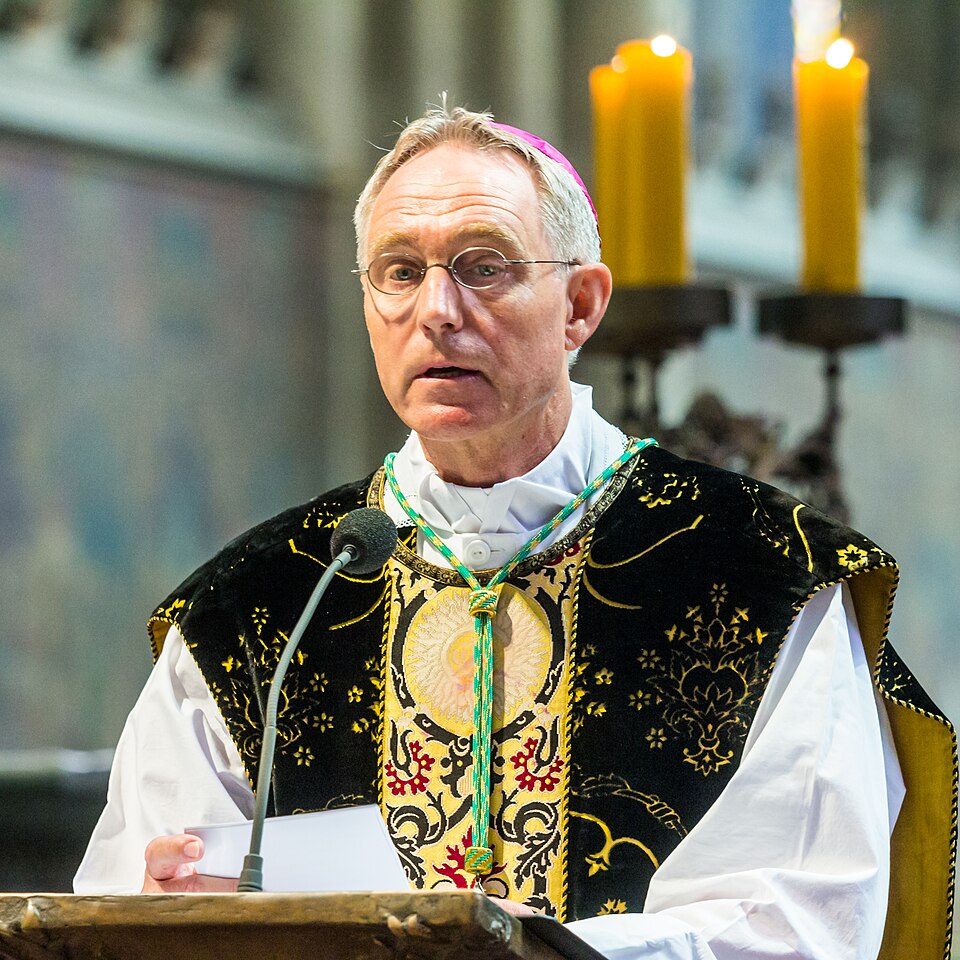
Archbishop Gänswein on Benedict and Francis relationship
In an interview with La Repubblica, Pope Benedict’s longtime personal secretary discusses Benedict XVI and Pope Francis’s relationship, including tensions over the traditional Mass Archbishop Georg Gänswein has said that Pope Emeritus Benedict XVI never criticised the restrictions imposed on the traditional Mass by Pope Francis, despite being personally troubled by them. In an interview published by La Repubblica on April 20, Archbishop Gänswein, who served for years as Benedict’s personal secretary, said: “Benedict never commented on Pope Francis’s motu proprio Traditionis custodes. In my book I wrote that when we read L’Osservatore Romano [about Traditionis custodes], Benedict’s heart grew heavy. That is true, but I am the one saying it, not him.” The archbishop, now Apostolic nuncio in Lithuania, also spoke at length about the unprecedented coexistence of two popes following Benedict’s resignation in 2013. “There was only one Pope. The other was still called Pope, but he was in reality the Pope Emeritus. That is a very important difference,” he said. He added that Pope Emeritus Benedict XVI himself took visible steps to mark the distinction, removing elements of papal dress and adopting a simpler presentation, even as he retained the title “Pope Emeritus”, which Gänswein confirmed “he chose himself”. Responding to claims that the resignation had been shaped by scandal, Gänswein rejected any link to the Vatileaks scandal or other controversies. “None of what you have recalled had anything to do with it. Neither Vatileaks, nor the so called ‘gay lobbies’, nor anything else. The resignation was the fruit of deep reflection and intense prayer. The Pope put the question to his conscience and then made his decision.” He recalled the moment of the conclave that elected Francis, describing how he saw the white smoke from his office before going to the Sala Regia. “Then the door opened and from a distance I saw the cardinals congratulating the new Pope. Almost at once, the name Jorge Mario Bergoglio spread through the entire hall like wildfire.” When he met the newly elected Pope, Gänswein said Francis spoke first: “I would like to meet Benedict. Can you help me?” The first meeting between the two men took place at Castel Gandolfo on March 23, 2013. Gänswein said the encounter was marked by mutual deference. “When they entered the chapel, Pope Benedict wanted to let Pope Francis go first, but Francis refused. The same thing happened with the prie-dieu.” He added that Pope Emeritus Benedict XVI had prepared a box of documents relating to the Vatileaks inquiry, which he handed over personally. “He wanted to explain the contents to Francis and tell him what he thought. He did it in writing, as usual, and put everything inside.” Archbishop Gänswein confirmed that Pope Francis chose not to reside in the Apostolic Palace after his election. “The Pope told me to find him something else,” he said, admitting that he initially did not take the request seriously. He later understood the decision more clearly when Francis explained: “I have never lived in such large rooms. I want to live in smaller ones.” The Pope subsequently remained at the Casa Santa Marta. The interview also addressed perceptions of tension between the two pontificates. Archbishop Gänswein said reports of sustained opposition organised around Benedict were exaggerated. “From what I experienced, the real situation was greatly exaggerated.” He acknowledged that “there were some observations about Francis’s behaviour and choices”, but added: “It is perfectly normal to comment on a Pope’s decisions; it is not in itself forbidden.” Reflecting on his own position, Archbishop Gänswein referred to a remark he had made about carrying the “mark of Cain”. He clarified: “I did say that, but in general, not with reference to Pope Francis.” He added that Benedict’s figure “aroused both friends and enemies”, and that his own association with the former Pope had remained a defining factor. Archbishop Gänswein also described the personal relationship that developed between the two popes in more ordinary terms. He pointed to small gestures, including visits and the exchange of gifts, as evidence of a cordial rapport. “One could sense it, atmospherically, so to speak, from the climate that had been created between them,” he said, noting that such gestures were “signs of mutual attention”. He also gave a detailed account of the moment following Benedict’s death, when Francis arrived at the Mater Ecclesiae Monastery. “Pope Francis had told me: ‘When the hour comes, please call me directly.’ I did so on my mobile phone. Shortly afterwards the Pope arrived.” Archbishop Gänswein said: “Francis blessed his predecessor, then sat down beside him, remained in silence for a few minutes, and then we all prayed together.” Asked about a comparison between recent popes, Gänswein declined to offer a clear characterisation of the current pontificate beyond noting the significance of the name. “That is a difficult question at the moment,” he said. “But the name Leo itself already says something, don’t you think?” The remarks of Archbishop Georg Gänswein over recent years, taken together with testimony from those close to Pope Emeritus Benedict XVI, suggest a more restrained relationship than some accounts presented during the years of his retirement alongside Pope Francis. The evidence increasingly suggests that the relationship may have been difficult, even if this was never publicly acknowledged by Pope Emeritus Benedict XVI himself. His silence, long interpreted as serene acquiescence, now appears as an act of discipline intended to avoid any impression of a divided papacy. The clearest point of tension concerns the motu proprio Traditionis custodes, which reversed the more permissive framework established by Benedict for the older form of the Roman rite in Summorum Pontificum. Archbishop Gänswein said in an interview with Die Tagespost on January 20, 2023: “It was very hard. I believe that reading the new motu proprio broke Pope Benedict’s heart because his intention had been to help all those who had found their home in the traditional Mass, to find inner peace, liturgical peace, so that they would abandon the position of Archbishop Lefebvre.” That judgement, offered by the man who knew Benedict most intimately in his final years, corresponds to a known priority of Benedict’s pontificate: the reconciliation of those attached to the older liturgy. Sources close to Archbishop Gänswein and to Pope Emeritus Benedict XVI have further confirmed this, telling AdVaticanum that the promulgation of Traditionis custodes “caused [Benedict] pain”. That pain was not expressed publicly. Instead, Pope Emeritus Benedict XVI maintained the silence he had promised upon his resignation. More significant, and less often discussed, is the way Archbishop Gänswein’s own position further complicates the picture. Once Prefect of the Papal Household, he was effectively sidelined and later sent to Germany and then the Baltics as nuncio. The same sources told AdVaticanum that Pope Emeritus Benedict XVI made both formal and informal requests that his secretary be allowed to remain in the Vatican. They said: “There wasn’t an actual relationship. Sometimes Benedict asked favours of Francis to keep Gänswein in the Vatican and not remove him, both formally and informally.” These requests, it is said, went unanswered. This asymmetry is also discernible in reflections offered by the papal biographer Peter Seewald in an interview with Nico Spuntoni. Seewald contrasted the widely remembered homily delivered by then Cardinal Ratzinger at the funeral of Pope St John Paul II with the more restrained tone of the rites following Benedict’s own death. “We all remember the warm words that Cardinal Ratzinger spoke at the requiem for John Paul II,” he said. “But no one remembers Bergoglio’s words at the requiem for Benedict XVI. They were as cold as the whole ceremony, which had to be rather brief so as not to honour his predecessor too much. At least that was my impression.” Pressed on whether such a judgement was too severe, Seewald continued: “I mean, how does one manifest friendship? With a mere statement in words, or by living it?” He pointed to differences “in temperament, culture, intellect and above all in the direction of the pontificates”, adding that Benedict had promised obedience and “remained silent so as not to give the slightest impression of wanting to interfere in his successor’s governance”. That silence, he suggested, was not without consequence. “Benedict trusted Francis. But he was bitterly disappointed several times.” Historically, the coexistence of a reigning Pope and a Pope Emeritus was itself without precedent in the modern Church. Pope Emeritus Benedict XVI sought to define that relationship through withdrawal, discretion and loyalty. His intention was to remove himself entirely from the exercise of authority. Yet the very novelty of the situation meant that every gesture and every silence acquired a significance beyond the personal.
Apr. 23, 2026
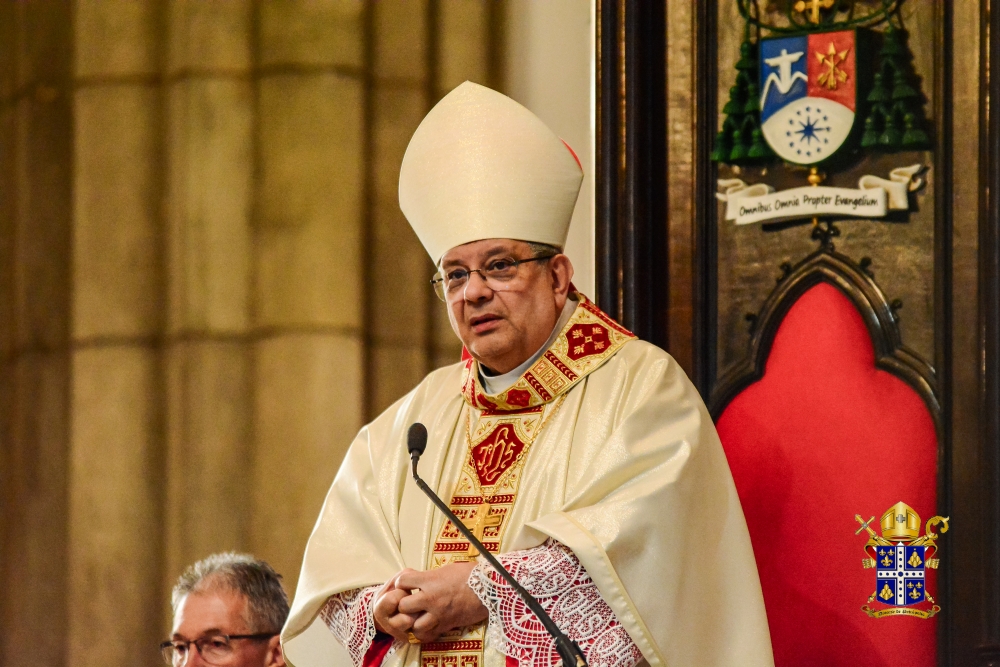
Brazilian bishop says young Catholics drawn to tradition have a place in the Church
A Brazilian bishop has said young Catholics drawn to traditional practices such as kneeling for Communion and wearing veils have a legitimate place in the Church, describing such expressions as part of Catholicism’s natural diversity rather than a rupture. A Brazilian bishop has said that young Catholics drawn to more traditional forms of worship have a legitimate place in the Church, insisting that such expressions are part of the inherent diversity of Catholic life rather than a rupture within it. Speaking at a press conference during the 62nd General Assembly of the National Conference of Bishops of Brazil in Aparecida, São Paulo, Bishop Joel Portella Amado of Petrópolis addressed questions about the resurgence of interest among younger Catholics in older liturgical customs. Responding to a question from a journalist with Rede Vida TV about “a return of a certain Catholic traditionalism in Masses”, the bishop acknowledged visible signs of this trend, including “young people who kneel to receive communion, who wear veils”, adding that “it is possible to perceive this in the Masses”. He said that such developments should be understood within the broader context of contemporary religious life in Brazil, particularly among younger generations. Referring to census data from 2022, he noted the large number of 19-39 year olds who do not profess a religious belief. “It’s not that they don’t believe in God,” he said. “The evangelical side calls them ‘unchurched’. I prefer this expression. They believe in God in heaven, but they don’t have a mediation on earth, a path to the Church.” Within this context, Bishop Amado indicated that the attraction to more traditional forms of worship may arise from a wider search for meaning. “In times of emptiness, we start searching, we look for things, even in some historical realities that this youth did not experience,” he said. The remarks came as part of a wider briefing on the ecclesial and socio-cultural issues discussed by the Brazilian bishops during their annual assembly, which has brought together prelates from across the country to consider pastoral priorities and challenges facing the Church. Bishop Amado, who serves as president of the CNBB’s Commission for the Doctrine of the Faith, emphasised that diversity in liturgical expression is not only permissible but intrinsic to Catholicism itself. “Does it have the right to be this way? Yes, because Catholicism is plural by nature, even more so in a profoundly plural world,” he said. At the same time, he cautioned against any tendency to elevate one form of expression above others or to impose personal preferences on the wider Church. “While there is a right to live and express one’s faith in one’s own way, according to one’s own personality, on the other hand, in the name of love and brotherhood, one cannot impose this on others or believe that only one is right,” he said. The bishop’s comments come amid an ongoing conversation within the global Church about the place of traditional practices in contemporary Catholic life, particularly in the years following the liturgical reforms of the twentieth century and subsequent debates over their implementation. While the early signs of Pope Leo XIV’s approach to the TLM suggest not a dramatic reversal of his predecessor’s policy, they do point to a deliberate attempt to reframe the question in terms of unity, discipline and synodality. What is emerging is a repositioning of the issue within a broader vision aimed at removing ideological conflict and quietly adjusting the tone. There has been no explicit indication that a formal or stable resolution for the traditional Latin Mass is imminent. Yet, indirectly, there has been a perceptible shift towards a more inclusive use of the Vetus Ordo, one that corresponds to the language of synodality. This began with the granting of extensions for the TLM in parishes in Texas and Ohio, and became most notable when the Catholic Bishops’ Conference of England and Wales informed its members that Rome would “be generous” in granting dispensations from restrictions on the older liturgy. While there was a response from the CDW, owing to the media frenzy surrounding it, indicating that there had been no reversal, the tone shifted following the promulgation of Traditionis Custodes under Pope Francis. Further clarity has come through the remarks of Cardinal Pietro Parolin after he sent a letter to the French bishops on behalf of Pope Leo concerning the TLM. Speaking to Advaticanum’s Vatican correspondent the following day, Cardinal Parolin articulated what appears to be the governing principle behind the Pope’s thinking. “I think we all share this, this, let’s say, assessment that the Pope gives, right?” he said. “In the sense that the liturgy must not become a source of conflict and division among us. It will be necessary to find the formula, well, this I believe, it will be necessary to find the formula that can meet legitimate needs. But I believe that, well, this can happen without turning the liturgy into a battlefield.” The insistence on avoiding conflict, while acknowledging “legitimate needs”, encapsulates the present moment. Yet the significance of these developments cannot be understood solely in terms of the TLM alone. Sources have told Advaticanum that many cardinals and bishops expect a forthcoming document on the liturgy, following an anticipated encyclical on artificial intelligence. According to these curial sources, the document is likely to address reverence and ritual integrity in the ordinary form of the Roman Rite, as well as the complex issue of inculturation. Such a move would confirm that the Pope’s concern is with the quality and unity of Catholic worship as a whole. This broader approach helps to explain why the Pope is moving more quickly on liturgical matters than had been expected. Rather than allowing the question to remain a point of ongoing contention, he appears intent on integrating it into a wider programme of ecclesial governance. His recent appointments, including figures such as Archbishop Randozza, Bishop Ioanne and Bishop Marin to senior curial roles within the Dicastery for Legislative Texts, the Dicastery for Bishops and the office of the Papal Almoner, have been noted as administratively capable prelates. In the bigger picture, while public attention has often focused on Cardinal Arthur Roche as the figure associated with restrictions on the TLM, it is widely understood that Archbishop Vittorio Francesco Viola played a decisive role in shaping that policy, working in collaboration with the lay theologian Andrea Grillo. Within the Dicastery for Divine Worship and the Discipline of the Sacraments, it is increasingly evident that the office of secretary has, in practice, exercised a level of influence that at times appears to rival, if not quietly supersede, that of the prefect. The question of Archbishop Viola’s and Cardinal Roche’s future therefore assumes a significance that goes beyond personnel. His first five-year term as secretary is due to conclude in May. Whether Pope Leo chooses to renew that mandate, reassign him within the Curia, or appoint him to a diocesan see will offer a clear indication of the direction in which liturgical policy is likely to develop. Sources close to Advaticanum suggest that an extension is expected, not least because of his relatively low profile in the English-speaking press, which has allowed him to operate without attracting sustained public scrutiny.
Apr. 23, 2026