

The Vatican
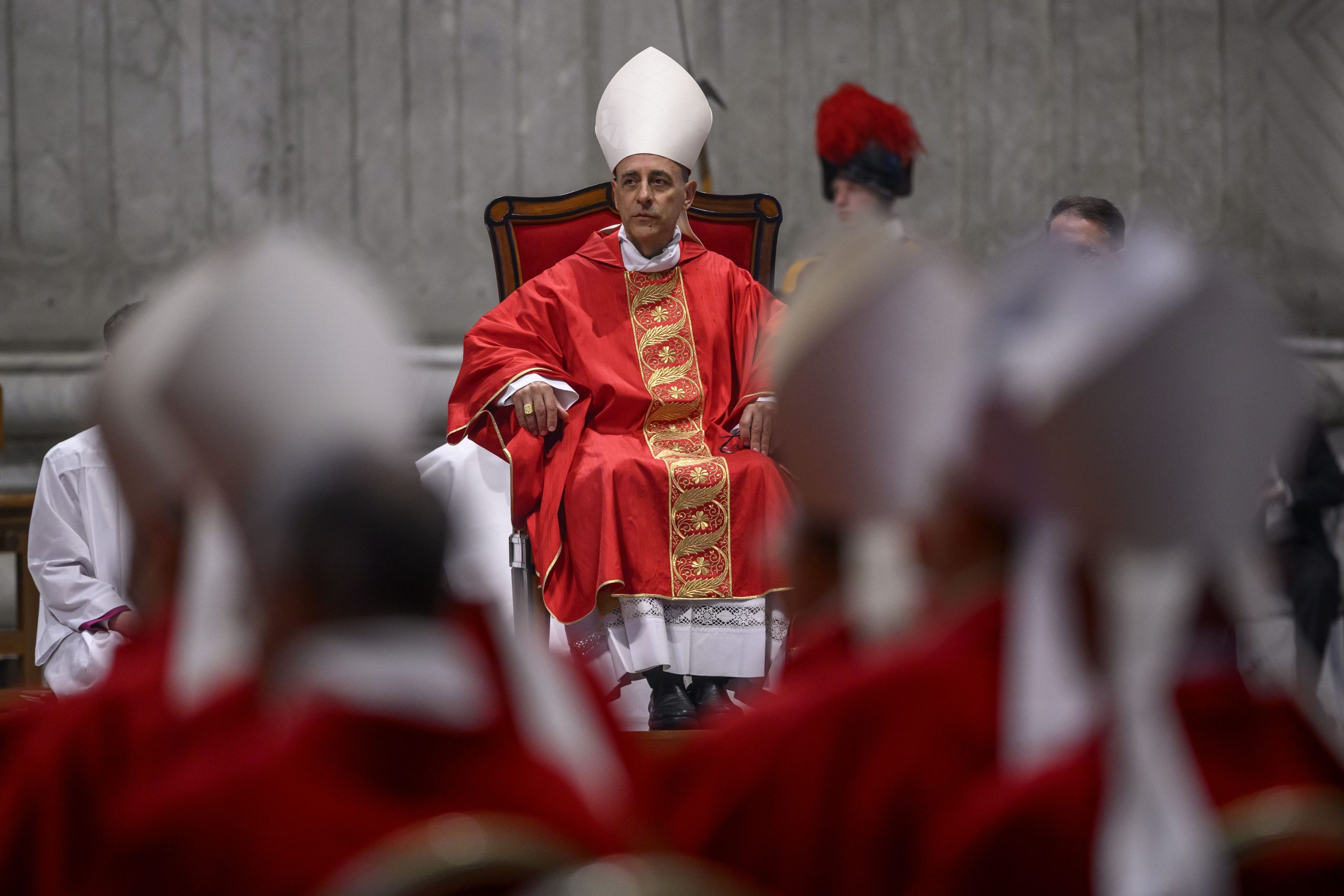
Cardinal Fernández criticises Vatican’s 2006 censure of liberation theologian Fr Jon Sobrino
Cardinal Víctor Manuel Fernández has criticised a 2006 Vatican doctrinal notification against liberation theologian Fr Jon Sobrino, arguing it risked portraying theology rooted in “the context of the poor” as “inadequate and dangerous”. Speaking in Rome, the DDF prefect also revealed his own defence of “contextual theology” once caused difficulties with the doctrinal dicastery Cardinal Víctor Manuel Fernández has criticised a 2006 Vatican doctrinal notification against the Jesuit theologian Fr Jon Sobrino. Speaking at the Pontifical Urban University in Rome on 12 May, the prefect of the Dicastery for the Doctrine of the Faith said the notification, issued by the then Congregation for the Doctrine of the Faith under Cardinal William Levada, appeared to suggest that “theology made in the context of the poor is inadequate and dangerous”. The Argentine cardinal made the remarks during the opening address of a study day titled “Milestones in Contextual Theology Today”, in which he spoke at length on theological development, inculturation and the influence of Pope Francis on contemporary Catholic thought. The 2006 notification, approved by Pope Benedict XVI, examined two works by the Spanish Jesuit Fr Jon Sobrino, a leading figure in liberation theology. The congregation concluded the books contained “notable discrepancies with the faith of the Church”, particularly in relation to Christology, the divinity of Christ and the methodological foundations of theological reflection. In the document, the congregation objected to Fr Sobrino’s assertion that “the poor” constitute a privileged theological locus in Latin American theology. It argued instead “the ecclesial foundation of Christology may not be identified with ‘the Church of the poor’, but is found rather in the apostolic faith transmitted through the Church for all generations”. Cardinal Fernández directly addressed those criticisms in his lecture, recalling that many Latin American theologians had struggled to understand parts of the notification. “One of the strong points of Latin American theology is the importance of taking the historical context into account in theological reflection,” he said. “The problem with this document is that it applies the expression ‘from’ only to ecclesial tradition, in such a way that expressions such as ‘thinking from pastoral experience’, ‘thinking from motherhood’, or ‘thinking from the suffering of the poor’ are excluded.” He added: “What we call ‘contextual theology’ would always be viewed with suspicion.” The cardinal argued the notification did not sufficiently encourage theologians to engage with the social realities surrounding them. “This does not encourage the effort to take seriously the context in which theological reflection takes place,” he said. “It seems to indicate rather that theology made in the context of the poor is inadequate and dangerous, that is, that the life of the poor may occupy only a marginal place in the reflection of faith.” Cardinal Fernández also revealed his own defence of contextual theology caused difficulties with the doctrinal dicastery more than a decade ago. He recalled publishing an article in 2007, shortly before the Latin American bishops’ conference at Aparecida, in which he argued although the faith of the Church remained the “fundamental point of departure”, this did not exclude “other complementary points of departure” linked to concrete historical situations. The article resurfaced in 2010 when the Argentine episcopate proposed him as rector of the Pontifical Catholic University of Argentina. According to Cardinal Fernández, the doctrinal congregation delayed granting the required nihil obstat after concerns were raised over the text. “There was at that time an exchange of letters with the dicastery, which forced me to publish a new article in which I would have to retract my affirmations,” His Eminence said. Instead, he published a second article in 2011 in which he restated his earlier arguments while stressing “it is precisely the faith of the Church that provides the most solid and profound foundations to look at the poor as God looks at them”. He also maintained fidelity to tradition alone could leave Christians indifferent to the circumstances in which people suffer. “The simple fact of accepting the tradition of the Church can leave us indifferent to the history into which God has inserted us, if at the same time we do not have our eyes open to what is happening around us,” he said. Cardinal Fernández linked those ideas closely to the pontificate of Pope Francis, saying the late pope had consistently insisted reality is better understood from the peripheries and through the experience of the poor. Cardinal Fernández quoted from Francis’s 2013 apostolic exhortation Evangelii Gaudium, in which the pope warned against abstract thinking detached from lived reality. “The idea disconnected from reality gives rise to ineffective idealisms and nominalisms,” the passage states. “What engages people is reality illuminated by reason.” The lecture also explored the relationship between contextual theology and inculturation, which Cardinal Fernández described as interconnected but distinct processes. Inculturation, he said, involves the long-term embedding of the Gospel within a culture, while contextual theology responds more immediately to particular historical events and social circumstances. Drawing on the documents of the Second Vatican Council, he argued theological reflection develops more fully when it engages with the experiences and cultures of different peoples. He cited the decree Ad Gentes, which called for theological research to re-examine revealed truths within differing socio-cultural settings, and said such engagement allows aspects of revelation to emerge may otherwise remain unnoticed. Cardinal Fernández also referred to the thought of Pope Benedict XVI and Pope John Paul II in support of his argument. He quoted Benedict XVI’s encyclical Deus Caritas Est: “Closing our eyes to our neighbour also blinds us to God.” He also cited John Paul II’s Novo Millennio Ineunte, in which the Polish pope wrote that Christ must be recognised especially in the faces of those with whom He identified Himself. The cardinal further argued that the Congregation for the Doctrine of the Faith itself had previously recognised the value of contextual theology. He pointed to the 1986 instruction Libertatis Conscientia, issued under Cardinal Joseph Ratzinger, which stated that theological reflection developed “starting from a particular experience” could make a “very positive contribution” by highlighting dimensions of the Word of God not previously perceived in full. Although Cardinal Fernández criticised aspects of the 2006 notification, he did not reject the authority of Church doctrine or dogmatic formulations. Instead, he repeatedly insisted that contextual theology must remain linked to revelation and the faith of the Church. “The faith of the Church is certainly the fundamental point of departure, the principal theological locus,” he said, while arguing that historical and social realities also shape how revelation is understood and expressed. The original notification on Fr Sobrino emerged during a period of heightened Vatican scrutiny of liberation theology in Latin America. While the movement’s concern for the poor was frequently praised by Rome, Church authorities also warned against interpretations influenced by Marxist analysis or approaches thought to weaken orthodox teaching on Christ and salvation. Fr Sobrino, who taught for many years in El Salvador and was closely associated with the murdered Archbishop St Óscar Romero, became one of liberation theology’s most prominent theologians.
May 23, 2026
Schneider, Murray and SSPX accuse Vatican of ‘complicity’ in promoting LGBT ideology
Bishop Athanasius Schneider, Fr Gerald Murray and the Society of Saint Pius X have accused the Vatican of being “complicit” in promoting homosexuality after the publication of the Synod Study Group 9 report The publication of Synod Study Group 9’s report has become a crisis and controversy that the Vatican cannot ignore, although such appears to be its current policy. Mounting criticism of the report – released by Study Group 9, born out of the Synod on Synodality – has already included cardinals such as Müller and Eijk, numerous priests and veteran commentators. Such rebuke has largely centred on the message contained within the report, which presented an unfiltered promotion of homosexual ideology and lifestyles whilst remaining notably quiet about Catholic teaching on the matter. But now attention is turning elsewhere as clerics accuse the Vatican of being complicit in promoting homosexuality by virtue of allowing the report to be published, and by the Vatican’s near silence in the face of the scandal. Speaking recently to Raymond Arroyo, Bishop Athanasius Schneider described the report as “a propaganda text, which very carefully and cunningly uses certain traditional documents or biblical expressions, but which fundamentally aims to promote the acceptance of homosexual ideology.” Such themes within the Study Group report are by no means surprising given that the group itself comprises a number of LGBT advocates, and Fr James Martin SJ was revealed to have had key influence in drafting it. But Schneider warned that the Holy See is far from being innocent. It was “issued by an organ of the Holy See,” he noted, and thus many Catholics will be led to believe that it is Church teaching. “The majority of ordinary Catholics are unaware of the distinctions between a magisterial text, a Vatican text, and a study group in the Vatican.” Therefore, he warned, “the message given to the entire world and to Catholics is that, from now on, the Holy See is basically accepting, de facto, same-sex relationships, same-sex activity and the so-called LGBTQ agenda, which is an un-Christian worldly ideology.” The General Secretariat of the Synod of Bishops has indeed sought to distance itself from the text, stating that “these reports cannot be attributed” to them, and that the group “worked, as is logical, autonomously.” However, for the auxiliary bishop – who has personally conveyed his concerns about the Church’s doctrinal crisis to Pope Leo XIV – such a response is lacking. “It’s not convincing at all,” he stated. “It is [the study group report] officially under a Vatican dicastery or organ called the Synod Secretariat, which has officially published [the text], though of course as a study group.” For the Synod Secretariat to assign responsibility to the Study Group is “a trickery to close our eyes,” opined Schneider, “and then to transmit, and be a propaganda platform for this homosexual ideology – to infect ever more the Catholic Church through the acceptance of this style of life.” The auxiliary of Astana, Kazakhstan, is known for being outspoken in his ecclesial commentaries. But he is not alone in his thoughts on this point. Prominent canon lawyer and New York cleric Fr Gerald Murray also accused the Vatican of being at fault. Writing a commentary in The Catholic Thing , Murray attested that the Synod Secretariat “has become the Holy See’s officially sponsored agent of destruction of Catholic doctrine, which is disparaged and dismissed as being deductive principles set forth in an immutable and rigid manner – sterile, regressive and ossified statements, as being ‘pre-packaged’ doctrines, which are merely abstractions and theories.” Murray, like Schneider, is a cleric in good standing with the Church and walks a fine line between highlighting doctrinal crises and moral relativism while also promoting loyalty to the See of Peter, in contrast to those tempted to argue that the See is vacant. His commentary is unabashed when law, morals or doctrine are at stake. “Why would the Synod of Bishops publish interviews with men who reject Catholic teaching on the nature of marriage, inspired as it is by the Holy Spirit, as part of its effort to discern the workings of the Holy Spirit in the Church today?” he queried. “This Vatican-sponsored destructive subversion must come to an end now,” wrote Murray. “Souls are endangered by the scandalous false teachings being propagated by the Synod. Pope Leo needs to strengthen the brethren in the Faith by putting an end to this poisonous betrayal of God’s truth.” The Vatican’s response appears to be limited simply to the perfunctory hand-washing attempt by the Synod Secretariat, who are doubtless relying on the natural continuation of the news cycle and the lack of attention given by many Catholics to the details. Yet for the Society of St Pius X, turning a blind eye to such events is not an option. The state of emergency within the Church is worse now than in 1988, the SSPX’s superior general has repeatedly stated during the spring. Outlining the Holy See’s “complicity” with the LGBT lobby – as reportedly evidenced by Fiducia Supplicans and the conciliatory approach to the German bishops – the Society pointed to the Study Group report as the final piece of the puzzle. Fiducia Supplicans destroyed the Holy See’s ability to clamp down on LGBT promotion, the Society argued, whilst simultaneously “faith and moral conviction are deserting the Curia”. “If anyone doubts this, let them read the report of Study Group No. 9, which aligns with the Synodal Path and its conclusions on the LGBT issue,” the Society’s official news portal argued. “While we wait for the ‘dialogue’ to produce ‘consensus’ between Rome and the German Catholic Church, the problem is spreading among German Catholics and beginning to cross borders, with the blessing of the Curia. Under these circumstances, we must speak of complicity.”
May 22, 2026
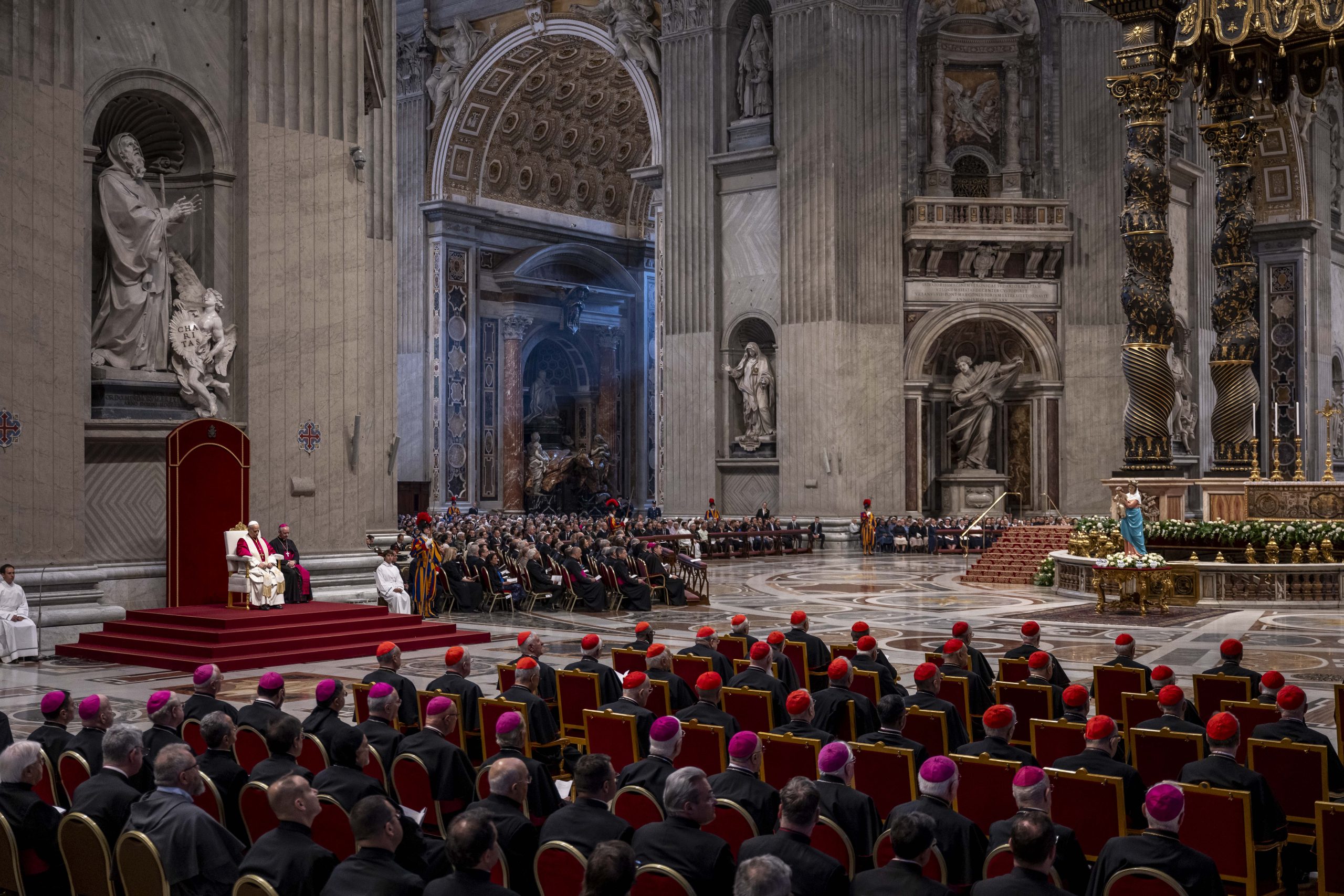
Vatican confirms global synodal assemblies ahead of Rome gathering in 2028
The Vatican has confirmed that dioceses across the world will spend the next two years preparing for a major “Ecclesial Assembly” in Rome in 2028 as part of the next phase of the Synod on Synodality The Vatican has unveiled a detailed timetable for the next phase of the Synod on Synodality, confirming that dioceses across the world will spend the next two years preparing for a major ecclesial assembly in Rome in October 2028. Entitled Towards the Assemblies 2027-2028 , the text presents the next stage of synodality. The process will culminate in what the Vatican is calling an “Ecclesial Assembly”, distinct from a Synod of Bishops but intended to gather representatives from across the global Church for a final act of discernment in Rome. The document, published on May 20 by the General Secretariat of the Synod, sets out the “stages, criteria, and tools for preparation” that will guide local Churches through what Rome describes as the “implementation phase” of the synodal process launched by Pope Francis in 2021. Under the plan, dioceses, bishops’ conferences and continental episcopal bodies will each hold assemblies between 2027 and 2028 aimed at assessing how the Synod’s final document is being put into practice. The Vatican said the process would culminate in an Ecclesial Assembly in Rome “together with the Holy Father”. The text divides the process into four stages titled “Recollecting”, “Interpreting”, “Orienting” and “Celebrating”. The first phase, scheduled for the first half of 2027, will involve diocesan and eparchial assemblies intended to evaluate the reception of the Synod’s final document at local level. Bishops will oversee the preparation of narrative reports describing “what concrete form of a missionary synodal Church and what new paths of synodality are emerging” within their communities. Dioceses will also prepare letters addressed to other Churches highlighting what the Vatican described as “the principal fruits that have emerged in the process of implementing the synod”. National and regional bishops’ conferences will then gather during the second half of 2027 to prepare theological-pastoral reports before continental assemblies take place during the opening months of 2028. Those continental meetings will produce “perspective reports” that will contribute to the drafting of the instrumentum laboris , or working document, for the Rome assembly. The final stage will take place in October 2028 at the Vatican. Although officials have repeatedly insisted the gathering will not constitute another Synod of Bishops, the new document states that the assembly’s conclusions will be “offered to the Holy Father as the fruit of the process of discernment”. The text places strong emphasis on papal oversight throughout the process, concluding that the entire journey will take place “under the guidance of the Holy Father”. The publication provides the clearest indication yet that Pope Leo XIV intends to continue the synodal project initiated by his predecessor. Since his election, the Pope has repeatedly referred to synodality as a defining characteristic of ecclesial life, describing it as “a style of cooperation” and an exercise in listening. The Vatican stressed that the implementation phase was not intended to reopen the consultation process that began in 2021, but rather to assess what has already been achieved since the Synod’s conclusion. “It is not a matter of repeating the Synod consultation, nor of adding further tasks to the ordinary life of communities,” the document states, “but rather of rereading what has already been experienced, recognizing its fruits and difficulties.” Cardinal Mario Grech, Secretary General of the Synod, said the assemblies were intended to be “a profound ecclesial and spiritual experience of discernment”. “What we are proposing to the local Churches is not an additional task, but rather a time of shared discernment and thanksgiving, in which to reread together what the Spirit is causing to grow in the Church and to recognize the steps we are called to take,” His Eminence said. The document also calls for broad participation within the assemblies themselves. It says organisers should ensure “balance between men and women and among different generations”, while also involving priests, deacons, Religious, members of ecclesial movements and “persons living in situations of fragility or marginality”. It adds that “particular care should be devoted to the involvement of parish priests”. Representatives of other Christian communities and religions may also take part “where appropriate”. Responsibility for organising the assemblies will rest with diocesan bishops at local level, presidents of bishops’ conferences nationally, and the heads of continental ecclesial bodies at regional level. The Vatican further encouraged organisers to continue using “conversation in the Spirit”, the discussion method strongly promoted during the Synod assemblies in Rome in 2023 and 2024. The implementation phase formally began after the late Pope Francis approved the Synod’s final document last year and handed it directly to the Church without issuing a separate post-synodal apostolic exhortation. Before his death, Francis repeatedly described synodality as irreversible and insisted the process marked a new way of governing and listening within the Church. Materials produced during each stage will be submitted to the Synod Secretariat according to a fixed timetable. Diocesan reports must be completed by June 30, 2027, bishops’ conference reports by December 31, 2027, and continental reports by April 30, 2028 ahead of the final assembly in Rome.
May 21, 2026
Vatican confirms release date, title and theme of Pope Leo XIV’s first encyclical
The Vatican has confirmed the release date, title and theme of Pope Leo XIV’s first encyclical The release date for Pope Leo XIV’s first encyclical has been confirmed as May 25. The title of the document has been confirmed as Magnifica Humanitas, and it will focus on preserving the human person in the age of artificial intelligence, according to Vatican News. Although the text will not be released until May 25, it will be signed on May 15, matching the date of the signing and publication of Rerum Novarum, Pope Leo XIII’s best-known encyclical, issued on May 15, 1891. The same date was also chosen in 1931 by Pope Pius XI for Quadragesimo Anno, which developed the Church’s teaching on social order and introduced the principle of subsidiarity. Thirty years later, on May 15, 1961, Pope John XXIII promulgated Mater et Magistra, focusing on economic justice and social development. May 25 also coincides with Pope St John Paul II’s Ut Unum Sint, on ecumenism, which was released on May 25, 1995, and Pope Leo XIII’s Annum Sacrum, released on May 25, 1899, which consecrated the entire human race to the Sacred Heart of Jesus. Magnifica Humanitas will be presented at 11.30am in the Vatican’s Synod Hall. Alongside the Pope, a number of significant prelates, theologians and specialists are scheduled to speak. They include Cardinal Víctor Manuel Fernández, prefect of the Dicastery for the Doctrine of the Faith; Cardinal Michael Czerny SJ, prefect of the Dicastery for Promoting Integral Human Development; Prof Anna Rowlands, a theologian and professor at Durham University; Christopher Olah, co-founder of Anthropic and head of research on the interpretability of artificial intelligence; and Prof Leocadie Lushombo IT, professor of political theology and Catholic social thought at the Jesuit School of Theology at Santa Clara University in California. Closing remarks will be given by Cardinal Secretary of State Pietro Parolin, followed by an address and blessing by the Pope. Addressing artificial intelligence, the encyclical will build on recent Vatican interest in the subject. In January 2025, the Dicastery for the Doctrine of the Faith and the Dicastery for Culture and Education issued Antiqua et Nova, a joint note on “the relationship between artificial intelligence and human intelligence”. The document said AI could bring “important innovations” but warned that it also carried the danger of deepening inequality, manipulating public opinion and expanding “the instruments of war well beyond the scope of human oversight”. It added that artificial intelligence “should not be seen as an artificial form of human intelligence, but as a product of it”, and insisted that it “should be used only as a tool to complement human intelligence rather than replace its richness”.
May 18, 2026
SSPX rejects Cardinal Fernández warning over July consecrations
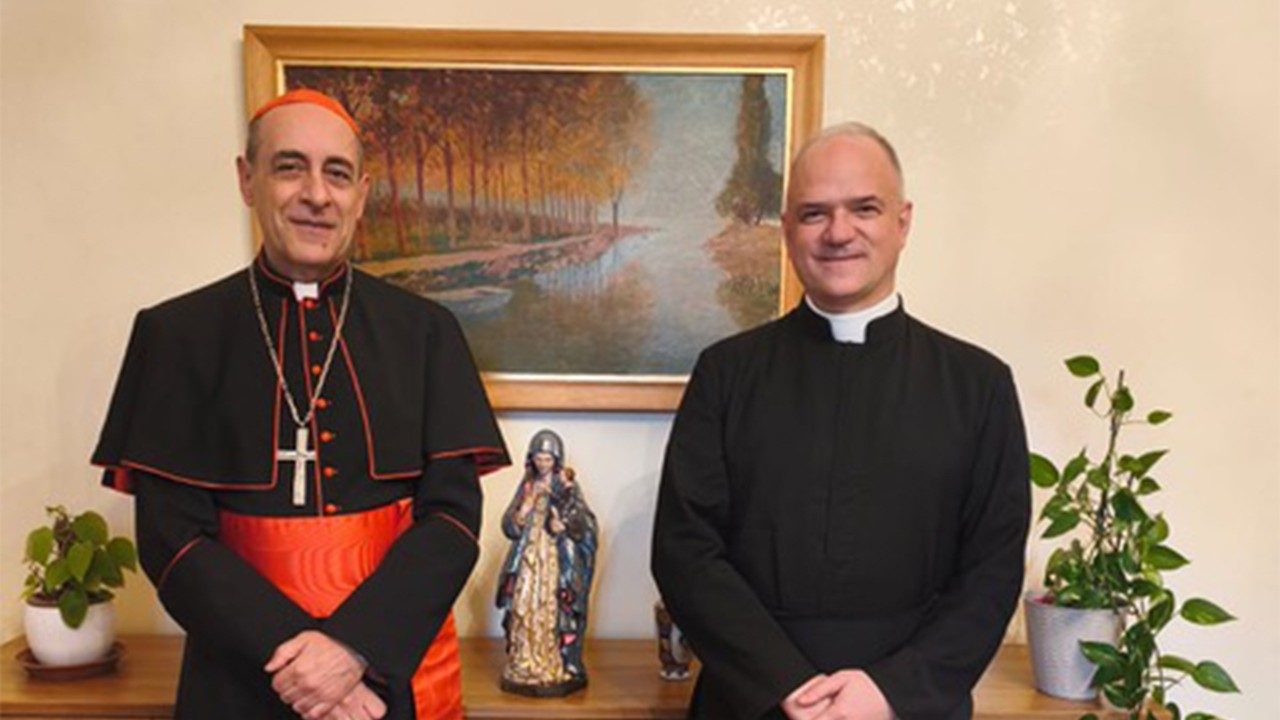
The Society of St Pius X has issued a forceful public response to Cardinal Víctor Manuel Fernández’s warning that planned episcopal consecrations without papal approval would constitute “a schismatic act”, arguing that the Society is acting out of necessity for the “salvation of souls” The Society of St Pius X has issued a forceful response to Cardinal Fernández’s warning that planned episcopal consecrations without papal approval would constitute “a schismatic act”, arguing that the Society is acting out of necessity for the “salvation of souls” and therefore incurs no automatic excommunication under canon law. The response was published on 15 May by the Society’s official in-house news service, through Fr Jean-Michel Gleize, the French professor at the seminary at Écône who took part in doctrinal discussions with Rome between 2009 and 2011. The intervention follows a statement issued two days earlier by Cardinal Víctor Manuel Fernández, prefect of the Dicastery for the Doctrine of the Faith, who warned that the episcopal consecrations announced by the SSPX “do not have the corresponding pontifical mandate”. Cardinal Fernández said: “This gesture will constitute ‘a schismatic act’ (John Paul II, Ecclesia Dei, n. 3), and ‘formal adherence to the schism constitutes a grave offense against God and entails the excommunication established by Church law’.” The cardinal added that the Holy Father was praying that the Society’s leaders would “retrace their steps regarding the very serious decision they have taken”. Fr Gleize’s reply interpreted the Vatican declaration as confirmation that Pope Leo XIV will refuse to grant authorisation for the consecrations expected to take place on July 1. “The novelty that appears in this declaration from Rome,” Fr Gleize wrote, “is that the episcopal consecrations scheduled for July 1st will not be ‘accompanied by the corresponding papal mandate’. Coming from a Prefect of a Vatican dicastery, this remark is quite clearly an attempt to convey to the Society that Pope Leo XIV will refuse to authorise the consecrations.” Fr Gleize based much of his argument on Canons 1323 and 1324 of the 1983 Code of Canon Law, maintaining that a person acting out of necessity, or under the sincere belief that such necessity exists, is not subject to automatic penalties. Quoting canon law directly, Fr Gleize argued that a person who violates a law “out of necessity, or to avoid serious harm, is not punishable by any penalty”, provided the act is not “intrinsically evil or causes harm to souls”. He further contended that even if Church authorities judged the act objectively wrong, “the penalty of latae sententiae is not incurred” where the accused acted in good faith under a perceived necessity. “In other words,” Fr Gleize wrote, “even if one admits that there is no real necessity to justify the act, the mere fact that the perpetrator committed the act driven by what he believed to be a real necessity is sufficient to excuse him from the crime.” The SSPX professor insisted that the Society’s intention remained the good of the Church rather than rebellion against papal authority. “This is why it disregards this application of ecclesiastical law that would accuse it of a crime and impose the corresponding penalty,” Fr Gleize stated. “Why? Simply because ecclesiastical law cannot be applied to the detriment of the salvation of souls.” Fr Gleize added: “In all reality, there is no wrongdoing, no schism on the part of the Fraternity. But only the same zeal which remains unchanged, even if it takes on paradoxical forms in the eyes of the world, for the glory of God and the salvation of souls.” The response concluded with an unusually confrontational passage directed at senior churchmen associated with more progressive currents in the Church. “Excommunicated? But by whom?” Fr Gleize asked. “By those who receive the blessing of a schismatic woman, the Archbishop of Canterbury, Sarah Mullally? By those who authorise the blessing of Fiducia Supplicans? And who kneel before Pachamama?” Cardinal Fernández’s statement had drawn immediate comparisons with events preceding the 1988 consecrations carried out by Archbishop Marcel Lefebvre at Écône without papal mandate. Shortly before those consecrations, Cardinal Bernardin Gantin, then prefect of the Congregation for Bishops, issued a formal canonical warning to Archbishop Lefebvre declaring that such an act would incur automatic excommunication. “Since on June 15, 1988 you stated that you intended to ordain four priests to the episcopate without having obtained the mandate of the Supreme Pontiff,” Cardinal Gantin wrote, “I myself convey to you this public canonical warning.” His Eminence added: “If you should carry out your intention as stated above, you yourself and also the bishops ordained by you shall incur ipso facto excommunication latae sententiae reserved to the Apostolic See.” Archbishop Lefebvre nevertheless proceeded with the consecrations on June 30, 1988, leading Pope St John Paul II to issue the motu proprio Ecclesia Dei, which described the act as schismatic. The SSPX has long disputed that interpretation, insisting that Archbishop Lefebvre acted in a state of necessity amid what the Society viewed as a profound doctrinal and liturgical crisis in the Church following the Second Vatican Council. The latest public exchange between Cardinal Fernández and Fr Gleize now appears to indicate that tensions between Rome and the Society are entering a new and potentially decisive phase ahead of the proposed July consecrations. Photo credit: Dicastery for the Doctrine of the Faith
May 17, 2026
Cardinal Eijk warns Vatican synod report ‘must be forcefully refuted’
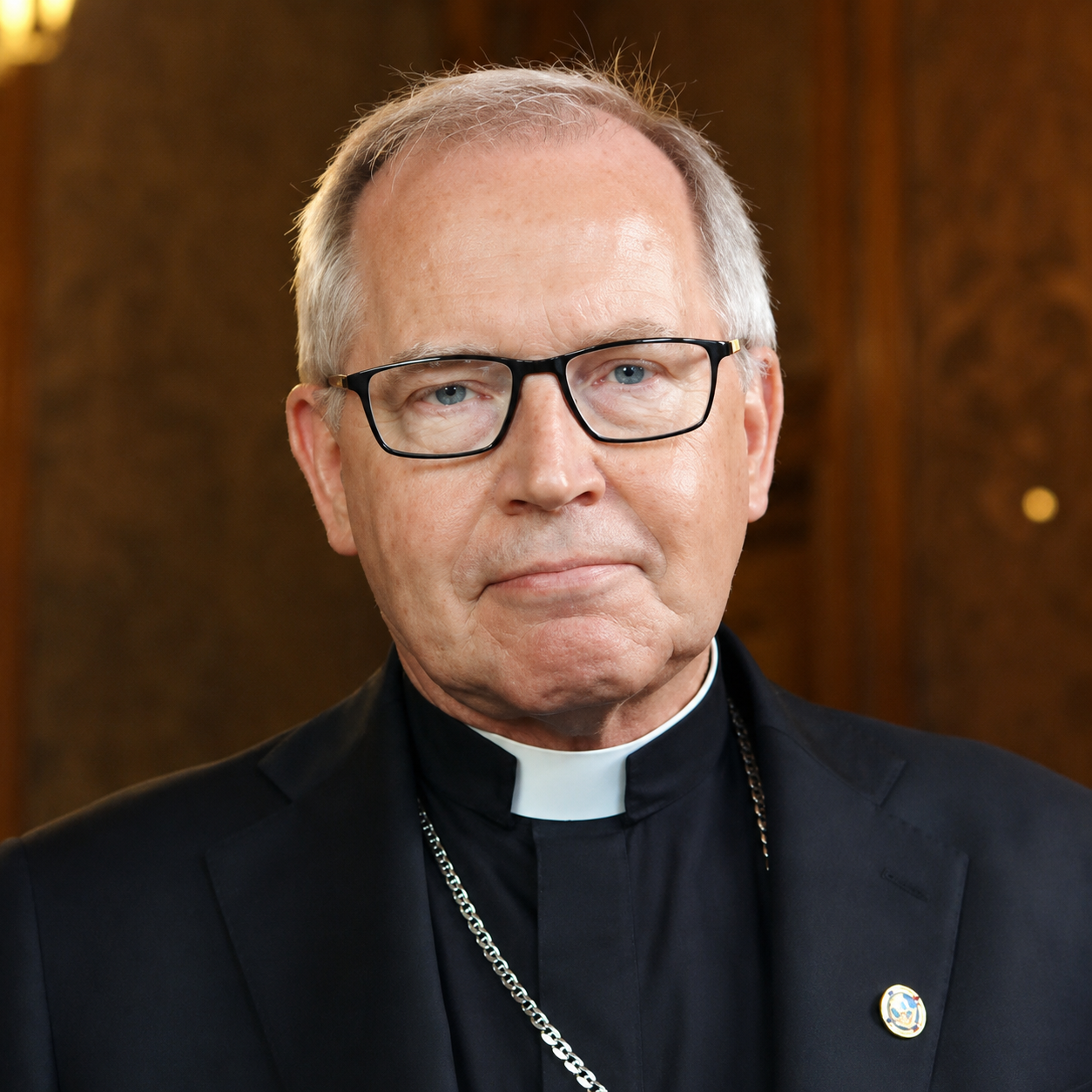
Cardinal Willem Jacobus Eijk has issued one of the strongest episcopal critiques yet of the Synod on Synodality Cardinal Willem Jacobus Eijk has issued one of the strongest episcopal interventions yet against the Synod on Synodality’s treatment of moral theology. The Dutch Cardinal has warned that the final report of Study Group 9 risks undermining settled Catholic teaching on sexuality and the nature of moral truth itself. Writing in the National Catholic Register , Cardinal Eijk said the report “fundamentally contradicts Catholic moral teaching and thoroughly undermines its application to moral conduct”, adding that the document “must be forcefully refuted”. The report at the centre of the controversy, entitled Theological Criteria and Synod Methodologies for Shared Discernment of Emerging Doctrinal, Pastoral, and Ethical Issues , was produced by one of 10 study groups established by Pope Francis in February 2024 after the Synod assemblies concluded that insufficient time remained to address several contentious themes before the final Vatican gathering later that year. Study Group 9 had been tasked with examining doctrinal and ethical questions initially described as “controversial”. The report later explained that the phrase had been replaced with “emerging issues” as part of what it called an “authentic paradigm shift” inspired by the reforms of the Second Vatican Council. Particular controversy has surrounded the inclusion of testimonies from two men in same-sex “civil marriages”. One contributor from Portugal described building “a life of shared faith and service with my husband”, while another American witness wrote that his sexuality “isn’t a perversion, disorder, or cross; it’s a gift from God. I have a happy, healthy marriage and am flourishing as an openly gay Catholic”. The report stated that one testimony “bears witness to the discovery that sin, at its root, does not consist in the (same-sex) couple relationship, but in a lack of faith in a God who desires our fulfilment”. Cardinal Eijk said the authors reproduced the statement “without correction or clarification”. “Homosexual acts are intrinsically evil – this is settled Catholic doctrine,” Cardinal Eijk wrote. “A believing Christian who engages in such acts certainly falls short in faith, insofar as he fails to trust in God’s grace, which enables him to avoid sin. But this does not mean the sin lies primarily in lack of faith rather than in the act itself, as the witness suggests.” His Eminence also criticised the report’s treatment of Courage International, the apostolate founded in New York in 1980 to help Catholics with same-sex attraction live according to Church teaching. The American testimony portrayed Courage negatively, suggesting that it “separates faith and sexuality” and associated it with conversion therapy. Cardinal Eijk argued that by presenting such testimonies without doctrinal response, the report effectively normalised homosexual relationships within a Church context. “This represents a clear attempt to weaken the proclamation of Catholic moral teaching,” Cardinal Eijk said. Much of Cardinal Eijk’s criticism focused not only on sexuality but on the report’s wider theological method. The study group rejected what it described as the “abstractly proclaiming and deductively applying principles that are set out in an immutable and rigid manner”, instead advocating what it termed a “fruitful tension” between doctrine and lived experience. The report also insisted that discernment should avoid “a problem-solving perspective” and should not presume “to deduce action from the simple application of norms”. Instead, local Churches were encouraged to prioritise listening and dialogue rather than “pre-packaged” doctrinal solutions. Cardinal Eijk said such language concealed “a radical departure from Catholic moral theology”. Referring to the report’s use of Christ’s words that “the Sabbath was made for humankind, and not humankind for the Sabbath”, His Eminence wrote: “This is a fundamental misreading of Scripture.” Cardinal Eijk argued that the report confused changeable ritual law with the permanent moral law rooted in creation. “The moral law concerning marriage and sexuality is of an entirely different character,” Cardinal Eijk wrote. “These norms flow from the natural law, which reflects God’s purposes in creating human beings, marriage and sexuality itself.” His Eminence then restated traditional Catholic teaching on marriage in classical terms, writing that “sexual differentiation and openness to life are essential elements” of marriage as a “mutual total self-giving between a man and a woman”. Cardinal Eijk added that “sexual acts between persons of the same sex cannot constitute such a total gift because they are closed to the transmission of life by their very nature”. Study Group 9 repeatedly insisted that its aim was not to produce “generalisable solutions” but to initiate “processes in the form of listening”. The report argued that moral understanding should emerge gradually through dialogue across cultures and local Churches rather than through the direct application of universal norms. For Cardinal Eijk, that approach strikes at the heart of Catholic moral teaching. “The Church’s teaching is not obscure, nor is it subject to revision through synodal processes,” Cardinal Eijk wrote. “It is the truth that sets us free.” His Eminence concluded by stating that “a number of cardinals and bishops will make their objections known to the Roman Magisterium.”
May 16, 2026