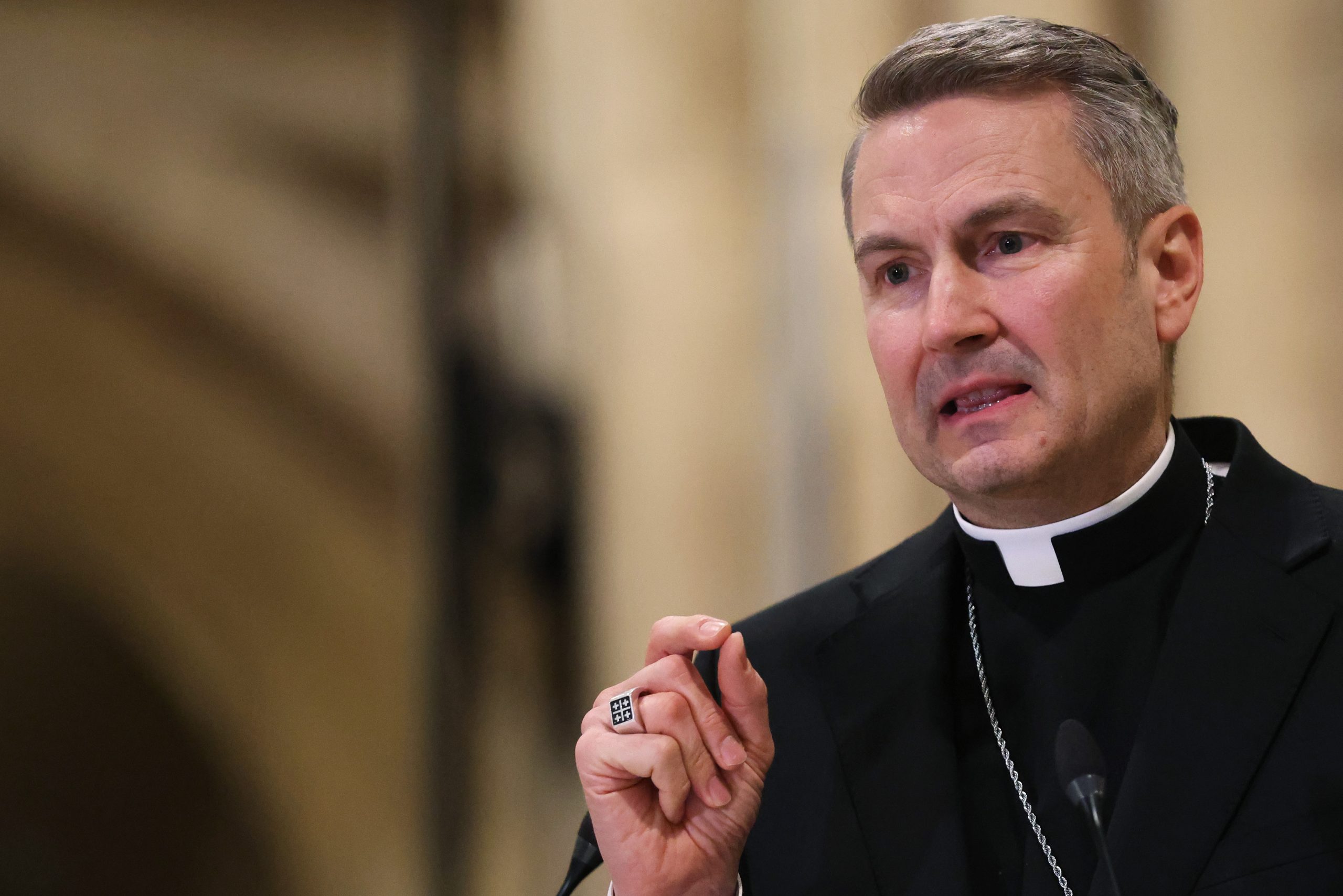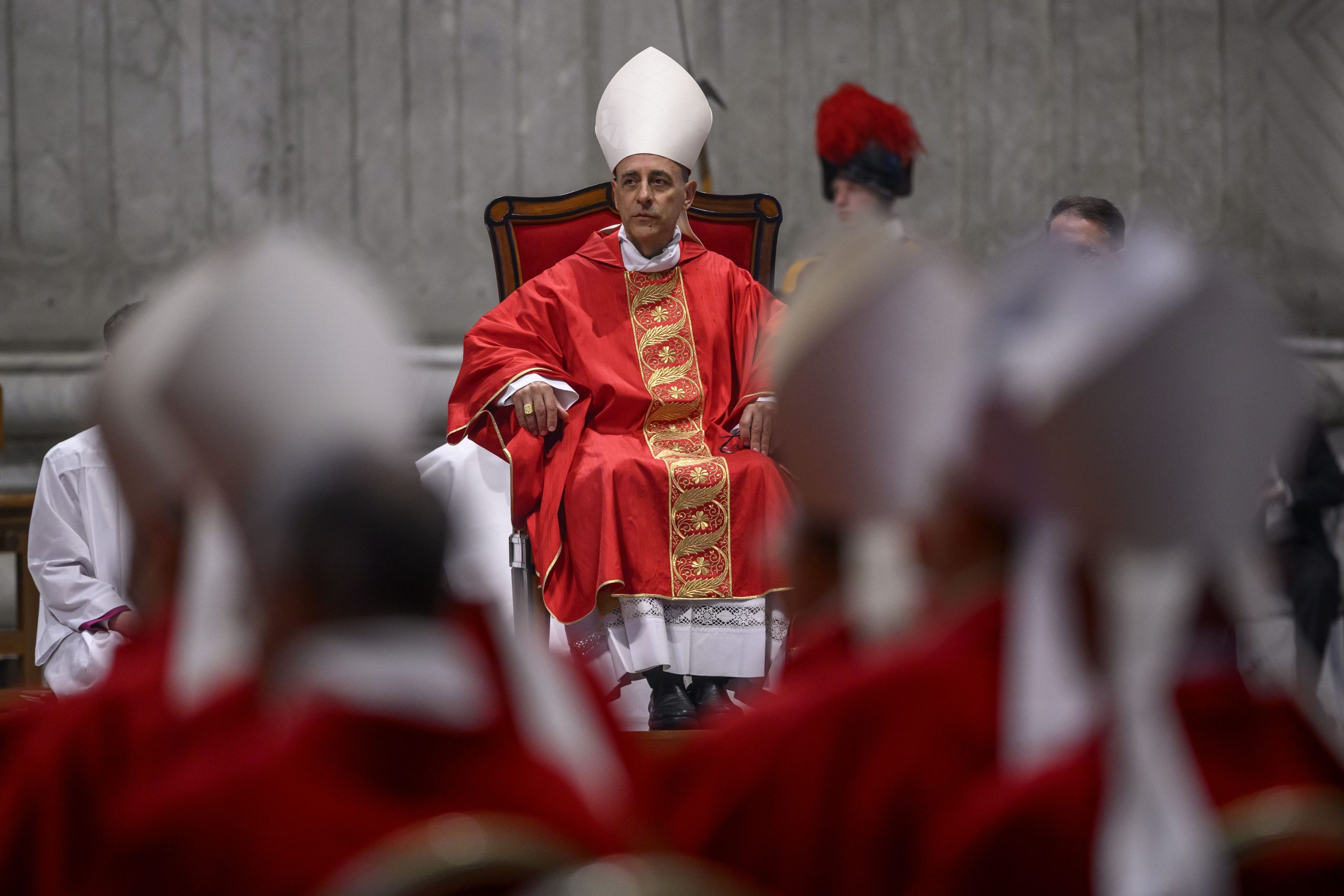
Cardinal Víctor Manuel Fernández has criticised a 2006 Vatican doctrinal notification against the Jesuit theologian Fr Jon Sobrino.
Speaking at the Pontifical Urban University in Rome on 12 May, the prefect of the Dicastery for the Doctrine of the Faith said the notification, issued by the then Congregation for the Doctrine of the Faith under Cardinal William Levada, appeared to suggest that “theology made in the context of the poor is inadequate and dangerous”.
The Argentine cardinal made the remarks during the opening address of a study day titled “Milestones in Contextual Theology Today”, in which he spoke at length on theological development, inculturation and the influence of Pope Francis on contemporary Catholic thought.
The 2006 notification, approved by Pope Benedict XVI, examined two works by the Spanish Jesuit Fr Jon Sobrino, a leading figure in liberation theology. The congregation concluded the books contained “notable discrepancies with the faith of the Church”, particularly in relation to Christology, the divinity of Christ and the methodological foundations of theological reflection.
In the document, the congregation objected to Fr Sobrino’s assertion that “the poor” constitute a privileged theological locus in Latin American theology. It argued instead “the ecclesial foundation of Christology may not be identified with ‘the Church of the poor’, but is found rather in the apostolic faith transmitted through the Church for all generations”.
Cardinal Fernández directly addressed those criticisms in his lecture, recalling that many Latin American theologians had struggled to understand parts of the notification.
“One of the strong points of Latin American theology is the importance of taking the historical context into account in theological reflection,” he said. “The problem with this document is that it applies the expression ‘from’ only to ecclesial tradition, in such a way that expressions such as ‘thinking from pastoral experience’, ‘thinking from motherhood’, or ‘thinking from the suffering of the poor’ are excluded.”
He added: “What we call ‘contextual theology’ would always be viewed with suspicion.”
The cardinal argued the notification did not sufficiently encourage theologians to engage with the social realities surrounding them.
“This does not encourage the effort to take seriously the context in which theological reflection takes place,” he said. “It seems to indicate rather that theology made in the context of the poor is inadequate and dangerous, that is, that the life of the poor may occupy only a marginal place in the reflection of faith.”
Cardinal Fernández also revealed his own defence of contextual theology caused difficulties with the doctrinal dicastery more than a decade ago. He recalled publishing an article in 2007, shortly before the Latin American bishops’ conference at Aparecida, in which he argued although the faith of the Church remained the “fundamental point of departure”, this did not exclude “other complementary points of departure” linked to concrete historical situations.
The article resurfaced in 2010 when the Argentine episcopate proposed him as rector of the Pontifical Catholic University of Argentina. According to Cardinal Fernández, the doctrinal congregation delayed granting the required nihil obstat after concerns were raised over the text.
“There was at that time an exchange of letters with the dicastery, which forced me to publish a new article in which I would have to retract my affirmations,” His Eminence said.
Instead, he published a second article in 2011 in which he restated his earlier arguments while stressing “it is precisely the faith of the Church that provides the most solid and profound foundations to look at the poor as God looks at them”. He also maintained fidelity to tradition alone could leave Christians indifferent to the circumstances in which people suffer.
“The simple fact of accepting the tradition of the Church can leave us indifferent to the history into which God has inserted us, if at the same time we do not have our eyes open to what is happening around us,” he said.
Cardinal Fernández linked those ideas closely to the pontificate of Pope Francis, saying the late pope had consistently insisted reality is better understood from the peripheries and through the experience of the poor.
Cardinal Fernández quoted from Francis’s 2013 apostolic exhortation Evangelii Gaudium, in which the pope warned against abstract thinking detached from lived reality.
“The idea disconnected from reality gives rise to ineffective idealisms and nominalisms,” the passage states. “What engages people is reality illuminated by reason.”
The lecture also explored the relationship between contextual theology and inculturation, which Cardinal Fernández described as interconnected but distinct processes. Inculturation, he said, involves the long-term embedding of the Gospel within a culture, while contextual theology responds more immediately to particular historical events and social circumstances.
Drawing on the documents of the Second Vatican Council, he argued theological reflection develops more fully when it engages with the experiences and cultures of different peoples. He cited the decree Ad Gentes, which called for theological research to re-examine revealed truths within differing socio-cultural settings, and said such engagement allows aspects of revelation to emerge may otherwise remain unnoticed.
Cardinal Fernández also referred to the thought of Pope Benedict XVI and Pope John Paul II in support of his argument. He quoted Benedict XVI’s encyclical Deus Caritas Est: “Closing our eyes to our neighbour also blinds us to God.” He also cited John Paul II’s Novo Millennio Ineunte, in which the Polish pope wrote that Christ must be recognised especially in the faces of those with whom He identified Himself.
The cardinal further argued that the Congregation for the Doctrine of the Faith itself had previously recognised the value of contextual theology. He pointed to the 1986 instruction Libertatis Conscientia, issued under Cardinal Joseph Ratzinger, which stated that theological reflection developed “starting from a particular experience” could make a “very positive contribution” by highlighting dimensions of the Word of God not previously perceived in full.
Although Cardinal Fernández criticised aspects of the 2006 notification, he did not reject the authority of Church doctrine or dogmatic formulations. Instead, he repeatedly insisted that contextual theology must remain linked to revelation and the faith of the Church.
“The faith of the Church is certainly the fundamental point of departure, the principal theological locus,” he said, while arguing that historical and social realities also shape how revelation is understood and expressed.
The original notification on Fr Sobrino emerged during a period of heightened Vatican scrutiny of liberation theology in Latin America. While the movement’s concern for the poor was frequently praised by Rome, Church authorities also warned against interpretations influenced by Marxist analysis or approaches thought to weaken orthodox teaching on Christ and salvation.
Fr Sobrino, who taught for many years in El Salvador and was closely associated with the murdered Archbishop St Óscar Romero, became one of liberation theology’s most prominent theologians.