

Latest
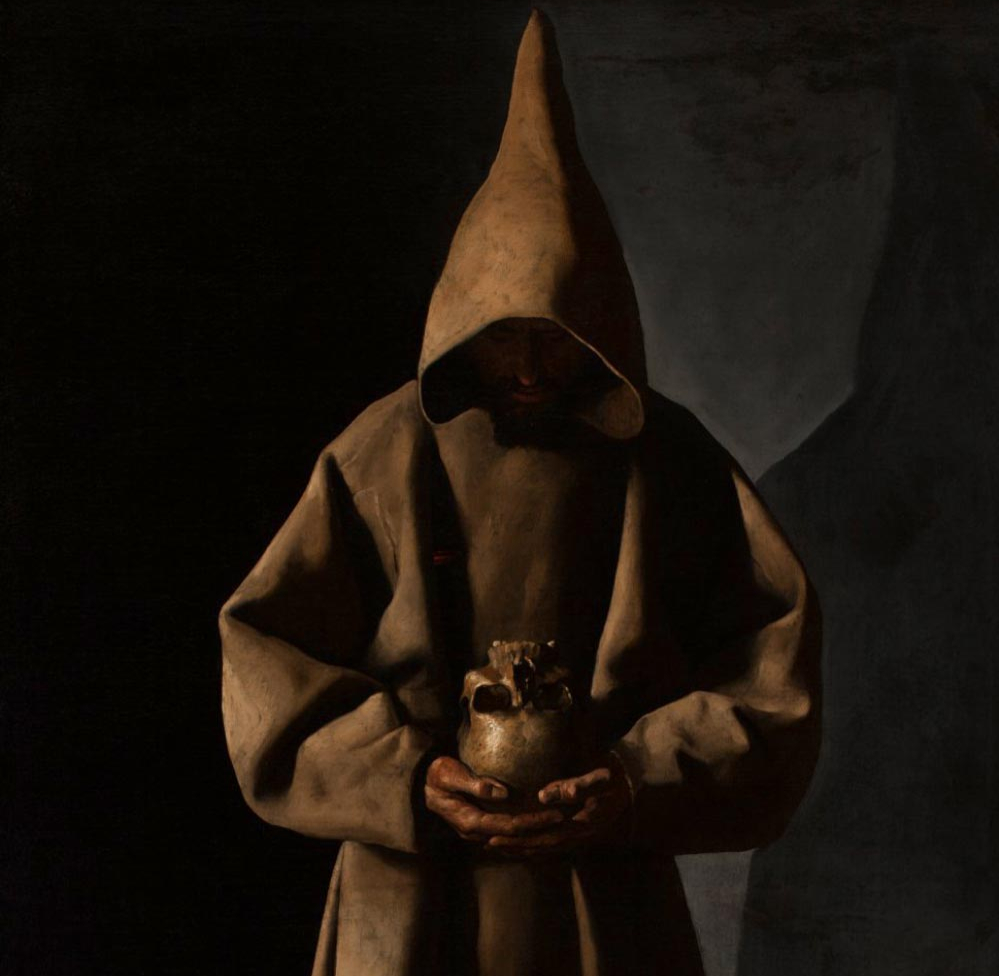
St Francis and memento mori
Brother René Stockman reflects on St Francis of Assisi, “Sister Death” and the Christian tradition of memento mori There comes a moment in our lives when we will have to let go of everything and we will appear before God. During our lives, we are afraid to show who we truly are. We erect so many façades that we try to keep standing with great effort. Eventually, however, they will all collapse, like a house of cards swept away by the wind. It reminds me of St Francis of Assisi, who stripped himself of his clothes twice. The first time was when he bade farewell to his lavish life and left his home. In the market square of Assisi, in the presence of his parents, the bishop and a whole crowd, he returned his clothes to his parents. For him, it was a sign of a radical break with his past and, at the same time, the start of a completely new life that he himself called his marriage to Lady Poverty. The bishop covered his nakedness with his cloak to protect him from the covetous eyes of the crowd, but also to welcome him into the Church through this symbolic act. From then on, through his radical living out of the Gospel, he would rebuild the Church of Jesus, which he had received as a special calling from the Lord Himself. What he had initially understood purely in material terms, he would later experience as a spiritual calling and, as a friar, he would travel about to proclaim the Good News everywhere. With this act, a new religious order was born: the mendicant friars, who simultaneously became urban Religious and set in motion an entirely new movement within the Church. By divesting himself of his clothes, he sought to embody the evangelical virtue of poverty in the most radical way and, from then on, to walk through the world as an authentic human being, in the footsteps of his and the world’s only Master, Jesus Christ. In doing so, he broke with a part of the Church that lived behind a façade of wealth and was far removed from the ideal of the Gospel. Later Francis divested himself of his clothes for the second time. This time, not of the lavish costume he wore before his conversion, but of his meagre habit. This time he need not fear covetous glances, for his body had been completely emaciated by illness. He wanted to return to the place where it all began, to his Assisi, to end his hymn of praise to life there and to embrace Sister Death with total surrender. Francis wanted to appear before God as we know humanity from the story of creation: naked and without any form of desire. As soon as he had made the Lord the sole centre of his life he began a process of purification that brought him into total harmony with God, with himself, with his fellow human beings and with all of creation, so that he was ready to appear before God as He had originally created humankind. Before the Fall, humankind was naked, yet felt no shame. Shame arose when desire made its entrance, as described in the Book of Genesis: “Then the eyes of both of them were opened, and they realised they were naked. So they sewed fig leaves together and made loincloths for themselves” (Gen. 3:7). They had lost the innocence of their origin and hid themselves even from their Creator: “I heard your thunder in the garden, and I was afraid because I am naked; so I hid myself” (Gen. 3:10). A little further on, we read how God Himself gave clothes to man to cover him: “And Yahweh God made garments of skin for the man and his wife, and He clothed them” (Gen. 3:21). This repeated emphasis on the fundamental change in the perception of the body has a profound meaning. It constitutes the turning point at which the original human is transformed into the historical human, to use the terms of Pope St John Paul II. With the Fall comes a rupture in the original harmony in which man was created, and selfishness makes its entrance. The worm of pride has turned man’s natural desire and his innate passion for the good into a covetous gazing and grasping at one another. The original inner peace is disrupted, and the other becomes a threat. From then on, humanity must protect itself from its fellow humans and also cover its nakedness. Its unguarded relationship with God is also disrupted. We can truly speak of a broken harmony on all levels. Was this harmony then fully restored in Francis? No, for we know from history how, in the last years of his life, he truly had to struggle with his fellow brothers, who were taking a different path. Perhaps he watched with pain as the radicalism of the early beginning was gradually abandoned. What had begun as a protest against the way the Gospel was being violated, both in society and in the Church, gradually grew into a greater conformity with what he had prophetically renounced. But even in the struggle he waged against this, an inner resignation came over him, and he saw that he had to relinquish that as well. Ultimately, it was not he who had founded his order; this was the work of God, for which he was merely an instrument. He even accepted temporary care in the bishop’s palace, where the bishop spared no effort in his good care. On the surface, his stay with the bishop seemed to contradict his ideal of radical poverty, but even that became relative in light of his total surrender to God’s will. We thus see in Francis a total internalisation and a further purification of all his relationships, through which they also grew in harmony. The moment he wished to lie completely naked on the ground to welcome death is therefore the moment he was able to surrender his life in a completely harmonious way into the hands of God. He lay there as Christ hung naked on the Cross, and as Adam had been created by God. He could echo Job: “Naked I came from my mother’s womb, and naked I shall return there; the Lord gave, and the Lord has taken away. Blessed be the name of the Lord” (Job 1:21–22). We can learn much from Francis, but perhaps most of all from this moment, in which he was able to surrender himself completely and entrust himself to God without reserve, without pretence, in his full reality as a naked human being. For that is the path we must all take and for which we must prepare ourselves. It is always about that total self-emptying, through which we grow towards the image that God has placed within us of Himself and that we were allowed to behold in a completely clear and perfect way in Jesus Christ. It is only through the imitation of Christ, by conforming ourselves to Him, that the likeness to the image of God can grow within us. Everyone is called to do this in his or her own way, from and with his or her own personality, in his or her own time and in the concrete circumstances of life at that moment. For Francis, this was in Assisi, at the end of the 12th and the beginning of the 13th century. For him, it was about that radical following of Christ. His radical experience of poverty was his way of becoming totally conformed to Christ and ultimately appearing before his Creator as a new Adam. There are many aspects of Jesus Christ that can inspire us to follow in his footsteps. Within religious life, this is expressed through the many and highly diverse charisms lived out by the members of various orders and congregations. They are like different windows through which one looks out at the world from a large apartment building. Each charism has its own distinct character, and every member of the order or congregation is called to live out this charism as a radical following of Christ. No one charism is better than another, provided it is lived out in a consistent and radical way. But this is not reserved solely for Religious. Every believer is called to take Jesus Christ as his or her model and to follow Him from within his or her own reality. The ultimate goal is that we prepare ourselves for that final encounter with the Lord, in which our death becomes the transition to full life with and in God. We must view our lives as a journey towards this final destination, and we will constantly have to make choices about which path to follow to get there. Sometimes we will lose our way and stray onto wrong paths, but then there is always the Lord who, through His example, can bring us back onto the right path. Here God’s mercy comes into view, which, through His forgiveness, continually encourages us to leave the wrong steps of the past behind, so that we may set out on the right path with renewed courage. We all know that we will eventually arrive at our destination, but we do not know how or when. That is why it is important to prepare ourselves thoroughly and not let death take us by surprise. We should actually become friends with our death, thinking of it daily, not as a terrifying fate looming over us, but as a friendly guest whom we look forward to with a reassuring and even longing heart. This need not be a macabre message, but we realise that for many death is seen as a threatening bogeyman and is therefore truly detested. It is telling that Francis was only able to complete his famous “Canticle of the Sun” in the final phase of his life, concluding with the greeting to “Sister Death”. For him, too, this was a process of growth, through which he became fully reconciled with death and truly welcomed it as a redemptive moment in his life. We, too, will have to go through that process, and it may take a few years, and for some many years, before we, like Francis, can greet death as our sister. But we must dare to set that process in motion and not run away from it, as many unfortunately do. For one day we will have to let go of everything, and leave behind everything that was dear to us on this earth. We must not let this take us by surprise, but cultivate it within ourselves as a positive process and allow it to evolve.
May 13, 2026
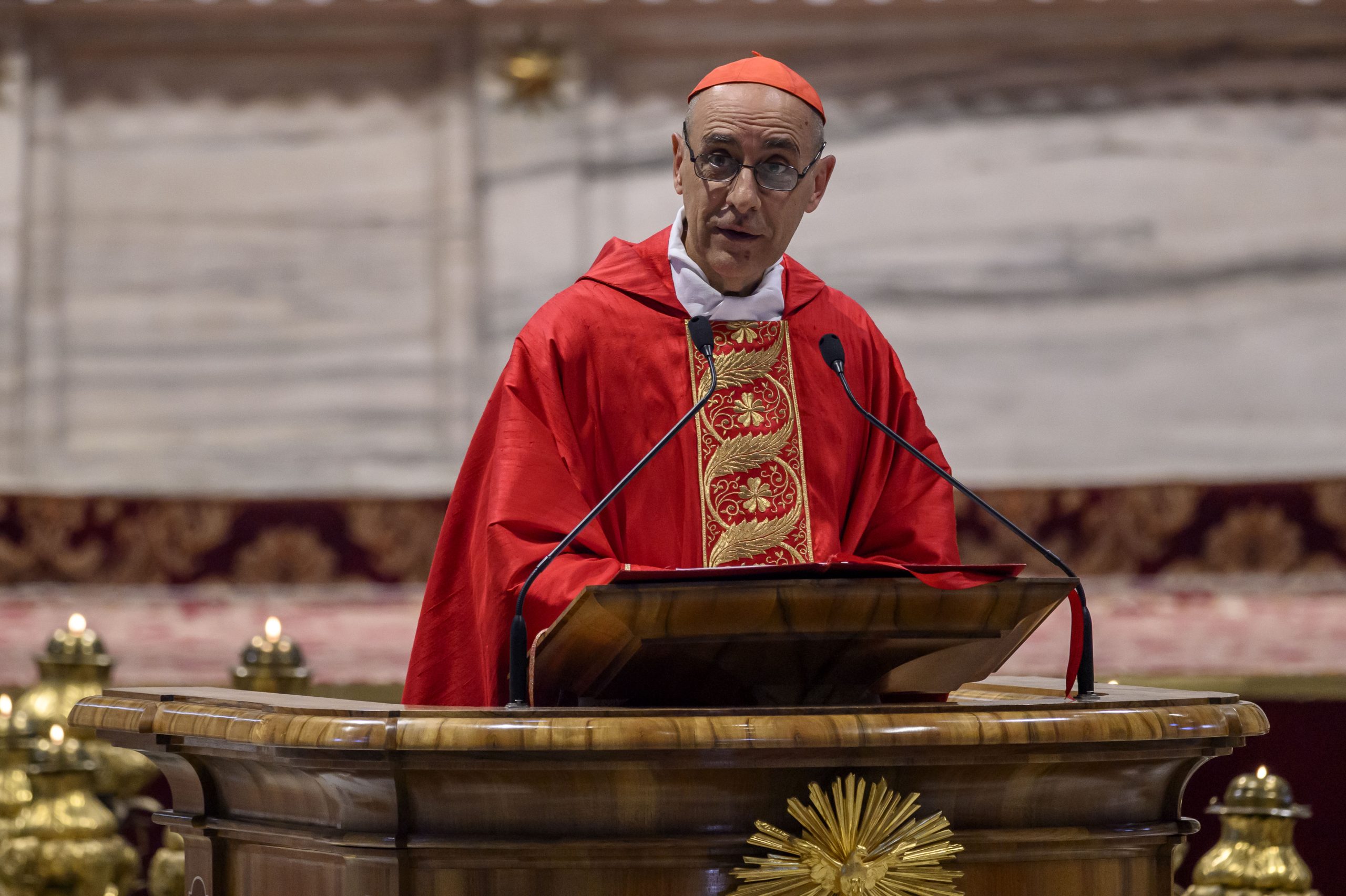
Cardinal Fernández releases statement on SSPX episcopal consecrations
Cardinal Víctor Manuel Fernández, Prefect of the Dicastery for the Doctrine of the Faith, has released a statement warning that planned episcopal consecrations by the Society of St Pius X risk constituting “a schismatic act” Cardinal Víctor Manuel Fernández has warned that the Society of St Pius X risks committing “a schismatic act” through episcopal consecrations without papal approval, in the first public intervention since the meeting with the SSPX on 12 February. In a statement released by the Dicastery for the Doctrine of the Faith on 13 May, the prefect said the planned SSPX episcopal ordinations “do not have the corresponding pontifical mandate” and reiterated the penalties attached under canon law to such an action. “The episcopal ordinations announced by the Priestly Society of Saint Pius X do not have the corresponding pontifical mandate,” Cardinal Fernández said. “This gesture will constitute ‘a schismatic act’ (John Paul II, Ecclesia Dei , n. 3), and ‘formal adherence to the schism constitutes a grave offense against God and entails the excommunication established by Church law’ ( ibid ., 5c; cf. Pontifical Council for Legislative Texts, Explanatory Note , 24 August 1996).” The statement concluded: “The Holy Father continues in his prayers to ask the Holy Spirit to enlighten the leaders of the Priestly Society of Saint Pius X so that they retrace their steps regarding the very serious decision they have taken.” The intervention followed reports earlier on Wednesday morning by Vatican correspondent Nico Spuntoni in the Italian newspaper Il Giornale that the Dicastery for the Doctrine of the Faith was preparing a text concerning the Society and the limits of its relationship with Rome. While no formal canonical decree has yet been issued, Cardinal Fernández’s statement closely resembles the warning sent to Archbishop Marcel Lefebvre shortly before the episcopal consecrations at Écône in 1988. On 17 June 1988, Cardinal Bernardin Gantin, prefect of the Congregation for Bishops, issued a public canonical warning to Lefebvre after the French archbishop announced that he intended to consecrate four bishops without pontifical mandate. “Since on June 15, 1988 you stated that you intended to ordain four priests to the episcopate without having obtained the mandate of the Supreme Pontiff as required by Canon 1013 of the 1983 Code of Canon Law, I myself convey to you this public canonical warning,” Cardinal Gantin wrote. His Eminence continued: “If you should carry out your intention as stated above, you yourself and also the bishops ordained by you shall incur ipso facto excommunication latae sententiae reserved to the Apostolic See in accordance with Canon 1382.” The letter concluded with a direct appeal to Lefebvre “in the name of Jesus Christ” to reconsider what it described as a grave act against the unity of the Church. Furthermore, the statement’s citation of a 1996 explanatory note issued by the Pontifical Council for the Interpretation of Legislative Texts recalls one of the strongest Vatican texts ever published on the canonical status of the SSPX. The 1996 document stated that the 1988 consecrations represented “the consummation of a progressive global situation of a schismatic character” and said that “the whole Lefebvrian movement is to be held schismatic”. It added: “As long as there are no changes which may lead to the re-establishment of this necessary communion, the whole Lefebvrian movement is to be held schismatic, in view of the existence of a formal declaration by the Supreme Authority on this matter.” The explanatory note also addressed Catholics attending SSPX chapels and clergy belonging to the Society. It distinguished between occasional attendance at SSPX liturgies and what it called “formal adherence to the schism”. According to the document, such adherence involved “a free and informed agreement with the substance of the schism” together with an external manifestation of separation from ecclesial communion. The text said that in the case of SSPX priests and deacons “there seems no doubt that their ministerial activity in the ambit of the schismatic movement is a more than evident sign” of formal adherence. The SSPX was founded in 1970 by Archbishop Lefebvre, a former superior general of the Holy Ghost Fathers and one of the leading conservative critics of Vatican II. Tensions between the Society and Rome escalated throughout the 1970s and 1980s over liturgical reform, ecumenism, collegiality and religious liberty. The crisis culminated on 30 June 1988 when Lefebvre consecrated four bishops at Écône without papal approval. The Holy See responded by declaring that Lefebvre, Bishop Antônio de Castro Mayer and the four newly consecrated bishops had incurred automatic excommunication. Two days after the consecrations, Pope St John Paul II issued the motu proprio Ecclesia Dei adflicta , describing the consecrations as “a schismatic act”. Relations improved significantly under Pope Emeritus Benedict XVI. In 2009 he lifted the excommunications of the four bishops as part of an attempt to facilitate reconciliation, though the Society’s canonical status remained unresolved. Pope Francis later granted SSPX priests faculties to validly hear confessions during the Year of Mercy, later extending the provision indefinitely. Local bishops were also authorised under certain conditions to delegate SSPX priests to witness marriages. Despite those concessions, doctrinal discussions between Rome and the Society have remained stalled for years, particularly over the interpretation of Vatican II and the authority of post-conciliar reforms. The Vatican statement issued on Wednesday is the first direct intervention from the doctrinal dicastery since the 12 February meeting with SSPX superior Fr Davide Pagliarani, which the dicastery described as “cordial and sincere”. The DDF reiterated that the ordination of bishops without a mandate from the Roman Pontiff would entail “a decisive rupture of ecclesial communion”, namely “a schism”, with “grave consequences for the Society as a whole”, the dicastery noted. For that reason, it proposed suspending the episcopal ordinations announced for 1 July 2026, which had been declared without papal approval. However, the SSPX rejected the proposal in a communiqué and decided to proceed with the episcopal consecrations.
May 13, 2026
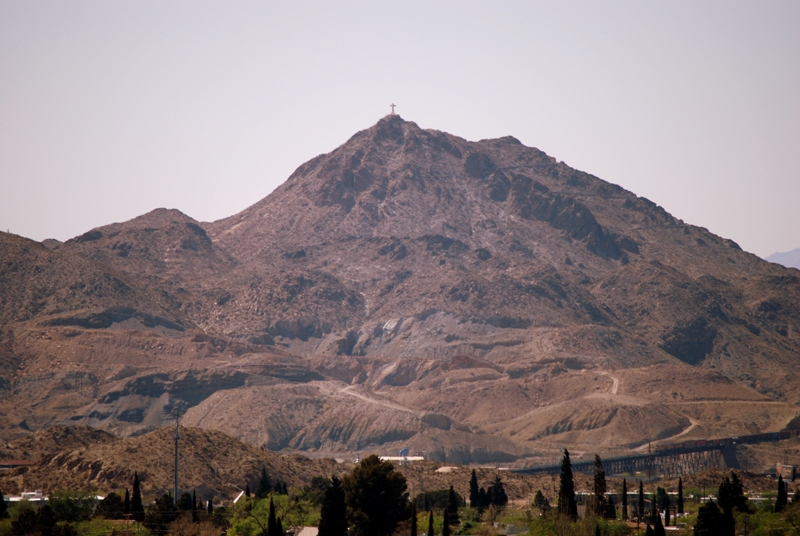
Catholic diocese fights Trump administration over seizure of land close to Mount Cristo Rey
Diocese of Las Cruces has launched a legal battle against the Trump administration after federal authorities moved to seize Church-owned land near Mount Cristo Rey on the United States-Mexico border The Catholic Diocese of Las Cruces has entered into a legal battle with the Trump administration after federal authorities moved to seize Church-owned land at a Catholic pilgrimage site on the United States-Mexico border in order to expand the border wall. Court filings lodged in the United States District Court for New Mexico reveal that the diocese is resisting attempts by the Department of Justice to acquire approximately 14 acres of land at the foot of Mount Cristo Rey, a mountain shrine crowned by a towering limestone statue of Christ. The Trump administration argues that the land is required for the construction of new border infrastructure, including fencing, roads, surveillance systems and vehicle barriers. The diocese, however, maintains that the seizure would gravely interfere with the free exercise of religion and damage the sanctity of a site which has become a symbol of Catholic devotion in the borderlands. In legal submissions filed on 8 May, lawyers acting for the Diocese of Las Cruces argued that the proposed construction would “substantially burden the free exercise of religion” for the faithful who use the site for prayer and pilgrimage. The diocese said the erection of a border wall through the area could “irreparably damage its religious and cultural sanctity”. The dispute centres on Mount Cristo Rey, situated near Sunland Park, where an 8.8-metre statue of Christ the King was completed in 1940 overlooking the Rio Grande valley. Every year, particularly around the Feast of Christ the King, tens of thousands of pilgrims ascend the mountain in acts of penance and devotion. Court documents state that some pilgrims climb the mountain barefoot while others make the ascent on their knees. The federal government has offered compensation of approximately $183,000 for the land under powers of eminent domain, the legal doctrine which permits the state to compulsorily purchase private property for public use. According to filings submitted by the Department of Homeland Security, the acquisition forms part of a wider project to construct more than two kilometres of additional border barrier south of Mount Cristo Rey. The Diocese of Las Cruces has argued that the government is attempting to move too quickly through the courts and deny the Church an opportunity to properly challenge the seizure under both the First Amendment of the United States Constitution and the Religious Freedom Restoration Act. Kathryn Brack Morrow, an attorney representing the diocese, told the press: “The United States Government’s effort to use expedited procedures to condemn diocesan land to build a border wall is an affront to religious liberty.” She added that the diocese would use “all legal tools at its disposal to stop these heavy-handed tactics”. The administration has defended the project as a necessary measure for national security and border control. Customs and Border Protection said in a statement that its preference had been to obtain the land voluntarily, but that the matter had been referred to the Department of Justice after negotiations failed. “It is always CBP’s preference to obtain real estate interests voluntarily,” the agency said. “However, if CBP is unable to acquire the necessary access voluntarily within a reasonable timeframe, CBP refers the matter to the Department of Justice to acquire any necessary property interests through eminent domain.” The shrine at Mount Cristo Rey occupies a unique position along the southern frontier. Much of the border surrounding El Paso and southern New Mexico is already heavily fortified, leaving the mountain as one of the few remaining open stretches in the metropolitan area without an extensive barrier system. The legal challenge mounted by the Diocese of Las Cruces is being supported by lawyers from Georgetown University’s Institute for Constitutional Advocacy and Protection, an organisation which has previously been involved in litigation against Trump-era immigration measures. The Diocese is led by Bishop Peter Baldacchino, who was born in Malta and later became a naturalised American citizen. Much of Bishop Baldacchino’s formation took place within the Neocatechumenal Way, and he is the first bishop in the United States to be part of the charism.
May 13, 2026
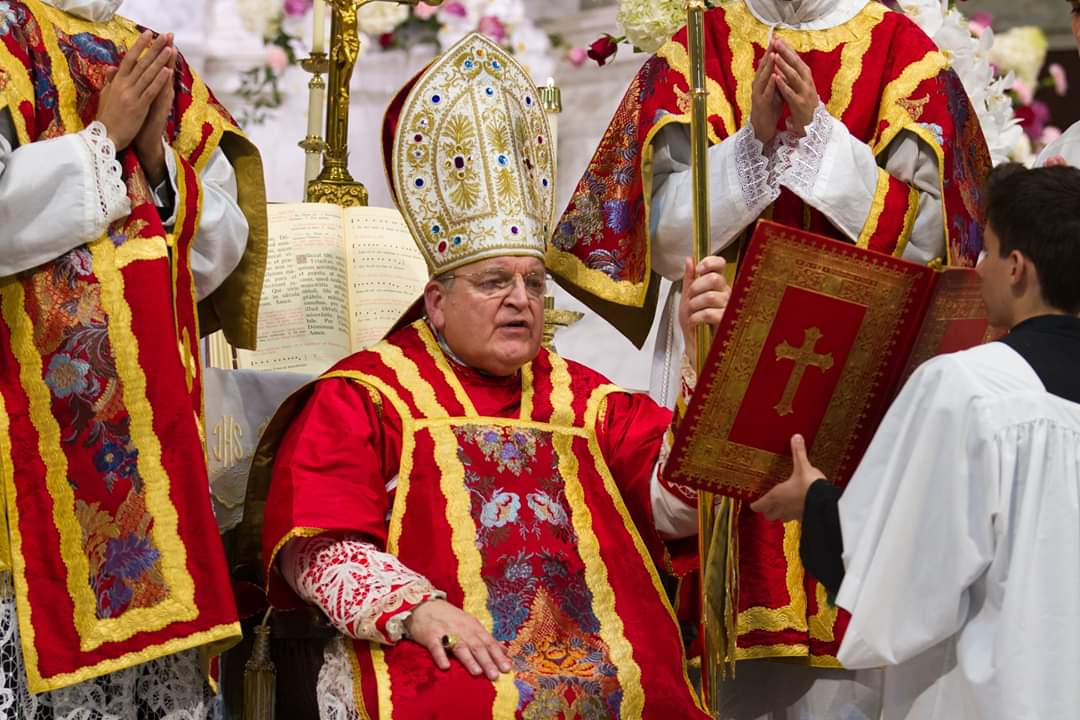
Cardinal Burke to celebrate closing Pontifical High Mass of Chartres pilgrimage
Cardinal Raymond Burke will celebrate the closing Pontifical High Mass of this year’s Chartres pilgrimage as more than 20,000 pilgrims prepare to walk from Paris to Chartres Cardinal Raymond Burke has been confirmed as the celebrant for the Pontifical High Mass at the concluding celebration of the Chartres pilgrimage this year. The American cardinal will celebrate Mass inside Chartres Cathedral on Pentecost Monday for pilgrims arriving on foot from Paris. More than 20,000 pilgrims are registered to take part in the 44th Pèlerinage de Chrétienté , the highest number yet. The theme of this year’s pilgrimage is “You will be my witnesses to the ends of the earth”, with a particular focus on mission, inspired by the resurgence of interest in Christianity across France and other parts of western Europe. More than 13,000 adults were baptised into the Church in France this Easter, a 20 per cent increase on the previous record high in 2025 and a 220 per cent increase on 2016. The largest cohort is made up of 18 to 26-year-olds, who account for 42 per cent of the total, while 82 per cent are aged 40 or under. When teenagers are included, the total rises to more than 20,000. Across the United Kingdom, significant increases were also reported, with Westminster Diocese in London receiving double the number of adults into the Church compared with just two years ago. Explaining the rationale, the Association of Notre-Dame de Chrétienté, which organises the pilgrimage, said the event stands “at the heart of this spiritual awakening in France, for which prayers have been offered for 44 years”, and encouraged Catholics to “show boldness and renew their approach to mission”. Founded in 1983 in response to what its organisers describe as the doctrinal and liturgical crisis of the post-conciliar Church, the Pèlerinage de Chrétienté sees participants walk the 100km journey from Paris to Chartres. In doing so, they revive a medieval tradition and follow in the footsteps of Charles Péguy, the French essayist who helped popularise the pilgrimage at the beginning of the 20th century. Pilgrims are scheduled to meet at Saint-Sulpice, Paris’s second-largest church, at 6.50am on Saturday, May 23 for Mass, before beginning a 35km walk to Choisel, where Mass will be celebrated at 7.30pm. On Pentecost Sunday, a Pontifical Mass will be celebrated at Les Courlis at midday, after which pilgrims will continue walking to Gas, where there will be Benediction of the Blessed Sacrament and all-night adoration. Alongside Cardinal Burke, other celebrants and preachers are scheduled to include Mgr Patrick Chauvet, former rector-archpriest of Notre-Dame Cathedral in Paris, Fr Antonius Maria Mamsery, Superior General of the Missionaries of the Holy Cross, and the Dominican Fr Serge-Thomas Bonino. Also in attendance will be Fr Fabrice Loiseau, a former seminarian of the Society of St Pius X who left before the 1988 episcopal consecrations to join the Fraternity of St Peter at its foundation. Fr Loiseau later founded the Society of Missionaries of Divine Mercy with the support of the then bishop of Fréjus-Toulon, Dominique Rey. The community, whose charism is to live by mercy through the Eucharist and proclaim it to the world, celebrates Mass exclusively according to the Tridentine rite. Cardinal Burke, a long-time advocate of the Traditional Latin Mass, also celebrated the closing Mass for the pilgrimage in 2017. Other notable prelates who have celebrated Mass during the pilgrimage include Bishop Athanasius Schneider, Cardinal Gerhard Müller and Cardinal Robert Sarah. Imagre credit: Di Abraxham03 – Opera propria, CC BY-SA 4.0, https://commons.wikimedia.org/w/index.php?curid=81254560
May 13, 2026
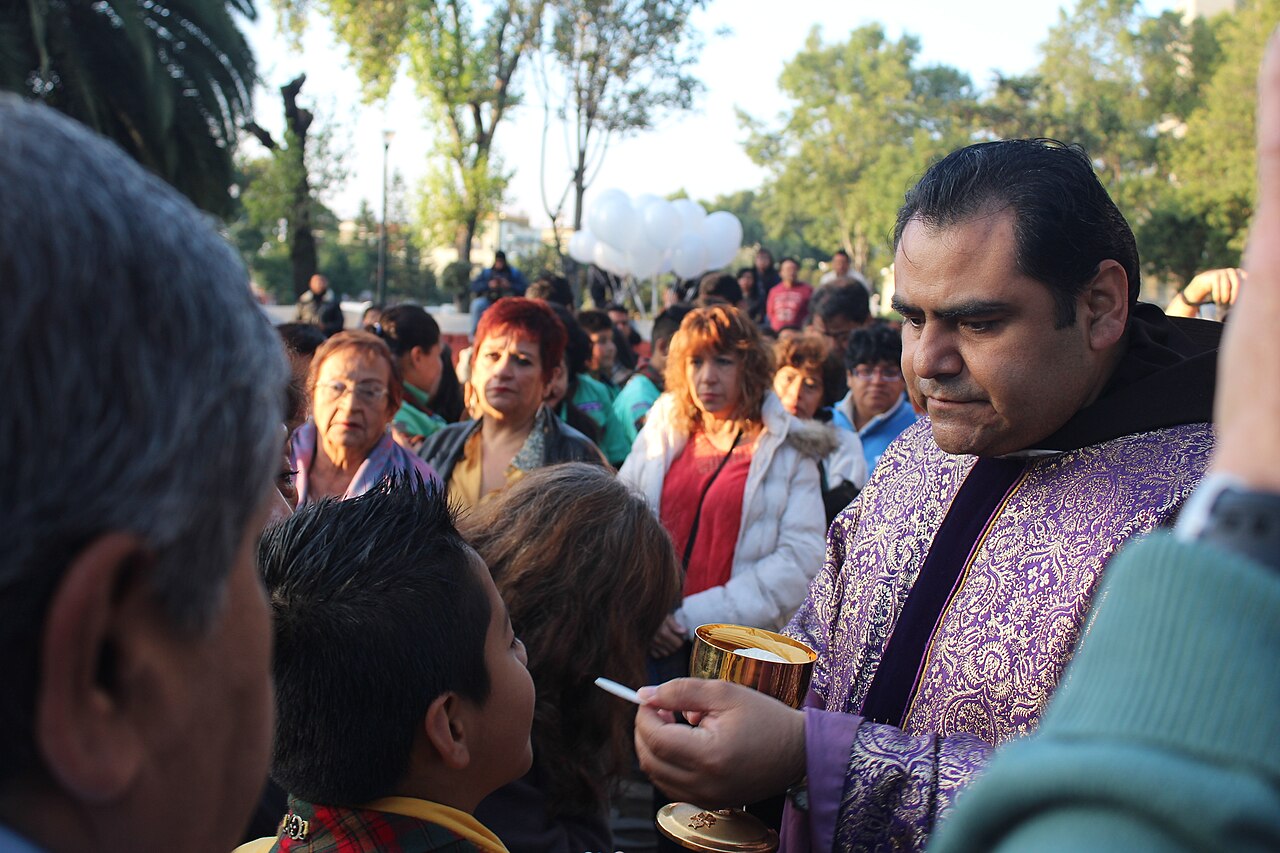
Vatican reported rebuke of Argentine bishops and the limits of bishops’ conferences
The Vatican has reportedly intervened after two Argentine bishops introduced measures discouraging Catholics from receiving Holy Communion kneeling and on the tongue. The intervention raises the question: why have dioceses and bishops’ conferences established “norms” discouraging practices which remain fully licit under universal Church law? The Dicastery for Divine Worship and the Discipline of the Sacraments has reportedly intervened with two Argentine bishops after restrictions were imposed on Catholics wishing to receive Holy Communion kneeling and on the tongue. According to the Argentine Catholic outlet El Wanderer , officials from the dicastery held discussions with Archbishop Marcelo Colombo of Mendoza, president of the Argentine Bishops’ Conference, and Bishop Gabriel Barba of San Luis over measures introduced in their dioceses concerning the manner in which the Eucharist may be received. The report said Vatican officials reminded both bishops that “the faithful have the freedom to receive Communion according to the methods established by the Church, and this freedom cannot be restricted”. The intervention follows months of controversy in Argentina after Archbishop Colombo and Bishop Barba both introduced policies widely interpreted as discouraging or effectively prohibiting traditional modes of reception. In September last year, Archbishop Colombo stated publicly that “in Argentina, Communion is received standing”, referring to norms approved by the Argentine bishops which designate standing as the ordinary posture for the reception of Holy Communion. The norms also provide for a bow before receiving the sacrament. The controversy intensified after an incident at the Basilica of San Francisco in Mendoza in September 2025, when worshippers attempting to receive Communion kneeling were publicly rebuked. Reports from Argentine Catholic media said Fr Alberto Zini, a Franciscan friar serving at the basilica, shouted “Get up!” at communicants who knelt before him. At least one worshipper was allegedly refused Communion while kneeling and was instructed to receive in the hand instead. A Catholic teacher who witnessed the incident later wrote to Archbishop Colombo to complain about the treatment of the faithful at the Mass. In his response, the archbishop reportedly defended the existing norms in the archdiocese, citing liturgical provisions contained in the Argentine edition of the Roman Missal and decisions of the bishops’ conference concerning the posture for Communion. The dispute quickly became a focal point for wider tensions within the Argentine Church over liturgical practice and the place of traditional forms of devotion. Bishop Barba also came under criticism after issuing a clarification before Corpus Christi in June 2025 encouraging the faithful in San Luis to receive Communion in the hand. The diocese had long been associated with more traditional Eucharistic practice under the late Bishop Juan Rodolfo Laise, who became known internationally for defending the right of Catholics to receive Communion on the tongue. The dispute deepened further in October when Bishop Barba reportedly wrote to candidates preparing to become extraordinary ministers of Holy Communion, instructing them to receive the Eucharist only in the hand in order to act as “pedagogues” of the practice and to “preach by example”. The Holy See has repeatedly affirmed over several decades that Catholics retain the right to receive Holy Communion on the tongue where the practice is permitted by the Church. The Congregation for Divine Worship stated in the 2004 instruction Redemptionis Sacramentum that “each of the faithful always has the right to receive Holy Communion on the tongue”. If the reports from Argentina are accurate, the Dicastery for Divine Worship and the Discipline of the Sacraments has effectively rebuked Archbishop Colombo and Bishop Barba after both dioceses adopted practices which discouraged, restricted or practically penalised Catholics who wished to receive Communion kneeling or on the tongue. Many bishops and clergy across the Western Church have acted as though Communion in the hand and standing were mandatory, despite repeated Vatican instructions stating the opposite. In practice, Catholics attached to older forms of Eucharistic reverence have often been treated as troublesome, divisive or psychologically suspect. The language changes from diocese to diocese, from “pastoral unity” to “liturgical norms” and “ecclesial maturity”, but the underlying message is usually the same: conform to the preferred style of the local hierarchy. Archbishop Colombo’s subsequent defence of the diocesan norms only deepened the controversy. His argument rested on the claim that Argentine liturgical norms establish standing as the manner in which Communion is received. Yet this is precisely where many bishops misunderstand the distinction between what is normative and what is compulsory. Rome settled this question years ago. Redemptionis Sacramentum , issued in 2004 under Pope St John Paul II, explicitly states: “It is not licit to deny Holy Communion to any of Christ’s faithful solely on the grounds, for example, that the person wishes to receive the Eucharist kneeling or standing.” The same instruction further declares that every member of the faithful “always has the right to receive Holy Communion on the tongue”. The Holy See recognised that local liturgical bureaucracies had begun treating permissions as prohibitions and preferences as law. What is happening is part of a much older post-conciliar pattern in which traditional devotional practices are tolerated officially while being marginalised culturally. San Luis illustrates this particularly well. Under the late Bishop Laise, the diocese became known for defending Communion on the tongue and maintaining a visibly traditional Eucharistic culture long after much of the Church had abandoned it. Bishop Barba’s subsequent insistence that extraordinary ministers receive only in the hand in order to act as “pedagogues” of the practice was therefore interpreted by many as a deliberate attempt to reshape the liturgical identity of the diocese. Since Vatican II, bishops’ conferences have accumulated enormous practical influence, often behaving as though they possess a kind of national magisterium. Yet they remain subordinate to universal law. They cannot abolish rights guaranteed by Rome, nor can they transform local customs into binding obligations where the Holy See has explicitly preserved legitimate freedom. The irony is difficult to miss. Much of the rhetoric surrounding modern ecclesial governance emphasises decentralisation and synodality. Yet Argentina demonstrates the inevitable problem with excessive decentralisation in liturgical matters: local ideological preferences quickly begin presenting themselves as universal Catholicism. One bishop discourages kneeling, another marginalises Latin and another treats ad orientem worship as pastorally unacceptable. Before long, practices which the Church still permits exist only on paper. Image credit: By ProtoplasmaKid – Own work, CC BY-SA 4.0, https://commons.wikimedia.org/w/index.php?curid=43442907
May 13, 2026
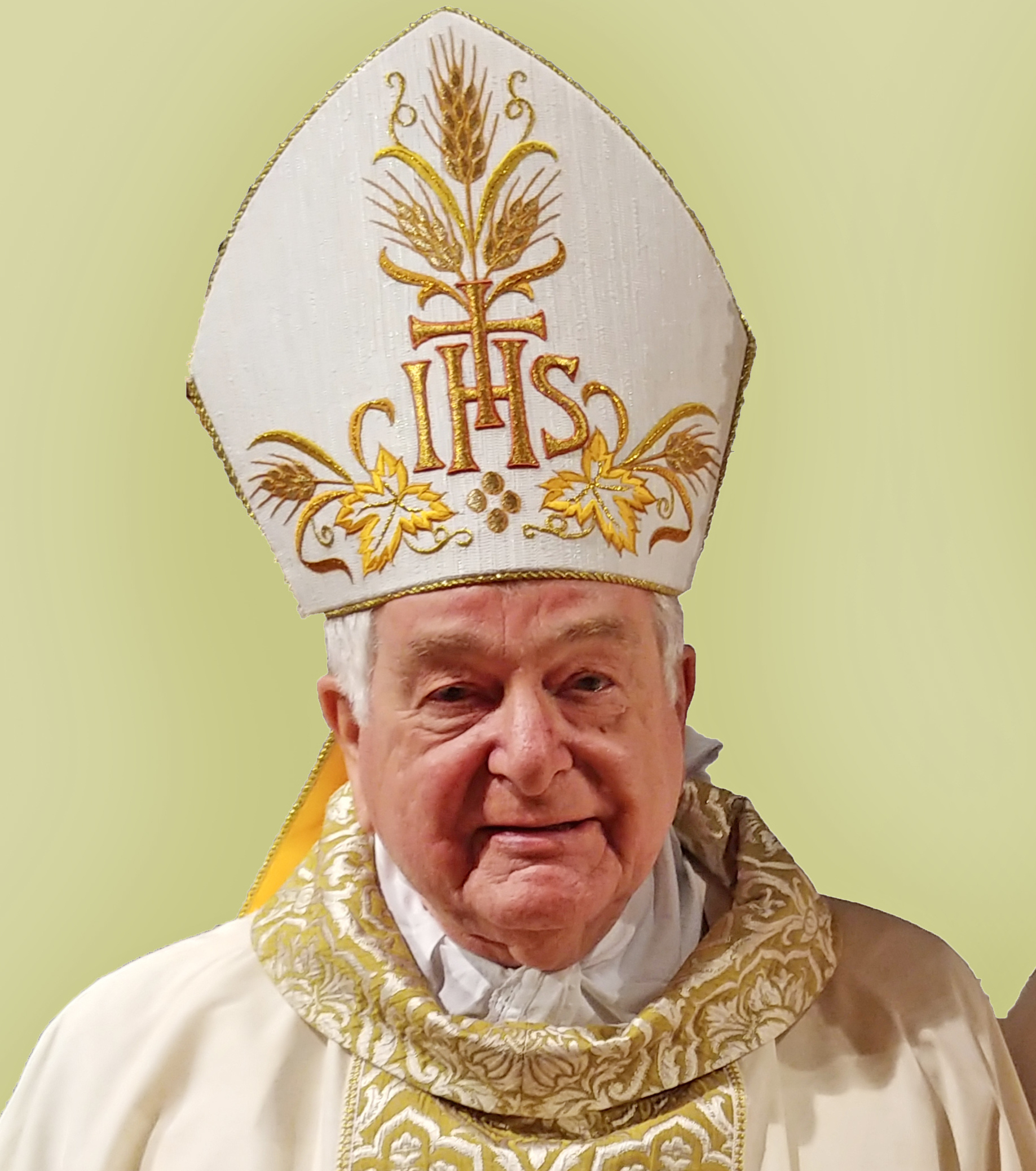
Cardinal Emil Paul Tscherrig, first non-Italian nuncio to Italy, dies aged 79
Cardinal Emil Paul Tscherrig, the first non-Italian to serve as Apostolic Nuncio to Italy and San Marino, has died at the age of 79. The Swiss diplomat served the Holy See across four continents during a diplomatic career spanning almost five decades and later took part in the 2025 conclave as a cardinal elector Cardinal Emil Paul Tscherrig, the former Apostolic Nuncio to Italy and San Marino and the first non-Italian to hold the post, has died at the age of 79. His death on 12 May was confirmed by multiple Vatican sources to AdVaticanum and reported by the Italian outlet Silere Non Possum . No cause of death has yet been announced. Born in Unterems, Switzerland, on 3 February 1947, Tscherrig was ordained a priest for the Diocese of Sion on 11 April 1974. He later earned a doctorate in canon law from the Pontifical Gregorian University in Rome before entering the diplomatic service of the Holy See in 1978. Over the following decades, he served in apostolic nunciatures across the world, including in Uganda, South Korea, Mongolia and Bangladesh, while also working in the Secretariat of State during the pontificate of Pope St John Paul II. In 1996, Pope St John Paul II appointed him titular archbishop of Voli and Apostolic Nuncio to Burundi. Cardinal Angelo Sodano, then Secretary of State, presided at his episcopal consecration in Rome on 27 June that year. Tscherrig later represented the Holy See across the Caribbean, serving as nuncio to Trinidad and Tobago, the Dominican Republic, Jamaica, Grenada, Guyana, Saint Lucia, Saint Vincent and the Grenadines and the Bahamas, before receiving further appointments to Barbados, Antigua and Barbuda, Suriname and Saint Kitts and Nevis. In 2004, he was appointed Apostolic Nuncio to South Korea and Mongolia by Pope St John Paul II, before Pope Emeritus Benedict XVI named him nuncio to the Nordic countries in 2008, with responsibility for Sweden, Denmark, Finland, Iceland and Norway. He was appointed Apostolic Nuncio to Argentina on 5 January 2012. Following the election of Pope Francis in March 2013, Tscherrig revealed that the newly elected pontiff had telephoned him personally on the night of the conclave to ask that Argentine bishops and faithful not travel to Rome for the inauguration Mass. According to Tscherrig, Pope Francis said they should instead “give to the poor what they would have spent on the journey”. In September 2017, Pope Francis appointed him Apostolic Nuncio to Italy and San Marino, making him the first non-Italian diplomat ever chosen for the role, a position traditionally reserved for Italians because of its importance in relations between the Holy See and the Italian episcopate. Francis later elevated him to the College of Cardinals during the consistory of 30 September 2023, assigning him the deaconry of San Giuseppe in Via Trionfale. At the time of his death, Cardinal Tscherrig was a member of the Supreme Tribunal of the Apostolic Signatura, the Dicastery for Bishops, the Dicastery for the Causes of Saints and the Dicastery for Evangelisation. He also served on the Commission of Cardinals for the Supervision of the Institute for the Works of Religion, commonly known as the Vatican Bank. He retired as nuncio to Italy and San Marino in March 2024 and later participated as a cardinal elector in the 2025 conclave. Image credit: By Pufui PcPifpef – Own work, CC BY-SA 4.0, https://commons.wikimedia.org/w/index.php?curid=110190296
May 12, 2026