

Latest
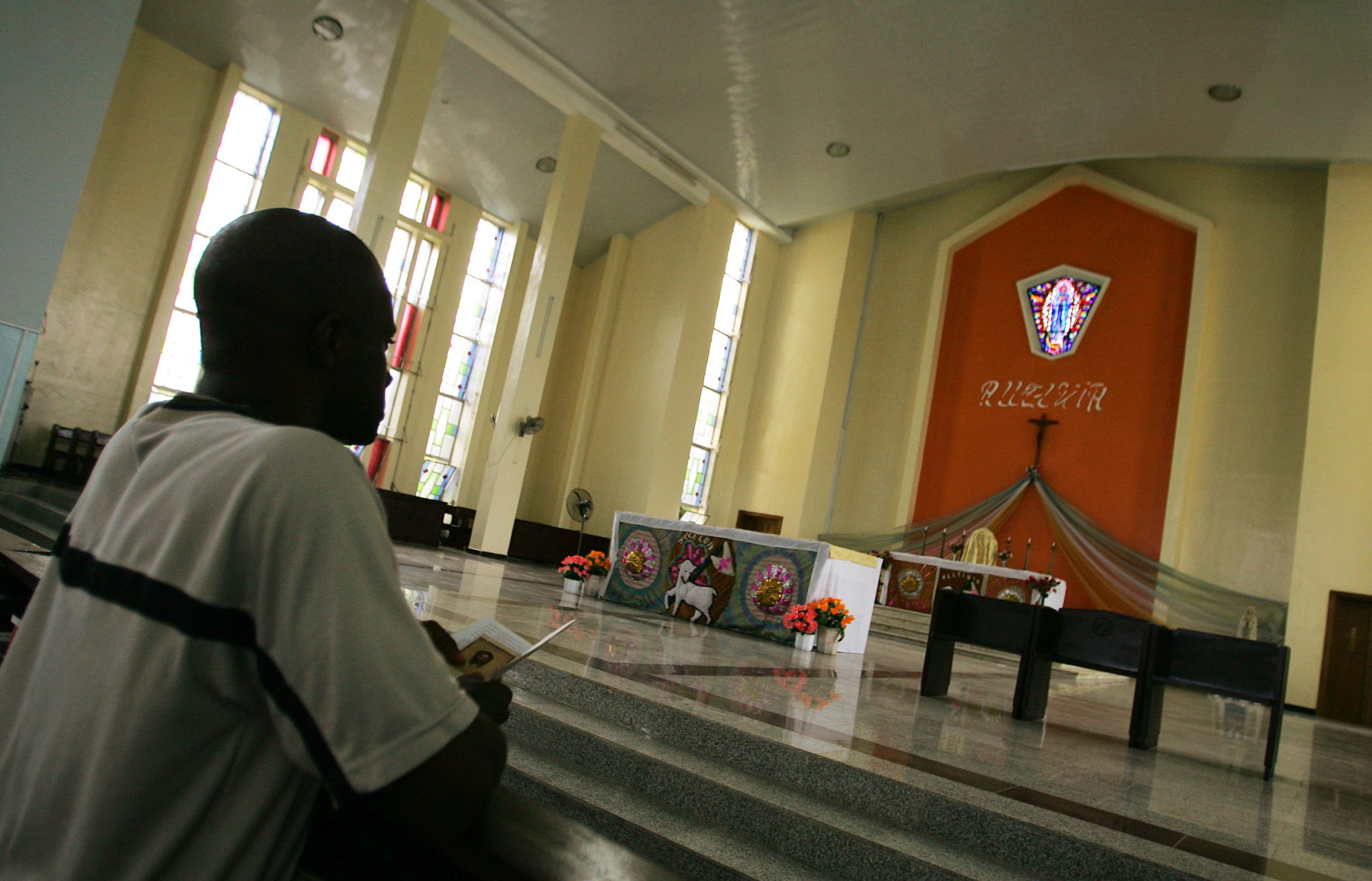
Nigerian archdiocese orders week of reparation after Blessed Sacrament stolen
The Archdiocese of Owerri has declared a week of prayer and reparation after thieves broke into an adoration chapel through the roof and stole a monstrance containing the Blessed Sacrament The Archdiocese of Owerri in southern Nigeria has declared a week of prayer and reparation after thieves broke into an adoration chapel and stole a monstrance containing the Blessed Sacrament. The desecration took place at St Mulumba Parish, Wetheral Road, Owerri, during the early hours of 29 April after intruders reportedly entered the chapel through the roof. In a statement to the faithful, Archbishop Lucius Iwejuru Ugorji said: “It is with great sadness that we inform you of the desecration of the Chapel of Adoration of St Mulumba Parish, Wetheral Road, Owerri. As reported by the parish priest, Rev. Fr Raymond Madu, unknown persons opened parts of the roof, gained access through the ceiling, and made away with the monstrance containing the Blessed Sacrament.” The archbishop ordered a week of prayer in reparation from 1 May to 8 May between 4pm and 6pm each day for parishioners of St Mulumba Parish. He also instructed priests across the archdiocese to observe more closely the Church’s regulations governing Eucharistic adoration. “All priests in the Owerri Archdiocese are reminded to strictly adhere to the norms and directives regarding the exposition of the Blessed Sacrament and adoration to avoid any recurrence,” Archbishop Ugorji said. “We emphasise that exposition is to take place only when a fitting attendance of the faithful is assured (cf. Can. 942). The Blessed Sacrament must never be left unattended during exposition,” the archbishop concluded. Fr Humphrey Tatah Mbuy told the Catholic World Report that prayers of reparation are offered after acts of sacrilege against churches or the Eucharist. “A prayer of reparation is a liturgical rite and spiritual act performed to make amends for the sacrilege committed against God and to restore the sacred character of the building,” Fr Mbuy said. He added: “The prayer is a way for the Church to apologise to God for the offence committed against His house.” Nigeria continues to experience significant violence against Christians, particularly in the north and Middle Belt. This often involves attacks by Fulani militants, Boko Haram affiliates or armed bandits, with churches and clergy frequently targeted. For example, over this year’s Easter season, armed attackers stormed two churches in the Ariko community of Kachia Local Government Area, Kaduna State, during services at the Evangelical Church Winning All (ECWA) and St Augustine’s Catholic Church. The gunmen opened fire indiscriminately, killing at least five worshippers and abducting dozens more. The Catholic Archdiocese of Kafanchan also confirmed the abduction of Fr Nathaniel Asuwaye after armed men attacked the priest’s residence in Karku in February. In a statement issued after the assault, the archdiocese described the incident as a “terrorist invasion”, while local Catholics organised Masses and rosaries for the safe return of the priest and those kidnapped alongside him. According to Open Doors, in 2024 Nigeria was the country with the highest number of Christians killed for their faith, with 3,100 Christians killed and 2,830 kidnapped that year. The Catholic Bishops’ Conference of Nigeria has warned on several occasions that attacks on churches, rectories and Christian villages are creating widespread fear among the faithful. Aid organisations including Aid to the Church in Need and the United States Commission on International Religious Freedom have also documented repeated incidents involving church burnings, abductions and the killing of clergy across the country.
May 12, 2026
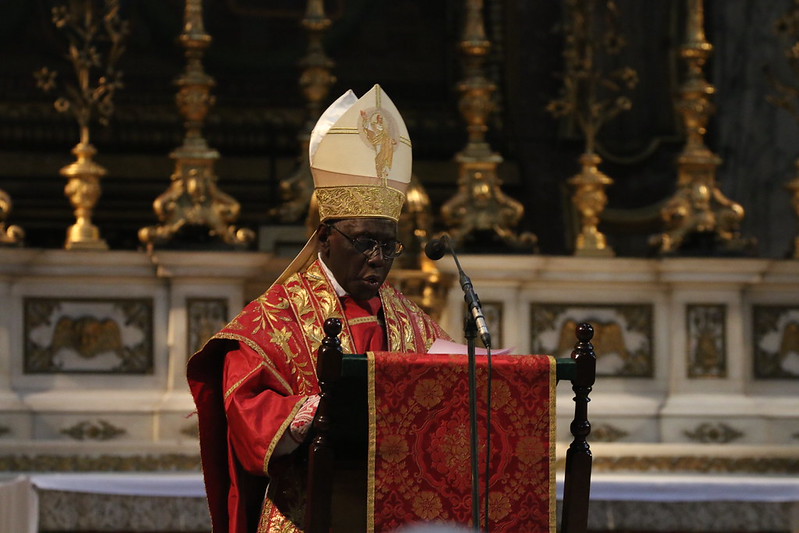
Cardinal Sarah tells new Archbishop of Conakry: “To be a bishop is to die”
Cardinal Robert Sarah has urged the new Archbishop of Conakry to root his ministry in prayer, sacrifice and fidelity to the truth, warning that “to be a bishop is to die”. During Archbishop François Sylla’s installation Mass in Guinea, the cardinal also called for unity among priests and continual Eucharistic adoration within the Church Cardinal Robert Sarah has urged the new Archbishop of Conakry to root his episcopal ministry in prayer and fidelity to the truth as Archbishop François Sylla formally took possession of Guinea’s metropolitan archdiocese. Preaching during the installation Mass at the Cathedral of Sainte Marie in Conakry on 9 May, Cardinal Sarah told the congregation that the burden of the episcopate could not be carried without discipline and spiritual devotion. Recalling his own years as Archbishop of Conakry, a post he held from 1979 until 2001 before entering the Roman Curia, the cardinal said he would regularly withdraw for periods of fasting and prayer and encouraged Archbishop Sylla to do likewise. “You will not be able to bear this heavy burden if you do not fast, if you do not pray, if you do not make sacrifices, if you do not do penance,” His Eminence said. The former prefect of the Congregation for Divine Worship and the Discipline of the Sacraments warned against any understanding of episcopal office as a position of prestige or authority for its own sake, saying that the vocation of a bishop was inseparable from suffering and personal sacrifice. “To be a bishop is not to show off, nor to selfishly enjoy the tremendous authority of the Episcopacy,” Cardinal Sarah said. “On the contrary, to be a bishop is to die, it is to accept suffering.” Addressing Archbishop Sylla directly, His Eminence added: “To be a bishop is to drink the cup of the Lord every day, to suffer and die for others, to love and remain attached to the truth.” Cardinal Sarah also spoke of the need for humility and unity within the clergy, urging the new archbishop to remain close to his priests, especially those with whom he might experience difficulties. “The second task, dear Monsignor François, is to love your priests, especially those who make you suffer,” he said. He called for continual prayer and Eucharistic adoration within the archdiocese, adding: “A Church that does not pray will not survive.” In his address at the conclusion of the Mass, Archbishop Sylla emphasised the role of the Church in promoting peace and unity in Guinea at a time of political and social uncertainty. “Together, we are called to work for peace, fraternity and social cohesion in our country,” he said, adding that religious leaders had “an important role to play in promoting peace, unity, fraternity and the hope of a better tomorrow in respect for institutions”. The archbishop also appealed for greater unity among Catholics and said the Church must remain outward-looking in its mission. Referring to “divisions”, he said the faithful were called to form “one people united in Christ’s prayer”. He added that Christians must respond to what he described as an “identity crisis” affecting society through “the coherence of our witness”. Archbishop Sylla concluded by asking the faithful to pray for him as he began his ministry, saying he hoped to become “a shepherd according to His heart, at the service of the unity of His people, peace among men, and the joy of proclaiming the Gospel”. He also said the Church must continue to reach those on the margins of society and go forward “without hesitation, without repulsion, and without fear”. Archbishop Sylla succeeded Archbishop Vincent Coulibaly on 28 February after Pope Leo XIV accepted the latter’s resignation on health grounds. His appointment had long been expected after he was named coadjutor archbishop in May 2024 with the right of succession. A native of Siboty in the Archdiocese of Conakry, the 54-year-old prelate studied philosophy and theology in Mali before continuing his studies in Switzerland and Rome. Archbishop Sylla was born on 9 April 1972 in Siboty in the Archdiocese of Conakry and studied at the minor seminary in Kindia before undertaking philosophical and theological formation at the Saint Augustin de Samaya Major Seminary in Bamako, Mali. After his ordination to the priesthood on 21 November 2004, he served as parish vicar at Conakry Cathedral before continuing his studies in Switzerland, where he obtained a master’s degree in comparative law of religions at the Faculty of Theology of Lugano. He later studied canon law at the Pontifical Lateran University in Rome, receiving a doctorate in the discipline in 2013. Returning to Guinea, he served as chancellor of the Archdiocese of Conakry, judicial vicar and president of the metropolitan tribunal, while also leading the Union of Clergy in Guinea between 2018 and 2022. From 2020 until his episcopal appointment, he served as rector of the Benoît XVI Major Seminary in Kendoumayah. Pope Francis appointed him coadjutor archbishop of Conakry in May 2024 and he received episcopal consecration the following month at Conakry Cathedral. Photo credit: “ Cardinal Sarah preaching ” by Lawrence OP , CC BY-NC-ND 2.0
May 12, 2026
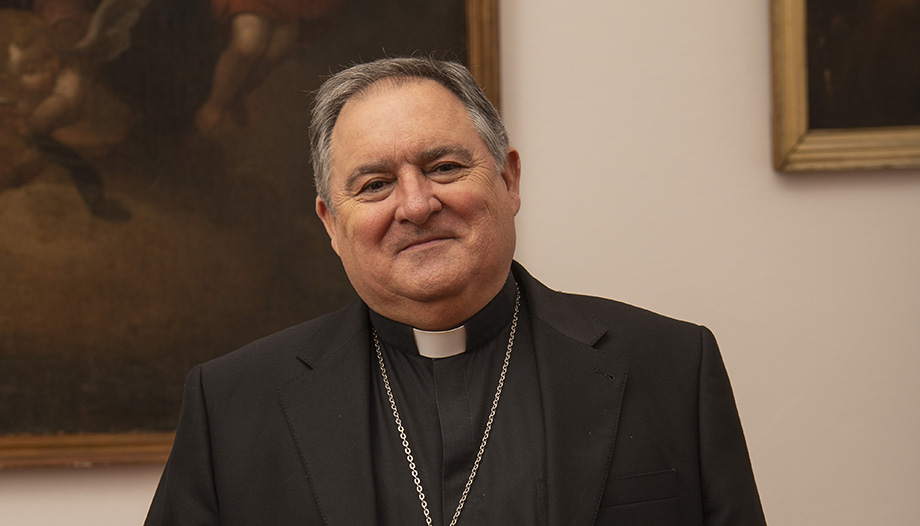
Canary Islands bishop says politicians must stop using migration “to win votes” ahead of papal visit
Bishop José Mazuelos Pérez of the Canary Islands has urged Spain’s political leaders to stop “playing politics” with immigration ahead of Pope Leo XIV’s expected visit to the country. The bishop warned against ideological polarisation, criticised the handling of migrant policy and said the Pope would call for unity and “the most humane solutions possible” The Bishop of the Canary Islands has appealed for Spain’s political class to stop using immigration as a weapon of ideological warfare ahead of the forthcoming visit of Pope Leo XIV. In an interview with the Spanish outlet The Objective , given as preparations continue for the Pope’s visit to Spain, Bishop José Mazuelos Pérez insisted that the migration crisis affecting the Canary Islands could not be reduced to electoral calculations or partisan rhetoric. “Immigration cannot be used for political polarisation,” the bishop said. “It’s not a matter of polarising the issue and using it for an ideology to win votes, but rather of finding the most humane solutions possible.” The Canary Islands have become one of the principal entry points into Europe for migrants crossing from West Africa, with local authorities struggling to cope with growing numbers of arrivals, especially unaccompanied minors. At the same time, debate over immigration has intensified sharply within Spanish politics, where both Left and Right accuse one another of exploiting the issue for political advantage. Bishop Mazuelos criticised what he described as attempts by all sides to instrumentalise migration for electoral purposes. “Politicians have to stop playing politics with immigration and find a solution together,” the bishop said. “Enough is enough; it seems the common good has been lost.” Over recent years, bishops, Catholic charities and ecclesiastical organisations have repeatedly backed measures designed to regularise migrants already living in Spain, while pressing for greater humanitarian protections and expanded reception policies. That stance has generated criticism that the Spanish hierarchy has aligned itself too closely with the assumptions of progressive migration policy while failing to address concerns surrounding integration, crime, pressure on housing and public services, and the wider social consequences of large-scale irregular migration. Bishop Mazuelos acknowledged that the Church had supported the regularisation of migrants for more than a year. “The Church has been asking for it for over a year and a half,” he said, arguing that Spain depended heavily upon migrant labour, particularly in caring professions and among workers supporting the country’s ageing population. At the same time, however, he openly criticised the political handling of the issue by the government of Spanish President Pedro Sánchez, suggesting that recent moves towards regularisation had been driven less by humanitarian concerns than by domestic political calculations. Referring to the timing of the proposals, the bishop said: “It was more because of the elections in Aragon than the Pope’s visit, because it suited their purposes.” Bishop Mazuelos repeatedly invoked the need for a return to “the spirit of the Transition”, referring to the broad political consensus that accompanied Spain’s move from Francoist dictatorship to parliamentary democracy in the late 1970s. “A large majority of Spaniards miss that spirit of the Transition,” the bishop said, expressing hope that Pope Leo XIV’s visit to the Spanish parliament might encourage politicians to rediscover a sense of national unity. Pope Leo XIV is expected to visit Madrid, Barcelona and the Canary Islands during what will be his first visit to Spain as Pope and the first papal visit since Benedict XVI attended World Youth Day in 2011. The Canary Islands, now synonymous across Europe with the migration crisis in the Atlantic, make any papal appearance there impossible to separate entirely from politics. Bishop Mazuelos insisted that the visit should not be interpreted as a political intervention. “The Pope’s visit to the Canary Islands is not political; he’s not coming to scold anyone or tell anyone what to do,” he said. Instead, he argued, the Pope wished to highlight “charity” and the wider mission of evangelisation. Still, the bishop also made clear that Leo XIV would likely speak forcefully about the need for unity and human dignity in the face of political division. “Pope Leo XIV is going to make that call for unity,” he said. “Let’s not use immigration for votes.” Bishop Mazuelos also addressed growing concerns over the treatment of unaccompanied migrant minors arriving in the Canary Islands, many of whom face uncertain futures upon reaching adulthood. “When they turn 18, they’re sent out onto the street,” he said, warning that many subsequently become vulnerable to criminal exploitation, prostitution and homelessness. He praised the work of Caritas and Catholic organisations operating in the islands, arguing that Church agencies were frequently stepping in where the state had failed. “Ultimately, it’s Caritas that’s feeding them,” he said. “Helping them so often where the State falls short.” The bishop nevertheless rejected accusations that the Church supported uncontrolled or irregular migration. “The Church is not in favour of irregular immigration,” he said. “But rather the most humane immigration possible.”
May 12, 2026
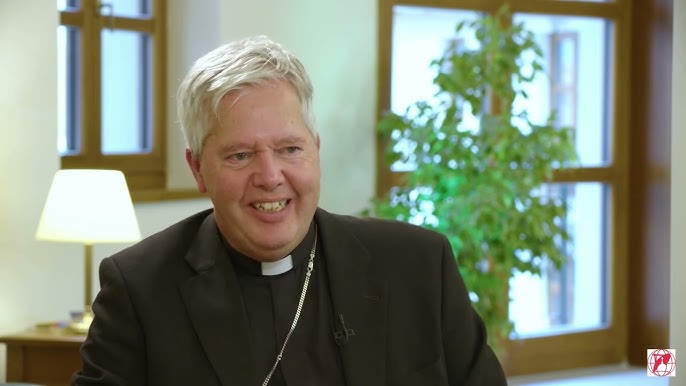
Dutch Bishop Rob Mutsaerts seriously injured in car crash
Auxiliary Bishop Rob Mutsaerts of ’s-Hertogenbosch has been seriously injured in a car crash while returning home after hearing confessions. The conservative Dutch bishop reportedly suffered a dislocated hip, fractured pelvis and broken elbow in the accident on 10 May Auxiliary Bishop Rob Mutsaerts of ’s-Hertogenbosch has been seriously injured in a car crash while returning home after hearing confessions. Reports emerging from The Remnant said the 67-year-old bishop suffered a dislocated hip, a fractured pelvis and a broken elbow in the accident, which took place on 10 May. No further details about the collision have yet been released publicly. Bishop Mutsaerts has served as auxiliary bishop of the Dutch diocese since 2010 following his appointment by Pope Benedict XVI. He was ordained to the priesthood in 1993 by Bishop Johannes ter Schure after training at the Sint-Janscentrum seminary in Den Bosch, where he later also served as deputy headmaster. Before entering the priesthood, he studied law at Tilburg University. He subsequently worked in parishes including Millingen aan de Rijn and Heeze before being named titular bishop of Uccula and auxiliary bishop of ’s-Hertogenbosch. For much of the last decade Bishop Mutsaerts has become one of the best-known conservative bishops in Europe through his outspoken interventions on synodality, Church reform and secularisation in the West. In 2018 Bishop Mutsaerts withdrew from the Synod on Young People in Rome amid the clerical abuse crisis, saying the timing of the gathering was inappropriate. He later emerged as a strong critic of the Synod on the Amazon in 2019, warning that proposals discussed there had opened “a Pandora’s box”. The bishop became particularly critical of the Synodal Process initiated under Pope Francis. Writing about diocesan consultations, he said they risked giving “a megaphone to non-ecclesial views”. The bishop wrote: “Because of the statements of those who disagree with the teachings of the Catholic Church, which the bishops were supposed to document and forward to Rome, the result at the Synod would be a lottery of opinions; this was a recipe for disaster.” In another intervention he stated: “God is not involved in this accursed Synodal Process. The Holy Spirit has absolutely nothing to do with it.” During the Covid-19 pandemic Bishop Mutsaerts was also among the signatories of an appeal promoted by former Vatican nuncio, now excommunicated, Archbishop Carlo Maria Viganò entitled Veritas liberabit vos! , which criticised restrictions imposed during the coronavirus outbreak. The statement complained that, under the pretext of the pandemic, “the rights and fundamental freedoms of many citizens are being disproportionately and unjustifiably restricted”. It also warned against “foreign powers” exploiting the crisis and referred to “forces interested in creating panic among the population”. Bishop Mutsaerts again attracted international attention in 2025 when he joined Bishops Joseph Strickland, Athanasius Schneider and Marian Eleganti at a “Prayer of Reparation” held in Pittsburgh following an LGBTQ pilgrimage connected to the Holy Year in Rome. At the event the bishops denounced “fornication” and “sodomy” and condemned what they described as the legitimisation of sins against the sixth commandment. The gathering was criticised by progressive Church figures in Germany. Auxiliary Bishop Ludger Schepers of Essen described the prayer event as “shameful” and “a scandalous sign of ecclesiastical narrow-mindedness”. No indication has yet been given about how long Bishop Mutsaerts will remain away from public ministry while recovering from his injuries.
May 12, 2026
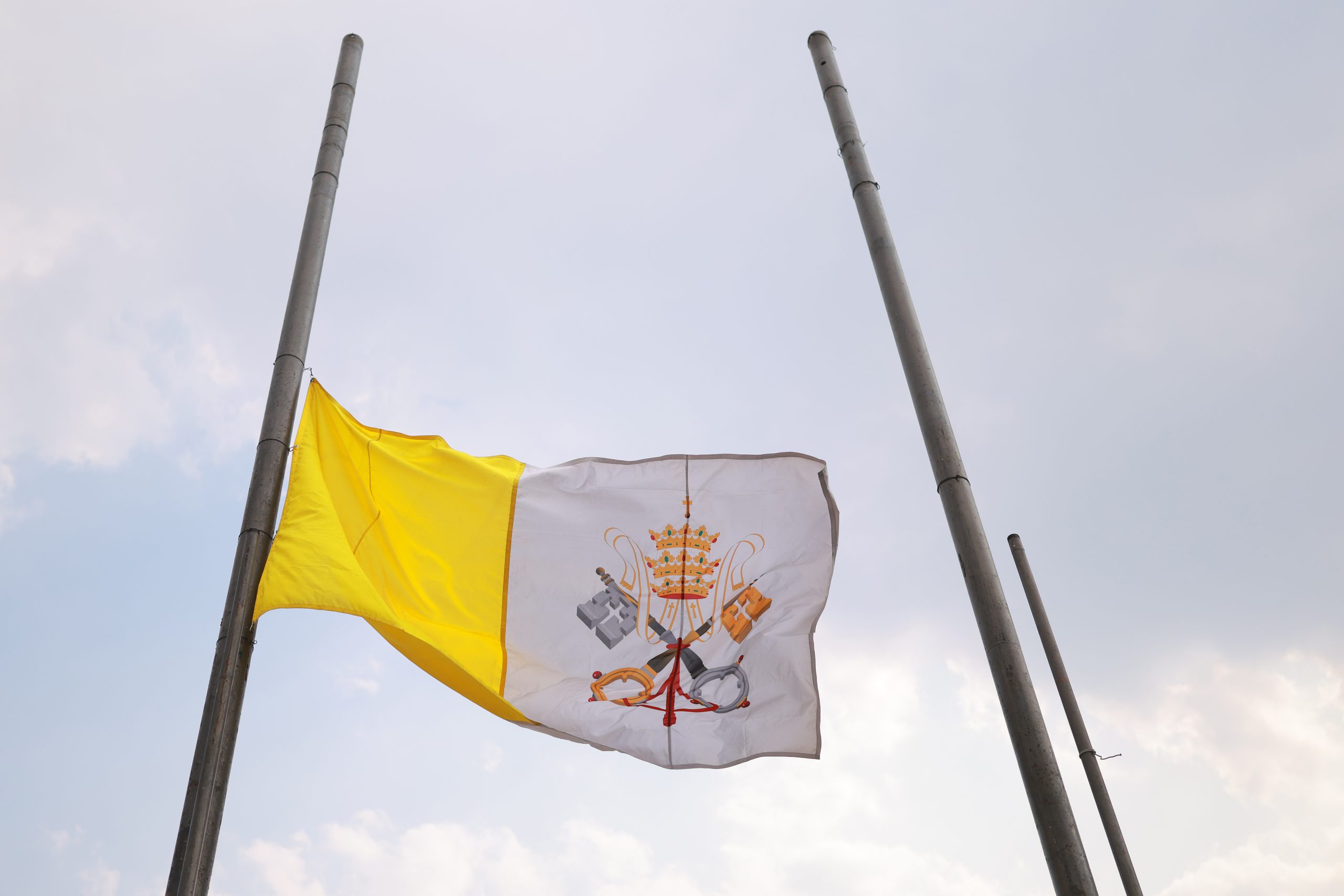
British ambassador-designate to the Holy See faces scrutiny over activism and Mandelson links
Britain’s newly appointed ambassador to the Holy See has voiced strong support for LGBT Pride activism during her time as British Consul General in San Francisco and has retained social media posts featuring the disgraced politician Peter Mandelson The appointment of Tarandip “Tammy” Kaur Sandhu as the next British ambassador to the Holy See has prompted scrutiny over the Foreign, Commonwealth and Development Office’s increasingly prominent promotion of LGBT causes through its diplomatic missions. The Foreign, Commonwealth and Development Office announced on May 11 that Ms Sandhu would succeed Christopher Trott as His Majesty’s Ambassador to the Holy See later this summer. The Leicester-born diplomat, who studied at University College London before joining the Foreign Office in 2005, most recently served as British Consul General in San Francisco. Her career has combined commercial diplomacy with internal diversity work inside the Foreign Office. In Chennai she worked as deputy head of mission and head of international trade, while in 2020 she chaired the FCDO’s Race and Ethnicity Network during a period in which the department expanded its public focus on diversity and inclusion initiatives as well as navigating the unrest after the murder of George Floyd. In San Francisco, Ms Sandhu developed close ties with the city’s political and business establishment, regularly appearing at technology, cultural and civic events linked to Britain’s commercial presence in Silicon Valley and the wider Bay Area. She also became a visible public supporter of LGBT Pride events in the city, where British diplomatic involvement has steadily expanded in recent years. During her tenure in California, the British consulate became heavily involved in San Francisco Pride events and related LGBT campaigns, with the mission publishing repeated statements backing Pride activism and describing itself as a “proudly inclusive mission”. That record is now attracting attention following her appointment to the Holy See. AdVaticanum, which contacted the FCDO for comment after the appointment was announced, compiled a series of social media posts published during Sandhu’s tenure in California documenting the British consulate’s participation in San Francisco Pride celebrations and associated LGBT campaigns. One post published by the British consulate after the city’s 2025 Pride parade stated: “Consul General @TammySandhu was proud to join our amazing team marching in this year’s @sanfranciscopride Parade — a vibrant celebration of love, equality, and the power of community.” The post continued: “As a proudly inclusive mission, we’re committed to standing with the LGBTQ+ community in the Bay Area, the UK, and around the world.” In another message published during Pride month, Sandhu wrote: “Wrapped in rainbows and filled with love … what a joy to celebrate Pride in San Francisco once again!” “This city has been my home for five years, and I continue to be in awe of how it leads — with love, with courage, and with glitter.” The same post said: “I am so proud to represent a country that shows up for LGBT rights — at home and around the world. Because visibility matters. Safety matters. Love matters.” Referring to Britain’s longstanding involvement in San Francisco Pride, she added: “The UK was the first foreign government to march in San Francisco Pride — and we’ve never stopped dancing since.” Other posts highlighted by critics included Sandhu appearing alongside San Francisco Mayor Daniel Lurie, State Senator Scott Wiener and San Francisco Pride executive director Suzanne Ford during the installation of the city’s annual “Pink Triangle” display. A further statement issued by the consulate said Sandhu had addressed “leaders, dignitaries and allies” at San Francisco City Hall and spoken about “the UK’s deep commitment to LGBTQ+ rights and inclusion, at home and around the world”. The message added: “From the steps of City Hall, where history has so often been made, the Consul General shared the UK’s unwavering belief that everyone deserves to live freely, openly, and with pride.” Another Instagram collaboration post shared by a former San Francisco Pride president used the phrase “GOD SAVE THE K̶I̶N̶G̶ KWEEN” while thanking Sandhu for hosting a Christmas luncheon. Under the Civil Service Code, diplomats are required to uphold the principles of “integrity, honesty, objectivity and impartiality”, with impartiality defined as “acting solely according to the merits of the case and serving equally well governments of different political persuasions”. In practice, senior diplomats will inevitably engage with politicians across the spectrum, particularly in a state such as California where Democratic officeholders dominate public life. Yet the cumulative picture created by the public messaging surrounding Sandhu’s tenure in San Francisco has created an appearance of political and ideological alignment that sits uneasily with both the spirit of civil service neutrality and the sensitivities of the Vatican posting. While British ambassadors to the Holy See are not expected to be Catholic, the scale and tone of some interventions risk bringing unnecessary controversy to one of Britain’s most delicate diplomatic appointments. While a degree of political engagement is inevitable for any senior diplomat operating in California, particularly one whose role required regular contact with figures such as Governor Gavin Newsom and the state’s Democratic leadership, some of Ambassador-designate Sandhu’s public interventions have nevertheless raised eyebrows. Appearances alongside elected officials are broadly understandable. However, a lengthy tribute posted following the death of Senator Dianne Feinstein, one of America’s most prominent pro-abortion politicians, is more difficult to reconcile given the sensitivities of the Vatican posting. In the post, Sandhu described Feinstein as “a trailblazer who improved the lives of so many San Franciscans”, praised her for ensuring “young women grew up in a world that was fairer, more just”, and concluded by saying: “Senator Feinstein was a great friend of the UK and a political force on the international stage.” Sandhu also has Instagram posts featuring and alongside Peter Mandelson, the former British Ambassador to the United States who maintained a close friendship with the convicted sex offender Jeffrey Epstein. Mandelson reportedly received cash payments from Epstein and was accused of attempting to influence British government policy at Epstein’s request. He is currently under investigation over allegations that he shared confidential UK government information with Epstein while serving as Business Secretary between 2009 and 2010. Sandhu’s association with Mandelson during her time as British Consul General in San Francisco, while he was serving as ambassador in Washington, is unsurprising. However, the decision to retain multiple photographs of the disgraced politician on her public social media accounts is more difficult to reconcile with her new diplomatic posting. The FCDO did not immediately comment on the social media posts highlighted following the announcement. Photo: Foreign, Commonwealth and Development Office / OGL v3.0
May 11, 2026
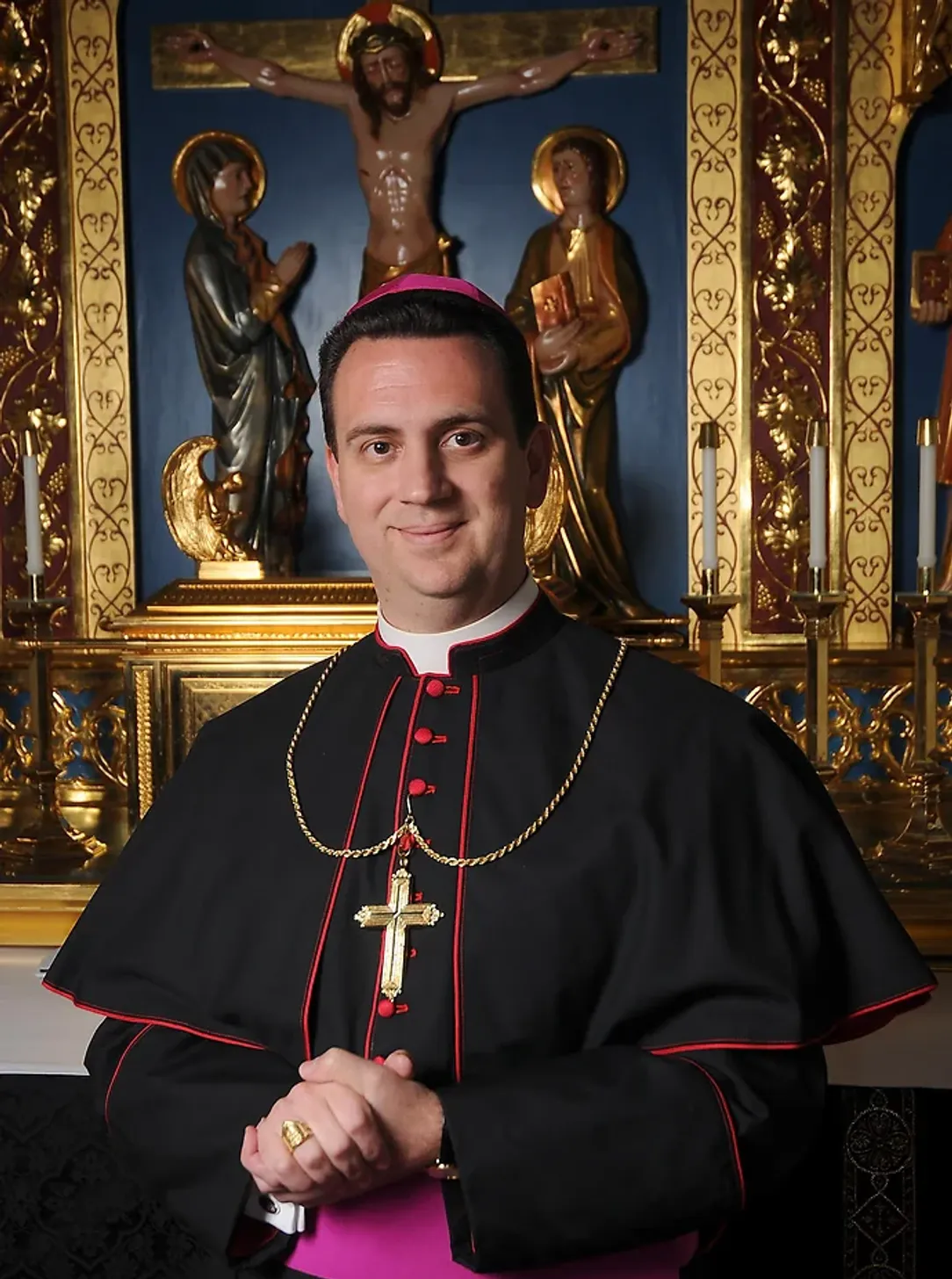
Pope Leo XIV appoints US Ordinariate Ordinary as temporary head of Australia’s ordinariate
Pope Leo XIV has appointed Bishop Steven Joseph Lopes, Ordinary of the Personal Ordinariate of the Chair of Saint Peter in North America, as temporary head of Australia’s Personal Ordinariate of Our Lady of the Southern Cross following the appointment of Archbishop Anthony Randazzo to the Dicastery for Legislative Texts Pope Leo XIV has appointed Bishop Steven Joseph Lopes, Ordinary of the Personal Ordinariate of the Chair of Saint Peter, to temporarily run the Personal Ordinariate of Our Lady of the Southern Cross in Australia. On May 11, the Holy See moved to conclude the mandate of Archbishop Anthony Randazzo as Apostolic Administrator ad nutum Sanctae Sedis of the Personal Ordinariate of Our Lady of the Southern Cross, following his appointment as Prefect of the Dicastery for Legislative Texts. In the same communication, Pope Leo XIV appointed Bishop Steven Joseph Lopes as Apostolic Administrator sede vacante et ad nutum Sanctae Sedis of the Australian ordinariate, adding another layer of responsibility to a prelate already central to the governance of the worldwide Anglican ordinariate structures. Bishop Lopes, who continues as Ordinary of the Personal Ordinariate of the Chair of Saint Peter in the United States and Canada, thus assumes temporary oversight of the Australian jurisdiction during its vacancy. The announcement comes amid a period of ongoing administrative consolidation within the Curia. Archbishop Randazzo’s departure from the Australian ordinariate role follows his elevation to the Dicastery for Legislative Texts, a body responsible for interpreting and safeguarding the Church’s canonical order. His earlier appointment to the Australian ordinariate in 2023 had itself been framed as a stabilising measure during a transitional phase in its governance. In February 2023, Pope Francis appointed Archbishop Randazzo president of the Federation of Catholic Bishops’ Conferences of Oceania, extending his influence across the wider Pacific region. Bishop Lopes, consecrated in 2016 as the first bishop of any ordinariate, has long been regarded as a central figure in the post-Anglican provision. His consecration in Houston was led by Cardinal Gerhard Ludwig Müller, with Cardinal William Levada and Cardinal Donald Wuerl serving as co-consecrators, marking the formal establishment of episcopal leadership within the ordinariate system. Since then, he has overseen the development of liturgical and pastoral structures for former Anglicans in full communion with Rome across North America. His broader responsibilities have expanded steadily in recent years and in 2021, he was elected chairman of the United States Conference of Catholic Bishops’ Committee on Divine Worship. . The ordinariate structure itself, established under Pope Benedict XVI’s apostolic constitution Anglicanorum coetibus , was designed to provide a stable canonical home for groups of former Anglicans entering full communion with the Catholic Church while retaining elements of their liturgical and spiritual patrimony. Each ordinariate functions similarly to a diocese, though without strict territorial boundaries, and is governed by an ordinary appointed by the Pope. In canonical terms, an apostolic administrator sede vacante assumes full governing authority when a see is vacant, though with certain limitations typical of temporary governance. As outlined in canon law, such administrators are restricted from making major structural decisions, particularly those involving the alienation of property or long-term commitments, unless explicitly authorised by the Holy See.
May 11, 2026