

Latest
The troubled faith of Vincent van Gogh
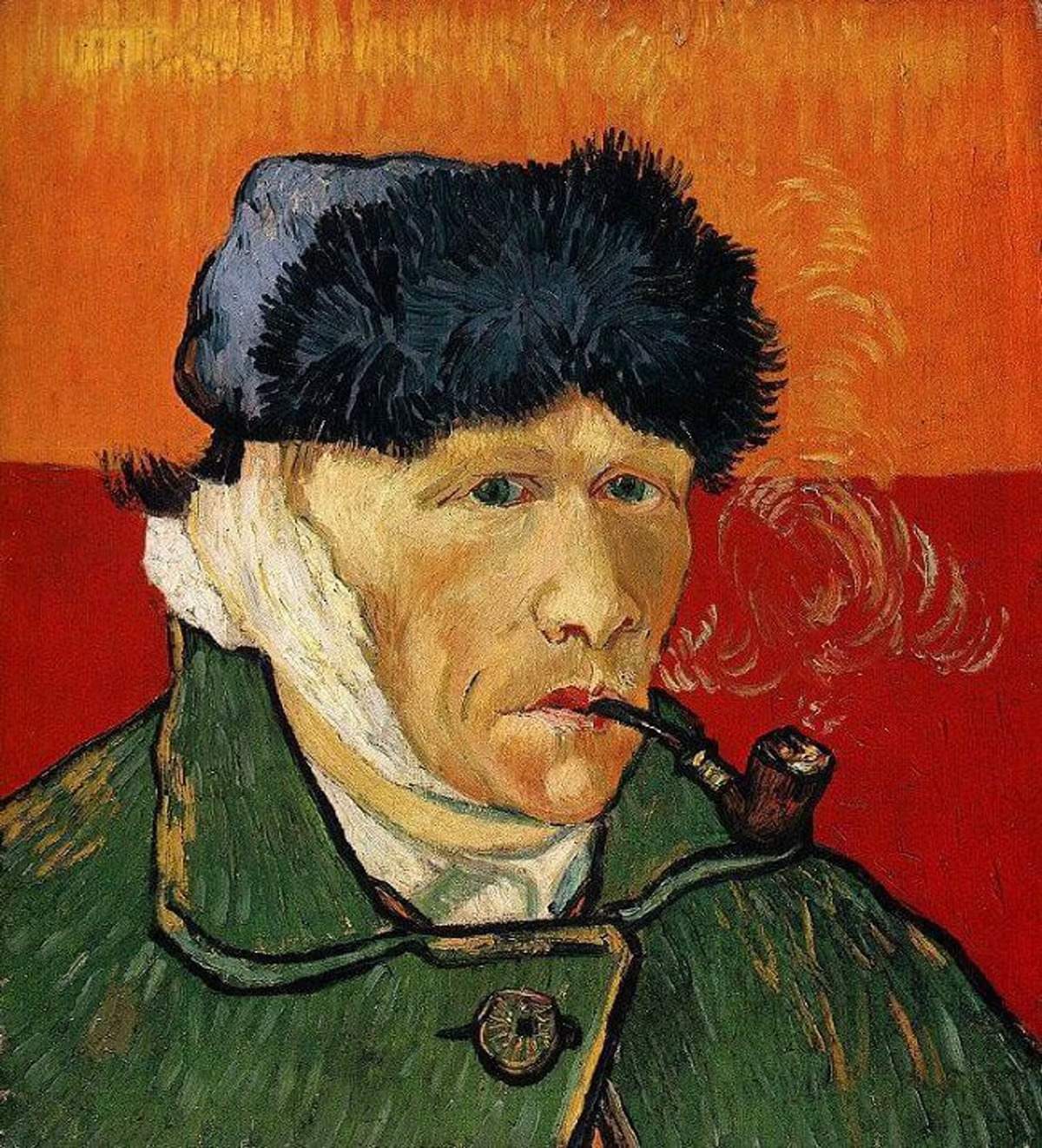
Vincent van Gogh is rarely remembered as a man of religion. However, Oscar Yuill finds that there is more than a touch of faith in the Dutch master’s life and work Sunflowers on fridge magnets, starry skies on tote bags, nighttime cafés on t-shirts: the man who sold just one painting during his lifetime ( The Red Vineyard ) is now a commercial phenomenon and arguably the most recognised and ubiquitous artist in the history of Western painting. I mean, of course, Vincent van Gogh. Biographically speaking, however, most people do not know much about him except that he cut off his ear and, shortly thereafter, shot himself. We feel little need to pry any further; it is enough that Gogh sates our appetite for the suffering artiste, an appetite that has been rumbling away since Goethe’s Sorrows of Young Werther and the Sturm und Drang of Beethoven’s late symphonies and string quartets. Indeed, if Vincent’s mind could be “heard”, especially during his year-long stay at the Saint-Paul de Mausole psychiatric hospital, it would sound, perhaps, like Beethoven’s Grosse Fugue , which was also slated by contemporary critics. But this Vincent of the popular imagination is a half-truth, and an unfair one. He was not driven by absinthe, but by faith. There are signs this is changing, but faith, especially Christian faith, has long been anathema to the mainstream artistic and cinematic industries. I suspect many galleries would sooner admit to asbestos in the ceiling than write a museum card that did not describe the West’s historical faith as though it were an Ecuadorian shrunken head. I have been to many van Gogh exhibitions. They usually consist of luscious reproductions, sometimes originals, of only the secular favourites: Sunflowers , Starry Night , Wheatfield with Crows , etc. One gallery in London promised a “retina-battering, virtual-reality post-Impressionist extravaganza”. None of them covered the central moral and aesthetic wellsprings of the artist’s heart. None of them, that is, featured Pietà (which can be found in “Room 2” of the Vatican Museum), The Raising of Lazarus , or Parable of the Sower . Vincent’s early letters read like sermons by the Church Fathers. “Hold on to what you have,” he wrote to his brother, the aptly named Theo. “I long so fervently for the goal you know of. But how can I attain it? … It takes so much hard work to become a Christian labourer and a preacher of the Gospel and a sower of the Word.” He spoke from experience. Long before he took up the brush, Gogh slept in barns, subsisting on bread, water and wine, and preached the Good News to coal miners in the Belgian Borinage. “I want to be bound to Christ with unbreakable bonds,” he wrote elsewhere, “to be sorrowful yet always rejoicing. To live in and for Christ, to be one of the poor in His Kingdom, steeped in the leaven, filled with his spirit, impelled by His love, reposing in the Father.” These are not the words of an agnostic; they are the words of a fanatic. But this excess de zèle soon brought him to the attention of the Evangelisation Council of the Dutch Reformed Church, which promptly expelled him from its hierarchy (such as it was). The whole affair left him deeply wounded. Nor was it the last time he would be ostracised and scapegoated. Gone sour on organised religion, his letters hereafter shift tonally from the supernatural to the natural. If the contemporary secular world finds it so easy to overlook his faith, it is because he himself chose to step back from it. Not, however, inwardly. His faith was too deep simply to vanish along with the religious subject matter of his youth. Rather, it found a gentler, subtler expression in even his most famous paintings. Consider Café Terrace at Night . I have myself been to this café, now rather a grotty tourist trap, in Arles. Gogh’s rendering appears to be little more than a post-Impressionist gloss on an otherwise perfectly naturalistic scene. But upon closer inspection, the painting is nearly medieval in its rich symbolism. Twelve people are seated around an enigmatic thirteenth figure (the waiter), and to the left, by the door, stands a shadowy figure all in black. It has been suggested that the waiter is Christ, the twelve His disciples, and the shadow Judas. The window behind the waiter even forms a cross. It is difficult to unsee this interpretation. Another example: I have always wondered whether Wheatfield with Crows , one of his last paintings, at once so dark and so hopeful, is not in fact Golgotha. The wheat is swept up in a strong wind as though something of incalculable magnitude has just occurred: “And behold, the curtain of the temple was torn in two, from top to bottom; and the earth shook, and the rocks were split” (Matt. 27:51). The three paths suggest a cross or the Trinity; and the way the middle path peters out into a distant point under the light of the moon (or cloud?) suggests an eschatological peace. Wishful thinking or no, it is reasonable to believe that the fiery missionary of Borinage was at work to the end. Faith informs a person in more ways than one, and certainly in more ways than the obvious. “Try,” says Gogh, “to grasp the essence of what the great artists, the serious masters, say in their masterpieces, and you will again find God in them. One man has written or said it in a book, another in a painting.” He could never have known that he would rank among those masters; he had no reason to suppose the future would resurrect him, much less celebrate him. But then, as he said: “The nature of every true son does indeed bear some resemblance to that of the son who was dead and came back to life.” Though deeply flawed, alcoholic, self-harming, capricious, there was, I am convinced, something of the saint in that red-headed Dutchman. He was like a child, indeed was frequently bullied by the children of whichever village he happened to be staying in, and thus closer to God. He saw things no one else saw, and “inscaped” them (to use Manley Hopkins’s terminology) in ways no one else could. Van Gogh will never be canonised. But despite being such a messy, pipe-smoking, absinthe-sodden wastrel, he can, in the manner of a saint, help us get a little closer to that mysterious beauty at the heart of human suffering.
May 11, 2026
Pope Leo XIV appoints outspoken immigration bishop to conservative West Virginia diocese
Pope Leo XIV has appointed Bishop-Designate Evelio Menjivar-Ayala to lead the Diocese of Wheeling-Charleston in West Virginia. The Salvadoran-born bishop, who entered the United States illegally as a teenager after fleeing civil war, has become one of the most prominent episcopal voices on immigration in America Bishop-Designate Evelio Menjivar-Ayala has drawn fresh attention to the increasingly vocal role being played by senior Catholic clergy in the United States over immigration policy. The Salvadoran-born bishop-designate of Wheeling-Charleston, who arrived in the United States illegally as a teenager after fleeing civil war in El Salvador, said in an interview with The Guardian following his appointment by Pope Leo XIV that he would continue defending migrants and speaking publicly about immigration despite the political hostility towards undocumented immigrants in America. Speaking to The Guardian shortly after the announcement of his appointment, Bishop Menjivar-Ayala said: “I will keep talking about people’s reality, defending immigrants and fighting for fair treatment for them.” Bishop Menjivar-Ayala explained the Church’s involvement in the immigration debate in explicitly moral and religious terms. “We are not approaching this from a partisan political standpoint, but from a moral one,” the bishop said. “Morality is not something that pertains solely to one’s private life, but also to how I treat others, how I conduct my public life, how I perform my work, and how I engage with society.” Bishop Menjivar-Ayala added that the Church’s teaching on immigration was rooted directly in scripture, saying that “the prophets denounce the mistreatment of the poor, foreigners, widows, and orphans”, before referring to Christ’s identification with the vulnerable in the Gospel of St Matthew. The bishop-designate has become one of the more prominent episcopal voices criticising the administration’s deportation agenda. Earlier this year he condemned immigration raids and what he described as “highly visible operations of questionable legality that go far beyond mere immigration enforcement”. Born in El Salvador during the country’s brutal civil war, the bishop-designate has recalled witnessing violence near the Sumpul River massacre in Chalatenango while still a child. His family later fled the region before he eventually attempted to migrate to the United States to join relatives already living there. According to his interview, he was turned back during earlier attempts before finally crossing the border near San Ysidro hidden in the boot of a smuggler’s car. Reflecting on the experience, the bishop said: “I don’t recommend it. You risk your own life.” After arriving in California, he worked a series of manual and low-paid jobs while studying English and continuing his education. He later moved to Maryland, where he began working within the Church before entering seminary formation. Speaking more broadly about civic participation and political life, the bishop-designate encouraged Catholics not to withdraw from public engagement despite growing social divisions in the United States. “We can all do something,” Bishop Menjivar-Ayala said. “We need to use the opportunities we have to take action.” The bishop added that people should “not be afraid” to defend their rights, show solidarity and participate in public life, insisting that “participation in political and social life is important for change to happen”. Ordained a priest for the Archdiocese of Washington in 2004, he became an American citizen two years later. In 2022, Pope Francis appointed him an auxiliary bishop in Washington. Speaking about his own experiences as an immigrant, Bishop Menjivar-Ayala said: “I’ve lived through that story. I am part of the history of migration in the United States, and at the same time, it’s very hopeful to know that I’m also part of the story of overcoming adversity.” Bishop Menjivar-Ayala succeeds Bishop Mark Brennan, who has led the Diocese of Wheeling-Charleston through a prolonged period of recovery after the scandal surrounding former Bishop Michael Bransfield. Bishop Bransfield was accused of financial and sexual misconduct and was later ordered to repay substantial sums to the diocese following a Vatican investigation. The appointment of Bishop Evelio Menjivar-Ayala is an eyebrow-raising decision by Pope Leo XIV because auxiliary bishops in Washington have traditionally emerged from one of the most politically engaged and ideologically progressive episcopal environments in the United States. Bishop Menjivar-Ayala himself became known nationally for his outspoken criticism of immigration enforcement operations and his defence of undocumented migrants while serving as an auxiliary bishop in the capital. His transfer to the Diocese of Wheeling-Charleston is a sharp contrast, as West Virginia remains one of the whitest states in America, with one of the country’s lowest percentages of foreign-born residents and a comparatively small Hispanic Catholic population. The decision to appoint a Salvadoran-born bishop so publicly associated with immigration advocacy has therefore inevitably led to questions about the message Rome intends to send through the appointment. Bishop Menjivar-Ayala himself appeared to acknowledge the symbolic dimension of the move when he said: “The fact that they are sending me to a state where there aren’t many immigrants means a lot because it shows that immigrants have the ability to adapt, to embrace a new way of life, to adjust to a new environment.”
May 11, 2026
Blood of Saint Januarius liquefies during Pope Leo XIV’s visit to Naples
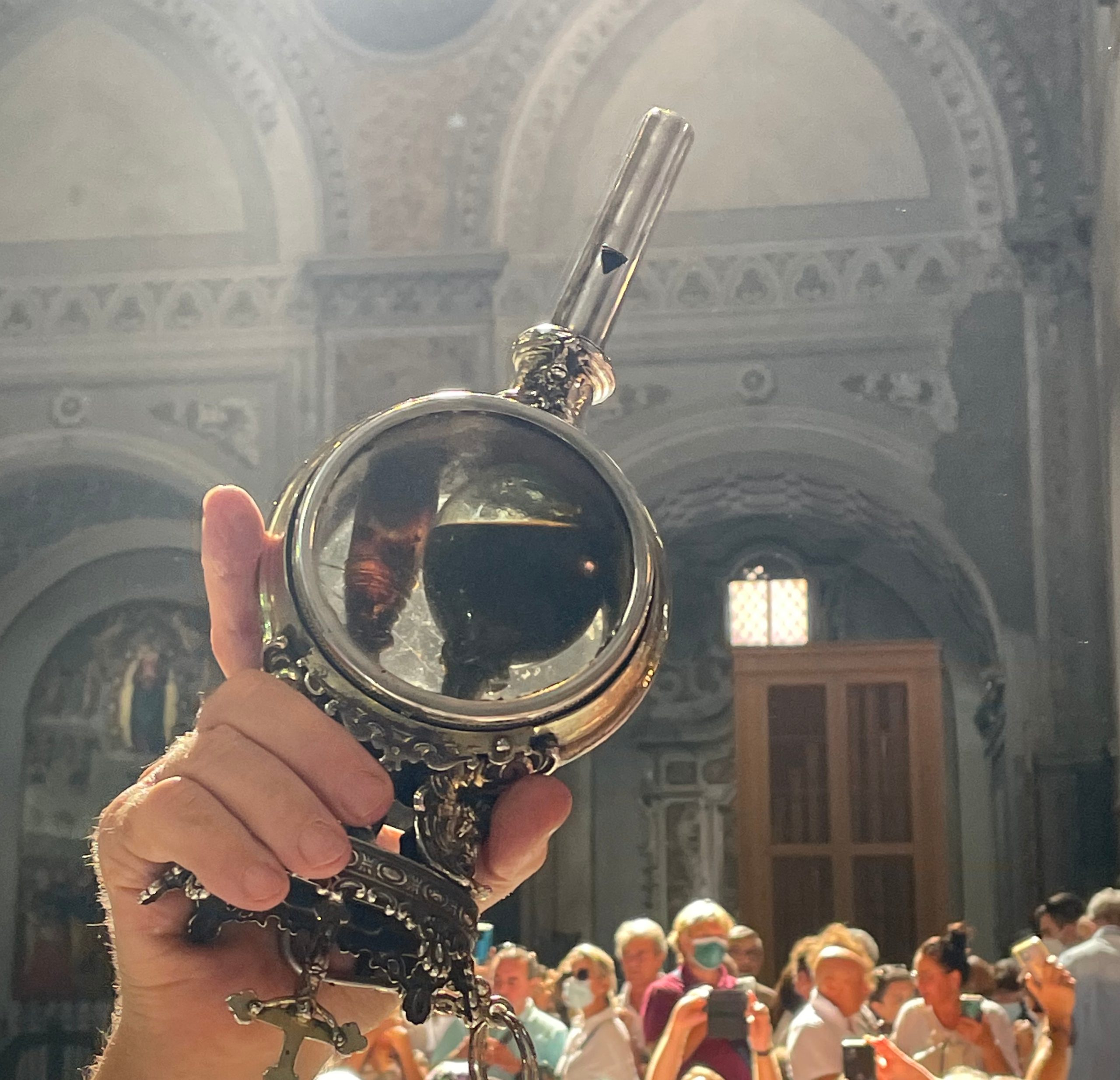
The blood of Saint Januarius reportedly liquefied at Naples Cathedral during the visit of Pope Leo XIV, outside the three traditional dates on which the phenomenon is normally expected to occur The liquefaction of the blood of Saint Januarius was reported in Naples on Friday shortly before the arrival of Pope Leo XIV. The miracle took place at Naples Cathedral, where the relics of the city’s patron saint, known locally as San Gennaro, are preserved. The substance contained in the larger of two sealed ampoules appeared to liquefy on the Pope’s arrival and while the Holy Father was holding it, despite the event falling outside the three dates each year on which the phenomenon is traditionally expected. The liquefaction was witnessed as Naples welcomed Leo XIV during a pastoral visit marking the first anniversary of his pontificate. The Pope later travelled through the city before addressing crowds gathered in Piazza del Plebiscito, where he urged Naples to become a “workshop of peace”. “There is no peace without justice,” the Pope said. “And justice is not complete without charity.” He warned against allowing entire neighbourhoods to fall into neglect and exclusion, describing what he called a modern “geography of inequality” stretching across both the historic centre and the outskirts of the city. He stressed the importance of strong public institutions capable of restoring trust and opportunity, particularly for young people. Pope Leo also praised those he described as the “everyday heroes” of Naples, the priests, volunteers, teachers and families who continue quietly working for the common good despite difficult social conditions. Their efforts, he said, should not remain isolated acts but become part of a wider “network of good” capable of strengthening the social fabric of the city. The Pope repeatedly returned to the role of the Church in helping rebuild civic life, praising cooperation between parishes, schools and charitable organisations. He said Naples should not become merely a “postcard city” shaped only by tourism, but a place where solidarity, education and human dignity are defended in practical ways. He also commended the city’s longstanding openness towards migrants and refugees, describing hospitality not as an emergency response but as “an opportunity for encounter and mutual enrichment”. According to long-standing tradition, a woman named Eusebia collected the saint’s blood after his execution. It is today preserved in two hermetically sealed glass ampoules held within a silver reliquary in Naples Cathedral. The phenomenon normally occurs three times a year: on September 19, the feast of Saint Januarius; on the Saturday before the first Sunday in May, commemorating the reunification of his relics; and on December 16, marking his patronage of Naples. Thousands of pilgrims routinely gather in the cathedral on those dates to witness the ceremony, during which the reliquary is brought from the cathedral treasury and presented for veneration. The dark red substance inside the larger ampoule is initially shown in solid form before, in most cases, appearing gradually to liquefy during prayers offered by the faithful. The ritual surrounding the relics has remained largely unchanged for centuries. The ampoules are stored in a secure vault, while bone fragments of the saint are kept beneath the cathedral altar. During the ceremony, the reliquary is repeatedly tilted to demonstrate whether liquefaction has taken place. The miracle did not occur during the visit of Pope St John Paul II in 1979 or during the visit of Pope Emeritus Benedict XVI in 2007. During Pope Francis’s visit to Naples in 2015, the blood was said to have partially liquefied. Cardinal Crescenzio Sepe remarked at the time: “The blood has half liquefied, which shows that Saint Januarius loves our Pope and Naples.” The phenomenon was also reported during the visit of Blessed Pius IX in 1848. The blood failed to liquefy in September 1939 and September 1940 during the Second World War, in September 1943 during the Nazi occupation of Naples, and in December 2020 amid the coronavirus pandemic.
May 11, 2026
Pakistan Court upholds marriage of a 13-year-old abducted Christian girl
Pakistan’s Catholic bishops have expressed scepticism after the government announced a review of a court ruling which upheld the marriage of a 13 year old Christian girl to the Muslim man accused of abducting and forcibly converting her The Catholic Church in Pakistan has expressed scepticism over government attempts to review a court ruling which upheld the marriage of a 13-year-old Christian girl to the Muslim man accused of abducting and converting her. Maria Shahbaz, from Lahore, was reportedly abducted in July 2025 after leaving her home to visit a nearby shop. According to her family, she was forcibly converted to Islam and married to Shaheryar Ahmad, a 30-year-old Muslim man. On 25 March, Pakistan’s Federal Constitutional Court ruled that the marriage was valid under Sharia law and that Ahmad was the girl’s lawful guardian, rejecting a petition filed by her father, Shehbaz Masih. The judgment prompted protests, press conferences and demonstrations by Christian groups across Pakistan, while the country’s Catholic bishops asked the authorities to intervene. Attaullah Tarar, Pakistan’s federal minister for information and broadcasting, announced on Easter Sunday that the government had established a committee to examine the ruling and submit recommendations to the Ministry of Law and Justice. Bishop Samson Shukardin of Hyderabad, president of the Pakistan Catholic Bishops’ Conference, questioned whether the initiative would lead to any meaningful action. “These issues often subside by the time such committees make their reports public. The process is deliberately delayed so that people forget,” he told EWTN News. “This is fundamentally a religious freedom issue. Consent is often coerced from minors. We await a genuine response from the government. Many Muslim clerics support us but have avoided joining public protests,” the bishop said. Documents submitted by the family, including a certificate issued by Pakistan’s National Database and Registration Authority, stated that Maria was 13 at the time of the marriage, below the legal minimum age of 18 in Punjab province. According to the Centre for Social Justice, at least 515 cases involving the abduction and forced conversion of minority girls and women were reported between 2021 and 2025. Hindu girls accounted for 69 per cent of the cases, while Christians represented 31 per cent. Most victims were under the age of 18. Anthony Naveed, deputy speaker of the Sindh Assembly, wrote to the Ministry of Law and Justice on 6 April calling for amendments to provincial laws dealing with child marriage. He urged the federal government to address what he described as “serious legal gaps” exposed by the ruling and called for legislation in line with the law in Balochistan province, where child marriages are explicitly invalidated.
May 10, 2026
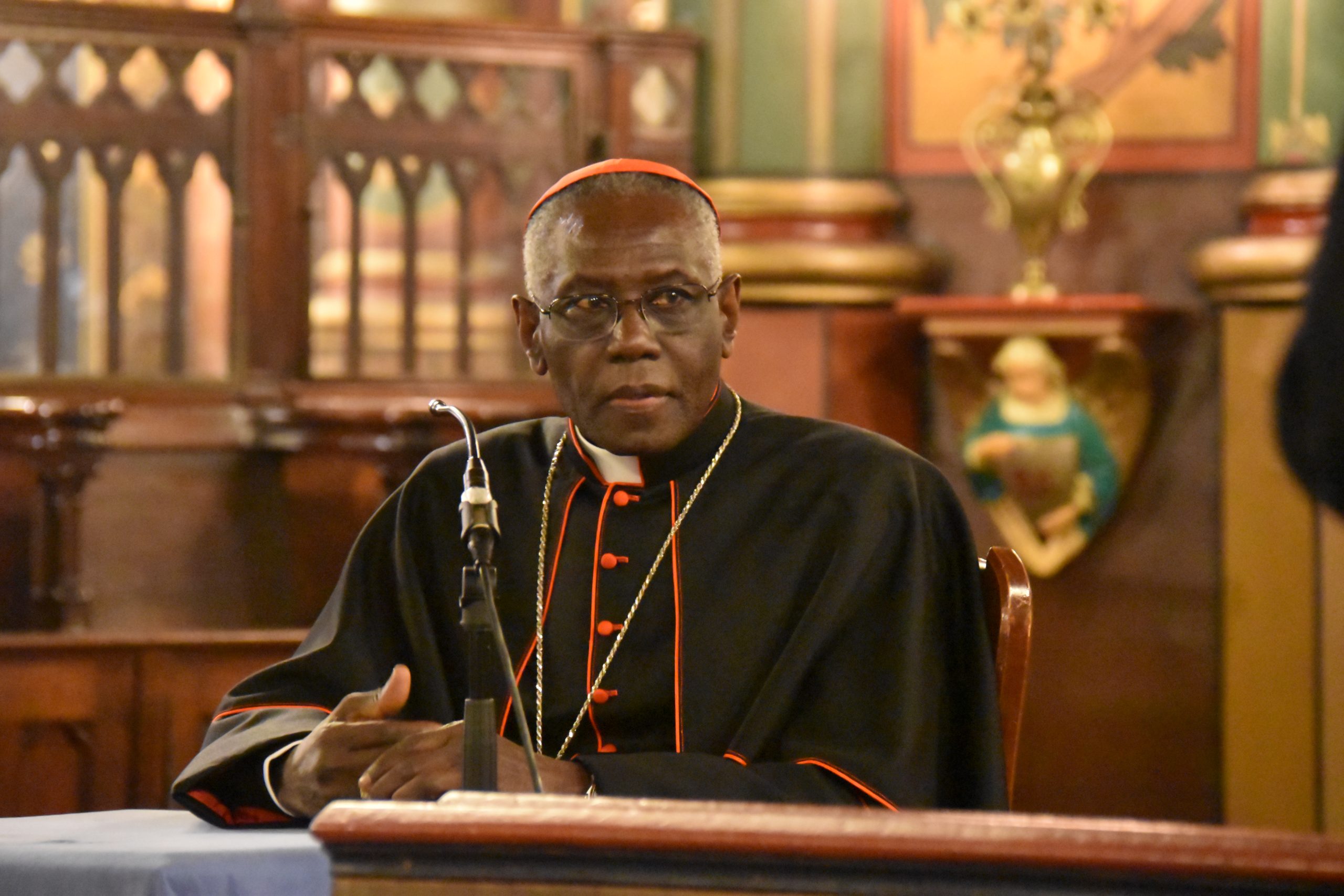
Cardinal Sarah says liturgy has been reduced to ‘mere entertainment’
Cardinal Robert Sarah has called for “clarifications” to parts of the interpretation of Vatican II in order to prevent readings that represent “a break with the faith”. The former prefect of the Congregation for Divine Worship and the Discipline of the Sacraments also warned against liturgy becoming “mere entertainment” and said the Church must resist pressure to conform to the modern world Cardinal Robert Sarah has said that parts of the interpretation of the Second Vatican Council require “clarifications” in order to prevent readings that represent “a break with the faith”. In a lengthy interview published by the French Catholic magazine La Nef on May 4, the former prefect of the Congregation for Divine Worship and the Discipline of the Sacraments said certain conciliar texts had produced “divergent, even opposing, interpretations”, particularly concerning religious freedom, ecumenism, collegiality and the relationship between the Church and the modern world. “A council must be read within the continuity of the faith as it has always been,” Cardinal Sarah said. “Where certain texts have given rise to divergent, even opposing, interpretations, it is legitimate to call for a deeper examination in order to avoid readings that represent a break with the faith.” His Eminence added: “The Church has nothing to fear from clarity.” The Guinean cardinal said he favoured “clarifications rather than corrections”, arguing that the interpretation of the Council belonged to the Magisterium and had already been “largely initiated” by Pope St John Paul II and Pope Benedict XVI. He also warned against treating the Council “as one judges a political programme”. Speaking about Pope Francis, Cardinal Sarah said it was “sometimes necessary” for cardinals to exercise “discernment regarding a period in the life of the Church”, while insisting that criticism of a pontificate must always be carried out “with fear of God, with love for the Church, and without ever falling into irreverence”. “A cardinal is not a courtier,” His Eminence said. “Before God, he is a servant of truth and a collaborator of the Apostolic See.” Without directly criticising Francis personally, Cardinal Sarah suggested that aspects of the previous pontificate had generated uncertainty among Catholics. “A pontificate always leaves a mixed legacy: pastoral insights, spiritual emphases, but also sometimes areas of unease or confusion,” he said, adding that he had spoken privately to Francis to express concerns “that practical ambiguity might obscure doctrinal clarity”. The cardinal said that “an era can leave wounds of confusion” and argued that the duty of pastors was “to help restore to the Church a clearer, more peaceful and more theological message”. Cardinal Sarah repeatedly returned to the theme of secularisation within the Church itself, describing the spread of what he called a “modern form of paganism”. “When faith is reduced to sociological language, liturgy to mere entertainment, morality to perpetual negotiation, and the Church to an institution that must adapt to the desires of the times, then something of paganism returns,” His Eminence said. Cardinal Sarah identified “the effacement of the sense of sin”, “discomfort with the affirmation of revealed truth” and “the trivialisation of the liturgy” as signs of an internal spiritual crisis. “When God is no longer primary, even in the Church, everything else is corrupted,” he said. Cardinal Sarah also warned against what he described as the Church’s growing “fear of displeasing the world”, saying that ambiguity was increasingly preferred “to clarity” and “communication to contemplation”. He added: “The world does not expect the Church to repeat its words; it expects it to open Heaven to it.” On the question of the liturgy, Cardinal Sarah rejected what he described as a “war of sensibilities”, insisting that the issue could not be reduced to factions competing for victory within the Church. “The liturgy belongs to the Church, not to political parties,” he said. “The real question is: how can we restore to the entire Catholic liturgy its sacred dignity, its continuity, its orientation towards God?” The 80 year old cardinal has long been associated with the traditional wing of the Church, so his comments should be read in the light of the restrictions imposed on the Traditional Latin Mass and the impending episcopal consecrations of the Society of Saint Pius X. He described the Society’s planned July 1 episcopal consecrations as “objectively serious”, warning that they would further damage ecclesial unity. “Fidelity to Tradition cannot be separated from hierarchical communion,” he said. However, the cardinal has acknowledged that “doctrinal questions” and tensions had accumulated over decades, adding that “truth and charity must go hand in hand”. Cardinal Sarah also reflected on the wider crisis facing western civilisation, describing Europe as “deeply wounded” and increasingly detached from Christianity and even “the most fundamental anthropological truths”. Yet he argued that the collapse of cultural certainties was leading some people back towards religion. “In Europe, we are seeing an increase in adult baptisms and returns to the faith,” the cardinal said. “When cultural securities crumble, some souls rediscover that God alone remains.” Asked about the priorities of Leo XIV, Cardinal Sarah declined to speak directly for the Pope, but said the new pontificate appeared focused on “peace, unity, mission” and “the Church’s doctrinal responsibility”. Having turned 80 shortly after the 2025 conclave, Cardinal Sarah is no longer a cardinal elector and it is now extremely unlikely that he could ever become Pope. However, as has perhaps been seen most clearly in recent years through Hong Kong’s Cardinal Zen, who is 94, cardinals can continue to exert influence long after the age of 80. Cardinal Zen flew to Rome before the conclave that elected Pope Leo to participate in the General Congregations, the pre-conclave meetings of cardinals in which views on the direction of the Church are expressed, where he warned against reforms he considered damaging. If Cardinal Sarah remains in good health, he is likely to continue using his voice to advocate for the traditionalist wing of the Church for years to come.
May 10, 2026
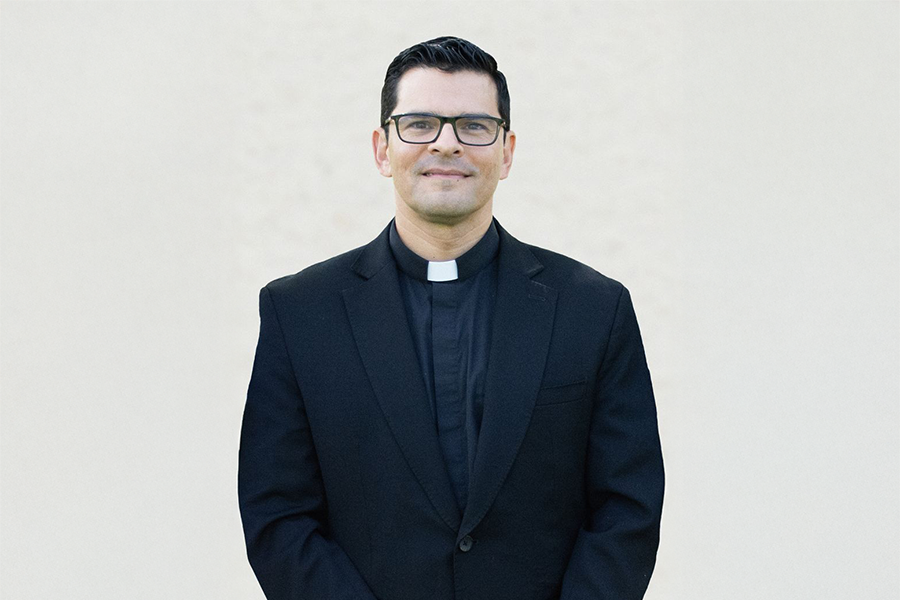
New general director of Legionaries of Christ says the congregation has “much to contribute”
The new general director of the Legionaries of Christ has said the congregation still has “much to contribute and give” to the Church as it continues its process of renewal The new general director of the Legionaries of Christ has said the congregation still has “much to contribute and give” to the Church as it continues a long process of renewal after the crimes of its late founder. Fr Carlos Gutiérrez López, who was elected general director in February, said the congregation had spent recent years strengthening safeguarding standards, working with civil and canonical authorities and responding to victims of abuse. Interviewed by ACI Prensa, he said the painful reckoning over Fr Marcial Maciel’s crimes had forced the Legionaries to confront deep failures within the institute. “Since we began facing this reality, although it was very painful, it also opened our eyes: there was a lot of work to do,” Fr Carlos said. “In recent years we have been working hard to meet standards, following the documents issued by the Church, collaborating with canonical and civil authorities.” The Legionaries of Christ was founded in Mexico in 1941 by and today has more than 1,300 members worldwide, including just over 1,000 priests, according to figures published in the Annuario Pontificio . That growth was overshadowed by revelations concerning Maciel, who died in 2008. In 2006, the Congregation for the Doctrine of the Faith ordered him to withdraw from public ministry and live a life of prayer and penance following allegations of sexual abuse. Subsequent Vatican investigations found that he had abused seminarians and minors over decades while leading what the Holy See later described as “a life devoid of scruples and genuine religious sentiment”. Fr Gutiérrez, 51, said the revelations surrounding the founder had profoundly affected his own vocation. Ordained a priest in 2009, he entered ministry as the scale of Maciel’s misconduct was emerging publicly. “It was definitely something very strong, something that left all of us very perplexed, frightened, and also disillusioned,” he said. “That meant for me a very deep process of reflection in which I had to ask why I was giving my life to God and also the question: why remain here?” He said the congregation no longer regarded Maciel as a spiritual or moral reference point. “Definitely, the founder is no longer a spiritual reference point, a moral reference point for us,” he said. “That reference point, I saw, had always been Our Lord Jesus Christ.” The Legionaries embarked on an extensive Vatican-supervised reform process after Maciel’s downfall. In 2010, following an apostolic visitation ordered by Pope Benedict XVI, the Holy See directed the congregation to revise its constitutions, review the exercise of authority and improve the formation of seminarians and priests. Particular attention was given to abuses of power and conscience, which had enabled Maciel to conceal his conduct for years. Fr Gutiérrez said the process had transformed the institute’s internal structures and culture. “The Church accompanied us throughout a whole process of renewal,” he said. “We reviewed constitutions, we reviewed many of the norms we had been living in within the congregation, the style of apostolate we carried out. In short, it was an entire review that lasted many years.” The congregation has also attempted to present itself as a model of transparency in safeguarding. In 2019, it published a global report detailing abuse cases within the Legionaries from its foundation until that year, including accusations against Maciel and other priests. Annual “Truth, Justice and Healing” reports have since updated the figures and outlined safeguarding measures. Fr Gutiérrez said the Legionaries had worked to establish professional safeguarding teams in the countries where they operate. “These are things that we priests cannot do alone,” he said. “We need specialists — psychologists, lawyers, and so on — to help us truly be very serious in complying with these standards.” He also referred to an audience with Pope Leo XIV earlier this year in which the Pope reportedly stressed that authority in the Church must be exercised as service rather than domination. Fr Gutiérrez said he had been struck by the Pope’s call to approach people “with a respectful and compassionate gaze”. “What they share with me is something sacred, and I have to respect that sacredness,” he said, reflecting on his experience in leadership roles within the congregation. Questions remain, however, over whether the Legionaries can separate their present identity from the legacy of their founder. Fr Gutiérrez acknowledged the issue directly, describing it as “a valid question”. He said the congregation had spent years discerning its authentic charism after the Vatican instructed it to re-examine the basis of its mission. “The charism, I believe, is something we have been discovering,” he said. “It is nothing other than forming apostles to transmit the love of Christ, to form apostles and also send them to evangelise the world and help the Church in this evangelisation.” The Legionaries continue to oversee a substantial international network through Regnum Christi. According to statistics released by the congregation, the movement includes more than 21,000 adult and youth lay members, alongside consecrated women and lay consecrated men. Its educational institutions include 139 schools and 14 universities educating more than 150,000 students. Despite the continuing shadow of the Maciel scandal, the Legionaries have continued to attract vocations. The congregation says more than 250 minor seminarians are currently in formation worldwide. Fr Gutiérrez said he hoped the congregation could continue to serve the Church while remaining conscious of the failures of its past. “Seeing how the Legion was responding, I said: ‘Well, I also want to help the Church with my priesthood to move this congregation forward,’” Fr Carlos Gutiérrez said. Photo credit: Legionaries of Christ website
May 9, 2026