There comes a moment in our lives when we will have to let go of everything and we will appear before God. During our lives, we are afraid to show who we truly are. We erect so many façades that we try to keep standing with great effort. Eventually, however, they will all collapse, like a house of cards swept away by the wind.
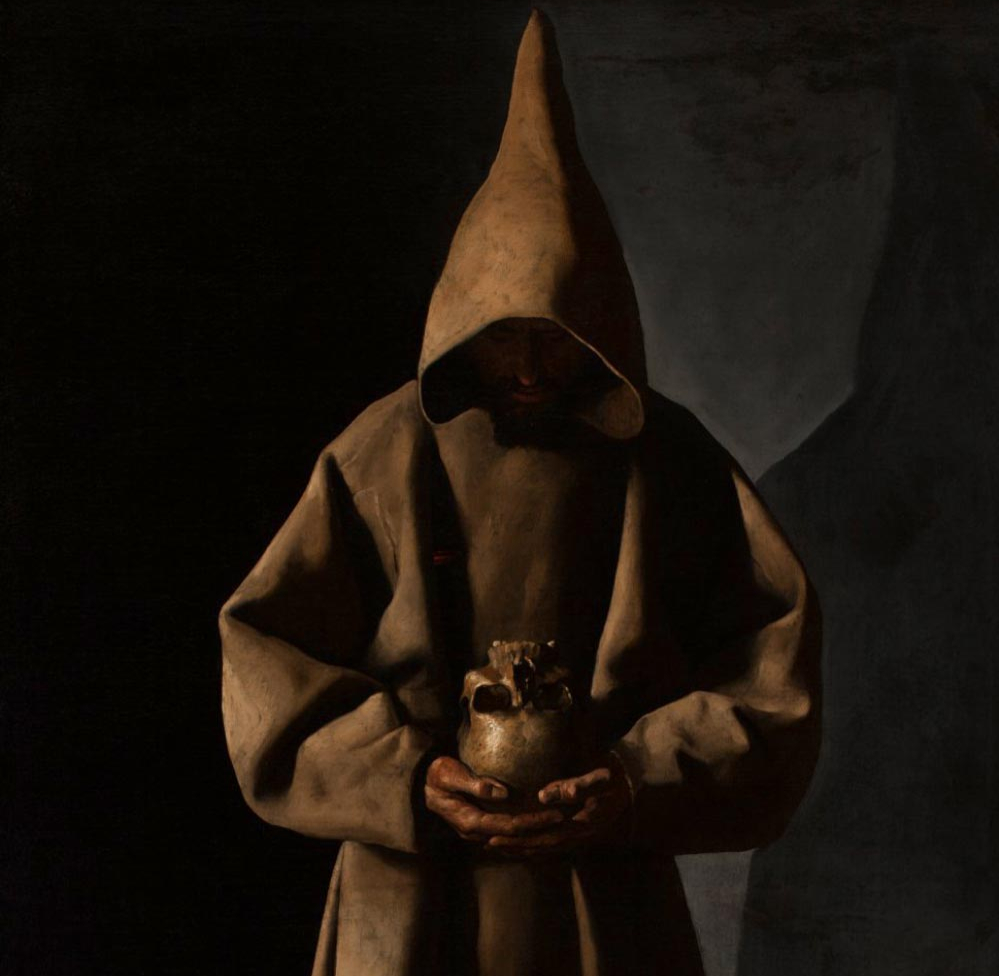
It reminds me of St Francis of Assisi, who stripped himself of his clothes twice. The first time was when he bade farewell to his lavish life and left his home. In the market square of Assisi, in the presence of his parents, the bishop and a whole crowd, he returned his clothes to his parents. For him, it was a sign of a radical break with his past and, at the same time, the start of a completely new life that he himself called his marriage to Lady Poverty.
The bishop covered his nakedness with his cloak to protect him from the covetous eyes of the crowd, but also to welcome him into the Church through this symbolic act. From then on, through his radical living out of the Gospel, he would rebuild the Church of Jesus, which he had received as a special calling from the Lord Himself. What he had initially understood purely in material terms, he would later experience as a spiritual calling and, as a friar, he would travel about to proclaim the Good News everywhere.
With this act, a new religious order was born: the mendicant friars, who simultaneously became urban Religious and set in motion an entirely new movement within the Church. By divesting himself of his clothes, he sought to embody the evangelical virtue of poverty in the most radical way and, from then on, to walk through the world as an authentic human being, in the footsteps of his and the world’s only Master, Jesus Christ. In doing so, he broke with a part of the Church that lived behind a façade of wealth and was far removed from the ideal of the Gospel.
Later Francis divested himself of his clothes for the second time. This time, not of the lavish costume he wore before his conversion, but of his meagre habit. This time he need not fear covetous glances, for his body had been completely emaciated by illness. He wanted to return to the place where it all began, to his Assisi, to end his hymn of praise to life there and to embrace Sister Death with total surrender.
Francis wanted to appear before God as we know humanity from the story of creation: naked and without any form of desire. As soon as he had made the Lord the sole centre of his life he began a process of purification that brought him into total harmony with God, with himself, with his fellow human beings and with all of creation, so that he was ready to appear before God as He had originally created humankind.
Before the Fall, humankind was naked, yet felt no shame. Shame arose when desire made its entrance, as described in the Book of Genesis: “Then the eyes of both of them were opened, and they realised they were naked. So they sewed fig leaves together and made loincloths for themselves” (Gen. 3:7). They had lost the innocence of their origin and hid themselves even from their Creator: “I heard your thunder in the garden, and I was afraid because I am naked; so I hid myself” (Gen. 3:10). A little further on, we read how God Himself gave clothes to man to cover him: “And Yahweh God made garments of skin for the man and his wife, and He clothed them” (Gen. 3:21).
This repeated emphasis on the fundamental change in the perception of the body has a profound meaning. It constitutes the turning point at which the original human is transformed into the historical human, to use the terms of Pope St John Paul II. With the Fall comes a rupture in the original harmony in which man was created, and selfishness makes its entrance. The worm of pride has turned man’s natural desire and his innate passion for the good into a covetous gazing and grasping at one another.
The original inner peace is disrupted, and the other becomes a threat. From then on, humanity must protect itself from its fellow humans and also cover its nakedness. Its unguarded relationship with God is also disrupted. We can truly speak of a broken harmony on all levels.
Was this harmony then fully restored in Francis? No, for we know from history how, in the last years of his life, he truly had to struggle with his fellow brothers, who were taking a different path. Perhaps he watched with pain as the radicalism of the early beginning was gradually abandoned. What had begun as a protest against the way the Gospel was being violated, both in society and in the Church, gradually grew into a greater conformity with what he had prophetically renounced.
But even in the struggle he waged against this, an inner resignation came over him, and he saw that he had to relinquish that as well. Ultimately, it was not he who had founded his order; this was the work of God, for which he was merely an instrument. He even accepted temporary care in the bishop’s palace, where the bishop spared no effort in his good care. On the surface, his stay with the bishop seemed to contradict his ideal of radical poverty, but even that became relative in light of his total surrender to God’s will.
We thus see in Francis a total internalisation and a further purification of all his relationships, through which they also grew in harmony. The moment he wished to lie completely naked on the ground to welcome death is therefore the moment he was able to surrender his life in a completely harmonious way into the hands of God. He lay there as Christ hung naked on the Cross, and as Adam had been created by God. He could echo Job: “Naked I came from my mother’s womb, and naked I shall return there; the Lord gave, and the Lord has taken away. Blessed be the name of the Lord” (Job 1:21–22).
We can learn much from Francis, but perhaps most of all from this moment, in which he was able to surrender himself completely and entrust himself to God without reserve, without pretence, in his full reality as a naked human being. For that is the path we must all take and for which we must prepare ourselves. It is always about that total self-emptying, through which we grow towards the image that God has placed within us of Himself and that we were allowed to behold in a completely clear and perfect way in Jesus Christ. It is only through the imitation of Christ, by conforming ourselves to Him, that the likeness to the image of God can grow within us.
Everyone is called to do this in his or her own way, from and with his or her own personality, in his or her own time and in the concrete circumstances of life at that moment. For Francis, this was in Assisi, at the end of the 12th and the beginning of the 13th century. For him, it was about that radical following of Christ. His radical experience of poverty was his way of becoming totally conformed to Christ and ultimately appearing before his Creator as a new Adam.
There are many aspects of Jesus Christ that can inspire us to follow in his footsteps. Within religious life, this is expressed through the many and highly diverse charisms lived out by the members of various orders and congregations. They are like different windows through which one looks out at the world from a large apartment building. Each charism has its own distinct character, and every member of the order or congregation is called to live out this charism as a radical following of Christ. No one charism is better than another, provided it is lived out in a consistent and radical way.
But this is not reserved solely for Religious. Every believer is called to take Jesus Christ as his or her model and to follow Him from within his or her own reality. The ultimate goal is that we prepare ourselves for that final encounter with the Lord, in which our death becomes the transition to full life with and in God. We must view our lives as a journey towards this final destination, and we will constantly have to make choices about which path to follow to get there.
Sometimes we will lose our way and stray onto wrong paths, but then there is always the Lord who, through His example, can bring us back onto the right path. Here God’s mercy comes into view, which, through His forgiveness, continually encourages us to leave the wrong steps of the past behind, so that we may set out on the right path with renewed courage.
We all know that we will eventually arrive at our destination, but we do not know how or when. That is why it is important to prepare ourselves thoroughly and not let death take us by surprise. We should actually become friends with our death, thinking of it daily, not as a terrifying fate looming over us, but as a friendly guest whom we look forward to with a reassuring and even longing heart.
This need not be a macabre message, but we realise that for many death is seen as a threatening bogeyman and is therefore truly detested. It is telling that Francis was only able to complete his famous “Canticle of the Sun” in the final phase of his life, concluding with the greeting to “Sister Death”. For him, too, this was a process of growth, through which he became fully reconciled with death and truly welcomed it as a redemptive moment in his life.
We, too, will have to go through that process, and it may take a few years, and for some many years, before we, like Francis, can greet death as our sister. But we must dare to set that process in motion and not run away from it, as many unfortunately do. For one day we will have to let go of everything, and leave behind everything that was dear to us on this earth. We must not let this take us by surprise, but cultivate it within ourselves as a positive process and allow it to evolve.