

Pope Leo Xiv
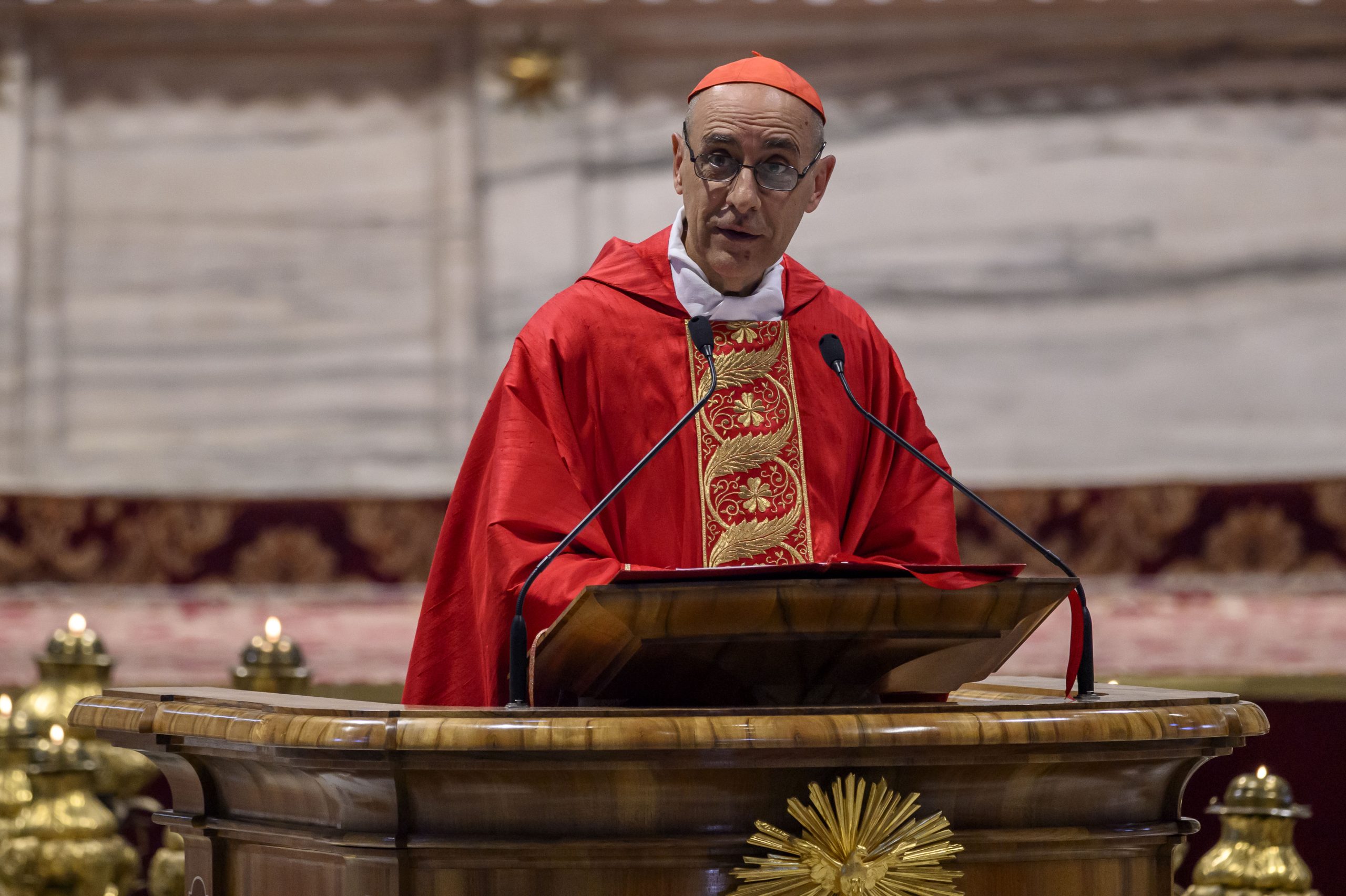
Cardinal Fernández releases statement on SSPX episcopal consecrations
Cardinal Víctor Manuel Fernández, Prefect of the Dicastery for the Doctrine of the Faith, has released a statement warning that planned episcopal consecrations by the Society of St Pius X risk constituting “a schismatic act” Cardinal Víctor Manuel Fernández has warned that the Society of St Pius X risks committing “a schismatic act” through episcopal consecrations without papal approval, in the first public intervention since the meeting with the SSPX on 12 February. In a statement released by the Dicastery for the Doctrine of the Faith on 13 May, the prefect said the planned SSPX episcopal ordinations “do not have the corresponding pontifical mandate” and reiterated the penalties attached under canon law to such an action. “The episcopal ordinations announced by the Priestly Society of Saint Pius X do not have the corresponding pontifical mandate,” Cardinal Fernández said. “This gesture will constitute ‘a schismatic act’ (John Paul II, Ecclesia Dei , n. 3), and ‘formal adherence to the schism constitutes a grave offense against God and entails the excommunication established by Church law’ ( ibid ., 5c; cf. Pontifical Council for Legislative Texts, Explanatory Note , 24 August 1996).” The statement concluded: “The Holy Father continues in his prayers to ask the Holy Spirit to enlighten the leaders of the Priestly Society of Saint Pius X so that they retrace their steps regarding the very serious decision they have taken.” The intervention followed reports earlier on Wednesday morning by Vatican correspondent Nico Spuntoni in the Italian newspaper Il Giornale that the Dicastery for the Doctrine of the Faith was preparing a text concerning the Society and the limits of its relationship with Rome. While no formal canonical decree has yet been issued, Cardinal Fernández’s statement closely resembles the warning sent to Archbishop Marcel Lefebvre shortly before the episcopal consecrations at Écône in 1988. On 17 June 1988, Cardinal Bernardin Gantin, prefect of the Congregation for Bishops, issued a public canonical warning to Lefebvre after the French archbishop announced that he intended to consecrate four bishops without pontifical mandate. “Since on June 15, 1988 you stated that you intended to ordain four priests to the episcopate without having obtained the mandate of the Supreme Pontiff as required by Canon 1013 of the 1983 Code of Canon Law, I myself convey to you this public canonical warning,” Cardinal Gantin wrote. His Eminence continued: “If you should carry out your intention as stated above, you yourself and also the bishops ordained by you shall incur ipso facto excommunication latae sententiae reserved to the Apostolic See in accordance with Canon 1382.” The letter concluded with a direct appeal to Lefebvre “in the name of Jesus Christ” to reconsider what it described as a grave act against the unity of the Church. Furthermore, the statement’s citation of a 1996 explanatory note issued by the Pontifical Council for the Interpretation of Legislative Texts recalls one of the strongest Vatican texts ever published on the canonical status of the SSPX. The 1996 document stated that the 1988 consecrations represented “the consummation of a progressive global situation of a schismatic character” and said that “the whole Lefebvrian movement is to be held schismatic”. It added: “As long as there are no changes which may lead to the re-establishment of this necessary communion, the whole Lefebvrian movement is to be held schismatic, in view of the existence of a formal declaration by the Supreme Authority on this matter.” The explanatory note also addressed Catholics attending SSPX chapels and clergy belonging to the Society. It distinguished between occasional attendance at SSPX liturgies and what it called “formal adherence to the schism”. According to the document, such adherence involved “a free and informed agreement with the substance of the schism” together with an external manifestation of separation from ecclesial communion. The text said that in the case of SSPX priests and deacons “there seems no doubt that their ministerial activity in the ambit of the schismatic movement is a more than evident sign” of formal adherence. The SSPX was founded in 1970 by Archbishop Lefebvre, a former superior general of the Holy Ghost Fathers and one of the leading conservative critics of Vatican II. Tensions between the Society and Rome escalated throughout the 1970s and 1980s over liturgical reform, ecumenism, collegiality and religious liberty. The crisis culminated on 30 June 1988 when Lefebvre consecrated four bishops at Écône without papal approval. The Holy See responded by declaring that Lefebvre, Bishop Antônio de Castro Mayer and the four newly consecrated bishops had incurred automatic excommunication. Two days after the consecrations, Pope St John Paul II issued the motu proprio Ecclesia Dei adflicta , describing the consecrations as “a schismatic act”. Relations improved significantly under Pope Emeritus Benedict XVI. In 2009 he lifted the excommunications of the four bishops as part of an attempt to facilitate reconciliation, though the Society’s canonical status remained unresolved. Pope Francis later granted SSPX priests faculties to validly hear confessions during the Year of Mercy, later extending the provision indefinitely. Local bishops were also authorised under certain conditions to delegate SSPX priests to witness marriages. Despite those concessions, doctrinal discussions between Rome and the Society have remained stalled for years, particularly over the interpretation of Vatican II and the authority of post-conciliar reforms. The Vatican statement issued on Wednesday is the first direct intervention from the doctrinal dicastery since the 12 February meeting with SSPX superior Fr Davide Pagliarani, which the dicastery described as “cordial and sincere”. The DDF reiterated that the ordination of bishops without a mandate from the Roman Pontiff would entail “a decisive rupture of ecclesial communion”, namely “a schism”, with “grave consequences for the Society as a whole”, the dicastery noted. For that reason, it proposed suspending the episcopal ordinations announced for 1 July 2026, which had been declared without papal approval. However, the SSPX rejected the proposal in a communiqué and decided to proceed with the episcopal consecrations.
May 13, 2026
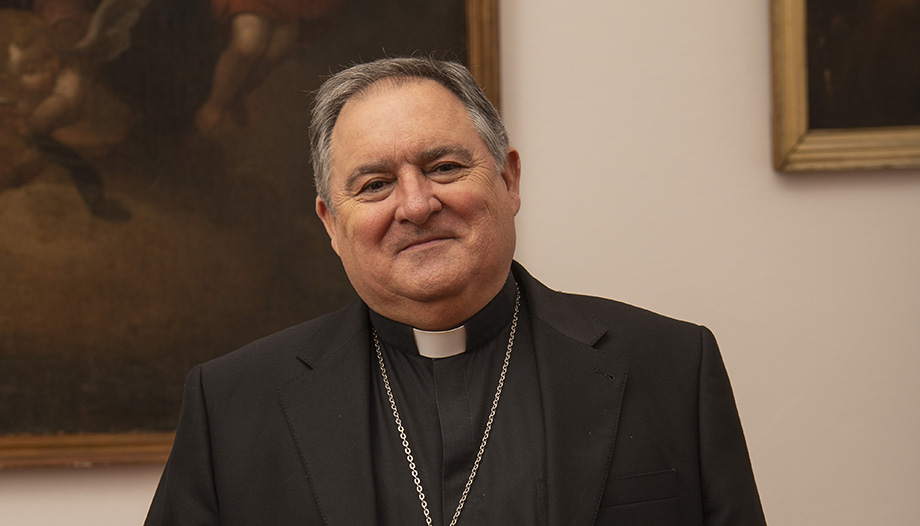
Canary Islands bishop says politicians must stop using migration “to win votes” ahead of papal visit
Bishop José Mazuelos Pérez of the Canary Islands has urged Spain’s political leaders to stop “playing politics” with immigration ahead of Pope Leo XIV’s expected visit to the country. The bishop warned against ideological polarisation, criticised the handling of migrant policy and said the Pope would call for unity and “the most humane solutions possible” The Bishop of the Canary Islands has appealed for Spain’s political class to stop using immigration as a weapon of ideological warfare ahead of the forthcoming visit of Pope Leo XIV. In an interview with the Spanish outlet The Objective , given as preparations continue for the Pope’s visit to Spain, Bishop José Mazuelos Pérez insisted that the migration crisis affecting the Canary Islands could not be reduced to electoral calculations or partisan rhetoric. “Immigration cannot be used for political polarisation,” the bishop said. “It’s not a matter of polarising the issue and using it for an ideology to win votes, but rather of finding the most humane solutions possible.” The Canary Islands have become one of the principal entry points into Europe for migrants crossing from West Africa, with local authorities struggling to cope with growing numbers of arrivals, especially unaccompanied minors. At the same time, debate over immigration has intensified sharply within Spanish politics, where both Left and Right accuse one another of exploiting the issue for political advantage. Bishop Mazuelos criticised what he described as attempts by all sides to instrumentalise migration for electoral purposes. “Politicians have to stop playing politics with immigration and find a solution together,” the bishop said. “Enough is enough; it seems the common good has been lost.” Over recent years, bishops, Catholic charities and ecclesiastical organisations have repeatedly backed measures designed to regularise migrants already living in Spain, while pressing for greater humanitarian protections and expanded reception policies. That stance has generated criticism that the Spanish hierarchy has aligned itself too closely with the assumptions of progressive migration policy while failing to address concerns surrounding integration, crime, pressure on housing and public services, and the wider social consequences of large-scale irregular migration. Bishop Mazuelos acknowledged that the Church had supported the regularisation of migrants for more than a year. “The Church has been asking for it for over a year and a half,” he said, arguing that Spain depended heavily upon migrant labour, particularly in caring professions and among workers supporting the country’s ageing population. At the same time, however, he openly criticised the political handling of the issue by the government of Spanish President Pedro Sánchez, suggesting that recent moves towards regularisation had been driven less by humanitarian concerns than by domestic political calculations. Referring to the timing of the proposals, the bishop said: “It was more because of the elections in Aragon than the Pope’s visit, because it suited their purposes.” Bishop Mazuelos repeatedly invoked the need for a return to “the spirit of the Transition”, referring to the broad political consensus that accompanied Spain’s move from Francoist dictatorship to parliamentary democracy in the late 1970s. “A large majority of Spaniards miss that spirit of the Transition,” the bishop said, expressing hope that Pope Leo XIV’s visit to the Spanish parliament might encourage politicians to rediscover a sense of national unity. Pope Leo XIV is expected to visit Madrid, Barcelona and the Canary Islands during what will be his first visit to Spain as Pope and the first papal visit since Benedict XVI attended World Youth Day in 2011. The Canary Islands, now synonymous across Europe with the migration crisis in the Atlantic, make any papal appearance there impossible to separate entirely from politics. Bishop Mazuelos insisted that the visit should not be interpreted as a political intervention. “The Pope’s visit to the Canary Islands is not political; he’s not coming to scold anyone or tell anyone what to do,” he said. Instead, he argued, the Pope wished to highlight “charity” and the wider mission of evangelisation. Still, the bishop also made clear that Leo XIV would likely speak forcefully about the need for unity and human dignity in the face of political division. “Pope Leo XIV is going to make that call for unity,” he said. “Let’s not use immigration for votes.” Bishop Mazuelos also addressed growing concerns over the treatment of unaccompanied migrant minors arriving in the Canary Islands, many of whom face uncertain futures upon reaching adulthood. “When they turn 18, they’re sent out onto the street,” he said, warning that many subsequently become vulnerable to criminal exploitation, prostitution and homelessness. He praised the work of Caritas and Catholic organisations operating in the islands, arguing that Church agencies were frequently stepping in where the state had failed. “Ultimately, it’s Caritas that’s feeding them,” he said. “Helping them so often where the State falls short.” The bishop nevertheless rejected accusations that the Church supported uncontrolled or irregular migration. “The Church is not in favour of irregular immigration,” he said. “But rather the most humane immigration possible.”
May 12, 2026
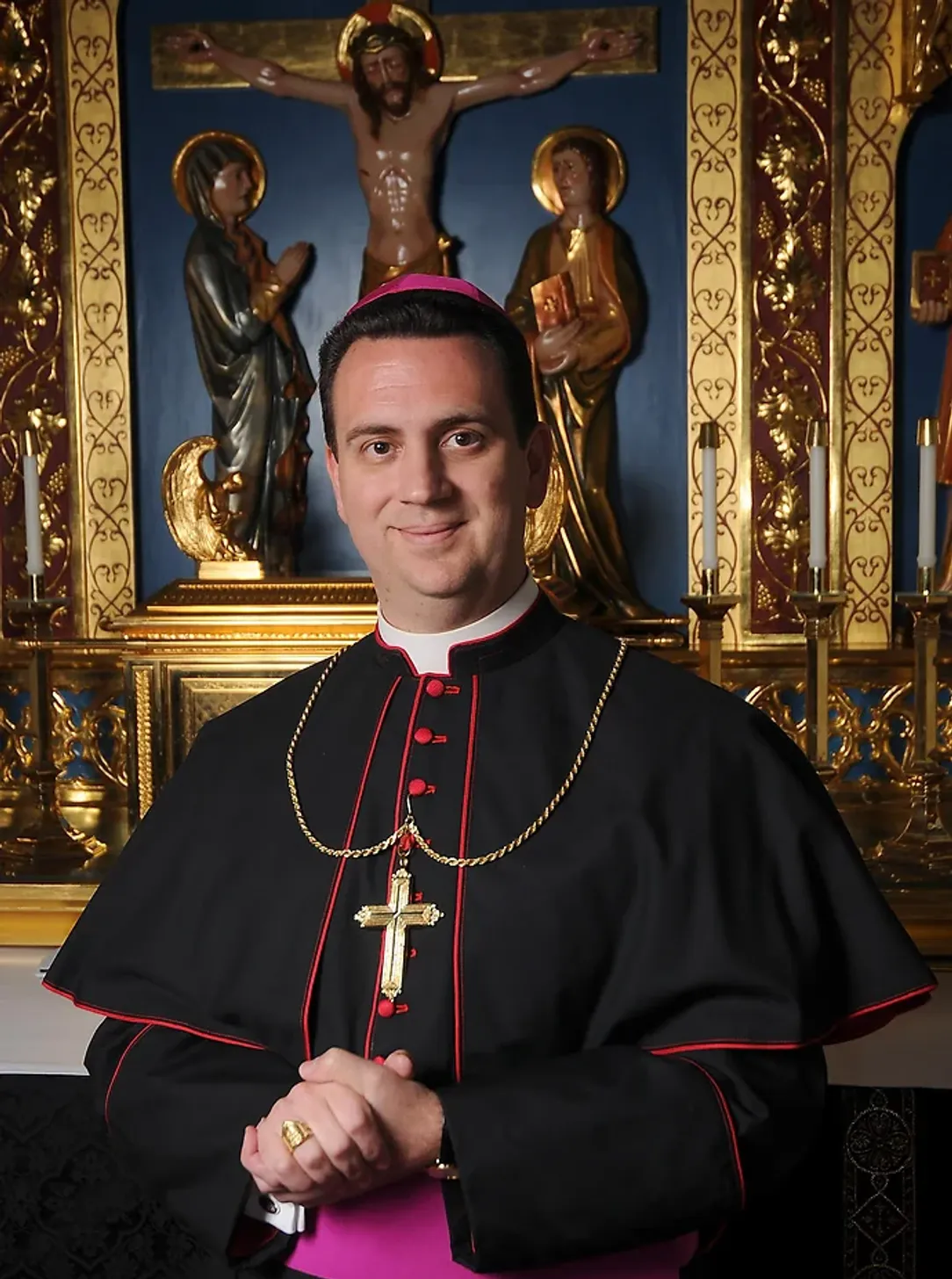
Pope Leo XIV appoints US Ordinariate Ordinary as temporary head of Australia’s ordinariate
Pope Leo XIV has appointed Bishop Steven Joseph Lopes, Ordinary of the Personal Ordinariate of the Chair of Saint Peter in North America, as temporary head of Australia’s Personal Ordinariate of Our Lady of the Southern Cross following the appointment of Archbishop Anthony Randazzo to the Dicastery for Legislative Texts Pope Leo XIV has appointed Bishop Steven Joseph Lopes, Ordinary of the Personal Ordinariate of the Chair of Saint Peter, to temporarily run the Personal Ordinariate of Our Lady of the Southern Cross in Australia. On May 11, the Holy See moved to conclude the mandate of Archbishop Anthony Randazzo as Apostolic Administrator ad nutum Sanctae Sedis of the Personal Ordinariate of Our Lady of the Southern Cross, following his appointment as Prefect of the Dicastery for Legislative Texts. In the same communication, Pope Leo XIV appointed Bishop Steven Joseph Lopes as Apostolic Administrator sede vacante et ad nutum Sanctae Sedis of the Australian ordinariate, adding another layer of responsibility to a prelate already central to the governance of the worldwide Anglican ordinariate structures. Bishop Lopes, who continues as Ordinary of the Personal Ordinariate of the Chair of Saint Peter in the United States and Canada, thus assumes temporary oversight of the Australian jurisdiction during its vacancy. The announcement comes amid a period of ongoing administrative consolidation within the Curia. Archbishop Randazzo’s departure from the Australian ordinariate role follows his elevation to the Dicastery for Legislative Texts, a body responsible for interpreting and safeguarding the Church’s canonical order. His earlier appointment to the Australian ordinariate in 2023 had itself been framed as a stabilising measure during a transitional phase in its governance. In February 2023, Pope Francis appointed Archbishop Randazzo president of the Federation of Catholic Bishops’ Conferences of Oceania, extending his influence across the wider Pacific region. Bishop Lopes, consecrated in 2016 as the first bishop of any ordinariate, has long been regarded as a central figure in the post-Anglican provision. His consecration in Houston was led by Cardinal Gerhard Ludwig Müller, with Cardinal William Levada and Cardinal Donald Wuerl serving as co-consecrators, marking the formal establishment of episcopal leadership within the ordinariate system. Since then, he has overseen the development of liturgical and pastoral structures for former Anglicans in full communion with Rome across North America. His broader responsibilities have expanded steadily in recent years and in 2021, he was elected chairman of the United States Conference of Catholic Bishops’ Committee on Divine Worship. . The ordinariate structure itself, established under Pope Benedict XVI’s apostolic constitution Anglicanorum coetibus , was designed to provide a stable canonical home for groups of former Anglicans entering full communion with the Catholic Church while retaining elements of their liturgical and spiritual patrimony. Each ordinariate functions similarly to a diocese, though without strict territorial boundaries, and is governed by an ordinary appointed by the Pope. In canonical terms, an apostolic administrator sede vacante assumes full governing authority when a see is vacant, though with certain limitations typical of temporary governance. As outlined in canon law, such administrators are restricted from making major structural decisions, particularly those involving the alienation of property or long-term commitments, unless explicitly authorised by the Holy See.
May 11, 2026
Pope Leo XIV appoints outspoken immigration bishop to conservative West Virginia diocese
Pope Leo XIV has appointed Bishop-Designate Evelio Menjivar-Ayala to lead the Diocese of Wheeling-Charleston in West Virginia. The Salvadoran-born bishop, who entered the United States illegally as a teenager after fleeing civil war, has become one of the most prominent episcopal voices on immigration in America Bishop-Designate Evelio Menjivar-Ayala has drawn fresh attention to the increasingly vocal role being played by senior Catholic clergy in the United States over immigration policy. The Salvadoran-born bishop-designate of Wheeling-Charleston, who arrived in the United States illegally as a teenager after fleeing civil war in El Salvador, said in an interview with The Guardian following his appointment by Pope Leo XIV that he would continue defending migrants and speaking publicly about immigration despite the political hostility towards undocumented immigrants in America. Speaking to The Guardian shortly after the announcement of his appointment, Bishop Menjivar-Ayala said: “I will keep talking about people’s reality, defending immigrants and fighting for fair treatment for them.” Bishop Menjivar-Ayala explained the Church’s involvement in the immigration debate in explicitly moral and religious terms. “We are not approaching this from a partisan political standpoint, but from a moral one,” the bishop said. “Morality is not something that pertains solely to one’s private life, but also to how I treat others, how I conduct my public life, how I perform my work, and how I engage with society.” Bishop Menjivar-Ayala added that the Church’s teaching on immigration was rooted directly in scripture, saying that “the prophets denounce the mistreatment of the poor, foreigners, widows, and orphans”, before referring to Christ’s identification with the vulnerable in the Gospel of St Matthew. The bishop-designate has become one of the more prominent episcopal voices criticising the administration’s deportation agenda. Earlier this year he condemned immigration raids and what he described as “highly visible operations of questionable legality that go far beyond mere immigration enforcement”. Born in El Salvador during the country’s brutal civil war, the bishop-designate has recalled witnessing violence near the Sumpul River massacre in Chalatenango while still a child. His family later fled the region before he eventually attempted to migrate to the United States to join relatives already living there. According to his interview, he was turned back during earlier attempts before finally crossing the border near San Ysidro hidden in the boot of a smuggler’s car. Reflecting on the experience, the bishop said: “I don’t recommend it. You risk your own life.” After arriving in California, he worked a series of manual and low-paid jobs while studying English and continuing his education. He later moved to Maryland, where he began working within the Church before entering seminary formation. Speaking more broadly about civic participation and political life, the bishop-designate encouraged Catholics not to withdraw from public engagement despite growing social divisions in the United States. “We can all do something,” Bishop Menjivar-Ayala said. “We need to use the opportunities we have to take action.” The bishop added that people should “not be afraid” to defend their rights, show solidarity and participate in public life, insisting that “participation in political and social life is important for change to happen”. Ordained a priest for the Archdiocese of Washington in 2004, he became an American citizen two years later. In 2022, Pope Francis appointed him an auxiliary bishop in Washington. Speaking about his own experiences as an immigrant, Bishop Menjivar-Ayala said: “I’ve lived through that story. I am part of the history of migration in the United States, and at the same time, it’s very hopeful to know that I’m also part of the story of overcoming adversity.” Bishop Menjivar-Ayala succeeds Bishop Mark Brennan, who has led the Diocese of Wheeling-Charleston through a prolonged period of recovery after the scandal surrounding former Bishop Michael Bransfield. Bishop Bransfield was accused of financial and sexual misconduct and was later ordered to repay substantial sums to the diocese following a Vatican investigation. The appointment of Bishop Evelio Menjivar-Ayala is an eyebrow-raising decision by Pope Leo XIV because auxiliary bishops in Washington have traditionally emerged from one of the most politically engaged and ideologically progressive episcopal environments in the United States. Bishop Menjivar-Ayala himself became known nationally for his outspoken criticism of immigration enforcement operations and his defence of undocumented migrants while serving as an auxiliary bishop in the capital. His transfer to the Diocese of Wheeling-Charleston is a sharp contrast, as West Virginia remains one of the whitest states in America, with one of the country’s lowest percentages of foreign-born residents and a comparatively small Hispanic Catholic population. The decision to appoint a Salvadoran-born bishop so publicly associated with immigration advocacy has therefore inevitably led to questions about the message Rome intends to send through the appointment. Bishop Menjivar-Ayala himself appeared to acknowledge the symbolic dimension of the move when he said: “The fact that they are sending me to a state where there aren’t many immigrants means a lot because it shows that immigrants have the ability to adapt, to embrace a new way of life, to adjust to a new environment.”
May 11, 2026
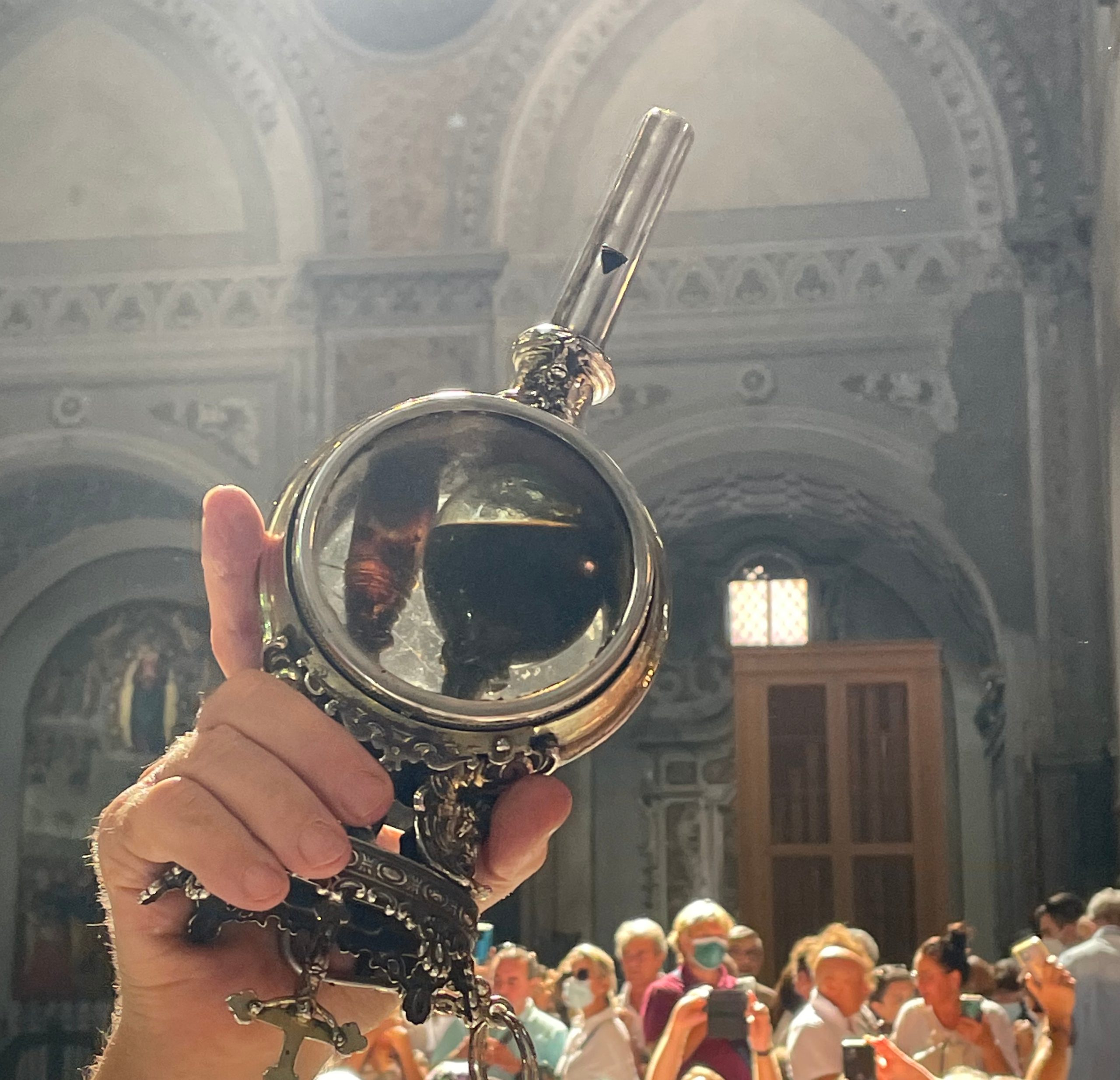
Blood of Saint Januarius liquefies during Pope Leo XIV’s visit to Naples
The blood of Saint Januarius reportedly liquefied at Naples Cathedral during the visit of Pope Leo XIV, outside the three traditional dates on which the phenomenon is normally expected to occur The liquefaction of the blood of Saint Januarius was reported in Naples on Friday shortly before the arrival of Pope Leo XIV. The miracle took place at Naples Cathedral, where the relics of the city’s patron saint, known locally as San Gennaro, are preserved. The substance contained in the larger of two sealed ampoules appeared to liquefy on the Pope’s arrival and while the Holy Father was holding it, despite the event falling outside the three dates each year on which the phenomenon is traditionally expected. The liquefaction was witnessed as Naples welcomed Leo XIV during a pastoral visit marking the first anniversary of his pontificate. The Pope later travelled through the city before addressing crowds gathered in Piazza del Plebiscito, where he urged Naples to become a “workshop of peace”. “There is no peace without justice,” the Pope said. “And justice is not complete without charity.” He warned against allowing entire neighbourhoods to fall into neglect and exclusion, describing what he called a modern “geography of inequality” stretching across both the historic centre and the outskirts of the city. He stressed the importance of strong public institutions capable of restoring trust and opportunity, particularly for young people. Pope Leo also praised those he described as the “everyday heroes” of Naples, the priests, volunteers, teachers and families who continue quietly working for the common good despite difficult social conditions. Their efforts, he said, should not remain isolated acts but become part of a wider “network of good” capable of strengthening the social fabric of the city. The Pope repeatedly returned to the role of the Church in helping rebuild civic life, praising cooperation between parishes, schools and charitable organisations. He said Naples should not become merely a “postcard city” shaped only by tourism, but a place where solidarity, education and human dignity are defended in practical ways. He also commended the city’s longstanding openness towards migrants and refugees, describing hospitality not as an emergency response but as “an opportunity for encounter and mutual enrichment”. According to long-standing tradition, a woman named Eusebia collected the saint’s blood after his execution. It is today preserved in two hermetically sealed glass ampoules held within a silver reliquary in Naples Cathedral. The phenomenon normally occurs three times a year: on September 19, the feast of Saint Januarius; on the Saturday before the first Sunday in May, commemorating the reunification of his relics; and on December 16, marking his patronage of Naples. Thousands of pilgrims routinely gather in the cathedral on those dates to witness the ceremony, during which the reliquary is brought from the cathedral treasury and presented for veneration. The dark red substance inside the larger ampoule is initially shown in solid form before, in most cases, appearing gradually to liquefy during prayers offered by the faithful. The ritual surrounding the relics has remained largely unchanged for centuries. The ampoules are stored in a secure vault, while bone fragments of the saint are kept beneath the cathedral altar. During the ceremony, the reliquary is repeatedly tilted to demonstrate whether liquefaction has taken place. The miracle did not occur during the visit of Pope St John Paul II in 1979 or during the visit of Pope Emeritus Benedict XVI in 2007. During Pope Francis’s visit to Naples in 2015, the blood was said to have partially liquefied. Cardinal Crescenzio Sepe remarked at the time: “The blood has half liquefied, which shows that Saint Januarius loves our Pope and Naples.” The phenomenon was also reported during the visit of Blessed Pius IX in 1848. The blood failed to liquefy in September 1939 and September 1940 during the Second World War, in September 1943 during the Nazi occupation of Naples, and in December 2020 amid the coronavirus pandemic.
May 11, 2026
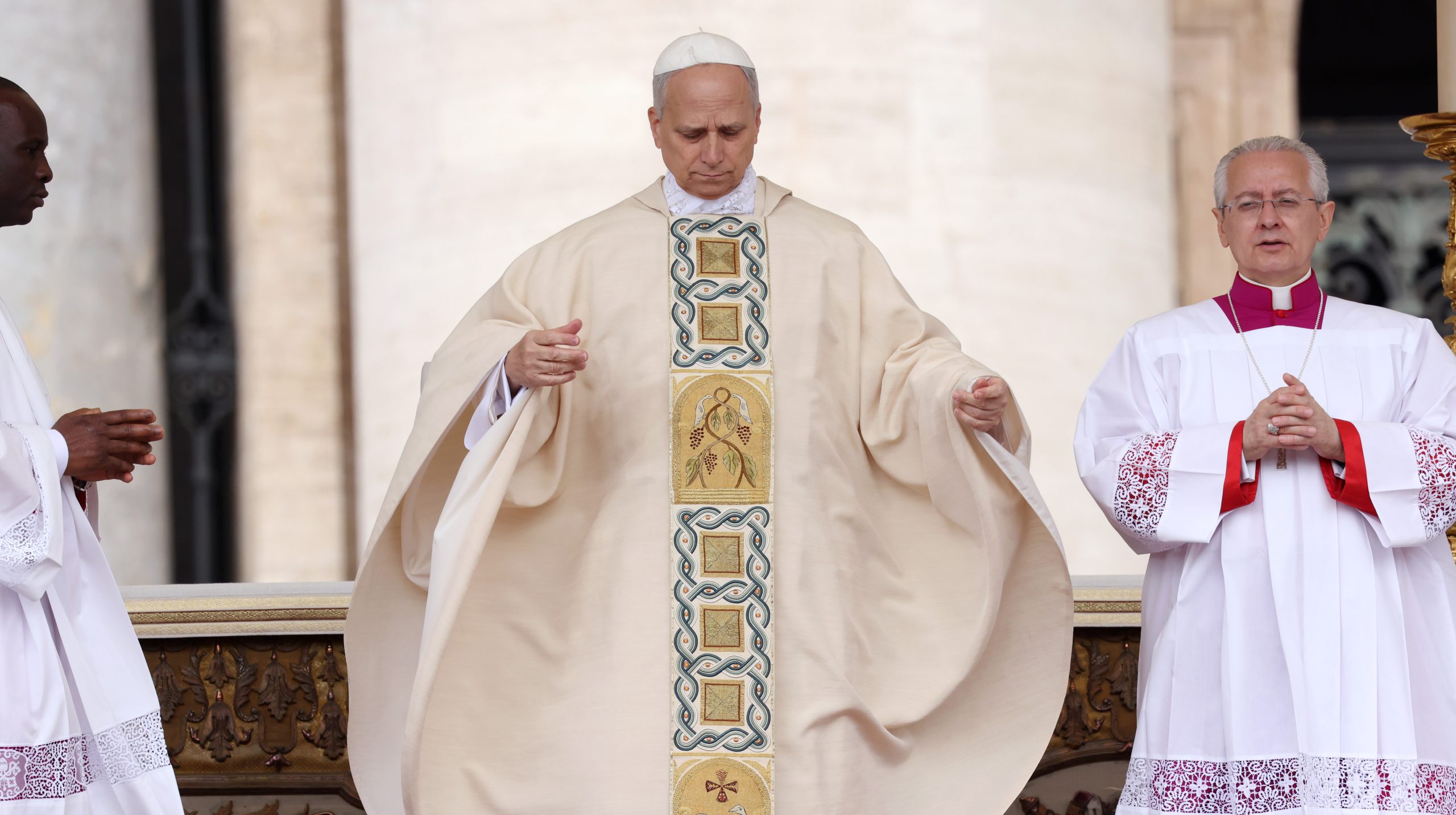
Pope Leo XIV’s first year and the future of the Traditional Mass
Dr Joseph Shaw, philosopher and chairman of the Latin Mass Society, examines Pope Leo XIV’s approach to the Traditional Mass, Traditionis Custodes and the question of the SSPX a year after the Pope’s election. The first question for the Catholic press about a new pope is inevitably where he sits on the ideological spectrum: will he support readers’ causes and punish their opponents? Popes are complicated figures, however, and do not arrive neatly labelled. The first indication of the Holy Father’s ideological allegiance came before his election, when the journalist Jaime Gurpegui encountered Austin Ivereigh and Fr James Martin SJ in a street in Rome. It was a moment when Cardinal Prevost’s handling of a clerical abuse case in his former diocese in Peru was being discussed in the media, and Ivereigh was upset about this. The encounter suggested that two of the best-known supporters of Pope Francis regarded Prevost as “their man”. His election a few days later was indeed welcomed by many who had been looking for a “continuity candidate” to continue the work of Pope Francis. What we have been told about the conclave suggests a more complicated story, however. The progressives’ candidate was Cardinal Pietro Parolin, the Secretary of State; conservative cardinals had backed the Hungarian Cardinal Péter Erdő. The story appears to be that the conservative bloc of votes went to Prevost, as a compromise candidate, after the initial ballots, before Parolin’s supporters accepted the inevitable. There are many possible explanations for why Fr Martin’s favoured candidate did not immediately secure the support of the largest bloc of more liberal cardinals, and we will never know all the factors involved. Now he is Pope, we can more usefully judge him by his actions. The very first thing we saw of the newly elected Pope Leo when he appeared on the balcony and greeted the people was that he was wearing the traditional red papal mozzetta, a garment worn by all the modern popes except Pope Francis. Indeed, Leo wears it frequently on formal occasions, for example when first meeting the President of Italy. To read this as a rebuke to Francis might be too strong, but it adjusts the dial of formality, a dial that every pope can turn as he sees fit. In the same spirit, he has restored the throne used at public Masses by Pope Benedict and rejected by Pope Francis. Pope Leo has also undone a series of decisions made by Pope Francis. The issues involved are not headline-grabbing: a reorganisation of the Diocese of Rome; the rent charged to cardinals and others in housing owned by the Vatican; the role of the Vatican Bank in regulating financial matters; and a commission to promote fundraising. If there is a political angle to these, it may have more to do with personalities than deep theological principles. Nevertheless, it reminds us that what one pope does, another can undo: a reality demonstrated by Pope Francis himself when he overturned the legal framework established by his predecessor, Pope Benedict XVI, for the Vetus Ordo. One rumour that circulated around Pope Leo when he was first elected was that he himself had celebrated the Traditional Mass. No witness to these celebrations was willing to be identified, however, and the rumour now appears to be untrue. What he has done, on the subject of the Traditional Mass, is give permission for its celebration by Cardinal Raymond Burke in St Peter’s in October 2025, as the centrepiece of the annual traditionalist Ad Petri Sedem pilgrimage. It is unclear whether he will grant permission again this year. He may have been displeased by the triumphalist tone of some of the media coverage of last year’s Mass, which was attended by an overflowing congregation. Nevertheless, he has continued his series of private audiences with supporters and representatives of the Vetus Ordo, including Cardinal Raymond Burke, the most powerful and consistent supporter of the ancient liturgy in the Curia; Bishop Athanasius Schneider of Kazakhstan, its best-known episcopal supporter; Fr John Berg, the Superior General of the traditionalist Fraternity of St Peter; and Prof Stephen Bullivant, a sociologist of religion whose most recent research, soon to be published, concerns Catholics attached to the Traditional Mass in the United States. Unsurprisingly, Pope Leo has also seen many people from other parts of the spectrum of opinion, including the ubiquitous James Martin SJ, but he has not found time to see Fr Davide Pagliarani, Superior General of the traditionalist but canonically irregular Society of St Pius X. No one could begrudge Pope Leo speaking to people on all sides of the argument in order to inform himself, but excluding Fr Pagliarani is not easy to understand. The SSPX is planning to carry out the consecration of new bishops without the permission of the Holy See, an act that would incur automatic excommunication for those most directly involved and, it is widely argued, would trigger a formal schism. These consecrations are scheduled for July 1 and inevitably form a backdrop to everything else connected with the traditional liturgy. The founder of the SSPX, the French Archbishop Marcel Lefebvre, carried out such consecrations in 1988. This led to the excommunication of the consecrators and those consecrated, but was also the occasion for Pope St John Paul II to approve new priestly institutes dedicated to the Traditional Mass which distanced themselves from Lefebvre. Pope St John Paul II was at pains to distinguish the question of the liturgy from the question of obedience, writing in his Apostolic Letter Ecclesia Dei that traditional Catholics had a “rightful aspiration” to the ancient Mass, an aspiration that should be met in the context of healthy liturgical pluralism. Pope Francis appeared to merge the two issues in 2021, in his own Apostolic Letter Traditionis Custodes and the accompanying letter, when he suggested that the Vetus Ordo and liturgical pluralism were intrinsically problematic. The closest we have yet come to a fresh statement of policy from Pope Leo is his message to the bishops of France, conveyed to a meeting of their Episcopal Conference in a letter from Cardinal Parolin. This asked them to look for “practical solutions” to the question, with a view to “the generous inclusion of persons sincerely attached to the Vetus Ordo”. The irony of this letter is that what is stopping bishops finding practical solutions is papal legislation – Traditionis Custodes – which prevents them from setting up personal parishes, recognising new “groups” of the faithful attached to the Traditional Mass, allowing recently ordained priests to celebrate the Vetus Ordo publicly, and fostering long-standing celebrations in parishes without permission from the Dicastery for Divine Worship: a permission that has not always been forthcoming. There are many ways in which Traditionis Custodes could be neutralised, not all of which require a humiliating public renunciation of Pope Francis’s thinking. One indication of a change in the way the law is being applied was given when Britain’s papal nuncio told the bishops of England and Wales that permissions would be granted for the celebration of the Traditional Mass in parish churches. This would be enough to relieve many local frustrations and conflicts, but it would not be enough to rebuild trust with the SSPX. If Pope Leo wants to begin doing that, something more public and dramatic will be required. Now that a full year has passed since his election, we may see some bolder moves from the Holy Father, such as changes of personnel: for example, the Prefect of the Dicastery for Divine Worship, Cardinal Arthur Roche, has so far been kept in post despite being past retirement age. On the SSPX, it would be surprising if any pope watched a group move into schism with indifference: we will see whether Pope Leo finds his inner John Paul II.
May 8, 2026