

Pope Leo Xiv

Magnifica Humanitas offers a window into Leo XIV’s moral compass
Magnifica Humanitas is far more than an encyclical on artificial intelligence. Michael Haynes finds that Pope Leo XIV’s first major text offers a window into the moral vision shaping his pontificate With the launch of his first encyclical there is now no doubt that Leo’s choice of regnal name and entire papacy is centred around what he sees as a pivotal moment for the future of the Church and humanity. “Artificial intelligence needs to be disarmed,” said Leo XIV while launching Magnifica Humanitas today. “This moment needs words capable of attracting attention, of awakening consciences.” This is not to say that Leo opposes the seemingly relentless drive of artificial intelligence (AI) or the wider technological development of the modern world. While AI cannot be deemed “morally neutral”, Leo urged that “it must be at the service of all and the common good”. In short, this could be taken as a summation of the entire encyclical : a plea for the pursuit of the common good. It is certainly written as a response to AI and describes itself as being in the “age of AI”. But it is much wider than AI itself, as Leo appeared to launch his pontificate anew. Just as during his address to the College of Cardinals last May he outlined his papal priorities, in Magnifica Humanitas Leo revealed his deeper concerns about wider society. Given the length of the encyclical, no single analysis can justly summarise all that it contains, but one key element to examine first is what the text reveals about the Pontiff’s moral compass and his view of addressing crises in the Church and wider secular society. Far from being a mere appeal from another cleric for some generically responsible behaviour, this time regarding AI, Leo delved into the entire foundation of societal life. For Leo, the link between his encyclical and his namesake’s Rerum Novarum is palpable. “Like the earlier Leo, I feel entrusted to look upon another huge transformation with eyes of faith, with lucidity of reason, with openness to mystery, and with cries of the poor and the earth resounding in my heart,” he commented during the launch event. This is why Magnifica Humanitas does not deal briefly and solely with AI, but instead uses the topic to launch into a wider schooling of society about improving standards of behaviour and acting in a more Christian manner while seeking the common good. Leo’s assessment of how to preserve humanity from the dangers posed by AI is to attempt a ground-up re-education of society with God at the centre. In part this explains the considerable length of the text, which will have disappointed those looking for a return to briefer tomes. Of the 245 paragraphs and 224 footnotes, Pope Francis is cited 54 times, Benedict XVI 16 times, John Paul II nearly 40 times, and the Second Vatican Council 13 times. St Augustine also features throughout, with a quotation drawn from J.R.R. Tolkien. The tone is a mixture of different elements. Firstly, it is undeniably clear that Leo is seeking to address the result of many years of increasingly anti-Catholic secularism. “We live at a time of significant spiritual and cultural blindness,” he stated. In order to resolve this crisis, a crisis which then spills over into the use of AI, Leo urges society to return to elements intrinsic to Christian civilisation, such as pursuing the common good. “In the era of artificial intelligence, when human dignity is threatened by new forms of dehumanization, ours is the pressing duty to remain profoundly human,” he writes. “We must lovingly safeguard the grandeur of humanity bestowed upon us and revealed in its fullness in Christ, the splendour of which no machine can ever replace.” His approach to how best to use AI thus necessarily involves a quasi-catechesis on the re-Christianisation of society. Leo decried how “the risk of dehumanization — of building a future that excludes God and reduces the other to a means — is an ancient and ever-new temptation that today takes on a technical guise”. Should AI and wider technological development continue in the line of the Tower of Babel, then all will suffer, Leo argued. “Babel thus reveals the limits of any effort that, however grandiose, arises from self-affirmation, sacrifices human dignity for efficiency and aspires to reach heaven without God’s blessing.” “What saves humanity,” he added later in the encyclical, “is the divine love that descends into the most fragile point of our history and renews it from within.” The Pontiff urged all readers to recognise “the harmony that arises when all persons assume their own role and recognize that their strength comes from the Lord”. Such lines present a decidedly Christian tone to the text, if perhaps not a stridently or overtly Catholic one. It reads as Leo’s heartfelt appeal to the world at large to act in a more polite, respectful and ultimately Christian manner. “In order to protect the human person in the age of artificial intelligence, I believe that today we must once again reflect on the common good, the universal destination of goods, subsidiarity, solidarity and social justice,” wrote Leo, having noted that “a city founded on the common good implies, first and foremost, building on a firm relationship with God”. At other times the text seems less unabashedly Catholic than a papal encyclical ought confidently to appear. In large part this is due to the Pope’s reiteration of his predecessor’s text Dignitas Infinita regarding human dignity, and an underlying tone in the text which appears to orient the Pope’s proposed societal changes as being chiefly desirable because they benefit man, rather than being linked to a conversion of hearts and minds to Catholicism. Assuredly, in certain sections the Pope notes the importance of having God at the foundation of activity, but in others a far more secular tone is present. Modern teaching on human dignity tends to upend traditional teaching, generally remaining silent on supernatural dignity and then elevating natural dignity. For a more detailed analysis on the topic than is possible here, see this correspondent’s article and book on the topic. Citing this teaching on human dignity, Leo writes that it is this which “requires us to shape the way we live together, including our economic and political choices, and the makeup of our cities”. Yet such an aspect is also very much in line with Leo’s papal style: avoiding polemics, and outwardly remaining calm as he seeks to find common ground with all in an apparent attempt to defuse tensions and foster peaceful dialogue. This does not stop him from once again decrying abortion and euthanasia. Nor did Leo feel restrained in making a bold statement declaring that the Church’s longstanding teaching on a “just war” is “now outdated” since “humanity possesses far more effective and capable tools for promoting human life and resolving conflicts, such as dialogue, diplomacy and forgiveness”. Indeed, this latter point places his repeated calls for peace in a new light, given that, for Leo, it appears that armed conflict can no longer be justified, a pronouncement which is not supported either by Scripture or Tradition. For an encyclical billed as being solely about AI, the text delivers far more than that. It reads as a window into Leo’s moral and social views and thus into the style and priorities of his pontificate. Vaticanists waiting for a “tell” on Leo have finally been granted an inside look. Leo highlights the Christian foundation of society before noting that only Christianity can lead society and mankind to truly flourish. He then moves to address questions relating to the common good, alongside topics likely to interest more secular readers, including his passionate appeals regarding armed conflict and the growing use of AI in fuelling the global war industry. But in closing he returns once more to his overtly Christian theme, emphasising the importance of prayer in sustaining any endeavour aimed at fostering a better society in pursuit of the common good. “The spirituality that we need,” he wrote, “is a Eucharistic spirituality, that is, a spirituality of ecclesial unity in love.” Leo urged society to recognise the beauty that comes not from AI’s takeover of the world, or even man himself through transhumanism, but from the frailty of humanity which must rely upon God for everything. “Our rule,” he concluded, “must be the acceptance of human limitations as a natural and positive reality, and should be characterized by shared responsibility and a language characterized by the Gospel.” Michael Haynes is an English journalist in the Holy See Press Corps. He serves as Vatican Correspondent and Analyst for Pelican+ , while readers can follow him at Per Mariam and on X @MLJHaynes .
May 25, 2026
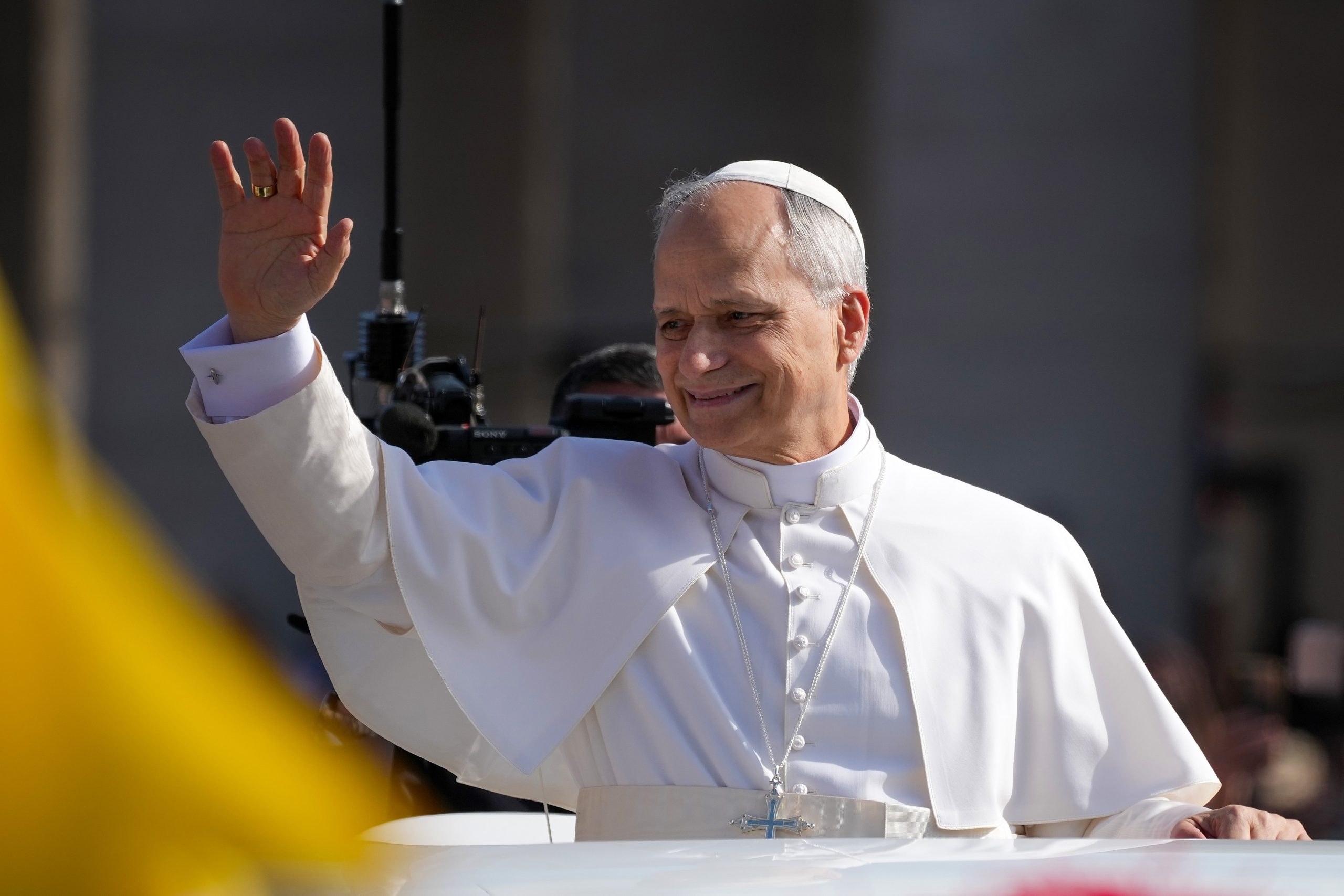
Inside Magnifica Humanitas: Pope Leo XIV’s warning on AI
Pope Leo XIV has published the first encyclical of his pontificate, warning that artificial intelligence risks creating a new “Tower of Babel” built on technocratic power, dehumanisation and moral confusion Pope Leo XIV has published the first encyclical of his pontificate, issuing a warning against the dangers posed by artificial intelligence and what he describes as a growing “culture of power” threatening the dignity of the human person. Magnifica Humanitas (“Magnificent Humanity”), released by the Vatican on 25 May after being held under strict embargo until late Monday morning in Rome, is the Holy Father’s most substantial intervention yet in the global debate surrounding AI and the technological transformation of society. The encyclical argues that humanity now stands between two paths: the construction of a new “Tower of Babel” founded on pride, uniformity and technocratic power, or the rebuilding of a new Jerusalem grounded in solidarity, communion and God-centred human fraternity. “Humanity, created by God in all its grandeur, is today facing a pivotal choice: either to construct a new Tower of Babel or to build the city in which God and humanity dwell together,” the Pope writes in the opening paragraphs of the encyclical. The 230-paragraph document is the first major social encyclical of Leo XIV’s pontificate and immediately places him within the long tradition of modern Catholic social teaching stretching back to Pope Leo XIII’s Rerum Novarum in 1891. Far from rejecting technological progress outright, Leo XIV repeatedly insists that technology is a fundamentally human achievement capable of serving the common good. However, he warns that technological systems can never be considered morally neutral and must remain subordinate to the dignity of the human person. “We cannot consider AI to be morally neutral,” the Pope states. The encyclical presents artificial intelligence as one of the defining res novae — “new things” — confronting the modern world, the language traditionally used by the Church to describe the upheavals of the industrial revolution. The document states that unprecedented technological power is increasingly concentrated in the hands of private actors operating beyond effective political oversight, creating new dangers for democracy, labour, truth and peace. “More power does not necessarily imply something better,” it states. Much of the encyclical is devoted to explaining why the Church believes artificial intelligence cannot be equated with human intelligence. The Pope insists that AI systems, however sophisticated, remain incapable of moral reasoning, authentic relationships or genuine human experience. “So-called artificial intelligences do not undergo experiences, do not possess a body, do not feel joy or pain,” the encyclical says. “Nor do they have a moral conscience.” Leo XIV repeatedly returns to the theme of human dignity, grounding the entire encyclical in the belief that every person possesses an “infinite dignity” rooted in creation in the image of God rather than in usefulness, efficiency or productivity. “The fundamental dignity of each person,” he writes, “is neither acquired nor earned, nor does it need to be justified.” The Pope warns that the unchecked growth of AI risks creating new forms of dehumanisation in which human beings are valued according to economic output, algorithmic usefulness or digital visibility. He cautions against reducing human judgement to automated systems and criticises cultural movements that treat technological transcendence as a substitute for spiritual fulfilment. One of the most striking sections of the document is its sustained critique of transhumanist and posthumanist ideologies, which seek to overcome biological limitations through technological enhancement. Without naming particular movements or figures, Leo XIV argues that such projects reflect humanity’s recurring temptation to seek salvation apart from God. “Babel thus reveals the limits of any effort that, however grandiose, arises from self-affirmation, sacrifices human dignity for efficiency and aspires to reach heaven without God’s blessing,” the encyclical says. The encyclical also addresses the growing political and social consequences of AI-generated misinformation and manipulated media. Leo XIV warns that artificial intelligence is rapidly transforming the public square and undermining trust in democratic institutions through the spread of falsehoods and synthetic content. “Disinformation finds a powerful amplifier in AI,” the document states. The Pope argues that truth itself must be defended as a “common good” and calls for what he describes as an “ecology of communication” rooted in responsibility, education and human relationships rather than manipulation and profit. “The search for truth is an essential element of democracy,” he writes. Questions surrounding labour and the future of work occupy another substantial portion of the encyclical. Leo XIV warns against economic systems that prioritise efficiency over workers and expresses concern about automation displacing millions of people while weakening social bonds and family life. The Pope also calls for stronger political oversight of AI systems, greater international cooperation and safeguards against the monopolisation of data and digital infrastructure. In one of the encyclical’s most arresting phrases, Leo XIV urges world leaders to “disarm AI”. “Disarming AI means freeing it from the mentality of ‘armed’ competition,” the Pope writes, warning against an escalating technological arms race between states and corporations. The document devotes an extended section to the dangers posed by autonomous weapons systems and the growing use of AI in warfare. Leo XIV argues that artificial intelligence is accelerating the pace and destructiveness of conflict while distancing human beings from moral responsibility for violence. “AI acts as an accelerating factor” in changing the nature of war, he writes. The Pope condemns what he calls the “normalisation of war” and criticises a global culture increasingly resigned to permanent conflict, weakened diplomacy and the collapse of multilateral institutions. “This culture of power infiltrates society,” he warns, “normalising war.” Despite the encyclical’s sombre tone, the document concludes on a strongly hopeful note centred on the Christian doctrine of the Incarnation. Against ideologies promising technological transcendence, Leo XIV points to Christ as the true fulfilment of humanity. “At the heart of everything is the mystery of the Incarnation, the Word who became flesh and dwelt among us,” he writes. The final pages call on Catholics to resist despair and instead help build what the Pope repeatedly describes as a “civilisation of love” capable of directing technological progress towards authentic human flourishing. “In the era of artificial intelligence,” the Pope writes, “when human dignity is threatened by new forms of dehumanisation, ours is the pressing duty to remain profoundly human.”
May 25, 2026
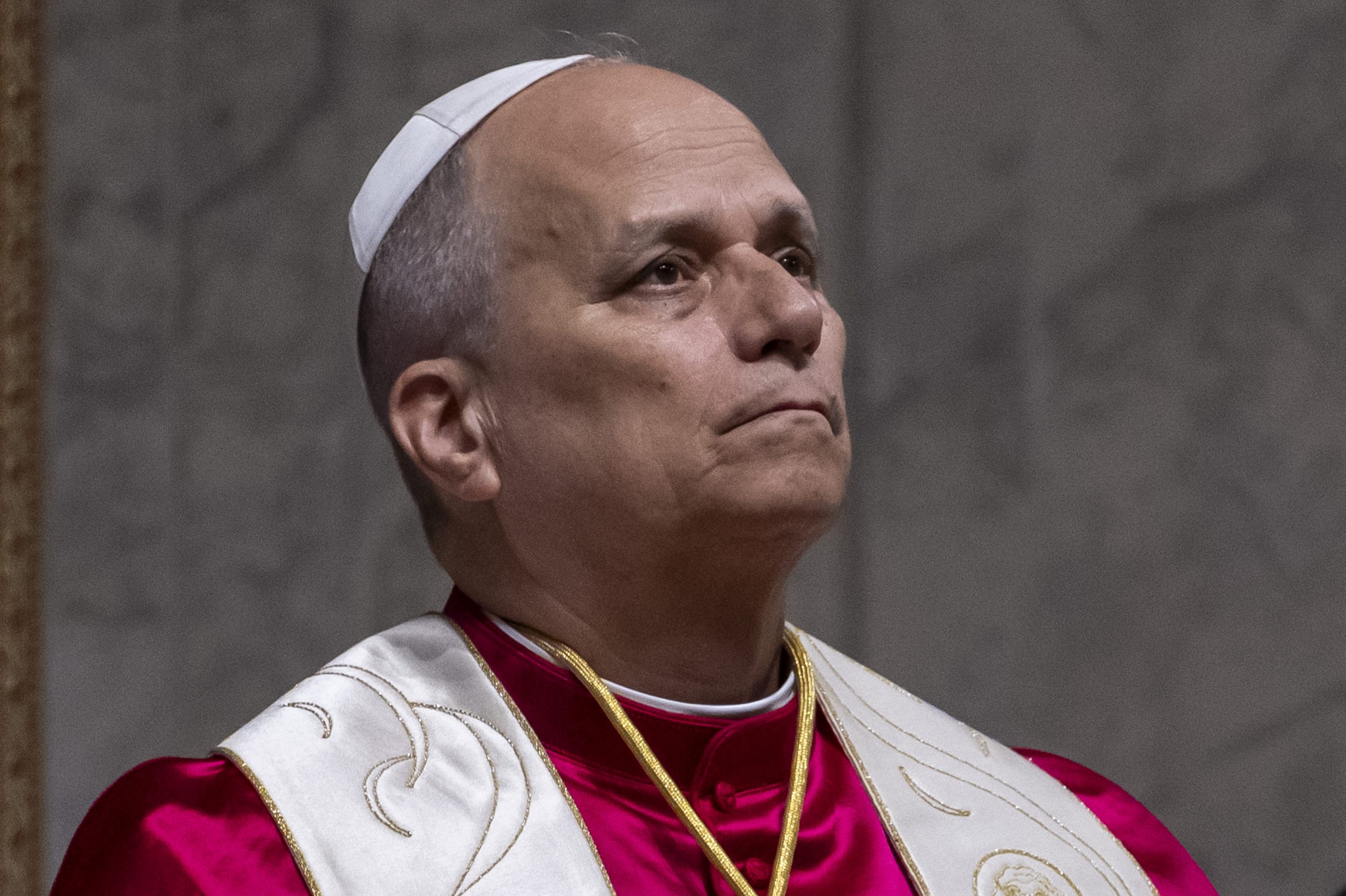
Pope Leo XIV’s first encyclical attacks transhumanism and AI excess
Magnifica Humanitatis will reportedly place human dignity at the centre of the Church’s response to artificial intelligence as Pope Leo XIV addresses war, algorithms and the moral limits of technological progress Pope Leo XIV will publish his first encyclical on Monday, warning against the dangers of transhumanism and the dehumanising effects of artificial intelligence, according to details revealed in advance by Vatican correspondent Nico Spuntoni. The document, titled Magnifica Humanitatis , has reportedly been described inside the Vatican as the defining text of the new pontificate and places the defence of human dignity at the centre of the Church’s response to rapid technological change. According to Spuntoni, the encyclical argues that humanity now stands “at a crossroads between self-sufficiency and solidarity” as artificial intelligence becomes increasingly embedded in political, economic and social life. The text frames that struggle through biblical imagery while returning repeatedly to the theological significance of the Incarnation. Nico Spuntoni wrote that Leo XIV presents “contemplation of the Incarnate Word” as the answer to what the Pope calls “the eclipse of the meaning of what it means to be human”. The encyclical is expected to expand substantially on comments made by the Pope shortly after his election when he explained why he had chosen the name Leo. Addressing the College of Cardinals, the Pope said Leo XIII had confronted “the social question in the context of the first great industrial revolution”, while the Church today must respond to “another industrial revolution and to the developments of artificial intelligence, which bring new challenges for the defence of human dignity, justice and work”. Far from rejecting technological development altogether, the encyclical reportedly argues that artificial intelligence must remain subject to moral responsibility and ordered towards the common good. The Pope is also said to warn against any attempt to replace or transcend the human person through technology. Furthermore, Nico Spuntoni reported that Leo XIV criticises those who seek “to transcend humanity through technology”, while insisting on what he previously described as a “healthy sense of proportion” in relation to scientific development. The document reportedly returns several times to the question of human dignity as the measure against which all technological progress must be judged. In one passage referenced by Spuntoni, the Pope stresses that the human person possesses inherent dignity because each person is “willed, created, and loved by God”. That theme had already appeared in the Pope’s message for this year’s World Communications Day, in which he quoted St Gregory of Nyssa’s teaching that mankind possesses “a royal character” because humanity is created in the image of God. According to Nico Spuntoni’s account, the Pope expresses particular concern about what he sees as the erosion of moral accountability through reliance on algorithms and automated systems. The encyclical reportedly develops warnings Leo XIV issued earlier this year in a message for the International Day of Mathematics, when he called for algorithms to respect “the integral growth of the person” and not exclude “the moral dimension of these emerging technologies”. The impact of artificial intelligence on relationships and public discourse also features prominently in the text. Spuntoni said the Pope warns against forms of digital communication that undermine truth and human freedom, echoing earlier appeals from the pontiff for technology to remain at the service of authentic human interaction. The encyclical is also expected to address the military use of artificial intelligence. Pope Leo, who has appealed for peace since his election, reportedly insists on the ethical limits that must govern technological development in the defence sector. Nico Spuntoni suggested the Pope also uses the document to defend multilateral cooperation at a time of increasing geopolitical instability and international fragmentation. The encyclical is also likely to reinforce Leo XIV’s growing reputation as a pontiff deeply shaped by the intellectual legacy of St Augustine and Pope Benedict XVI. Spuntoni noted that the document revisits themes explored by Benedict in Spe Salvi , particularly the danger of mankind placing excessive faith in its own power and technological capability. According to Spuntoni, the Pope rejects the idea that Catholic social teaching is merely sociological or political, instead presenting it as something rooted directly in Christ and the Gospel. Ultimately, the encyclical does not condemn artificial intelligence itself, but instead seeks to direct technological development towards the service of humanity and the common good. In doing so, according to Spuntoni, the Pope expresses hope that mankind can still place technological progress at the service of human dignity rather than allow it to diminish or replace it. The topic of the text is as expected. The Pope’s choice of name and subsequent comments on artificial intelligence made it almost certain that this would be the theme of his first encyclical. The antimilitarist stance is also not surprising. However, the succinct way in which the pontiff has drawn together two major themes of his pontificate is characteristic of both the diplomatic ability and quiet confidence he has exuded since taking office. JD Vance has already said that he is “looking forward to reading” Magnifica Humanitatis, and it is likely that the text will prove influential on the world stage. By linking war with the topic of AI, the Pope has adeptly given world leaders a way to discuss the need for restraint in conflict without stoking partisan tensions. The full text will be presented tomorrow at 11.30am in the Vatican’s Synod Hall. It will be signed on 15 May, matching the date of the signing and publication of Rerum Novarum, Pope Leo XIII’s best-known encyclical, issued on 15 May 1891. The same date was also chosen in 1931 by Pope Pius XI for Quadragesimo Anno, which developed the Church’s teaching on social order and introduced the principle of subsidiarity. Thirty years later, on 15 May 1961, Pope John XXIII promulgated Mater et Magistra, focusing on economic justice and social development. The date of release, 25 May, also coincides with Pope John Paul II’s Ut Unum Sint, on ecumenism, which was released on 25 May 1995, and Pope Leo XIII’s Annum Sacrum, released on 25 May 1899, which consecrated the entire human race to the Sacred Heart of Jesus.
May 24, 2026
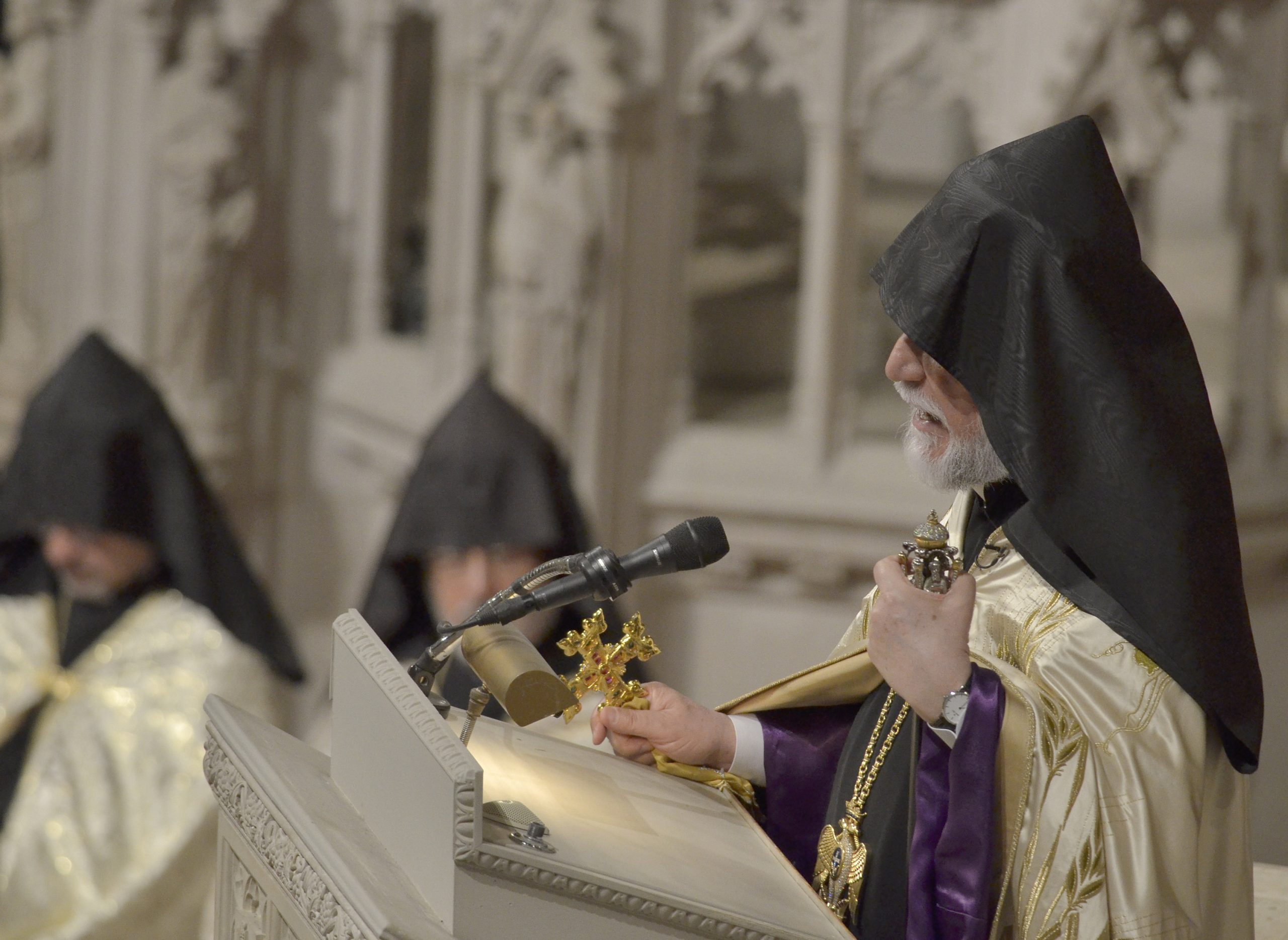
Armenian Church says Pope Leo XIV discussed possibility of a “Third Vatican Council”
The Armenian Apostolic Church has said that Pope Leo XIV and Catholicos Aram I discussed the possibility of convening a “Third Vatican Council” during a private meeting at the Vatican focused on Christian unity, Artsakh and the Middle East The idea of convening a “Third Vatican Council” was discussed during a private meeting between Pope Leo XIV and Catholicos Aram I at the Vatican. The meeting took place on May 18 and focused on Christian unity, the plight of displaced Armenians from Artsakh, the continuing detention of Armenian prisoners in Baku and the situation in Lebanon. While the Vatican’s own account of the audience made no mention of a council, a statement released by the Armenian Apostolic Church said the two Church leaders discussed “the establishment of a common date for Easter, a day of commemoration for all martyrs, and the convening of a Third Vatican Council”. According to the statement, Aram I stressed the “urgent necessity” of such initiatives for the life of the “universal Christian Church”. The Armenian Church added that Pope Leo XIV expressed “understanding and support” concerning the issues raised during the meeting. No details were given about what form a Third Vatican Council might take or whether it would involve only the Catholic Church or a wider ecumenical gathering of Christian Churches. The Second Vatican Council, convened by Pope John XXIII in 1962 and concluded under Pope Paul VI in 1965, remains the most recent ecumenical council of the Catholic Church. Speculation about a future council has surfaced periodically in recent decades, though no pope has publicly advanced plans for another ecumenical council. The proposal emerged during a broader conversation between Leo XIV and Aram I concerning the condition of Christians in the Middle East and relations between Churches. According to the Armenian statement, Aram I also raised the issue of Artsakh and the right of displaced Armenians to return “under international guarantees”. He further stressed the need to protect Armenian churches and historical monuments in accordance with international law. The Catholicos additionally referred to the continuing detention of former Artsakh officials and political leaders held in Baku, saying their release remained an urgent matter. The meeting also addressed Lebanon, where Aram I underlined the importance of preserving the sovereignty of the Lebanese state and ensuring the authority of the government throughout the country. He also spoke of the importance of Israel withdrawing from southern Lebanon and respecting existing ceasefire agreements. The Armenian statement said the two Church leaders also discussed ecumenical relations and the future direction of inter-Church dialogue. Aram I emphasised that alongside theological discussions, “moral and ethical issues” should occupy a greater place within ecumenical cooperation and international Christian initiatives. The Vatican has sought closer ties with the Oriental Orthodox Churches since the Second Vatican Council, with relations between Rome and the Armenian Apostolic Church improving markedly during the pontificates of Pope St John Paul II, Benedict XVI and Francis. Pope Francis maintained warm relations with Armenian Christian leaders and frequently referred to the suffering of Armenian Christians in the Middle East. In 2015 he described the mass killing of Armenians under the Ottoman Empire as “the first genocide of the 20th century”. Aram I, who has led the Catholicosate of the Great House of Cilicia since 1995, has long been active in ecumenical affairs and previously served as moderator of the World Council of Churches.
May 21, 2026
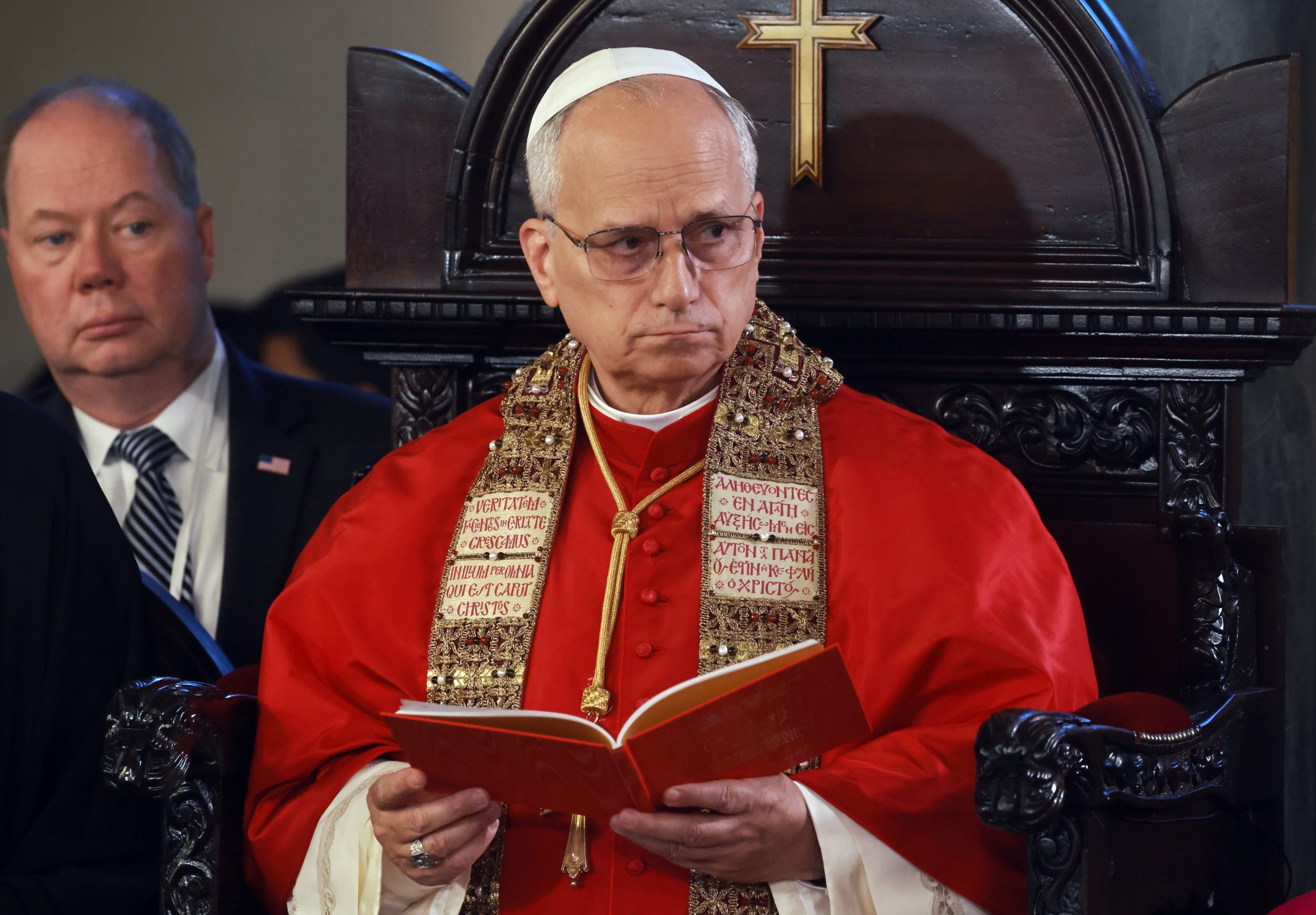
Vatican confirms release date, title and theme of Pope Leo XIV’s first encyclical
The Vatican has confirmed the release date, title and theme of Pope Leo XIV’s first encyclical The release date for Pope Leo XIV’s first encyclical has been confirmed as May 25. The title of the document has been confirmed as Magnifica Humanitas, and it will focus on preserving the human person in the age of artificial intelligence, according to Vatican News. Although the text will not be released until May 25, it will be signed on May 15, matching the date of the signing and publication of Rerum Novarum, Pope Leo XIII’s best-known encyclical, issued on May 15, 1891. The same date was also chosen in 1931 by Pope Pius XI for Quadragesimo Anno, which developed the Church’s teaching on social order and introduced the principle of subsidiarity. Thirty years later, on May 15, 1961, Pope John XXIII promulgated Mater et Magistra, focusing on economic justice and social development. May 25 also coincides with Pope St John Paul II’s Ut Unum Sint, on ecumenism, which was released on May 25, 1995, and Pope Leo XIII’s Annum Sacrum, released on May 25, 1899, which consecrated the entire human race to the Sacred Heart of Jesus. Magnifica Humanitas will be presented at 11.30am in the Vatican’s Synod Hall. Alongside the Pope, a number of significant prelates, theologians and specialists are scheduled to speak. They include Cardinal Víctor Manuel Fernández, prefect of the Dicastery for the Doctrine of the Faith; Cardinal Michael Czerny SJ, prefect of the Dicastery for Promoting Integral Human Development; Prof Anna Rowlands, a theologian and professor at Durham University; Christopher Olah, co-founder of Anthropic and head of research on the interpretability of artificial intelligence; and Prof Leocadie Lushombo IT, professor of political theology and Catholic social thought at the Jesuit School of Theology at Santa Clara University in California. Closing remarks will be given by Cardinal Secretary of State Pietro Parolin, followed by an address and blessing by the Pope. Addressing artificial intelligence, the encyclical will build on recent Vatican interest in the subject. In January 2025, the Dicastery for the Doctrine of the Faith and the Dicastery for Culture and Education issued Antiqua et Nova, a joint note on “the relationship between artificial intelligence and human intelligence”. The document said AI could bring “important innovations” but warned that it also carried the danger of deepening inequality, manipulating public opinion and expanding “the instruments of war well beyond the scope of human oversight”. It added that artificial intelligence “should not be seen as an artificial form of human intelligence, but as a product of it”, and insisted that it “should be used only as a tool to complement human intelligence rather than replace its richness”.
May 18, 2026
Vatican and US embassy clarify Iran ambassador’s papal honour
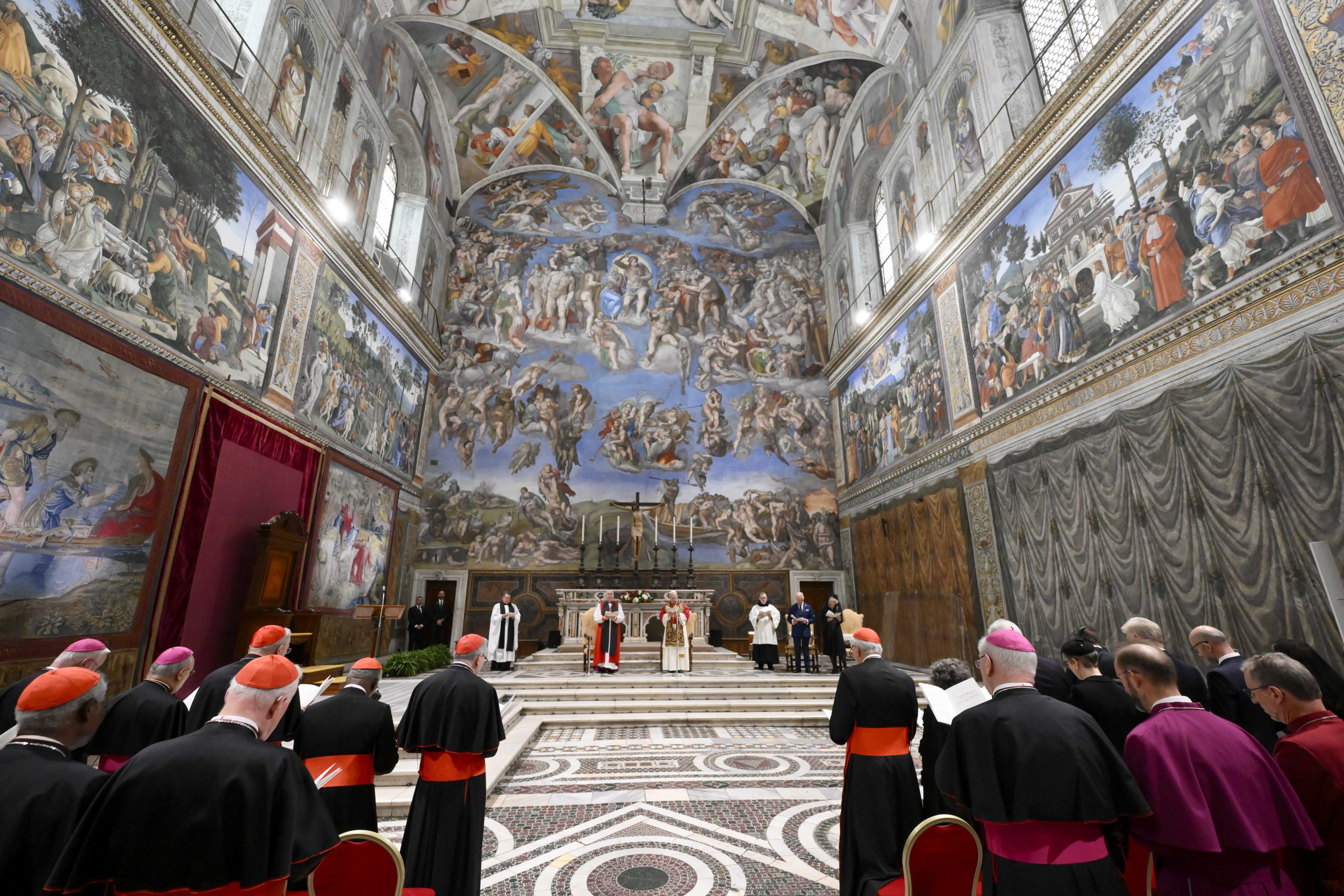
The Vatican and the United States Embassy to the Holy See have issued clarifications after Iranian media reports claimed Pope Leo XIV had personally granted a special honour to Iran’s ambassador to the Holy See The Vatican and the United States Embassy to the Holy See have both issued clarifications after Iranian media reports claimed that Pope Leo XIV had personally granted a special honour to Iran’s ambassador to the Holy See. Mohammad Hossein Mokhtari, the Iranian ambassador, was among 13 diplomats who received the Grand Cross of the Order of Pius IX during a ceremony held in the Vatican on May 12 for ambassadors who had completed at least two years of service accredited to the Holy See. Iranian state-linked outlets described the award as a significant gesture by the Pope towards Tehran, with some reports claiming the distinction recognised the ambassador’s efforts “to promote messages of peace, justice, and opposition to warmongering”. Iranian press suggested that “the award and the pope’s denunciation of the aggression are closely linked to the ongoing efforts of the Iranian embassy at the Vatican to promote messages of peace, justice, and opposition to warmongering”. The reports prompted criticism on social media and led to public clarification from both the Vatican and the American diplomatic mission to the Holy See. In a statement published online, the United States Embassy to the Holy See said: “Contrary to some reports, Pope Leo has not bestowed an exclusive special honour on the Iranian Ambassador to the Holy See. This decoration is given to all accredited ambassadors to the Holy See after 2+ years of service and has been standard practice for many years.” The Holy See press office confirmed the same account in comments to journalists, stating that the honour “is an award bestowed upon ambassadors after two years of service at the Holy See”. The Vatican added: “Yesterday, the Sostituto presented it to 13 ambassadors, including Iran’s ambassador.” The ceremony took place on the anniversary of Pope Leo XIV’s election and was presided over by Archbishop Paolo Rudelli, the substitute for general affairs of the Secretariat of State (Sostituto), who presented the insignia and official parchments to the diplomats. The certificates accompanying the awards were signed by Cardinal Pietro Parolin, the Vatican Secretary of State. The Order of Pius IX, also known as the Pian Order, is one of the principal papal orders of knighthood and is regularly conferred upon heads of state, royalty and ambassadors accredited to the Holy See. Although the Supreme Order of Christ and the Order of the Golden Spur formally rank above it, both honours have effectively fallen dormant. In practical diplomatic terms, the Order of Pius IX is regarded as the Holy See’s highest active distinction. The order was restored by Blessed Pius IX in 1847, though its origins date back to the 16th century under Pope Pius IV. Recent recipients have included King Charles III, who received the honour during his visit to the Vatican, as well as King Juan Carlos I of Spain, King Albert II of Belgium and King Carl XVI Gustaf of Sweden. Recipients of the Grand Cross wear a dark blue sash edged in red, together with a silver breast star bearing the insignia of the order. The original members of the order historically formed part of the papal lay court and accompanied the pope in ceremonial and official duties within the Apostolic Palace.
May 15, 2026