

The Vatican
Pope Leo responds to Trump’s latest attacks as Rubio readies for Rome
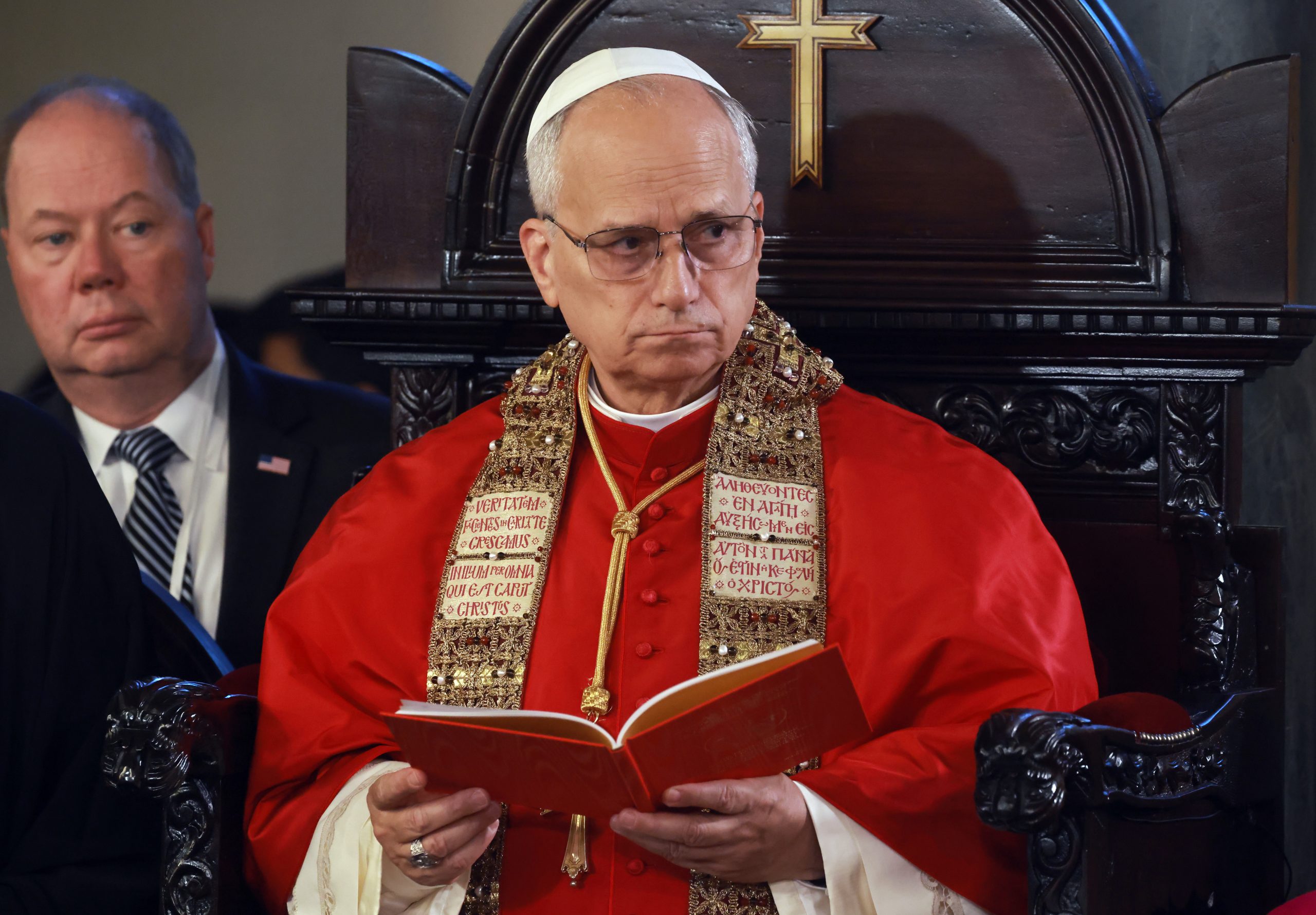
Pope Leo XIV has responded directly to Donald Trump’s criticism, stating that “there is no doubt” about the Church’s opposition to nuclear weapons The Holy Father Pope Leo XIV has responded to the latest criticism from Donald Trump. Speaking to reporters outside the the papal villa in Castel Gandolfo on Tuesday, May 5, the Pope said in Italian: “I have spoken out from the very moment I was elected, and now, as we approach the anniversary, I have said, ‘Peace be with you.’” The Pontiff added: “If anyone wishes to criticise me for proclaiming the Gospel, let them do so with truth.” Addressing Trump’s accusation that he was in favour of Iran possessing nuclear weapons, the Pope responded: “For years the Church has spoken out against all nuclear weapons, so there is no doubt about that.” The Pope concluded his remarks in Italian by saying: “I simply hope to be heard for the sake of the value of God’s words.” Speaking to another reporter in English, he continued: “I always believe that it’s much better to enter into dialogue than to look for arms and support the arms industry, which gains billions and billions of dollars each year, instead of sitting down at the table and solving our problems and using money to solve humanitarian issues and hunger in the world.” Trump’s latest remarks were delivered on Monday during an interview with Hugh Hewitt. He said: “The Pope would rather talk about the fact that it’s OK for Iran to have a nuclear weapon.” He continued: “And I don’t think that’s very good. I think he’s endangering a lot of Catholics and a lot of people.” The comments came after Trump posted on his social media platform, Truth Social, last month that the Pope was “WEAK on crime” and “terrible for foreign policy”, before later posting an image of himself depicted as Jesus. President Trump has consistently sought to justify the joint US and Israeli military action in Iran, which has an estimated death toll of 3,114 people, according to HRANA, including 1,354 civilians, of whom 207 were children. The Pope has responded to the war, and to various other conflicts around the world, by calling for peace. The disagreements come during an important diplomatic week for the United States and the Vatican, which will see Secretary of State Marco Rubio make a two-day visit to Italy and the Vatican. Alongside JD Vance, Rubio is often seen as the Catholic face of the Trump administration. Not always a practising Catholic, Rubio also attended the Church of Jesus Christ of Latter-day Saints as a child before returning to Catholicism with his family. He later drifted from the faith during the early years of his professional success. However, he subsequently returned, speaking of a renewed desire to receive the Eucharist, which he described as “the sacramental point of contact between the Catholic and the liturgy of heaven”. Rubio is often regarded as a calming presence within a volatile administration, a characteristic that was particularly evident in his 2026 Munich conference speech, which focused on shared American and European ideals and prompted the Latvian president to say that he “agreed with every single word”. Rubio is also a seasoned politician, having served as Senator for Florida since 2011. He speaks Spanish fluently and is the child of Cuban immigrants, sharing Pope Leo’s strong association with Latin America. The decision to send him at a time of deteriorating diplomatic relations between the Holy See and the United States therefore appears politically astute. Despite Trump’s apparent doubling down on criticism of the papacy, the administration is likely conscious of the potential ramifications of a public fallout with the spiritual leader of the United States’ 70 million Catholics. The Catholic voting bloc has supported every winning presidential candidate in recent US political history, with some polls placing Catholic support for Trump’s 2024 campaign as high as 57 per cent. In November, the United States midterm elections will see voters elect all 435 members of the House of Representatives and 35 Senate seats. Emerson College Polling currently gives the Democrats a 10-point advantage on the generic congressional ballot. If Republicans fail to reverse the current polling trend, the election could result in Democrats taking control of the House and being able to block much of Trump’s legislative agenda. Rubio will also seek to smooth relations with Italy, where Giorgia Meloni, a long-time Trump ally, has taken exception to Trump’s remarks about the Pope, describing them as “unacceptable”. Relations have further deteriorated over the Italian Prime Minister’s refusal to involve Italy in the war with Iran, with Trump responding: “I’m shocked at her. I thought she had courage, but I was wrong.” With Viktor Orbán recently ousted after 16 years in power, Trump is left with relatively few close allies governing in Europe. Much of his remaining European political support now comes in the form of opposition figures such as Nigel Farage, Marine Le Pen and Mateusz Morawiecki. Rubio has attempted to play down the timing of the diplomatic visit, telling reporters in the White House briefing room that it was a trip “we had planned from before” and that “the trip is really not tied to anything other than the fact that it would be normal for us to engage with them [the Church]”. Secretary of State Marco Rubio will visit Vatican City on Thursday, May 7, where he will have an audience with Pope Leo XIV at the Apostolic Palace, scheduled for 11.30am. According to the White House, the meeting will focus on the Middle East and mutual interests in the Western Hemisphere. On Friday, Rubio will meet Prime Minister Giorgia Meloni and Foreign Minister Antonio Tajani to discuss what the White House has described as “shared security interests and strategic alignment”.
May 7, 2026
Monsignor Bux: ‘The crisis of the liturgy is the crisis of the Church’
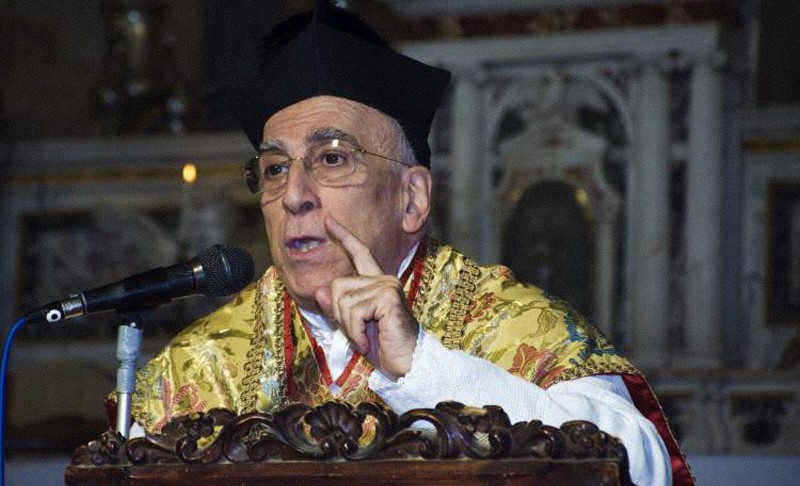
Monsignor Nicola Bux speaks to AdVaticanum about the SSPX, Traditionis Custodes, the “reform of the reform”, women’s ordination, Anglicanism and what he describes as the Church’s liturgical and doctrinal crisis under the post-conciliar era Monsignor Nicholas Bux is a priest and theologian whose work has spanned academia, pastoral ministry and service to the Roman Curia. Born in Bari, southern Italy, in 1947 into a modest family, he studied at the Pontifical Gregorian University before being ordained in 1975 by Archbishop Anastasio Ballestrero, the Discalced Carmelite archbishop later known for overseeing the first modern scientific examination of the Shroud of Turin in 1978. A specialist in Eastern liturgy and sacramental theology, he obtained a doctorate at the Pontifical Oriental Institute and went on to teach in his native Bari, Jerusalem and Rome. His service to the Holy See began under Pope John Paul II, who appointed him a consultant to the Congregation for the Causes of Saints and the Congregation for the Doctrine of the Faith. A collaborator of Cardinal Joseph Ratzinger, later Pope Benedict XVI, he contributed to synodal preparations and Eucharistic texts, and later served during Benedict XVI’s pontificate in roles connected to synodal assemblies and papal liturgies. AV: Monsignor Bux, since leaving Rome and your responsibilities in the Roman Curia, what have you been doing? How have you been spending your time? Are there any particular projects, writings or pastoral activities you are currently working on? How did your work and apostolate develop following the resignation of Pope Benedict XVI, particularly during the pontificate of Pope Francis? Monsignor Nicholas Bux: After concluding my collaboration with the Congregation for the Doctrine of the Faith and the Office for the Liturgical Celebrations of the Supreme Pontiff upon Benedict XVI’s resignation, I continued working until 2019 with the Congregation for the Causes of Saints and until 2021 with the Congregation for Divine Worship. Having reached the age limit for teaching theology in a faculty, I have continued giving conferences in Italy and abroad, and publishing on topics related to Eastern liturgy, ecclesiology and ecumenism. During the pontificate of Pope Francis, in which the Magisterium experienced a serious crisis, I devoted myself to explaining the reasons why one must remain in the Church, resisting despotic forms and avoiding the mistake of placing oneself outside it. By dying within the Church – like the grain of wheat that falls to the earth – one contributes to overcoming the crisis and renewing it. Together with theologian friends, we promoted the Scuola Ecclesia Mater, an Italian network of clerics and laity, with study sessions and spiritual exercises. Along with Cardinals Caffarra, Brandmüller, Burke and Sarah, we continue to advance the idea and practice of the “reform of the reform” of the liturgy and the Church according to the thought of Pope Benedict, as well as the international Summorum Pontificum pilgrimage at the end of October in Rome. I can say, in light of the Pope’s latest address to the French bishops, that we were right. AV: Looking back on the years spent in the Curia, particularly your service at the Dicastery for Divine Worship and the Discipline of the Sacraments, what were the most significant challenges or moments you faced? NB: In 2009, after a plenary meeting of the Congregation that had decided to propose to the Pope the inclusion in the Missal of certain rites from the Vetus Ordo Missae – for example, the Offertory, to be used ad libitum – the news was leaked by someone, and an alarm was sounded by those who feared an attack on the post-conciliar liturgical reform, so everything was stopped. Another issue we began to address was that of mega-concelebrations. The rite of concelebration promulgated by Paul VI in 1965 prescribed no more than 50 concelebrants so that they could “stand around the altar”, even if not all could immediately touch the altar table and pronounce the words of consecration over the bread and wine. These are the intention and external action required for a true concelebration and simultaneous consecration. Otherwise, saying “This is my body … this is the chalice …” does not correspond – to use the liturgists’ terms – to the truth of the sign, because one should say “That is my body …” These are the conditions for the validity of a concelebrated Mass, so that it is sacramental and not merely a ceremony, as Pius XII affirmed. The limit set by Paul VI has disappeared in the current Missal, so doubts arise about the validity of the celebration when the number of concelebrants overflows the presbyteral area or when it takes place outdoors in enormous spaces, where non-liturgical equipment of the concelebrants is added – hats, sunglasses, water bottles and cameras. AD: You were in the Curia during the period of negotiations with the Priestly Society of Saint Pius X (SSPX). In light of the Society’s recent decision to proceed with episcopal consecrations without a papal mandate, what is your current judgment on the SSPX? NB: Setting aside the good intentions of individuals, over time the Society has lost the vital sap of Catholic thought, as already happened with the Orthodox. Catholic thought flows only if one remains united to the main tree, despite the weakening of the Magisterium. Otherwise, one arrives at a museum-like conception of Tradition. One can understand the fears, but it is not justified to remove oneself from the Church in order to self-preserve. The organic development of doctrine, to use the expression of the new Doctor Saint John Henry Newman, is thus lacking. The Church is a mother and one must allow oneself to be corrected, because a true Christian must accept dying, and at the time established by God, will be reborn to new life, as has happened with the charisms of the Saints. Where Peter is, there is the Church: one cannot disregard this visible principle of unity willed by Jesus Christ, in relation to the invisible one, which is the Holy Spirit. AV: Pope Leo XIV recently sent a letter, through Cardinal Parolin, to the French bishops, urging them to find “generous” pastoral solutions for communities attached to the Traditional Latin Mass ahead of their plenary assembly. What does this letter indicate about the current pontificate’s approach to the Traditional Latin Mass, and how do you interpret its tone in light of Traditionis Custodes? NB: The antiquior usus of the Mass has resisted for over sixty years; this is the reality and we must take note of it, just as Saint Pius V did with rites that were over two hundred years old at the time of the Tridentine reform. With this realism, Benedict XVI stated: “What earlier generations held as sacred, remains sacred and great for us too, and it cannot be all of a sudden entirely forbidden or even considered harmful. It behooves all of us to preserve the riches which have grown in the faith and prayer of the Church, and to give them their proper place” (Summorum Pontificum, 10). It seems to me that Pope Leo wants to recover this “gaze” and has invited the French bishops and the faithful of Christian communities – traditional or not – to look at each other fraternally. It seems to me that the Pope wants, in an Augustinian way, to let consensus mature from within the ecclesial community: bishops, priests and faithful. I am certain that gradually, in this way, the other episcopates will be led to do the same in their dioceses. AV: Does accepting the Second Vatican Council require Catholics to accept the post-Vatican II liturgical reform in its current form? NB: The liturgy is the epiphany of the Church, which gathered solemnly in the Second Vatican Council, celebrated it constantly in the form then in force during its sessions, thus becoming an integral part of that infallible Magisterium, as stated in the Catechism of the Catholic Church (cf. 891). When the Church gathers in Council, it performs a liturgical act because it places itself in adoring listening to God. For this reason, Benedict XVI, in his address to the Roman Curia on December 22, 2005, invited us to read the event as “reform in the continuity of the one subject Church.” With this gaze towards God, the Council elaborated as its first document the liturgical constitution Sacrosanctum Concilium, and Paul VI established a Consilium to implement it. However, one cannot identify the Council tout court with the work of the Consilium, because it was not without defects. Cardinal Ratzinger observed: “Anyone who thinks that not everything in this reform has been successful, and that some things are modifiable or even need revision, is not for that reason an enemy of the Council.” Therefore, the equation does not hold: accepting the validity of the Second Vatican Council means accepting the liturgical reform that would express the reality of the liturgy intimately linked to the vision of the Church in Lumen Gentium, as the text distributed by Cardinal Roche at the Consistory last January seems to suggest. Instead, Benedict XVI intended to apply the Liturgical Constitution, safeguarding “legitimate diversities” – that is, the pluralism of rites – and, at the same time, “the substantial unity of the Roman rite” (SC 38). With the motu proprio Summorum Pontificum, he restored the ancient Roman rite, which had never been juridically abrogated. AV: How do you assess the current liturgical crisis in the Church, and what steps do you believe are necessary for authentic liturgical renewal and a true “reform of the reform”? NB: The Holy Father placed the Liturgy on the agenda of the Consistory, proposing to the Cardinals an in-depth historical, theological and pastoral reflection “to preserve the healthy tradition and yet open the way to legitimate progress” (SC 23). To preserve tradition and progress legitimately, one must understand the nature of the liturgy. “The crisis of the Liturgy, and therefore of the Church, in which we continue to find ourselves,” affirmed Benedict XVI, “is due only to a minimal extent to the difference between the old and new liturgical books.” It is becoming ever clearer that, behind all the controversies, a profound dissent has emerged concerning the essence of liturgical celebration, its derivation, its representative and its correct form. At first, Paul VI was convinced that the liturgical reform had translated and supported the indications of the Liturgical Constitution. But arbitrary experimentation continued, which sharpened the nostalgia for the ancient rite. Thus, in the Bull Apostolorum Limina for the proclamation of the 1975 Holy Year, regarding liturgical renewal, he stated: “We consider it extremely opportune that this work be re-examined and receive new developments.” John Paul II, in the apostolic letter Vicesimus quintus annus of 1988, spoke openly of “erroneous applications.” Now, the Dicastery, before anything else, if it wants to render a service to all Catholics, must have the courage to clarify the causes, promoting the study and full publication of the documents of the Consilium for the implementation of the Constitution on the Sacred Liturgy, preserved in its archive. This is a wish addressed to the Holy Father in the book La liturgia non è uno spettacolo, co-authored by myself and Saverio Gaeta. I believe we must proceed with the “reform of the reform” proposed several times by Joseph Ratzinger, which begins “from the presence of the sacred in hearts, from the liturgy and its mystery”. In truth, there are already signs: the spread of Eucharistic adoration, receiving Communion kneeling and on the tongue, rediscovering the traditional liturgy in which silence and the Mystery of the Lord’s Presence in His Church prevail, beginning from its heart, which is the Eucharist, the Divine and indeed “Sacred Liturgy”. What would happen if the priest’s orientation ad Deum or towards the Cross were permitted during the Eucharistic Liturgy of the Mass, as the clearest sign of continuity with the apostolic tradition and that of the East? This rebirth of the sacred is the condition for the renewal of the Church. Monsignor Bux and John Paul II AV: Turning to ecumenism, the Church of England has just installed Sarah Mullally as the first female Archbishop of Canterbury. In your view, what does this development mean for today’s Catholic-Anglican relations, especially regarding apostolic succession, the ordination of women and the possibility of true theological convergence? NB: There is a contradiction: on the one hand, at least 700 Anglican pastors are welcomed into the Catholic Church – a sign of the profound crisis of the Anglican Communion, which in Great Britain records only 2 per cent Sunday attendance – while on the other hand, a congratulatory message from the Pope is sent for the installation of the so-called primate Sarah Mullally. “So-called” first of all because her office is null, as she is a woman who, according to Catholic teaching, cannot be ordained to the priesthood; then, as a member of the Anglican Communion, her ordination is invalid – otherwise one would not understand why we established Ordinariates to re-ordain bishops and priests coming from it. Finally, because she is not effectively the Primate of Canterbury, since two-thirds of Anglicans do not recognise her as such. It is true that, as Christians, we are united in baptism, but we do not agree on everything that belongs to Christ, John Paul II said to German Protestants in November 1980, primarily on the sacraments. Has no one at the Council for Christian Unity noticed this and told the Pope? Do they not realise that, with such behaviour, many Catholic faithful are scandalised? If one really did not want to tell the truth, it would have been better not to send any message at all. AD: The Church continues to face a serious vocation crisis in many parts of the West. A common response has been the creation of “pastoral units” or groupings of parishes to address the shortage of priests. Do you see this as a real solution, or does it risk becoming an illusion that simply masks a strategic retreat from the traditional understanding of priestly ministry in the Church? NB: Since the post-conciliar period, the number of priests has decreased dramatically, and today in Europe about 10 per cent of the baptised go to Mass. Among the causes are the crisis of the family and the failure to transmit Catholic thought in catechesis to the younger generations. It was also a mistake to admit girls to altar service in place of the “little clergy”, the nursery of vocations. Then, despite the immense paper production by the Italian Bishops’ Conference on the urgency of announcing the Gospel to those far away, instead of strengthening capillary presence in the territories, they invented “pastoral units” – a fig leaf to cover the strategic retreat due to the shortage of priests. When will it be understood that so-called “pastoral care” begins from the deep unity of the Church, which in turn is nourished by the diversity and identity of individuals and groups that together constitute Tradition – and that innovation occurs only from within it? Isn’t that precisely what the word “Tradition” indicates? AV: In contemporary debate, there is often talk of adapting the liturgy and ecclesial institutions “to man” and “to the times”, but these expressions are rarely accompanied by a clear explanation of what is really meant by “man” or “times” in light of the Church’s perennial mission and the deposit of faith. What is your theological evaluation of this approach? NB: In the Second Vatican Council’s liturgical constitution (SC 48), there is mention of the need to adapt the liturgy to the needs of our times (cf. also 1, 4, 107, 110), but it is never explained exactly what these are. The discussions among the conciliar fathers in the three drafts leading to the final version provide no further information on these expressions. In a positive sense, it could mean that we need to present the Gospel in ever new ways in every age. In a negative sense, it could mean that our age is so unique that we must adapt the Gospel and divine worship to it – that is, to ourselves. Perhaps, in the post-conciliar liturgical reform, this second interpretation prevailed, but without reflection, as if it were something obvious and therefore required no explanation. Thus, the “legitimate progress” that was to be balanced by “healthy tradition” (SC 23) has become a “pathological search for novelty”, just as Cardinal Roche notes in the text distributed at the Consistory. AV: Monsignor Bux, thank you very much for being so generous with your time and for your years of priestly ministry.
May 7, 2026
Vatican synod reports propose new model for choosing bishops
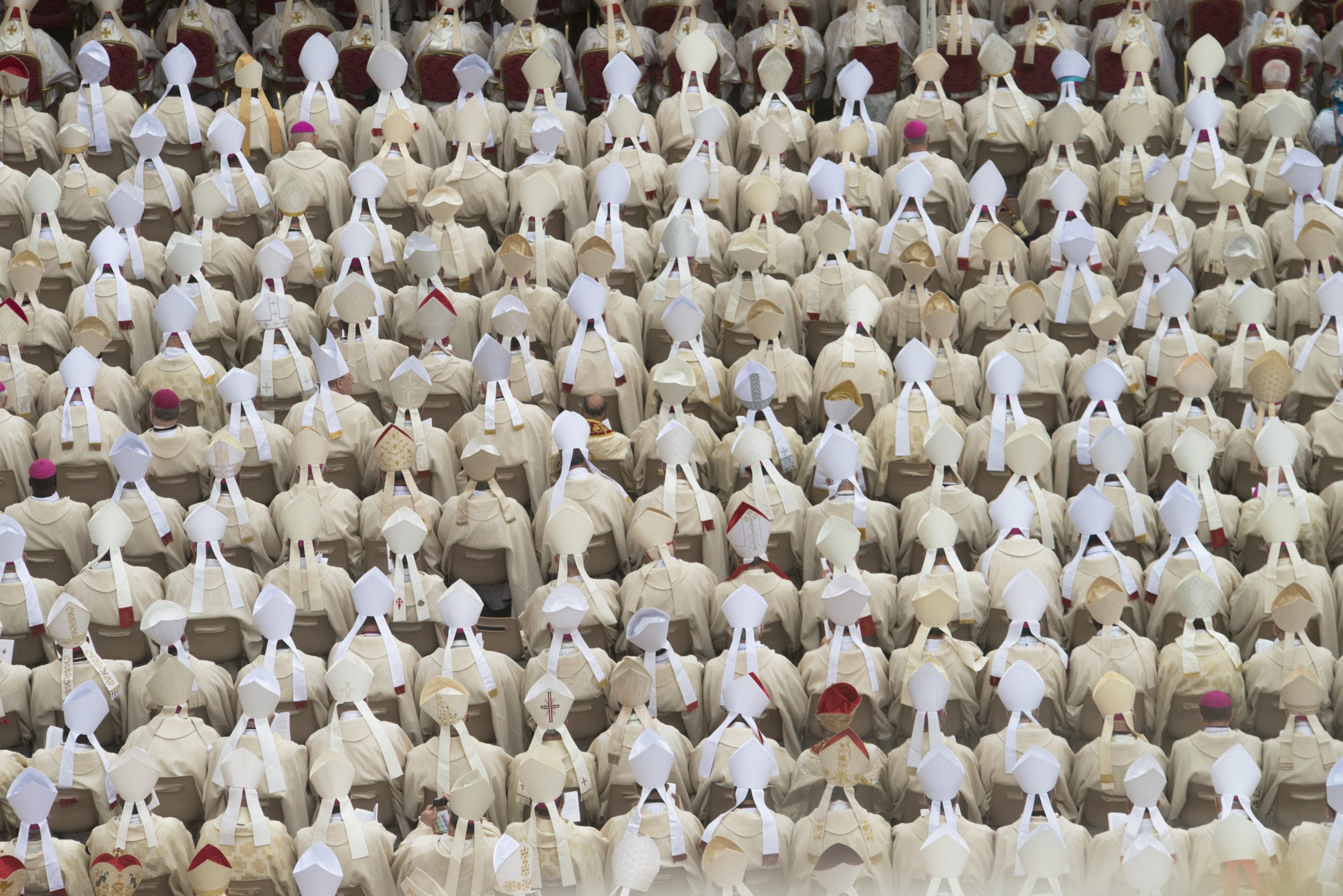
New Vatican synod reports set out proposals to widen consultation in the selection of bishops and introduce new methods for addressing doctrinal questions The Vatican has released new synodal reports outlining proposed criteria for the selection of bishops and new methods for addressing doctrinal and pastoral questions. The texts, published by the General Secretariat of the Synod of Bishops and overseen by Cardinal Mario Grech, include the first part of the final report of Study Group No. 7 on some aspects of the person and ministry of the bishop (in particular: criteria for selecting candidates to the episcopacy, the judicial function of bishops, the nature and structure of ad limina Apostolorum visits) from a missionary synodal perspective, together with the final report of Study Group No. 9 on theological criteria and synodal methodologies for shared discernment of emerging doctrinal, pastoral and ethical issues. Introducing the documents, Cardinal Grech said: “Discernment lies at the heart of selecting a bishop,” a motif in line with the wider synodal emphasis on listening and participation. The report on bishops states that “there is no shepherd without a flock, and no flock without a shepherd”. It sets out a number of qualities expected of candidates, including the ability to “build communion”, “engage in dialogue”, and demonstrate “deep knowledge of local cultures”. It also calls for apostolic nuncios to adopt “a synodal and missionary profile”, adding that they should be capable of recognising those same characteristics in potential candidates for the episcopate. A more structured consultation process is proposed for dioceses approaching an episcopal succession. The report states: “As an episcopal succession approaches, the bishop is to convene the presbyteral council and the diocesan pastoral council, whose members express, in a collegial manner, an opinion on the needs of the diocese and submit to the bishop – in a sealed envelope – the names of priests they consider suitable for the episcopate.” It adds: “Where possible, consultation is also to include the cathedral chapter, the finance council, the lay council, and representatives of consecrated persons, young people and the poor.” The document further recommends that consultation should involve “an equivalent number of consecrated men and women, laymen and laywomen” in order “to bring out the truth as fully as possible”. Provision is also made for the ongoing formation of clergy, with the suggestion that dedicated teams be established to assist bishops. In cases of a vacant see, the report proposes the creation of diocesan committees that may be consulted by the apostolic nuncio “to clarify the state of the diocese, the profile of the new shepherd, and possible candidates”. Alongside these measures, the report calls on the dicasteries of the Roman Curia to review their procedures “in a more synodal direction” and suggests the introduction of periodic independent evaluations of the selection process. The companion report on theological discernment proposes what it describes as a “change of paradigm” in addressing difficult questions facing the Church. Drawing on the witness of the early Church in the Acts of the Apostles, it highlights the importance of unity amid cultural diversity. It states that the term “emerging” should be preferred to “controversial” when referring to such questions, explaining that “the aim is not merely to resolve problems but to build the common good through relational conversion, shared learning and transparency”. The document introduces what it calls the “principle of pastorality”, adding that “there can be no proclamation of the Gospel without taking responsibility for the interlocutor, in whom the Spirit is already at work”. It sets out three methodological steps: “listening to ourselves, listening to reality, and convening different forms of knowledge”, and reiterates that “conversation in the Spirit remains the privileged tool for developing an ecclesial culture of synodality”. The report also indicates areas where these methods are to be applied, including the experience of Catholics with homosexual tendencies and questions relating to active nonviolence. It emphasises the importance of testimony, stating that lived experience should serve as “the starting point for paths of ethical and theological discernment”. The publication of the synodal reports of Study Groups No. 7 and No. 9 represents a structural reconfiguration within the Church, as both documents shift the centre of gravity from a hierarchical model towards one governed by process, consultation and “discernment”. This begins in the framing of Study Group No. 7. Under “Purpose and Scope” (p. 3, §a–b, e–g), the report states: “The Assembly calls for a review of the criteria for selecting candidates for the episcopate, balancing the authority of the apostolic nuncio with participation of episcopal conferences. There are also requests to expand consultation with the faithful People of God…” It continues: “The relevant canons of the Code of Canon Law … must be adapted in accordance with the synodal spirit of the following proposals.” The subordination of canon law to a “synodal spirit” reverses the traditional order, and while it does not explicitly say so, it places the Church’s law within a contemporary process. The shift becomes more pronounced in the section on discernment within the local Church (pp. 5–6, §c–g). The report states: “The bishop must convene the presbyteral council and the diocesan pastoral council … each of these bodies will collegially formulate a written opinion … [and] submit … the names of priests … suitable for the episcopate.” It adds: “Where circumstances allow, the cathedral chapter, the diocesan finance council, the lay council, the unions of consecrated men and women, and diocesan groups that institutionally represent youth and the poor should also be convened.” This is not consultation in the traditional sense, but formalises a structured, representative process of nomination. The inclusion of “groups that institutionally represent youth and the poor” introduces categories that are sociological rather than ecclesial and are not rooted in God. Historically, while acclamation by clergy and people existed, it was precisely curtailed to avoid factionalism and politicisation. The same dynamic appears in the section on a vacant see (pp. 6–7, §b–d): “A Committee for the Provision of the Local Church is established … composed of two diocesan priests … two consecrated men or women and two laypersons … The nuncio relies on this committee … to receive opinions on possible candidates.” In effect, this creates a standing local body that mediates between Rome and the diocese in the nomination of a bishop. The proposed model, even if not formally altering doctrine, introduces a practical expectation of local participation that approximates a nomination process. The development continues in the criteria for bishop candidates themselves (p. 4, §b–c): “It is necessary to consider … his ‘synodal competencies’ … openness to complexity, a disposition towards innovation, the ability to adapt to new situations.” These criteria stand alongside, and risk displacing, the traditional requirements set out in canon 378: sound doctrine, good morals, piety and prudence. The emphasis shifts from what a bishop is to how he operates within a process. If Study Group No. 7 alters governance, Study Group No. 9 addresses doctrine more directly. In its introductory framework (pp. 3–6), the report states that the synodal process “calls for a conversion of heart and mind as well as a transformation of practices” and explicitly prioritises method: “priority to ‘how?’ … favouring ‘the account of the lived experience of the People of God, read and interpreted ecclesially in the light of Revelation’ rather than ‘abstract theoretical assumptions’.” This is a decisive methodological claim. It shifts the starting point of theological reflection from revealed truth, as authoritatively taught, to experience interpreted within a communal process. The report makes this explicit in its call for “a paradigm shift” and a “shared commitment to a historical, experiential, and practical hermeneutics that is genuinely human” (p. 8 ff.). The tension becomes acute in the application of this method. In the section on “emerging issues” (p. 23 ff.), the report selects the experience of persons with same-sex attraction as a test case. The annexed testimonies are not incidental illustrations; they are the material for discernment. Annex A1 (Portugal) states: “The real sin was not my love, but my lack of trust in His desire for my fulfilled life.” It describes a same-sex partner as a “husband” and rejects approaches centred on chastity. Annex A2 (USA) is more explicit: “My sexuality isn’t a perversion, disorder, or cross; it’s a gift from God… If I could choose to be gay, I would.” The difficulty lies in how the report uses these testimonies. They are presented as voices to be “listened to” within a process of discernment that seeks “possible pathways”. The underlying pattern across both documents is therefore the same: the Church hierarchy is reframed as facilitation. While not alien to Catholic life, this is a sign a rebalancing that places pressure on the Church’s traditional understanding of herself. Photo credit: Jeffrey Bruno from New York City, United States – Canonization 2014- The Canonization of Saint John XXIII and Saint John Paul II, CC BY-SA 2.0, https://commons.wikimedia.org/w/index.php?curid=32427716
May 6, 2026
Newly surfaced Vatican letter rejects German blessing proposals
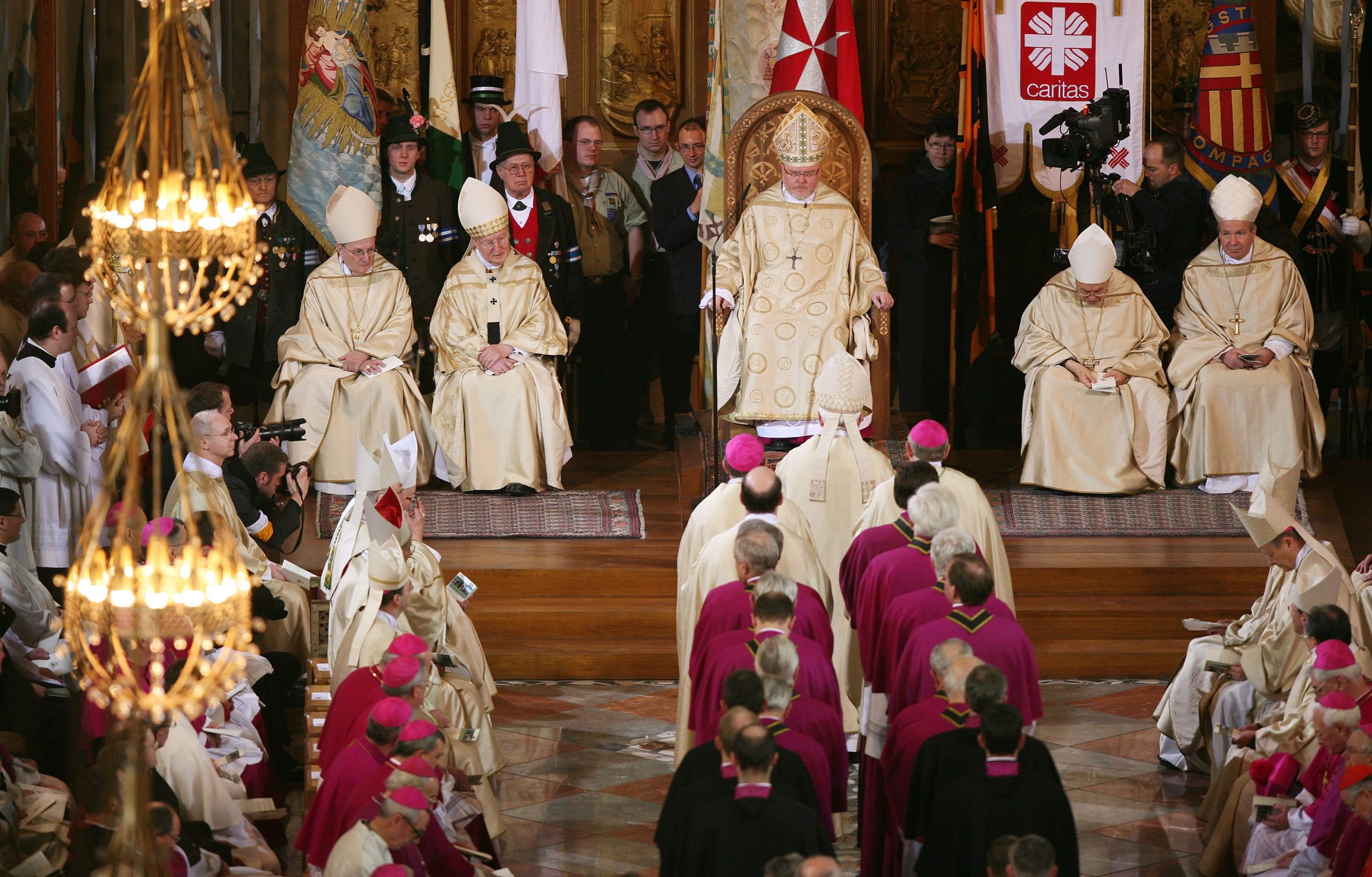
A newly surfaced letter from the Dicastery for the Doctrine of the Faith, dated November 2024, rejects Germany’s plans for formal blessings of couples in irregular unions, warning they risk resembling a sacramental rite and contradict Fiducia supplicans A letter from the Dicastery for the Doctrine of the Faith has emerged rejecting proposals from Germany for the formalised blessing of couples in irregular unions. The document, published in Spanish on X by Fr Jorge Enrique Mújica, head of the news site Zenit, was signed by Cardinal Víctor Manuel Fernández, dated November 18 2024 and addressed to Bishop Stephan Ackermann. It concerns a pastoral handbook prepared in Germany under the title Blessings for couples who love one another . The text had been submitted to Rome ahead of a planned vote by the German bishops. Citing Fiducia supplicans , the dicastery states: “The Church does not have the power to confer its liturgical blessing when that would somehow offer a form of moral legitimacy to a union that presumes to be a marriage or to an extra-marital sexual practice.” It continues: “With such blessings ‘nothing is intended to be legitimised, but only to open one’s life to God’ … nor to ‘sanction … anything’, but only to ask for God’s help ‘to live better’.” The letter raises concern that the German text refers explicitly to the blessing of “a union” and envisages an “official regulation” by pastors, adding that such an approach risks becoming “the object of a true and proper ‘acclamation,’ a gesture that is normally foreseen in the matrimonial rite”. It concludes that “one in fact seems to aim at legitimising the status of such couples, in a sense contrary to what is affirmed by Fiducia supplicans ”. It further reiterates that the declaration excludes any practice that could resemble a sacramental rite, stating that blessings must not “become a liturgical or semi-liturgical act, similar to a sacrament” and insisting: “For this reason, one must neither promote nor provide for a ritual for the blessings of couples in an irregular situation.” The dicastery also criticises the proposed handbook for internal inconsistency. While it speaks of “spontaneity and freedom”, it nevertheless provides a fixed structure for the celebrations. The letter notes that “a fixed formulary is then offered for their realisation, contradicting what was previously affirmed” and adds that “a sort of liturgy or para-liturgy is prescribed with regard to the blessing of same-sex couples”. The publication of the letter follows recent comments by Pope Leo XIV, who addressed the issue during a press conference on a return flight from Africa. He said: “The Holy See has made it clear that we do not agree with the formalised blessing of (homosexual) couples … or of couples in irregular situations, beyond what … was allowed for by Pope Francis in saying all people receive blessings.” His Holiness added: “When a priest gives the blessing at the end of Mass … there are blessings for all people,” before referring to Pope Francis’s phrase “tutti, tutti, tutti”, and warning that “to go beyond this today … could cause more disunity than unity”. Despite the intervention from Rome, bishops in Germany have defended the proposals. Bishop Georg Bätzing said the practice “serves the people” and “does not jeopardise the unity of the Church”, while acknowledging differences within the wider Church. The guidelines were developed jointly with the Central Committee of German Catholics, whose president, Irme Stetter-Karp, said they are intended to provide blessings “for couples who do not wish to enter into a sacramental church marriage or for whom such a marriage is not an option”, adding: “There is no possibility of confusing it with the sacrament of marriage.” In Munich, Cardinal Reinhard Marx has instructed clergy to follow guidance under the title Segen gibt der Liebe Kraft . In a letter to clergy and pastoral staff, he wrote: “To all couples who love each other and seek a blessing from the Church for their partnership, I wish that they may feel God’s grace in this blessing.” The directive states that “no couple should be turned away” and requires that priests unwilling to conduct such blessings refer couples to another minister. The archdiocese has also confirmed that training sessions for clergy and pastoral workers will begin in June to support the implementation of the policy across parishes.
May 4, 2026
Pope Leo XIV’s first encyclical set for May 15 release
Pope Leo XIV is expected to publish his first encyclical on May 15, aligning it with landmark social teaching documents. The provisional text, Magnifica humanitas, is set to address artificial intelligence, global instability and the state of international law Pope Leo XIV’s first encyclical is expected to be signed and published soon, placing its release close to a date long associated with landmark papal social teaching documents. According to reports from the German Catholic news agency KNA, it will be signed on May 15. The text will be the first major teaching document of his pontificate. Circulating under the provisional title Magnifica humanitas , it is expected to address a range of issues, including artificial intelligence, international peace and what sources describe as a crisis in international law. Previous reports indicate that the document will set out the Pope’s initial response to these questions within the framework of Catholic social teaching. The encyclical follows earlier indications that the Holy See had been preparing a document focused specifically on artificial intelligence. At the beginning of February, reports pointed to work under way on a text examining the ethical and anthropological implications of emerging technologies. Pope Leo XIV has already spoken about the risks associated with technological development, warning of the dangers posed by “uncontrolled technology” and the importance of safeguarding human dignity. According to the same reports, the encyclical will also address geopolitical instability and the perceived weakening of international legal structures. By doing this, the document is expected to set out the Vatican’s response to the principal challenges facing humanity in the 21st century. The anticipated date of May 15 places the encyclical within a well-established tradition. On May 15, 1891, Pope Leo XIII issued Rerum Novarum , the foundational text of modern Catholic social doctrine, addressing the condition of workers during the industrial age. The same date was chosen in 1931 by Pope Pius XI for Quadragesimo Anno , which developed the Church’s teaching on social order and introduced the principle of subsidiarity. Thirty years later, on May 15, 1961, Pope John XXIII promulgated Mater et Magistra , focusing on economic justice and social development. The expected treatment of artificial intelligence would build on recent Vatican teaching. In January 2025, the Dicastery for the Doctrine of the Faith and the Dicastery for Culture and Education issued Antiqua et Nova , a joint note on “the relationship between artificial intelligence and human intelligence”. The document said AI could bring “important innovations” but warned that it also carried the danger of deepening inequality, manipulating public opinion and expanding “the instruments of war well beyond the scope of human oversight”. It added that artificial intelligence “should not be seen as an artificial form of human intelligence, but as a product of it”, and insisted that it “should be used only as a tool to complement human intelligence rather than replace its richness”. No official text has yet been released, and the title Magnifica humanitas remains provisional.
May 4, 2026
Cardinal Müller rejects claims Vatican finances influenced election of Pope Leo XIV
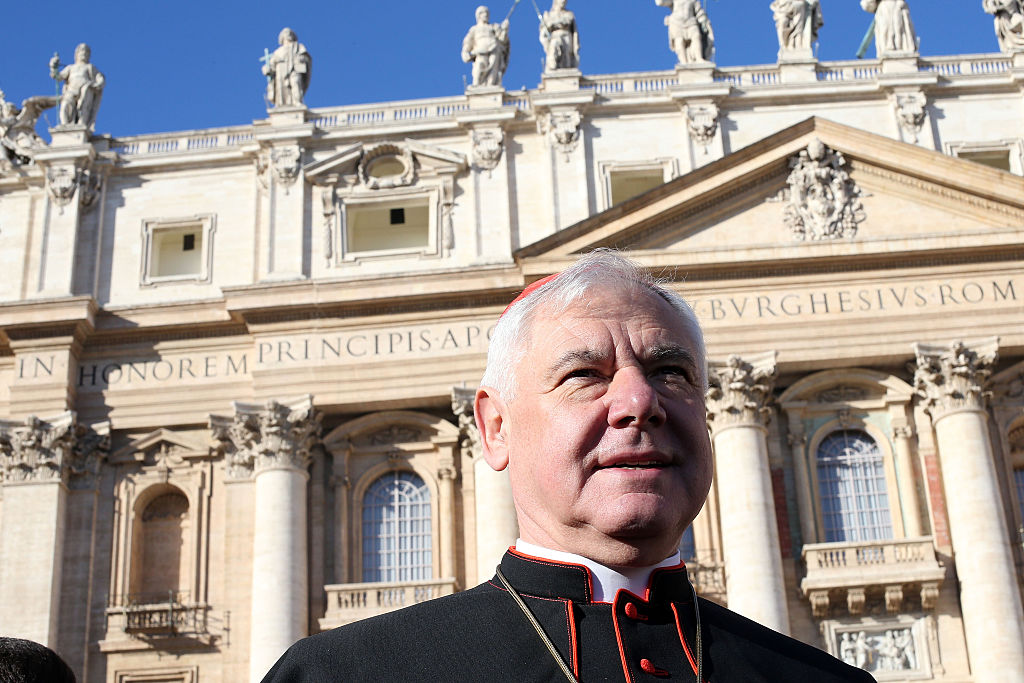
Cardinal Müller has dismissed speculation that financial concerns shaped the election of Pope Leo XIV Cardinal Gerhard Ludwig Müller has rejected claims that the Vatican’s financial situation influenced the election of Pope Leo XIV. The German cardinal made his remarks in Rome during the presentation of the new book Papi, Dollari e Guerre by the renowned Italian Vaticanista Massimo Franco, which examines the historical relationship between the United States and the Holy See. Speaking at the event, Cardinal Müller addressed speculation that concerns over Vatican finances may have played a decisive role in the election of the first American pope. “Although Cardinal Reinhard Marx dedicated a full day to discussing the Holy See’s finances in the pre-conclave, this did not influence the final decision,” Cardinal Müller said. His Eminence added that the choice of a pope “is based on different criteria.” The intervention comes one year after the conclave that elected Pope Leo XIV, a historic event given the longstanding assumption that a pontiff from the United States was unlikely. Cardinal Marx, who has been closely associated with Vatican economic reform and oversight, reportedly led a full day of discussions on financial issues during the general congregations preceding the conclave. These meetings, which take place before the formal voting begins, allow cardinals to exchange views on the challenges facing the Church. Despite the prominence of those discussions, Cardinal Müller insisted that they did not shape the final outcome. His remarks appeared to counter interpretations that the election reflected a strategic response to financial pressures or a desire to strengthen ties with American Catholic institutions. Franco’s book, presented at the same event, sets out the historical context of relations between the Vatican and the United States, including financial links that have developed over more than a century. According to the publisher’s summary, the work traces the role of American Catholic influence from the early twentieth century to the present day, using archival material and previously unpublished testimonies. The book refers to financial contributions from American benefactors during the pontificates of Pius XI and Pius XII, as well as support provided during and after the Second World War. It also examines the role of institutions such as the Papal Foundation, established during the pontificate of John Paul II, and the continuing presence of major Catholic organisations in the United States. The summary further notes that the most recent conclave marked “the end of Eurocentrism in an impoverished and divided Vatican”, while suggesting that the election of Pope Leo XIV should be understood within a broader historical and geopolitical framework. It also points to the significance of the Pontifical North American College in Rome, where it is claimed discussions among American cardinals took place prior to the conclave. Among those present at the book presentation were several figures from ecclesiastical, political and journalistic circles, including Archbishop Antonio Mennini and the former Italian prime minister Romano Prodi. Massimo Franco, the author, is a political journalist and commentator for Corriere della Sera . He has previously written on Italian and Vatican politics and has contributed to a range of international publications. His latest work continues that focus, examining the intersection of religion, diplomacy and finance.
May 1, 2026