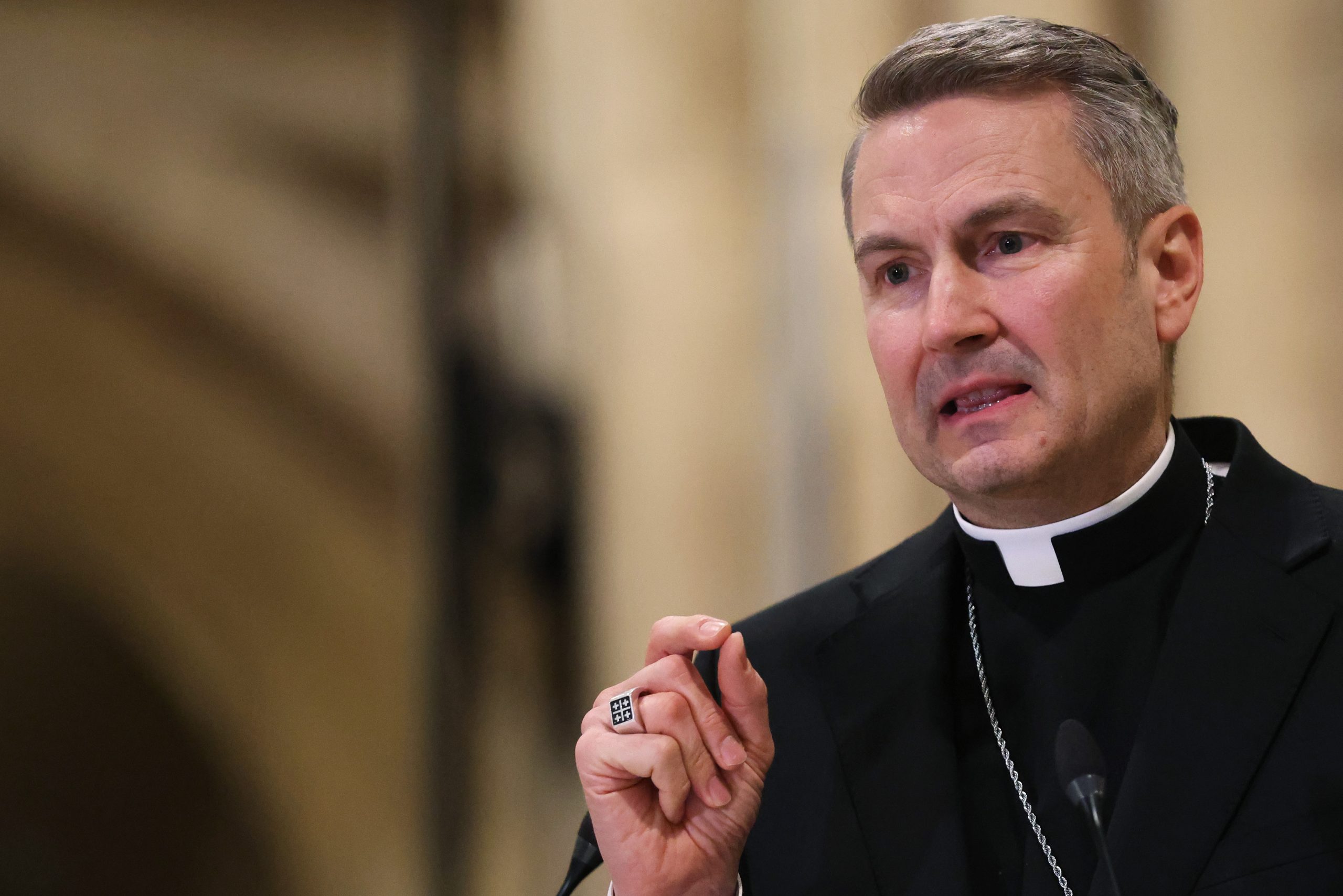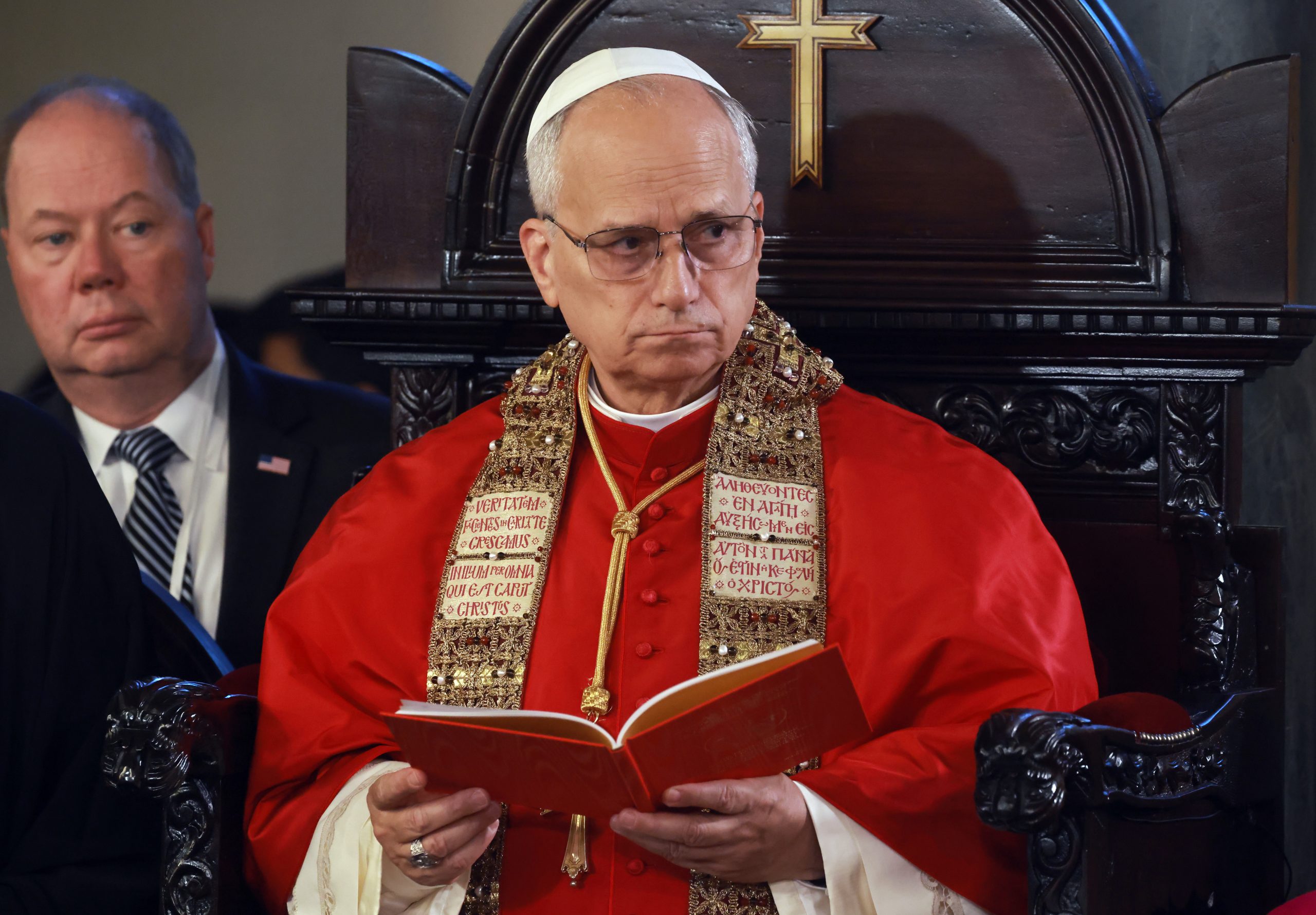
The Holy Father Pope Leo XIV has responded to the latest criticism from Donald Trump.
Speaking to reporters outside the the papal villa in Castel Gandolfo on Tuesday, May 5, the Pope said in Italian: “I have spoken out from the very moment I was elected, and now, as we approach the anniversary, I have said, ‘Peace be with you.’” The Pontiff added: “If anyone wishes to criticise me for proclaiming the Gospel, let them do so with truth.”
Addressing Trump’s accusation that he was in favour of Iran possessing nuclear weapons, the Pope responded: “For years the Church has spoken out against all nuclear weapons, so there is no doubt about that.”
The Pope concluded his remarks in Italian by saying: “I simply hope to be heard for the sake of the value of God’s words.”
Speaking to another reporter in English, he continued: “I always believe that it’s much better to enter into dialogue than to look for arms and support the arms industry, which gains billions and billions of dollars each year, instead of sitting down at the table and solving our problems and using money to solve humanitarian issues and hunger in the world.”
Trump’s latest remarks were delivered on Monday during an interview with Hugh Hewitt. He said: “The Pope would rather talk about the fact that it’s OK for Iran to have a nuclear weapon.” He continued: “And I don’t think that’s very good. I think he’s endangering a lot of Catholics and a lot of people.” The comments came after Trump posted on his social media platform, Truth Social, last month that the Pope was “WEAK on crime” and “terrible for foreign policy”, before later posting an image of himself depicted as Jesus.
President Trump has consistently sought to justify the joint US and Israeli military action in Iran, which has an estimated death toll of 3,114 people, according to HRANA, including 1,354 civilians, of whom 207 were children. The Pope has responded to the war, and to various other conflicts around the world, by calling for peace.
The disagreements come during an important diplomatic week for the United States and the Vatican, which will see Secretary of State Marco Rubio make a two-day visit to Italy and the Vatican. Alongside JD Vance, Rubio is often seen as the Catholic face of the Trump administration.
Not always a practising Catholic, Rubio also attended the Church of Jesus Christ of Latter-day Saints as a child before returning to Catholicism with his family. He later drifted from the faith during the early years of his professional success. However, he subsequently returned, speaking of a renewed desire to receive the Eucharist, which he described as “the sacramental point of contact between the Catholic and the liturgy of heaven”.
Rubio is often regarded as a calming presence within a volatile administration, a characteristic that was particularly evident in his 2026 Munich conference speech, which focused on shared American and European ideals and prompted the Latvian president to say that he “agreed with every single word”. Rubio is also a seasoned politician, having served as Senator for Florida since 2011. He speaks Spanish fluently and is the child of Cuban immigrants, sharing Pope Leo’s strong association with Latin America. The decision to send him at a time of deteriorating diplomatic relations between the Holy See and the United States therefore appears politically astute.
Despite Trump’s apparent doubling down on criticism of the papacy, the administration is likely conscious of the potential ramifications of a public fallout with the spiritual leader of the United States’ 70 million Catholics. The Catholic voting bloc has supported every winning presidential candidate in recent US political history, with some polls placing Catholic support for Trump’s 2024 campaign as high as 57 per cent.
In November, the United States midterm elections will see voters elect all 435 members of the House of Representatives and 35 Senate seats. Emerson College Polling currently gives the Democrats a 10-point advantage on the generic congressional ballot. If Republicans fail to reverse the current polling trend, the election could result in Democrats taking control of the House and being able to block much of Trump’s legislative agenda.
Rubio will also seek to smooth relations with Italy, where Giorgia Meloni, a long-time Trump ally, has taken exception to Trump’s remarks about the Pope, describing them as “unacceptable”.
Relations have further deteriorated over the Italian Prime Minister’s refusal to involve Italy in the war with Iran, with Trump responding: “I’m shocked at her. I thought she had courage, but I was wrong.” With Viktor Orbán recently ousted after 16 years in power, Trump is left with relatively few close allies governing in Europe. Much of his remaining European political support now comes in the form of opposition figures such as Nigel Farage, Marine Le Pen and Mateusz Morawiecki.
Rubio has attempted to play down the timing of the diplomatic visit, telling reporters in the White House briefing room that it was a trip “we had planned from before” and that “the trip is really not tied to anything other than the fact that it would be normal for us to engage with them [the Church]”.
Secretary of State Marco Rubio will visit Vatican City on Thursday, May 7, where he will have an audience with Pope Leo XIV at the Apostolic Palace, scheduled for 11.30am. According to the White House, the meeting will focus on the Middle East and mutual interests in the Western Hemisphere. On Friday, Rubio will meet Prime Minister Giorgia Meloni and Foreign Minister Antonio Tajani to discuss what the White House has described as “shared security interests and strategic alignment”.