

United States
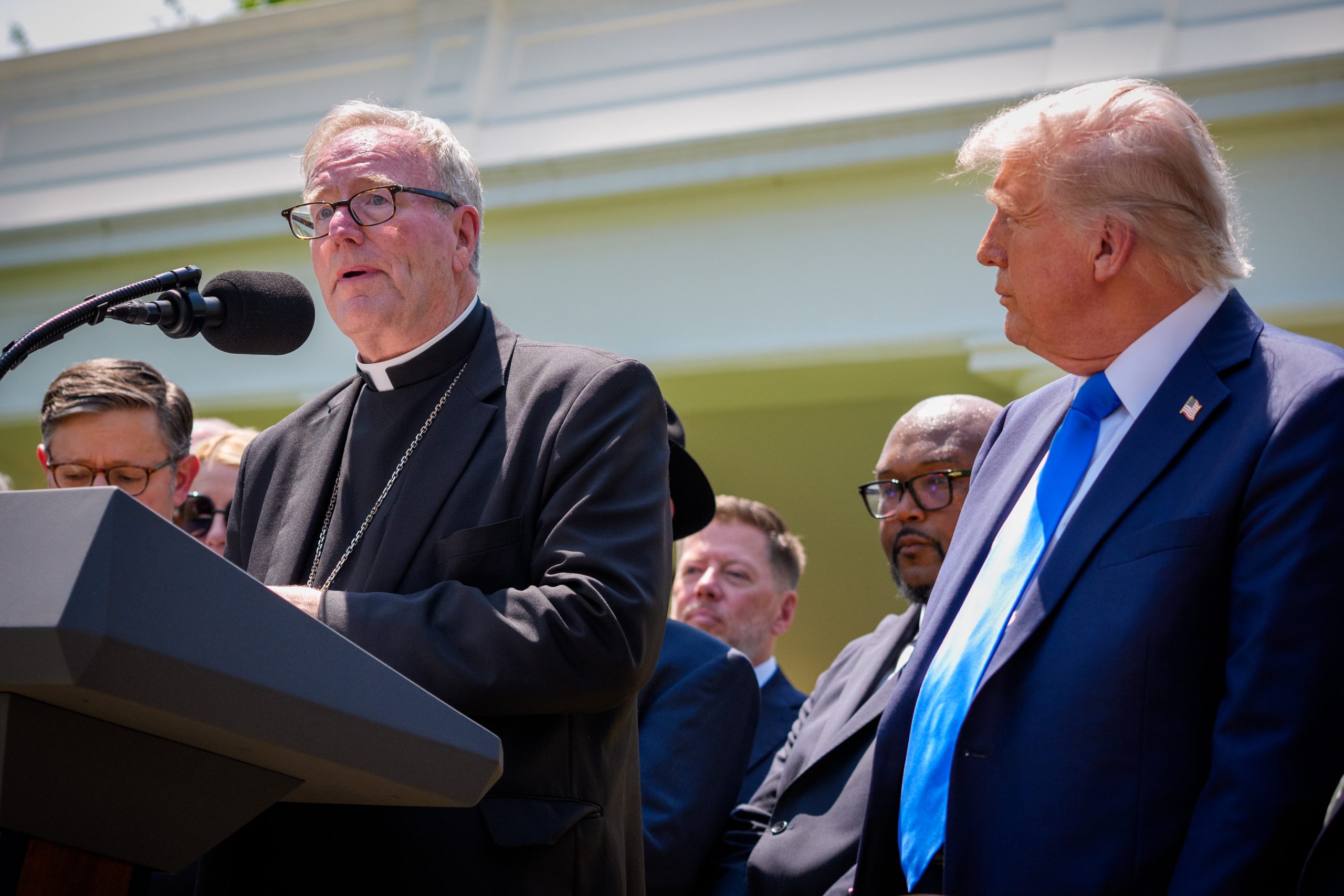
Bishop Barron warns against ‘demonisation’ of Trump over immigration
Bishop Robert Barron has warned Catholics against the “demonisation” of Donald Trump’s administration over immigration policy and said that support for border enforcement can arise from “very good moral reasons” Bishop Robert Barron has called on Catholics to resist the “demonisation” of President Donald Trump’s administration over immigration policy. The Bishop of Winona-Rochester made the remarks during an interview with Fox News Digital in which he urged greater dialogue between Catholics of differing political convictions and warned against reducing the immigration debate to partisan caricatures. Bishop Barron, perhaps the most recognisable Catholic from the United States after the Pope, said that conservatives who support tighter immigration controls should not automatically be dismissed as lacking compassion. “I don’t think it’s fair to say to a conservative, to a Republican, you’re just being difficult and anti-humanitarian,” Bishop Barron said, while arguing that the Church should instead encourage “bridges of conversation”. His Grace suggested that some Catholics on the political left had failed to extend to conservatives the same spirit of dialogue they often advocate elsewhere in public life. “At times, the Catholic left is great for calling for dialogue and bridge-building, until it comes to conservatives,” Bishop Barron said. “When it comes to conservatives, just tell them what they should be doing and saying.” The bishop continued: “No, no, let’s build bridges of conversation. That’s a role the Church can play. What I don’t want from the Church is a kind of demonisation of the Trump administration.” Bishop Barron said disagreements over immigration policy, or other contentious issues such as the recent conflict involving Iran, should be approached through serious discussion rather than ideological condemnation. “If there are points of disagreement, whether it’s immigration or it’s the [Iran] war or whatever, let’s talk about it, let’s talk,” His Grace said, while acknowledging that efforts to foster those conversations within ecclesial circles had “not always met with success”. The bishop also revealed that he had recently been moved by comments from Tom Homan, the former acting director of US Immigration and Customs Enforcement and President Trump’s so-called “border czar”, during a White House call connected to the president’s Religious Liberty Commission, on which Bishop Barron serves. According to Bishop Barron, Homan spoke emotionally about the human consequences of weak border enforcement and particularly about trafficking networks exploiting children. “He said that because he’s seen the terrible destruction caused by an open border,” Bishop Barron explained. “He was talking especially about human trafficking, the human trafficking of children, the disappearance of children we’ve lost track of completely in this process.” The bishop said Homan had rejected what he described as “the simplistic view that an open border is humanitarian”. “An open border also produces enormous moral problems,” Bishop Barron said, adding that Homan’s concern appeared deeply personal and sincere. “You could tell that it was affecting him very deeply, very personally. I found that very moving.” His Grace argued that support for immigration enforcement should not simply be interpreted through a partisan lens, but could arise from genuine moral concern. “It’s not just, well, the bad guy, Republicans, who want to enforce immigration laws,” Bishop Barron said. “It’s Republicans for very good moral reasons who want to enforce immigration law.” At the same time, the bishop stressed that the immigration debate contains “values on both sides” and suggested that the Church could help facilitate a more serious exchange between political leaders and Catholic moral teaching. Bishop Barron referred to tensions between President Trump and Pope Leo XIV, saying that part of the difficulty stemmed from attempts to treat the Holy Father as though he were merely another political figure. “Popes, I think, are supposed to use the moral structure of the Church’s teaching to move prudential judgement in the right direction,” Bishop Barron said. “Now what’s a president’s responsibility? His responsibility is to make those prudential judgements.” The bishop suggested that prominent Catholics within the Trump administration, including Vice President JD Vance, Secretary of State Marco Rubio and the US ambassador to the Holy See, Brian Burch, should engage directly with Vatican officials in order to foster more constructive discussion. “The Church provides a moral framework. Terrific,” Bishop Barron said. “Now, let’s have a real conversation with those whose job it is to make that decision, but have it conditioned by this moral framework. That would be more fruitful.” The remarks come amid continuing divisions among American Catholics over immigration policy and the proper balance between national sovereignty and humanitarian obligations towards migrants and refugees. The US bishops’ conference has frequently criticised aspects of the Trump administration’s immigration policies in recent years, particularly mass deportation proposals and restrictions on asylum claims, while conservative Catholics have increasingly argued that border enforcement and opposition to human trafficking are themselves matters of Catholic social concern. The debate has become one of the defining fault lines in American Catholic life, particularly following the rise of populist politics in the United States and Europe, with bishops and theologians often divided over how Catholic teaching on solidarity, the dignity of migrants and the responsibilities of the state should be applied in practice. Bishop Barron’s comments suggest he believes the Church’s role is not to align itself unquestioningly with either political camp, but to insist upon serious moral engagement between them.
May 27, 2026
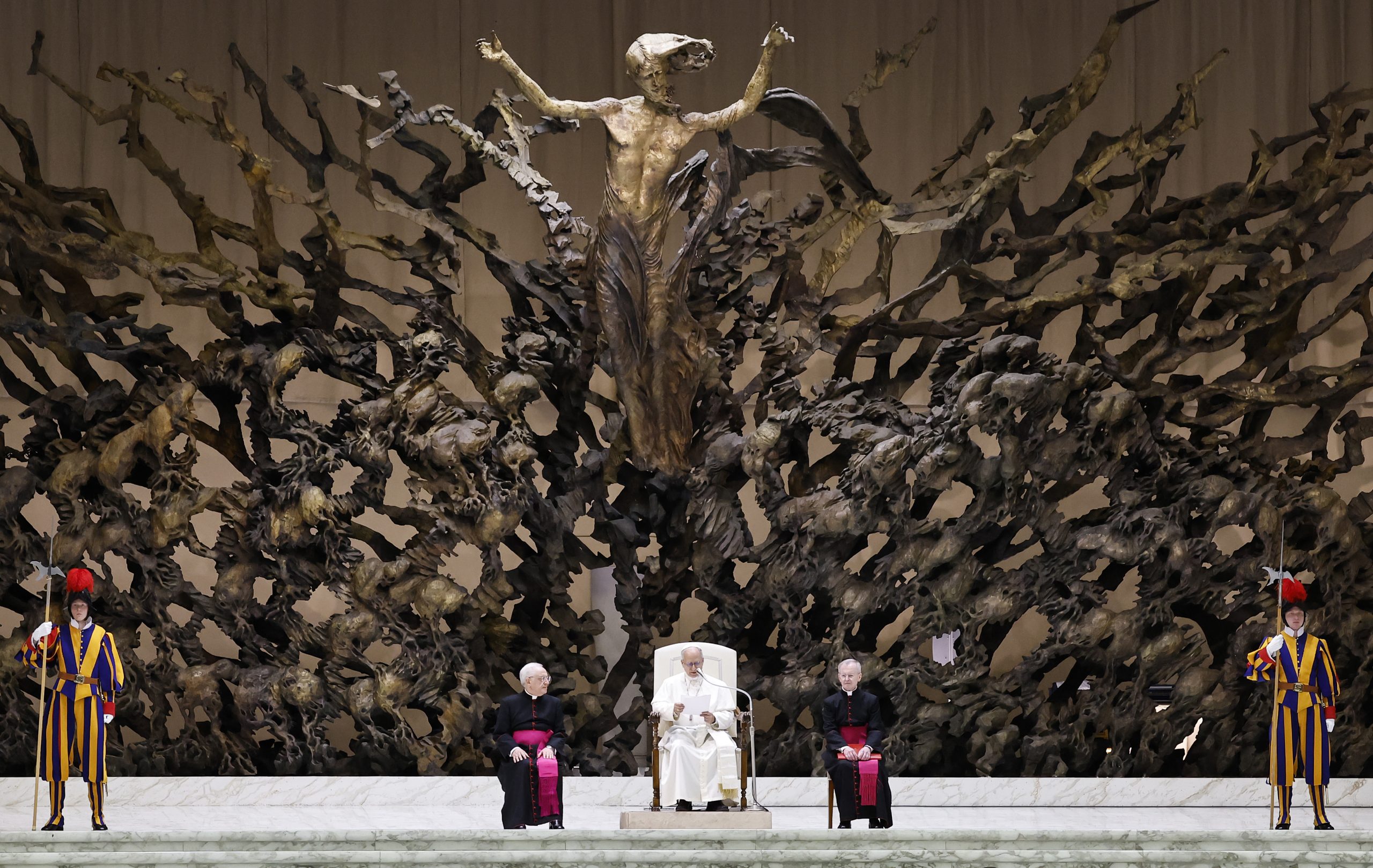
Pope Leo XIV appoints outspoken immigration bishop to conservative West Virginia diocese
Pope Leo XIV has appointed Bishop-Designate Evelio Menjivar-Ayala to lead the Diocese of Wheeling-Charleston in West Virginia. The Salvadoran-born bishop, who entered the United States illegally as a teenager after fleeing civil war, has become one of the most prominent episcopal voices on immigration in America Bishop-Designate Evelio Menjivar-Ayala has drawn fresh attention to the increasingly vocal role being played by senior Catholic clergy in the United States over immigration policy. The Salvadoran-born bishop-designate of Wheeling-Charleston, who arrived in the United States illegally as a teenager after fleeing civil war in El Salvador, said in an interview with The Guardian following his appointment by Pope Leo XIV that he would continue defending migrants and speaking publicly about immigration despite the political hostility towards undocumented immigrants in America. Speaking to The Guardian shortly after the announcement of his appointment, Bishop Menjivar-Ayala said: “I will keep talking about people’s reality, defending immigrants and fighting for fair treatment for them.” Bishop Menjivar-Ayala explained the Church’s involvement in the immigration debate in explicitly moral and religious terms. “We are not approaching this from a partisan political standpoint, but from a moral one,” the bishop said. “Morality is not something that pertains solely to one’s private life, but also to how I treat others, how I conduct my public life, how I perform my work, and how I engage with society.” Bishop Menjivar-Ayala added that the Church’s teaching on immigration was rooted directly in scripture, saying that “the prophets denounce the mistreatment of the poor, foreigners, widows, and orphans”, before referring to Christ’s identification with the vulnerable in the Gospel of St Matthew. The bishop-designate has become one of the more prominent episcopal voices criticising the administration’s deportation agenda. Earlier this year he condemned immigration raids and what he described as “highly visible operations of questionable legality that go far beyond mere immigration enforcement”. Born in El Salvador during the country’s brutal civil war, the bishop-designate has recalled witnessing violence near the Sumpul River massacre in Chalatenango while still a child. His family later fled the region before he eventually attempted to migrate to the United States to join relatives already living there. According to his interview, he was turned back during earlier attempts before finally crossing the border near San Ysidro hidden in the boot of a smuggler’s car. Reflecting on the experience, the bishop said: “I don’t recommend it. You risk your own life.” After arriving in California, he worked a series of manual and low-paid jobs while studying English and continuing his education. He later moved to Maryland, where he began working within the Church before entering seminary formation. Speaking more broadly about civic participation and political life, the bishop-designate encouraged Catholics not to withdraw from public engagement despite growing social divisions in the United States. “We can all do something,” Bishop Menjivar-Ayala said. “We need to use the opportunities we have to take action.” The bishop added that people should “not be afraid” to defend their rights, show solidarity and participate in public life, insisting that “participation in political and social life is important for change to happen”. Ordained a priest for the Archdiocese of Washington in 2004, he became an American citizen two years later. In 2022, Pope Francis appointed him an auxiliary bishop in Washington. Speaking about his own experiences as an immigrant, Bishop Menjivar-Ayala said: “I’ve lived through that story. I am part of the history of migration in the United States, and at the same time, it’s very hopeful to know that I’m also part of the story of overcoming adversity.” Bishop Menjivar-Ayala succeeds Bishop Mark Brennan, who has led the Diocese of Wheeling-Charleston through a prolonged period of recovery after the scandal surrounding former Bishop Michael Bransfield. Bishop Bransfield was accused of financial and sexual misconduct and was later ordered to repay substantial sums to the diocese following a Vatican investigation. The appointment of Bishop Evelio Menjivar-Ayala is an eyebrow-raising decision by Pope Leo XIV because auxiliary bishops in Washington have traditionally emerged from one of the most politically engaged and ideologically progressive episcopal environments in the United States. Bishop Menjivar-Ayala himself became known nationally for his outspoken criticism of immigration enforcement operations and his defence of undocumented migrants while serving as an auxiliary bishop in the capital. His transfer to the Diocese of Wheeling-Charleston is a sharp contrast, as West Virginia remains one of the whitest states in America, with one of the country’s lowest percentages of foreign-born residents and a comparatively small Hispanic Catholic population. The decision to appoint a Salvadoran-born bishop so publicly associated with immigration advocacy has therefore inevitably led to questions about the message Rome intends to send through the appointment. Bishop Menjivar-Ayala himself appeared to acknowledge the symbolic dimension of the move when he said: “The fact that they are sending me to a state where there aren’t many immigrants means a lot because it shows that immigrants have the ability to adapt, to embrace a new way of life, to adjust to a new environment.”
May 11, 2026
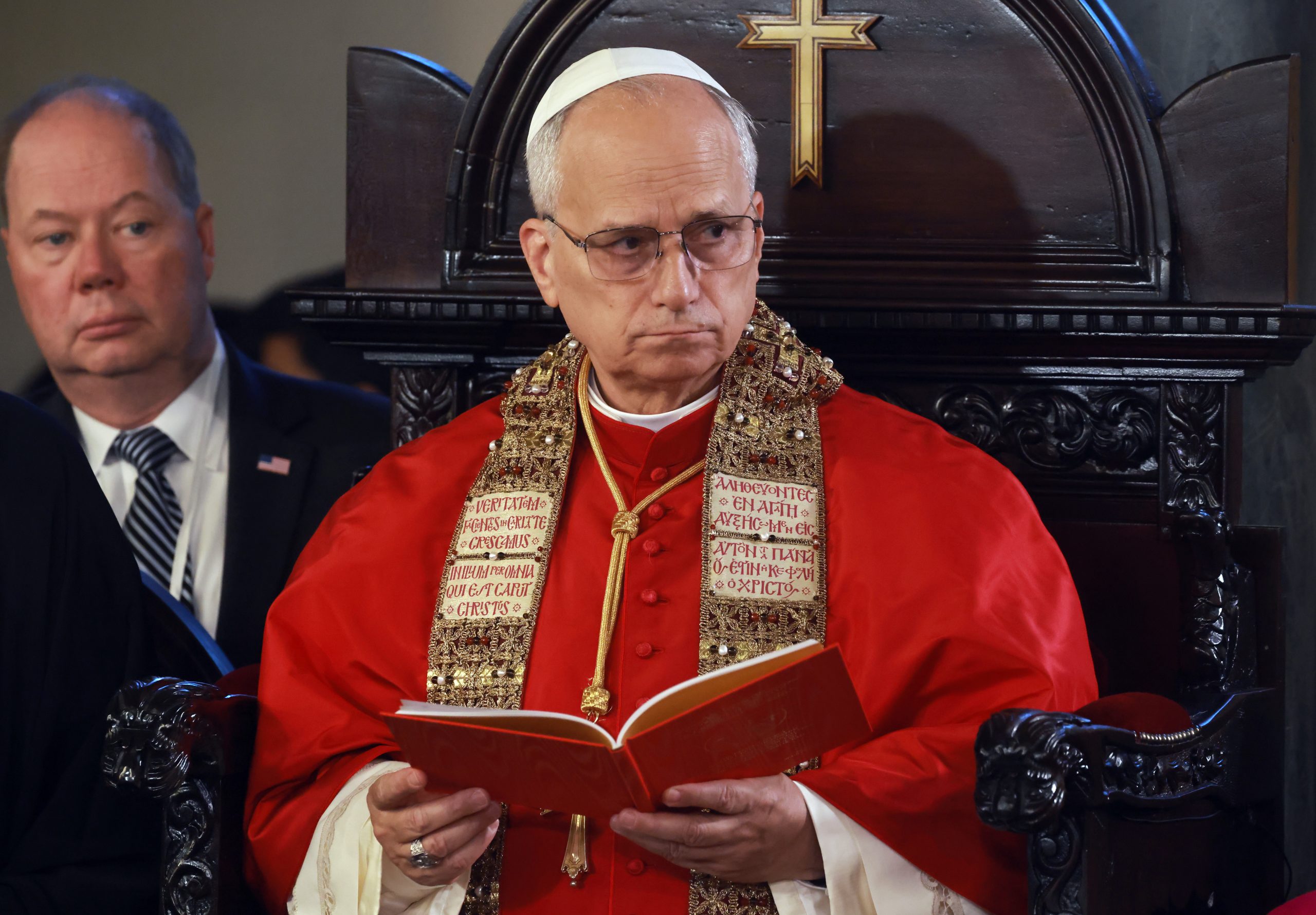
Pope Leo responds to Trump’s latest attacks as Rubio readies for Rome
Pope Leo XIV has responded directly to Donald Trump’s criticism, stating that “there is no doubt” about the Church’s opposition to nuclear weapons The Holy Father Pope Leo XIV has responded to the latest criticism from Donald Trump. Speaking to reporters outside the the papal villa in Castel Gandolfo on Tuesday, May 5, the Pope said in Italian: “I have spoken out from the very moment I was elected, and now, as we approach the anniversary, I have said, ‘Peace be with you.’” The Pontiff added: “If anyone wishes to criticise me for proclaiming the Gospel, let them do so with truth.” Addressing Trump’s accusation that he was in favour of Iran possessing nuclear weapons, the Pope responded: “For years the Church has spoken out against all nuclear weapons, so there is no doubt about that.” The Pope concluded his remarks in Italian by saying: “I simply hope to be heard for the sake of the value of God’s words.” Speaking to another reporter in English, he continued: “I always believe that it’s much better to enter into dialogue than to look for arms and support the arms industry, which gains billions and billions of dollars each year, instead of sitting down at the table and solving our problems and using money to solve humanitarian issues and hunger in the world.” Trump’s latest remarks were delivered on Monday during an interview with Hugh Hewitt. He said: “The Pope would rather talk about the fact that it’s OK for Iran to have a nuclear weapon.” He continued: “And I don’t think that’s very good. I think he’s endangering a lot of Catholics and a lot of people.” The comments came after Trump posted on his social media platform, Truth Social, last month that the Pope was “WEAK on crime” and “terrible for foreign policy”, before later posting an image of himself depicted as Jesus. President Trump has consistently sought to justify the joint US and Israeli military action in Iran, which has an estimated death toll of 3,114 people, according to HRANA, including 1,354 civilians, of whom 207 were children. The Pope has responded to the war, and to various other conflicts around the world, by calling for peace. The disagreements come during an important diplomatic week for the United States and the Vatican, which will see Secretary of State Marco Rubio make a two-day visit to Italy and the Vatican. Alongside JD Vance, Rubio is often seen as the Catholic face of the Trump administration. Not always a practising Catholic, Rubio also attended the Church of Jesus Christ of Latter-day Saints as a child before returning to Catholicism with his family. He later drifted from the faith during the early years of his professional success. However, he subsequently returned, speaking of a renewed desire to receive the Eucharist, which he described as “the sacramental point of contact between the Catholic and the liturgy of heaven”. Rubio is often regarded as a calming presence within a volatile administration, a characteristic that was particularly evident in his 2026 Munich conference speech, which focused on shared American and European ideals and prompted the Latvian president to say that he “agreed with every single word”. Rubio is also a seasoned politician, having served as Senator for Florida since 2011. He speaks Spanish fluently and is the child of Cuban immigrants, sharing Pope Leo’s strong association with Latin America. The decision to send him at a time of deteriorating diplomatic relations between the Holy See and the United States therefore appears politically astute. Despite Trump’s apparent doubling down on criticism of the papacy, the administration is likely conscious of the potential ramifications of a public fallout with the spiritual leader of the United States’ 70 million Catholics. The Catholic voting bloc has supported every winning presidential candidate in recent US political history, with some polls placing Catholic support for Trump’s 2024 campaign as high as 57 per cent. In November, the United States midterm elections will see voters elect all 435 members of the House of Representatives and 35 Senate seats. Emerson College Polling currently gives the Democrats a 10-point advantage on the generic congressional ballot. If Republicans fail to reverse the current polling trend, the election could result in Democrats taking control of the House and being able to block much of Trump’s legislative agenda. Rubio will also seek to smooth relations with Italy, where Giorgia Meloni, a long-time Trump ally, has taken exception to Trump’s remarks about the Pope, describing them as “unacceptable”. Relations have further deteriorated over the Italian Prime Minister’s refusal to involve Italy in the war with Iran, with Trump responding: “I’m shocked at her. I thought she had courage, but I was wrong.” With Viktor Orbán recently ousted after 16 years in power, Trump is left with relatively few close allies governing in Europe. Much of his remaining European political support now comes in the form of opposition figures such as Nigel Farage, Marine Le Pen and Mateusz Morawiecki. Rubio has attempted to play down the timing of the diplomatic visit, telling reporters in the White House briefing room that it was a trip “we had planned from before” and that “the trip is really not tied to anything other than the fact that it would be normal for us to engage with them [the Church]”. Secretary of State Marco Rubio will visit Vatican City on Thursday, May 7, where he will have an audience with Pope Leo XIV at the Apostolic Palace, scheduled for 11.30am. According to the White House, the meeting will focus on the Middle East and mutual interests in the Western Hemisphere. On Friday, Rubio will meet Prime Minister Giorgia Meloni and Foreign Minister Antonio Tajani to discuss what the White House has described as “shared security interests and strategic alignment”.
May 7, 2026
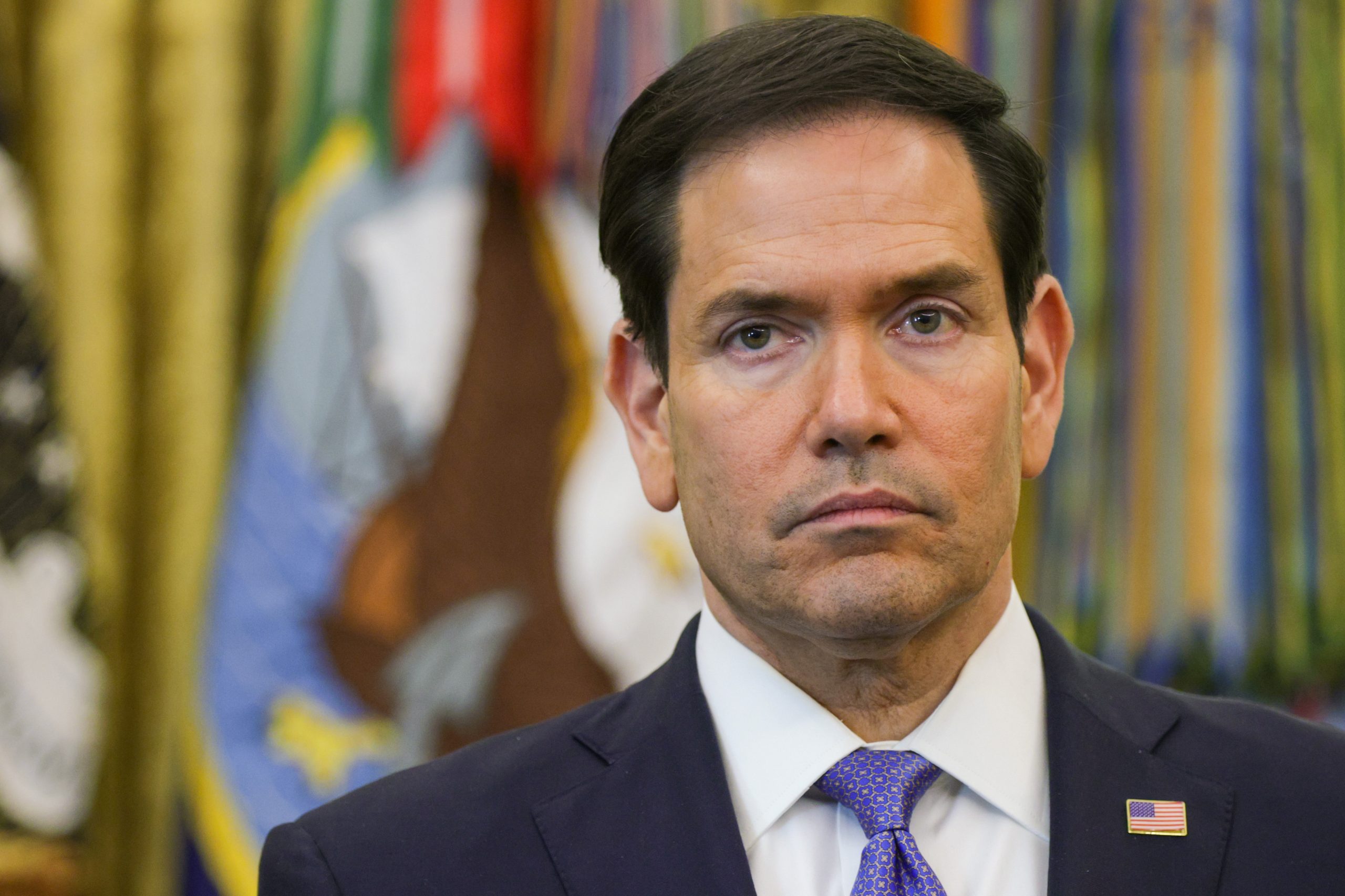
US seeks to reset Vatican ties as Rubio heads to Rome
Marco Rubio is set to meet Pope Leo XIV and Cardinal Parolin in Rome, as Washington moves to ease tensions with the Vatican after recent clashes over Iran and criticism from President Trump The United States Secretary of State, Marco Rubio, is expected to arrive in Rome on 7 May for meetings with Vatican and Italian officials, in what is understood to be an effort by Washington to stabilise relations. The visit, confirmed by the Holy See Press Office, will include a meeting with the Pope and talks with Pietro Parolin, as well as senior figures within the Italian government. It comes almost a year to the day since the election of Pope Leo XIV, and marks the first senior-level engagement between the current US administration and the Vatican since the deterioration in relations prompted by the President’s remarks about the pontiff. Over the past month, President Donald Trump has publicly criticised Pope Leo in recent weeks over the Holy See’s opposition to the United States’ military action against Iran. In one post circulated on social media, the President described the Pope as “WEAK on Crime, and terrible for Foreign Policy”. The Vatican has not issued an official response to Rubio’s visit, but the Holy See has continued to articulate its position on the conflict. Speaking to journalists last month while travelling to Africa, Pope Leo said he had “no fear of the Trump administration, or speaking out loudly of the message of the Gospel”. The Pope has repeatedly criticised the use of military force, warning against what he described in a separate address as the actions of “tyrants” who expend vast resources on warfare. Rubio’s presence in Rome is also expected to include discussions with Italian officials, amid signs of strain between Washington and Rome. Italy’s Prime Minister, Giorgia Meloni, had been regarded as a close ally of the Trump administration, but relations have cooled following her criticism of the US position on Iran and her public disapproval of the President’s remarks about the Pope. She described the attacks as “unacceptable”, placing her government at odds with Washington on both diplomatic tone and policy substance. According to Italian press reports, Rubio’s visit was communicated to the government in Rome through diplomatic channels, with indications that efforts have been underway to “rebuild the bridge” between the two countries. Meetings are expected to include Foreign Minister Antonio Tajani, with further contacts under discussion. It remains unclear whether a meeting with Meloni herself will take place. The wider diplomatic context has been further complicated by tensions between the United States and other European allies. Recent statements from Washington have included threats to reassess troop deployments in Europe, including in Italy, Germany and Spain, following criticism from European leaders over the Iran campaign. Italian Defence Minister Guido Crosetto has rejected suggestions that Rome has failed to support US operations, particularly in relation to maritime security. Rubio’s role as a senior Catholic within the administration has been noted. The timing of the visit, with the United States approaching midterm elections later this year, has also attracted attention. Catholic voters remain a significant voting bloc in American politics, having come out in support for all presidential victories in recent history. Trump himself received an estimated 57 per cent of the Catholic vote in 2024. Whether Rubio’s meetings in Rome will succeed in easing tensions remains to be seen, but the decision to send the Secretary of State signals an acknowledgement within Washington that the President is seeking to ease relations with the Vatican.
May 4, 2026
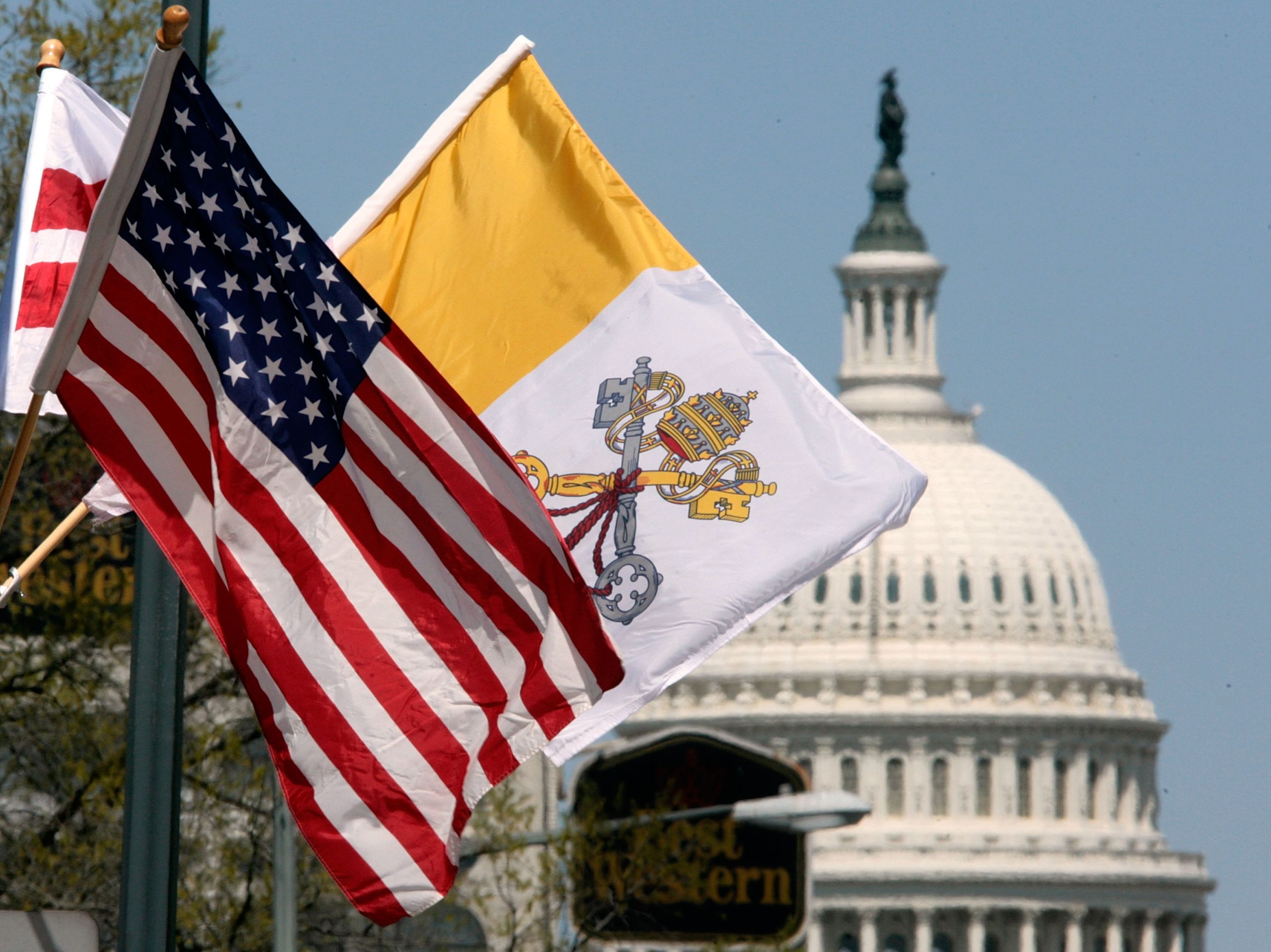
Papal Foundation approves record $15 million in grants for 2026
The Papal Foundation has approved more than $15 million in grants for 2026, its largest total to date, funding over 140 projects worldwide The Papal Foundation has approved more than $15 million in grants for 2026, marking the largest total in its 38-year history. The announcement came as Pope Leo XIV received members, trustees and stewards of the foundation at the Apostolic Palace at the conclusion of their annual pilgrimage. The Chicago-born pontiff thanked donors for their sustained financial backing of projects ranging from humanitarian aid to clerical education, telling them their generosity had enabled “countless people to experience in a concrete fashion the goodness and kindness of God in their own communities”. According to figures released by the foundation, the 2026 grants will support more than 140 projects across approximately 75 countries, continuing a steady increase in annual distributions in recent years. In 2023, the foundation allocated around $9.5 million to 114 projects in 57 countries, rising to roughly $14 million in 2025 for 116 projects in more than 60 countries. The latest total represents a further expansion rather than an isolated increase, with consistent growth in the foundation’s grant-making capacity. The foundation also reported a notable rise in new membership, with 25 families joining in the year since the election of Pope Leo XIV. Membership as a steward requires a contribution of at least $1 million, forming part of an endowment used to fund papal projects. The increase is viewed as a sign of renewed engagement among wealthy American Catholics following the election of the first pope born in the United States. During the audience, the Pope referred to his own experience of the foundation’s work during his time as Bishop of Chiclayo, stating: “I have already been aware of your work, especially during my years of service as Bishop of Chiclayo, where I saw first-hand the positive impact of the Foundation’s grants, as both the Diocese and a religious community were blessed to receive assistance on various projects, thanks to your generosity.” He continued by expressing gratitude for the organisation’s role in supporting the universal Church, saying: “I am, therefore, deeply grateful for your ongoing commitment to assist the Successor of Peter in his mission to care for the needs of the universal Church.” The Pope pointed in particular the role of the foundation in funding scholarships for priests and Religious from developing countries to study at pontifical universities in Rome. “Many priests and consecrated men and women have likewise been able to receive an advanced education from the Pontifical Universities in Rome that would otherwise not have been possible, forming them to be future leaders in the Church,” he said. The Pope also emphasised the wider spiritual dimension of charitable giving, stating: “All members of the Church, by virtue of our Baptism, share the responsibility to proclaim the Gospel today with words as well as with charitable deeds.” He added that “by funding projects, humanitarian aid and scholarships for people from around the world, the Papal Foundation participates in the Church’s ongoing evangelical mission”. Referring to the liturgical season, the Pope described Easter as a “time focusing on mission as well as peace” and recalled Christ’s words to the Apostles, “Peace be with you!” He told members that their work contributes not only to the Church’s mission but also to peace at local and regional levels. Concluding his remarks, the Pope asked for continued support and prayers, saying: “I ask for your continued prayers for my ministry as the Successor of Saint Peter and for the needs of the Church.” He added: “You will probably never meet everyone who has benefitted from your kindness, so in their name I express heartfelt appreciation.” The Papal Foundation, established in 1988 by Cardinal John Krol of Philadelphia, was created to provide direct financial support for the charitable priorities of the Pope. Based in Pennsylvania, it includes all United States cardinals as ex officio members and is governed by a board of lay trustees and bishops. Since its inception, it has distributed more than $250 million to projects around the world. Speculation that financial concerns may have influenced the election of Pope Leo XIV has been rejected by senior Church figures. Speaking in Rome at the presentation of a book examining relations between the United States and the Holy See, Cardinal Gerhard Ludwig Müller said: “Although Cardinal Reinhard Marx dedicated a full day to discussing the Holy See’s finances in the pre-conclave, this did not influence the final decision.” He added that the election of a pope “is based on different criteria”, stressing the spiritual nature of the process. During the pontificate of Pope Francis, contributions linked to Vatican causes experienced a noticeable decline, particularly in the years following the global financial crisis and during the Covid-19 pandemic. Reports of financial corruption within Vatican structures further weakened donor confidence, especially among American benefactors, while Pope Francis’s criticism of aspects of free market capitalism was also seen to have cooled enthusiasm in some quarters.
May 4, 2026