

Sspx
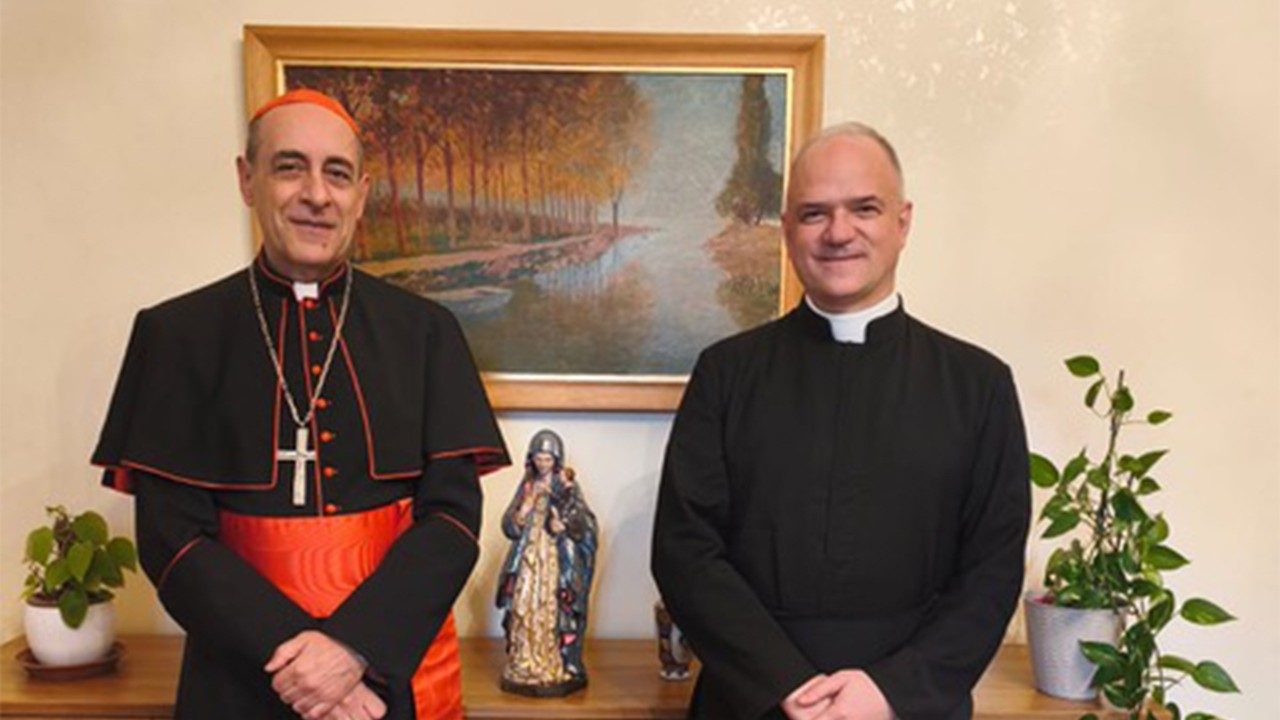
SSPX rejects Cardinal Fernández warning over July consecrations
The Society of St Pius X has issued a forceful public response to Cardinal Víctor Manuel Fernández’s warning that planned episcopal consecrations without papal approval would constitute “a schismatic act”, arguing that the Society is acting out of necessity for the “salvation of souls” The Society of St Pius X has issued a forceful response to Cardinal Fernández’s warning that planned episcopal consecrations without papal approval would constitute “a schismatic act”, arguing that the Society is acting out of necessity for the “salvation of souls” and therefore incurs no automatic excommunication under canon law. The response was published on 15 May by the Society’s official in-house news service, through Fr Jean-Michel Gleize, the French professor at the seminary at Écône who took part in doctrinal discussions with Rome between 2009 and 2011. The intervention follows a statement issued two days earlier by Cardinal Víctor Manuel Fernández, prefect of the Dicastery for the Doctrine of the Faith, who warned that the episcopal consecrations announced by the SSPX “do not have the corresponding pontifical mandate”. Cardinal Fernández said: “This gesture will constitute ‘a schismatic act’ (John Paul II, Ecclesia Dei, n. 3), and ‘formal adherence to the schism constitutes a grave offense against God and entails the excommunication established by Church law’.” The cardinal added that the Holy Father was praying that the Society’s leaders would “retrace their steps regarding the very serious decision they have taken”. Fr Gleize’s reply interpreted the Vatican declaration as confirmation that Pope Leo XIV will refuse to grant authorisation for the consecrations expected to take place on July 1. “The novelty that appears in this declaration from Rome,” Fr Gleize wrote, “is that the episcopal consecrations scheduled for July 1st will not be ‘accompanied by the corresponding papal mandate’. Coming from a Prefect of a Vatican dicastery, this remark is quite clearly an attempt to convey to the Society that Pope Leo XIV will refuse to authorise the consecrations.” Fr Gleize based much of his argument on Canons 1323 and 1324 of the 1983 Code of Canon Law, maintaining that a person acting out of necessity, or under the sincere belief that such necessity exists, is not subject to automatic penalties. Quoting canon law directly, Fr Gleize argued that a person who violates a law “out of necessity, or to avoid serious harm, is not punishable by any penalty”, provided the act is not “intrinsically evil or causes harm to souls”. He further contended that even if Church authorities judged the act objectively wrong, “the penalty of latae sententiae is not incurred” where the accused acted in good faith under a perceived necessity. “In other words,” Fr Gleize wrote, “even if one admits that there is no real necessity to justify the act, the mere fact that the perpetrator committed the act driven by what he believed to be a real necessity is sufficient to excuse him from the crime.” The SSPX professor insisted that the Society’s intention remained the good of the Church rather than rebellion against papal authority. “This is why it disregards this application of ecclesiastical law that would accuse it of a crime and impose the corresponding penalty,” Fr Gleize stated. “Why? Simply because ecclesiastical law cannot be applied to the detriment of the salvation of souls.” Fr Gleize added: “In all reality, there is no wrongdoing, no schism on the part of the Fraternity. But only the same zeal which remains unchanged, even if it takes on paradoxical forms in the eyes of the world, for the glory of God and the salvation of souls.” The response concluded with an unusually confrontational passage directed at senior churchmen associated with more progressive currents in the Church. “Excommunicated? But by whom?” Fr Gleize asked. “By those who receive the blessing of a schismatic woman, the Archbishop of Canterbury, Sarah Mullally? By those who authorise the blessing of Fiducia Supplicans? And who kneel before Pachamama?” Cardinal Fernández’s statement had drawn immediate comparisons with events preceding the 1988 consecrations carried out by Archbishop Marcel Lefebvre at Écône without papal mandate. Shortly before those consecrations, Cardinal Bernardin Gantin, then prefect of the Congregation for Bishops, issued a formal canonical warning to Archbishop Lefebvre declaring that such an act would incur automatic excommunication. “Since on June 15, 1988 you stated that you intended to ordain four priests to the episcopate without having obtained the mandate of the Supreme Pontiff,” Cardinal Gantin wrote, “I myself convey to you this public canonical warning.” His Eminence added: “If you should carry out your intention as stated above, you yourself and also the bishops ordained by you shall incur ipso facto excommunication latae sententiae reserved to the Apostolic See.” Archbishop Lefebvre nevertheless proceeded with the consecrations on June 30, 1988, leading Pope St John Paul II to issue the motu proprio Ecclesia Dei, which described the act as schismatic. The SSPX has long disputed that interpretation, insisting that Archbishop Lefebvre acted in a state of necessity amid what the Society viewed as a profound doctrinal and liturgical crisis in the Church following the Second Vatican Council. The latest public exchange between Cardinal Fernández and Fr Gleize now appears to indicate that tensions between Rome and the Society are entering a new and potentially decisive phase ahead of the proposed July consecrations. Photo credit: Dicastery for the Doctrine of the Faith
May 17, 2026
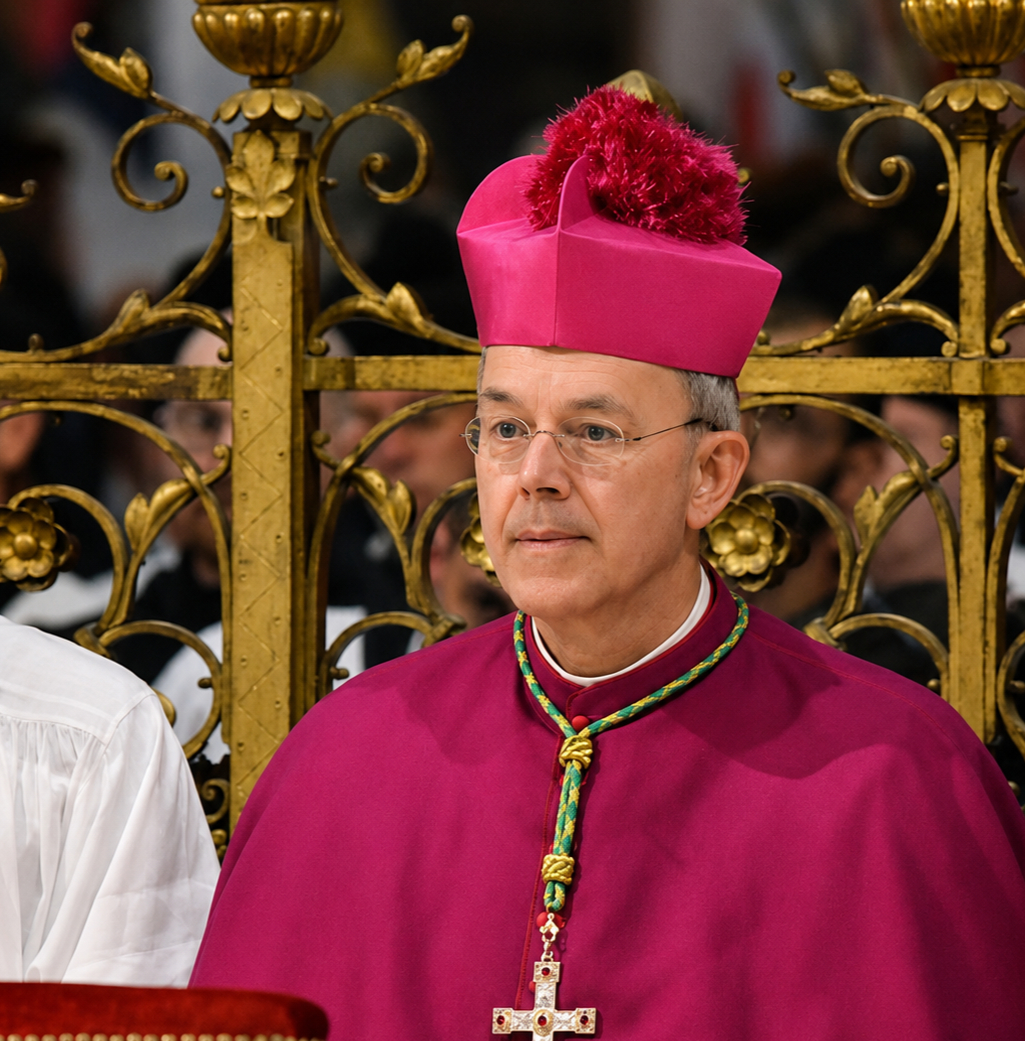
‘This is not synodal’: Bishop Schneider on possible SSPX excommunications
Bishop Athanasius Schneider, Auxiliary Bishop of Astana in Kazakhstan, has said that excommunicating the SSPX would be “not synodal” and warned that, if the Pope were to excommunicate the Society, “this will go down in history as a huge error of rigidity”. Speaking to EWTN’s The World Over with Raymond Arroyo, the 65 year old […] Bishop Athanasius Schneider, Auxiliary Bishop of Astana in Kazakhstan, has said that excommunicating the SSPX would be “not synodal” and warned that, if the Pope were to excommunicate the Society, “this will go down in history as a huge error of rigidity”. Speaking to EWTN’s The World Over with Raymond Arroyo , the 65 year old prelate spoke openly about the planned July episcopal consecrations by the Society of St Pius X, which have led to reports that the entire Society and its faithful could find themselves excommunicated. Bishop Schneider pointed to what he described as a contradiction in the approach, saying that the Vatican is “promoting the inclusivity of synodal methods and are generous with the German Synodal Way” as well as being “generous with the Communist Chinese Party to grant them to ordain bishops there”, whilst coming down with full ecclesial force on the Society of St Pius X. The bishop further said that he had written to the Pope asking him to give the SSPX permission to consecrate bishops “as a first step to integrate them, to create an atmosphere of mutual trust”. He also appealed directly to the Pope during the interview, saying: “Holy Father, please avoid such a wound in the Church which you can avoid.” Throughout the interview, Bishop Schneider was notably more forgiving towards the Society than other prelates have been when discussing the its canonical irregularity. He said that he did not think they were “schismatics” and that they “love the Pope, pray for the Pope, and want simply to have the guarantee to transmit the faith of all times without any ambiguity”. When the topic turned to whether the concerns of the SSPX were purely related to their attachment to the Tridentine Mass, the bishop responded by saying “the problem is deeper”. Acknowledging their criticisms of parts of the Second Vatican Council, he said: “There are ambiguities in some council texts. There are ambiguities in the post-conciliar Magisterium.” He also appeared grateful for the role played by the Society in raising such questions about the Second Vatican Council, telling Arroyo that “we must be honest, and therefore we must be thankful to the Society of Pius X to address it publicly”. Appointed a bishop at the age of 49 by Pope Benedict XVI, Bishop Schneider has long been associated with the traditional Latin Mass and the communities attached to it. In 2015 he was appointed by the Holy See to carry out visitations to two SSPX seminaries. After the visit, he stated that “there are no serious reasons to deny the clergy and faithful of the Society of Saint Pius X official canonical recognition”. At present, every indication points towards the Society of St Pius X consecrating bishops on July 1, with a website recently created requiring attendees to complete compulsory registration “for security reasons”. Photo by: Monegasque2 – Own work, CC BY-SA 4.0, https://commons.wikimedia.org/w/index.php?curid=48468039
May 16, 2026
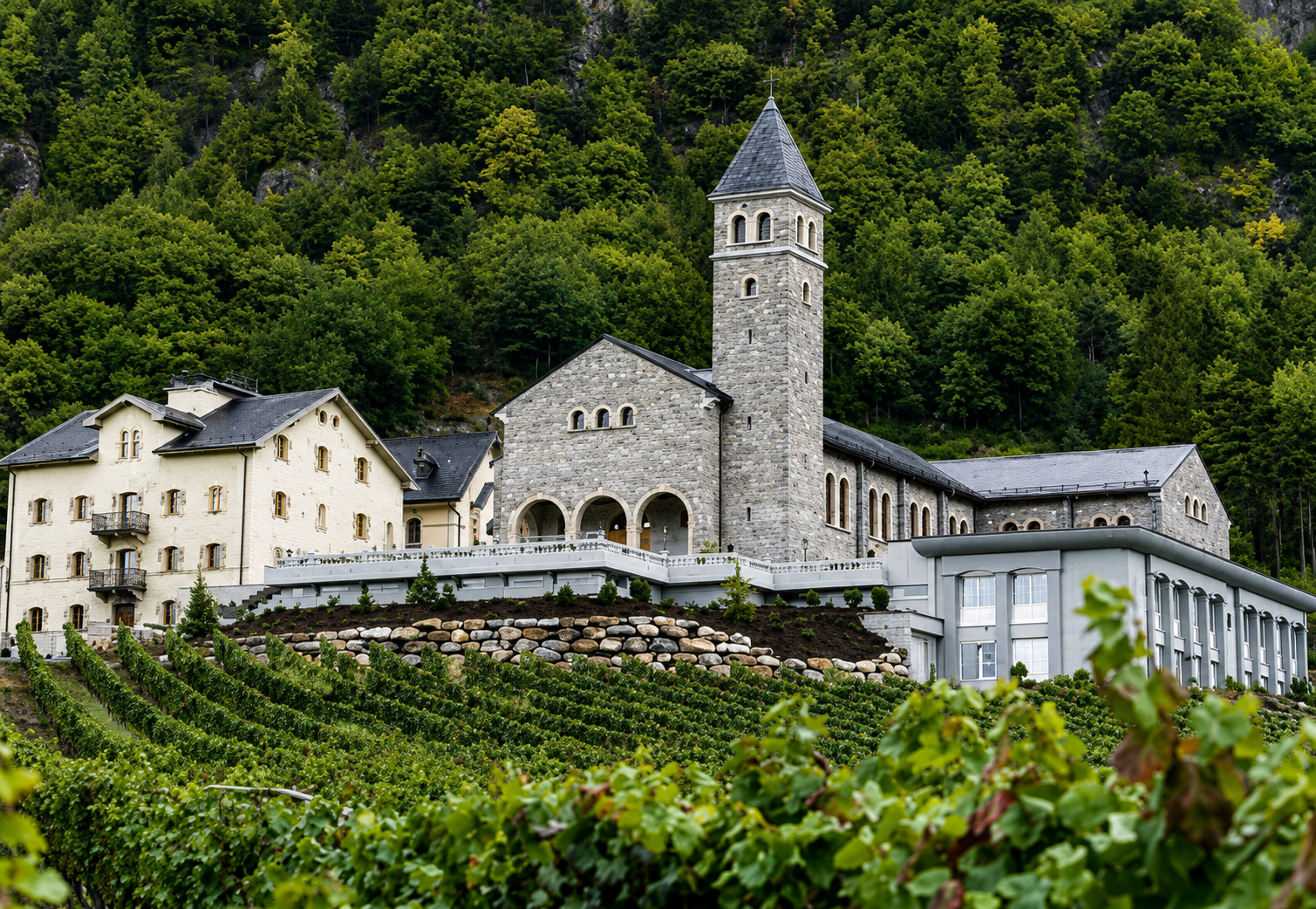
SSPX website reveals details of July consecrations and compulsory registration system
The Society of St Pius X has opened official registration for pilgrims wishing to attend the priestly ordinations and episcopal consecrations at Écône this summer, with organisers insisting that registration will be compulsory “for security reasons”. A new multilingual website launched by the seminary authorities says: “Access to the ceremonies is reserved for registered attendees. […] The Society of St Pius X has opened official registration for pilgrims wishing to attend the priestly ordinations and episcopal consecrations at Écône this summer, with organisers insisting that registration will be compulsory “for security reasons”. A new multilingual website launched by the seminary authorities says: “Access to the ceremonies is reserved for registered attendees. Please complete your registration below.” The ceremonies, which will take place from June 29 to July 2 at the International Seminary of Saint Pius X in Switzerland, are expected to attract thousands of faithful from across Europe and beyond. Visitors are asked to register according to their category, including “Faithful”, “Clergy”, “Organised Group” and “Press / Media”. The website describes the gathering as four “days of grace” centred on the priestly ordinations and episcopal consecrations in the “majestic setting of the Écône meadow”. A countdown clock on the homepage marked 43 days remaining before the ceremonies at the time of publication. The programme published by the organisers provides one of the clearest indications yet of the scale and detailed planning surrounding the event. Priestly ordinations will begin on Monday, June 29, with a Pontifical Mass of Ordination scheduled for 9am in the meadow at Écône, followed by first blessings from the newly ordained priests and Pontifical Vespers with Benediction of the Blessed Sacrament. The following day will include a series of first Masses celebrated by the newly ordained priests at various locations around the seminary grounds. The schedule published online includes Masses to be celebrated by Fr Bunge, Fr Braun, Fr Richter and Fr Hernanz. The episcopal consecrations themselves are due to take place on Wednesday, July 1, beginning at 9am, followed later in the day by Pontifical Vespers and Benediction. A final Pontifical Mass celebrated by one of the newly consecrated bishops is scheduled for Thursday, July 2. The website also includes a dedicated section titled “Our Future Bishops”, inviting visitors to “discover the priests who will receive episcopal consecration at Écône” and to “support them with your prayers and encouragement”. No further official details about the candidates for episcopal consecration had been published in the section at the time of writing. The launch of the portal appears intended not only to organise pilgrim access but also to coordinate accommodation and transport for the large international crowds expected to travel to the Swiss Alps. The organisers have published accommodation listings under sections marked “Private hosts” and “Partner hosts”, while a dedicated carpooling system allows pilgrims to offer or request transport. Users are instructed to create accounts in order to participate in the ride-sharing system, which allows searches “by city”. The seminary authorities have also published extensive logistical guidance under a “Plan my visit” section, including travel information, maps and practical instructions for pilgrims attending the ceremonies. The scale of the preparations points to the significance of the upcoming consecrations for the Society of St Pius X, founded by Archbishop Marcel Lefebvre in 1970. Écône has occupied a central place in the history of the Society since Archbishop Lefebvre established the seminary there following the reforms after Vatican II. The Swiss seminary became internationally known in 1988 when Archbishop Lefebvre consecrated four bishops without papal mandate alongside Bishop Antonio de Castro Mayer, prompting Rome to declare that the bishops involved had incurred automatic excommunication. The Vatican later lifted the excommunications of the surviving bishops in 2009 under Pope Benedict XVI, although the Society’s canonical situation within the Church remains unresolved. The forthcoming consecrations have already attracted widespread interest internationally, particularly because episcopal consecrations at Écône remain comparatively rare and historically significant events in the life of the Society. The new registration system now makes clear that attendance at the ceremonies will be tightly controlled through advance accreditation and organised access procedures. Image credit: DICI – http://www.dici.org/wp-content/uploads/2011/04/econe_11.jpg, CC BY-SA 4.0, https://commons.wikimedia.org/w/index.php?curid=53945183
May 16, 2026
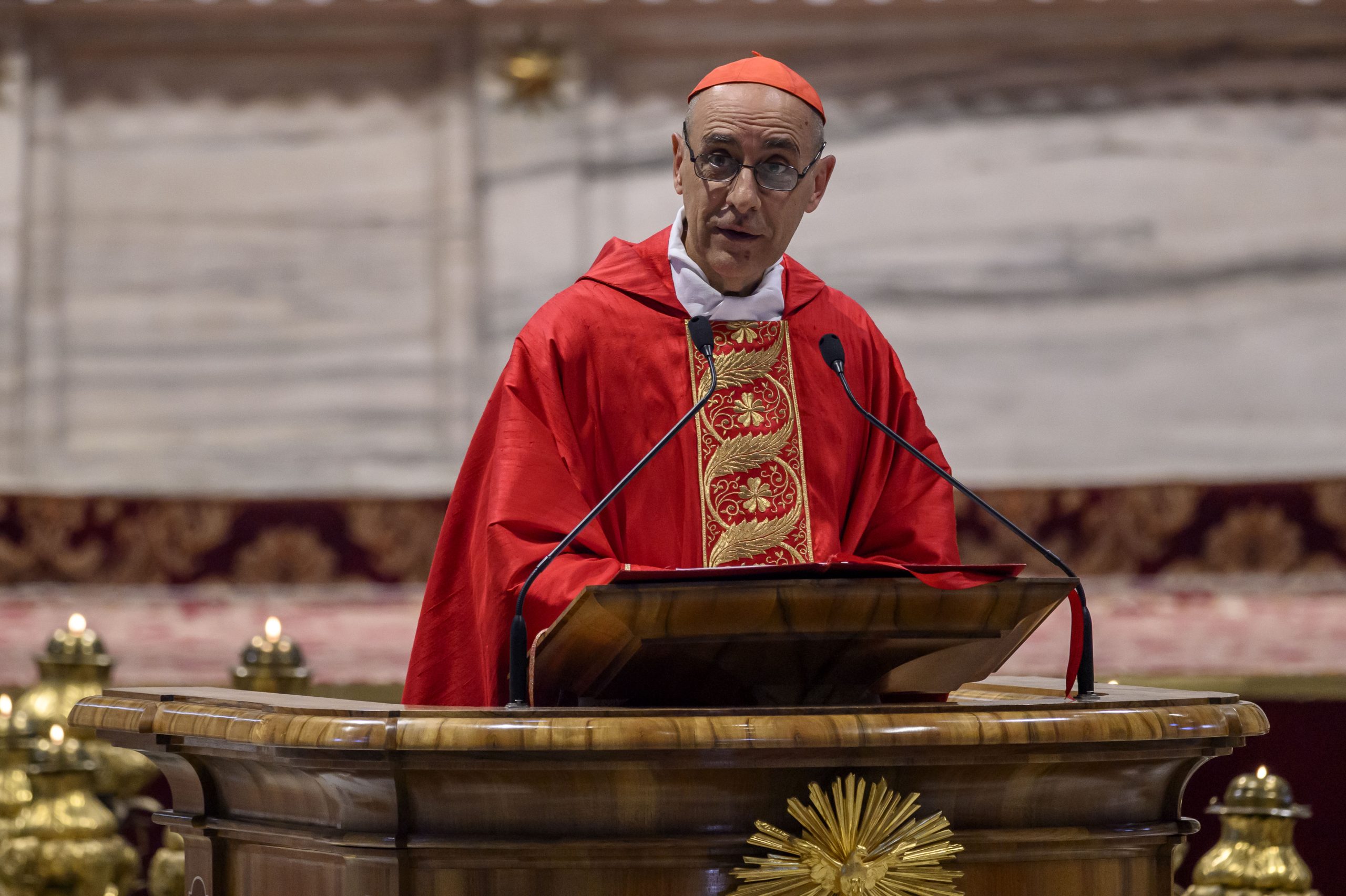
Cardinal Fernández releases statement on SSPX episcopal consecrations
Cardinal Víctor Manuel Fernández, Prefect of the Dicastery for the Doctrine of the Faith, has released a statement warning that planned episcopal consecrations by the Society of St Pius X risk constituting “a schismatic act” Cardinal Víctor Manuel Fernández has warned that the Society of St Pius X risks committing “a schismatic act” through episcopal consecrations without papal approval, in the first public intervention since the meeting with the SSPX on 12 February. In a statement released by the Dicastery for the Doctrine of the Faith on 13 May, the prefect said the planned SSPX episcopal ordinations “do not have the corresponding pontifical mandate” and reiterated the penalties attached under canon law to such an action. “The episcopal ordinations announced by the Priestly Society of Saint Pius X do not have the corresponding pontifical mandate,” Cardinal Fernández said. “This gesture will constitute ‘a schismatic act’ (John Paul II, Ecclesia Dei , n. 3), and ‘formal adherence to the schism constitutes a grave offense against God and entails the excommunication established by Church law’ ( ibid ., 5c; cf. Pontifical Council for Legislative Texts, Explanatory Note , 24 August 1996).” The statement concluded: “The Holy Father continues in his prayers to ask the Holy Spirit to enlighten the leaders of the Priestly Society of Saint Pius X so that they retrace their steps regarding the very serious decision they have taken.” The intervention followed reports earlier on Wednesday morning by Vatican correspondent Nico Spuntoni in the Italian newspaper Il Giornale that the Dicastery for the Doctrine of the Faith was preparing a text concerning the Society and the limits of its relationship with Rome. While no formal canonical decree has yet been issued, Cardinal Fernández’s statement closely resembles the warning sent to Archbishop Marcel Lefebvre shortly before the episcopal consecrations at Écône in 1988. On 17 June 1988, Cardinal Bernardin Gantin, prefect of the Congregation for Bishops, issued a public canonical warning to Lefebvre after the French archbishop announced that he intended to consecrate four bishops without pontifical mandate. “Since on June 15, 1988 you stated that you intended to ordain four priests to the episcopate without having obtained the mandate of the Supreme Pontiff as required by Canon 1013 of the 1983 Code of Canon Law, I myself convey to you this public canonical warning,” Cardinal Gantin wrote. His Eminence continued: “If you should carry out your intention as stated above, you yourself and also the bishops ordained by you shall incur ipso facto excommunication latae sententiae reserved to the Apostolic See in accordance with Canon 1382.” The letter concluded with a direct appeal to Lefebvre “in the name of Jesus Christ” to reconsider what it described as a grave act against the unity of the Church. Furthermore, the statement’s citation of a 1996 explanatory note issued by the Pontifical Council for the Interpretation of Legislative Texts recalls one of the strongest Vatican texts ever published on the canonical status of the SSPX. The 1996 document stated that the 1988 consecrations represented “the consummation of a progressive global situation of a schismatic character” and said that “the whole Lefebvrian movement is to be held schismatic”. It added: “As long as there are no changes which may lead to the re-establishment of this necessary communion, the whole Lefebvrian movement is to be held schismatic, in view of the existence of a formal declaration by the Supreme Authority on this matter.” The explanatory note also addressed Catholics attending SSPX chapels and clergy belonging to the Society. It distinguished between occasional attendance at SSPX liturgies and what it called “formal adherence to the schism”. According to the document, such adherence involved “a free and informed agreement with the substance of the schism” together with an external manifestation of separation from ecclesial communion. The text said that in the case of SSPX priests and deacons “there seems no doubt that their ministerial activity in the ambit of the schismatic movement is a more than evident sign” of formal adherence. The SSPX was founded in 1970 by Archbishop Lefebvre, a former superior general of the Holy Ghost Fathers and one of the leading conservative critics of Vatican II. Tensions between the Society and Rome escalated throughout the 1970s and 1980s over liturgical reform, ecumenism, collegiality and religious liberty. The crisis culminated on 30 June 1988 when Lefebvre consecrated four bishops at Écône without papal approval. The Holy See responded by declaring that Lefebvre, Bishop Antônio de Castro Mayer and the four newly consecrated bishops had incurred automatic excommunication. Two days after the consecrations, Pope St John Paul II issued the motu proprio Ecclesia Dei adflicta , describing the consecrations as “a schismatic act”. Relations improved significantly under Pope Emeritus Benedict XVI. In 2009 he lifted the excommunications of the four bishops as part of an attempt to facilitate reconciliation, though the Society’s canonical status remained unresolved. Pope Francis later granted SSPX priests faculties to validly hear confessions during the Year of Mercy, later extending the provision indefinitely. Local bishops were also authorised under certain conditions to delegate SSPX priests to witness marriages. Despite those concessions, doctrinal discussions between Rome and the Society have remained stalled for years, particularly over the interpretation of Vatican II and the authority of post-conciliar reforms. The Vatican statement issued on Wednesday is the first direct intervention from the doctrinal dicastery since the 12 February meeting with SSPX superior Fr Davide Pagliarani, which the dicastery described as “cordial and sincere”. The DDF reiterated that the ordination of bishops without a mandate from the Roman Pontiff would entail “a decisive rupture of ecclesial communion”, namely “a schism”, with “grave consequences for the Society as a whole”, the dicastery noted. For that reason, it proposed suspending the episcopal ordinations announced for 1 July 2026, which had been declared without papal approval. However, the SSPX rejected the proposal in a communiqué and decided to proceed with the episcopal consecrations.
May 13, 2026
Pope Leo XIV’s first year and the future of the Traditional Mass
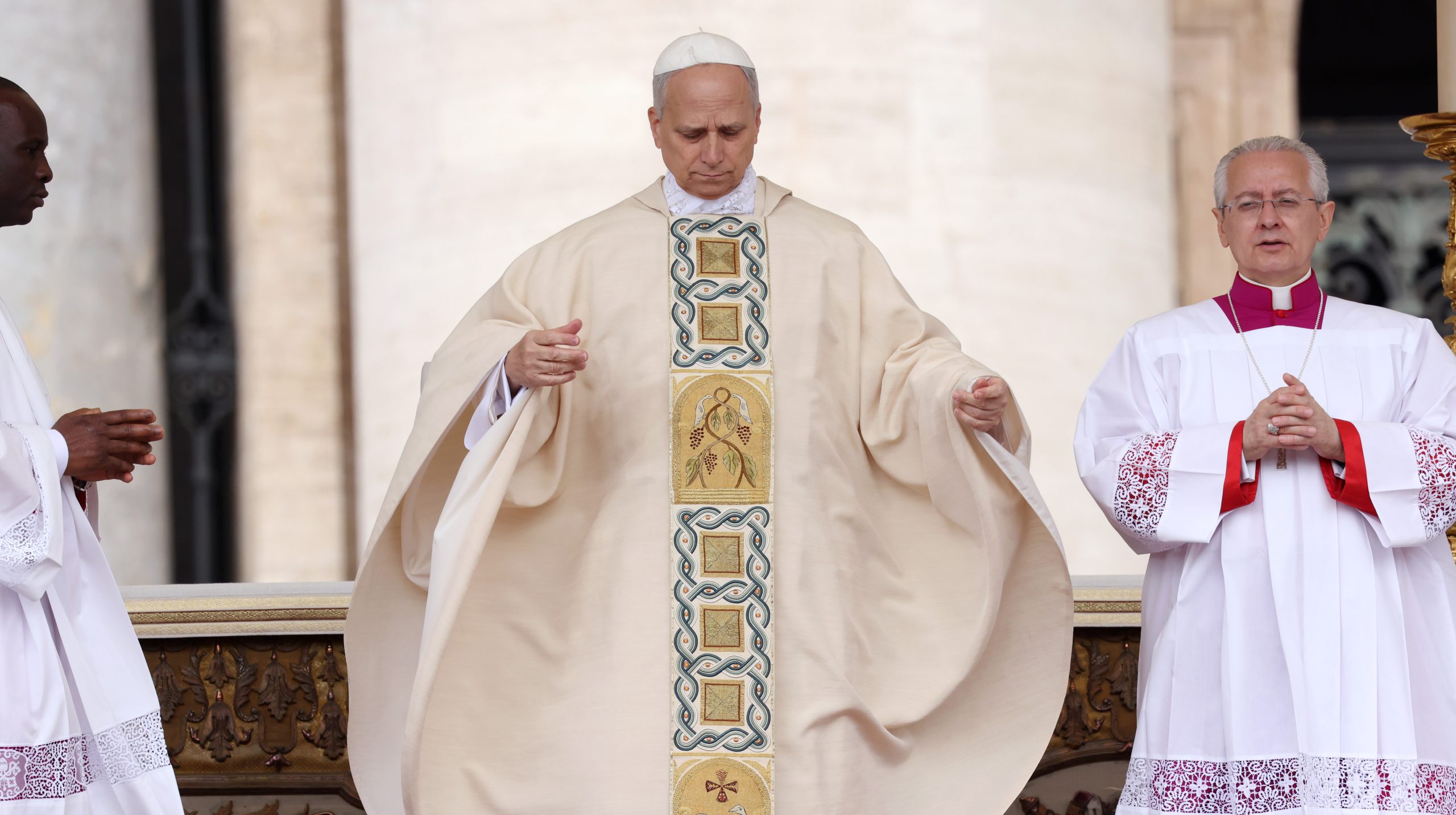
Dr Joseph Shaw, philosopher and chairman of the Latin Mass Society, examines Pope Leo XIV’s approach to the Traditional Mass, Traditionis Custodes and the question of the SSPX a year after the Pope’s election. The first question for the Catholic press about a new pope is inevitably where he sits on the ideological spectrum: will he support readers’ causes and punish their opponents? Popes are complicated figures, however, and do not arrive neatly labelled. The first indication of the Holy Father’s ideological allegiance came before his election, when the journalist Jaime Gurpegui encountered Austin Ivereigh and Fr James Martin SJ in a street in Rome. It was a moment when Cardinal Prevost’s handling of a clerical abuse case in his former diocese in Peru was being discussed in the media, and Ivereigh was upset about this. The encounter suggested that two of the best-known supporters of Pope Francis regarded Prevost as “their man”. His election a few days later was indeed welcomed by many who had been looking for a “continuity candidate” to continue the work of Pope Francis. What we have been told about the conclave suggests a more complicated story, however. The progressives’ candidate was Cardinal Pietro Parolin, the Secretary of State; conservative cardinals had backed the Hungarian Cardinal Péter Erdő. The story appears to be that the conservative bloc of votes went to Prevost, as a compromise candidate, after the initial ballots, before Parolin’s supporters accepted the inevitable. There are many possible explanations for why Fr Martin’s favoured candidate did not immediately secure the support of the largest bloc of more liberal cardinals, and we will never know all the factors involved. Now he is Pope, we can more usefully judge him by his actions. The very first thing we saw of the newly elected Pope Leo when he appeared on the balcony and greeted the people was that he was wearing the traditional red papal mozzetta, a garment worn by all the modern popes except Pope Francis. Indeed, Leo wears it frequently on formal occasions, for example when first meeting the President of Italy. To read this as a rebuke to Francis might be too strong, but it adjusts the dial of formality, a dial that every pope can turn as he sees fit. In the same spirit, he has restored the throne used at public Masses by Pope Benedict and rejected by Pope Francis. Pope Leo has also undone a series of decisions made by Pope Francis. The issues involved are not headline-grabbing: a reorganisation of the Diocese of Rome; the rent charged to cardinals and others in housing owned by the Vatican; the role of the Vatican Bank in regulating financial matters; and a commission to promote fundraising. If there is a political angle to these, it may have more to do with personalities than deep theological principles. Nevertheless, it reminds us that what one pope does, another can undo: a reality demonstrated by Pope Francis himself when he overturned the legal framework established by his predecessor, Pope Benedict XVI, for the Vetus Ordo. One rumour that circulated around Pope Leo when he was first elected was that he himself had celebrated the Traditional Mass. No witness to these celebrations was willing to be identified, however, and the rumour now appears to be untrue. What he has done, on the subject of the Traditional Mass, is give permission for its celebration by Cardinal Raymond Burke in St Peter’s in October 2025, as the centrepiece of the annual traditionalist Ad Petri Sedem pilgrimage. It is unclear whether he will grant permission again this year. He may have been displeased by the triumphalist tone of some of the media coverage of last year’s Mass, which was attended by an overflowing congregation. Nevertheless, he has continued his series of private audiences with supporters and representatives of the Vetus Ordo, including Cardinal Raymond Burke, the most powerful and consistent supporter of the ancient liturgy in the Curia; Bishop Athanasius Schneider of Kazakhstan, its best-known episcopal supporter; Fr John Berg, the Superior General of the traditionalist Fraternity of St Peter; and Prof Stephen Bullivant, a sociologist of religion whose most recent research, soon to be published, concerns Catholics attached to the Traditional Mass in the United States. Unsurprisingly, Pope Leo has also seen many people from other parts of the spectrum of opinion, including the ubiquitous James Martin SJ, but he has not found time to see Fr Davide Pagliarani, Superior General of the traditionalist but canonically irregular Society of St Pius X. No one could begrudge Pope Leo speaking to people on all sides of the argument in order to inform himself, but excluding Fr Pagliarani is not easy to understand. The SSPX is planning to carry out the consecration of new bishops without the permission of the Holy See, an act that would incur automatic excommunication for those most directly involved and, it is widely argued, would trigger a formal schism. These consecrations are scheduled for July 1 and inevitably form a backdrop to everything else connected with the traditional liturgy. The founder of the SSPX, the French Archbishop Marcel Lefebvre, carried out such consecrations in 1988. This led to the excommunication of the consecrators and those consecrated, but was also the occasion for Pope St John Paul II to approve new priestly institutes dedicated to the Traditional Mass which distanced themselves from Lefebvre. Pope St John Paul II was at pains to distinguish the question of the liturgy from the question of obedience, writing in his Apostolic Letter Ecclesia Dei that traditional Catholics had a “rightful aspiration” to the ancient Mass, an aspiration that should be met in the context of healthy liturgical pluralism. Pope Francis appeared to merge the two issues in 2021, in his own Apostolic Letter Traditionis Custodes and the accompanying letter, when he suggested that the Vetus Ordo and liturgical pluralism were intrinsically problematic. The closest we have yet come to a fresh statement of policy from Pope Leo is his message to the bishops of France, conveyed to a meeting of their Episcopal Conference in a letter from Cardinal Parolin. This asked them to look for “practical solutions” to the question, with a view to “the generous inclusion of persons sincerely attached to the Vetus Ordo”. The irony of this letter is that what is stopping bishops finding practical solutions is papal legislation – Traditionis Custodes – which prevents them from setting up personal parishes, recognising new “groups” of the faithful attached to the Traditional Mass, allowing recently ordained priests to celebrate the Vetus Ordo publicly, and fostering long-standing celebrations in parishes without permission from the Dicastery for Divine Worship: a permission that has not always been forthcoming. There are many ways in which Traditionis Custodes could be neutralised, not all of which require a humiliating public renunciation of Pope Francis’s thinking. One indication of a change in the way the law is being applied was given when Britain’s papal nuncio told the bishops of England and Wales that permissions would be granted for the celebration of the Traditional Mass in parish churches. This would be enough to relieve many local frustrations and conflicts, but it would not be enough to rebuild trust with the SSPX. If Pope Leo wants to begin doing that, something more public and dramatic will be required. Now that a full year has passed since his election, we may see some bolder moves from the Holy Father, such as changes of personnel: for example, the Prefect of the Dicastery for Divine Worship, Cardinal Arthur Roche, has so far been kept in post despite being past retirement age. On the SSPX, it would be surprising if any pope watched a group move into schism with indifference: we will see whether Pope Leo finds his inner John Paul II.
May 8, 2026
Bishop Eleganti on the old rite, Islam and the future of the Church
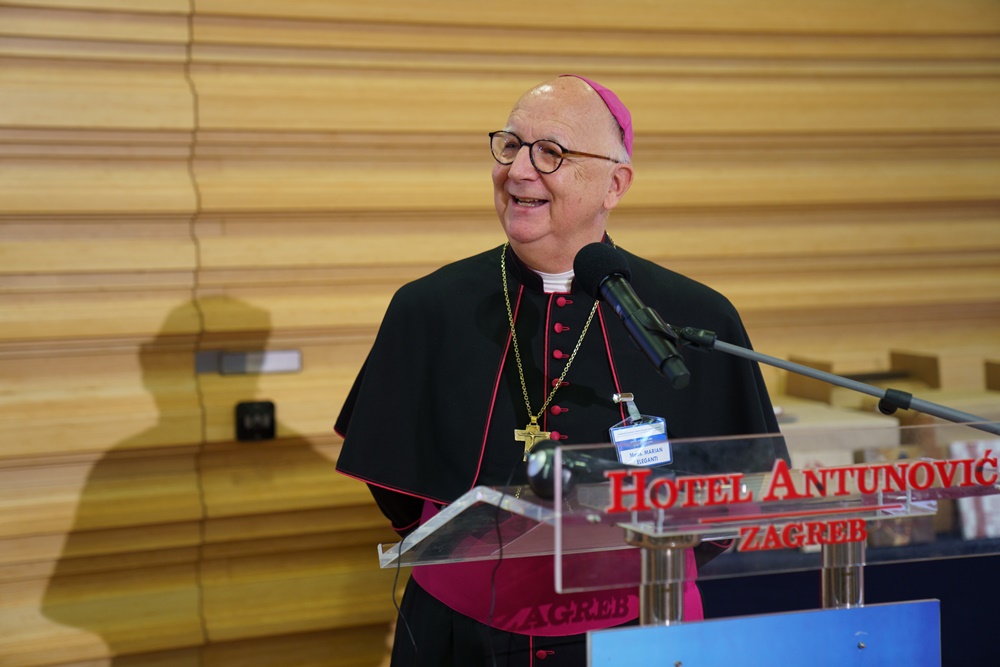
Bishop Marian Eleganti speaks to AdVaticanum on the appeal of the traditional liturgy, Islam and the Society of St Pius X. Eleganti addresses the fallout of the Second Vatican Council, the place of the old rite and the pertinent questions facing the Church in the West The Benedictine Bishop Marian Eleganti, former Abbot of St Otmarsberg Abbey and auxiliary bishop of the Diocese of Chur until 2021, is well known for his defence of the truth and beauty of Catholicism in the face of an increasingly hostile West. A principled churchman, he has often paid the price for adhering to his conscience, stepping down as the Swiss bishops’ youth bishop in 2018 due to disagreements with other bishops at the 2018 Youth Synod and offering his resignation in 2021 at the age of 65, a full ten years before the mandatory retirement age for bishops. In this interview, he sits down with AdVaticanum to reflect on his years of priestly ministry and to offer his erudite analysis of the challenges facing the Church in the twenty-first century. He addresses Islam, the Society of St Pius X, the liturgy and the fallout of the Second Vatican Council with the characteristic clarity that has made him a much respected voice within the Church. AV: Your Excellency, you were born in 1955 and have recounted serving as an enthusiastic altar boy in the traditional rite in your childhood before being retrained for the Novus Ordo. You have described the post-conciliar liturgical intervention as “a rather violent, provisional reconstruction of the Holy Mass… associated with great losses that need to be addressed”, noting differences especially in the prayers, postures, and ad orientem orientation. Young Catholics today, who often know little about the texts of Vatican II, are increasingly drawn to the Tridentine rite for its beauty and transcendence. In your view, what specific elements of the ancient liturgy address the spiritual hunger of this generation, and how would you respond to claims that restricting the Traditional Latin Mass is necessary for ecclesial unity? +ME: I believe that the appeal of the Old Liturgy for young people lies primarily in several key aspects. Firstly, its focus, and the centrality, on God or Christ, rather than on the community. The general orientation of everyone (the congregation and the priest) is towards Him. Another is the palpable reverence associated with the encounter with the transcendent God or the present Christ. There is also the stillness and silence, reminiscent of the worship of the Lamb in the Book of Revelation. I believe people are also drawn to the solemnity and dignity of the vestments, liturgical objects, and the altar, as well as the overall design of the sanctuary. Finally, Gregorian chant, which has been a trend for some time, even in secular circles. Reverence, faith, prayer, love, and inner devotion or participation have their roots in the heart. They can be found just as easily in the Novus Ordo. I am the same person in any rite. How I stand before God and celebrate Him is decided within me. It is not the form that makes me devout. Devotion is either present or it is not, regardless of the form. The inner self then also takes on the proper mode of expression; it does not work the other way around. I kneel because I am devout; I am not devout because I kneel. If a form becomes associated with false thinking, it can become a divisive force and a question of “to be or not to be”, which a rite never is. Every form has advantages and disadvantages, and the wise person distinguishes without doing wrong. Why did Jesus call the outwardly righteous Pharisees whitewashed tombs? The discrepancy between what is inside and what is outside can be very great, whatever form it takes. AV: Building on your recent calls (including in early 2026 reflections) for renewed study of the liturgical crisis under a new pontificate, such as the marginalisation of the tabernacle and overemphasis on the “meal character”, do you see a path for restoring wider access to the Tridentine rite beyond the restrictions of Traditionis Custodes? What concrete pastoral measures would you recommend to bishops to allow the old liturgy to flourish again as a living treasure? +ME: We have so many rites in the Catholic Church. We should accept them for what they are: mere rites. We must infuse every rite with love and devotion; otherwise, it misses its mark. The Old and New Rites, as such, have nothing to do with whether we recognise the Council or not, or how we deal with its texts or reforms. These questions are not to be resolved at the level of the rites. Whether the New Mass corresponds to the vision of the Council Fathers who inspired it is a historical question. The answer may vary. Why don’t we simply give hearts the freedom to pray as they wish and to honour God as they like, without disqualifying any person or rite? The Church must set the framework for this. That is not a problem. Rites are not absolute. In a validly administered sacrament, the believer always finds God, regardless of the rite, provided, of course, that the sacraments are celebrated as the Church prescribes and with the inner attitude and dignity I have described above. AV: Your Excellency, you have described the post-Vatican II era as bringing “an indescribable decline in the practice and knowledge of the faith, widespread liturgical formlessness and arbitrariness” instead of the expected “springtime”. Official statistics from the Annuario Pontificio 2026 and Annuarium Statisticum Ecclesiae 2024 confirm a 13-year decline in priestly vocations that has accelerated recently, with major seminarians worldwide falling from 106,495 in 2023 to 103,604 in 2024 (a 2.72% drop), following prior yearly declines, with Europe seeing particularly sharp losses and a net global priest decrease of 734 between 2022 and 2023 despite Catholic population growth. What, in your view, are the specific post-conciliar developments or practices that have contributed to the excesses and loss of the sacred, and how should they now be corrected within the life of the Church? +ME: On the topic of the Old Rite, we must remember the causes of this phenomenon do not lie in the Novus Ordo. The Council Fathers had intended a modest liturgical reform. Excesses, lack of form, trivialisation of the sacred, liturgical disobedience, community-centredness, the absence of priests, or even a hostility towards priests, are phenomena of the post-conciliar era that cannot be attributed to the Council’s texts, any more than post-conciliar heretical tendencies can. The worst of all evils is the practical irrelevance of God in our society and the turning away from Christianity, which has been replaced by ideologies or other forces that have an extremely destructive effect on everything that was once sacred to the so-called Christian West. Nothing better has taken its place. This is becoming increasingly clear. AV: Specifically, focusing on vocations, this multi-year decline has hit Europe and the Americas hardest, with empty seminaries and ageing clergy in many places, while Africa and Asia show some growth. What would you propose to reverse it? +ME: There are many young converts and those seeking baptism. They want to build Christian marriages and families. This is where we need to invest our efforts. We must impart knowledge of the faith to children and young people, provide them with support, and introduce them to the sacraments; we must accompany young families. As a parish priest, I would begin by celebrating Holy Mass as deeply and beautifully as possible, accompanied by brief catechesis. Following the liturgy: fellowship, love, and joy; parents forming friendships, children getting to know one another and playing together. People and charisms gather around every devout priest. With Holy Mass at the centre of life, the Church begins to renew itself. If the priest is a bride in love, the community he gathers around him will soon be the same. This brings an unimaginable momentum. AV: In your October 2025 article “Homosexuality in Society and in the Church: An Elephant in the Room”, you identified the “widespread homosexuality in the clergy and its significance in the abuse crisis” as the ignored “elephant in the room”, calling it a phenomenon sui generis with negative consequences that must be named, while noting that silence renders other prevention efforts incomplete. What pastoral experience or observations led you to this conclusion, and do you think enough is being addressed openly despite earlier calls for psychological screening? +ME: This is not a matter of my own subjective impressions or pastoral experience, but of pure statistics. I wrote to Pope Leo XIV about this. All Church studies on abuse show a disproportionately high number of male victims. It does little good to turn a blind eye to this. There is a factual correlation, without implying that clergy with a homosexual orientation are predestined to commit abuse because of their orientation. The same applies to heterosexuals. There are also many cases of sexual abuse outside the Church, but society primarily focuses on and is scandalised by those within the clergy. To sin means: I could have acted differently, but everyone has their own preferences. AV: As auxiliary bishop emeritus of the Church in Switzerland, you have witnessed the challenges of secularisation in the country. What is your current assessment of the state of the faith in Switzerland, and are there any emerging Swiss “hotspots” of renewal among younger generations rediscovering the faith? +ME: Generally speaking, I give the Swiss very poor marks when it comes to their spiritual life and their connection to the Church. While most of them have been baptised, they have never truly become disciples of Jesus. I say this merely as an observation. It may not necessarily be their own fault. That said, there are genuine hotspots of faith. As the bishop for youth, I was right in the thick of it. Even today, I rejoice in the growth of these hotspots. AV: Your Excellency, you have been clear in your statements that the SSPX’s planned episcopal consecrations on 1 July 2026, without papal mandate, would constitute a “schismatic act” rupturing visible unity with the Pope, citing issues of autonomy, non-incardinated priests, and self-positioning as the true Church. What is the current attitude towards the SSPX within Switzerland? Do you perceive growing support for the SSPX among the faithful? +ME: The Society of St Pius X has gone to great lengths to justify its decision, both internally and externally. Many faithful simply love the traditional liturgy without truly identifying with the Society’s ideology. They are, in fact, often put off by what they sometimes encounter in parishes. I would not say that there is growing support for the Society of St Pius X among the faithful. AV: On the broader European scene, Cardinal Gerhard Müller has recently described mass migration from Islamic countries into Europe as posing significant challenges to integration, warning of risks such as cultural strain, potential social conflict, and growing Muslim influence in public life if not managed carefully. Your Grace, how do you assess the compatibility of large-scale Islamic immigration with preserving Europe’s Christian identity? What role should the Catholic Church play in addressing this, balancing the Gospel’s call to charity and welcome with a realistic consideration of the demographic, religious, and social shifts underway? +ME: Islam, not just so-called Islamism, is, by its very nature, an anti-Christian religion, in theory and in practice. Christianity has never fared well under Islamic rule. This remains true today. Wherever Islam holds sway, Christianity is being decimated to the point of near extinction. I consider Islam incompatible with the Western idea of freedom and the secular state. Ultimately, only the numerical balance will decide which of the two, Christianity or Islam, will disappear and perish or remain in a state of tolerance. Even secular political entities like the European Union exhibit anti-Christian traits today. Due to Islam’s incompatibility with the Christian idea of the separation of state and politics and church and religion (“Render unto Caesar what is Caesar’s, and unto God what is God’s”), I consider Islam to be incompatible with the Judeo-Christian tradition of the West, which still strongly shapes our thinking and political system. The more Muslims are naturalised into our societies, the worse it could become unless Christ converts them and sets them free. AV: And finally, Your Excellency, could you offer your thoughts on the recent scandal in the Diocese of Chur, Switzerland, where three people shared the Eucharist with their pets? +ME: I cannot understand why the Holy Eucharist is celebrated in connection with the blessing of animals. Animals do not belong in a sacred space. They can be blessed outside the church, if one wishes. It is simply terrible that the sacraments, above all the Holy Mass, are no longer understood. The Holy Eucharist is viewed by many as a mere symbol and treated accordingly. But it is the Body of Christ, that is, the living, mysteriously present Person of the Lord. It causes me great pain to hear of such profanations. AV: Thank you, Your Excellency, for your continued dedication to the Church.
Apr. 30, 2026