

Sspx
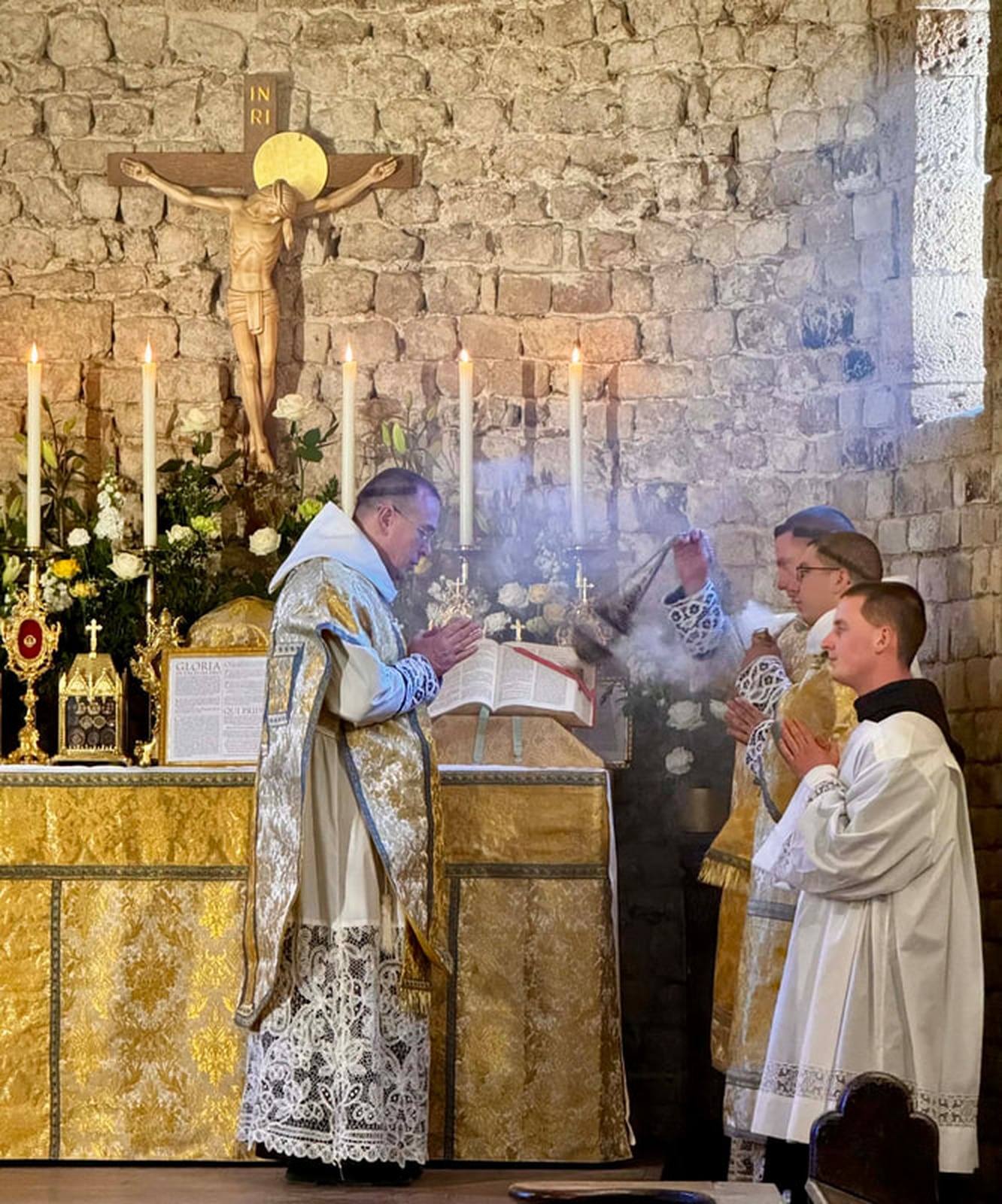
Dom Alcuin Reid calls for month of prayer for the unity of the Church as SSPX consecrations approach
Dom Alcuin Reid, prior of the Monastère Saint-Benoît in France, has called on Catholics to make June a month of prayer and fasting for the unity of the Church ahead of the SSPX’s planned episcopal consecrations on 1 July. He has urged prayers for Pope Leo XIV, his advisers and the Society of St Pius X Monastère Saint-Benoît, an international English-speaking traditional Benedictine monastery in the Diocese of Fréjus-Toulon, France, has called on Catholics to make June a month of prayer for the unity of the Church. The monastery’s prior, Dom Alcuin Reid, explained that “the Church faces the possibility of the hardening of divisions through the positions held by various parties in respect of the episcopal consecrations announced for 1 July by the Society of St Pius X.” The monk also drew on reflections made by Pope Benedict XVI in 2007, in which he stated that, “looking back over the past, to the divisions which in the course of the centuries have rent the Body of Christ, one continually has the impression that, at critical moments when divisions were coming about, not enough was done by the Church’s leaders to maintain or regain reconciliation and unity.” With this in mind, he appealed to Catholics to “make the month of June a time of earnest prayer and fasting for the unity of the Church, praying in particular for the Holy Father and his advisers as well as the leaders of the Society of St Pius X.” For its part, the monastery will offer up one day a week in particular for the intention. Dom Reid stated: “The monastery will observe one day each week as a day of particular prayer and fasting: Wednesdays, June 3, 10 and 17, and Friday, June 26 (respecting the feasts of the Sacred Heart and St John the Baptist). On these days the Conventual Mass will be a votive Mass Pro unitate Ecclesiae, and a Holy Hour of adoration will be offered before the Most Blessed Sacrament from the Office of Sext, concluding with Benediction of the Most Blessed Sacrament.” Dom Alcuin Reid is a renowned liturgical scholar whose 2004 book, The Organic Development of the Liturgy , featured a foreword by the then Cardinal Joseph Ratzinger. In 2011, he went on to found the Monastère Saint-Benoît at the invitation of the then Bishop of Fréjus-Toulon, Bishop Dominique Rey. The monastery seeks to live a classical Benedictine life, celebrating the sacred liturgy in all its fullness according to the older traditional Latin forms of the Roman and monastic rites.
Jun. 1, 2026
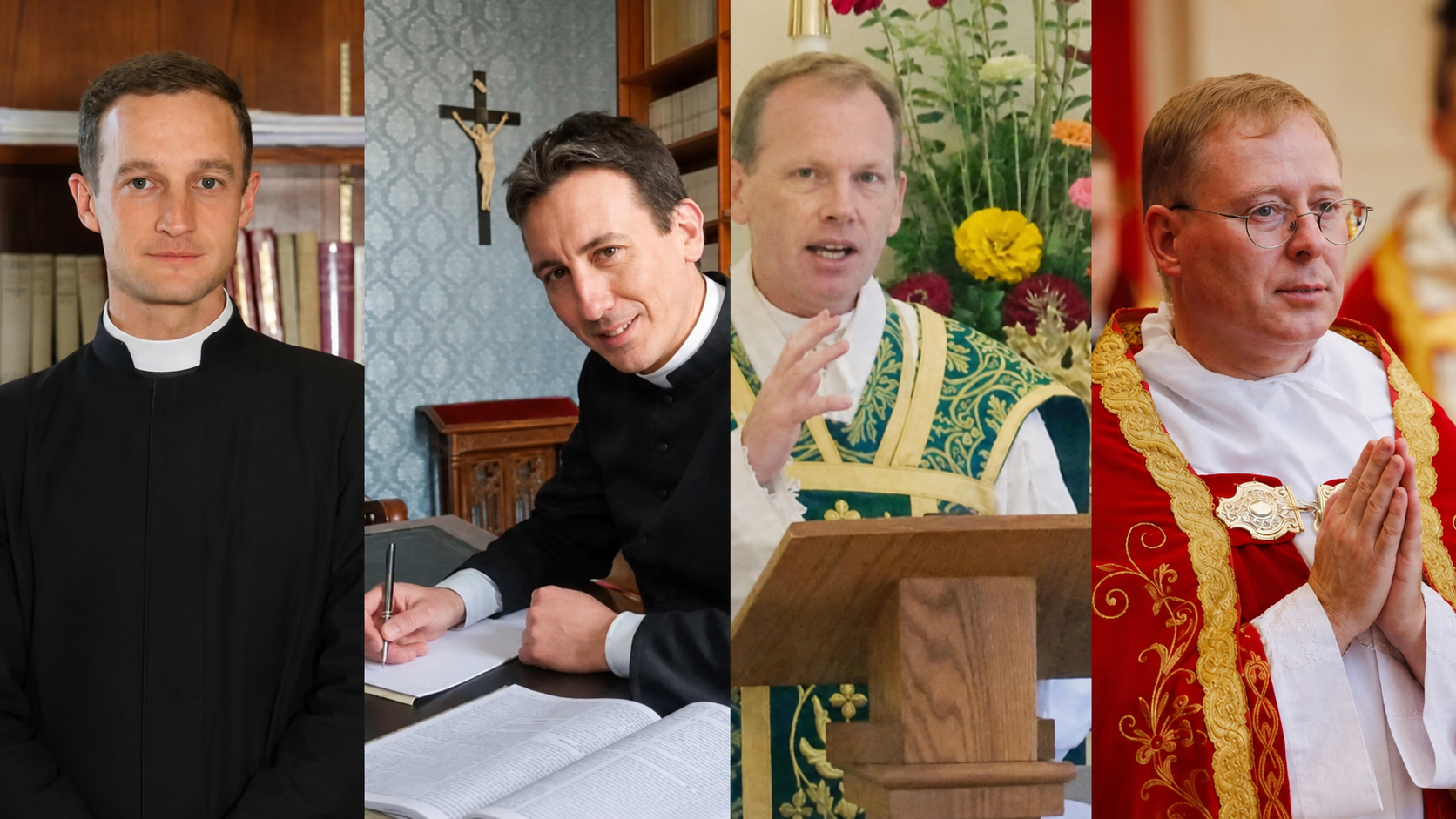
SSPX announces names of four priests to be consecrated bishops at Écône
The SSPX has announced the names of four priests who will be consecrated bishops at Écône on July 1, saying the move is intended to preserve the traditional sacraments during what it described as an “unprecedented crisis of the Faith” The Society of Saint Pius X has announced the names of the priests who will be consecrated bishops at Écône on July 1. In a communiqué issued from the SSPX General House in Menzingen on May 26, Father Davide Pagliarani, the Superior General of the society, said the names of the four priests had been presented to Pope Leo XIV “together with certain explanations necessary for a proper understanding of this step”. The statement said the episcopal consecrations would take place “in a spirit of respect towards the supreme authority of the universal Church” and insisted that the move did not represent “a denial of, refusal of, or challenge to the supreme, full, and immediate power of jurisdiction of the Vicar of Christ over the universal Church”. “The ceremony of July 1st will have no other purpose than to ensure the continued administration of the sacraments of Holy Orders and Confirmation, together with those sacramentals reserved to bishops, according to the traditional rite of the Holy Roman Church and the immemorial Faith,” the communiqué said. It added: “The episcopacy to be received by these priests is therefore conceived solely as a service rendered to souls and to the Church during this unprecedented crisis of the Faith.” The four priests named for consecration are Father Pascal Schreiber, rector of the SSPX seminary in Zaitzkofen, Germany; Father Michael Goldade, rector of St Thomas Aquinas Seminary in Dillwyn, Virginia; Father Michel Poinsinet de Sivry, Superior of the Benelux District; and Father Marc Hanappier, professor of theology at the society’s American seminary. Father Schreiber, 53, was born in Switzerland and ordained in 1998 after studies at the seminaries of Zaitzkofen and Écône. After assignments in Germany and Switzerland, he spent more than a decade directing SSPX schools before becoming Swiss District Superior in 2016. Since 2020 he has served as rector of the German seminary. Father Goldade, 45, comes from St Marys, Kansas, one of the principal centres of the SSPX in the United States. Ordained in 2004, he worked in Michigan and Connecticut before becoming prior of the large Kansas City apostolate. He was appointed rector of St Thomas Aquinas Seminary in Virginia in 2023. Father Poinsinet de Sivry, 42, was ordained in 2008 and worked in schools and apostolates in France before being appointed head of the Benelux District in 2022. The communiqué noted his work at Saint Nicolas du Chardonnet in Paris, the church occupied by traditionalists since 1977. The youngest of the four, Father Hanappier, 36, was ordained in 2013 and currently teaches metaphysics and dogmatic theology in Virginia. Before joining the seminary faculty he worked in schools in France and spent a year in Scotland improving his English while assisting in parish ministry. The SSPX was founded in 1970 by Archbishop Lefebvre, the former Superior General of the Holy Ghost Fathers, after disputes over the reforms which followed the Second Vatican Council. Tensions with Rome escalated throughout the 1970s and 1980s, culminating in the consecration of four bishops at Écône on June 30, 1988. Pope John Paul II declared at the time that the consecrations constituted “a schismatic act”, and Lefebvre and the four bishops incurred automatic excommunication. Archbishop Lefebvre defended his actions by arguing that extraordinary measures were necessary to preserve the traditional priesthood and sacraments. Relations between Rome and the SSPX improved under Pope Emeritus Benedict XVI, who lifted the excommunications of the surviving bishops in 2009 and opened doctrinal talks with the society. Pope Francis later granted SSPX priests faculties to validly hear confessions and allowed local bishops to delegate them to witness marriages under certain conditions. Image: The four priests to be ordained bishop by the Society of St Pius X. From left to right: Father Marc Hanappier, Father Michel Poinsinet de Sivry, Father Michael Goldade and Father Pascal Schreiber. Image: The four priests to be consecrated bishops by the Society of Saint Pius X. From left to right: Father Marc Hanappier, Father Michel Poinsinet de Sivry, Father Michael Goldade and Father Pascal Schreiber.
May 26, 2026
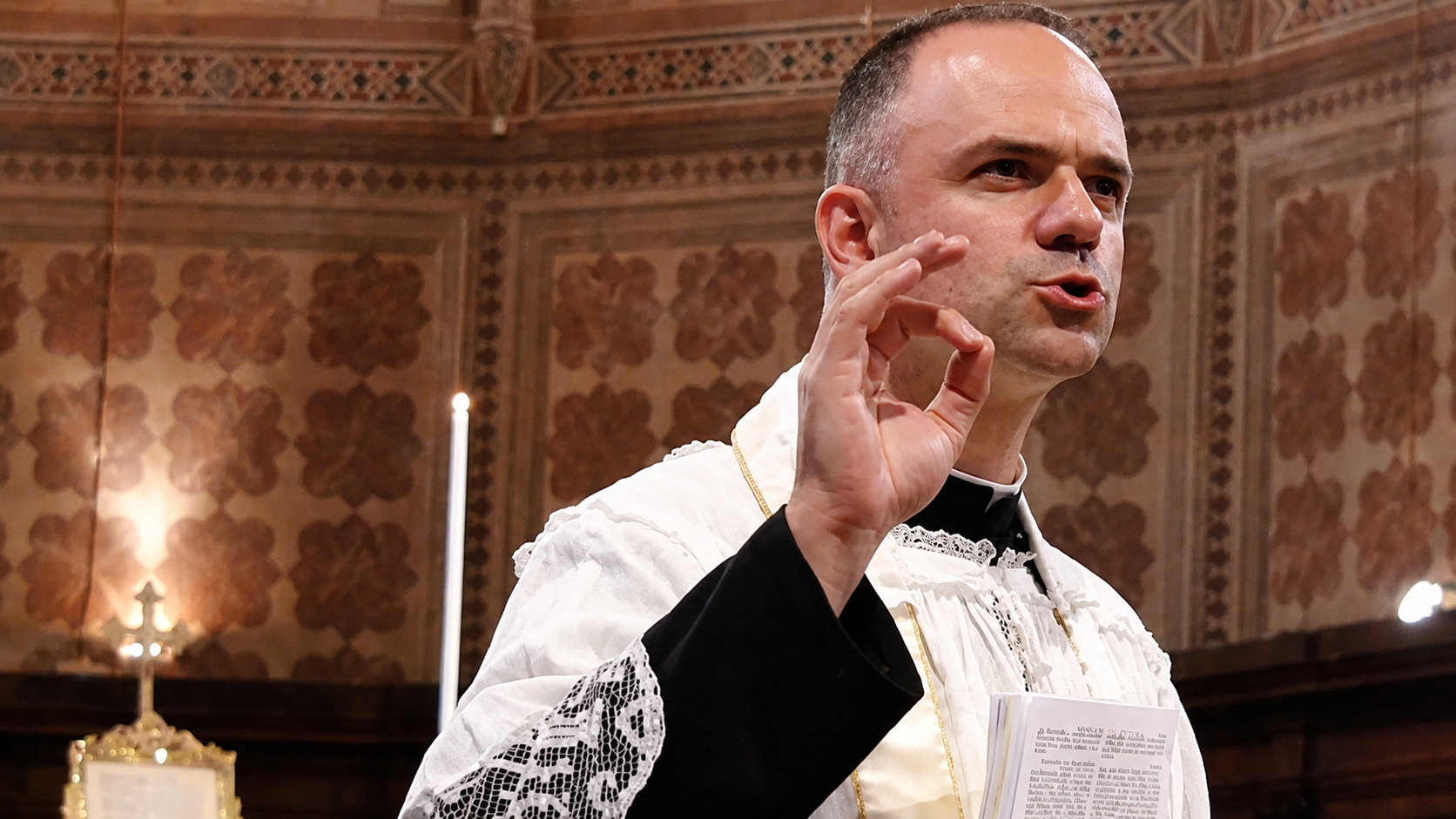
SSPX superior: consecrations ‘even more necessary in 2026’
SSPX superior: consecrations ‘even more necessary in 2026’ The Society of St Pius X has defended its decision to proceed with episcopal consecrations this summer, with its Superior General warning that any declaration of excommunication or schism against the Society “would be objectively unjust”. In a letter addressed to SSPX priests ahead of the consecrations due to take place at Écône on 1 July, Fr Davide Pagliarani said the “state of necessity” invoked by Archbishop Marcel Lefebvre in 1988 was “even more evident in 2026”. “While the state of necessity could already be invoked in 1988, this state of necessity is, unfortunately, even more evident in 2026,” he wrote. The text, dated 7 March and released publicly by the Society on 21 May, was accompanied by an introduction from the SSPX Secretary General, Fr Foucauld le Roux, who said the purpose of publishing the letter was to help clergy and faithful prepare spiritually for the ceremony. “This text does not revisit the question of the consecrations themselves, but is devoted to recalling the spirit in which they must be prepared for and lived,” Fr le Roux wrote. The publication of the letter comes four months after the SSPX announced that bishops would again be consecrated at its seminary in Switzerland, the site of Archbishop Lefebvre’s consecrations in June 1988. Those consecrations, carried out without papal mandate, led Rome to declare that Archbishop Lefebvre, Bishop Antonio de Castro Mayer and the four newly consecrated bishops had incurred automatic excommunication. Although the excommunications of the surviving bishops were lifted by Pope Benedict XVI in 2009, the Society remains canonically irregular and without official status in the Church. In his latest letter, Fr Pagliarani repeatedly insisted that the SSPX was acting out of fidelity to the Catholic Church rather than separation from it. “The Society is nothing more than a means of remaining faithful to the Church,” he wrote. “If we are taking exceptional measures today to preserve the faith, the Holy Sacrifice of the Mass, and the priesthood, it is because we want the whole Catholic Church – and every soul without distinction – to be able to benefit freely from them one day. All this belongs to the Church, and we are only its guardians.” Fr Pagliarani also directly addressed the prospect of fresh sanctions from Rome, stating that the Society neither desired nor celebrated such a development. “If we come to be declared excommunicated and schismatic, this would not mean that we seek such a sanction or rejoice in it, for it would be objectively unjust,” he wrote. Furthermore, Fr Pagliarani wrote: “It is one thing to rejoice in receiving a new humiliation to offer to God, and it is quite another to rejoice in an evil and an objective injustice that causes scandal to the whole Church.” The SSPX superior urged members to avoid bitterness and resentment during the controversy surrounding the consecrations, warning against triumphalism and hostility towards Church authorities. “We must always show kindness,” he wrote. “When there is no understanding on the other side, when there is not even a willingness to listen to what we have to say and understand our reasons, it is very easy – humanly speaking – to fall into resentment.” He added that members should remain “firm and gentle at the same time”, “especially towards the hierarchy of the Catholic Church”. The letter contains repeated references to charity and suffering, including a lengthy citation from St John’s Gospel. “It is with this same charity that, now more than ever, we must love souls and Holy Mother Church, even if its official representatives were to declare us excommunicated and schismatic once again,” Fr Pagliarani wrote, before quoting John 16:1-4: “They will put you out of the synagogues: yea, the hour cometh, that whosoever killeth you, will think that he doth a service to God.” Fr Pagliarani also rejected accusations that the SSPX had become a “parallel Church”, arguing instead that the Society existed to safeguard Catholic tradition until it could once again flourish throughout the wider Church. “We ask nothing for ourselves,” he wrote. “Our only reward will be to see one day Holy Mother Church reclaim her Traditions.” The Superior General described the debate surrounding the consecrations as “providential”, saying the issue had provoked concern throughout the Catholic Church. “The announcement on 2 February left no one in the Catholic Church indifferent,” he wrote. “Almost everyone feels concern and the need to express their approval or disapproval.” He added: “Sometimes words, opinions, and simple statements are no longer enough. They must be accompanied by meaningful actions that Divine Providence can use to shake consciences – and even the Church herself.” Fr Pagliarani concluded his letter by urging members and faithful to prepare for the consecrations through prayer and devotion to the Blessed Virgin Mary. “It is with these sentiments and this charity that we must prepare for the ceremony on 1 July,” he wrote, “and strive to prepare all the faithful under our care.” The tensions between the Vatican and the SSPX stem from the Second Vatican Council. Relations improved significantly during the pontificate of Pope Benedict XVI, who lifted the excommunications of the SSPX bishops and expanded permission for the celebration of the Traditional Latin Mass through Summorum Pontificum in 2007. Under Pope Francis, however, tensions between Rome and traditionalist groups deepened following the publication of Traditionis Custodes in 2021, which imposed major restrictions on the old rite of Mass. Despite those disputes, Pope Francis granted SSPX priests faculties to hear confessions during the Jubilee Year of Mercy before extending them indefinitely, while also allowing local bishops to delegate SSPX priests to witness marriages. Image credit: SSPX
May 22, 2026
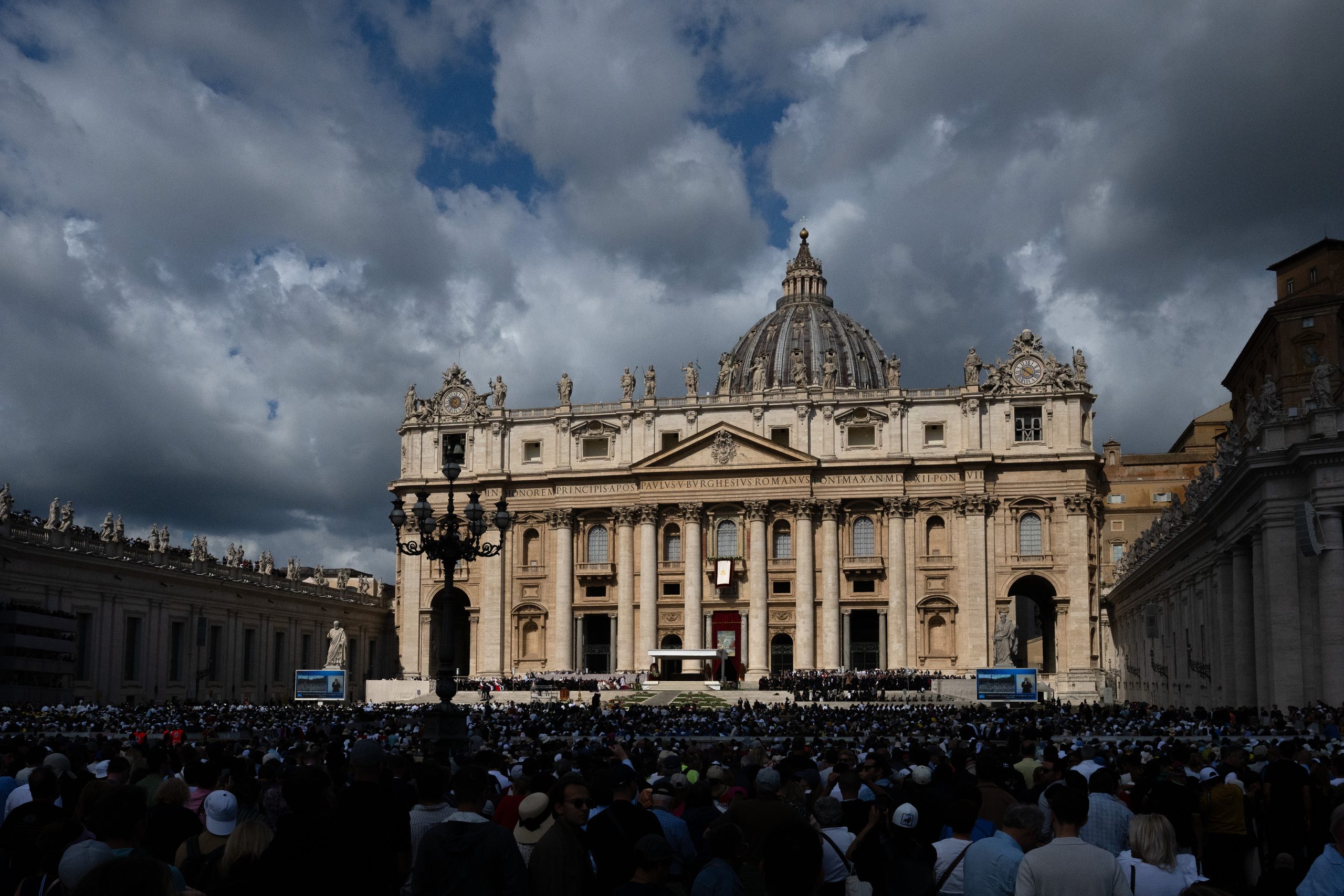
Schneider, Murray and SSPX accuse Vatican of ‘complicity’ in promoting LGBT ideology
Bishop Athanasius Schneider, Fr Gerald Murray and the Society of Saint Pius X have accused the Vatican of being “complicit” in promoting homosexuality after the publication of the Synod Study Group 9 report The publication of Synod Study Group 9’s report has become a crisis and controversy that the Vatican cannot ignore, although such appears to be its current policy. Mounting criticism of the report – released by Study Group 9, born out of the Synod on Synodality – has already included cardinals such as Müller and Eijk, numerous priests and veteran commentators. Such rebuke has largely centred on the message contained within the report, which presented an unfiltered promotion of homosexual ideology and lifestyles whilst remaining notably quiet about Catholic teaching on the matter. But now attention is turning elsewhere as clerics accuse the Vatican of being complicit in promoting homosexuality by virtue of allowing the report to be published, and by the Vatican’s near silence in the face of the scandal. Speaking recently to Raymond Arroyo, Bishop Athanasius Schneider described the report as “a propaganda text, which very carefully and cunningly uses certain traditional documents or biblical expressions, but which fundamentally aims to promote the acceptance of homosexual ideology.” Such themes within the Study Group report are by no means surprising given that the group itself comprises a number of LGBT advocates, and Fr James Martin SJ was revealed to have had key influence in drafting it. But Schneider warned that the Holy See is far from being innocent. It was “issued by an organ of the Holy See,” he noted, and thus many Catholics will be led to believe that it is Church teaching. “The majority of ordinary Catholics are unaware of the distinctions between a magisterial text, a Vatican text, and a study group in the Vatican.” Therefore, he warned, “the message given to the entire world and to Catholics is that, from now on, the Holy See is basically accepting, de facto, same-sex relationships, same-sex activity and the so-called LGBTQ agenda, which is an un-Christian worldly ideology.” The General Secretariat of the Synod of Bishops has indeed sought to distance itself from the text, stating that “these reports cannot be attributed” to them, and that the group “worked, as is logical, autonomously.” However, for the auxiliary bishop – who has personally conveyed his concerns about the Church’s doctrinal crisis to Pope Leo XIV – such a response is lacking. “It’s not convincing at all,” he stated. “It is [the study group report] officially under a Vatican dicastery or organ called the Synod Secretariat, which has officially published [the text], though of course as a study group.” For the Synod Secretariat to assign responsibility to the Study Group is “a trickery to close our eyes,” opined Schneider, “and then to transmit, and be a propaganda platform for this homosexual ideology – to infect ever more the Catholic Church through the acceptance of this style of life.” The auxiliary of Astana, Kazakhstan, is known for being outspoken in his ecclesial commentaries. But he is not alone in his thoughts on this point. Prominent canon lawyer and New York cleric Fr Gerald Murray also accused the Vatican of being at fault. Writing a commentary in The Catholic Thing , Murray attested that the Synod Secretariat “has become the Holy See’s officially sponsored agent of destruction of Catholic doctrine, which is disparaged and dismissed as being deductive principles set forth in an immutable and rigid manner – sterile, regressive and ossified statements, as being ‘pre-packaged’ doctrines, which are merely abstractions and theories.” Murray, like Schneider, is a cleric in good standing with the Church and walks a fine line between highlighting doctrinal crises and moral relativism while also promoting loyalty to the See of Peter, in contrast to those tempted to argue that the See is vacant. His commentary is unabashed when law, morals or doctrine are at stake. “Why would the Synod of Bishops publish interviews with men who reject Catholic teaching on the nature of marriage, inspired as it is by the Holy Spirit, as part of its effort to discern the workings of the Holy Spirit in the Church today?” he queried. “This Vatican-sponsored destructive subversion must come to an end now,” wrote Murray. “Souls are endangered by the scandalous false teachings being propagated by the Synod. Pope Leo needs to strengthen the brethren in the Faith by putting an end to this poisonous betrayal of God’s truth.” The Vatican’s response appears to be limited simply to the perfunctory hand-washing attempt by the Synod Secretariat, who are doubtless relying on the natural continuation of the news cycle and the lack of attention given by many Catholics to the details. Yet for the Society of St Pius X, turning a blind eye to such events is not an option. The state of emergency within the Church is worse now than in 1988, the SSPX’s superior general has repeatedly stated during the spring. Outlining the Holy See’s “complicity” with the LGBT lobby – as reportedly evidenced by Fiducia Supplicans and the conciliatory approach to the German bishops – the Society pointed to the Study Group report as the final piece of the puzzle. Fiducia Supplicans destroyed the Holy See’s ability to clamp down on LGBT promotion, the Society argued, whilst simultaneously “faith and moral conviction are deserting the Curia”. “If anyone doubts this, let them read the report of Study Group No. 9, which aligns with the Synodal Path and its conclusions on the LGBT issue,” the Society’s official news portal argued. “While we wait for the ‘dialogue’ to produce ‘consensus’ between Rome and the German Catholic Church, the problem is spreading among German Catholics and beginning to cross borders, with the blessing of the Curia. Under these circumstances, we must speak of complicity.”
May 22, 2026
SSPX sources dismiss speculation over Fr Daniel Themann consecration
Sources close to the Society of St Pius X have dismissed speculation that Fr Daniel Themann will be among those consecrated bishop this summer Sources close to the Society of St Pius X have dismissed speculation that Fr Daniel Themann will be among the priests consecrated bishop during the Society’s expected episcopal consecrations on July 1, AdVaticanum can reveal. The Australian district superior had been widely discussed in SSPX circles in recent months as a possible candidate for episcopal consecration, particularly following the circulation of a false communiqué on April 1 claiming that decisions had already been made regarding new bishops. But multiple sources have told AdVaticanum that Fr Themann has personally indicated he would instead be reassigned to the United States and was not under consideration for consecration. One source told AdVaticanum that Fr Themann had personally moved to dampen speculation shortly after the circulation of the false April 1 communiqué, reiterating that preparations were already under way for his reassignment to the United States. The source said Fr Themann had spoken openly about the move to those working closely with him and had “spoken to the Sisters under him explicitly about it”. The source added: “It was at the start of April he spoke to Father Themann, after the fake April 1 communiqué. Father reasserted that he was going to be reassigned to the United States and that preparations are already made for a real reassignment to the US.” Another SSPX source said Fr Themann again rejected the rumours several weeks later following Mass, insisting that his future role in America had effectively already been settled and would be ongoing rather than temporary. According to the source, Fr Themann was “adamant” that he would not be among those selected for consecration. The source said: “After May 3, after celebrating a Low Mass, Father was adamant that the position in the US is now confirmed as an ongoing position and he’s not going to be selected for consecration.” A further source within the SSPX general house in Switzerland told this publication that no announcement concerning Fr Themann was expected and that clergy had become increasingly reluctant to discuss the matter because of the level of speculation surrounding the consecrations. The source said: “Fr Daniel Themann is sick of being asked one way or another, so there will be nothing.” The source added: “No one wants to make any comment even off the record, not even an anti-comment, because everything has an implication for who it may or may not be.” The SSPX has not publicly confirmed any of the names of those to be consecrated this summer. The speculation is unsurprising given that Fr Themann has emerged in recent years as one of the Society’s more prominent English-speaking superiors. An American priest, he entered the SSPX after studying industrial management and completing work in business and manufacturing before beginning priestly formation at St Thomas Aquinas Seminary in Winona, Minnesota. He was ordained priest in 2009 by Bishop Bernard Tissier de Mallerais as part of one of the seminary’s largest ordination classes. After serving in the United States and teaching at the Winona seminary, Fr Themann was appointed rector of Holy Cross Seminary in Goulburn, Australia, in 2015 by the then superior general, Bishop Bernard Fellay. During his five years as rector, Fr Themann oversaw the formation of seminarians from across the Asia-Pacific region before succeeding Fr John Fullerton as district superior of Australia and New Zealand in 2020. In that role, Fr Themann has supervised the Society’s chapels, schools and apostolates across both countries while also serving as chairman of the board of St Thomas Aquinas College in Tynong, Victoria. The Society’s last episcopal consecrations took place in 1988, when Archbishop Marcel Lefebvre consecrated four bishops at Écône, Switzerland, without papal approval, leading Rome to declare that the bishops had incurred automatic excommunication. The excommunications were later remitted by Pope Benedict XVI in 2009. Photo credit: St Thomas Aquinas Seminary
May 18, 2026
A homily for the Sunday after the Ascension: Dom Alcuin Reid warns against SSPX excommunications
Dom Alcuin Reid warns against possible SSPX excommunications in a homily for the Sunday after the Ascension, saying Catholics attached to the older liturgical rites have faced exclusion and “ecclesiastical displacement” since Traditionis custodes In these days after the Ascension, as the Paschal candle stands extinguished and we wait in expectation and hope for the consoling fire of Pentecost, the Sacred Liturgy of our Holy Mother the Church gives us a somewhat stark warning about living as faithful witnesses to Christ. “They will put you out of the synagogues; indeed, the hour is coming when whoever kills you will think he is offering service to God. And they will do this because they have not known the Father, nor me,” we are informed by the words of Our Lord Himself in this morning’s Gospel. Historically, these words apply to the expulsion of early Christians from the Jewish synagogues as it became clear that Christian faith and life was a substantial development of Jewish belief that the authorities of the time deemed unacceptable. Christianity rightly boasts of and venerates its roots in the Old Covenant, but it remains a fact that the New Covenant fulfils the Old and surpasses it. The Old Covenant no longer suffices. Because of this reality, Christians were expelled from Jewish synagogues and, as we see clearly in the martyrdom of St Stephen (cf. Acts 7), were indeed killed out of a supposedly godly zeal. But what are we to make of this prophecy today? We hear it proclaimed only days after the Holy See has threatened to excommunicate those who plan to consecrate new bishops for the Society of St Pius X, and the new bishops themselves, at the beginning of July. (In spite of much sensational reporting, there is no question of the excommunication of their faithful.) The parallel is not exact: there are many issues involved, and they are complex. But the echo of Our Lord’s prophecy at this time is unnerving, particularly given the zeal with which those who wish to celebrate according to the older liturgical rites of the Church have been excluded from their churches and chapels since the liturgical, historical and pastoral travesty that is the Motu Proprio Traditionis custodes of 2021, which has brought about further disunity and division whilst purportedly seeking unity through the imposition of a ritual uniformity never before known, or required, in the life of the Church. Many are the good and loyal Catholics who have experienced expulsion from their places of worship and the killing off of the sources of grace and pastoral care for themselves and their families at the hands of prelates who, seemingly, “do this because they have not known the Father, nor me.” We ourselves have had to step outside of the system, as it were, in order simply to survive: something no one wishes to do, but which, in extraordinary times, may become truly necessary in conscience. Necessity is the key, as the Society of St Pius X often says. For the older liturgical rites are not a matter of mere aesthetic preference: they are the integral source and summit of our Christian life and mission and guarantee a ritual and doctrinal integrity that is, at best, “watered down” in their successors and which, if we examine the increasingly poisonous fruits of the virus of synodalism that has been unleashed in the Church, is at times utterly compromised, if not downright rejected, by those who would proscribe that which, of its very nature, “remains sacred and great for us too, and it cannot be all of a sudden entirely forbidden or even considered harmful.” (Benedict XVI, Letter, 7 July 2007.) Maintaining the rites of the usus antiquior, including the Divine Office, the sacraments and sacramentals, is not a personal “choice”: it is the conviction that, at this time in the history of the Church, they are necessary to guarantee a continuity of faith and life with the Church founded by Christ on the Apostles, at a time when other means do so less effectively or are at times hijacked for ends utterly inimical to the Deposit of Faith. This is not to malign the good will of many of those in authority, or of clergy, religious and laity who have struggled for decades, and who continue to struggle, to be faithful, often in the face of much opposition and, at times, from bishops and other ecclesiastical superiors. Nor is it to question the validity of the newer rites when celebrated correctly. This is, however, to underline the pastoral necessity, that is, the necessity for the salvation of souls, of free access to the Church’s unadulterated rites and teaching: something that the fruits produced by communities who celebrate them make abundantly evident. Sadly, this is a reality which still seems to be ignored. What, then, can we do when the choice seems to be between disobedience and dissolution? This is no small question, and we do well to consult St Thomas Aquinas and other sound theologians on its implications. In doing so, we find that material disobedience to positive law, as distinct from Divine law, can, extraordinarily, be tolerated for a truly necessary good: a father must feed and protect his family. There is no virtue in allowing them to starve to death or to be destroyed by danger. At certain times we must act outside the norm. And, as the fourth century martyrs of Abitene teach us so eloquently, sacramental starvation is not tolerable: sine dominico, non possumus (without the Sunday Eucharist, without the liturgy and the sacraments, we simply cannot live). But first and foremost, we must pray. In the context in which we find ourselves, the counsel of this morning’s Epistle is particularly pertinent: “Keep sane and sober for your prayers,” St Peter insists. So too he urges us: “Above all hold unfailing your love for one another, since charity covers a multitude of sins. Practice hospitality ungrudgingly to one another. As each has received a gift, employ it for one another, as good stewards of God’s varied grace.” Prayer, charity, hospitality and mutual service are most certainly necessary at all levels of the Church in our times, and persevering in each of them will bring many graces, particularly for those who are persecuted or who, as it were, find themselves “ecclesiastically displaced”. In these days when we await the coming of the Counsellor whom Our Lord promises to send us from the Father, we can, then, each redouble our prayers that the Spirit of Truth shall truly inhabit those in authority and, as we shall sing in the Sequence of Pentecost, flecte quod est rigidum, fove quod est frigidum, rege quod est devium. (Bend what is inflexible, warm what is chilled, correct what has gone astray.) Not only should we beg Almighty God to send the Holy Spirit to melt the hearts that govern the Church, we should also implore Him in particular to fill the Holy Father with His sevenfold gifts of wisdom, understanding, counsel, fortitude, knowledge, piety and fear of the Lord in the exercise of his unenviable but utterly crucial duty to protect the integrity of the Deposit of Faith and the unity of the Church under it, of which the Sacred Liturgy is the living source and sacramental. The Holy Father needs our prayers at this time! Let us begin praying earnestly that, through the inspiration and gifts of God the Holy Spirit, charity and Truth will prevail on all sides and all talk of excommunication shall cease; that true hospitality will be shown; and that those who have been given the gift of the episcopacy and papacy will employ them, as good stewards, in the service of all their flock after the example of the Good Shepherd Himself (cf. Jn 10). With the help of our prayers, through the power of God the Holy Spirit, this can yet come to pass. Dom Alcuin Reid is the Prior of the Monastère Saint-Benoît in Brignoles, France, www.monasterebrignoles.org
May 17, 2026