

Outside the Walls
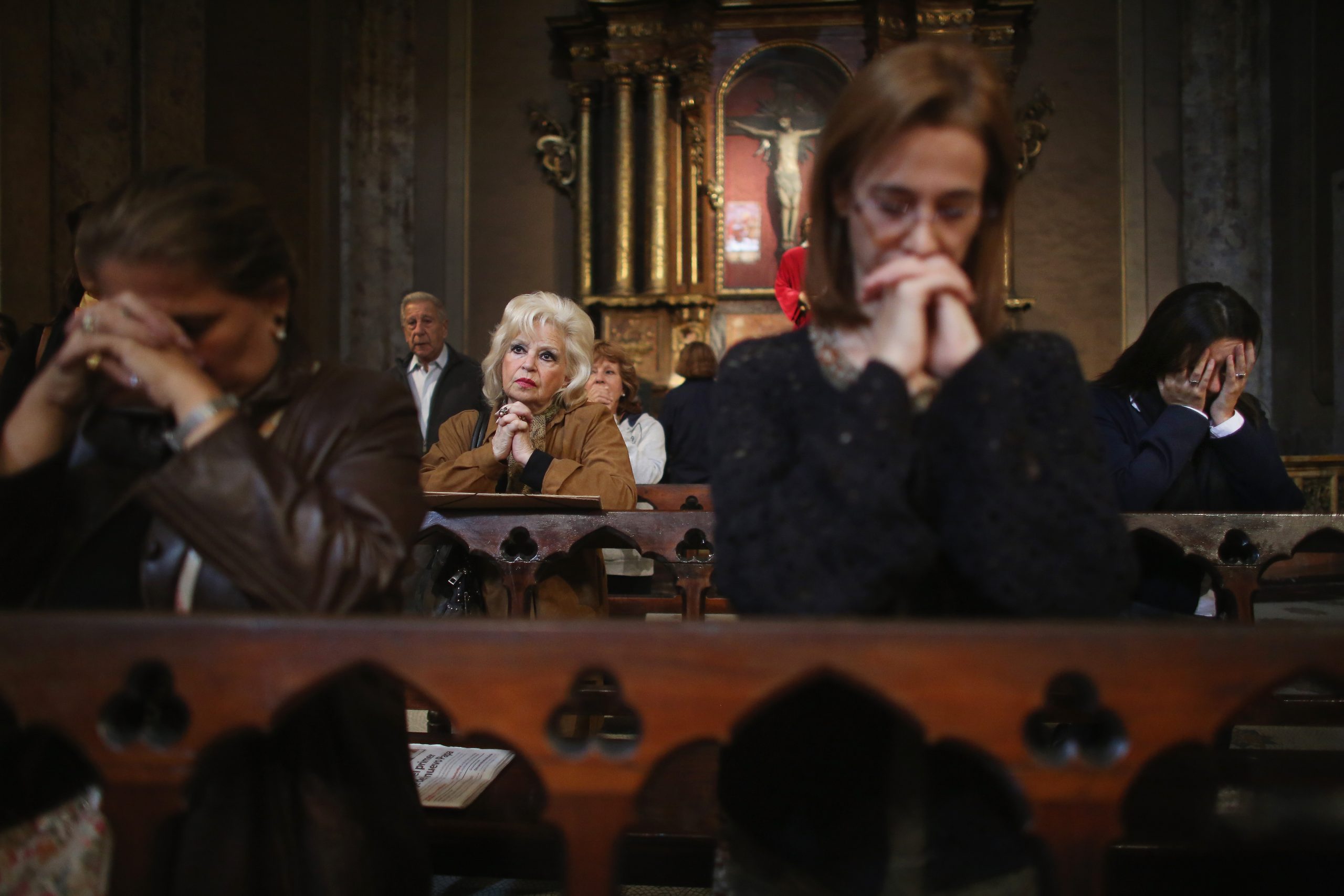
Argentina’s bishops warn middle class is turning to Church charities in economic crisis
Argentina’s Catholic bishops have warned that worsening economic conditions are driving growing numbers of middle-class families to seek help from Church charities Argentina’s Catholic bishops have warned of a deepening social crisis as increasing numbers of middle-class families turn to Church charities for food and assistance amid worsening economic conditions. Archbishop Marcelo Daniel Colombo, president of the Argentine Episcopal Conference, said Church agencies were seeing a sharp rise in demand from people who, until recently, had not required support. “There are people from the lower middle class who are coming to ask for help from Caritas,” Archbishop Colombo told Futurock radio. “Many who are poor today were helping us at Caritas a few months or years ago. We are also very distressed by the increase in the number of middle and lower-class people coming to ask for help.” The archbishop also warned of rising homelessness across the country. “The number of people experiencing homelessness is very alarming,” he said. Argentina is currently in a period of economic instability, with inflation, unemployment and cuts to public spending putting growing pressure on households. Catholic charities and diocesan agencies have reported increased demand at parish soup kitchens and food distribution centres in recent months. Archbishop Colombo defended the principle of social justice and stressed the responsibility of the state to support the vulnerable. “Social justice is the dimension of support provided by the state to those who are vulnerable,” he said. “No one should be left out of social life when they lack the necessities to live.” The archbishop also rejected suggestions that the Church was acting as a political opposition to President Javier Milei’s government. “I think that sometimes some sectors of the leadership believe that the Church is a political opposition, and the truth is that we are not,” he said. “We try to offer our perspective where our poorest people are invisible.” The bishops’ conference has already intervened publicly over concerns surrounding funding for disability care. In April, the conference sent a letter to Argentina’s health minister, Mario Lugones, warning that Church-run institutions caring for disabled people were facing severe financial strain because of delayed and insufficient state payments. “Many of them are in an extremely serious economic crisis, due to the delay and insufficiency of state contributions, which has generated deficits that compromise essential aspects of care, such as food, medicines and the payment of salaries of those who dedicate their lives to the care of people with disabilities,” the bishops wrote. Concerns over deteriorating social conditions were echoed this week during a meeting between Church representatives and several Peronist mayors from Greater Buenos Aires. Among those attending were Jorge Ferraresi of Avellaneda, Mariel Fernández of Moreno, Andrés Watson of Florencio Varela, Ariel Sujarchuk of Escobar, Fernando Espinosa of La Matanza and Pablo Descalzo of Ituzaingó, alongside Gabriel Katopodis, infrastructure minister for the Province of Buenos Aires. Following the meeting, Ferraresi said participants had shared “the harsh assessment of the situation in our neighbourhoods and the need for all sectors to join forces to bring work and food to the homes of every Argentine family”. Archbishop Colombo later confirmed that the bishops were considering further dialogue initiatives in response to the crisis. Born in Buenos Aires in 1961, Archbishop Colombo studied canon law at the Pontifical University of St Thomas Aquinas after his ordination to the priesthood in 1988 for the Diocese of Quilmes. He later served as rector of the diocesan seminary and held several legal and pastoral roles before being appointed Bishop of Orán by Pope Benedict XVI in 2009. In 2013, Pope Francis transferred him to the Diocese of La Rioja before appointing him Archbishop of Mendoza in 2018. He became president of the Argentine bishops’ conference in November 2024 after previously serving as vice-president and second vice-president of the body. There is a historical precedent in Argentina for interventions from the Catholic hierarchy. When the country gained independence at the beginning of the 19th century, the Church was deeply embedded in the formation of the Argentine state. Juan Manuel de Rosas, the longtime governor of Buenos Aires who dominated Argentine politics between 1829 and 1852, enjoyed the support of the Church, with the exception of the Jesuit order, whom he expelled from the country. Many bishops also supported the rise of Juan Domingo Perón in the 1940s, though relations soured in the 1950s as Perón pursued anti-Catholic policies. The military dictatorship of the 1970s and 1980s was a particularly contentious time for the Church, with clerics at times unsure where to lend their support. This was perhaps most famously seen in the kidnapping of Jesuit priests Orlando Yorio and Franz Jalics, who, it has been claimed, were abducted after Jorge Bergoglio, later Pope Francis and then provincial superior of the Jesuits, withdrew protection from the priests. In the country’s more than 40 years of democracy, the Church has continued to make itself heard, opposing the secularisation introduced by President Raúl Alfonsín in the 1980s and leading the charge to defend the rights of the unborn during subsequent presidencies. Archbishop Colombo’s opposition therefore follows a well-trodden pattern, though it is noticeable that he is deliberately avoiding direct “political opposition” and instead focusing on the plight of the poor.
May 14, 2026
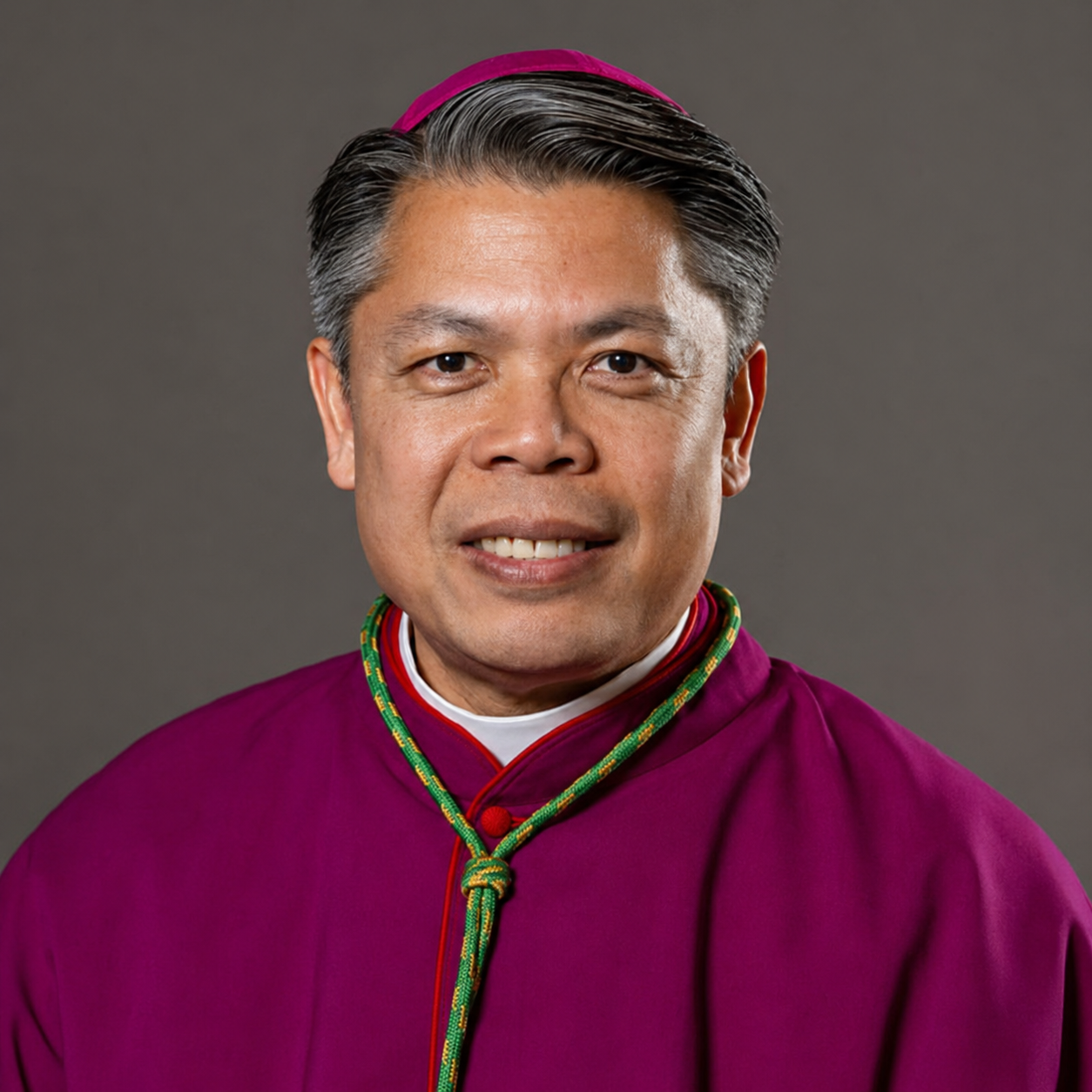
Phoenix auxiliary bishop attacks anti-synodality book backed by Cardinal Müller
Bishop Peter Dai Bui of Phoenix has sharply criticised The Trojan Horse in the Catholic Church, a book backed by Cardinal Gerhard Müller which argues that the Synod on Synodality seeks to undermine the Church’s hierarchical structure Bishop Peter Dai Bui, auxiliary bishop of the Diocese of Phoenix, has written a scathing criticism of the book The Trojan Horse in the Catholic Church , published by the lay group Catholics for Catholics (CforC). The Trojan Horse in the Catholic Church is written under the pseudonym “Father Enoch” by a priest-author, with Cardinal Gerhard Müller writing the foreword. The book, written in the form of a two-part essay entitled “Replacing the Hierarchical Structure of the Church” and “Overturning the Moral Order”, seeks to explain how the Synod on Synodality is intended to undermine the governing hierarchy of the Church. In the book, Fr Enoch writes that “the first goal of the Synod is to invert the hierarchical structure of the Church as instituted by her Founder and our Saviour, Jesus Christ” because it “undercuts the authority or sacred power with which He endowed the Apostles and their successors in office, the bishops: to teach, to govern, and to sanctify”. Fr Enoch argues that this attempt to overturn the hierarchy of the Church found its roots in the pontificate of Pope Francis. He writes that during the Francis era it appeared that “nothing had changed in the Vatican”, while in fact “a quiet revolution had been taking place”. Fr Enoch argues that this revolution originated in the 2014 Synod on the Family and the subsequent 2016 Apostolic Exhortation Amoris Laetitia , reaching a crescendo in the 2023 Synod on Synodality. Fr Enoch takes issue with the term “synodality”, quoting Cardinal Burke saying that it has “no history in the doctrine of the Church and for which there is no reasonable definition”. He also argues that “the hierarchical structure of the early Church [was] deeply embedded already in the early second century”, making its removal contrary to Christianity. The second part of the book focuses on the “homosexual agenda”, particularly Amoris Laetitia , Fiducia Supplicans and various actions taken by the German Synodal Way. The essay is a damning assessment of the pontificate of Pope Francis, portraying much of it as a “push for the homosexualist agenda”. In his response, Bishop Peter Dai Bui argues that synodality is “as old as Emmaus, as old as the Council of Jerusalem, where the apostles and the whole community gathered to discern together and wrote”. He specifically uses the example of Emmaus as an illustration of synodality, where the two disciples were “trying to make sense of a catastrophe they could not yet name”. Bishop Dai Bui defends synodality as not being a challenge to the deposit of faith, which “cannot be subject to revision by any synod, any council, or any pope”, but rather as the Church asking itself how to “walk with human beings whose lives are complicated, wounded and often far from the fullness of what the Church proclaims?” On Catholics for Catholics specifically, the article claims that it is “not a theological institute and it holds no magisterial standing”. It also argues that Cardinal Müller’s reflections are “contested by others who were present in the same room”. Responding to the criticism, Catholics for Catholics pointed to what it described as the contradiction of a bishop criticising the opinions of a lay group while defending synodality as an exercise in listening to the laity. John Yep, president of Catholics for Catholics, stated: “Why is the bishop reprimanding us as lay Catholics trying to defend the Faith?” He also pointed out that while Catholics for Catholics is not a theological institute, “the former head of the Doctrine of the Faith, Cardinal Gerhard Müller, as well as its very accomplished author, would most definitely qualify as theologians who carry weight.” Referencing the bishop’s use of the story of Emmaus, Yep commented: “If Jesus Christ would have received that ‘Synod Report’ [the final report of Study Group 9, which addressed homosexual behaviour] on the road to Emmaus, he would have said the same thing – or worse – than what he told the two disciples when they erred in their understanding. ‘O Stulti!’, Christ said, which literally means ‘O stupid or foolish ones.’ I wonder if Christ would say the same thing today to any bishop promoting this new ‘synodal Church.’” Catholics for Catholics, with the assistance of its supporters, has been able to send a copy of The Trojan Horse in the Catholic Church to every bishop in the United States and to more than a quarter of the country’s priestly population. Yep argued that Bishop Bui’s attempt to discredit the book had resulted in greater support, adding: “For that, we are grateful.” Bishop Peter Dai Bui was appointed auxiliary bishop of Phoenix by Pope Leo XIV in December 2025 and received episcopal consecration the following February. A native of Vietnam, his family fled the country after the war and arrived in the United States when he was a child. He was ordained a priest in 2003 and was initially a member of the Legionaries of Christ. He later left the congregation and was incardinated into the Diocese of Phoenix in 2009.
May 14, 2026
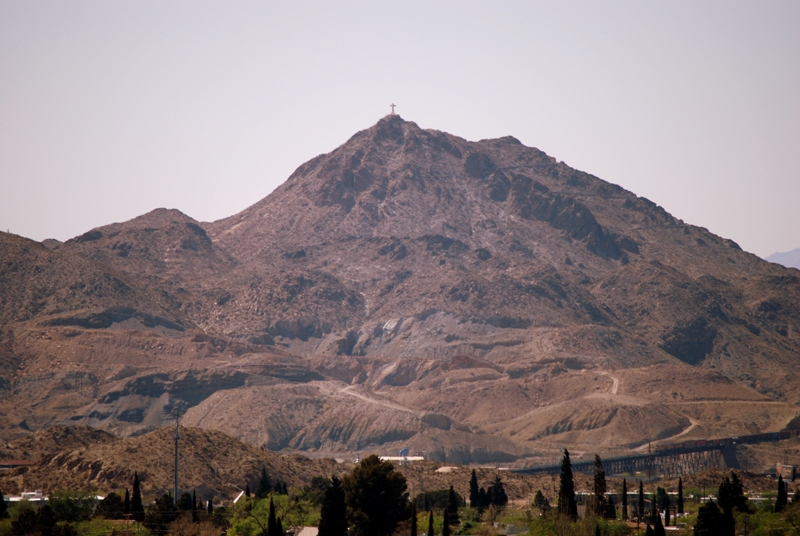
Catholic diocese fights Trump administration over seizure of land close to Mount Cristo Rey
Diocese of Las Cruces has launched a legal battle against the Trump administration after federal authorities moved to seize Church-owned land near Mount Cristo Rey on the United States-Mexico border The Catholic Diocese of Las Cruces has entered into a legal battle with the Trump administration after federal authorities moved to seize Church-owned land at a Catholic pilgrimage site on the United States-Mexico border in order to expand the border wall. Court filings lodged in the United States District Court for New Mexico reveal that the diocese is resisting attempts by the Department of Justice to acquire approximately 14 acres of land at the foot of Mount Cristo Rey, a mountain shrine crowned by a towering limestone statue of Christ. The Trump administration argues that the land is required for the construction of new border infrastructure, including fencing, roads, surveillance systems and vehicle barriers. The diocese, however, maintains that the seizure would gravely interfere with the free exercise of religion and damage the sanctity of a site which has become a symbol of Catholic devotion in the borderlands. In legal submissions filed on 8 May, lawyers acting for the Diocese of Las Cruces argued that the proposed construction would “substantially burden the free exercise of religion” for the faithful who use the site for prayer and pilgrimage. The diocese said the erection of a border wall through the area could “irreparably damage its religious and cultural sanctity”. The dispute centres on Mount Cristo Rey, situated near Sunland Park, where an 8.8-metre statue of Christ the King was completed in 1940 overlooking the Rio Grande valley. Every year, particularly around the Feast of Christ the King, tens of thousands of pilgrims ascend the mountain in acts of penance and devotion. Court documents state that some pilgrims climb the mountain barefoot while others make the ascent on their knees. The federal government has offered compensation of approximately $183,000 for the land under powers of eminent domain, the legal doctrine which permits the state to compulsorily purchase private property for public use. According to filings submitted by the Department of Homeland Security, the acquisition forms part of a wider project to construct more than two kilometres of additional border barrier south of Mount Cristo Rey. The Diocese of Las Cruces has argued that the government is attempting to move too quickly through the courts and deny the Church an opportunity to properly challenge the seizure under both the First Amendment of the United States Constitution and the Religious Freedom Restoration Act. Kathryn Brack Morrow, an attorney representing the diocese, told the press: “The United States Government’s effort to use expedited procedures to condemn diocesan land to build a border wall is an affront to religious liberty.” She added that the diocese would use “all legal tools at its disposal to stop these heavy-handed tactics”. The administration has defended the project as a necessary measure for national security and border control. Customs and Border Protection said in a statement that its preference had been to obtain the land voluntarily, but that the matter had been referred to the Department of Justice after negotiations failed. “It is always CBP’s preference to obtain real estate interests voluntarily,” the agency said. “However, if CBP is unable to acquire the necessary access voluntarily within a reasonable timeframe, CBP refers the matter to the Department of Justice to acquire any necessary property interests through eminent domain.” The shrine at Mount Cristo Rey occupies a unique position along the southern frontier. Much of the border surrounding El Paso and southern New Mexico is already heavily fortified, leaving the mountain as one of the few remaining open stretches in the metropolitan area without an extensive barrier system. The legal challenge mounted by the Diocese of Las Cruces is being supported by lawyers from Georgetown University’s Institute for Constitutional Advocacy and Protection, an organisation which has previously been involved in litigation against Trump-era immigration measures. The Diocese is led by Bishop Peter Baldacchino, who was born in Malta and later became a naturalised American citizen. Much of Bishop Baldacchino’s formation took place within the Neocatechumenal Way, and he is the first bishop in the United States to be part of the charism.
May 13, 2026
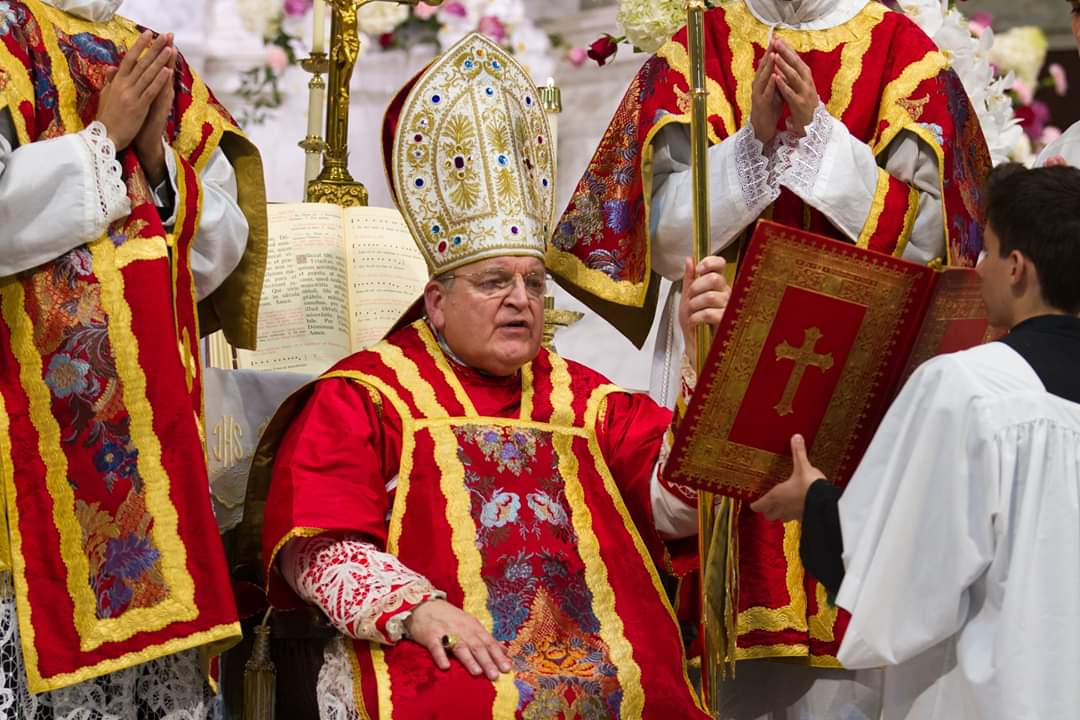
Cardinal Burke to celebrate closing Pontifical High Mass of Chartres pilgrimage
Cardinal Raymond Burke will celebrate the closing Pontifical High Mass of this year’s Chartres pilgrimage as more than 20,000 pilgrims prepare to walk from Paris to Chartres Cardinal Raymond Burke has been confirmed as the celebrant for the Pontifical High Mass at the concluding celebration of the Chartres pilgrimage this year. The American cardinal will celebrate Mass inside Chartres Cathedral on Pentecost Monday for pilgrims arriving on foot from Paris. More than 20,000 pilgrims are registered to take part in the 44th Pèlerinage de Chrétienté , the highest number yet. The theme of this year’s pilgrimage is “You will be my witnesses to the ends of the earth”, with a particular focus on mission, inspired by the resurgence of interest in Christianity across France and other parts of western Europe. More than 13,000 adults were baptised into the Church in France this Easter, a 20 per cent increase on the previous record high in 2025 and a 220 per cent increase on 2016. The largest cohort is made up of 18 to 26-year-olds, who account for 42 per cent of the total, while 82 per cent are aged 40 or under. When teenagers are included, the total rises to more than 20,000. Across the United Kingdom, significant increases were also reported, with Westminster Diocese in London receiving double the number of adults into the Church compared with just two years ago. Explaining the rationale, the Association of Notre-Dame de Chrétienté, which organises the pilgrimage, said the event stands “at the heart of this spiritual awakening in France, for which prayers have been offered for 44 years”, and encouraged Catholics to “show boldness and renew their approach to mission”. Founded in 1983 in response to what its organisers describe as the doctrinal and liturgical crisis of the post-conciliar Church, the Pèlerinage de Chrétienté sees participants walk the 100km journey from Paris to Chartres. In doing so, they revive a medieval tradition and follow in the footsteps of Charles Péguy, the French essayist who helped popularise the pilgrimage at the beginning of the 20th century. Pilgrims are scheduled to meet at Saint-Sulpice, Paris’s second-largest church, at 6.50am on Saturday, May 23 for Mass, before beginning a 35km walk to Choisel, where Mass will be celebrated at 7.30pm. On Pentecost Sunday, a Pontifical Mass will be celebrated at Les Courlis at midday, after which pilgrims will continue walking to Gas, where there will be Benediction of the Blessed Sacrament and all-night adoration. Alongside Cardinal Burke, other celebrants and preachers are scheduled to include Mgr Patrick Chauvet, former rector-archpriest of Notre-Dame Cathedral in Paris, Fr Antonius Maria Mamsery, Superior General of the Missionaries of the Holy Cross, and the Dominican Fr Serge-Thomas Bonino. Also in attendance will be Fr Fabrice Loiseau, a former seminarian of the Society of St Pius X who left before the 1988 episcopal consecrations to join the Fraternity of St Peter at its foundation. Fr Loiseau later founded the Society of Missionaries of Divine Mercy with the support of the then bishop of Fréjus-Toulon, Dominique Rey. The community, whose charism is to live by mercy through the Eucharist and proclaim it to the world, celebrates Mass exclusively according to the Tridentine rite. Cardinal Burke, a long-time advocate of the Traditional Latin Mass, also celebrated the closing Mass for the pilgrimage in 2017. Other notable prelates who have celebrated Mass during the pilgrimage include Bishop Athanasius Schneider, Cardinal Gerhard Müller and Cardinal Robert Sarah. Imagre credit: Di Abraxham03 – Opera propria, CC BY-SA 4.0, https://commons.wikimedia.org/w/index.php?curid=81254560
May 13, 2026
Vatican reported rebuke of Argentine bishops and the limits of bishops’ conferences
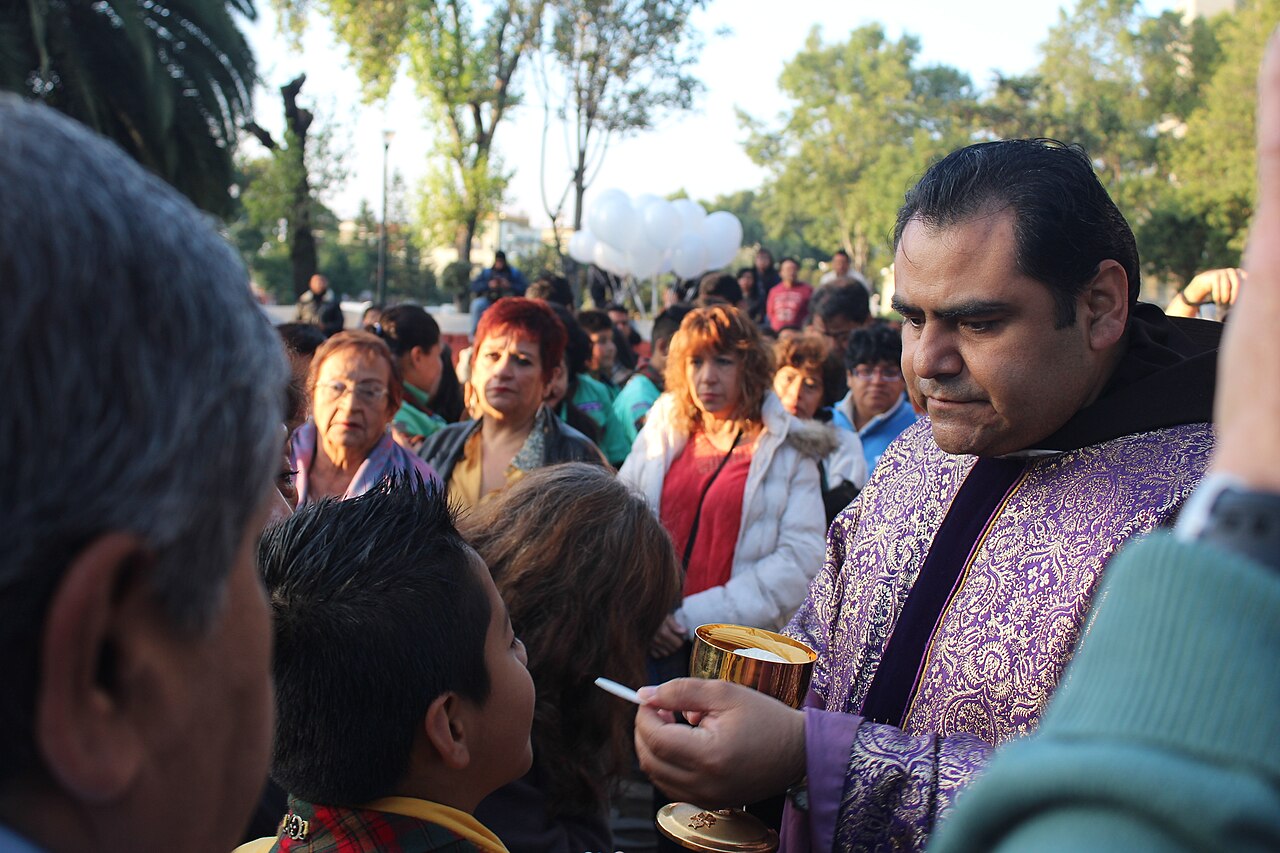
The Vatican has reportedly intervened after two Argentine bishops introduced measures discouraging Catholics from receiving Holy Communion kneeling and on the tongue. The intervention raises the question: why have dioceses and bishops’ conferences established “norms” discouraging practices which remain fully licit under universal Church law? The Dicastery for Divine Worship and the Discipline of the Sacraments has reportedly intervened with two Argentine bishops after restrictions were imposed on Catholics wishing to receive Holy Communion kneeling and on the tongue. According to the Argentine Catholic outlet El Wanderer , officials from the dicastery held discussions with Archbishop Marcelo Colombo of Mendoza, president of the Argentine Bishops’ Conference, and Bishop Gabriel Barba of San Luis over measures introduced in their dioceses concerning the manner in which the Eucharist may be received. The report said Vatican officials reminded both bishops that “the faithful have the freedom to receive Communion according to the methods established by the Church, and this freedom cannot be restricted”. The intervention follows months of controversy in Argentina after Archbishop Colombo and Bishop Barba both introduced policies widely interpreted as discouraging or effectively prohibiting traditional modes of reception. In September last year, Archbishop Colombo stated publicly that “in Argentina, Communion is received standing”, referring to norms approved by the Argentine bishops which designate standing as the ordinary posture for the reception of Holy Communion. The norms also provide for a bow before receiving the sacrament. The controversy intensified after an incident at the Basilica of San Francisco in Mendoza in September 2025, when worshippers attempting to receive Communion kneeling were publicly rebuked. Reports from Argentine Catholic media said Fr Alberto Zini, a Franciscan friar serving at the basilica, shouted “Get up!” at communicants who knelt before him. At least one worshipper was allegedly refused Communion while kneeling and was instructed to receive in the hand instead. A Catholic teacher who witnessed the incident later wrote to Archbishop Colombo to complain about the treatment of the faithful at the Mass. In his response, the archbishop reportedly defended the existing norms in the archdiocese, citing liturgical provisions contained in the Argentine edition of the Roman Missal and decisions of the bishops’ conference concerning the posture for Communion. The dispute quickly became a focal point for wider tensions within the Argentine Church over liturgical practice and the place of traditional forms of devotion. Bishop Barba also came under criticism after issuing a clarification before Corpus Christi in June 2025 encouraging the faithful in San Luis to receive Communion in the hand. The diocese had long been associated with more traditional Eucharistic practice under the late Bishop Juan Rodolfo Laise, who became known internationally for defending the right of Catholics to receive Communion on the tongue. The dispute deepened further in October when Bishop Barba reportedly wrote to candidates preparing to become extraordinary ministers of Holy Communion, instructing them to receive the Eucharist only in the hand in order to act as “pedagogues” of the practice and to “preach by example”. The Holy See has repeatedly affirmed over several decades that Catholics retain the right to receive Holy Communion on the tongue where the practice is permitted by the Church. The Congregation for Divine Worship stated in the 2004 instruction Redemptionis Sacramentum that “each of the faithful always has the right to receive Holy Communion on the tongue”. If the reports from Argentina are accurate, the Dicastery for Divine Worship and the Discipline of the Sacraments has effectively rebuked Archbishop Colombo and Bishop Barba after both dioceses adopted practices which discouraged, restricted or practically penalised Catholics who wished to receive Communion kneeling or on the tongue. Many bishops and clergy across the Western Church have acted as though Communion in the hand and standing were mandatory, despite repeated Vatican instructions stating the opposite. In practice, Catholics attached to older forms of Eucharistic reverence have often been treated as troublesome, divisive or psychologically suspect. The language changes from diocese to diocese, from “pastoral unity” to “liturgical norms” and “ecclesial maturity”, but the underlying message is usually the same: conform to the preferred style of the local hierarchy. Archbishop Colombo’s subsequent defence of the diocesan norms only deepened the controversy. His argument rested on the claim that Argentine liturgical norms establish standing as the manner in which Communion is received. Yet this is precisely where many bishops misunderstand the distinction between what is normative and what is compulsory. Rome settled this question years ago. Redemptionis Sacramentum , issued in 2004 under Pope St John Paul II, explicitly states: “It is not licit to deny Holy Communion to any of Christ’s faithful solely on the grounds, for example, that the person wishes to receive the Eucharist kneeling or standing.” The same instruction further declares that every member of the faithful “always has the right to receive Holy Communion on the tongue”. The Holy See recognised that local liturgical bureaucracies had begun treating permissions as prohibitions and preferences as law. What is happening is part of a much older post-conciliar pattern in which traditional devotional practices are tolerated officially while being marginalised culturally. San Luis illustrates this particularly well. Under the late Bishop Laise, the diocese became known for defending Communion on the tongue and maintaining a visibly traditional Eucharistic culture long after much of the Church had abandoned it. Bishop Barba’s subsequent insistence that extraordinary ministers receive only in the hand in order to act as “pedagogues” of the practice was therefore interpreted by many as a deliberate attempt to reshape the liturgical identity of the diocese. Since Vatican II, bishops’ conferences have accumulated enormous practical influence, often behaving as though they possess a kind of national magisterium. Yet they remain subordinate to universal law. They cannot abolish rights guaranteed by Rome, nor can they transform local customs into binding obligations where the Holy See has explicitly preserved legitimate freedom. The irony is difficult to miss. Much of the rhetoric surrounding modern ecclesial governance emphasises decentralisation and synodality. Yet Argentina demonstrates the inevitable problem with excessive decentralisation in liturgical matters: local ideological preferences quickly begin presenting themselves as universal Catholicism. One bishop discourages kneeling, another marginalises Latin and another treats ad orientem worship as pastorally unacceptable. Before long, practices which the Church still permits exist only on paper. Image credit: By ProtoplasmaKid – Own work, CC BY-SA 4.0, https://commons.wikimedia.org/w/index.php?curid=43442907
May 13, 2026
Nigerian archdiocese orders week of reparation after Blessed Sacrament stolen
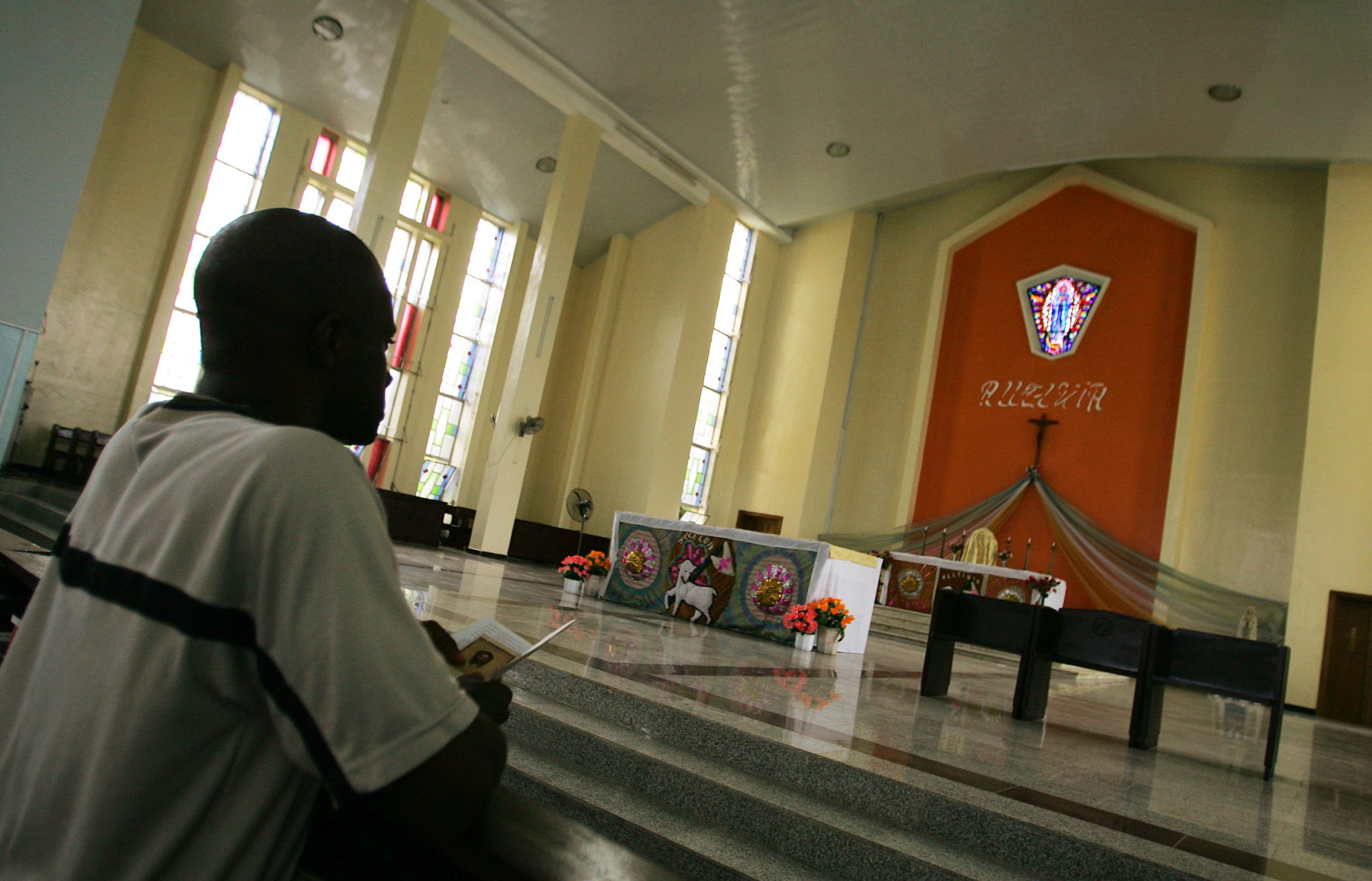
The Archdiocese of Owerri has declared a week of prayer and reparation after thieves broke into an adoration chapel through the roof and stole a monstrance containing the Blessed Sacrament The Archdiocese of Owerri in southern Nigeria has declared a week of prayer and reparation after thieves broke into an adoration chapel and stole a monstrance containing the Blessed Sacrament. The desecration took place at St Mulumba Parish, Wetheral Road, Owerri, during the early hours of 29 April after intruders reportedly entered the chapel through the roof. In a statement to the faithful, Archbishop Lucius Iwejuru Ugorji said: “It is with great sadness that we inform you of the desecration of the Chapel of Adoration of St Mulumba Parish, Wetheral Road, Owerri. As reported by the parish priest, Rev. Fr Raymond Madu, unknown persons opened parts of the roof, gained access through the ceiling, and made away with the monstrance containing the Blessed Sacrament.” The archbishop ordered a week of prayer in reparation from 1 May to 8 May between 4pm and 6pm each day for parishioners of St Mulumba Parish. He also instructed priests across the archdiocese to observe more closely the Church’s regulations governing Eucharistic adoration. “All priests in the Owerri Archdiocese are reminded to strictly adhere to the norms and directives regarding the exposition of the Blessed Sacrament and adoration to avoid any recurrence,” Archbishop Ugorji said. “We emphasise that exposition is to take place only when a fitting attendance of the faithful is assured (cf. Can. 942). The Blessed Sacrament must never be left unattended during exposition,” the archbishop concluded. Fr Humphrey Tatah Mbuy told the Catholic World Report that prayers of reparation are offered after acts of sacrilege against churches or the Eucharist. “A prayer of reparation is a liturgical rite and spiritual act performed to make amends for the sacrilege committed against God and to restore the sacred character of the building,” Fr Mbuy said. He added: “The prayer is a way for the Church to apologise to God for the offence committed against His house.” Nigeria continues to experience significant violence against Christians, particularly in the north and Middle Belt. This often involves attacks by Fulani militants, Boko Haram affiliates or armed bandits, with churches and clergy frequently targeted. For example, over this year’s Easter season, armed attackers stormed two churches in the Ariko community of Kachia Local Government Area, Kaduna State, during services at the Evangelical Church Winning All (ECWA) and St Augustine’s Catholic Church. The gunmen opened fire indiscriminately, killing at least five worshippers and abducting dozens more. The Catholic Archdiocese of Kafanchan also confirmed the abduction of Fr Nathaniel Asuwaye after armed men attacked the priest’s residence in Karku in February. In a statement issued after the assault, the archdiocese described the incident as a “terrorist invasion”, while local Catholics organised Masses and rosaries for the safe return of the priest and those kidnapped alongside him. According to Open Doors, in 2024 Nigeria was the country with the highest number of Christians killed for their faith, with 3,100 Christians killed and 2,830 kidnapped that year. The Catholic Bishops’ Conference of Nigeria has warned on several occasions that attacks on churches, rectories and Christian villages are creating widespread fear among the faithful. Aid organisations including Aid to the Church in Need and the United States Commission on International Religious Freedom have also documented repeated incidents involving church burnings, abductions and the killing of clergy across the country.
May 12, 2026