

Outside the Walls
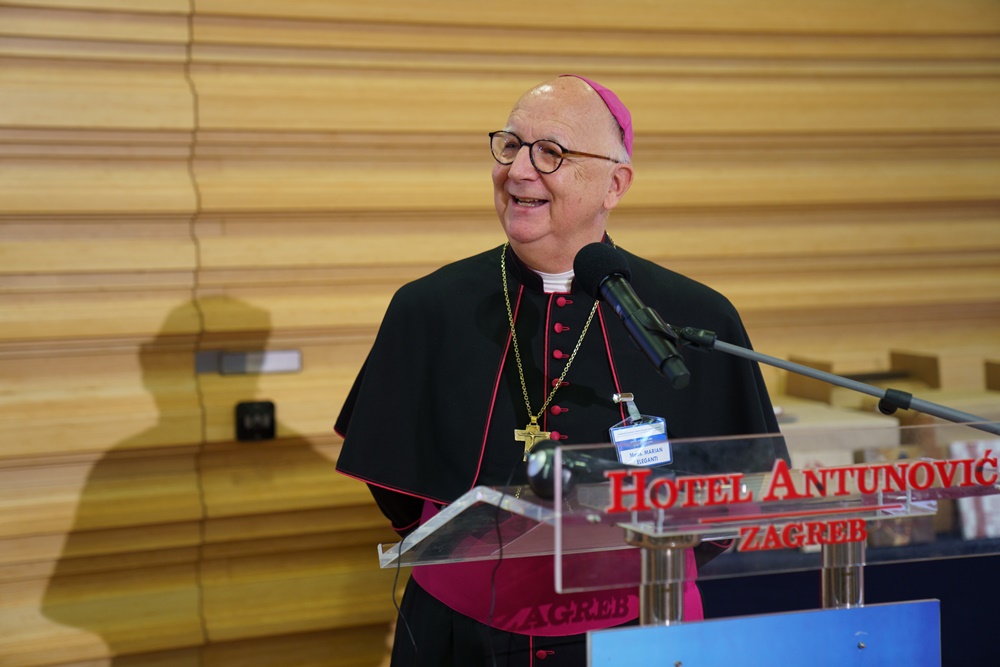
Bishop Eleganti on the old rite, Islam and the future of the Church
Bishop Marian Eleganti speaks to AdVaticanum on the appeal of the traditional liturgy, Islam and the Society of St Pius X. Eleganti addresses the fallout of the Second Vatican Council, the place of the old rite and the pertinent questions facing the Church in the West The Benedictine Bishop Marian Eleganti, former Abbot of St Otmarsberg Abbey and auxiliary bishop of the Diocese of Chur until 2021, is well known for his defence of the truth and beauty of Catholicism in the face of an increasingly hostile West. A principled churchman, he has often paid the price for adhering to his conscience, stepping down as the Swiss bishops’ youth bishop in 2018 due to disagreements with other bishops at the 2018 Youth Synod and offering his resignation in 2021 at the age of 65, a full ten years before the mandatory retirement age for bishops. In this interview, he sits down with AdVaticanum to reflect on his years of priestly ministry and to offer his erudite analysis of the challenges facing the Church in the twenty-first century. He addresses Islam, the Society of St Pius X, the liturgy and the fallout of the Second Vatican Council with the characteristic clarity that has made him a much respected voice within the Church. AV: Your Excellency, you were born in 1955 and have recounted serving as an enthusiastic altar boy in the traditional rite in your childhood before being retrained for the Novus Ordo. You have described the post-conciliar liturgical intervention as “a rather violent, provisional reconstruction of the Holy Mass… associated with great losses that need to be addressed”, noting differences especially in the prayers, postures, and ad orientem orientation. Young Catholics today, who often know little about the texts of Vatican II, are increasingly drawn to the Tridentine rite for its beauty and transcendence. In your view, what specific elements of the ancient liturgy address the spiritual hunger of this generation, and how would you respond to claims that restricting the Traditional Latin Mass is necessary for ecclesial unity? +ME: I believe that the appeal of the Old Liturgy for young people lies primarily in several key aspects. Firstly, its focus, and the centrality, on God or Christ, rather than on the community. The general orientation of everyone (the congregation and the priest) is towards Him. Another is the palpable reverence associated with the encounter with the transcendent God or the present Christ. There is also the stillness and silence, reminiscent of the worship of the Lamb in the Book of Revelation. I believe people are also drawn to the solemnity and dignity of the vestments, liturgical objects, and the altar, as well as the overall design of the sanctuary. Finally, Gregorian chant, which has been a trend for some time, even in secular circles. Reverence, faith, prayer, love, and inner devotion or participation have their roots in the heart. They can be found just as easily in the Novus Ordo. I am the same person in any rite. How I stand before God and celebrate Him is decided within me. It is not the form that makes me devout. Devotion is either present or it is not, regardless of the form. The inner self then also takes on the proper mode of expression; it does not work the other way around. I kneel because I am devout; I am not devout because I kneel. If a form becomes associated with false thinking, it can become a divisive force and a question of “to be or not to be”, which a rite never is. Every form has advantages and disadvantages, and the wise person distinguishes without doing wrong. Why did Jesus call the outwardly righteous Pharisees whitewashed tombs? The discrepancy between what is inside and what is outside can be very great, whatever form it takes. AV: Building on your recent calls (including in early 2026 reflections) for renewed study of the liturgical crisis under a new pontificate, such as the marginalisation of the tabernacle and overemphasis on the “meal character”, do you see a path for restoring wider access to the Tridentine rite beyond the restrictions of Traditionis Custodes? What concrete pastoral measures would you recommend to bishops to allow the old liturgy to flourish again as a living treasure? +ME: We have so many rites in the Catholic Church. We should accept them for what they are: mere rites. We must infuse every rite with love and devotion; otherwise, it misses its mark. The Old and New Rites, as such, have nothing to do with whether we recognise the Council or not, or how we deal with its texts or reforms. These questions are not to be resolved at the level of the rites. Whether the New Mass corresponds to the vision of the Council Fathers who inspired it is a historical question. The answer may vary. Why don’t we simply give hearts the freedom to pray as they wish and to honour God as they like, without disqualifying any person or rite? The Church must set the framework for this. That is not a problem. Rites are not absolute. In a validly administered sacrament, the believer always finds God, regardless of the rite, provided, of course, that the sacraments are celebrated as the Church prescribes and with the inner attitude and dignity I have described above. AV: Your Excellency, you have described the post-Vatican II era as bringing “an indescribable decline in the practice and knowledge of the faith, widespread liturgical formlessness and arbitrariness” instead of the expected “springtime”. Official statistics from the Annuario Pontificio 2026 and Annuarium Statisticum Ecclesiae 2024 confirm a 13-year decline in priestly vocations that has accelerated recently, with major seminarians worldwide falling from 106,495 in 2023 to 103,604 in 2024 (a 2.72% drop), following prior yearly declines, with Europe seeing particularly sharp losses and a net global priest decrease of 734 between 2022 and 2023 despite Catholic population growth. What, in your view, are the specific post-conciliar developments or practices that have contributed to the excesses and loss of the sacred, and how should they now be corrected within the life of the Church? +ME: On the topic of the Old Rite, we must remember the causes of this phenomenon do not lie in the Novus Ordo. The Council Fathers had intended a modest liturgical reform. Excesses, lack of form, trivialisation of the sacred, liturgical disobedience, community-centredness, the absence of priests, or even a hostility towards priests, are phenomena of the post-conciliar era that cannot be attributed to the Council’s texts, any more than post-conciliar heretical tendencies can. The worst of all evils is the practical irrelevance of God in our society and the turning away from Christianity, which has been replaced by ideologies or other forces that have an extremely destructive effect on everything that was once sacred to the so-called Christian West. Nothing better has taken its place. This is becoming increasingly clear. AV: Specifically, focusing on vocations, this multi-year decline has hit Europe and the Americas hardest, with empty seminaries and ageing clergy in many places, while Africa and Asia show some growth. What would you propose to reverse it? +ME: There are many young converts and those seeking baptism. They want to build Christian marriages and families. This is where we need to invest our efforts. We must impart knowledge of the faith to children and young people, provide them with support, and introduce them to the sacraments; we must accompany young families. As a parish priest, I would begin by celebrating Holy Mass as deeply and beautifully as possible, accompanied by brief catechesis. Following the liturgy: fellowship, love, and joy; parents forming friendships, children getting to know one another and playing together. People and charisms gather around every devout priest. With Holy Mass at the centre of life, the Church begins to renew itself. If the priest is a bride in love, the community he gathers around him will soon be the same. This brings an unimaginable momentum. AV: In your October 2025 article “Homosexuality in Society and in the Church: An Elephant in the Room”, you identified the “widespread homosexuality in the clergy and its significance in the abuse crisis” as the ignored “elephant in the room”, calling it a phenomenon sui generis with negative consequences that must be named, while noting that silence renders other prevention efforts incomplete. What pastoral experience or observations led you to this conclusion, and do you think enough is being addressed openly despite earlier calls for psychological screening? +ME: This is not a matter of my own subjective impressions or pastoral experience, but of pure statistics. I wrote to Pope Leo XIV about this. All Church studies on abuse show a disproportionately high number of male victims. It does little good to turn a blind eye to this. There is a factual correlation, without implying that clergy with a homosexual orientation are predestined to commit abuse because of their orientation. The same applies to heterosexuals. There are also many cases of sexual abuse outside the Church, but society primarily focuses on and is scandalised by those within the clergy. To sin means: I could have acted differently, but everyone has their own preferences. AV: As auxiliary bishop emeritus of the Church in Switzerland, you have witnessed the challenges of secularisation in the country. What is your current assessment of the state of the faith in Switzerland, and are there any emerging Swiss “hotspots” of renewal among younger generations rediscovering the faith? +ME: Generally speaking, I give the Swiss very poor marks when it comes to their spiritual life and their connection to the Church. While most of them have been baptised, they have never truly become disciples of Jesus. I say this merely as an observation. It may not necessarily be their own fault. That said, there are genuine hotspots of faith. As the bishop for youth, I was right in the thick of it. Even today, I rejoice in the growth of these hotspots. AV: Your Excellency, you have been clear in your statements that the SSPX’s planned episcopal consecrations on 1 July 2026, without papal mandate, would constitute a “schismatic act” rupturing visible unity with the Pope, citing issues of autonomy, non-incardinated priests, and self-positioning as the true Church. What is the current attitude towards the SSPX within Switzerland? Do you perceive growing support for the SSPX among the faithful? +ME: The Society of St Pius X has gone to great lengths to justify its decision, both internally and externally. Many faithful simply love the traditional liturgy without truly identifying with the Society’s ideology. They are, in fact, often put off by what they sometimes encounter in parishes. I would not say that there is growing support for the Society of St Pius X among the faithful. AV: On the broader European scene, Cardinal Gerhard Müller has recently described mass migration from Islamic countries into Europe as posing significant challenges to integration, warning of risks such as cultural strain, potential social conflict, and growing Muslim influence in public life if not managed carefully. Your Grace, how do you assess the compatibility of large-scale Islamic immigration with preserving Europe’s Christian identity? What role should the Catholic Church play in addressing this, balancing the Gospel’s call to charity and welcome with a realistic consideration of the demographic, religious, and social shifts underway? +ME: Islam, not just so-called Islamism, is, by its very nature, an anti-Christian religion, in theory and in practice. Christianity has never fared well under Islamic rule. This remains true today. Wherever Islam holds sway, Christianity is being decimated to the point of near extinction. I consider Islam incompatible with the Western idea of freedom and the secular state. Ultimately, only the numerical balance will decide which of the two, Christianity or Islam, will disappear and perish or remain in a state of tolerance. Even secular political entities like the European Union exhibit anti-Christian traits today. Due to Islam’s incompatibility with the Christian idea of the separation of state and politics and church and religion (“Render unto Caesar what is Caesar’s, and unto God what is God’s”), I consider Islam to be incompatible with the Judeo-Christian tradition of the West, which still strongly shapes our thinking and political system. The more Muslims are naturalised into our societies, the worse it could become unless Christ converts them and sets them free. AV: And finally, Your Excellency, could you offer your thoughts on the recent scandal in the Diocese of Chur, Switzerland, where three people shared the Eucharist with their pets? +ME: I cannot understand why the Holy Eucharist is celebrated in connection with the blessing of animals. Animals do not belong in a sacred space. They can be blessed outside the church, if one wishes. It is simply terrible that the sacraments, above all the Holy Mass, are no longer understood. The Holy Eucharist is viewed by many as a mere symbol and treated accordingly. But it is the Body of Christ, that is, the living, mysteriously present Person of the Lord. It causes me great pain to hear of such profanations. AV: Thank you, Your Excellency, for your continued dedication to the Church.
Apr. 30, 2026
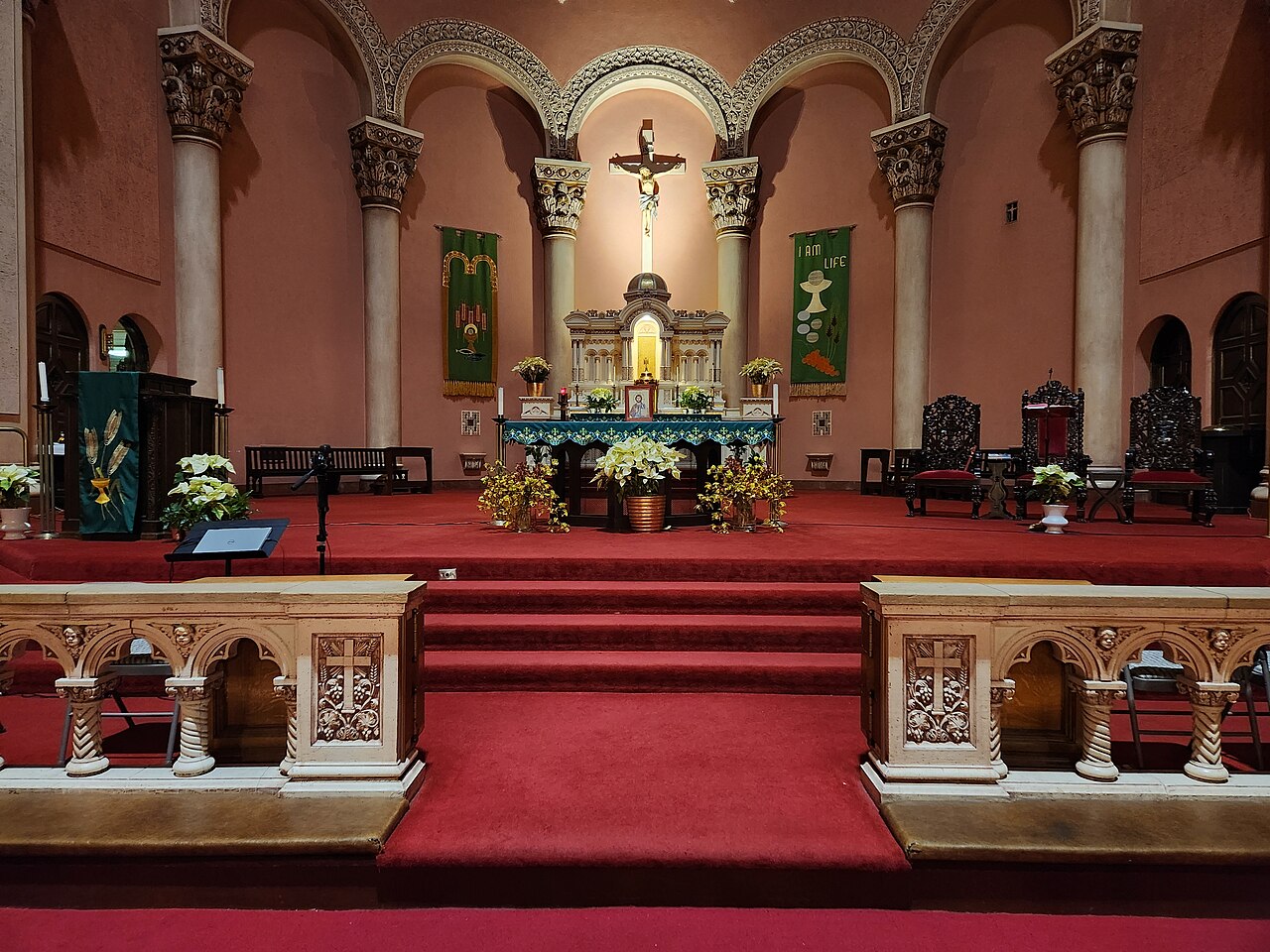
Bishop of the Diocese of Charlotte refuses communion to family at altar rail
A Catholic family in North Carolina claims they were refused Holy Communion after approaching the altar rail during a Confirmation Mass, according to a report from the Diocese Bishop Michael Martin of Charlotte has refused Holy Communion to a Catholic family who approached the altar rail during a Confirmation Mass. The incident took place on April 29 at Our Lady of Grace parish in Greensboro, North Carolina. While the Confirmation ceremony took place as usual, during Communion only two or three families approached the altar rail to receive the Eucharist. One father who brought his family said to AdVaticanum: “He was sitting in front of us when we went to the rail and he simply ignored us. All the priests turned their backs on us,” he said. “Everyone else communicated and we were denied. To be frank, it was very humiliating.” The same witness said that while the wider congregation received Communion, those kneeling at the rail were passed over. Attempts were made to speak to Bishop Martin about incident after the Confirmation Mass, but he did not respond in detail. Photo taken from the confirmation Mass. Submitted anonymously. The claim comes amid the current liturgical dispute in the Diocese of Charlotte. Bishop Martin has introduced norms governing the reception of Holy Communion, emphasising that the “normative posture” in the United States is to receive standing, following a bow of the head. The controversy unfolds alongside involvement from the Dicastery for Divine Worship and the Discipline of the Sacraments, which has acknowledged receipt of a formal “hierarchical recourse” concerning Bishop Michael Martin’s handling of liturgical matters in the Diocese of Charlotte. In a letter dated February 16 and signed by Fr Pierre Paul, the dicastery confirmed that the case had been registered under protocol number 369/25 and would be examined in accordance with canonical procedures. The acknowledgement signifies that the Holy See has formally taken cognisance of the complaint, although such steps are procedural and do not in themselves indicate that any corrective action will follow. Previously, in a pastoral letter issued on December 17, he wrote, “The liturgy of the Church is the work of God and the work on behalf of God in the life of the Church. These norms for our diocese move us together towards the Church’s vision for the fuller and more active participation of the faithful.” In this pastoral letter of December 17, Bishop Michael Martin set out specific norms concerning the manner of receiving Holy Communion in the Diocese of Charlotte, including explicit reference to altar rails. He added that “our unity as believers in Holy Communion is expressed through our postures and gestures that reflect our mystical communion and unity as fellow believers,” stressing that the Eucharist is “a communal act of worship, not only an individual act of piety.” The same directive instructed parishes that had reintroduced altar rails or kneelers for the distribution of Communion to discontinue the practice and remove any such furnishings, describing them as “a visible contradiction” of the prescribed norm. It stated that Holy Communion should be received as the faithful “go in procession, witnessing that the Church journeys forward and receives Holy Communion as a pilgrim people on their way.” At the same time, the bishop’s letter reiterated that individuals are not to be denied Holy Communion on the basis of posture, even if they choose to kneel. “Clergy and catechists,” he wrote, “are to instruct communicants according to the normative posture in the United States” and “are not to teach that some other manner is better, preferred, more efficacious, etc.” AdVaticanum asked the diocese for comment, but at the time of publication it has not responded.
Apr. 29, 2026
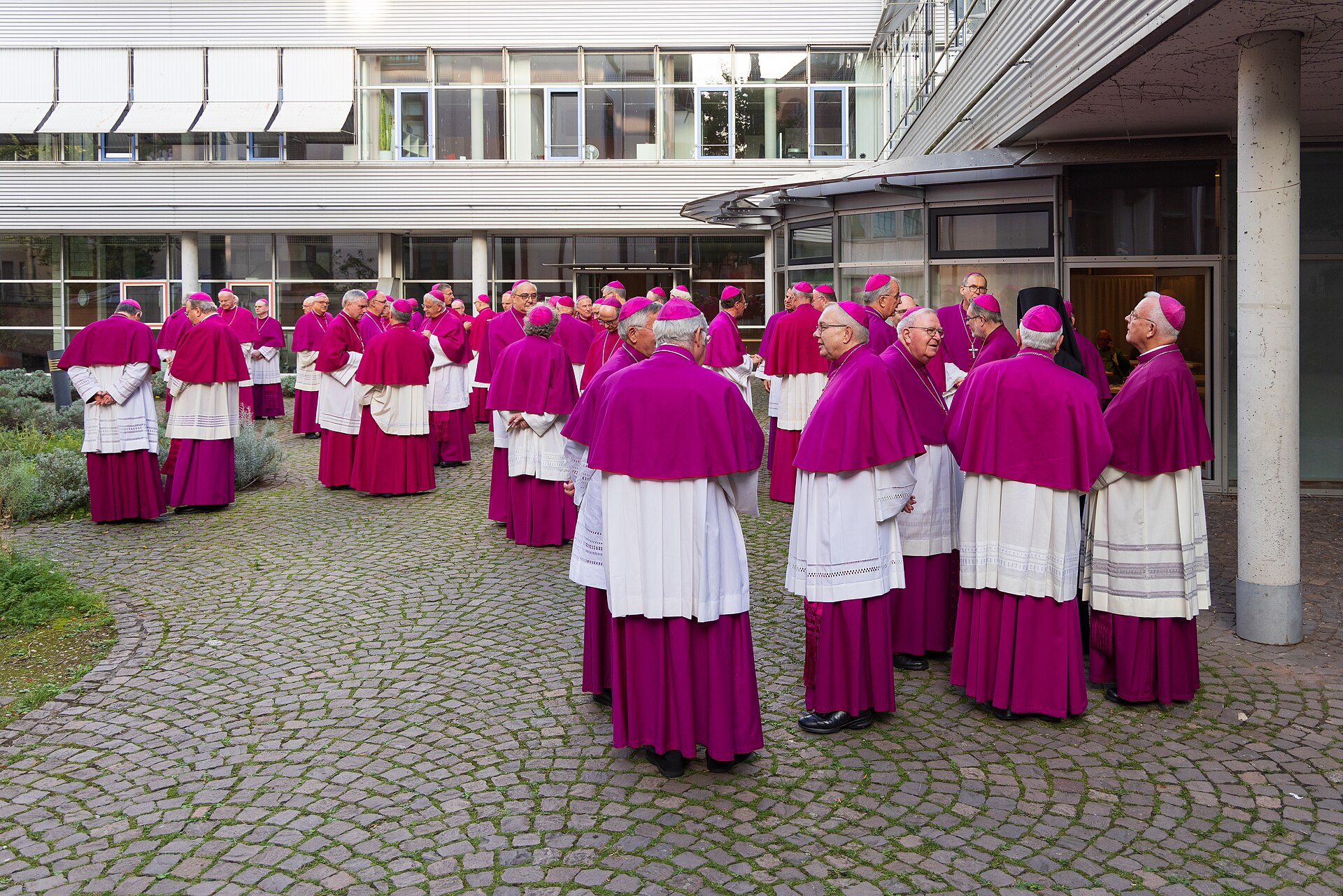
German Synodal Way figures defend blessings guidance as Pope reiterates opposition
Leaders behind the German Synodal Way have defended new guidance permitting blessings for couples in irregular unions, as Pope Leo states that the Holy See does not support formalised blessings beyond those allowed under Fiducia supplicans The architects of the German Synodal Way have defended controversial guidelines permitting the blessing of couples in irregular unions, amid concerns raised by the Pope that such practices risk undermining ecclesial unity. The dispute centres on pastoral norms adopted in 2025 by the German Bishops’ Conference and the Central Committee of German Catholics (ZdK), which seek to provide a framework for blessing couples who are unable, or do not wish, to enter into a sacramental marriage. The initiative has now been taken up in several dioceses, most notably Munich and Freising, where Cardinal Reinhard Marx has instructed clergy to ensure that “no couple should be turned away” if they request a blessing. In a letter to clergy and pastoral workers, Cardinal Marx wrote: “To all couples who love each other and seek a blessing from the Church for their partnership, I wish that they may feel God’s grace in this blessing.” The archdiocese has confirmed that the guidelines, entitled Segen gibt der Liebe Kraft (“Blessing Gives Love Strength”), will form a “fundamental element” of pastoral practice. Training sessions are scheduled to begin in June to standardise how such blessings are carried out across parishes. The policy goes further than merely permitting individual priests to exercise discretion. Clergy unwilling to conduct the ceremonies themselves are not free to simply refuse; instead, they are expected to refer couples to another priest or pastoral worker. Bishop Georg Bätzing, who oversaw the introduction of the guidelines while serving as chairman of the German Bishops’ Conference, has defended their implementation. He said that although “there are differing views on this within the universal Church”, the practice as carried out in his Diocese of Limburg “serves the people” and “does not jeopardise the unity of the Church”. Limburg was among the first dioceses to publish the norms formally in its official gazette, signalling full adoption. Support has also come from the ZdK, which co-authored the document. Its president, Irme Stetter-Karp, said there was “no reason to withdraw the guidelines” and emphasised their limited scope. The aim, she said, was simply to encourage the provision of blessing ceremonies “for couples who do not wish to enter into a sacramental church marriage or for whom such a marriage is not an option”. She added: “No more and no less. There is no possibility of confusing it with the sacrament of marriage.” The dioceses of Cologne, Augsburg, Eichstätt, Passau and Regensburg have all declined to implement the document, arguing that it exceeds the provisions set out in Fiducia supplicans, the 2023 Vatican instruction on blessings. The bishops of the opposing diocese are led by notably more conservative bishops in comparison to others in the German bishops conference, with the exception of the diocese of Eichstätt, which is currently vacant after the 2025 resignation of Bishop Gregor Franz Hanke. Fiducia supplicans allowed for spontaneous, non-liturgical blessings of individuals in irregular situations, but drew a clear line against any form of ritual that might resemble a marriage ceremony or give the impression of endorsing a union contrary to Church teaching. Pope Leo was asked during a press conference on April 23 about the decision to permit such blessings in Munich. The Pontiff responded: “The Holy See has made it clear that we do not agree with the formalised blessing of couples, in this case, homosexual couples, as you asked, or couples in irregular situations, beyond what was specifically, if you will, allowed for by Pope Francis in saying all people receive blessings.” The Holy Father continued by distinguishing between general blessings and those directed at particular unions. “When a priest gives a blessing at the end of Mass, when the Pope gives a blessing at the end of a large celebration like the one we had today, they are blessings for all people,” he said, invoking his predecessor’s phrase “Tutti, tutti, tutti” to emphasise that all are welcome and called to conversion. The Archdiocese of Munich and Freising has described internal communications about the guidelines as “an internal memo”, and has not yet formally promulgated them in its official gazette. Other dioceses, including Osnabrück and Aachen, have taken that step, effectively committing themselves to the policy.
Apr. 29, 2026
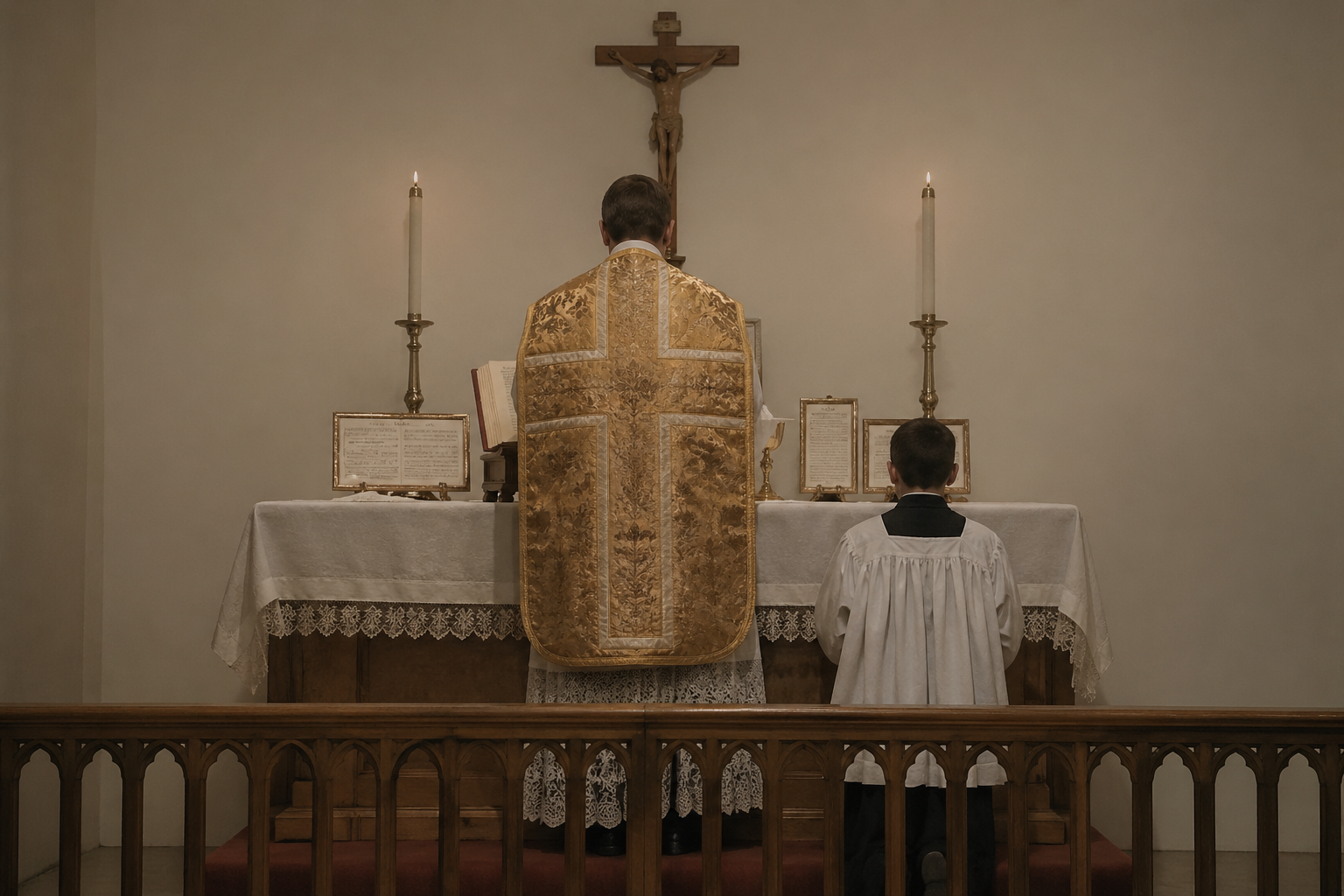
Vatican examines appeal over Charlotte liturgical restrictions
The Vatican has confirmed it is reviewing a formal appeal over liturgical decisions in the Diocese of Charlotte, including restrictions placed on the Traditional Latin Mass The Vatican has confirmed that it is reviewing a formal appeal concerning liturgical decisions taken by Bishop Michael Martin in the Diocese of Charlotte, according to a letter issued by the Dicastery for Divine Worship and the Discipline of the Sacraments. The letter, dated 16 February, states that the dicastery has “received a hierarchical recourse” regarding the bishop’s “apparent refusal” to respond to “requests concerning liturgical matters”. It adds: “The Dicastery will proceed to examine the Acta, which have been assigned protocol number 369/25.” The appeal itself was filed on 9 February. The acknowledgement confirms that the case has formally entered the Vatican’s administrative process, though no indication has been given as to how long the review may take or what outcome may follow. The appeal arises after a series of liturgical measures introduced in Charlotte over the past year. Most notably, Bishop Martin ordered that the Traditional Latin Mass be discontinued at parish churches in the diocese and restricted to a single location outside the city. Changes have also been implemented at parish level. Directives issued within the diocese have included the removal of altar rails and kneelers used for the reception of Holy Communion. These measures prompted concern among clergy, and in January a group of diocesan priests submitted a dubia to the Dicastery for Legislative Texts, questioning the legal basis of the restrictions. Additional controversy followed the circulation of draft liturgical norms, which proposed limits on the use of Latin, the celebration of Mass ad orientem, and certain traditional vestments and practices. The Diocese of Charlotte later stated that the text was a draft and had been revised after feedback. The Vatican body now examining the recourse is headed by Cardinal Arthur Roche, who has overseen the implementation of liturgical policy following Traditionis Custodes. The dicastery’s role includes adjudicating disputes concerning the application of liturgical law and responding to appeals submitted through hierarchical recourse. Such recourse allows clergy or lay faithful to challenge administrative acts they believe have been improperly handled or insufficiently addressed at diocesan level. The procedure involves the submission of documentation, which is then reviewed by the competent dicastery in Rome. No further details about the substance of the appeal have been released beyond the brief description contained in the Vatican letter. The document has, however, circulated widely in recent days. The Diocese of Charlotte has not issued a further statement in response to the Vatican’s acknowledgement of the case.
Apr. 29, 2026
Fellay warns of SSPX faithful excommunication as Rome prepares its response to episcopal consecrations
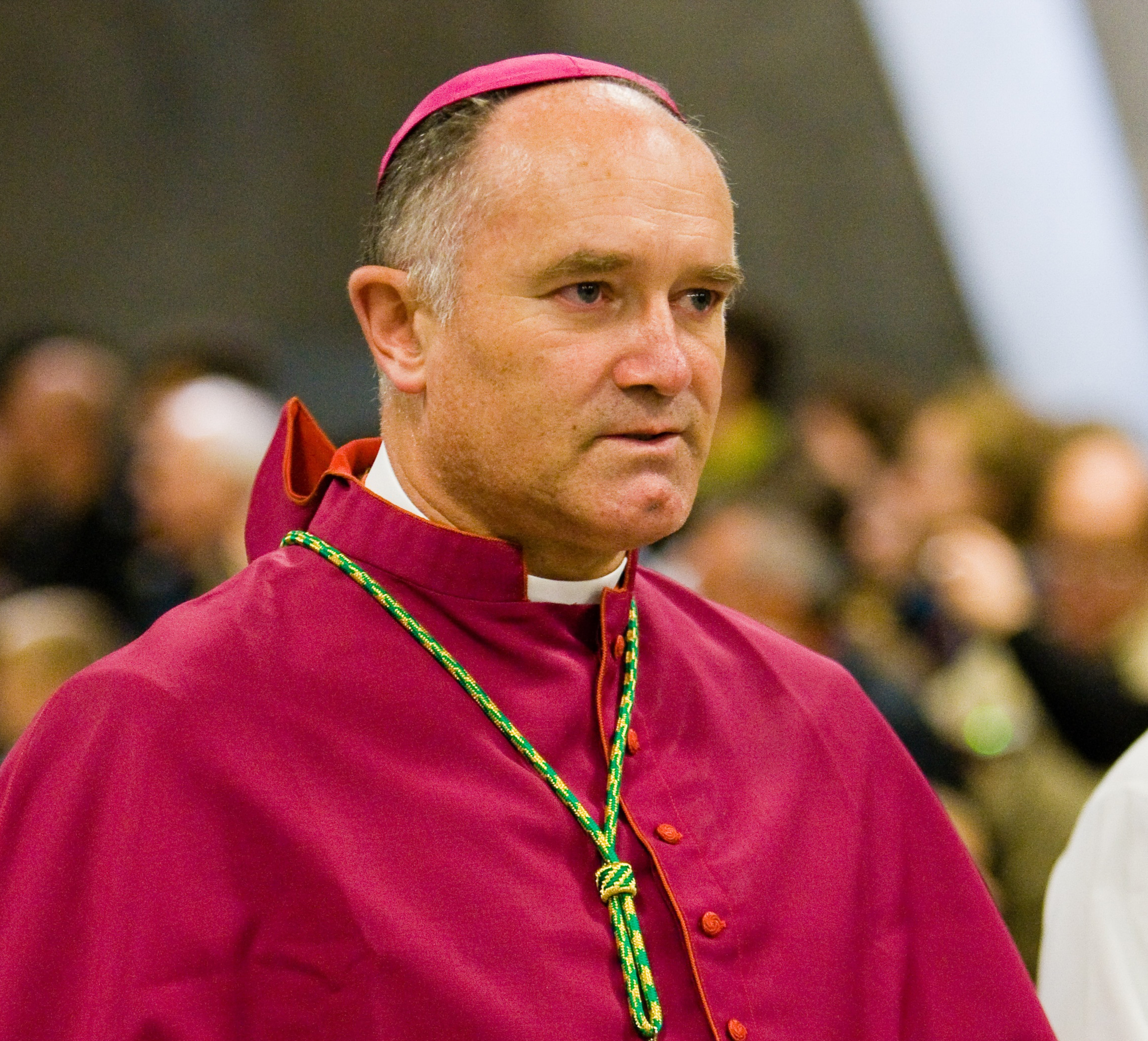
Bishop Bernard Fellay has warned that the faithful may face excommunication, as indications from Rome suggest a response is being prepared to possible episcopal consecrations without papal mandate In a surprise turn, the former superior general of the Society of Saint Pius X has warned that the faithful may face excommunication, as indications emerge that Rome has prepared a response to possible episcopal consecrations without a papal mandate. In an exclusive sermon transcript obtained by Advaticanum , Bishop Bernard Fellay told those present at confirmations on Good Shepherd Sunday at the Immaculata in St Mary’s, Kansas, that such a development was increasingly likely. “I prefer not to be a prophet here, but I’m pretty sure that there is an enormous probability that all of you, we included, may be excommunicated, declared schismatic, there is a very high probability because they already said it in public. So, they are so to say forcing themselves to do it. But whatever, God can do miracles. It’s not the end.” He continued by framing the homily in spiritual terms, telling the congregation that “our history shows that God wants us to be a sign of contradiction, a sign that reveals hearts. And a sign of contradiction means the Cross. We must be ready to carry it.” Beyond his warning on possible excommunication, Bishop Fellay used the homily to deliver an extended meditation on the nature of the Church, drawing repeatedly on the theme of Good Shepherd Sunday and the Gospel’s declaration that there shall be “one shepherd and one fold”. He began by stressing that the Church, like the human person, possesses both a visible and an invisible dimension, cautioning against what he described as a tendency to remain at the surface. “God has created us with both body and soul,” he said. “There is a visible part and an invisible part, and both are absolutely real. Indeed, the invisible part, the soul, is far more important. Yet we must not set them in opposition. To separate body and soul is to have death, nothing more.” Developing the point, he compared the Faith to a lake whose depths are often ignored. “Many people are content to admire its beautiful surface and believe they know everything about it. But if you truly wish to understand the lake, you must look beneath the surface.” The same, he said, applies to the Church, which cannot be reduced to outward appearances alone. He referred to the longstanding principle Ecclesia de internis non judicat , that the Church does not judge interior dispositions, and linked this to the sacraments, explaining that while matter and form are visible, intention remains hidden and is presumed when the rites are followed. Faith itself, he continued, is likewise interior, but must be outwardly professed. Citing Scripture, he warned: “These people honour me with their lips, but their hearts are far from me.” Turning to the liturgy, Bishop Fellay urged the faithful to deepen their engagement with the prayers of the Holy Mass, recommending that they be read in advance so that participation would not remain merely external. He drew on Archbishop Marcel Lefebvre’s Spiritual Journey, describing the liturgy as “the breathing of the soul” when properly united to interior prayer. He contrasted two approaches to worship, saying that one could remain at “the beautiful surface” or “dive deeper”, and insisted that this distinction applied to all aspects of Christian life. Even ordinary daily actions, he said, could be transformed if consciously offered to God: “If, every morning, we offer our entire day to God, all our actions, joys, and sufferings, then everything becomes an act of charity, praise, and glory to God.” The bishop also employed a more pointed comparison when speaking about the liturgy, likening it to a vessel containing grace. “The surface is important. Consider a glass: the liquid inside is more valuable, but without the glass the liquid is lost,” he said, before adding: “This is precisely what has happened with the new liturgy. They have made holes in the vessel of grace. The Traditional Mass is like a full-flowing river of graces, while the new rite often yields only a few drops.” He went on to describe what he called three pillars of the Church’s visible unity: unity of faith, unity of liturgy and unity of government. Each, he argued, had been “severely struck”. On the unity of faith, he claimed that belief had diminished significantly in various parts of the Church, asserting that outward profession did not always correspond to interior conviction. “They may still recite the Creed outwardly, but interiorly the faith is dead. Whoever denies even one truth of the faith has lost the faith entirely.” The homily was delivered in relation to the question of episcopal consecrations and possible sanctions. According to this publication’s Vatican correspondent, Niwa Limbu, officials within the Dicastery for the Doctrine of the Faith are preparing for the possibility of a formal declaration of excommunication not only of bishops but also of priests belonging to the Society. Vatican correspondent Nico Spuntoni, writing for Il Giornale, relayed that “as far as I know, the Dicastero for the Doctrine of the Faith is already prepared for the possibility of excommunicating the SSPX following the ordinations.” The Holy See has already set out its position in clear terms. In a statement issued following a meeting between the prefect of the Dicastery for the Doctrine of the Faith and the superior general of the Society, it reiterated that episcopal ordinations carried out without pontifical mandate would have grave consequences. The statement said that “the ordination of Bishops without a mandate from the Holy Father, who possesses supreme, full, universal, immediate and direct ordinary power (cf. CIC, can. 331; Dogmatic Constitution Pastor aeternus, chapters I and III), would imply a decisive rupture of ecclesial communion (schism) with grave consequences for the Fraternity as a whole.” Other less official reporting suggests that a similar course may now be under consideration. The blog Rorate Caeli, citing anonymous Roman sources, reported on April 25 that Pope Leo XIV has “decided to follow the ‘1988 jurisprudence’” in relation to any forthcoming consecrations by the Society. According to the report, a decree has already been prepared “similar in tone and content to the one promulgated by Pope John Paul II through Cardinal Bernardin Gantin … on 1 July 1988.” For now, both the warnings from the Holy See and the words of the Society’s leadership indicate that a decisive point may be approaching.
Apr. 26, 2026
Pope Leo concludes 11 day Africa visit with Holy Mass in Malabo
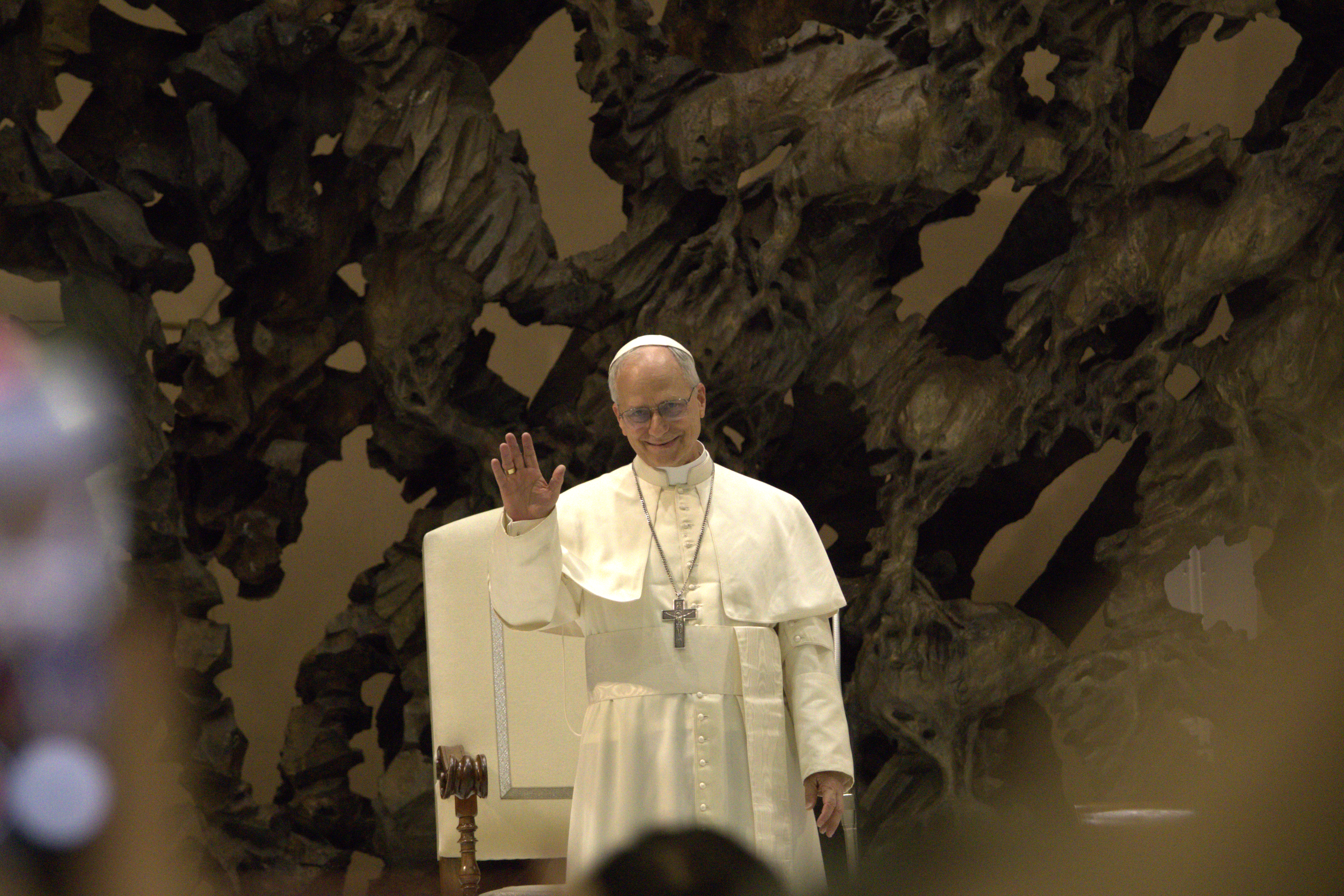
Pope Leo has brought his first African journey to a close with a final Mass in Malabo, ending an 11 day visit across Algeria, Cameroon, Angola and Equatorial Guinea The final Mass in Malabo, Equatorial Guinea, has brought to a close the first African journey of Pope Leo XIV, ending an 11 day visit that has taken him across four countries. Speaking at the end of the Mass, the Pope told the faithful plainly: “The time has come” to depart, thanking “the Archbishop, the bishops, the clergy and all the people of God journeying in this land”, and marking the conclusion of a visit that has combined large public gatherings with pointed addresses to political authorities. The journey, which ran from April 13 to 23, brought the Pontiff to Algeria, Cameroon, Angola and Equatorial Guinea, covering more than 11,000 miles and including 18 flights, alongside a programme of Masses, formal addresses and meetings with civil and religious leaders. It is the first apostolic journey of his pontificate to Africa, a continent now home to almost 300 million Catholics. In Malabo, closing the visit, the Pope spoke of what he described as “an immeasurable treasure of faith, hope and charity”, adding that “this treasure consists of stories, faces and testimonies, both joyful and sorrowful, which will greatly enrich my life and ministry as the Successor of Peter”. He thanked the country’s civil authorities for their welcome and entrusted the people of Equatorial Guinea and the wider continent to the care of the Virgin Mary. The Pope made several brief greetings to journalists aboard the papal plane on key legs of the journey. These were not full press conferences with questions and answers but short, unprompted or lightly interactive addresses. During the outbound flight from Rome to Algiers, Pope Leo addressed early comments from the US President Donald Trump criticising his stance on geopolitical issues. His Holiness said: “I have no fear of neither the Trump administration nor of speaking out loudly about the message of the Gospel. And that’s what I believe I am called to do and what the Church is called to do. We’re not politicians. We’re not looking to make foreign policy, as he calls it, with the same perspective that he might understand it. But I do believe that the message of the Gospel, ‘Blessed are the peacemakers’, is a message that the world needs to hear today.” The visit began in Algiers on April 13, where the Pope was received with official honours and met President Abdelmadjid Tebboune. Addressing civil authorities and the diplomatic corps, he spoke of the importance of coexistence before visiting the Great Mosque of Algiers. There, His Holiness said: “To seek God is also to recognise the image of God in every creature … it is very important to learn to live together with respect for the dignity of every human person.” He added that such encounters show that “we can learn to respect one another, live in harmony and build a world of peace”. Later the same day, the Pope met the small Catholic community at the Basilica of Our Lady of Africa, describing them as a “humble and faithful sign of Christ’s love”. The following day, Leo travelled to Annaba, the ancient Hippo Regius associated with St Augustine of Hippo. Visiting the ruins and celebrating Holy Mass, Pope Leo said: “God’s heart is torn apart by wars, violence, injustice and lies … God’s heart is with the little ones, with the humble, and with them he builds up his Kingdom of love and peace day by day.” Speaking to journalists aboard the flight from Algeria to Cameroon on April 15, Pope Leo XIV offered a brief but reflective account of the opening stage of his journey, describing it as “a very blessed trip” and “a special blessing for me personally”. He did not take questions, instead delivering a short prepared reflection in a notably relaxed tone. He expressed gratitude to the Algerian authorities for their welcome, including the military escort for the papal plane, stating: “It is a sign of the goodness, of the generosity, of the respect that the Algerian people and the Algerian government have wished to show to the Holy See, to myself.” Turning to the visit to the Great Mosque of Algiers, he underlined its significance, saying: “I think the visit to the mosque was significant and to say that although we have different beliefs, we have different ways of worshipping, we have different ways of living, we can live together in peace.” Reflecting on the Catholic presence in Algeria, he described the local community as “very small, but very significant”, before returning to the previous day’s visit to Annaba, associated with St Augustine of Hippo: “It was a special honor for me to return to Annaba yesterday also to offer the Church and the world the vision that St Augustine offers us in terms of that search for God and the struggle to build community, to seek for unity among all people, and respect for all peoples in spite of the differences.” From Algeria, the Pope travelled to Cameroon on April 15, where His Holiness met President Paul Biya in Yaoundé and addressed authorities, civil society and diplomats. In one of the most direct passages of the journey, Leo said: “In order for peace and justice to prevail, the chains of corruption must be broken. Hearts must be set free from an idolatrous thirst for profit.” The Pope added that “authentic peace arises when … the law serves as a secure safeguard against the whims of the rich and powerful”. The following day, he travelled to Bamenda, the centre of the country’s Anglophone crisis, where he met Christian and Muslim leaders. Speaking at a peace gathering, he said: “The world is being ravaged by a handful of tyrants, yet it is held together by a multitude of supportive brothers and sisters.” He warned against those who “manipulate religion and the very name of God for their own military, economic or political gain”, adding: “Peace is not something we must invent: it is something we must embrace.” Large public gatherings followed, including Holy Mass in Douala attended by tens of thousands, where he urged young people to resist corruption and remain rooted in faith and family life. During the subsequent flight from Yaoundé to Angola on April 18, the Pope delivered a more extended in-flight address in which he both reviewed the Cameroon leg and addressed media interpretations of his remarks. Opening with a multilingual greeting, “Buongiorno. Bonjour. Good morning everyone. Good afternoon already. I hope you had a good time in Cameroon. And, as you know of course, we are on our way now to Angola”. He referred to a monument at the Catholic University depicting St Augustine of Hippo at the centre of the continent, before restating his purpose: “I primarily come to Africa as a pastor, as the head of the Catholic Church to be with and to celebrate with, to encourage and accompany all of the Catholics throughout Africa.” Addressing reports that his peace remarks in Bamenda had been directed at US President Donald Trump, he rejected that interpretation, saying: “At the same time, there has been a certain narrative that has not been accurate in all of its aspects … Much of what has been written since then has been more commentary on commentary trying to interpret what has been said.” His Holiness added a specific clarification: “Just one little example: the talk that I gave at the prayer meeting for peace a couple of days ago was prepared two weeks ago, well before the President ever commented on myself and on the message of peace that I am promoting.” Concluding, he reiterated the continuity of the journey’s message: “So we go on the journey, we continue proclaiming the Gospel message … promote fraternity, brotherhood, trusting in the Lord, but also looking for ways to promote justice in our world, promote peace in our world.” The visit continued in Angola from April 18, where the Pope met President João Lourenço in Luanda. Addressing authorities, the Pope criticised what he called the “logic of extractivism” and the “cycle of interests” that has long shaped the exploitation of resources. At the Marian shrine of Muxima, he led the Rosary and told pilgrims: “It is love that must triumph, not war”, calling on the faithful to become “messengers of life”. In Saurimo, addressing a large crowd, His Holiness said: “We can see today how the hope of many people is frustrated by violence, exploited by the powerful and defrauded by the rich … when injustice corrupts hearts, the bread of all becomes the possession of a few.” The final leg of the journey brought him to Equatorial Guinea on April 21, where His Holiness was received by President Teodoro Obiang Nguema Mbasogo. Addressing authorities, he drew on the City of God to frame a contrast between political choices, asking leaders to consider whether they wished to serve “the city of God” or “the earthly city”. He said that governance must be rooted in “authentic liberty, justice, respect and promotion of the rights of every person”. During the visit, he met young people, cultural representatives and the country’s bishops, and visited a psychiatric hospital, where he told patients: “God loves us just as we are.” In Bata, he visited a prison, telling inmates: “You are not alone. Your families love you and are waiting for you … If any of you fear being abandoned by everyone, know that God will never abandon you, and that the Church will stand by your side.” He added: “No one is excluded from God’s love.” He also prayed at a memorial to victims of the March 7, 2021 explosions, before meeting families and young people, urging them to form “free and responsible consciences” and to work for the common good. The journey concluded on April 23 with the final Mass in Malabo Stadium, attended by large crowds. In his closing words, the Pope returned to the themes that have marked the visit, thanking those he had encountered and pointing to the enduring presence of the Church.
Apr. 24, 2026