

Outside the Walls
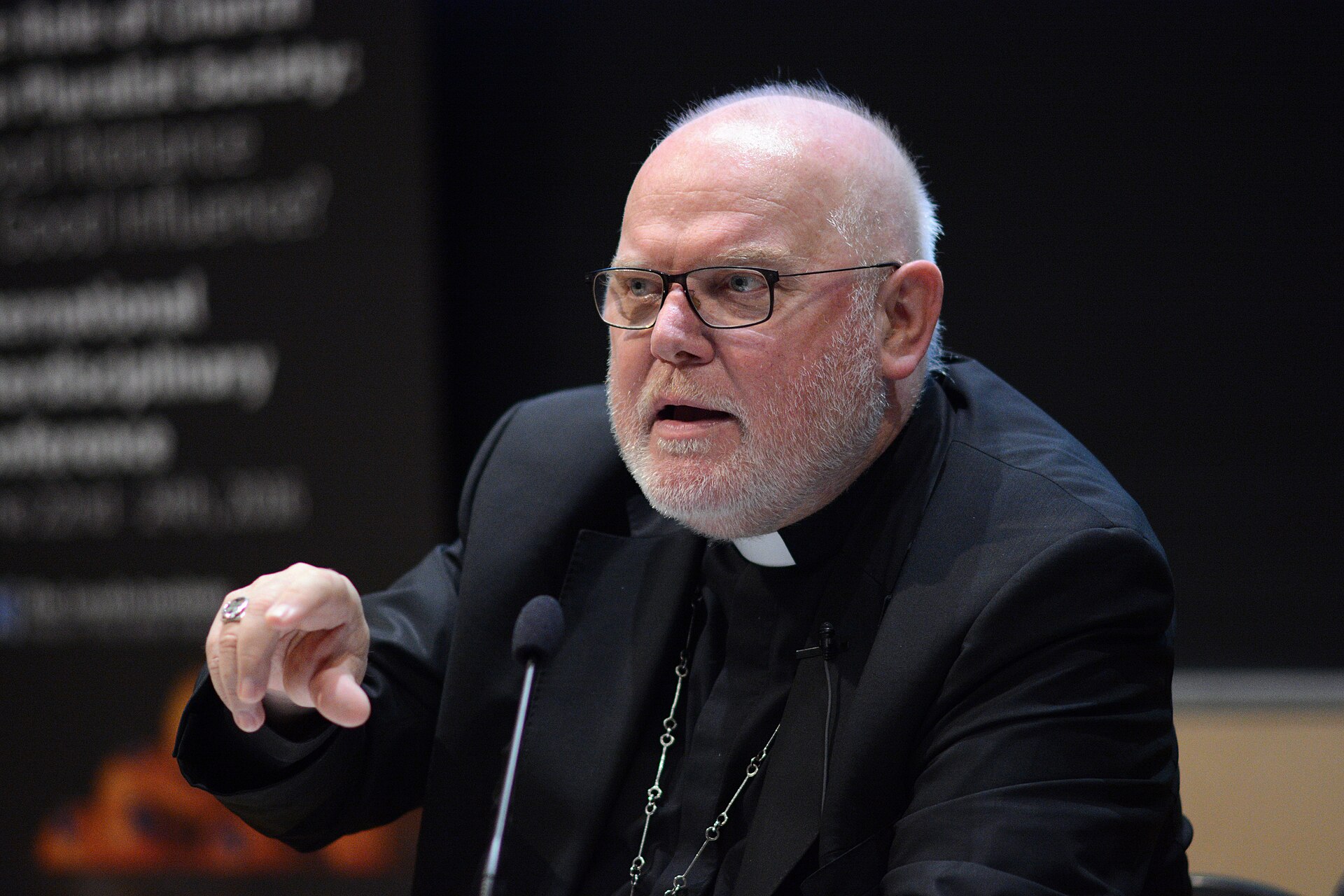
Cardinal Marx directs Munich priests to offer blessings to same-sex and irregular couples
Cardinal Reinhard Marx has instructed clergy in Munich to offer blessings to couples in irregular unions, including same-sex couples, under new diocesan guidelines based on Fiducia Supplicans Cardinal Reinhard Marx has instructed priests in Munich to offer blessings to couples in irregular unions, including same-sex couples and those who are divorced and civilly remarried. Cardinal Reinhard Marx has instructed priests in Munich to offer blessings to couples in irregular unions, including same-sex couples and those who are divorced and civilly remarried. According to guidance confirmed this week by the Archdiocese of Munich and Freising, all pastoral practice is to follow the guidelines Segen gibt der Liebe Kraft (“Blessing Gives Love Strength”), adopted last year by the Joint Conference of the German Bishops’ Conference and the Central Committee of German Catholics (ZdK), and now set to become a fundamental element of pastoral work across the archdiocese. In a letter to clergy and pastoral staff, Cardinal Marx wrote: “To all couples who love each other and seek a blessing from the Church for their partnership, I wish that they may feel God’s grace in this blessing.” The letter, confirmed by diocesan officials, sets out that “no couple should be turned away” if they request such a blessing. The archdiocese has also announced that training sessions for pastoral workers on how to conduct these blessing ceremonies will begin in June, in line with the new guidelines. These sessions are intended to standardise the practice across parishes and ensure that clergy and lay workers are prepared to implement the policy. Clergy who do not wish to perform such blessings themselves are not permitted simply to refuse. Instead, they are expected to refer couples to their dean or to another member of pastoral staff who is willing to carry out the ceremony. The directive is intended to ensure that access to blessings is not dependent on the personal views of individual priests. Cardinal Marx also addressed anticipated resistance, asking that the “theological meaning” of the blessings be explained to those who “still struggle with this blessing”. The guidance emphasises that the practice is to be understood within a broader pastoral framework rather than as a change to sacramental teaching. The document makes clear that such blessings are not equivalent to marriage. However, it adds that this distinction should not result in exclusion. “This does not mean that the blessing of a non-sacramental union, which in many cases is already a civil marriage, pushes the couple to the margins of the community and the Church,” the text states. It continues: “Couples should be welcomed in the heart of the community. Therefore, the Church asks God to bless and grant good things to these couples.” The guidelines also suggest that, “where necessary”, such blessings may serve as “a contribution to healing and reconciliation”. The blessing text was developed under Pope Francis’s declaration Fiducia Supplicans in December 2023, which permitted non-liturgical blessings of couples in irregular situations under certain conditions. According to the document, the guidelines are intended as an offer to “divorced and remarried individuals, couples of all gender identities and sexual orientations, as well as couples who, for other reasons, do not wish or cannot receive the sacrament of marriage”. At the time of their presentation, they were described as following “the pastoral approach of the pontificate of Pope Francis”. However, several dioceses, including Augsburg, Eichstätt, Cologne, Passau and Regensburg, have indicated that they do not use the guidelines. Blessings for same-sex couples are already a common practice in several German dioceses, and the Munich directive is expected to set a broader trend within the country’s Church structures. The introduction of formal guidelines indicates a move towards greater consistency in how such blessings are carried out.
Apr. 23, 2026
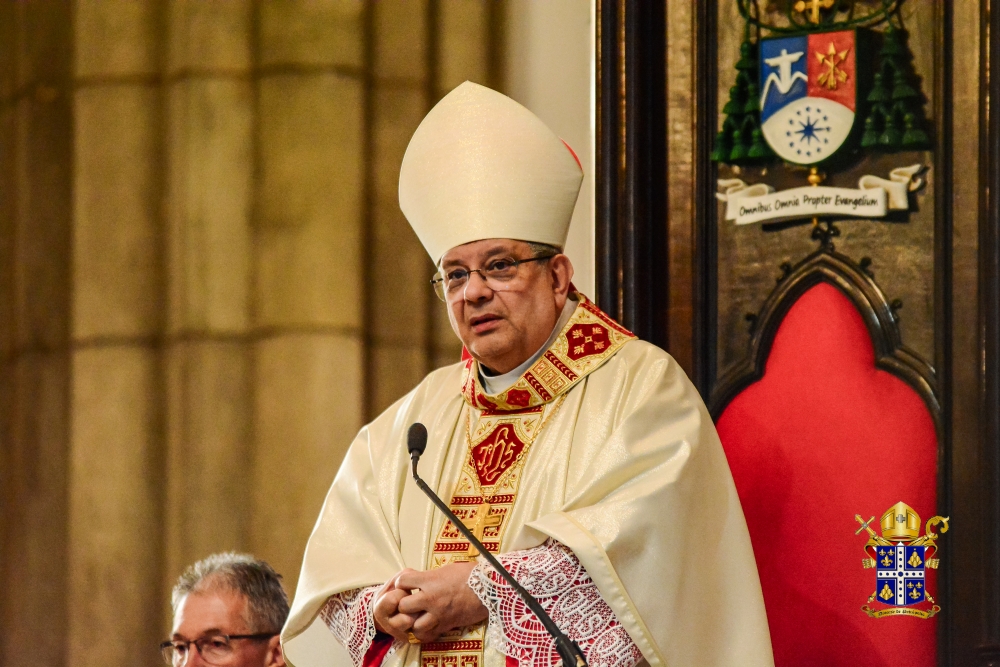
Brazilian bishop says young Catholics drawn to tradition have a place in the Church
A Brazilian bishop has said young Catholics drawn to traditional practices such as kneeling for Communion and wearing veils have a legitimate place in the Church, describing such expressions as part of Catholicism’s natural diversity rather than a rupture. A Brazilian bishop has said that young Catholics drawn to more traditional forms of worship have a legitimate place in the Church, insisting that such expressions are part of the inherent diversity of Catholic life rather than a rupture within it. Speaking at a press conference during the 62nd General Assembly of the National Conference of Bishops of Brazil in Aparecida, São Paulo, Bishop Joel Portella Amado of Petrópolis addressed questions about the resurgence of interest among younger Catholics in older liturgical customs. Responding to a question from a journalist with Rede Vida TV about “a return of a certain Catholic traditionalism in Masses”, the bishop acknowledged visible signs of this trend, including “young people who kneel to receive communion, who wear veils”, adding that “it is possible to perceive this in the Masses”. He said that such developments should be understood within the broader context of contemporary religious life in Brazil, particularly among younger generations. Referring to census data from 2022, he noted the large number of 19-39 year olds who do not profess a religious belief. “It’s not that they don’t believe in God,” he said. “The evangelical side calls them ‘unchurched’. I prefer this expression. They believe in God in heaven, but they don’t have a mediation on earth, a path to the Church.” Within this context, Bishop Amado indicated that the attraction to more traditional forms of worship may arise from a wider search for meaning. “In times of emptiness, we start searching, we look for things, even in some historical realities that this youth did not experience,” he said. The remarks came as part of a wider briefing on the ecclesial and socio-cultural issues discussed by the Brazilian bishops during their annual assembly, which has brought together prelates from across the country to consider pastoral priorities and challenges facing the Church. Bishop Amado, who serves as president of the CNBB’s Commission for the Doctrine of the Faith, emphasised that diversity in liturgical expression is not only permissible but intrinsic to Catholicism itself. “Does it have the right to be this way? Yes, because Catholicism is plural by nature, even more so in a profoundly plural world,” he said. At the same time, he cautioned against any tendency to elevate one form of expression above others or to impose personal preferences on the wider Church. “While there is a right to live and express one’s faith in one’s own way, according to one’s own personality, on the other hand, in the name of love and brotherhood, one cannot impose this on others or believe that only one is right,” he said. The bishop’s comments come amid an ongoing conversation within the global Church about the place of traditional practices in contemporary Catholic life, particularly in the years following the liturgical reforms of the twentieth century and subsequent debates over their implementation. While the early signs of Pope Leo XIV’s approach to the TLM suggest not a dramatic reversal of his predecessor’s policy, they do point to a deliberate attempt to reframe the question in terms of unity, discipline and synodality. What is emerging is a repositioning of the issue within a broader vision aimed at removing ideological conflict and quietly adjusting the tone. There has been no explicit indication that a formal or stable resolution for the traditional Latin Mass is imminent. Yet, indirectly, there has been a perceptible shift towards a more inclusive use of the Vetus Ordo, one that corresponds to the language of synodality. This began with the granting of extensions for the TLM in parishes in Texas and Ohio, and became most notable when the Catholic Bishops’ Conference of England and Wales informed its members that Rome would “be generous” in granting dispensations from restrictions on the older liturgy. While there was a response from the CDW, owing to the media frenzy surrounding it, indicating that there had been no reversal, the tone shifted following the promulgation of Traditionis Custodes under Pope Francis. Further clarity has come through the remarks of Cardinal Pietro Parolin after he sent a letter to the French bishops on behalf of Pope Leo concerning the TLM. Speaking to Advaticanum’s Vatican correspondent the following day, Cardinal Parolin articulated what appears to be the governing principle behind the Pope’s thinking. “I think we all share this, this, let’s say, assessment that the Pope gives, right?” he said. “In the sense that the liturgy must not become a source of conflict and division among us. It will be necessary to find the formula, well, this I believe, it will be necessary to find the formula that can meet legitimate needs. But I believe that, well, this can happen without turning the liturgy into a battlefield.” The insistence on avoiding conflict, while acknowledging “legitimate needs”, encapsulates the present moment. Yet the significance of these developments cannot be understood solely in terms of the TLM alone. Sources have told Advaticanum that many cardinals and bishops expect a forthcoming document on the liturgy, following an anticipated encyclical on artificial intelligence. According to these curial sources, the document is likely to address reverence and ritual integrity in the ordinary form of the Roman Rite, as well as the complex issue of inculturation. Such a move would confirm that the Pope’s concern is with the quality and unity of Catholic worship as a whole. This broader approach helps to explain why the Pope is moving more quickly on liturgical matters than had been expected. Rather than allowing the question to remain a point of ongoing contention, he appears intent on integrating it into a wider programme of ecclesial governance. His recent appointments, including figures such as Archbishop Randozza, Bishop Ioanne and Bishop Marin to senior curial roles within the Dicastery for Legislative Texts, the Dicastery for Bishops and the office of the Papal Almoner, have been noted as administratively capable prelates. In the bigger picture, while public attention has often focused on Cardinal Arthur Roche as the figure associated with restrictions on the TLM, it is widely understood that Archbishop Vittorio Francesco Viola played a decisive role in shaping that policy, working in collaboration with the lay theologian Andrea Grillo. Within the Dicastery for Divine Worship and the Discipline of the Sacraments, it is increasingly evident that the office of secretary has, in practice, exercised a level of influence that at times appears to rival, if not quietly supersede, that of the prefect. The question of Archbishop Viola’s and Cardinal Roche’s future therefore assumes a significance that goes beyond personnel. His first five-year term as secretary is due to conclude in May. Whether Pope Leo chooses to renew that mandate, reassign him within the Curia, or appoint him to a diocesan see will offer a clear indication of the direction in which liturgical policy is likely to develop. Sources close to Advaticanum suggest that an extension is expected, not least because of his relatively low profile in the English-speaking press, which has allowed him to operate without attracting sustained public scrutiny.
Apr. 23, 2026