

Latest

Pope Leo XIV warns Europe faces ‘drastic sterility’ after abandoning Christianity and embracing abortion
Pope Leo XIV has warned that Europe’s demographic crisis has been driven by the abandonment of the Christian principles that shaped the post-war European project, telling lawmakers in Rome that the continent faces a “time of drastic sterility” marked by abortion. The Pope made the remarks on Monday morning during an audience with members of […] Pope Leo XIV has warned that Europe’s demographic crisis has been driven by the abandonment of the Christian principles that shaped the post-war European project, telling lawmakers in Rome that the continent faces a “time of drastic sterility” marked by abortion. The Pope made the remarks on Monday morning during an audience with members of the European Parliament’s Demography Intergroup in the Clementine Hall of the Apostolic Palace. The meeting brought together MEPs alongside senior European and Italian officials attending a conference on family and demographics, including the European Commissioner for the Mediterranean, the Italian Minister for Family, Natality and Equal Opportunities, and the OSCE Special Representative on Demographic Change and Security. Addressing delegates, the Pontiff described Europe’s falling birth rates and ageing populations as an “urgent challenge with practical implications for millions of people and their families” across the continent. Referring to remarks frequently made by Pope Francis, Pope Leo said Europe was becoming the “‘old continent’ – no longer because of its glorious history, but because of its advancing age”. Official figures for 2024 show that the EU’s total fertility rate fell to a record low of 1.34 live births per woman, with just 3.55 million babies born across the bloc. No European country currently reaches the replacement level of around 2.1 children per woman required to maintain a stable population without imigration. The Pope said the crisis extended far beyond economics and population statistics, warning that it pointed to a deeper collapse in intergenerational solidarity and cultural confidence. “Demographic data are not merely statistics, but speak of fatherhood, motherhood and children,” His Holiness said. “And children are the future.” Pope Leo said Europe had failed to equip younger generations with both the material stability and cultural inheritance necessary to build families and face the future confidently. “Over recent decades, we can see that a rejection of the Christian inspiration of the founding fathers of the EU institutions has led to a time of drastic sterility,” the Pope said, adding that this had occurred “not only because too many have been deprived of the right to be born, but also because there has been a failure to pass on the material and cultural tools that young people need to face the future”. Across Europe, the abortion rate stands at approximately 29 per 1,000 women aged 15–44. In several countries, hundreds of thousands of abortions continue to be performed each year, even as birth rates remain at historic lows. Unsurprisingly, there has also been a rejection of traditional social norms. The EU crude marriage rate has fallen by more than half since the mid-1960s, standing at 3.9 marriages per 1,000 people in 2024. Regrettably, the fall reduction in Catholic marriages has been even greater. The Pontiff criticised what he described as contradictory social policies, which publicly claim to support families while simultaneously undermining motherhood and promoting abortion. He said Europe was increasingly confronted by “purportedly family-friendly policies” that “promote discrimination against motherhood, exalt abortion as a right, and undermine the very foundation of the desire to start a family”. The Pope also linked demographic decline to what he called the “pandemic of loneliness”, describing it as one of the many social consequences flowing from shrinking and ageing populations. He told lawmakers that Europe’s demographic problems demanded coordinated action from political institutions, governments, academics and wider civil society, saying the issue represented “a crucial juncture for the anthropological, social and economic future of Europe”. Pope Leo urged European leaders to place the family at the centre of policymaking and reaffirmed the Church’s teaching that the family is rooted in marriage between a man and a woman. Citing Pope St John Paul II’s apostolic exhortation Familiaris Consortio, he said the family remained “the first and irreplaceable school of social life” and described it as “founded on marriage between a man and a woman, a reality that unites the personal and public dimensions”. The Pontiff said lawmakers had a responsibility to encourage the “shared responsibility and active role of families in social, political and cultural life”, while also safeguarding the principle of subsidiarity. “For only by respecting and promoting this central place of the family, and applying the principle of subsidiarity, is it possible to avoid the two extremes of excessive State intervention and individualism,” His Holiness said. Throughout the address, Pope Leo framed demographic decline not simply as a policy challenge but as a question touching the future identity and stability of Europe itself. He called for cooperation between European institutions and Christian organisations, pointing to the work of the Federation of Catholic Family Associations in Europe and the Commission of the Bishops’ Conferences of the European Union as examples of how civil society groups could contribute to political debate and practical reform. “This is the impetus Christians are bringing to the European project,” he said, “so that policies look to human persons in their entirety and always promote the dignity of human beings.” The Pope insisted the Church was not proposing a return to older political or social arrangements, but rather the recovery of enduring principles capable of guiding modern societies through cultural and demographic decline. “This approach is not a matter of returning to social models of the past,” he said, but of offering “unchanging principles” capable of answering fundamental questions about “the meaning and value of human life”, authentic human society and the kind of world future generations will inherit. The Pope concluded by calling for what he described as “a fresh springtide for the family” to reverse “the winter chill of our ageing populations”. Pope St John Paul II made opposition to abortion and the defence of the family defining themes of his pontificate, particularly in Evangelium Vitae, his 1995 encyclical condemning abortion and euthanasia. Pope Leo’s address continues that emphasis while placing demographic decline at the centre of wider debates over Europe’s future direction. “What kind of world do we want to hand on to future generations?” the Pope asked delegates gathered in the Apostolic Palace. The question hung over the audience as European lawmakers departed the Vatican. In his comments, the Pontiff added his voice to some of the existential questions facing the continent, which can at present only accurately be described as being in a state of decline.
May 26, 2026

Magnifica Humanitas offers a window into Leo XIV’s moral compass
Magnifica Humanitas is far more than an encyclical on artificial intelligence. Michael Haynes finds that Pope Leo XIV’s first major text offers a window into the moral vision shaping his pontificate With the launch of his first encyclical there is now no doubt that Leo’s choice of regnal name and entire papacy is centred around what he sees as a pivotal moment for the future of the Church and humanity. “Artificial intelligence needs to be disarmed,” said Leo XIV while launching Magnifica Humanitas today. “This moment needs words capable of attracting attention, of awakening consciences.” This is not to say that Leo opposes the seemingly relentless drive of artificial intelligence (AI) or the wider technological development of the modern world. While AI cannot be deemed “morally neutral”, Leo urged that “it must be at the service of all and the common good”. In short, this could be taken as a summation of the entire encyclical : a plea for the pursuit of the common good. It is certainly written as a response to AI and describes itself as being in the “age of AI”. But it is much wider than AI itself, as Leo appeared to launch his pontificate anew. Just as during his address to the College of Cardinals last May he outlined his papal priorities, in Magnifica Humanitas Leo revealed his deeper concerns about wider society. Given the length of the encyclical, no single analysis can justly summarise all that it contains, but one key element to examine first is what the text reveals about the Pontiff’s moral compass and his view of addressing crises in the Church and wider secular society. Far from being a mere appeal from another cleric for some generically responsible behaviour, this time regarding AI, Leo delved into the entire foundation of societal life. For Leo, the link between his encyclical and his namesake’s Rerum Novarum is palpable. “Like the earlier Leo, I feel entrusted to look upon another huge transformation with eyes of faith, with lucidity of reason, with openness to mystery, and with cries of the poor and the earth resounding in my heart,” he commented during the launch event. This is why Magnifica Humanitas does not deal briefly and solely with AI, but instead uses the topic to launch into a wider schooling of society about improving standards of behaviour and acting in a more Christian manner while seeking the common good. Leo’s assessment of how to preserve humanity from the dangers posed by AI is to attempt a ground-up re-education of society with God at the centre. In part this explains the considerable length of the text, which will have disappointed those looking for a return to briefer tomes. Of the 245 paragraphs and 224 footnotes, Pope Francis is cited 54 times, Benedict XVI 16 times, John Paul II nearly 40 times, and the Second Vatican Council 13 times. St Augustine also features throughout, with a quotation drawn from J.R.R. Tolkien. The tone is a mixture of different elements. Firstly, it is undeniably clear that Leo is seeking to address the result of many years of increasingly anti-Catholic secularism. “We live at a time of significant spiritual and cultural blindness,” he stated. In order to resolve this crisis, a crisis which then spills over into the use of AI, Leo urges society to return to elements intrinsic to Christian civilisation, such as pursuing the common good. “In the era of artificial intelligence, when human dignity is threatened by new forms of dehumanization, ours is the pressing duty to remain profoundly human,” he writes. “We must lovingly safeguard the grandeur of humanity bestowed upon us and revealed in its fullness in Christ, the splendour of which no machine can ever replace.” His approach to how best to use AI thus necessarily involves a quasi-catechesis on the re-Christianisation of society. Leo decried how “the risk of dehumanization — of building a future that excludes God and reduces the other to a means — is an ancient and ever-new temptation that today takes on a technical guise”. Should AI and wider technological development continue in the line of the Tower of Babel, then all will suffer, Leo argued. “Babel thus reveals the limits of any effort that, however grandiose, arises from self-affirmation, sacrifices human dignity for efficiency and aspires to reach heaven without God’s blessing.” “What saves humanity,” he added later in the encyclical, “is the divine love that descends into the most fragile point of our history and renews it from within.” The Pontiff urged all readers to recognise “the harmony that arises when all persons assume their own role and recognize that their strength comes from the Lord”. Such lines present a decidedly Christian tone to the text, if perhaps not a stridently or overtly Catholic one. It reads as Leo’s heartfelt appeal to the world at large to act in a more polite, respectful and ultimately Christian manner. “In order to protect the human person in the age of artificial intelligence, I believe that today we must once again reflect on the common good, the universal destination of goods, subsidiarity, solidarity and social justice,” wrote Leo, having noted that “a city founded on the common good implies, first and foremost, building on a firm relationship with God”. At other times the text seems less unabashedly Catholic than a papal encyclical ought confidently to appear. In large part this is due to the Pope’s reiteration of his predecessor’s text Dignitas Infinita regarding human dignity, and an underlying tone in the text which appears to orient the Pope’s proposed societal changes as being chiefly desirable because they benefit man, rather than being linked to a conversion of hearts and minds to Catholicism. Assuredly, in certain sections the Pope notes the importance of having God at the foundation of activity, but in others a far more secular tone is present. Modern teaching on human dignity tends to upend traditional teaching, generally remaining silent on supernatural dignity and then elevating natural dignity. For a more detailed analysis on the topic than is possible here, see this correspondent’s article and book on the topic. Citing this teaching on human dignity, Leo writes that it is this which “requires us to shape the way we live together, including our economic and political choices, and the makeup of our cities”. Yet such an aspect is also very much in line with Leo’s papal style: avoiding polemics, and outwardly remaining calm as he seeks to find common ground with all in an apparent attempt to defuse tensions and foster peaceful dialogue. This does not stop him from once again decrying abortion and euthanasia. Nor did Leo feel restrained in making a bold statement declaring that the Church’s longstanding teaching on a “just war” is “now outdated” since “humanity possesses far more effective and capable tools for promoting human life and resolving conflicts, such as dialogue, diplomacy and forgiveness”. Indeed, this latter point places his repeated calls for peace in a new light, given that, for Leo, it appears that armed conflict can no longer be justified, a pronouncement which is not supported either by Scripture or Tradition. For an encyclical billed as being solely about AI, the text delivers far more than that. It reads as a window into Leo’s moral and social views and thus into the style and priorities of his pontificate. Vaticanists waiting for a “tell” on Leo have finally been granted an inside look. Leo highlights the Christian foundation of society before noting that only Christianity can lead society and mankind to truly flourish. He then moves to address questions relating to the common good, alongside topics likely to interest more secular readers, including his passionate appeals regarding armed conflict and the growing use of AI in fuelling the global war industry. But in closing he returns once more to his overtly Christian theme, emphasising the importance of prayer in sustaining any endeavour aimed at fostering a better society in pursuit of the common good. “The spirituality that we need,” he wrote, “is a Eucharistic spirituality, that is, a spirituality of ecclesial unity in love.” Leo urged society to recognise the beauty that comes not from AI’s takeover of the world, or even man himself through transhumanism, but from the frailty of humanity which must rely upon God for everything. “Our rule,” he concluded, “must be the acceptance of human limitations as a natural and positive reality, and should be characterized by shared responsibility and a language characterized by the Gospel.” Michael Haynes is an English journalist in the Holy See Press Corps. He serves as Vatican Correspondent and Analyst for Pelican+ , while readers can follow him at Per Mariam and on X @MLJHaynes .
May 25, 2026
When Canterbury fails
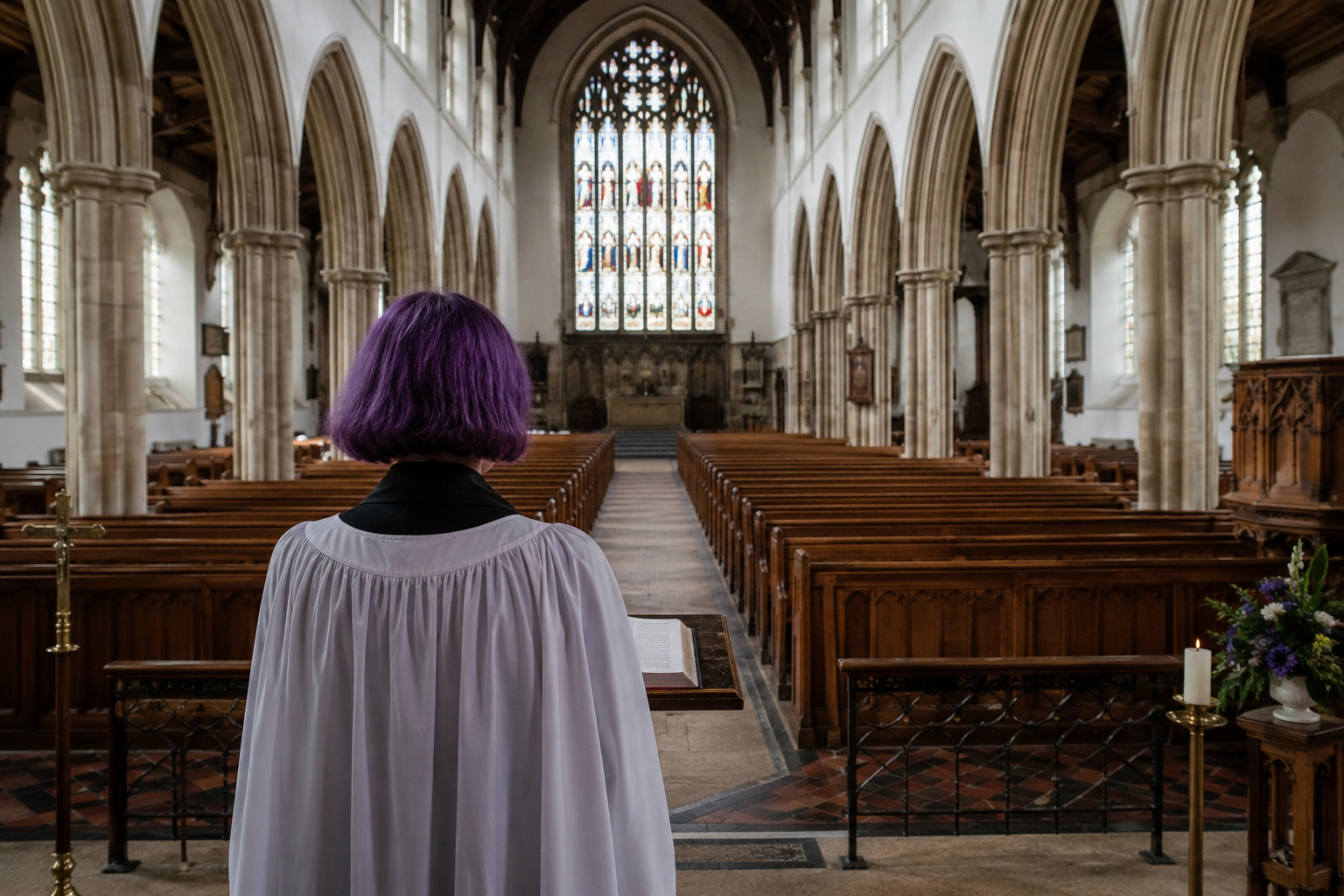
Discos in cathedrals and confusion on doctrine have left Anglicanism wanting at a time when many are searching for a counter-cultural truth. But how should a Catholic convert respond to leaving behind the Church of England? And what good can still be carried across the Tiber? I once read that converts from one church to another have a sort of grace period after which criticism of their former denomination becomes mere malice. Having just become a “stinking papist” (to quote Diana Gabaldon’s Outlander ), I thought I might take advantage of this special dispensation. For although I became Catholic for positive reasons, certainly my old Anglican tribe was generous in its provision of negatives. It would be remiss of me, however, to skate over the good. So let me say that when it comes to beauty I have yet to encounter a psalter quite as gorgeous as Coverdale’s. Regarding “our own hateful Cranmer” (as a Servite priest I know once homilised), the 1662 Prayer Book – containing as it does the Anglican Church’s entire liturgy, from baptism to burial of the dead – is a masterclass in convenience. The Prayer Book was my first introduction to the Divine Office, and I was lucky to have had a pastor open to using it. Indeed, soon after my reception into the Anglican Communion, I was given the honour of leading Morning Prayer on Thursdays. I joined the PCC. I began to deacon. I even began seriously to consider the priesthood. I was also part of a Bible study group, for lack of a better term, which we cheekily called The Corinthians. It was in the Corinthians WhatsApp group that things began to unravel. Prompted by a question from one of the members – I’ll call him Bob – the vicar invited us each to submit our definition of Anglicanism. It is difficult to know quite how to describe the resultant confusion without quoting from the exchange. Bob: What’s the Anglican take on the Eucharist? Closer to Catholic or Reformed? Vicar: Unfortunately that can’t be answered. Bob: So in effect it’s left to each person’s interpretation? Vicar: Not exactly. There are people who receive for years without becoming Anglican. Bob: Well tonight has thrown me a bit. I was absolutely convinced the C of E was Protestant. Vicar: Well, it’s good to be thrown. An expression that Anglican theologians have used over the centuries is the via media. We see ourselves as reconcilers, though that also needs unpacking. Bob: On a side note, I thought I’d share something I found amusing yesterday. There’s a church in Mexico that uses crisps and Coke in the Eucharist. Lol. Lol indeed. I like to think this exchange stands alone as a decisive rebuttal of the entire Reformation project. One would have thought, I mean, that the certainty of Cranmer and his heirs – the sheer resolve with which they hunted priests, sacked abbeys, debased the Virgin Mary and reimagined the liturgy – might have corresponded to an equally certain theology of the sacrament of the Eucharist. Not so. What, then, was it all for? The ability to claim, some four hundred years later, to be a “reconciler”? Reconciled to what, exactly? Error? One is reminded of Newman: “Between two extremes, there is no middle way; between truth and error, there is no neutral ground.” The exchange disturbed me tremendously. For though I had prepared my own answer – itself, in retrospect, confused – I had seen that even the beloved fallback of lex orandi, lex credendi could have no purchase in a communion in which some ministers (I had met them) were unwilling to touch the BCP – their own official liturgy – for being too Catholic. For my fiancée and me, there was to be one other event that drove the nail clean into the Anglican coffin. It was summer. The Corinthians had gathered in one of our gardens to discuss Taizé, the ecumenical youth community based in the French village of the same name. A chance comment led to a discussion of whether we ought really to be hosting discos in our historic cathedrals. That is, should we really be exposing the tomb of St Thomas Becket to spillages of vodka and Coke from jiving millennials who at any rate regard the Church of England as the Jesus contingent of the DEI agenda? The answer, obviously, is no. But it fell to the Corinthians’ three youngest members – the very people whom the C of E’s boomer leadership are most desirous to “attract” – to point this out. Our two pastors, on the other hand, exhibited not the slightest whiff of indignation. Specifically, one was indifferent and the other wholeheartedly in favour. The shepherds had abandoned their flock, or at least that portion of their flock who wished to respect tradition. In my experience, Church of England clergy remain dogmatically obsessed with the nostrums of the 1960s and ’70s. They fail to reckon with the urgent spiritual needs of the 2020s. “Women”, “the gays”, “eco churches” are forefront in their minds – the salvation of souls, not so much. (And why would they be? Most are universalists.) Female bishops are the best thing since Evensong. Sex – the very word – is titillating, as though the ravages of the sexual revolution had never manifested themselves. But is the host transformed into the body, blood, soul and divinity of Our Lord Jesus Christ? “Unfortunately that can’t be answered.” And even if it could, “it’s good to be thrown” – a statement flatly incompatible, one would have thought, with the very possibility of sound catechesis. It took me a long time to realise that, in the end, Anglicanism – which began with the cynical power, land and money grab of a schismatic king – exists and has ever existed to keep the faithful from the Blessed Sacrament in the Holy Sacrifice of the Mass. It may on occasion wear the garb of Catholics in the buildings it stole from Catholics. But, like drag queens, all it can do is insult the object of its pantomime. After announcing my intention to swim the Tiber, my old pastor was keen to present me with a list of what he regarded as the Catholic Church’s sins against liberalism, including its stances on abortion and sexual ethics generally. It was supposed to put me off. He couldn’t understand that they were part of the attraction. I am twenty-nine. Many in my generation have wised up to the fact that we have inherited a civilisation at the nadir of its spiritual, intellectual and artistic life. Modernism, that heresy of heresies – comprising as it does liberalism, rationalism, naturalism, secularism, etc – holds sway. Whole books are written about the consequences of these forces, although a brief shopping list would include the trans phenomenon; the ever-expanding “empire of rights” (to travel, to contracept, to abort and soon perhaps to death itself); and the deification of the political process. There is also the growth of New Age spirituality: for our malaise is spiritual, not political, and one might say that the extent to which cultural commentators grasp this – one thinks of Paul Kingsnorth – is the extent to which they are worth reading. Our Lord says: “If you belonged to the world, the world would love you as its own. Because you do not belong to the world, but I have chosen you out of the world – therefore the world hates you.” The Church of England has fallen in love with the idea that it might remain relevant by meeting the world on its own terms. It has lost the ability to exhort us to holiness; it has honed the ability to mock the very notion. It will not condemn degeneracy; it will move heaven and earth to justify it. It cannot preach repentance; it can minimise the need. It’s not that the Catholic Church is immune to the same progressive disease. But she has strong antibodies. She has the Catechism. She has Our Lord’s promise in Matthew 16:18. Whatever the views of Catholic parishioners, one may be sure that every particle of the Eucharist is transformed into the body, blood, soul and divinity of Christ. It is refreshing to expect the “Hail Mary” by default and not because the minister woke up feeling sufficiently orthodox. From a theological point of view, then, I will be glad to see the back of a communion predicated upon the rejection of the Catholic Church. From a social and cultural point of view, I am not so sanguine. For though they lack the Mass, Anglicans do at least use their churches for quintessentially social and religious purposes that, in spite of the Reformation’s initial violent rupture, have after hundreds of years found a settled – and settling – place in the spiritual and artistic life of the nation. In the years to come, more and more of these beautiful buildings will have to close down, a process already well under way and not at all helped by Welby’s recent war on the parish system. Unless the Catholic Church is willing to reclaim them, they will be converted into flats, clubs or mosques. The loss would be incalculable. Could this process have been arrested by an invigorated Prayer Book Anglicanism that held Jewel and Andrewes dearer than Welby and Cottrell? Who knows. The analogue would be the various Catholic Latin Mass societies, which flourish in spite of – and perhaps because of – what can only be described as persecution from above. Cranmer’s Prayer Book may be lacking from a Catholic point of view. But I have seen firsthand its power to attract the young. Many Anglican ministers hate it, not so much for its theology, but because it leaves so little room for them to impose their personalities. There is no rubric that reads: here the minister may play guitar, or: here the minister may employ the gimmick of pacing the nave during his sermon. British Christianity needs oxygen. When it finds it, it will, I suspect, be inhaled by the two great apostolic lungs of Catholicism and Eastern Orthodoxy. The recent news that Catholics may soon outnumber Anglicans, and already do in the younger age brackets, in England is a symptom of a larger cultural and spiritual renaissance. Thirsty people go to where the water is. And Canterbury is all dried up.
May 25, 2026
Inside Magnifica Humanitas: Pope Leo XIV’s warning on AI
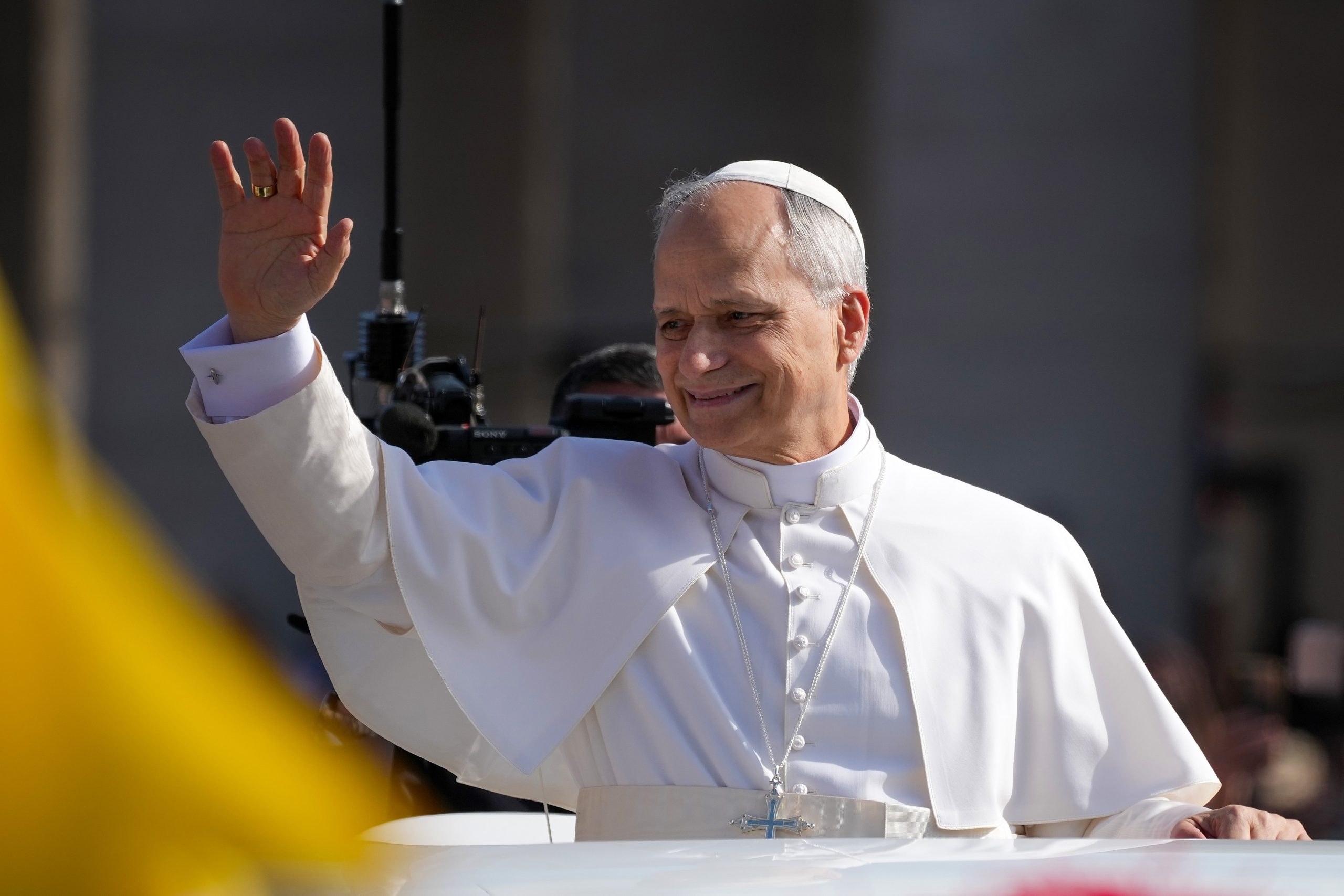
Pope Leo XIV has published the first encyclical of his pontificate, warning that artificial intelligence risks creating a new “Tower of Babel” built on technocratic power, dehumanisation and moral confusion Pope Leo XIV has published the first encyclical of his pontificate, issuing a warning against the dangers posed by artificial intelligence and what he describes as a growing “culture of power” threatening the dignity of the human person. Magnifica Humanitas (“Magnificent Humanity”), released by the Vatican on 25 May after being held under strict embargo until late Monday morning in Rome, is the Holy Father’s most substantial intervention yet in the global debate surrounding AI and the technological transformation of society. The encyclical argues that humanity now stands between two paths: the construction of a new “Tower of Babel” founded on pride, uniformity and technocratic power, or the rebuilding of a new Jerusalem grounded in solidarity, communion and God-centred human fraternity. “Humanity, created by God in all its grandeur, is today facing a pivotal choice: either to construct a new Tower of Babel or to build the city in which God and humanity dwell together,” the Pope writes in the opening paragraphs of the encyclical. The 230-paragraph document is the first major social encyclical of Leo XIV’s pontificate and immediately places him within the long tradition of modern Catholic social teaching stretching back to Pope Leo XIII’s Rerum Novarum in 1891. Far from rejecting technological progress outright, Leo XIV repeatedly insists that technology is a fundamentally human achievement capable of serving the common good. However, he warns that technological systems can never be considered morally neutral and must remain subordinate to the dignity of the human person. “We cannot consider AI to be morally neutral,” the Pope states. The encyclical presents artificial intelligence as one of the defining res novae — “new things” — confronting the modern world, the language traditionally used by the Church to describe the upheavals of the industrial revolution. The document states that unprecedented technological power is increasingly concentrated in the hands of private actors operating beyond effective political oversight, creating new dangers for democracy, labour, truth and peace. “More power does not necessarily imply something better,” it states. Much of the encyclical is devoted to explaining why the Church believes artificial intelligence cannot be equated with human intelligence. The Pope insists that AI systems, however sophisticated, remain incapable of moral reasoning, authentic relationships or genuine human experience. “So-called artificial intelligences do not undergo experiences, do not possess a body, do not feel joy or pain,” the encyclical says. “Nor do they have a moral conscience.” Leo XIV repeatedly returns to the theme of human dignity, grounding the entire encyclical in the belief that every person possesses an “infinite dignity” rooted in creation in the image of God rather than in usefulness, efficiency or productivity. “The fundamental dignity of each person,” he writes, “is neither acquired nor earned, nor does it need to be justified.” The Pope warns that the unchecked growth of AI risks creating new forms of dehumanisation in which human beings are valued according to economic output, algorithmic usefulness or digital visibility. He cautions against reducing human judgement to automated systems and criticises cultural movements that treat technological transcendence as a substitute for spiritual fulfilment. One of the most striking sections of the document is its sustained critique of transhumanist and posthumanist ideologies, which seek to overcome biological limitations through technological enhancement. Without naming particular movements or figures, Leo XIV argues that such projects reflect humanity’s recurring temptation to seek salvation apart from God. “Babel thus reveals the limits of any effort that, however grandiose, arises from self-affirmation, sacrifices human dignity for efficiency and aspires to reach heaven without God’s blessing,” the encyclical says. The encyclical also addresses the growing political and social consequences of AI-generated misinformation and manipulated media. Leo XIV warns that artificial intelligence is rapidly transforming the public square and undermining trust in democratic institutions through the spread of falsehoods and synthetic content. “Disinformation finds a powerful amplifier in AI,” the document states. The Pope argues that truth itself must be defended as a “common good” and calls for what he describes as an “ecology of communication” rooted in responsibility, education and human relationships rather than manipulation and profit. “The search for truth is an essential element of democracy,” he writes. Questions surrounding labour and the future of work occupy another substantial portion of the encyclical. Leo XIV warns against economic systems that prioritise efficiency over workers and expresses concern about automation displacing millions of people while weakening social bonds and family life. The Pope also calls for stronger political oversight of AI systems, greater international cooperation and safeguards against the monopolisation of data and digital infrastructure. In one of the encyclical’s most arresting phrases, Leo XIV urges world leaders to “disarm AI”. “Disarming AI means freeing it from the mentality of ‘armed’ competition,” the Pope writes, warning against an escalating technological arms race between states and corporations. The document devotes an extended section to the dangers posed by autonomous weapons systems and the growing use of AI in warfare. Leo XIV argues that artificial intelligence is accelerating the pace and destructiveness of conflict while distancing human beings from moral responsibility for violence. “AI acts as an accelerating factor” in changing the nature of war, he writes. The Pope condemns what he calls the “normalisation of war” and criticises a global culture increasingly resigned to permanent conflict, weakened diplomacy and the collapse of multilateral institutions. “This culture of power infiltrates society,” he warns, “normalising war.” Despite the encyclical’s sombre tone, the document concludes on a strongly hopeful note centred on the Christian doctrine of the Incarnation. Against ideologies promising technological transcendence, Leo XIV points to Christ as the true fulfilment of humanity. “At the heart of everything is the mystery of the Incarnation, the Word who became flesh and dwelt among us,” he writes. The final pages call on Catholics to resist despair and instead help build what the Pope repeatedly describes as a “civilisation of love” capable of directing technological progress towards authentic human flourishing. “In the era of artificial intelligence,” the Pope writes, “when human dignity is threatened by new forms of dehumanisation, ours is the pressing duty to remain profoundly human.”
May 25, 2026
Pope Leo XIV’s first encyclical attacks transhumanism and AI excess
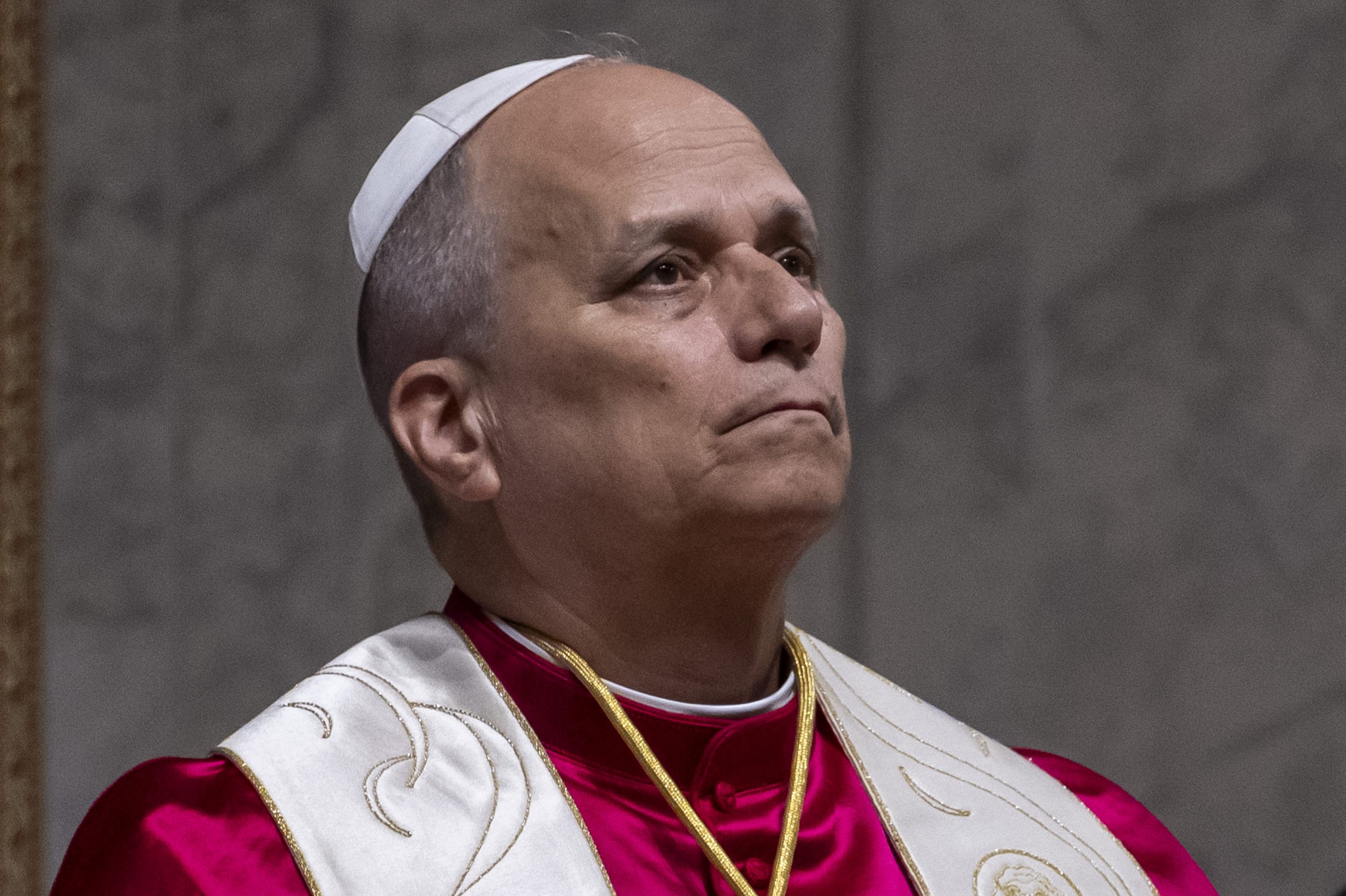
Magnifica Humanitatis will reportedly place human dignity at the centre of the Church’s response to artificial intelligence as Pope Leo XIV addresses war, algorithms and the moral limits of technological progress Pope Leo XIV will publish his first encyclical on Monday, warning against the dangers of transhumanism and the dehumanising effects of artificial intelligence, according to details revealed in advance by Vatican correspondent Nico Spuntoni. The document, titled Magnifica Humanitatis , has reportedly been described inside the Vatican as the defining text of the new pontificate and places the defence of human dignity at the centre of the Church’s response to rapid technological change. According to Spuntoni, the encyclical argues that humanity now stands “at a crossroads between self-sufficiency and solidarity” as artificial intelligence becomes increasingly embedded in political, economic and social life. The text frames that struggle through biblical imagery while returning repeatedly to the theological significance of the Incarnation. Nico Spuntoni wrote that Leo XIV presents “contemplation of the Incarnate Word” as the answer to what the Pope calls “the eclipse of the meaning of what it means to be human”. The encyclical is expected to expand substantially on comments made by the Pope shortly after his election when he explained why he had chosen the name Leo. Addressing the College of Cardinals, the Pope said Leo XIII had confronted “the social question in the context of the first great industrial revolution”, while the Church today must respond to “another industrial revolution and to the developments of artificial intelligence, which bring new challenges for the defence of human dignity, justice and work”. Far from rejecting technological development altogether, the encyclical reportedly argues that artificial intelligence must remain subject to moral responsibility and ordered towards the common good. The Pope is also said to warn against any attempt to replace or transcend the human person through technology. Furthermore, Nico Spuntoni reported that Leo XIV criticises those who seek “to transcend humanity through technology”, while insisting on what he previously described as a “healthy sense of proportion” in relation to scientific development. The document reportedly returns several times to the question of human dignity as the measure against which all technological progress must be judged. In one passage referenced by Spuntoni, the Pope stresses that the human person possesses inherent dignity because each person is “willed, created, and loved by God”. That theme had already appeared in the Pope’s message for this year’s World Communications Day, in which he quoted St Gregory of Nyssa’s teaching that mankind possesses “a royal character” because humanity is created in the image of God. According to Nico Spuntoni’s account, the Pope expresses particular concern about what he sees as the erosion of moral accountability through reliance on algorithms and automated systems. The encyclical reportedly develops warnings Leo XIV issued earlier this year in a message for the International Day of Mathematics, when he called for algorithms to respect “the integral growth of the person” and not exclude “the moral dimension of these emerging technologies”. The impact of artificial intelligence on relationships and public discourse also features prominently in the text. Spuntoni said the Pope warns against forms of digital communication that undermine truth and human freedom, echoing earlier appeals from the pontiff for technology to remain at the service of authentic human interaction. The encyclical is also expected to address the military use of artificial intelligence. Pope Leo, who has appealed for peace since his election, reportedly insists on the ethical limits that must govern technological development in the defence sector. Nico Spuntoni suggested the Pope also uses the document to defend multilateral cooperation at a time of increasing geopolitical instability and international fragmentation. The encyclical is also likely to reinforce Leo XIV’s growing reputation as a pontiff deeply shaped by the intellectual legacy of St Augustine and Pope Benedict XVI. Spuntoni noted that the document revisits themes explored by Benedict in Spe Salvi , particularly the danger of mankind placing excessive faith in its own power and technological capability. According to Spuntoni, the Pope rejects the idea that Catholic social teaching is merely sociological or political, instead presenting it as something rooted directly in Christ and the Gospel. Ultimately, the encyclical does not condemn artificial intelligence itself, but instead seeks to direct technological development towards the service of humanity and the common good. In doing so, according to Spuntoni, the Pope expresses hope that mankind can still place technological progress at the service of human dignity rather than allow it to diminish or replace it. The topic of the text is as expected. The Pope’s choice of name and subsequent comments on artificial intelligence made it almost certain that this would be the theme of his first encyclical. The antimilitarist stance is also not surprising. However, the succinct way in which the pontiff has drawn together two major themes of his pontificate is characteristic of both the diplomatic ability and quiet confidence he has exuded since taking office. JD Vance has already said that he is “looking forward to reading” Magnifica Humanitatis, and it is likely that the text will prove influential on the world stage. By linking war with the topic of AI, the Pope has adeptly given world leaders a way to discuss the need for restraint in conflict without stoking partisan tensions. The full text will be presented tomorrow at 11.30am in the Vatican’s Synod Hall. It will be signed on 15 May, matching the date of the signing and publication of Rerum Novarum, Pope Leo XIII’s best-known encyclical, issued on 15 May 1891. The same date was also chosen in 1931 by Pope Pius XI for Quadragesimo Anno, which developed the Church’s teaching on social order and introduced the principle of subsidiarity. Thirty years later, on 15 May 1961, Pope John XXIII promulgated Mater et Magistra, focusing on economic justice and social development. The date of release, 25 May, also coincides with Pope John Paul II’s Ut Unum Sint, on ecumenism, which was released on 25 May 1995, and Pope Leo XIII’s Annum Sacrum, released on 25 May 1899, which consecrated the entire human race to the Sacred Heart of Jesus.
May 24, 2026
Archbishop accuses Papua documentary makers of “one-sided” propaganda
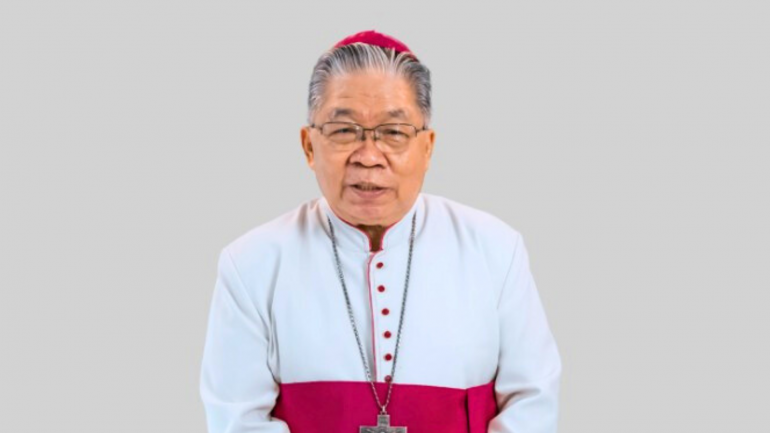
Archbishop Petrus Canisius Mandagi has accused the makers of a controversial documentary on development projects in Papua of producing “one-sided” propaganda Archbishop Petrus Canisius Mandagi has accused the makers of a controversial documentary about development projects in Papua of producing “one-sided” propaganda as tensions deepen between Indonesians and Indigenous Papuans. The Archbishop of Merauke criticised the film Pig Feast: Colonialism of Our Time for excluding the perspective of clergy in his archdiocese while amplifying accusations that the Church had aligned itself with companies linked to deforestation and the Indonesian government’s National Strategic Project. “Why did they not come to ask the bishop or the priests who live here?” Archbishop Mandagi said in comments released by the archdiocese on May 21. “They only took opinions from those who share the film’s purpose.” The documentary examines the expansion of food estate and bioenergy projects across South Papua and alleges that vast areas of indigenous land are being converted into industrial plantations. It includes criticism from Bishop Bernardus Bofitwos Baru, who has repeatedly warned of the environmental and social consequences of large-scale development in the region. Archbishop Mandagi questioned why the filmmakers had interviewed bishops from outside Merauke while overlooking the local hierarchy. He also rejected claims that his archdiocese had endorsed the destruction of forests or cooperated with companies involved in the projects. He described the allegations as “a major slander”. The Archbishop also objected to the documentary’s use of the pig feast ceremony as a political symbol, arguing that the tradition held deep spiritual significance among Papuan communities. “The pig feast is sacred. It strengthens brotherhood and connects people with God,” he said. “If it is used as a political tool, it becomes an insult to Papuans.” The controversy continues a bitter dispute between Archbishop Mandagi and sections of the Catholic laity of Papuan origin, where protests against the National Strategic Project have continued for months. The National Strategic Project is Indonesia’s large-scale infrastructure and economic programme designated by the government to drive economic growth, improve public welfare and accelerate regional development. However, for many indigenous Papuans, the project is centred on the massive Merauke food, sugarcane and bioethanol estate in South Papua, which they say has resulted in widespread human rights violations, severe environmental degradation and systematic displacement. The Voice of the Papuan Catholic Laity, a movement of indigenous Catholics which has organised demonstrations outside churches since 2024, accuses the Archbishop of siding with state authorities and corporate interests against local communities. Relations deteriorated further after Archbishop Mandagi warned during a homily in April that protesters disrupting churches would “perish”, remarks which triggered fresh demonstrations and renewed calls for his resignation. Soleman Itlay, a leading figure in the lay movement, said the Archbishop’s latest intervention came only after public criticism intensified. “Why didn’t he speak before?” he said while disputing the Archbishop’s denial of support for the National Strategic Project. “He has previously made public statements endorsing these projects. He has received company executives and military officials at the diocesan office, while closing the door to us, the indigenous Papuans.” The lay movement formally demanded Archbishop Mandagi’s resignation earlier this month in a nine-point open letter which accused the 78-year-old prelate of harming the archdiocese and alienating indigenous Catholics. The letter alleged that Archbishop Mandagi had “manipulated the pulpit” against priests and members of the congregation and accused him of fostering “anger, resentment, hatred and anxiety” within the Church. The Archbishop was also accused of maintaining close relations with corporations involved in the strategic development projects and of supporting programmes which indigenous Papuans say threaten forests, livelihoods and ancestral land. Archbishop Mandagi has consistently denied backing environmental destruction and has defended his cautious public approach to the projects. “Silence is also a way of resisting,” he said in the recent interview. “If I speak, my words will be twisted and may divide the Church.” He also criticised what he described as selective outrage over development in South Papua. “There are big eyes on South Papua, but no eyes on destruction elsewhere,” he said in an apparent reference to mining operations in other parts of Papua. Criticism of the National Strategic Project has also increased among environmental campaigners and human rights advocates, who say the programme risks transforming large areas of rainforest and wetland into industrial estates. Reports cited by activists claim concessions covering more than 560,000 hectares have already been granted to companies linked to sugarcane plantations, while wider plans envision the conversion of millions of hectares of forest, swamp and savanna into agricultural land. Archbishop Mandagi, a member of the Missionaries of the Sacred Heart, previously served as Bishop of Amboina before being appointed Apostolic Administrator of Merauke in 2019 and Archbishop the following year. The Archdiocese of Merauke is home to around 100,000 Catholics, many of them indigenous Papuans living in impoverished rural communities.
May 24, 2026