

Latest
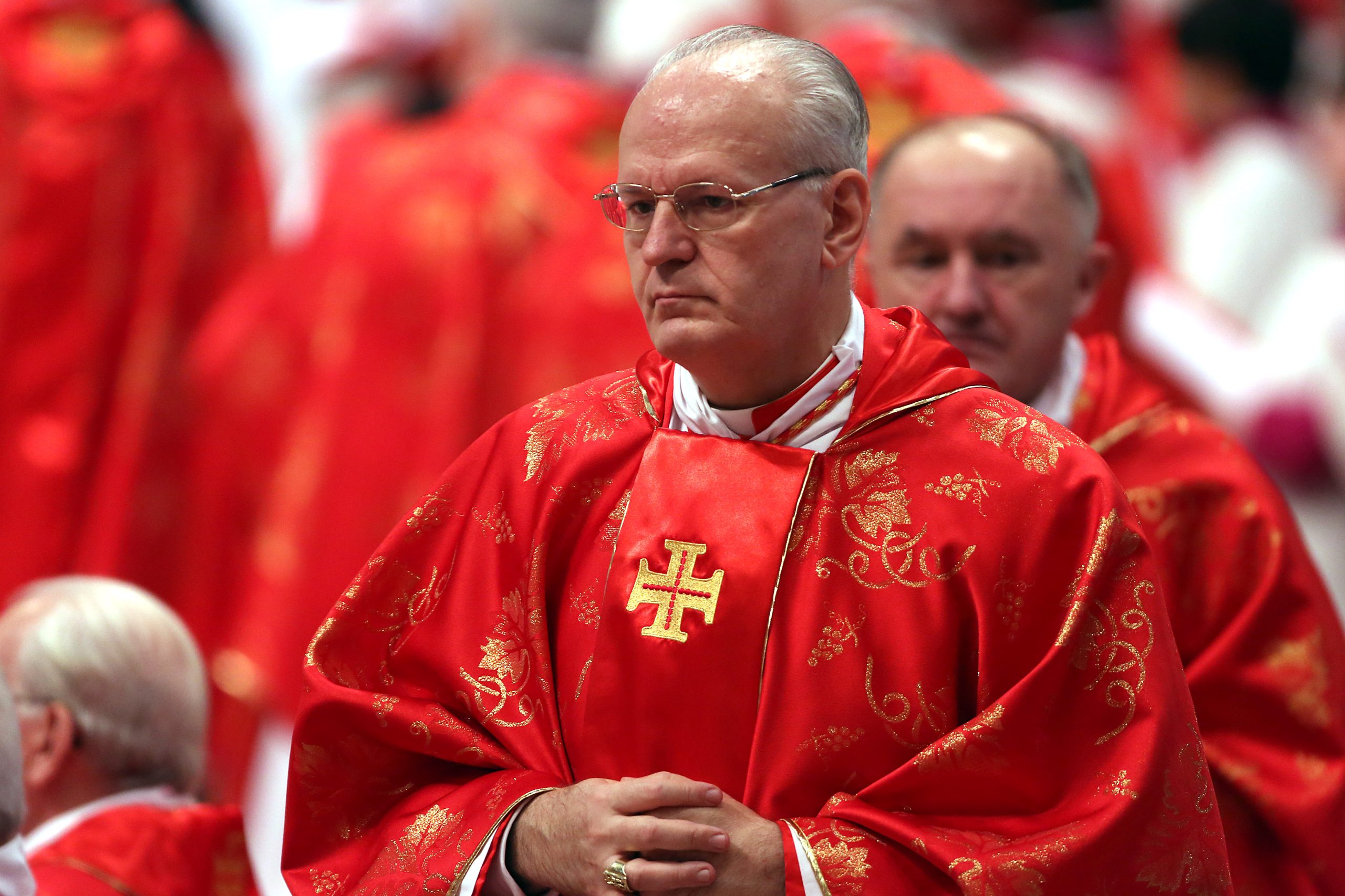
Cardinal Erdő returns to public life
Cardinal Péter Erdő attended Pentecost Mass in Hungary on Sunday, where he was greeted with prolonged applause after months of uncertainty over his condition Cardinal Péter Erdő has made his first public appearance in more than three months on Pentecost Sunday after suffering serious health complications, including multiple surgeries and a stroke. The Archbishop of Esztergom-Budapest, 73, attended the Pentecost Mass at the Basilica of the Assumption and Saint Adalbert in Esztergom, Hungary, where he was greeted with prolonged applause from the congregation. Although too weak to celebrate the liturgy himself, the cardinal’s presence at the packed basilica was received by many of the faithful as a sign of encouragement after months of uncertainty over his health. Cardinal Erdő had not appeared publicly since February 2, when he last celebrated Mass in the basilica on the feast of the Presentation of the Lord. The Pentecost Mass was celebrated by Bishop Levente Balázs Martos, auxiliary bishop of the Archdiocese of Esztergom-Budapest, during which 81 young people received the sacrament of Confirmation. At the beginning of the liturgy, parish priest Fr Csaba Török welcomed the cardinal warmly, with applause from worshippers gathered inside the cathedral. In his homily, Bishop Martos reflected on the Jewish origins of Pentecost and the covenant made between God and His people on Mount Sinai. “Pentecost was originally the feast of the giving of the law and the making of the covenant,” the auxiliary bishop said, adding that “the Jewish people made a covenant with God through Moses at Mount Sinai”. He described the covenant as taking place “under terrifying circumstances”, recalling how “the chosen people did not dare to go near the mountain, which God surrounded with fire, lightning and thunder”. The bishop contrasted this with the relationship between God and man established through Christ and the coming of the Holy Spirit. Quoting the Letter to the Hebrews, Bishop Levente said: “You have come to Mount Zion, to the festive gathering of the firstborn who are numbered in heaven.” “I could put this in freer words: it is not terror that keeps me close to God,” he added. Bishop Martos told the confirmands that the promise of the Old Testament is fulfilled through the Church because “the law is not written on stone tablets”. Instead, the words of Scripture are realised when God declares: “I will put my law into their hearts, and write it on their minds.” The bishop also spoke of how Christianity transformed the relationship between God and humanity from one founded principally on fear to one rooted in love. “Yes, the Bible says God is a jealous God, but in this it actually presents his condemning, burning, irrevocable love to us,” Bishop Levente said. “The New Testament celebrates that we can respond to this love through the law of the Holy Spirit.” Addressing those preparing to receive Confirmation, Bishop Martos emphasised the communal nature of the Church and the diversity of spiritual gifts within it. “The Church is a mysterious body in which the gifts of the Spirit can be experienced in different ways, and which lives its life precisely in the diversity of these gifts,” he said. He compared the life of the Church to a pilgrimage from Sinai to the heavenly Jerusalem. “We come from Sinai, we are heading to the heavenly Zion, to Jerusalem, but at the same time we really need this community, in which so many different gifts, so many different charisms, so many different opportunities and capacities complement each other,” the bishop said. In one of the most personal moments of the homily, Bishop Martos recalled teaching catechism to children and explaining the Christian covenant in simple terms. “Christ is counting on you,” he said he would tell them. “The answer was: ‘I am counting on you too.’” He said this reflected one of the deepest realities of Christian life. “We all experience situations in life where we feel like we need help. We need to have someone to count on,” he said. At the end of the Mass, Bishop Martos invited the congregation to renew their own faith and pray for the newly confirmed. “Let us all revive in our hearts the grace of the profession of faith. Let us all revive in our hearts the power of the Spirit, the faith placed in us,” the auxiliary bishop said. According to the Vatican journalist Diane Montagna, Cardinal Péter Erdő had been making a slow recovery from a serious health condition earlier this month. A prominent defender of traditional Catholicism, his public appearance will likely provide reassurance to the conservative wing of the Church.
May 27, 2026
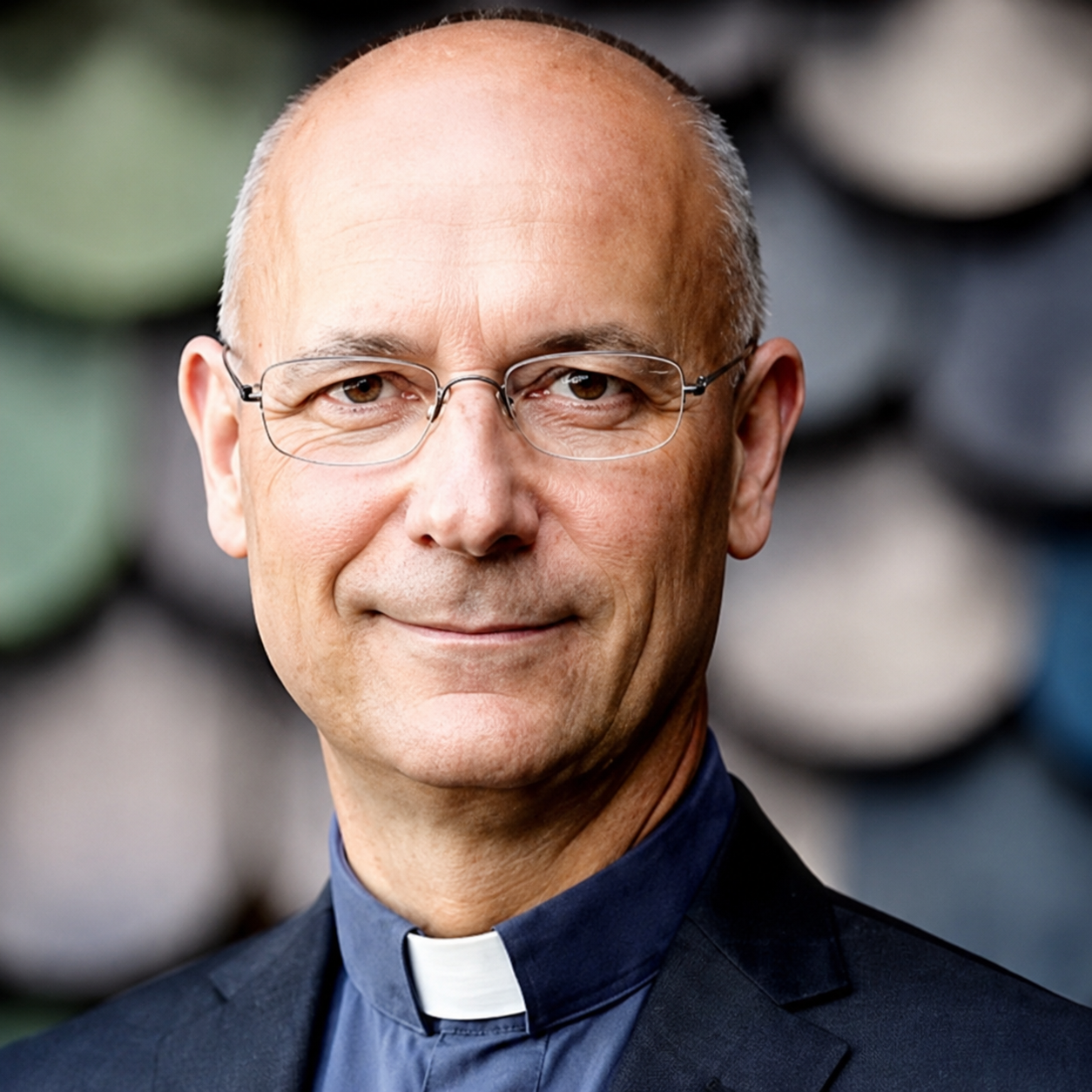
Vienna’s controversial cathedral rector to step down after 30 years
The Archdiocese of Vienna has confirmed that Fr Toni Faber will step down as rector of St Stephen’s Cathedral in 2027. The priest has long attracted attention for his media profile, comments on celibacy and support for blessings for same-sex couples The Archdiocese of Vienna has confirmed that the controversial priest Fr Toni Faber will step down as rector of St Stephen’s Cathedral in 2027, bringing to an end almost three decades in one of the most prominent clerical posts in the Austrian Church. The announcement was made by Archbishop Josef Grünwidl, who said that new leadership would be appointed for the cathedral in the summer of 2027. Speaking to the Austrian broadcaster ORF, the archbishop insisted that the decision was principally linked to the unusually long duration of Fr Faber’s tenure rather than any disciplinary measure. “No one has held this office for 30 years,” Archbishop Grünwidl said, describing the priest’s period in office as “a record”. The archbishop also stressed that the 64-year-old priest would not disappear from public ministry and would continue to exercise a pastoral role connected to the cathedral and the centre of Vienna. “We were ordained priests on the same day here in St Stephen’s Cathedral,” Archbishop Grünwidl said, underlining the personal bond between the two men as he praised Fr Faber’s decades of service. Fr Faber has long occupied an unusually prominent media profile for a diocesan priest and has frequently attracted controversy for remarks and public positions which drew criticism from more conservative Catholics. Recent media reports in Austria further intensified scrutiny of the priest after renewed attention was given to his appearances at public dance events accompanied by a woman. Although no formal accusation of misconduct emerged, the reports added to longstanding criticism surrounding his lifestyle and pastoral approach. Over the years he publicly questioned mandatory priestly celibacy and voiced support for blessings for same-sex couples. His regular appearances in Austrian public life, including events linked to politics, culture and entertainment, also distinguished him from the more restrained public image usually associated with cathedral clergy. Despite the controversy, the Archdiocese of Vienna has given no indication that Fr Faber’s departure from the rectorship represents any form of sanction. Archbishop Grünwidl instead repeatedly stressed that the priest would remain active within pastoral life in Vienna and continue to be associated with St Stephen’s Cathedral. Fr Faber himself indicated that he has no intention of withdrawing quietly from ecclesiastical life. Speaking about his future after the announcement, he said: “Being a priest and pastor is written in my DNA.” He added that he hoped to continue serving as a “bridge” between the Church and wider society, mentioning politics, business and culture among the fields in which he wished to remain active. He also referred to possible work connected with urban pastoral ministry in central Vienna. Fr Faber was appointed rector in 1997 and became closely associated with the public life of the cathedral through televised liturgies, high-profile funerals and appearances alongside leading figures from Austrian political and cultural life. His departure in 2027 will end one of the longest tenures in the cathedral’s history, with the archdiocese expected to announce his successor closer to the date of the transition.
May 27, 2026

Creator of Magisterium AI speaks to AdVaticanum about Magnifica Humanitas
Matthew Harvey Sanders, founder of Magisterium AI, tells AdVaticanum that Pope Leo XIV’s Magnifica Humanitas has set a new benchmark for how Catholics should approach artificial intelligence, warning against treating AI as if it possesses conscience or moral interiority The founder of the Catholic artificial intelligence platform Magisterium AI has said that Pope Leo XIV’s first encyclical on artificial intelligence has set a new benchmark for how Catholic institutions should approach emerging technologies, while warning against treating AI systems as if they possess conscience or moral interiority. Matthew Harvey Sanders, founder and chief executive of the Canadian technology company Longbeard, spoke exclusively to AdVaticanum following the publication of Magnifica Humanitas , the Pope’s inaugural encyclical, which was formally presented at the Vatican this week on AI. Matthew Sanders described the atmosphere surrounding the launch as unlike anything he had experienced in the technology sector, saying the event brought together Vatican officials, clergy, engineers, investors and researchers in a setting marked by “a particular solemnity”. “I have attended a great many events in the technology sector,” he said. “The hall where Leo XIV presented Magnifica Humanitas did not feel like any of them.” He said Pope Leo approached the subject of artificial intelligence without either fear or fashionable enthusiasm, adding that the Pontiff appeared entirely comfortable discussing the implications of rapidly developing technologies. “He spoke without the defensive caution you often find from institutional leaders engaging with technical topics, and without the performative enthusiasm of someone trying to signal relevance,” Sanders said. “He was simply present to the conversation.” Sanders argued that the most significant aspect of the papal intervention was not a condemnation of artificial intelligence itself, but what he described as an “invitation” by the Pope to technology developers and researchers to engage seriously with questions concerning the human person. “What he extended that day was an invitation to every laboratory and every developer in the field: not a verdict on the technology, but an ongoing engagement about what it means for the human person,” he said. “That invitation, in my view, is the most consequential thing that could have come out of the day.” Sanders also disclosed that he spent time during the Vatican gathering speaking with two senior researchers from the American artificial intelligence company Anthropic, including Chris Olah, whose work has focused on mechanistic interpretability, and Amanda Askell, who leads research into the behavioural character of the Claude AI model. “Chris Olah has spent years on mechanistic interpretability: the painstaking effort to reverse-engineer a trained neural network and understand, at a granular level, what is actually occurring when the model processes language,” Sanders said. Referring to Askell, he added: “Amanda Askell leads the work on Claude’s character; she has conducted more careful, sustained inquiry into how a large language model behaves under pressure, across context and at the edges of its training than arguably anyone working today.” Sanders said that while both conversations were “genuinely interesting”, he nevertheless believed the Pope was correct to reject attempts to describe artificial intelligence systems as possessing conscience or moral interiority. “There is an openness in parts of the research community to describing current models as possessing something resembling conscience or moral interiority,” he said. “The encyclical addresses this head-on, and I think the Pope is right to resist it. “Attributing moral subjecthood to a statistical system is a category error with consequences that go well beyond the lab.” Sanders said the presence in the same room of leading AI researchers alongside the Bishop of Rome reflected the scale of the questions now confronting both the Church and the technology industry. “The fact that the conversation in that room included both of them and the Bishop of Rome struck me as exactly the kind of encounter this moment requires,” he said. According to Sanders, Pope Leo’s principal concern is not simply what legal or regulatory restraints should govern artificial intelligence, but what understanding of the human person should precede and shape those rules. He connected the encyclical’s arguments to themes he explored earlier this year in an essay entitled “The Church as the Ark for a Post-Work World”, in which he argued that the greatest disruption caused by artificial intelligence would not ultimately be economic but existential. “My argument there was that the coming crisis of AI is not fundamentally economic: it is existential,” Sanders said. Referring to the Austrian psychiatrist Viktor Frankl, he added: “Viktor Frankl described what happens when a civilisation’s anchor for human identity is removed: an ‘existential vacuum’, a suffocating meaninglessness that no material provision can address.” “Silicon Valley’s answer to the disruption of labour is what I called the ‘hollow utopia’: income to fund the body, and infinite digital distraction to occupy the mind,” Sanders said. He contrasted this with the vision presented in Magnifica Humanitas , arguing that the Pope had rejected the idea that efficiency or economic productivity alone can define human flourishing. “When he cites John Paul II in §129, asking whether AI makes human life on earth ‘more human’ in every aspect of that life and more worthy of man, he is insisting the criterion is not comfort or efficiency,” Sanders said. He also pointed to another section of the encyclical which states that “no computational system, however sophisticated, can create a heart that gives itself, or a conscience that discerns good from evil”. “The GDP era told us human value was about output,” Sanders said. “The encyclical says it never was.” Speaking about the implications of Magnifica Humanitas for Magisterium AI, Sanders said he wanted “to be careful not to appropriate it for our own promotional purposes”, but argued that the encyclical nevertheless addressed “something much larger than any single company”. He highlighted the line: “A more moral AI is not enough if that morality is determined by a few”, adding: “That sentence captures the structural reason Magisterium AI was built the way it was built.” Sanders insisted that “a general-purpose AI platform cannot be made Catholic simply by pointing its outputs at Catholic content”, because “the moral architecture of a system, who controls its training data, what its reward functions are optimised for, what the company that built it needs commercially, shapes every response it generates”. He added that Magisterium AI was built around what the company calls the “off-ramp”, explaining: “Catholic AI should answer a question and then send the person back into prayer, real relationships and the sacramental life of the Church. It should be designed to be finished with.” He also cited another line from the encyclical stating that “technology is never neutral, because it takes on the characteristics of those who devise, finance, regulate and use it”. Referring to the encyclical’s treatment of subsidiarity, he warned that many Church institutions presently rely on technologies controlled by corporations whose priorities may change without notice. “They are using tools built and governed by a handful of companies, running on infrastructure they neither own nor fully understand,” he said. Sanders recalled advice once given to him by the former Archbishop of Toronto, Cardinal Thomas Collins. “My former boss, Cardinal Thomas Collins, used to say: ‘If you know where you’re going, you’ll be more likely to get there.’” Near the conclusion, Sanders said: “The encyclical has sharpened the question of where Catholic institutions should be going with this technology. It has not done the building for us. “The work of constructing digital infrastructure that actually embodies these principles is still largely ahead of us. But the standard has been set.”
May 27, 2026
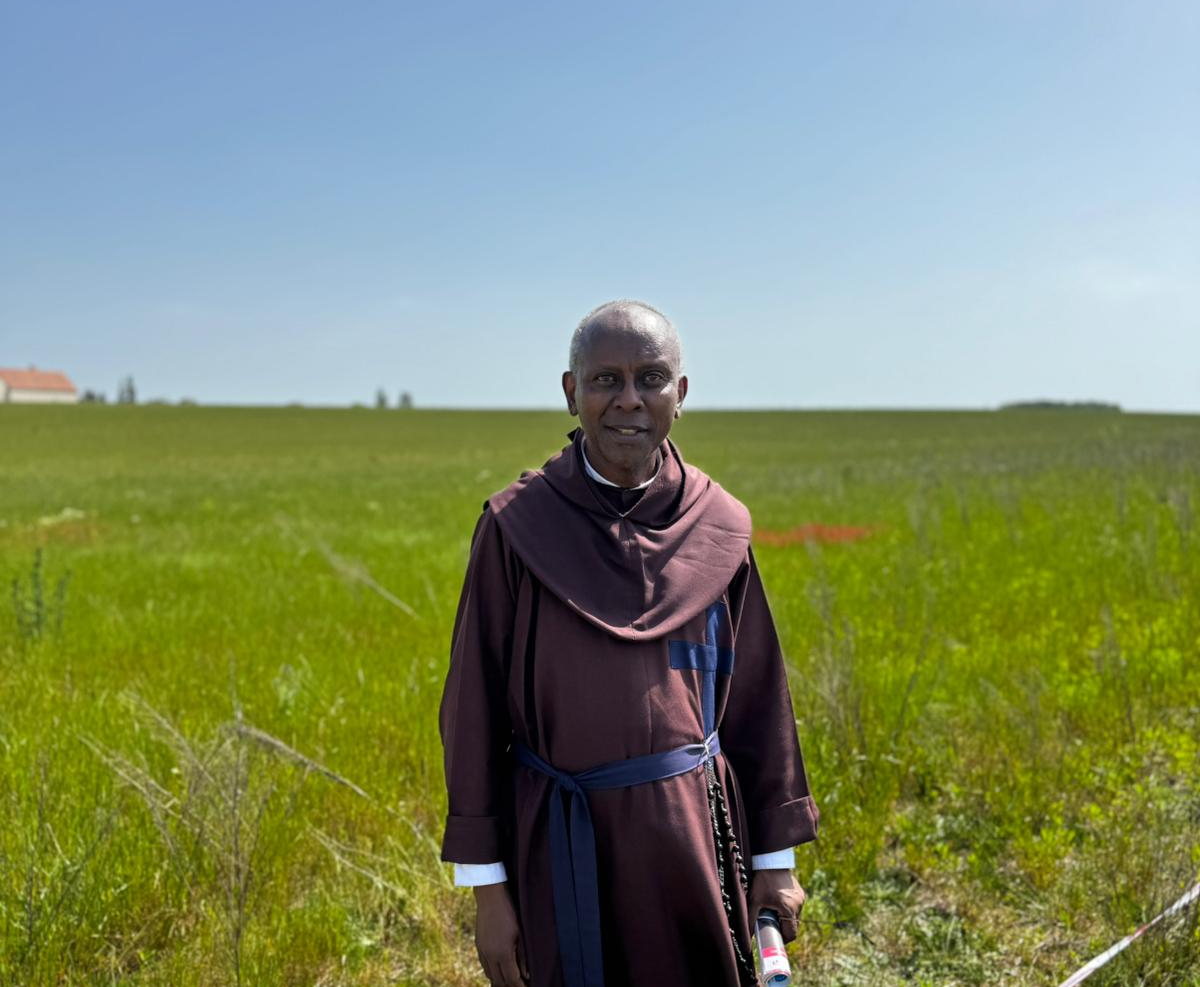
‘Chartres is the hope of Europe’: interview with Father Antonius Maria Mamsery
In an exclusive interview with AdVaticanum, Father Antonius Maria Mamsery, Superior General of the Missionaries of the Holy Cross, describes the Chartres pilgrimage as the “hope of Europe” and speaks about the revival of the Traditional Latin Mass, Africa’s growing vocations, and the future of the Church in Europe This year’s annual Pèlerinage de Chrétienté saw more than 20,000 people walk from Paris to the medieval cathedral city of Chartres. On Sunday, the pilgrims arrived in a field just outside Rambouillet, Yvelines, for Pentecost Sunday Solemn High Mass. The celebrant was Father Antonius Maria Mamsery, a Tanzanian priest and Superior General of the Missionaries of the Holy Cross (MSC). Chief celebrant of the 2023 Summorum Pontificum pilgrimage, Fr Antonius is well known for his attachment to the Tridentine Mass. Indeed, his community’s charism is to offer the traditional Mass, particularly in parts of the world where it is not readily available. After Holy Mass, Fr Antonius was kind enough to sit down with AdVaticanum and share his thoughts on the Church in Africa and Europe, the Traditional Latin Mass, and his impressions of the Pèlerinage de Chrétienté, which he was attending for the first time. AV: Father Antonio, could you share the story of your vocation to the priesthood and how you came to be superior of your community? AM: My vocation began when I was very young. My parents used to tell me that when I was around eight years old I was already teaching my brothers how to say Dominus Vobiscum , and sometimes I would cut up apples and distribute them to them like Communion. Later, I entered a minor seminary in the Kilimanjaro region of Tanzania. Then I discovered the beginnings of my congregation and moved from the seminary into the congregation in 1985. I joined this congregation then and have remained in it until now. My community was received by Saint John Paul II as one of the Ecclesia Dei communities from the beginning of the department’s establishment in 1988. We are one of those groups that preserved tradition without any negativity towards the Church. AV: As a native Tanzanian priest, what have you observed about the growth of the Traditional Latin Mass and the future of the Church in Africa? AM: When the liturgical changes were introduced, the natives were very obedient. They obeyed the hierarchy, but they still had this nostalgia. They were still searching for something. So, when we present to them the traditional liturgy, they sometimes have this very touching expression: “Oh, the Mass returned!” It is wonderful. They knew something was lost because they were faithful to the tradition. In Africa, devotion to the traditional Mass is growing. People are searching for it in countries like Uganda, Tanzania and parts of North Africa. Now I receive calls from young people from Mozambique, Angola and South Africa who want to know the traditional Mass. I have visited some of these groups and they are very enthusiastic. They want to know more about it. AV: The media has often reported that the Church in Africa is experiencing significant growth, while the Church in Europe is in a state of decline. Do you think this accurately represents the state of the Church? AM: I think that is quite accurate. But for me, Chartres has been very impressive. There are so many children here and I had never seen such a large group of children and young people in Europe. When you go to church, normally there are people from everywhere, in Germany, in Italy, in England, where I have visited, but in the traditional communities there are many young people. Traditional families are numerous, so they can be the future of the countries in Europe. AV: Do you think there will be a future when Africa, especially in the form of priests, will be the continent to re-evangelise Europe? AM: Yes. There are many vocations in Africa and there are many major seminaries. In my country, we had three major seminaries, but now there are at least seven and they are completely full. The numbers range from 300 to 400 in the major seminaries. If many of them are ordained, they can be sent to re-evangelise or help bishops who do not have vocations in their dioceses. In some parts of Europe there are dioceses that have only one seminarian or two, and they will need priests. There are men in Africa and Asia who are being formed for the priesthood and will be able to help others. Yesterday evening I was speaking with someone who told me that here in France a large number of diocesan priests are from Africa because the lack of priests in Europe is now very great. AV: In your homeland, there are a large number of communities where Catholics and Muslims live alongside one another. How does the Church interact with followers of Islam living amongst them? AM: Many Muslims are converting to Christianity. For example, during this Easter season many have been baptised. They come for catechism, they bring their children and they come to our schools. In Zanzibar, which is predominantly Muslim, we have various schools and many of those who register are Muslim families who learn about the Christian religion peacefully. There are not the fanatics that can sometimes be found in North Africa, where there are conflicts. In Tanzania there is peace between the two religions. We are friendly, we share our cultures and many other things. AV: What is your impression of this Pentecost pilgrimage to Chartres and the movement around it? AM: Well, this is my first time in Chartres. It is the hope of Europe, the hope of Christian culture, the hope of the revival of the faith and of Catholicism as it once was. The people are making sacrifices, walking in peace, praying and singing. The priests are hearing confessions, blessing people and offering guidance. You would not expect this in our time. You would expect people to be busy with their phones or television. But now they have left their homes to walk this hundred-kilometre pilgrimage. This is a revival of the faith. That is wonderful. AV: One of the characteristics of Chartres is the respect and devotion shown to priests. Why do you think this is? AM: Catholics and society itself respect priests when they live as priests. If priests in some way abandon themselves, so will be the response. But these priests of the traditional groups are trying their best to live their priesthood well. That is why people are so open to them. Young people see them and discover they have a vocation as well. They see the priest and think: “I want to be like that.” Young families will look and say: “How can my son become like that priest?” They often come from large Catholic families and their parents want them to be open to becoming a priest. AV: And finally, Father, how can people support your mission? AM: My community is growing rapidly. We have a great need for more space. I have started a minor seminary for early vocations. Initially we only had 17 young people, so I thought perhaps I had to offer a structure that could support up to 50, and suddenly we had 300. We need support so that we can provide the boys with board, classes and more. When they finish high school, we now have to offer them the opportunity to continue their philosophy and theology studies at a major seminary. So, if there are good people who want to help so that we have the possibility to grow, we will be very grateful. One of our men was recently ordained a priest in the Philippines and we had many young men saying: “Can I come? Can I come?” So we need the means to expand.
May 26, 2026
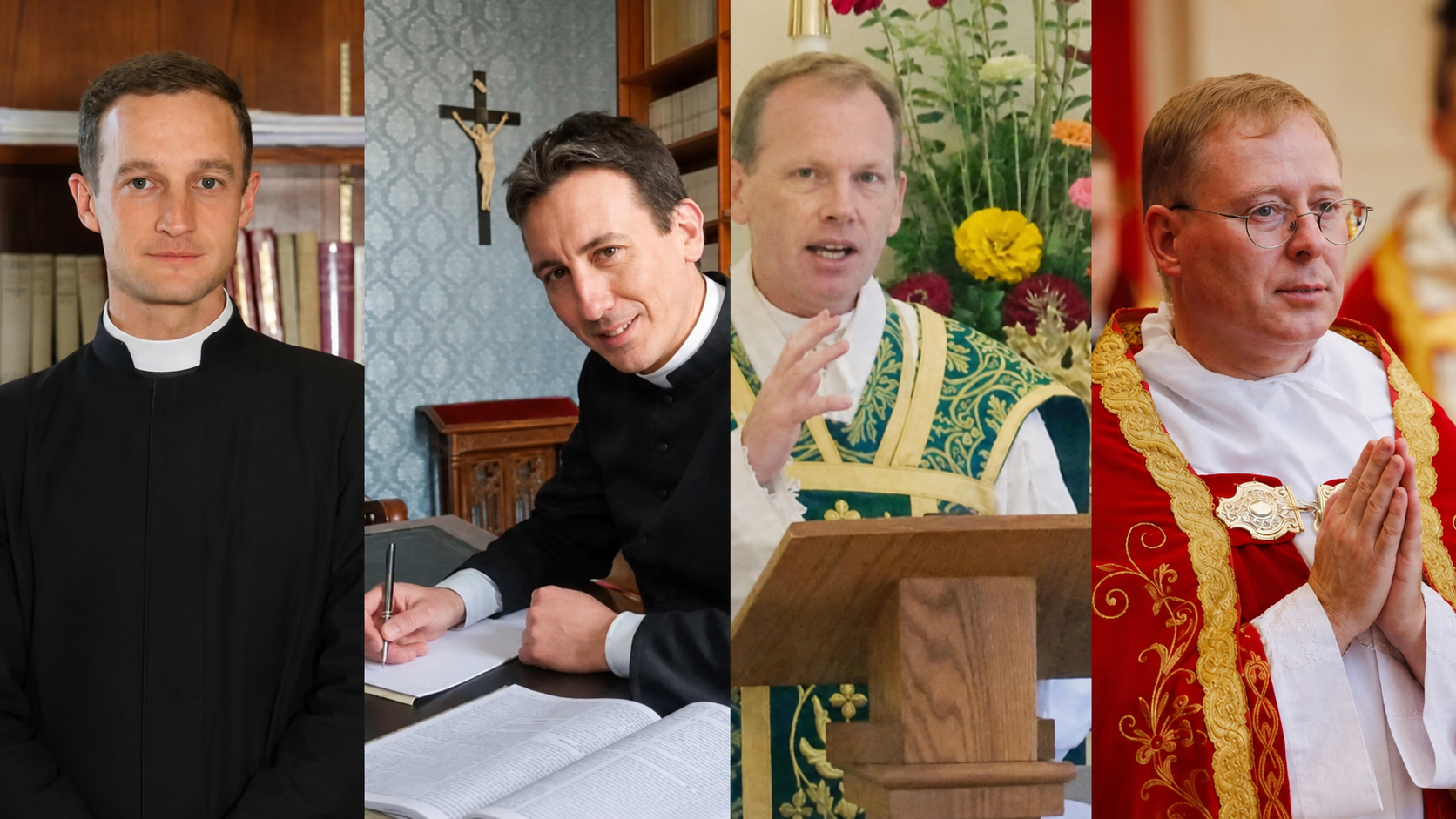
SSPX announces names of four priests to be consecrated bishops at Écône
The SSPX has announced the names of four priests who will be consecrated bishops at Écône on July 1, saying the move is intended to preserve the traditional sacraments during what it described as an “unprecedented crisis of the Faith” The Society of Saint Pius X has announced the names of the priests who will be consecrated bishops at Écône on July 1. In a communiqué issued from the SSPX General House in Menzingen on May 26, Father Davide Pagliarani, the Superior General of the society, said the names of the four priests had been presented to Pope Leo XIV “together with certain explanations necessary for a proper understanding of this step”. The statement said the episcopal consecrations would take place “in a spirit of respect towards the supreme authority of the universal Church” and insisted that the move did not represent “a denial of, refusal of, or challenge to the supreme, full, and immediate power of jurisdiction of the Vicar of Christ over the universal Church”. “The ceremony of July 1st will have no other purpose than to ensure the continued administration of the sacraments of Holy Orders and Confirmation, together with those sacramentals reserved to bishops, according to the traditional rite of the Holy Roman Church and the immemorial Faith,” the communiqué said. It added: “The episcopacy to be received by these priests is therefore conceived solely as a service rendered to souls and to the Church during this unprecedented crisis of the Faith.” The four priests named for consecration are Father Pascal Schreiber, rector of the SSPX seminary in Zaitzkofen, Germany; Father Michael Goldade, rector of St Thomas Aquinas Seminary in Dillwyn, Virginia; Father Michel Poinsinet de Sivry, Superior of the Benelux District; and Father Marc Hanappier, professor of theology at the society’s American seminary. Father Schreiber, 53, was born in Switzerland and ordained in 1998 after studies at the seminaries of Zaitzkofen and Écône. After assignments in Germany and Switzerland, he spent more than a decade directing SSPX schools before becoming Swiss District Superior in 2016. Since 2020 he has served as rector of the German seminary. Father Goldade, 45, comes from St Marys, Kansas, one of the principal centres of the SSPX in the United States. Ordained in 2004, he worked in Michigan and Connecticut before becoming prior of the large Kansas City apostolate. He was appointed rector of St Thomas Aquinas Seminary in Virginia in 2023. Father Poinsinet de Sivry, 42, was ordained in 2008 and worked in schools and apostolates in France before being appointed head of the Benelux District in 2022. The communiqué noted his work at Saint Nicolas du Chardonnet in Paris, the church occupied by traditionalists since 1977. The youngest of the four, Father Hanappier, 36, was ordained in 2013 and currently teaches metaphysics and dogmatic theology in Virginia. Before joining the seminary faculty he worked in schools in France and spent a year in Scotland improving his English while assisting in parish ministry. The SSPX was founded in 1970 by Archbishop Lefebvre, the former Superior General of the Holy Ghost Fathers, after disputes over the reforms which followed the Second Vatican Council. Tensions with Rome escalated throughout the 1970s and 1980s, culminating in the consecration of four bishops at Écône on June 30, 1988. Pope John Paul II declared at the time that the consecrations constituted “a schismatic act”, and Lefebvre and the four bishops incurred automatic excommunication. Archbishop Lefebvre defended his actions by arguing that extraordinary measures were necessary to preserve the traditional priesthood and sacraments. Relations between Rome and the SSPX improved under Pope Emeritus Benedict XVI, who lifted the excommunications of the surviving bishops in 2009 and opened doctrinal talks with the society. Pope Francis later granted SSPX priests faculties to validly hear confessions and allowed local bishops to delegate them to witness marriages under certain conditions. Image: The four priests to be ordained bishop by the Society of St Pius X. From left to right: Father Marc Hanappier, Father Michel Poinsinet de Sivry, Father Michael Goldade and Father Pascal Schreiber. Image: The four priests to be consecrated bishops by the Society of Saint Pius X. From left to right: Father Marc Hanappier, Father Michel Poinsinet de Sivry, Father Michael Goldade and Father Pascal Schreiber.
May 26, 2026
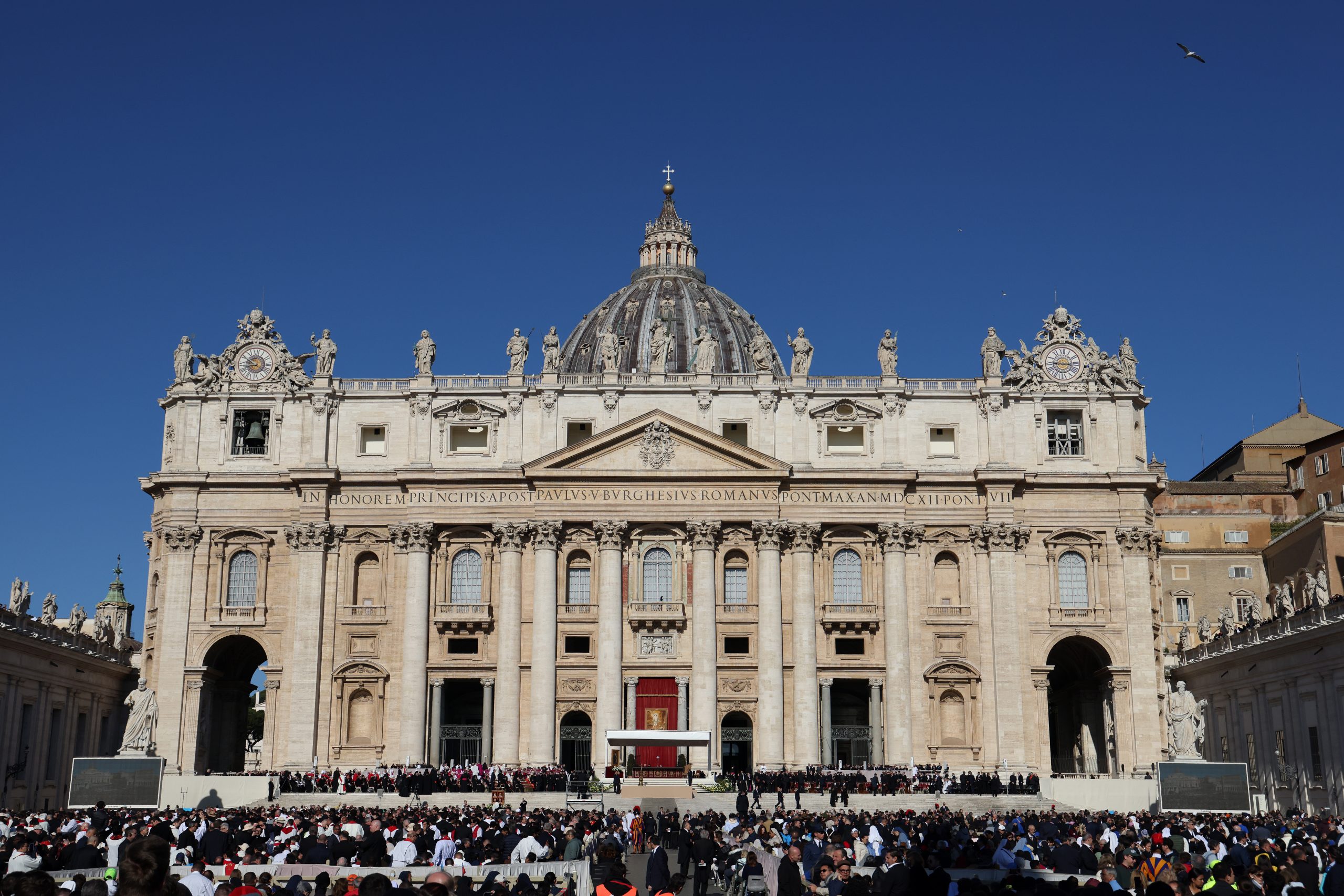
Global reactions pour in after Pope Leo XIV’s AI encyclical
Politicians, bishops and technology leaders across the United States, Britain and Canada have begun responding to Pope Leo XIV’s first encyclical, Magnifica Humanitas The first international reactions to Pope Leo XIV’s inaugural encyclical have begun to emerge less than 24 hours after its publication, with bishops, politicians and technology figures across the United States, Britain and Canada welcoming the document’s warnings about the dangers posed by artificial intelligence. The encyclical, Magnifica Humanitas, was released by the Vatican on 25 May and is already being compared to Pope Leo XIII’s landmark 1891 social encyclical Rerum Novarum, which addressed the upheavals of the Industrial Revolution. Pope Leo XIV deliberately dated the text 15 May to coincide with the 135th anniversary of the earlier document. One of the strongest official political reactions came from the United States ambassador to the Holy See, Brian Burch, who praised the Vatican’s intervention in the growing global debate surrounding AI. “We welcome the Holy See’s important contribution to the subject of artificial intelligence,” Burch said. “The Vatican’s moral leadership on technology and human dignity contributes meaningfully to the global conversation on AI.” Burch said the United States shared the Holy See’s commitment to ensuring that artificial intelligence “serves humanity and upholds fundamental values”, while also defending the Trump administration’s emphasis on innovation and American leadership in the sector. “The United States is likewise committed to exporting American AI technologies built on principles of transparency, security and human flourishing, ensuring the world benefits from AI systems that reflect democratic values rather than authoritarian control,” he said. David Sacks, the technology investor and former White House AI adviser, also responded publicly to the encyclical, agreeing with the Pope’s argument that AI should remain a tool at the service of humanity rather than become an instrument of “domination or exclusion”. Writing on X, however, Sacks questioned how governments could be trusted with increased regulatory authority over artificial intelligence. “If we hand governments sweeping power over AI development in the name of safety, how do we prevent it from being used to censor, surveil and control citizens, as Orwell foretold in 1984?” he wrote. “This is the real alignment problem. The oldest questions of human nature and authority don’t disappear in the AI age. They become newly relevant.” The encyclical also drew praise from Democratic Senator Chris Murphy of Connecticut, who said Pope Leo XIV had articulated growing concerns about the social and moral effects of artificial intelligence. “AI threatens to undermine the basic building blocks of humanity as it seeks to replace our most basic functions, like creativity, friendship and critical thinking,” Murphy wrote, describing the Pope’s warning against monopolisation of AI technologies by powerful corporations as “really important”. Catholic bishops throughout the English-speaking world moved quickly to welcome the document, presenting it as a major contribution to Catholic social teaching at a moment of rapid technological change. Archbishop Paul S. Coakley of Oklahoma City, president of the United States Conference of Catholic Bishops, said the Church in the United States received the encyclical “with gratitude and praise”. “It is a powerful reminder that no technology can replace a child of God, and all technology should be placed at the service of helping humanity thrive,” he said. Drawing parallels with Rerum Novarum, Archbishop Coakley said Pope Leo XIV had shone “the light of the Gospel and the tradition of the Church” on the opportunities and dangers created by artificial intelligence. “The Pope calls us to never lose sight of the inherent dignity of all human life and the moral imperative for technology to support peace and the common good rather than the limited interests of a few,” he said. The Archbishop also revealed that the US bishops’ conference had already tasked its doctrine committee with coordinating the Church’s response to developments in artificial intelligence. In England and Wales, Archbishop Richard Moth, president of the bishops’ conference, and the Archbishop of Westminster described the encyclical as “an important contribution to integral human development during a time of considerable change”. “One of the first interventions of Pope Leo since he was elected Pope was to draw attention to the profound challenges AI will bring to humanity,” Archbishop Moth said. The Archbishop of Westminster noted that the Church’s social teaching tradition since Rerum Novarum offered substantial guidance for navigating technological and economic upheaval. “We must respond to these, placing the centrality of humanity above all else, most especially the solidarity that is needed if we are to seek peace among peoples,” he said. “Pope Leo reminds us that ‘more powerful does not necessarily mean better.’” Archbishop Moth warned that technology “must not be used to embed unjust economic systems and abuses of power, but must always be at the service of human development”. He also disclosed that the Bishops’ Conference of England and Wales had established a working group to study the encyclical and examine the ethical issues generated by artificial intelligence. Other American bishops issued similar statements within hours of publication. Bishop Michael Burbidge of Arlington said the encyclical was especially welcome “in this time of tremendous social and technological change”. “I encourage all to join me over the coming days in reading Magnifica Humanitas in its entirety and prayerfully considering all that the Holy Father shares,” Bishop Burbidge said. Archbishop Richard Henning of Boston described the document as “timely and important”, while Archbishop Nelson Pérez of Philadelphia encouraged Catholics to reflect on its “vital message” concerning the protection of human dignity during rapid technological development. Bishop William Koenig of Wilmington, Delaware, said the encyclical drew upon the wisdom of Catholic social teaching to ensure that technological progress remained directed towards “human flourishing”. The Canadian Conference of Catholic Bishops also welcomed the document, saying it offered guidance for protecting the human person during “a profound epochal shift”. The bishops highlighted the encyclical’s call for “a civilization of love founded on justice, dialogue and shared responsibility” as an alternative to what the Vatican described as “the culture of power and war”. However, a more critical reaction came from the Bishop Emeritus of Tyler, Bishop Joseph Strickland, who published a lengthy critique arguing that Magnifica Humanitas risked placing excessive emphasis on social structures and human flourishing at the expense of sin, repentance and salvation. While acknowledging the encyclical’s “strong and important” rejection of transhumanism and its warnings about “AI warfare, exploitation, digital manipulation and technological domination”, Bishop Strickland said the document devoted comparatively little attention to “original sin, concupiscence, personal repentance, moral culpability, judgment, hell, penance, or the eternal destiny of the soul”. Bishop Strickland argued that “the roots of evil begin to appear primarily structural rather than spiritual” and warned that the encyclical’s repeated calls for a “civilization of love” risked sounding “less like the fruit of conversion to Christ and more like a global humanitarian project centred on fraternity, solidarity, inclusion and peace”. The former Bishop of Tyler said many Catholics would find the document “deeply unsettling” because “the entire framework is subtly shifting: from God-centredness to man-centredness, from salvation to human flourishing, from sin to systems”. He concluded by warning against “religious humanism” and insisting that “the answer remains what it has always been: Jesus Christ, King of kings and Lord of lords.”
May 26, 2026