

Latest
Britain’s foremost exorcist
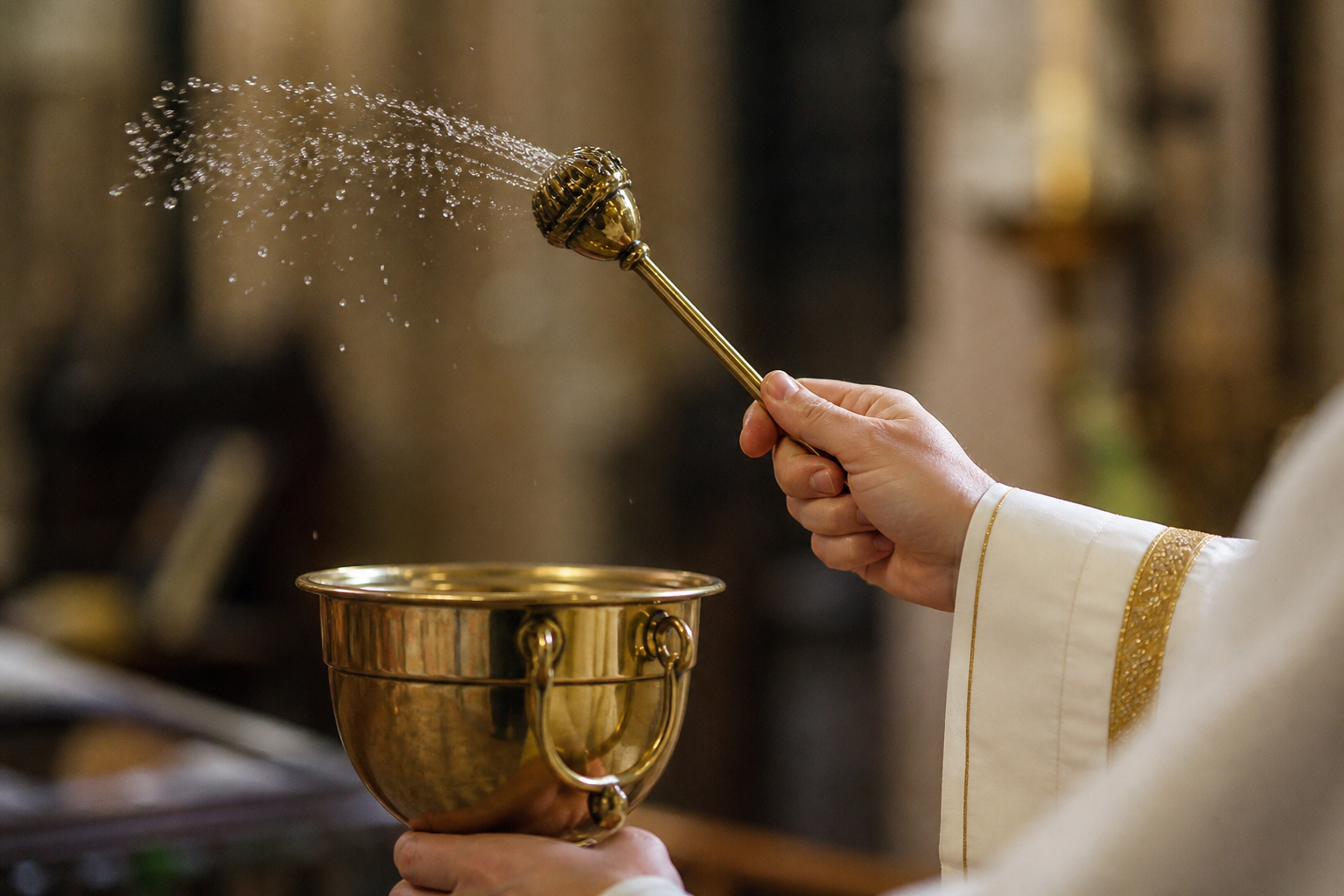
Fr Jeremy Davies, a former doctor who became a priest, spent 35 years as an exorcist, carrying out his ministry with quiet discipline, intellectual conviction and pastoral care If you entered Our Lady Help of Christians in Luton town centre for the 7am Mass on a weekday morning in the 2010s, you were one of few. Luton, a town about an hour’s drive from England’s capital, is known for its poverty and its history of extremism. An outpost of Al-Muhajiroun, radical Muslims famously held Islamist rallies there to protest the return of fallen British soldiers from Afghanistan. It is also home to the English Defence League, founded by Luton native Tommy Robinson, who has become one of the most recognisable faces of Britain’s hard right. There are many more mosques than Catholic churches in Luton. A parish priest in Bury Park, the town’s most densely Muslim area, once told me there were 16 mosques within his parish boundaries. Evangelicals also maintain a strong presence, particularly in High Town, an area with a large white working-class population. Hope Church, a Newfrontiers congregation, is particularly active in serving the town’s more marginalised residents. However, if you did enter Our Lady Help of Christians for the 7am Mass, you would likely have found yourself at a liturgy celebrated by Britain’s leading exorcist, Fr Jeremy Davies. Born in 1935 on the solemnity of the Annunciation, it was not expected that he would enter the priesthood. His father, a senior officer at RAF Fighter Command, left his wife and children to remarry, and there was still a healthy amount of anti-Catholic sentiment in civilised English society. Raised in the last ripples of the Victorian era, he had the manners, etiquette and genteel disposition that was expected of his upper-middle-class background. He attended the King’s School, Canterbury, then studied English at St Edmund Hall, Oxford, before training in medicine at St Bartholomew’s Hospital, London. At the age of 31, having found life lacking in meaning, he converted to the Catholic faith. At 32, he left London to work as a doctor in missions in Guyana, Nigeria, and Ghana. Sensing a call to the priesthood, he went to study in Rome at Beda College as a seminarian for the Diocese of Westminster and was ordained at the age of 39. His vocation was in part an intellectual effort which led him to a profound conviction in the truths of Catholicism. But it was also in reparation for doing something he described as “very wrong” and desiring to make atonement. Upon ordination, he was sent to Westminster Cathedral, the centre of English Catholicism, as a chaplain. He spent almost 20 years as an assistant priest at St James’s, Spanish Place, one of London’s most prominent Catholic churches, where Edward VII attended the requiem Mass for King Carlos I of Portugal, the first British monarch to do so since James II. It was there that he trained as an exorcist. In 1994, together with Gabriele Amorth, he founded the International Association of Exorcists to encourage greater awareness among dioceses of cases of demonic possession. The association now has more than 200 members. Of the 48 years Fr Davies served as a Catholic priest, 35 were spent as an exorcist in the Archdiocese of Westminster, where he became widely regarded as one of the leading figures in the field. As an exorcist, Fr Davies was known for bringing his medical precision to the spiritual realm, freeing hundreds of people from demonic bondage. He was pragmatic in his approach and wrote a book for the Catholic Truth Society entitled Exorcism: Understanding Exorcism in Scripture and Practice . After many years as a parish priest, his role as assistant priest in Luton brought him to a quieter life, but nonetheless still carrying out his priestly ministry, offering spiritual direction to anyone who asked for it and waiting patiently in the Church’s sacristy to meet troubled souls. In 2021, he retired to Walsingham, England’s Nazareth, indicative of his devotion to Our Lady. He is buried within the confines of the national shrine. Fr Davies gave instructions for his funeral Mass that the congregation should be told that no one should assume that he was already in heaven. A sobering thought for such a holy man. He was insistent that salvation should not be presumed, but rather hoped for and prayed for. He died on 5 November 2022, a date long associated with anti-Catholic hostility in England following the Gunpowder Plot. For a gentleman priest, thoroughly English and able to navigate such apparent contradictions with finesse, he would have found the timing of his departure quietly amusing. Fr Jeremey Davies(25 March 1935 – 5 November 2022)
May 4, 2026
Pope Leo XIV’s first encyclical set for May 15 release
Pope Leo XIV is expected to publish his first encyclical on May 15, aligning it with landmark social teaching documents. The provisional text, Magnifica humanitas, is set to address artificial intelligence, global instability and the state of international law Pope Leo XIV’s first encyclical is expected to be signed and published soon, placing its release close to a date long associated with landmark papal social teaching documents. According to reports from the German Catholic news agency KNA, it will be signed on May 15. The text will be the first major teaching document of his pontificate. Circulating under the provisional title Magnifica humanitas , it is expected to address a range of issues, including artificial intelligence, international peace and what sources describe as a crisis in international law. Previous reports indicate that the document will set out the Pope’s initial response to these questions within the framework of Catholic social teaching. The encyclical follows earlier indications that the Holy See had been preparing a document focused specifically on artificial intelligence. At the beginning of February, reports pointed to work under way on a text examining the ethical and anthropological implications of emerging technologies. Pope Leo XIV has already spoken about the risks associated with technological development, warning of the dangers posed by “uncontrolled technology” and the importance of safeguarding human dignity. According to the same reports, the encyclical will also address geopolitical instability and the perceived weakening of international legal structures. By doing this, the document is expected to set out the Vatican’s response to the principal challenges facing humanity in the 21st century. The anticipated date of May 15 places the encyclical within a well-established tradition. On May 15, 1891, Pope Leo XIII issued Rerum Novarum , the foundational text of modern Catholic social doctrine, addressing the condition of workers during the industrial age. The same date was chosen in 1931 by Pope Pius XI for Quadragesimo Anno , which developed the Church’s teaching on social order and introduced the principle of subsidiarity. Thirty years later, on May 15, 1961, Pope John XXIII promulgated Mater et Magistra , focusing on economic justice and social development. The expected treatment of artificial intelligence would build on recent Vatican teaching. In January 2025, the Dicastery for the Doctrine of the Faith and the Dicastery for Culture and Education issued Antiqua et Nova , a joint note on “the relationship between artificial intelligence and human intelligence”. The document said AI could bring “important innovations” but warned that it also carried the danger of deepening inequality, manipulating public opinion and expanding “the instruments of war well beyond the scope of human oversight”. It added that artificial intelligence “should not be seen as an artificial form of human intelligence, but as a product of it”, and insisted that it “should be used only as a tool to complement human intelligence rather than replace its richness”. No official text has yet been released, and the title Magnifica humanitas remains provisional.
May 4, 2026
Sons of the Most Holy Redeemer declare new position on the papacy
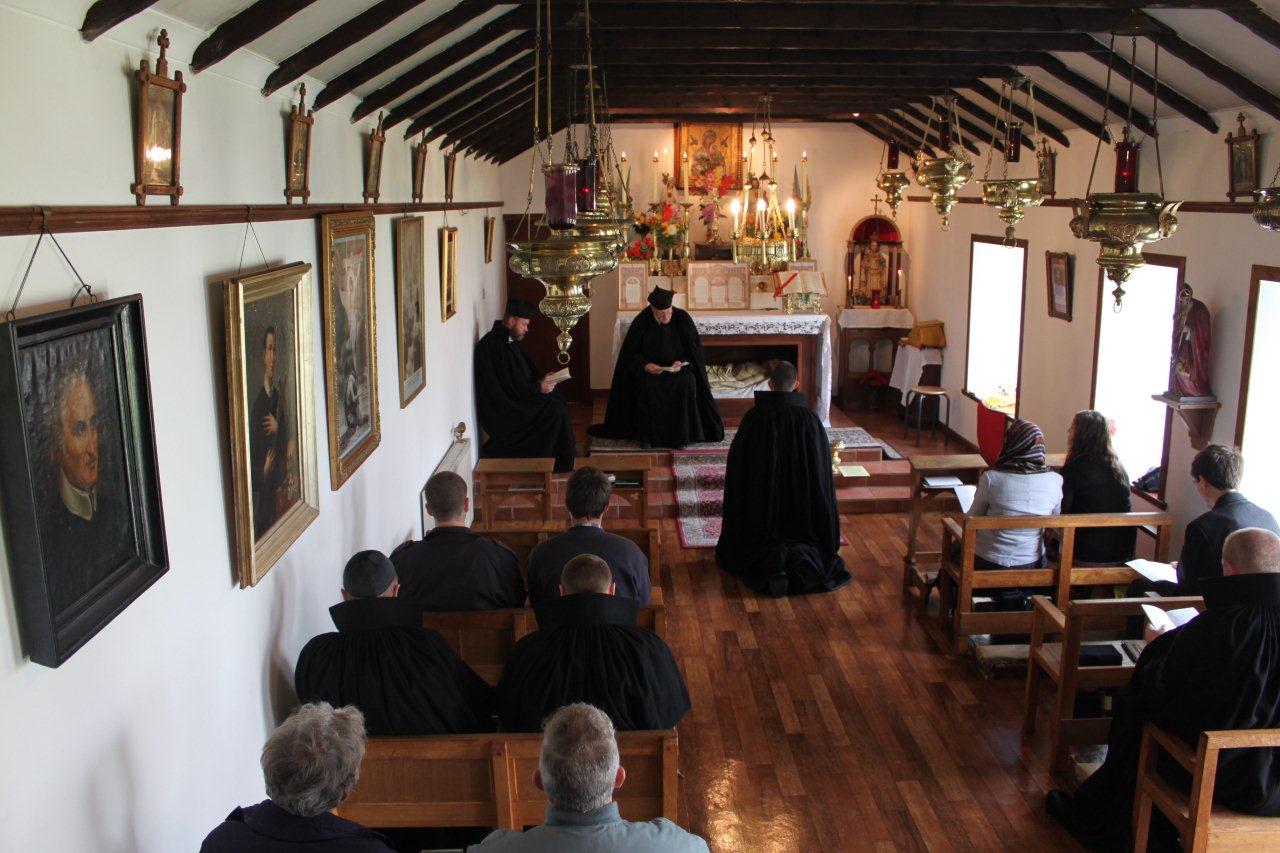
The Sons of the Most Holy Redeemer, a traditionalist community previously associated with the SSPX and later reconciled with Rome, has formally rejected the current papacy and called for an “imperfect general council” The Sons of the Most Holy Redeemer (FSSR) have publicly rejected the validity of the current papacy in a 21-page letter which describes a “spiritual catastrophe” in the Church since the Second Vatican Council. The community issued the document on 2 May, setting out a sustained critique of developments in doctrine, liturgy and governance in the Catholic Church over recent decades. In the letter, addressed to the faithful, the priests and brothers claim that the crisis stems from a long-term infiltration within the Church’s structures. “The problem is, as St Pius X warned, that the structures of the Catholic Church have been infiltrated by men of a different non-Catholic religion,” they wrote. “They use the Catholic name, they occupy the Catholic buildings, they know the Catholic culture. From the outside they look to be Catholics, but they do not profess the Catholic Faith as taught through the centuries.” The statement continues: “In reality, they have been formed as revolutionaries committed to the condemned Freemasonic heresies of Religious Liberty, Religious Indifference and False Ecumenism. Their infiltration has struck a lethal wound to the Catholic religion; they have brought about a major schism from the Mystical Body. We must stand firmly with the Catholic Church and move well away from the camouflage of its counterfeit.” The community argues that the effects of this alleged infiltration became fully visible in the period following the Second Vatican Council, held between 1962 and 1965. “Since the Second Vatican Council, the apparent Popes have caused a spiritual catastrophe of the greatest imaginable proportions,” the letter states. It adds that “new doctrinal, moral, liturgical, and disciplinary decisions since Vatican II cannot be accepted because they contradict what came before.” Despite the severity of its criticisms, the community insists that it does not consider itself to be separating from the Church. “Our Faith has not changed. Holding the True Faith of our Fathers, we will continue to offer the True Mass. We will worship the True God. And we will work for an Imperfect General Council to bring about the triumph of Christ’s One, Holy, Catholic and Apostolic Church,” the letter states. The monks further emphasise this point, writing: “We are not saying that we should leave the Catholic Church. The Catholic Church is the Ark of Salvation, the Mystical Body of Christ, the Bride without spot or wrinkle. We cling to her with all our strength. But we must recognise that the institutional structures that claim to be the Catholic Church have been infiltrated.” The declaration goes on to set out practical conclusions drawn from these claims, including a refusal to recognise the authority of the current pontiff. “We must do what Catholics have always done in times of crisis: we must hold fast to the Faith as it has always been taught. We must give no juridical recognition to those who have departed from it, including Leo XIV and his bishops,” the text states. Since 1999, the FSSR community has been based on Papa Stronsay, a small island in the Orkney archipelago off the north coast of Scotland. They also have one house in the United States and previously had another in New Zealand. The group traces its origins to the Society of St Pius X, itself founded in 1970 by Archbishop Marcel Lefebvre amid disputes over the interpretation and implementation of the Second Vatican Council. In 2008, the community sought reconciliation with Rome and was received into full communion during the pontificate of Pope Emeritus Benedict XVI. The declaration issued by the Sons of the Most Holy Redeemer on Papa Stronsay is the culmination of a trajectory that has been evident for some time. On 16 October last year, the group published “An Open Letter to the Catholic Bishops, Priests, Religious and Faithful” which took issue with various actions taken by Rome under Pope Francis, including Amoris Laetitia , Traditionis Custodes and Fiducia Supplicans . The recent letter marks a decisive break and makes the prospect of reconciliation considerably more difficult. Leaving little ambiguity, it states: “Since the Second Vatican Council, the apparent Popes have caused a spiritual catastrophe of the greatest imaginable proportions,” the priests and brothers write, adding that “new doctrinal, moral, liturgical, and disciplinary decisions since Vatican II cannot be accepted because they contradict what came before.” They conclude by saying: “We must give no juridical recognition to those who have departed from it, including Leo XIV and his bishops.” What has now emerged publicly confirms what some had already suspected. The community’s current position goes beyond that of the Society of St Pius X, which, despite its longstanding criticisms of Vatican II, has consistently stopped short of denying the legitimacy of the Pope. The Papa Stronsay declaration represents a further step, one that places the group closer to sedevacantist or quasi-sedevacantist currents. This shift had been anticipated in reporting from within traditionalist circles. It was unlikely that the Transalpine Redemptorists would rejoin the Society of St Pius X. Instead, sources within the Society suggested that the community was moving towards a more radical alignment, potentially situating itself within what has sometimes been described as the “sedevacantist” orbit. It is also believed that the group has received conditional ordinations from Bishop Pierre Roy, a former priest of the Society of St Pius X who is now a sedevacantist bishop. Bishop Roy himself has advocated the convocation of an ‘Imperfect General Council’ to resolve what he perceives to be a crisis in the Church. The community has explicitly called for an ‘Imperfect General Council’, a gathering of bishops who, in their view, have preserved the true faith. The idea has been referenced in external interviews. In remarks to a New Zealand outlet, Father Michael Mary indicated support for such a proposal, suggesting that the community sees this as a practical path forward in the absence of recognised ecclesial authority.
May 3, 2026
How the Church decides who becomes a saint
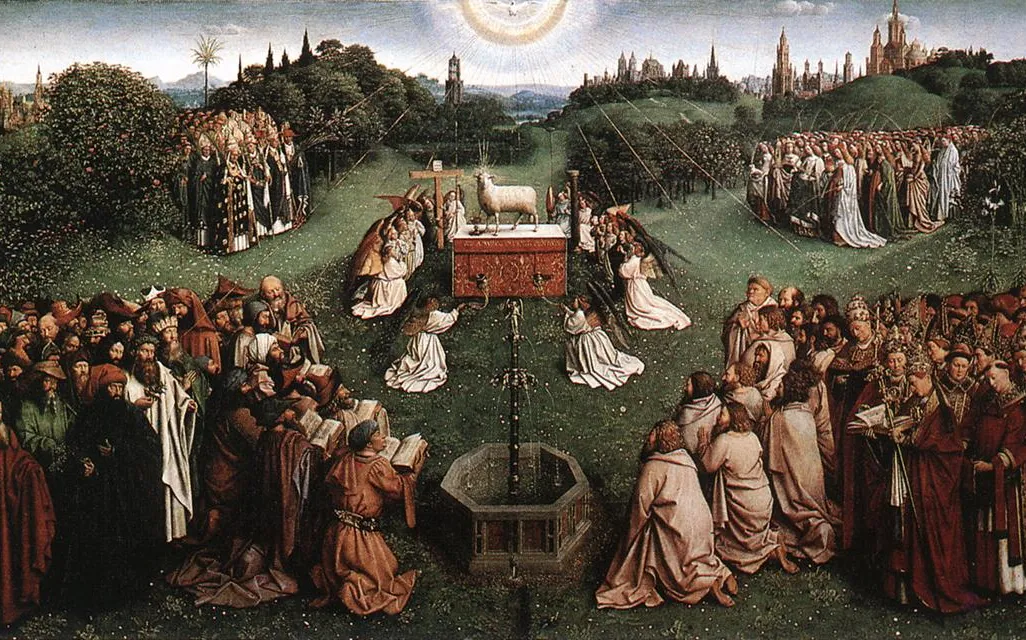
The canonisation process is now a structured system handled by Rome. Reforms have allowed more causes to move forward, but questions over scrutiny and rigour remain In a recent interview with Cardinal Marcello Semeraro, Daniel Beurthe explored a number of contested questions surrounding the modern canonisation process, particularly in the wake of post-conciliar reforms. Among the key themes discussed were longstanding criticisms that procedural changes have, in the eyes of some observers, diminished the traditional rigour once associated with the examination of causes, as well as the rationale behind the suppression of the office of the so-called “Devil’s Advocate”. For much of the Church’s early history, the recognition of saints was a local matter, exercised principally by bishops and, in some regions, by primates and patriarchs. Martyrs and confessors could be granted public ecclesiastical honour within the territories over which these authorities presided. Such recognition, however, did not extend beyond those local boundaries. Only the acceptance of a cultus by the Pope gave it universal force, since the Pope alone possesses authority over the whole Church. Even at this early stage, the distinction between local veneration and universal recognition was clearly understood, though not always consistently observed in practice. Over time, difficulties emerged within this decentralised system. Popular enthusiasm sometimes outpaced careful discernment, and in certain cases bishops were criticised for insufficiently rigorous inquiry into the lives of those whom they permitted to be honoured publicly. These tensions gradually prompted appeals to the Church, particularly in the medieval West, where the papacy was increasingly asked to intervene in order to ensure uniformity and credibility in such decisions. A significant moment in this development came in 993, when Pope John XV formally canonised Saint Ulrich of Augsburg, marking the first clear instance of a papal canonisation of a saint from outside Rome intended for the veneration of the universal Church. From the 11th century onwards, recourse to papal authority became more frequent, and the Roman Pontiffs began to assert a more direct role in regulating the recognition of sanctity. Figures such as Pope Urban II, Pope Calixtus II and Pope Eugene III insisted that claims of sanctity, including the verification of virtues and miracles, should be subjected to structured examination, often within the context of ecclesiastical councils. This was a decisive move away from purely local determination towards a more centralised and juridically grounded process, laying the foundations for later formal procedures. The transition to exclusive papal authority was gradual but decisive. One of the last known instances of canonisation carried out by a non-papal authority in the Western Church occurred in 1153, when the Archbishop of Rouen declared the sanctity of Walter of Pontoise. Within a generation, however, this practice had effectively ceased. In 1170 and 1173, Pope Alexander III issued decrees that strongly curtailed episcopal autonomy in this area, insisting that no one should be venerated as a saint without the authority of the Roman Church. This consolidation of authority was further developed under Pope Innocent III, whose pontificate saw the increasing elaboration of investigative procedures submitted to Rome. His involvement in canonisations reinforced the principle that such judgments required thorough examination at the highest level of the Church’s authority. Nevertheless, questions about the precise extent of papal reservation continued for some time, as earlier customs did not disappear immediately. A definitive settlement came in the 17th century under Pope Urban VIII, who formally reserved both canonisation and beatification to the Apostolic See. Through the apostolic letter Caelestis Hierusalem cives in 1634, and subsequent decrees in 1642, he established detailed norms governing the entire process. These measures not only centralised authority but also introduced a more systematic and regulated framework, addressing earlier inconsistencies and abuses. From this point forward, the recognition of saints became firmly embedded within the juridical structures of the Roman Curia. The system reached its classical form in the 18th century through the work of the eminent canonist Pope Benedict XIV. His monumental study, De Servorum Dei beatificatione et de Beatorum canonizatione , published between 1734 and 1738, synthesised existing legislation and practice into a comprehensive and authoritative guide. Lambertini’s work codified the procedures in a manner that would shape the Church’s approach for generations. These norms were later incorporated into the Code of Canon Law, ensuring their continued application into the modern era. The essential structure remained largely unchanged until the late 20th century, when reforms initiated under Pope Paul VI began to simplify certain aspects of the procedure, paving the way for the more comprehensive revisions enacted in 1983. Even so, the historical trajectory, from local episcopal recognition to exclusive papal authority, and from informal devotion to codified juridical process, remains fundamental to understanding how the Church has sought to discern and proclaim sanctity across the centuries. It is this background that lays the foundation of the current process. Prior to 1983, the early phases of a cause involved a series of diocesan inquiries. These included informative processes into the reputation for holiness and miracles, investigations to confirm the absence of illicit public cult, in accordance with the decrees of Pope Urban VIII, and examinations of the candidate’s writings. These inquiries could take place across multiple dioceses, depending on where witnesses or documents were located. Once completed, the findings were sealed and transmitted to Rome for further examination. At the Roman stage, the material was opened, translated where necessary, and organised into a formal dossier known as the positio . A cardinal relator was appointed to oversee the cause, and theologians were tasked with reviewing the writings of the Servant of God to ensure doctrinal soundness. Only after this scrutiny could the Congregation consider whether the cause might proceed. If no doctrinal impediments were found, the question of formally introducing the cause was debated in a meeting of the Congregation. A favourable decision led to the candidate being declared Venerable, following papal approval. This marked recognition that the individual had lived a life of heroic virtue, though public veneration remained prohibited at this stage. The demonstration of heroic virtue was itself the subject of extensive deliberation. It was examined across three successive congregations: ante-preparatory, preparatory and general, each requiring detailed reports and responses to the objections of the Promotor Fidei. Only after a majority of consultors and cardinals had resolved these objections could the Pope confirm the decree affirming heroic virtue. Miracles formed the next crucial stage. Their number and nature depended on the strength of the evidence already established. In cases supported by eyewitness testimony, fewer miracles were required; where evidence was indirect, more were demanded. Each alleged miracle underwent a process as exacting as that applied to virtues, including medical evaluations and theological assessments. The discussions again unfolded across multiple congregations, culminating in a decree confirming their authenticity. Only after both virtue and miracles had been established did the Congregation consider the question super tuto , whether it was safe to proceed to beatification. A favourable judgment led to the solemn beatification ceremony, at which the Pope authorised limited public veneration of the newly declared Blessed. This was accompanied by a papal brief and often by liturgical celebrations specific to the individual. Canonisation required further miracles attributed to the intercession of the Blessed after beatification. These too were subjected to the same layered scrutiny. Only then would the Pope issue a Bull of Canonisation, not merely permitting but commanding the universal veneration of the saint throughout the Church. The solemn proclamation, accompanied by a Pontifical High Mass, represented the definitive act of the process. The complexity of the system was reflected in its slowness, as causes could take decades or even centuries to complete, not least because the Congregation was limited in how many major questions it could consider at any given time. The same officials were required to participate in each stage, and the schedule of meetings was constrained. The result was a process that prioritised certainty over speed. In the modern period, reforms to the canonisation process were introduced in 1983 under Pope John Paul II through the apostolic constitution Divinus Perfectionis Magister . It retained the essential structure of investigating virtue and miracles but significantly altered the manner in which these elements were assessed. The responsibility of the diocesan bishop was expanded, and the role of the Dicastery for the Causes of Saints was streamlined. The Promotor Fidei was effectively replaced by a less adversarial role, and the number of formal congregations was reduced. Under the current system, a cause may be opened no sooner than five years after the candidate’s death, though this requirement can be waived. The diocesan phase focuses on collecting documentation and testimony, which are then transmitted to Rome. There, a relator works with theological experts to prepare a positio summarising the life and virtues of the Servant of God. This document is examined by a theological commission and subsequently by the cardinals and bishops of the dicastery. A favourable judgment leads to a decree of heroic virtue and the title Venerable. The verification of miracles remains essential, involving both scientific and theological commissions. However, the overall structure is less juridically complex than its predecessor, with fewer formal debates and a greater reliance on written documentation rather than adversarial proceedings. Beatification follows the recognition of a miracle, unless the candidate is a martyr, in which case the requirement may be waived. Canonisation requires a further miracle, examined through similar procedures. The final decision rests with the Pope, who, by the rite of canonisation, declares the individual a saint of the universal Church. Overall, the older system relied on a judicial model based on checks and balances, formal contradiction, multiple congregations, and the prominent role of the Promotor Fidei, whose task was to challenge the cause at every stage. In contrast, the contemporary process reduces the number of formal stages, removes the strictly adversarial structure, and places greater responsibility on diocesan investigations and the preparation of the positio . While scientific and theological scrutiny of miracles remains, the overall procedure is less cumbersome and more dependent on documentary synthesis. The modern reforms have enabled a far greater number of causes to be examined within a shorter timeframe, driven in part by practical considerations and the desire to present contemporary models of holiness. This shift has altered the balance between procedural thoroughness and efficiency, with the removal of certain institutional checks. These changes ultimately represent a continuing tension between rigour and accessibility that shapes the debate today.
May 2, 2026
Sheep among wolves: strength and gentleness in the Christian life
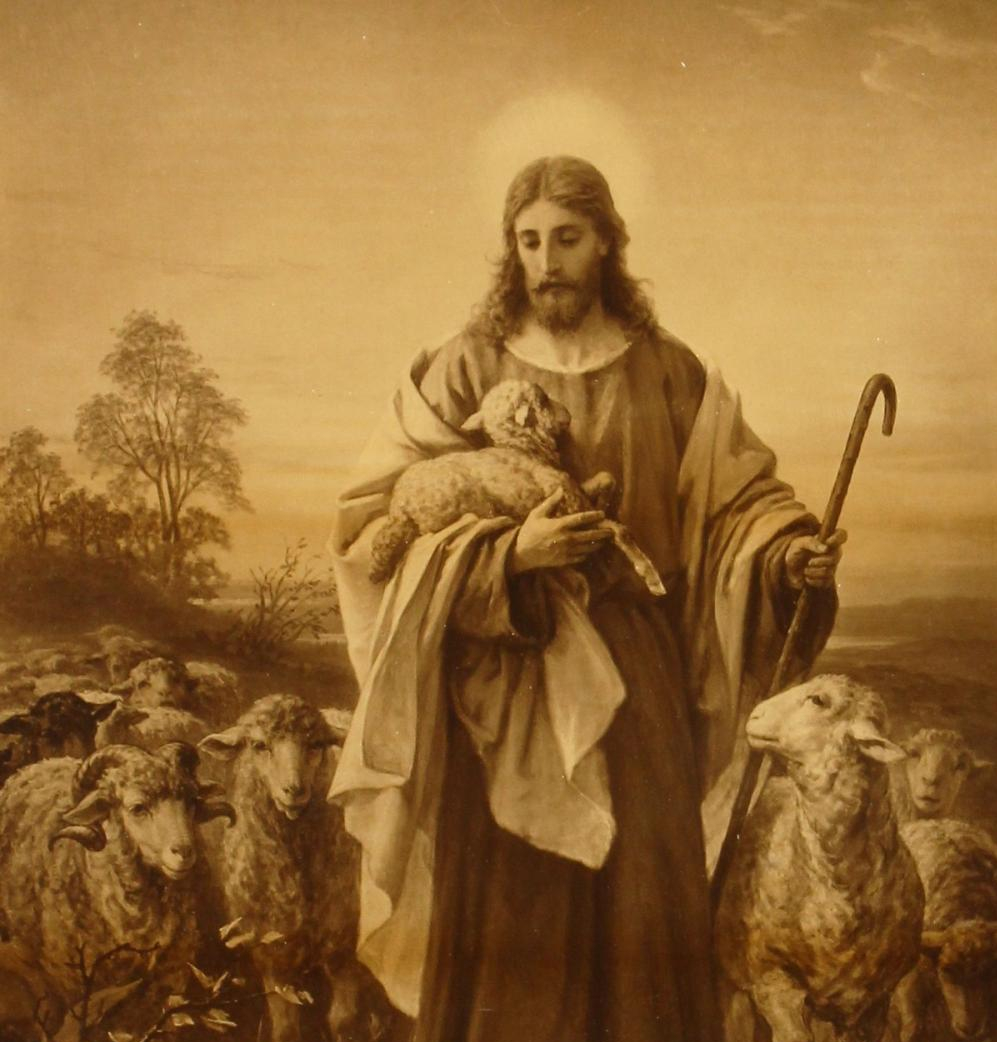
To follow Christ is to hold together strength and gentleness in a world that resists both. Br René Stockman, former Superior General of the Congregation of the Brothers of Charity, reflects on how in the face of conflict and confusion, the Gospel calls for courage shaped by grace, not force Those who try to follow Jesus Christ radically and put His message into practice have never had it easy in this world. His person and His message met with resistance in His time and led Him to the Cross. It would therefore be surprising if this resistance were to disappear today, for that would mean we had watered down the Gospel message into a pleasant story for our times. Christ brought us the Good News, a message that leads to true life, but that is not always the life the world holds up as an ideal. On the contrary. If we take the Sermon on the Mount, the heart of the message Christ wanted to impart to us, it would take a great deal of manipulation to reconcile it with what the world prioritises. We therefore often hear that, in the business world, one would not get very far with a message like the Sermon on the Mount. But even in our own lives, it is very difficult to remain consistently faithful to the radical message of the Gospel. Are we willing, like Christ, to take up our cross and follow Him all the way to Calvary, or do we give in to the temptation to fabricate our own interpretation of the Gospel, one that offends no one and grants us an easy life? The Gospel message, brought to us by Christ, calls on us, on the one hand, to be forceful in fulfilling it, yet at the same time not to lose our gentleness. These are two seemingly contradictory qualities that we must strive to hold together. If we act only forcefully, we run the risk of turning the Good News into something harsh, a spirituality that amounts to us being strict with ourselves and equally strict with others. It is a spirituality that actually takes us back to the mindset of the Pharisees, who were Our Lord’s chief opponents. But do we not then miss the joy that a life centred on God can bring us? Do we not run the risk of narrowing the message of the Gospel down to a strict rulebook? And do we not place burdens on our own shoulders and those of others that are difficult to bear, burdens that are often regarded as the exclusive result of our own efforts? It then seems as though we want to live for God, but at the same time without God. It is a spirituality that can even make us arrogant, self-satisfied in the thought that we are, after all, good Christians and much better than others. With such an attitude, we leave no room for God’s grace and rely exclusively on our own efforts. Our forceful actions then become strained behaviour that will have little positive impact on others. We view the Gospel message as intended for an elite, and we are glad to belong to this elite. Forcefulness alone will not get us there, and then we are very far from the basic attitude that Paul describes when he says: “When we are weak, then we are strong” (2 Cor. 12:10). In the teaching of St Paul a very different tone is struck, and we are called to adopt a meek attitude. But here too we must be careful about what we understand by this meekness and how we interpret the weakness that Paul describes. Paul was not a figure who radiated weakness. Rather, he was forceful and full of courage. Before his conversion, he did not spare the sword in persecuting Christians. And after his conversion, with similar zeal and strength, he travelled with boundless dedication to proclaim the Good News everywhere. He was not a man of compromise. Yet in his letters we also discern a genuine concern for those with whom he lived and worked. We need only read the letter he wrote to Philemon to see the tenderness with which he speaks of his relationship with him. In his Song of Love (1 Cor. 13) he reveals the warmth that was in his heart: “Set your heart on love” (1 Cor. 14:1) is the command he gives to us all. It was love that drove him and channelled his intense character into the almost incomprehensible zeal that marked him. From Paul, we learn that we do not have to set aside our individuality when we want to follow Christ, but that we must entrust ourselves to His grace. We must truly become instruments in His hands and therefore be willing to surrender ourselves to Him, until we can say with that same Paul: “It is no longer I who live, but Christ who lives in me” (Gal. 2:20). It is Christ who must become the reference point in our lives, He alone. Christ did not change the characters and professional skills of His Apostles, but He did give them a new orientation. “From now on I will make you fishers of men” (Mt 4:19). But in this new mission, they will allow themselves to be guided by Christ and will also obey Him when He commands them, against all reason, to cast their nets on the other side (cf. John 21:6). It is Jesus who becomes their shepherd and who carries this out with both strength and gentleness. He sends them out as sheep among wolves, but as the good shepherd, He will never abandon them. That is the heart of the matter: in Jesus Christ we have a good shepherd, to whose guidance we may entrust ourselves. We pray this in the well-known Psalm 23: “The Lord is my shepherd; I shall not want. He makes me lie down in green pastures … Even though I walk through the valley of the shadow of death, I will fear no evil, for You are with me …” Indeed, if we follow Him, we have nothing to fear, even if our path leads through dark valleys and we face situations that seem hopeless from a purely human perspective. To stay with the image of the shepherd and his sheep, we recall the words of St John Chrysostom, in which he urges us to resist the temptation to become wolves ourselves. “As long as we remain sheep, we will prevail, and even if we are surrounded by countless wolves, we will succeed in overcoming them. But if we become wolves, we will be defeated, because we will lack the shepherd’s help. He does not tend wolves, but sheep” (St John Chrysostom, Homily 33 on the Gospel according to Matthew). Here the question arises of how we behave in the face of resistance and persecution. Do we maintain our strength without losing our gentleness, or do we become hard-hearted and use the same weapons with which others try to attack us? In the latter case, we become like wolves and think that only through violence can we wage the battle in the world. There are no moments in history, including our own, when we are not confronted with unjust conditions and situations that are completely at odds with the great principles of the Gospel. We are regularly confronted with direct attacks against the Faith. We live in a time when people are quick, too quick, to reach for weapons in order supposedly to combat injustice. We see this today on the international stage, where so many flashpoints of war are flaring up and where we have fallen into a spiral of violence. All around us, we see wolves devouring the sheep and taking the place of the shepherd. The image of the wolf also brings to mind a story of St Francis of Assisi in the town of Gubbio, where a wolf struck fear into the population but ultimately brought peace. Francis entered into dialogue with the wolf and reached a mutual agreement: he would ensure that the wolf had enough food every day, on condition that the wolf would henceforth leave the people in peace. Is this not a powerful image of how one should try to address injustice and persecution? Instead of immediately resorting to arms, one must give absolute priority to dialogue and strive to reach a feasible compromise, without abandoning moral principles, in the conviction that there is Someone who blesses and guides this dialogue, like a good shepherd. St Francis was able to face that wolf alone because the peace of the Lord was present in his heart. It is this peace that we wish upon one another during the celebration of the Eucharist, and it is with this peace that we must go out into the world. It is therefore regrettable that the wish for peace has often degenerated into an enthusiastic greeting of one another, without a deep realisation that it is the peace of the Lord that we wish upon one another. It is that peace we need in order to stand in the world as sheep and face the confrontation with the wolves we will encounter. “Peace I leave with you; my peace I give to you. Not as the world gives do I give it to you. Let not your hearts be troubled or afraid” (John 14:27). With the peace of the Lord in our hearts, we will not be troubled or lose heart, but will receive the inner strength to face the wolves, like Francis, in a forceful yet gentle manner. Pope Leo XIV has often repeated lately that peace cannot be achieved through weapons. How relevant here are the words of Chrysostom urging us to resist the temptation to act and behave like wolves. This naturally requires humility and the trust that there is still a shepherd who leads us along the right paths and makes us lie down in green pastures (Psalm 23). What we are witnessing today worldwide should prompt us to look into our own hearts, remove all traces that lead to violence and plant there the seeds of God’s peace. In this way, we can truly remain as sheep among wolves, keeping in mind the words of the Lord Jesus: that He will never forsake us (cf. Mt 10:19).
May 2, 2026
Cardinal Müller rejects claims Vatican finances influenced election of Pope Leo XIV
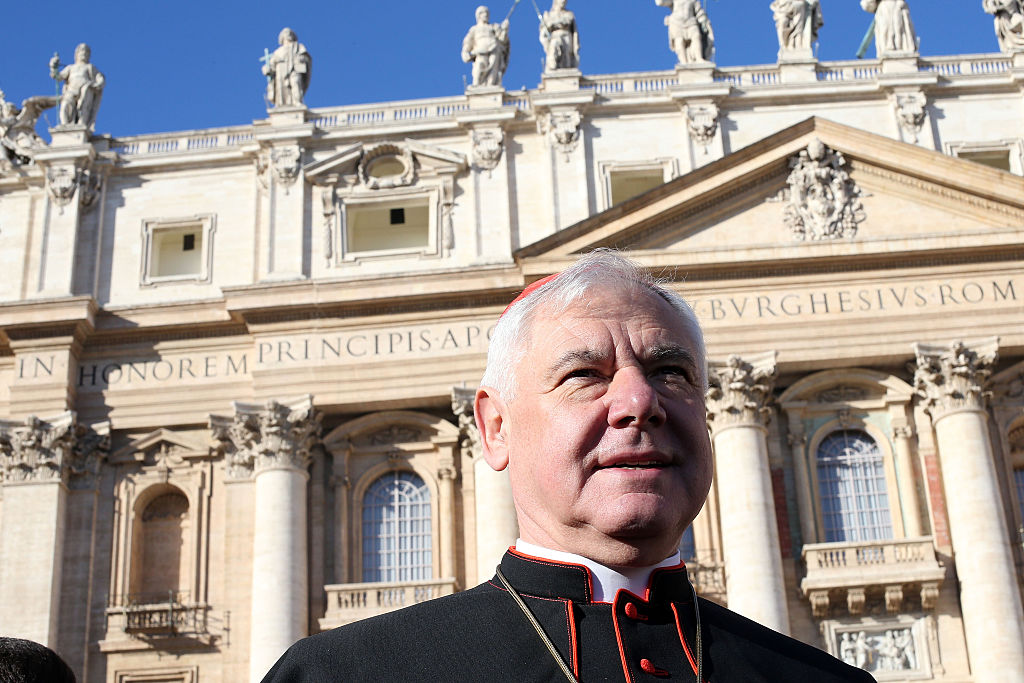
Cardinal Müller has dismissed speculation that financial concerns shaped the election of Pope Leo XIV Cardinal Gerhard Ludwig Müller has rejected claims that the Vatican’s financial situation influenced the election of Pope Leo XIV. The German cardinal made his remarks in Rome during the presentation of the new book Papi, Dollari e Guerre by the renowned Italian Vaticanista Massimo Franco, which examines the historical relationship between the United States and the Holy See. Speaking at the event, Cardinal Müller addressed speculation that concerns over Vatican finances may have played a decisive role in the election of the first American pope. “Although Cardinal Reinhard Marx dedicated a full day to discussing the Holy See’s finances in the pre-conclave, this did not influence the final decision,” Cardinal Müller said. His Eminence added that the choice of a pope “is based on different criteria.” The intervention comes one year after the conclave that elected Pope Leo XIV, a historic event given the longstanding assumption that a pontiff from the United States was unlikely. Cardinal Marx, who has been closely associated with Vatican economic reform and oversight, reportedly led a full day of discussions on financial issues during the general congregations preceding the conclave. These meetings, which take place before the formal voting begins, allow cardinals to exchange views on the challenges facing the Church. Despite the prominence of those discussions, Cardinal Müller insisted that they did not shape the final outcome. His remarks appeared to counter interpretations that the election reflected a strategic response to financial pressures or a desire to strengthen ties with American Catholic institutions. Franco’s book, presented at the same event, sets out the historical context of relations between the Vatican and the United States, including financial links that have developed over more than a century. According to the publisher’s summary, the work traces the role of American Catholic influence from the early twentieth century to the present day, using archival material and previously unpublished testimonies. The book refers to financial contributions from American benefactors during the pontificates of Pius XI and Pius XII, as well as support provided during and after the Second World War. It also examines the role of institutions such as the Papal Foundation, established during the pontificate of John Paul II, and the continuing presence of major Catholic organisations in the United States. The summary further notes that the most recent conclave marked “the end of Eurocentrism in an impoverished and divided Vatican”, while suggesting that the election of Pope Leo XIV should be understood within a broader historical and geopolitical framework. It also points to the significance of the Pontifical North American College in Rome, where it is claimed discussions among American cardinals took place prior to the conclave. Among those present at the book presentation were several figures from ecclesiastical, political and journalistic circles, including Archbishop Antonio Mennini and the former Italian prime minister Romano Prodi. Massimo Franco, the author, is a political journalist and commentator for Corriere della Sera . He has previously written on Italian and Vatican politics and has contributed to a range of international publications. His latest work continues that focus, examining the intersection of religion, diplomacy and finance.
May 1, 2026