Greeting the eager eyes of the world for the very first time one year ago, Leo XIV laid out his papal style by citing his spiritual father, St Augustine. Twelve months later, the Church he inherited remains largely just as troubled, and though Leo himself is beloved by many, he is yet to deliver notable resolutions to the various conflicts in the manner that was predicted of him.
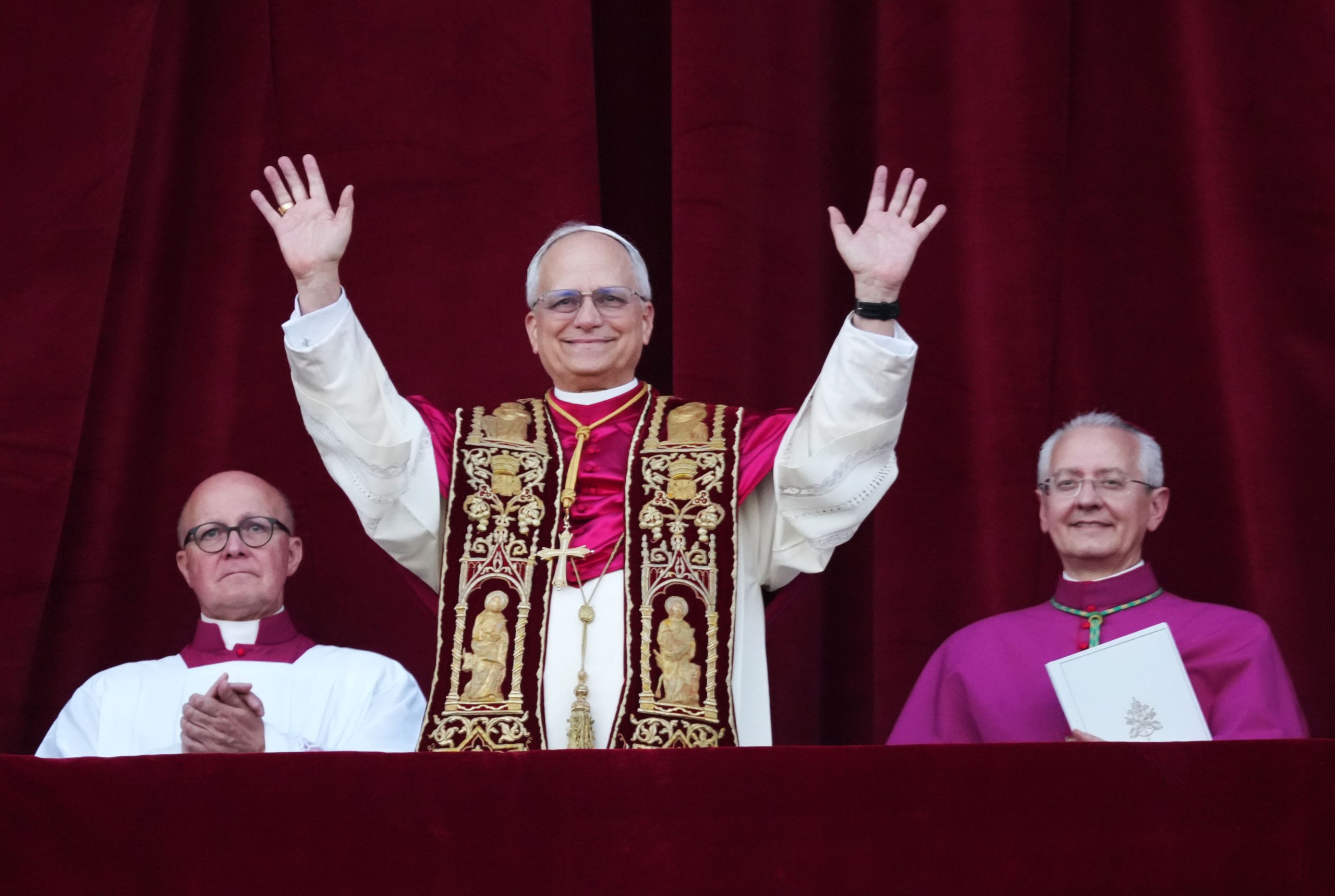
Emerging onto the Loggia in the early evening of May 8, 2025, Leo XIV presented a genial figure and, bedecked in the traditional mozzetta and stole rejected by Pope Francis, was greeted warmly. For all the rhetoric about necessary change proposed by ardent papal apologists during the Francis era, Leo’s use of traditional papal attire made an instant and undeniable positive impression on the crowd.
In assessing his first year as pope, it is clear that those who immediately sought to portray him as a reborn St Pius X or an ardent champion of the most heterodox causes have both been confounded. Francis’ reign led to continuous spicy headlines, and his off-the-cuff remarks brushed aside centuries of Tradition in favour of the Argentine’s personal theology. Leo is not as easy to pin down: he is neither revolutionary nor a “rigid” traditionalist.
If a label is needed, Leo appears to resemble John Paul II more than his other two immediate predecessors, for both better and worse: charismatic in character, quietly and confidently rooted in his own persona, conservative to a certain extent in liturgy and reverent, but not ardently traditional, orthodox in morality, but sometimes seemingly blind to pressing issues, or simply reluctant to act.
For those to whom the latter part of such an assessment seems too critical, one must not forget that a number of pressing scandals and personal appointments remain unaddressed. True, Leo’s style does not appear oriented towards instant action, nor towards breaking the laws of diplomatic courtesy. That can indeed be a positive trait – especially after a pontificate of such turmoil, but in some cases, such as the immense scandal and ecclesial devastation caused by the Francis-era appointment of Cardinal Victor Manuel Fernández, urgent action is not just appropriate but necessary.
So what are the most controversial issues Leo has inherited?
There is, of course, the infamous Sino-Vatican deal, but given that it is not due for renewal until 2028, Leo will likely feel less pressure over it. So far, though, the Leonine Vatican has continued the previous style of appeasement towards Beijing, seemingly allowing China to pull the strings. This is in large part due to Cardinal Pietro Parolin remaining as Secretary of State.
Amoris Laetitia and the scandal of allowing the divorced and “re-married” to receive Communion remain as grave a crisis as when the document was signed by Francis in 2016. Leo has convened a meeting of bishops to discuss the matter in October, and it is the opinion of this correspondent that, at that event or shortly afterwards, the American pope might overturn this element of Francis’ text, albeit in a veiled manner. Should he fail to do so, however, it will likely be seen as one of the most egregious moments of his pontificate.
Fiducia Supplicans also remains in force, although Leo appears to have undermined the ill-fated text in recent weeks when he stated that “the Holy See has made it clear that we do not agree with the formalized blessing of couples, in this case homosexual couples, as you asked, or couples in irregular situations, beyond what was specifically, if you will, allowed for by Pope Francis in saying all people receive blessings.” Debate has raged over this line, as to whether Leo was supporting FS or rejecting it, but there is no doubt that the text calls for the blessing of couples and that, by prohibiting such blessings, Leo has softly closed the door.
Herein lies the essence of much of Leo’s style. His is a gentle, diplomatic approach, and one much needed. Leo is never going to be the pope who formally overturns the actions of an immediate predecessor, unlike Francis. Rather, he favours re-presenting Catholic teaching anew, quoting just enough of Francis to show continuity in the papal line before then diverging from Francis in content in favour of the Church’s tradition. On more than one occasion, Leo has employed a trademark phrase of Francis’, used by the Argentine to cloud Church teaching, before adding his own twist in order to clarify the matter at hand.
He is a man of purpose and of listening. Also evident from his speeches and homilies is the extent of his personal learning and active spirituality. Commenting at the time of his election, many cardinals praised his ability to build bridges between warring parties and satisfy everyone. So far, Leo has certainly attempted to do just that.
On the issue of the traditional Mass, another problem inherited from Francis, he made waves by allowing Cardinal Raymond Burke to offer a high-profile Mass for the annual Latin Mass pilgrimage to the Vatican. It was an event laden with significance, and Leo even endured criticism for it from within the Curia. He believed strongly enough in the importance of allowing the event to proceed that he was willing to endure the grumblings of others.
But at a certain point, the papacy will force him to act in a way that being a diocesan bishop and Curial prefect did not, namely to decide in such a way as to leave only one side happy. As pope, he has stated that his ministry “is distinguished precisely by this self-sacrificing love, because the Church of Rome presides in charity and its true authority is the charity of Christ.”
Leo appears to be a man keen to honour truth, law and basic justice in a way that could not always be said of Francis. He is committed to a fairly permissive degree of listening to differing views and then acting with an informed mind.
However, in order to preserve unity based on Christ, Leo will eventually have to leave the heterodox ecclesial lobby unhappy, and whether or not he has the strength to do so will determine the efficacy of his papacy.