

Pope Francis
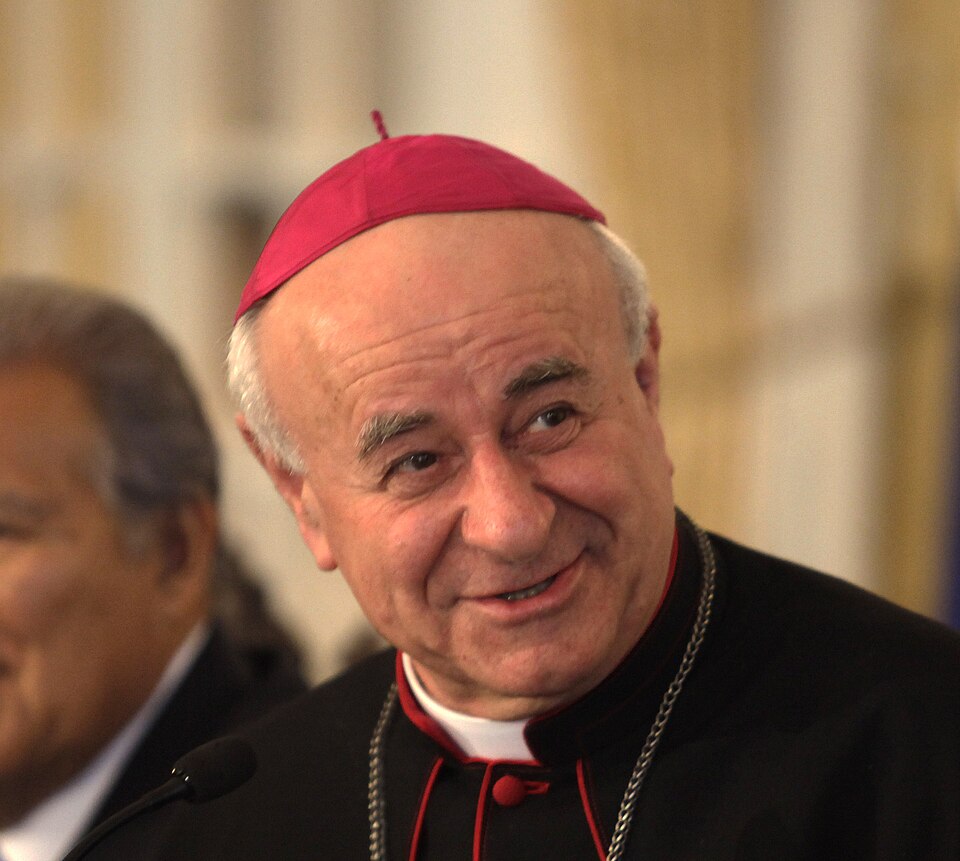
Archbishop Paglia says Pope Francis wanted ‘necessary updates’ to Humanae Vitae
Retired Archbishop Vincenzo Paglia has said Pope Francis believed Humanae Vitae required “necessary updates” to address modern questions surrounding sexuality Retired Archbishop Vincenzo Paglia has said Pope Francis believed Humanae Vitae required “necessary updates” to address modern questions surrounding sexuality. Archbishop Paglia, the former president and grand chancellor of the Pontifical Academy for Life, said in a lengthy interview published by the Italian website Settimana News that the late pontiff had personally asked him to prepare a text ahead of the 50th anniversary of Pope Paul VI’s 1968 encyclical banning artificial contraception. “Pope Francis felt the need to adapt the doctrine to the new times,” Archbishop Paglia said. “He asked me to prepare a text that would highlight its prophecy, while also highlighting some necessary updates.” “I prepared a text for him, drafted with the collaboration of a group of theologians,” the archbishop said. “He greatly appreciated it, asking me to continue the research, which resulted in subsequent texts.” The archbishop made the remarks while reflecting on the Synods on the Family held in 2014 and 2015, which discussed homosexuality, Communion for divorced and remarried Catholics, and what he called “irregular situations”. “The themes of the two synodal assemblies are well known,” Archbishop Paglia said. “The topic of homosexuality, then questions relating to marriage and ‘irregular’ situations, and the topic of the Eucharist for divorced and remarried people.” Archbishop Paglia also defended the reforms made under Francis to the Pontifical John Paul II Institute for Marriage and Family Sciences, which was restructured in 2019 following the promulgation of new statutes by the Vatican. The archbishop said the old institute had been based on “a static and immutable vision of natural law” and an “essentialist and ahistorical paradigm”. “The situation of the John Paul II Institute presented even greater challenges,” he said. “It was an institution strongly focused on marital morality.” Archbishop Paglia said Pope Francis asked him to reorganise both the John Paul II Institute and the Pontifical Academy for Life because “both of these institutions of the Holy See needed to be rethought”. According to Archbishop Paglia, the institutions had become centres of resistance to the direction set by Francis after the publication of Amoris Laetitia in 2016. “The Pontifical Academy and the JPII Institute had thus become, so to speak, loci of pronounced doctrinal resistance to papal teaching,” he said. The archbishop went further, saying: “The task entrusted to me was, therefore, to restore the ability of these two institutions to listen to the living magisterium, so that they might accompany the reform the Pope desired.” The reforms at the John Paul II Institute led to the removal of several professors associated with the theological vision of Pope St John Paul II, who established the institute in 1981 following the Synod on the Family. Archbishop Paglia acknowledged the scale of the changes. “Opponents understood correctly: a very profound reform was at stake,” he said. Throughout the interview, Archbishop Paglia repeatedly criticised what he described as “moralistic” approaches to Catholic theology. “At the time, both institutions were characterised by a strongly moralistic emphasis,” he said. “Pope Francis disliked what he called ‘armchair theology’, abstract and disconnected from pastoral care.” He also criticised the language of “non-negotiable values”, saying it carried “a strong moralistic connotation”. “Reducing such a delicate and complex subject to the application of a doctrinal algorithm of morality and discipline imposes a vision of human reality alien to the actual forms of consciousness and the real conditions of experience,” he said. Archbishop Paglia also spoke about broadening the membership of the Pontifical Academy for Life to include economists, engineers, experts in robotics and artificial intelligence, as well as non-Catholics and non-believers. “Until then, the academics had been exclusively Catholic ethicists and moral theologians,” Archbishop Paglia said. “We also included members from other Christian and religious traditions, as well as non-religious professionals and thinkers.” The archbishop also said the academy sought to widen discussion of life issues beyond abortion and euthanasia. “It was a matter of understanding [life] in all its richness,” he said, “not only in its biological and chronological dimension, from the beginning to the end of existence”. He recalled tensions with American pro-life groups after proposing a conference linking opposition to abortion with gun control. “I envisioned a conference that would simultaneously oppose abortion and address gun control in schools,” he said. “Well, the proposal was rejected.” Archbishop Paglia also referred to the publication in 2024 of The Joy of Life: A Journey of Theological Ethics , which he described as “the most mature fruit of this journey of reflection”. “It also included reflection on the updating of Humanae Vitae ,” Archbishop Paglia said. The reforms to the John Paul II Institute and the Pontifical Academy for Life were among the most controversial of Archbishop Paglia’s tenure. The archbishop, however, insisted they reflected Francis’s desire for “a theology capable of penetrating the depths of culture, history, and people’s lives”. During his presidency, he was also criticised for comments which appeared to give tacit support to assisted suicide. Speaking at the Perugia Journalism Festival in 2023, the archbishop said: “Personally, I would not practise assisted suicide, but I understand that legal mediation can constitute the greatest common good concretely possible in the conditions in which we find ourselves.” Two books which questioned Catholic teaching on matters of life were produced by the institute under Paglia’s leadership, leading renowned papal biographer George Weigel to comment that the institute was betraying “the intention of the saint and scholar who founded it”. It is also not the first time the archbishop has appeared to soften the teaching of Humanae Vitae on human sexuality. In May 2023, he said that “the recognition of the unbreakable connection between married love and generation in Humanae Vitae does not mean that every marital act must necessarily bear fruit”. He added: “We are facing epochal challenges. In the Sixties, the ‘pill’ was considered a total evil. Today, we face even greater dangers. All human life is at risk if we don’t stop spiralling conflict, the arms race, and the destruction of the environment.” The removal of Archbishop Paglia as president and grand chancellor of the Pontifical Academy for Life, and the appointment of his successors, Cardinal Baldassare Reina as grand chancellor and Renzo Pegoraro as president, was one of the first changes to the Curia under Pope Leo XIV. Paglia reached the mandatory retirement age of 80 on 21 April 2025, the day of Pope Francis’s death, so the change was not unexpected and had likely been arranged under the previous pontificate.
May 29, 2026
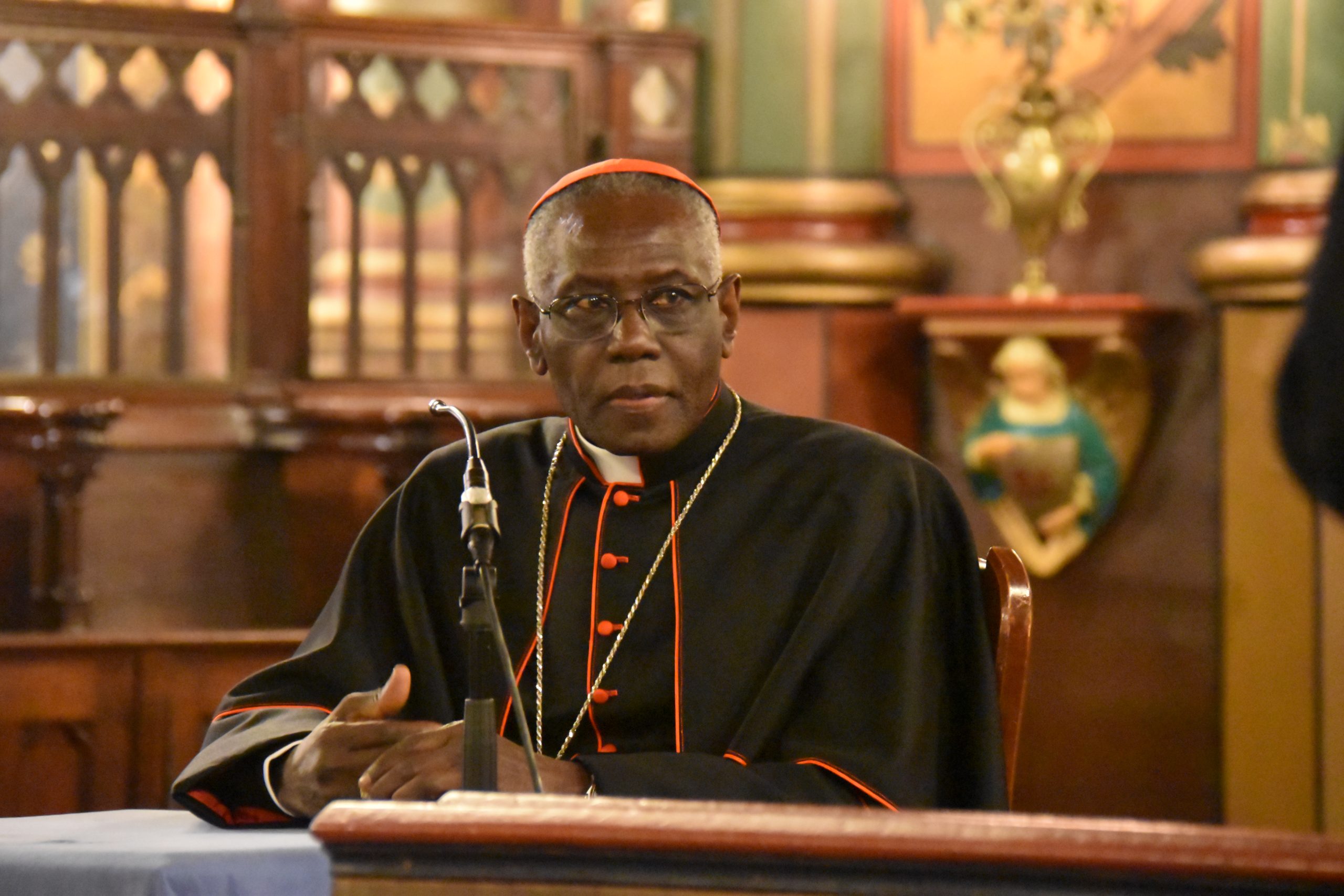
Cardinal Sarah says liturgy has been reduced to ‘mere entertainment’
Cardinal Robert Sarah has called for “clarifications” to parts of the interpretation of Vatican II in order to prevent readings that represent “a break with the faith”. The former prefect of the Congregation for Divine Worship and the Discipline of the Sacraments also warned against liturgy becoming “mere entertainment” and said the Church must resist pressure to conform to the modern world Cardinal Robert Sarah has said that parts of the interpretation of the Second Vatican Council require “clarifications” in order to prevent readings that represent “a break with the faith”. In a lengthy interview published by the French Catholic magazine La Nef on May 4, the former prefect of the Congregation for Divine Worship and the Discipline of the Sacraments said certain conciliar texts had produced “divergent, even opposing, interpretations”, particularly concerning religious freedom, ecumenism, collegiality and the relationship between the Church and the modern world. “A council must be read within the continuity of the faith as it has always been,” Cardinal Sarah said. “Where certain texts have given rise to divergent, even opposing, interpretations, it is legitimate to call for a deeper examination in order to avoid readings that represent a break with the faith.” His Eminence added: “The Church has nothing to fear from clarity.” The Guinean cardinal said he favoured “clarifications rather than corrections”, arguing that the interpretation of the Council belonged to the Magisterium and had already been “largely initiated” by Pope St John Paul II and Pope Benedict XVI. He also warned against treating the Council “as one judges a political programme”. Speaking about Pope Francis, Cardinal Sarah said it was “sometimes necessary” for cardinals to exercise “discernment regarding a period in the life of the Church”, while insisting that criticism of a pontificate must always be carried out “with fear of God, with love for the Church, and without ever falling into irreverence”. “A cardinal is not a courtier,” His Eminence said. “Before God, he is a servant of truth and a collaborator of the Apostolic See.” Without directly criticising Francis personally, Cardinal Sarah suggested that aspects of the previous pontificate had generated uncertainty among Catholics. “A pontificate always leaves a mixed legacy: pastoral insights, spiritual emphases, but also sometimes areas of unease or confusion,” he said, adding that he had spoken privately to Francis to express concerns “that practical ambiguity might obscure doctrinal clarity”. The cardinal said that “an era can leave wounds of confusion” and argued that the duty of pastors was “to help restore to the Church a clearer, more peaceful and more theological message”. Cardinal Sarah repeatedly returned to the theme of secularisation within the Church itself, describing the spread of what he called a “modern form of paganism”. “When faith is reduced to sociological language, liturgy to mere entertainment, morality to perpetual negotiation, and the Church to an institution that must adapt to the desires of the times, then something of paganism returns,” His Eminence said. Cardinal Sarah identified “the effacement of the sense of sin”, “discomfort with the affirmation of revealed truth” and “the trivialisation of the liturgy” as signs of an internal spiritual crisis. “When God is no longer primary, even in the Church, everything else is corrupted,” he said. Cardinal Sarah also warned against what he described as the Church’s growing “fear of displeasing the world”, saying that ambiguity was increasingly preferred “to clarity” and “communication to contemplation”. He added: “The world does not expect the Church to repeat its words; it expects it to open Heaven to it.” On the question of the liturgy, Cardinal Sarah rejected what he described as a “war of sensibilities”, insisting that the issue could not be reduced to factions competing for victory within the Church. “The liturgy belongs to the Church, not to political parties,” he said. “The real question is: how can we restore to the entire Catholic liturgy its sacred dignity, its continuity, its orientation towards God?” The 80 year old cardinal has long been associated with the traditional wing of the Church, so his comments should be read in the light of the restrictions imposed on the Traditional Latin Mass and the impending episcopal consecrations of the Society of Saint Pius X. He described the Society’s planned July 1 episcopal consecrations as “objectively serious”, warning that they would further damage ecclesial unity. “Fidelity to Tradition cannot be separated from hierarchical communion,” he said. However, the cardinal has acknowledged that “doctrinal questions” and tensions had accumulated over decades, adding that “truth and charity must go hand in hand”. Cardinal Sarah also reflected on the wider crisis facing western civilisation, describing Europe as “deeply wounded” and increasingly detached from Christianity and even “the most fundamental anthropological truths”. Yet he argued that the collapse of cultural certainties was leading some people back towards religion. “In Europe, we are seeing an increase in adult baptisms and returns to the faith,” the cardinal said. “When cultural securities crumble, some souls rediscover that God alone remains.” Asked about the priorities of Leo XIV, Cardinal Sarah declined to speak directly for the Pope, but said the new pontificate appeared focused on “peace, unity, mission” and “the Church’s doctrinal responsibility”. Having turned 80 shortly after the 2025 conclave, Cardinal Sarah is no longer a cardinal elector and it is now extremely unlikely that he could ever become Pope. However, as has perhaps been seen most clearly in recent years through Hong Kong’s Cardinal Zen, who is 94, cardinals can continue to exert influence long after the age of 80. Cardinal Zen flew to Rome before the conclave that elected Pope Leo to participate in the General Congregations, the pre-conclave meetings of cardinals in which views on the direction of the Church are expressed, where he warned against reforms he considered damaging. If Cardinal Sarah remains in good health, he is likely to continue using his voice to advocate for the traditionalist wing of the Church for years to come.
May 10, 2026
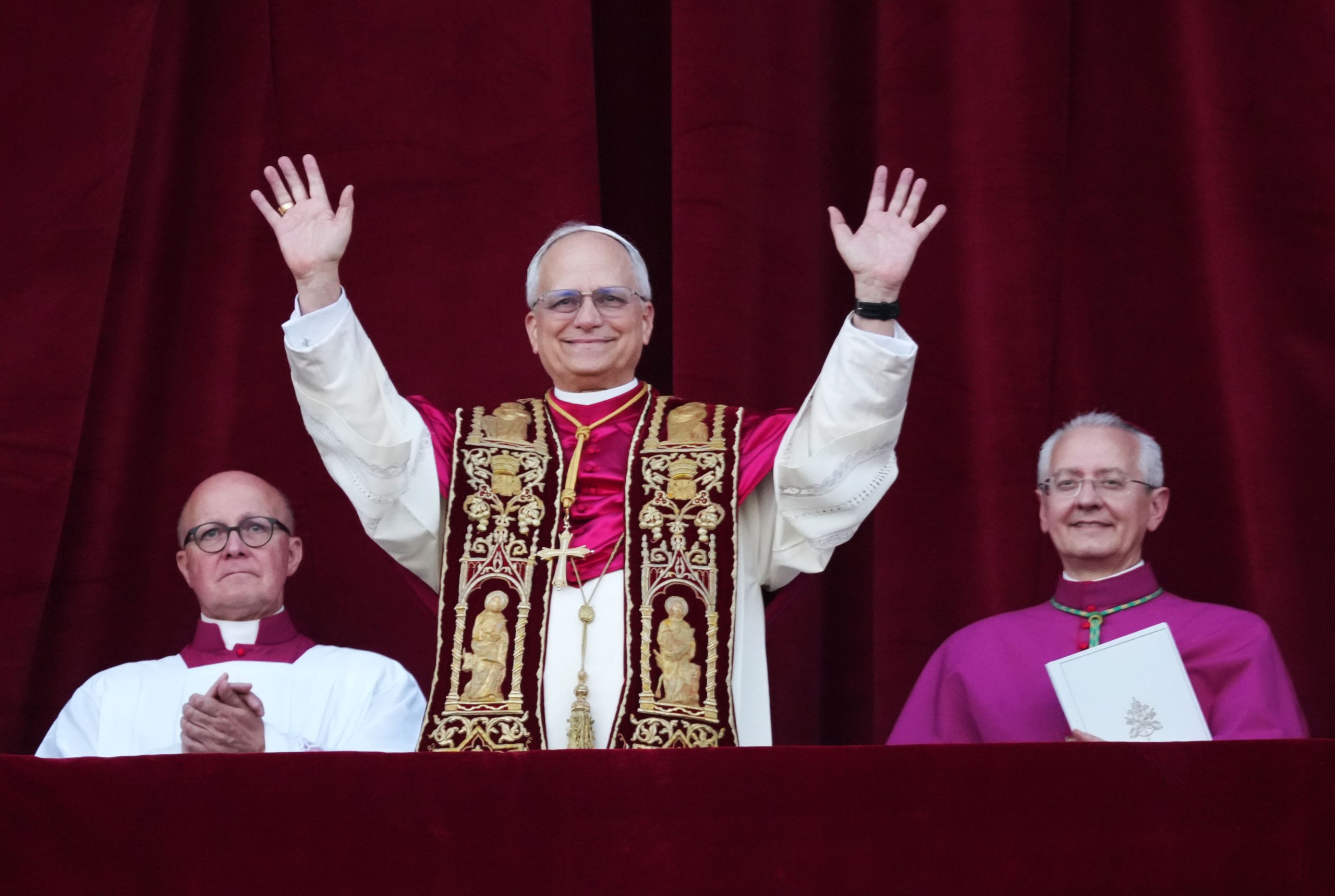
Pope Leo XIV’s first year has brought calm, not resolution
One year after his election, Pope Leo XIV remains widely respected and personally popular, yet many of the deepest crises inherited from Francis remain unsettled Greeting the eager eyes of the world for the very first time one year ago, Leo XIV laid out his papal style by citing his spiritual father, St Augustine. Twelve months later, the Church he inherited remains largely just as troubled, and though Leo himself is beloved by many, he is yet to deliver notable resolutions to the various conflicts in the manner that was predicted of him. Emerging onto the Loggia in the early evening of May 8, 2025, Leo XIV presented a genial figure and, bedecked in the traditional mozzetta and stole rejected by Pope Francis, was greeted warmly. For all the rhetoric about necessary change proposed by ardent papal apologists during the Francis era, Leo’s use of traditional papal attire made an instant and undeniable positive impression on the crowd. In assessing his first year as pope, it is clear that those who immediately sought to portray him as a reborn St Pius X or an ardent champion of the most heterodox causes have both been confounded. Francis’ reign led to continuous spicy headlines, and his off-the-cuff remarks brushed aside centuries of Tradition in favour of the Argentine’s personal theology. Leo is not as easy to pin down: he is neither revolutionary nor a “rigid” traditionalist. If a label is needed, Leo appears to resemble John Paul II more than his other two immediate predecessors, for both better and worse: charismatic in character, quietly and confidently rooted in his own persona, conservative to a certain extent in liturgy and reverent, but not ardently traditional, orthodox in morality, but sometimes seemingly blind to pressing issues, or simply reluctant to act. For those to whom the latter part of such an assessment seems too critical, one must not forget that a number of pressing scandals and personal appointments remain unaddressed. True, Leo’s style does not appear oriented towards instant action, nor towards breaking the laws of diplomatic courtesy. That can indeed be a positive trait – especially after a pontificate of such turmoil, but in some cases, such as the immense scandal and ecclesial devastation caused by the Francis-era appointment of Cardinal Victor Manuel Fernández, urgent action is not just appropriate but necessary. So what are the most controversial issues Leo has inherited? There is, of course, the infamous Sino-Vatican deal, but given that it is not due for renewal until 2028, Leo will likely feel less pressure over it. So far, though, the Leonine Vatican has continued the previous style of appeasement towards Beijing, seemingly allowing China to pull the strings. This is in large part due to Cardinal Pietro Parolin remaining as Secretary of State. Amoris Laetitia and the scandal of allowing the divorced and “re-married” to receive Communion remain as grave a crisis as when the document was signed by Francis in 2016. Leo has convened a meeting of bishops to discuss the matter in October, and it is the opinion of this correspondent that, at that event or shortly afterwards, the American pope might overturn this element of Francis’ text, albeit in a veiled manner. Should he fail to do so, however, it will likely be seen as one of the most egregious moments of his pontificate. Fiducia Supplicans also remains in force, although Leo appears to have undermined the ill-fated text in recent weeks when he stated that “the Holy See has made it clear that we do not agree with the formalized blessing of couples, in this case homosexual couples, as you asked, or couples in irregular situations, beyond what was specifically, if you will, allowed for by Pope Francis in saying all people receive blessings.” Debate has raged over this line, as to whether Leo was supporting FS or rejecting it, but there is no doubt that the text calls for the blessing of couples and that, by prohibiting such blessings, Leo has softly closed the door. Herein lies the essence of much of Leo’s style. His is a gentle, diplomatic approach, and one much needed. Leo is never going to be the pope who formally overturns the actions of an immediate predecessor, unlike Francis. Rather, he favours re-presenting Catholic teaching anew, quoting just enough of Francis to show continuity in the papal line before then diverging from Francis in content in favour of the Church’s tradition. On more than one occasion, Leo has employed a trademark phrase of Francis’, used by the Argentine to cloud Church teaching, before adding his own twist in order to clarify the matter at hand. He is a man of purpose and of listening. Also evident from his speeches and homilies is the extent of his personal learning and active spirituality. Commenting at the time of his election, many cardinals praised his ability to build bridges between warring parties and satisfy everyone. So far, Leo has certainly attempted to do just that. On the issue of the traditional Mass, another problem inherited from Francis, he made waves by allowing Cardinal Raymond Burke to offer a high-profile Mass for the annual Latin Mass pilgrimage to the Vatican. It was an event laden with significance, and Leo even endured criticism for it from within the Curia. He believed strongly enough in the importance of allowing the event to proceed that he was willing to endure the grumblings of others. But at a certain point, the papacy will force him to act in a way that being a diocesan bishop and Curial prefect did not, namely to decide in such a way as to leave only one side happy. As pope, he has stated that his ministry “is distinguished precisely by this self-sacrificing love, because the Church of Rome presides in charity and its true authority is the charity of Christ.” Leo appears to be a man keen to honour truth, law and basic justice in a way that could not always be said of Francis. He is committed to a fairly permissive degree of listening to differing views and then acting with an informed mind. However, in order to preserve unity based on Christ, Leo will eventually have to leave the heterodox ecclesial lobby unhappy, and whether or not he has the strength to do so will determine the efficacy of his papacy.
May 8, 2026