

Zdk
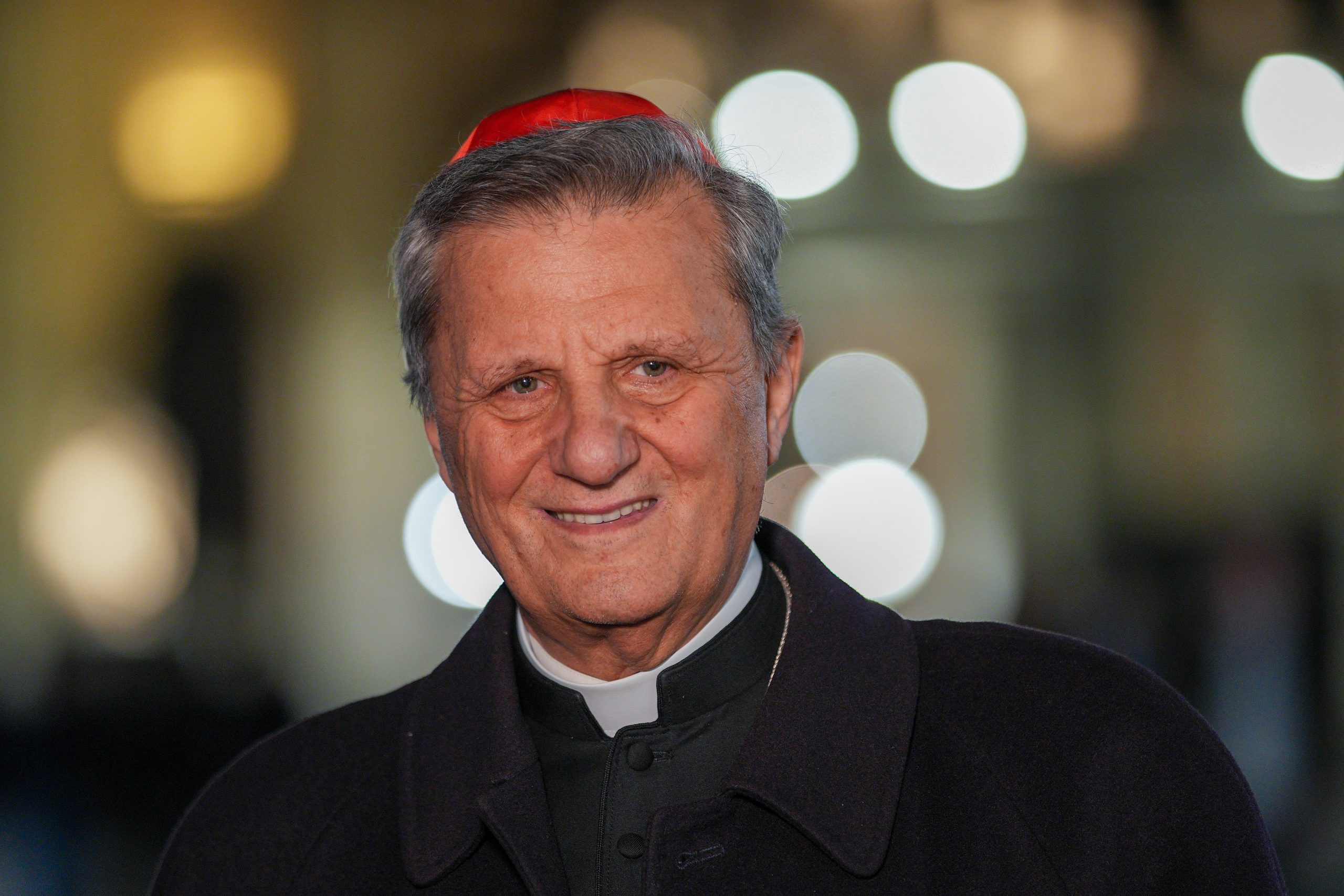
Cardinal Grech speaks on the Synodal Path and the Vatican’s Synod on Synodality
Cardinal Mario Grech has addressed the Synodal Path and the Vatican’s Synod on Synodality during a discussion at the Katholikentag in Germany Cardinal Mario Grech has said that Germany’s Synodal Path and the Vatican’s Synod on Synodality are guided by “the same protagonist: the Holy Spirit”. Speaking at the Katholikentag on May 17, the Secretary General of the Synod of Bishops rejected the idea that synodality was rooted in parliamentary manoeuvring or majority rule, insisting instead that it was a process of discernment guided by the Holy Spirit. “The Holy Spirit does not create a sum of opinions, but harmony, a symphony,” Cardinal Grech said, according to Katholisch.de. His Eminence said synodality should be understood as a “symphony of communion” and stressed the relationship between local Churches and the universal Church. “There is neither a universal Church without local Churches nor a local Church without the universal Church,” His Eminence said. According to Katholisch.de, the remarks came during a public discussion in which theology student Finja Miriam Weber, a member of the German Synodal Assembly, questioned Cardinal Grech’s comparison of the Church to a symphony orchestra. Weber asked who decides “who is allowed to play which instrument”, adding that women are barred from certain positions in the Church “simply because she is female”. Cardinal Grech replied: “Jesus composes the symphony and the Holy Spirit conducts.” According to reports from the event, the exchange was cut short when the moderator ended the discussion before it could continue further. Katholisch.de later reported that Cardinal Grech approached Weber afterwards and told her: “We need people like you.” The intervention is likely to attract attention because Cardinal Grech became one of the leading figures behind the late Pope Francis’s push for synodality. The Maltese prelate was appointed Pro-Secretary General of the Synod of Bishops by Pope Francis in October 2019, succeeding Cardinal Lorenzo Baldisseri the following year. During that period, Cardinal Grech participated in the Synod of Bishops for the Pan-Amazon region and served on the commission responsible for drafting the synod’s final document. In one of his first interviews after his appointment, Cardinal Grech spoke of a Church developing “a greater feminine face that would also mirror Mary’s face”. During the Covid-19 pandemic in 2020, the cardinal also drew controversy after criticising what he described as an overreliance on sacramental life among Catholics unable to attend Mass during lockdown restrictions. “It is of concern that someone feels lost outside of the Eucharistic or worship context, for it shows an ignorance of other ways of engaging with the mystery,” Cardinal Grech said at the time. Pope Francis created Cardinal Grech a cardinal in November 2020, assigning him the Roman deaconry of Santi Cosma e Damiano. He has since been appointed to a number of Vatican bodies, including the Dicastery for Bishops and the Supreme Tribunal of the Apostolic Signatura. In recent years Cardinal Grech has repeatedly defended synodality as a model for the future life of the Church. In a 2024 interview, His Eminence said synodality could help the Church move from “uniformity of thought” towards “unity in difference”.
May 20, 2026
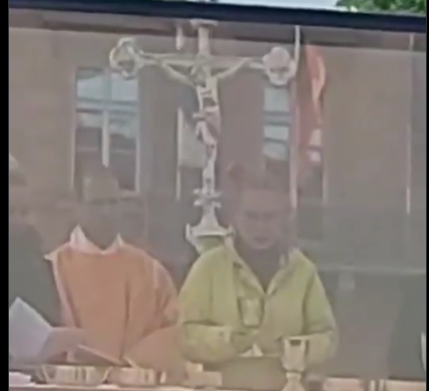
Woman appears to recite words of consecration at German Catholic congress
More than 70,000 people attended the 104th German Katholikentag in Würzburg as controversy over liturgical practices and the future direction of the Church in Germany again overshadowed the country’s flagship Catholic lay assembly. Footage circulated online during the event appeared to show a woman holding a chalice and reciting the words of consecration while a […] More than 70,000 people attended the 104th German Katholikentag in Würzburg as controversy over liturgical practices and the future direction of the Church in Germany again overshadowed the country’s flagship Catholic lay assembly. Footage circulated online during the event appeared to show a woman holding a chalice and reciting the words of consecration while a priest stood behind her. If the footage is as alleged, it would constitute a grave liturgical abuse and could not effect the consecration of the Eucharist. The Church has always taught that only a validly ordained priest acts in persona Christi during the Holy Sacrifice of the Mass. The Council of Trent and Tradition affirm that the minister of the Eucharist must be a priest: “No one can perform this sacrament except the priest duly ordained.” Canon 900 §1 of the 1983 Code of Canon Law states clearly: “The minister of the Eucharistic celebration is a validly ordained priest alone.” A laywoman, even one reciting the proper words with apparent intention, lacks the sacerdotal character imprinted by Holy Orders. Attempts by women or lay people to “co-consecrate” have been consistently condemned as invalid and sacrilegious, regardless of the presence of a priest. The priest’s passive stance does not supply what is lacking in the woman’s orders; rather, it implicates him in the abuse. It profanes the Most Holy Sacrament and wounds the faithful. This alleged incident is symptomatic of the ongoing crisis of liturgical experimentation and rejection of apostolic Tradition in parts of Germany. The Church’s doctrine on the male-only priesthood is de fide , rooted in the example of Christ, who chose only men as Apostles, the constant practice of the Apostles and their successors, and infallible teaching. A woman cannot validly consecrate the host under any circumstances; any “host” she handled remained mere bread and wine. The faithful present were not receiving the Body and Blood of Christ from her actions. The four-day gathering, organised by the Central Committee of German Catholics (ZdK), was held under the theme “Courage, Let Us Rise!”, and combined liturgical celebrations, political discussions, cultural events and debates about the future of the Church. Irme Stetter-Karp, president of the ZdK, said in her closing remarks that the Katholikentag had been marked by “commitment and solidarity, which instilled courage”. Marc Frings, general secretary of the ZdK, described the gathering as “a broadly based Catholic Congress” and defended the inclusion of groups and speakers from outside the Church’s traditional structures. “We gave secular partners with shared values a platform and space along the Church Mile,” he said. “We also offered participation to those with whom we might have little overlap within the Church. This doesn’t make us arbitrary, but rather open to dialogue.” Frings said the event’s motto had shaped discussions throughout the week “on our panels, in the workshops, in conversations along the Church Mile, and in the many spiritual offerings”. He also highlighted several cultural events connected to the gathering, including Susanne Wagner’s installation Schmerzpunkt , dealing with abuse and cover-ups in the Church, a performance on the Middle East conflict involving Emanuella Amichai, Mohammad Kundos and Bernhard Stengele, and a large mural by the Berlin art collective innerfields titled Our Big Picture of the Future . Bishop Heiner Wilmer, president of the German Bishops’ Conference, said the gathering had demonstrated unity within the German Church despite differing views. “Würzburg has shown that we are on a shared journey, each and every one of us contributing our own charism,” he said. “The bridges over the Main River are symbolic of our ecclesial path. We must build bridges to reach others.” “That is why it is good that this Catholic Congress made strong political statements and an unequivocal commitment to democracy,” he added. “We as a Church will continue to protect the freedom and democracy we have won on a foundation of Christian values, against all slogans that promise us otherwise.” The Bishop of Würzburg, Bishop Franz Jung, said the atmosphere throughout the event had encouraged dialogue between Church representatives and political leaders. “In the events with representatives of political life, I consistently sensed mutual respect and, above all, a genuine interest in engaging in dialogue,” he said. “Given the constant calls today to strengthen democracy, I am convinced that this Catholic Congress provided a very valuable platform for bringing people together for constructive dialogue on this topic.” Jung also welcomed the participation of Dr Josef Schuster, president of the Central Council of Jews in Germany, during one of the major liturgical celebrations. “I am very grateful to Dr Josef Schuster and all those involved that we were able to send such strong signals of interreligious unity during these days,” he said. Organisers said about 34,000 visitors bought tickets for the Katholikentag , while around 40,000 others attended open events and visited the “Church Mile” exhibitions across the city. Roland Vilsmaier, the managing director of the event, said nearly 700 local hosts had provided around 2,500 overnight stays for pilgrims and visitors. The Katholikentag traces its origins to 1848, when the first gathering, then called the General Assembly of the Catholic Associations of Germany, took place in Mainz amid political unrest across Europe. It was organised by the Pius Society for Religious Freedom and later came under the direction of the ZdK. The assemblies continued during Otto von Bismarck’s Kulturkampf in the nineteenth century, though they ceased during the First World War and under the Nazi regime. In the decades after the Second Vatican Council, the Katholikentag became increasingly associated with progressive movements within German Catholicism. In 1968, members linked to the movement were among those who publicly dissented from Humanae Vitae , Pope Paul VI’s encyclical reaffirming the Church’s opposition to artificial contraception.
May 19, 2026
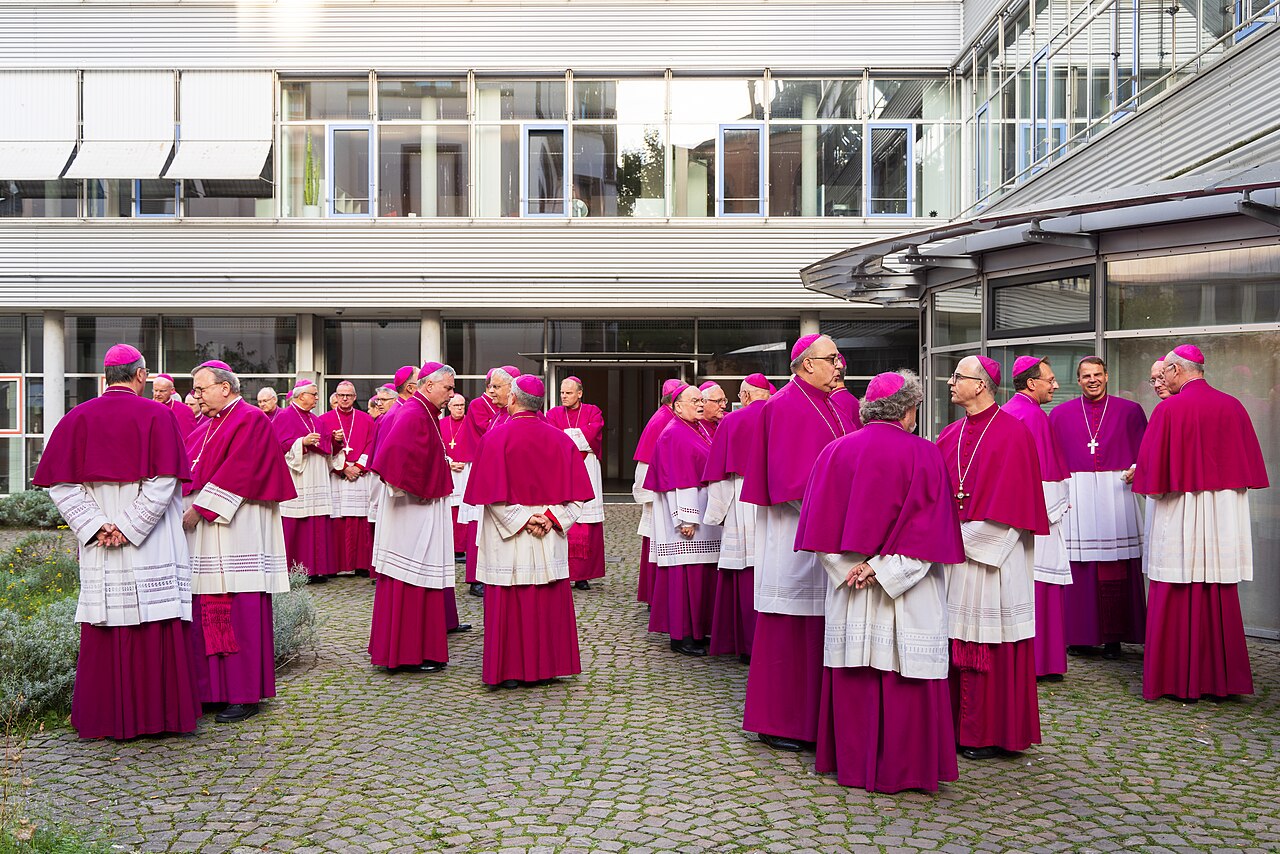
German Synodal Conference delayed
Germany’s planned Synodal Conference is unlikely to meet this November as the Vatican delays approval over its statutes Germany’s planned Synodal Conference is unlikely to meet for the first time this November as originally scheduled, after continued Vatican scrutiny delayed approval of the body’s statutes. Bishop Heiner Wilmer, president of the German Bishops’ Conference, said during the Katholikentag in Würzburg that he no longer expected the inaugural gathering in Stuttgart to proceed on November 6 and 7 because discussions in Rome were still ongoing. “I personally do not expect that we will meet as early as November,” Bishop Wilmer told the broadcaster Phoenix, citing the continuing movement of the proposal “from one discussion to the next”. The Synodal Conference is intended to become a permanent national structure bringing together bishops and lay representatives to deliberate on matters affecting the Church in Germany. The proposal emerged from the Synodal Path, the reform process launched in 2019 following Germany’s abuse crisis. The Vatican has spent months examining the statutes governing the planned body, particularly the issue of joint decision-making between bishops and lay delegates. Rome repeatedly warned during the Synodal Path that no national structure could be established which diminished the authority of diocesan bishops or placed itself above the bishops’ conference. The statutes nevertheless state that the Synodal Conference would deliberate and adopt decisions on “important questions of ecclesial life of supra-diocesan significance”. Despite the delay, Bishop Wilmer insisted he remained confident that the project would eventually move forward, although he acknowledged that “some patience” would be needed while Vatican dicasteries continued their review. The postponement marks another setback for the Synodal Path, which debated proposals including blessings for same-sex couples, changes to Church teaching on sexuality, a greater role for lay governance and the possibility of women’s ordination. Although Vatican officials repeatedly criticised aspects of the process under Pope Francis, the Holy See never formally demanded that it be abandoned. Pope Leo XIV has likewise not intervened publicly against the project since his election. Bishop Wilmer’s remarks echoed those made earlier this year by Bishop Georg Bätzing of Limburg, his predecessor as president of the German Bishops’ Conference, who acknowledged that the Synodal Conference would not proceed without Roman approval. At the beginning of the year, Bishop Bätzing said it would be “a provocation” to move ahead without the consent of the Holy See. The proposed body has continued to face criticism from canon lawyers and several German bishops who argue that it risks creating a parallel structure of authority within the Church. Cardinal Rainer Maria Woelki of Cologne, Bishop Stefan Oster of Passau and Bishop Rudolf Voderholzer of Regensburg all withdrew from the Synodal Path following repeated Vatican interventions. The former Bishop of Eichstätt, Gregor Maria Hanke, also distanced himself from the initiative. The Synodal Committee preparing the future conference subsequently ceased operating directly under the German Bishops’ Conference and instead continued under the sponsorship of an association established by the remaining dioceses. Bishop Oster said in March that he would act “with the universal Church” and was waiting to see how the Vatican responded to the latest proposals. The bishop also noted that German representatives had attempted to reassure Roman officials that the conference would not possess authority over bishops in the strict canonical sense, particularly regarding the distinction between passing resolutions and making binding decisions. “I am waiting with some interest to see how Rome reacts,” the bishop added. “But fundamentally, my position is: if we do it in agreement with the universal Church, then I will participate.” The Bishop of Passau also acknowledged attempts by German representatives to reassure Vatican officials over the wording of the statutes. “The German side tried to make it clear in talks with the Vatican that ‘making resolutions’ is something different from ‘deciding’,” he said. The first meeting of the Synodal Conference had originally been scheduled for Stuttgart this November, with a second assembly planned for Würzburg in April 2027. Photo credit: By Martin Kraft – Own work, CC BY-SA 4.0, https://commons.wikimedia.org/w/index.php?curid=138224261
May 19, 2026
Newly surfaced Vatican letter rejects German blessing proposals
A newly surfaced letter from the Dicastery for the Doctrine of the Faith, dated November 2024, rejects Germany’s plans for formal blessings of couples in irregular unions, warning they risk resembling a sacramental rite and contradict Fiducia supplicans A letter from the Dicastery for the Doctrine of the Faith has emerged rejecting proposals from Germany for the formalised blessing of couples in irregular unions. The document, published in Spanish on X by Fr Jorge Enrique Mújica, head of the news site Zenit, was signed by Cardinal Víctor Manuel Fernández, dated November 18 2024 and addressed to Bishop Stephan Ackermann. It concerns a pastoral handbook prepared in Germany under the title Blessings for couples who love one another . The text had been submitted to Rome ahead of a planned vote by the German bishops. Citing Fiducia supplicans , the dicastery states: “The Church does not have the power to confer its liturgical blessing when that would somehow offer a form of moral legitimacy to a union that presumes to be a marriage or to an extra-marital sexual practice.” It continues: “With such blessings ‘nothing is intended to be legitimised, but only to open one’s life to God’ … nor to ‘sanction … anything’, but only to ask for God’s help ‘to live better’.” The letter raises concern that the German text refers explicitly to the blessing of “a union” and envisages an “official regulation” by pastors, adding that such an approach risks becoming “the object of a true and proper ‘acclamation,’ a gesture that is normally foreseen in the matrimonial rite”. It concludes that “one in fact seems to aim at legitimising the status of such couples, in a sense contrary to what is affirmed by Fiducia supplicans ”. It further reiterates that the declaration excludes any practice that could resemble a sacramental rite, stating that blessings must not “become a liturgical or semi-liturgical act, similar to a sacrament” and insisting: “For this reason, one must neither promote nor provide for a ritual for the blessings of couples in an irregular situation.” The dicastery also criticises the proposed handbook for internal inconsistency. While it speaks of “spontaneity and freedom”, it nevertheless provides a fixed structure for the celebrations. The letter notes that “a fixed formulary is then offered for their realisation, contradicting what was previously affirmed” and adds that “a sort of liturgy or para-liturgy is prescribed with regard to the blessing of same-sex couples”. The publication of the letter follows recent comments by Pope Leo XIV, who addressed the issue during a press conference on a return flight from Africa. He said: “The Holy See has made it clear that we do not agree with the formalised blessing of (homosexual) couples … or of couples in irregular situations, beyond what … was allowed for by Pope Francis in saying all people receive blessings.” His Holiness added: “When a priest gives the blessing at the end of Mass … there are blessings for all people,” before referring to Pope Francis’s phrase “tutti, tutti, tutti”, and warning that “to go beyond this today … could cause more disunity than unity”. Despite the intervention from Rome, bishops in Germany have defended the proposals. Bishop Georg Bätzing said the practice “serves the people” and “does not jeopardise the unity of the Church”, while acknowledging differences within the wider Church. The guidelines were developed jointly with the Central Committee of German Catholics, whose president, Irme Stetter-Karp, said they are intended to provide blessings “for couples who do not wish to enter into a sacramental church marriage or for whom such a marriage is not an option”, adding: “There is no possibility of confusing it with the sacrament of marriage.” In Munich, Cardinal Reinhard Marx has instructed clergy to follow guidance under the title Segen gibt der Liebe Kraft . In a letter to clergy and pastoral staff, he wrote: “To all couples who love each other and seek a blessing from the Church for their partnership, I wish that they may feel God’s grace in this blessing.” The directive states that “no couple should be turned away” and requires that priests unwilling to conduct such blessings refer couples to another minister. The archdiocese has also confirmed that training sessions for clergy and pastoral workers will begin in June to support the implementation of the policy across parishes.
May 4, 2026
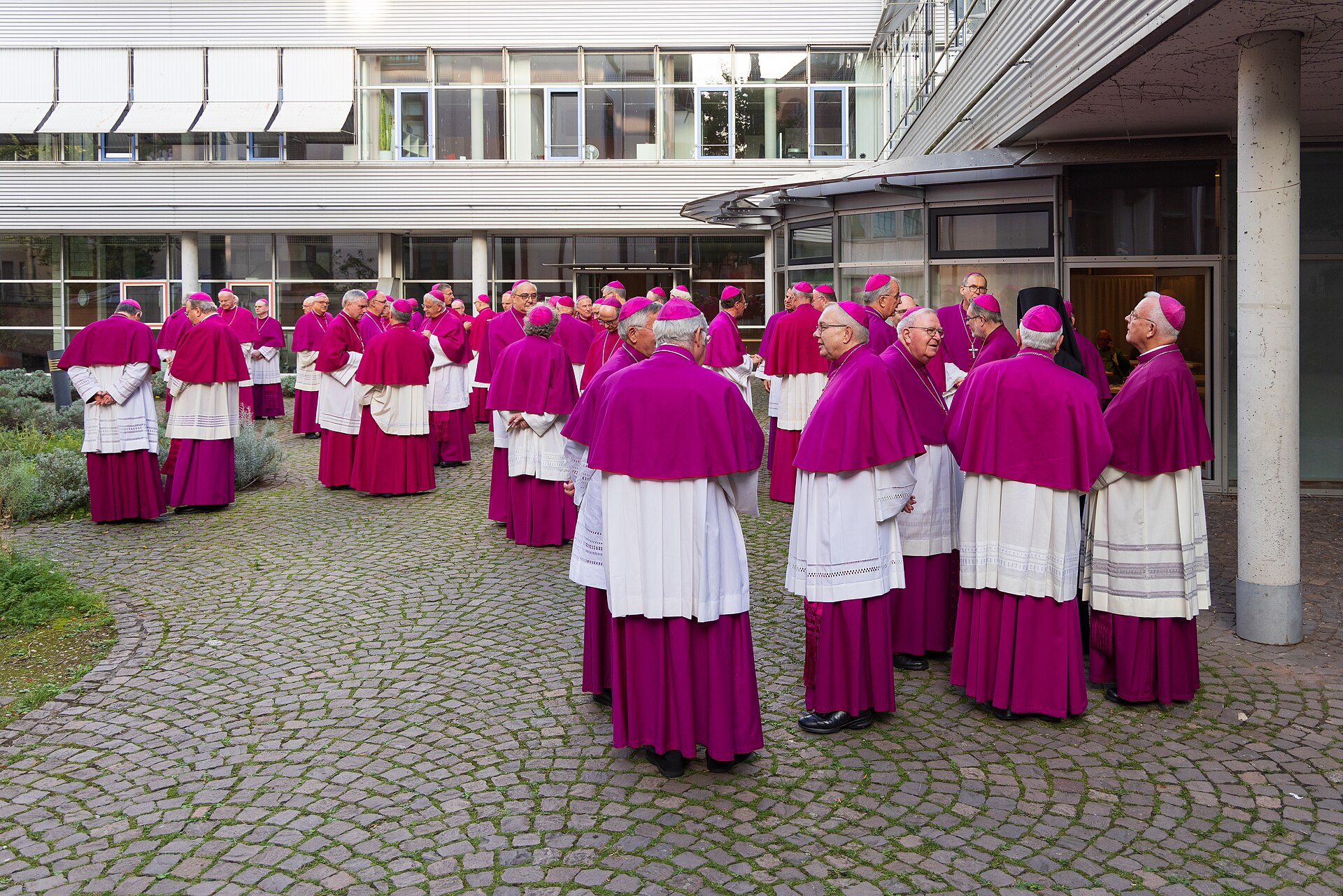
German Synodal Way figures defend blessings guidance as Pope reiterates opposition
Leaders behind the German Synodal Way have defended new guidance permitting blessings for couples in irregular unions, as Pope Leo states that the Holy See does not support formalised blessings beyond those allowed under Fiducia supplicans The architects of the German Synodal Way have defended controversial guidelines permitting the blessing of couples in irregular unions, amid concerns raised by the Pope that such practices risk undermining ecclesial unity. The dispute centres on pastoral norms adopted in 2025 by the German Bishops’ Conference and the Central Committee of German Catholics (ZdK), which seek to provide a framework for blessing couples who are unable, or do not wish, to enter into a sacramental marriage. The initiative has now been taken up in several dioceses, most notably Munich and Freising, where Cardinal Reinhard Marx has instructed clergy to ensure that “no couple should be turned away” if they request a blessing. In a letter to clergy and pastoral workers, Cardinal Marx wrote: “To all couples who love each other and seek a blessing from the Church for their partnership, I wish that they may feel God’s grace in this blessing.” The archdiocese has confirmed that the guidelines, entitled Segen gibt der Liebe Kraft (“Blessing Gives Love Strength”), will form a “fundamental element” of pastoral practice. Training sessions are scheduled to begin in June to standardise how such blessings are carried out across parishes. The policy goes further than merely permitting individual priests to exercise discretion. Clergy unwilling to conduct the ceremonies themselves are not free to simply refuse; instead, they are expected to refer couples to another priest or pastoral worker. Bishop Georg Bätzing, who oversaw the introduction of the guidelines while serving as chairman of the German Bishops’ Conference, has defended their implementation. He said that although “there are differing views on this within the universal Church”, the practice as carried out in his Diocese of Limburg “serves the people” and “does not jeopardise the unity of the Church”. Limburg was among the first dioceses to publish the norms formally in its official gazette, signalling full adoption. Support has also come from the ZdK, which co-authored the document. Its president, Irme Stetter-Karp, said there was “no reason to withdraw the guidelines” and emphasised their limited scope. The aim, she said, was simply to encourage the provision of blessing ceremonies “for couples who do not wish to enter into a sacramental church marriage or for whom such a marriage is not an option”. She added: “No more and no less. There is no possibility of confusing it with the sacrament of marriage.” The dioceses of Cologne, Augsburg, Eichstätt, Passau and Regensburg have all declined to implement the document, arguing that it exceeds the provisions set out in Fiducia supplicans, the 2023 Vatican instruction on blessings. The bishops of the opposing diocese are led by notably more conservative bishops in comparison to others in the German bishops conference, with the exception of the diocese of Eichstätt, which is currently vacant after the 2025 resignation of Bishop Gregor Franz Hanke. Fiducia supplicans allowed for spontaneous, non-liturgical blessings of individuals in irregular situations, but drew a clear line against any form of ritual that might resemble a marriage ceremony or give the impression of endorsing a union contrary to Church teaching. Pope Leo was asked during a press conference on April 23 about the decision to permit such blessings in Munich. The Pontiff responded: “The Holy See has made it clear that we do not agree with the formalised blessing of couples, in this case, homosexual couples, as you asked, or couples in irregular situations, beyond what was specifically, if you will, allowed for by Pope Francis in saying all people receive blessings.” The Holy Father continued by distinguishing between general blessings and those directed at particular unions. “When a priest gives a blessing at the end of Mass, when the Pope gives a blessing at the end of a large celebration like the one we had today, they are blessings for all people,” he said, invoking his predecessor’s phrase “Tutti, tutti, tutti” to emphasise that all are welcome and called to conversion. The Archdiocese of Munich and Freising has described internal communications about the guidelines as “an internal memo”, and has not yet formally promulgated them in its official gazette. Other dioceses, including Osnabrück and Aachen, have taken that step, effectively committing themselves to the policy.
Apr. 29, 2026
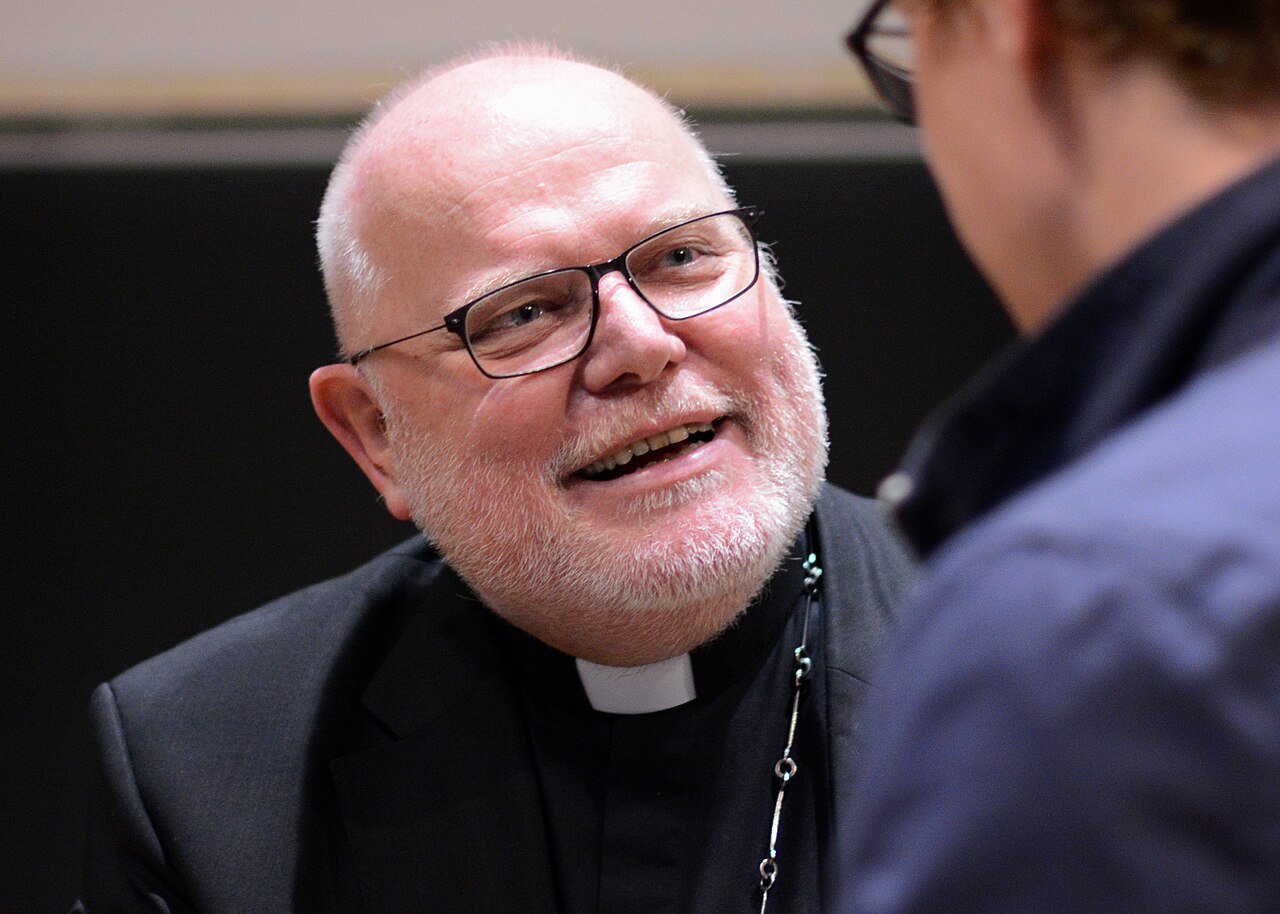
Pope Leo reaffirms opposition to blessing of same sex couples in face of Cardinal Marx’s directive
Pope Leo has reaffirmed that the Holy See does not approve the blessing of same sex couples, as Cardinal Marx advances new pastoral provisions in Munich. Pope Leo has reaffirmed that the Holy See does not approve the blessing of same sex couples, in remarks delivered to journalists on the return flight to Rome on April 23 following his recent apostolic journey to Africa. The Pope addressed the issue directly when asked about the divergence with developments in Germany after Cardinal Reinhard Marx confirmed new pastoral provisions permitting such blessings in his archdiocese. He cautioned against reducing ecclesial doctrinal questions to a single moral issue, stating: “First of all, I think it’s very important to understand that the unity or division of the Church should not revolve around sexual matters.” He added that “there are much greater, more important issues, such as justice, equality, freedom of men and women, freedom of religion”. Turning to the specific question, the Pope said: “The Holy See has made it clear that we do not agree with the formalised blessing of couples, in this case, homosexual couples … or couples in irregular situations, beyond what was specifically … allowed for by Pope Francis in saying all people receive blessings.” His Holiness emphasised that blessings given at the end of Mass or major liturgical celebrations are “for all people”, adding that Pope Francis’s phrase “Tutti, tutti, tutti” reflects that universal invitation. He warned that “to go beyond that today … can cause more disunity than unity”. The intervention follows confirmation earlier in the week, reported by AdVaticanum, that the Archdiocese of Munich and Freising will implement the guidelines Segen gibt der Liebe Kraft (“Blessing Gives Love Strength”) as a foundation for pastoral practice. The text, adopted by the German Bishops’ Conference and the Central Committee of German Catholics, is now to be applied across the archdiocese. In a letter to clergy and pastoral staff, Cardinal Marx wrote: “To all couples who love each other and seek a blessing from the Church for their partnership, I wish that they may feel God’s grace in this blessing.” The directive states that “no couple should be turned away” if they request such a blessing, and establishes that access is not to depend on the personal position of individual priests. The archdiocese has also announced that training sessions will begin in June to prepare clergy and lay pastoral workers to carry out the ceremonies. Those unwilling to perform the blessings themselves are expected to refer couples to another minister. Cardinal Marx acknowledged likely resistance, asking that the “theological meaning” of the practice be explained to those who “still struggle with this blessing”. The guidelines insist that such blessings are not equivalent to marriage, while stating that this distinction should not result in exclusion. “This does not mean that the blessing of a non sacramental union … pushes the couple to the margins of the community and the Church,” the text says, adding: “Couples should be welcomed in the heart of the community. Therefore, the Church asks God to bless and grant good things to these couples.” The developments in Munich come within the increasingly differing trajectory of the German synodal way. The Holy See has intervened on several occasions, including a 2021 declaration from the Congregation for the Doctrine of the Faith stating that the Church “does not have, and cannot have, the power to bless unions of persons of the same sex”.
Apr. 24, 2026