

Pope Leo Xiv
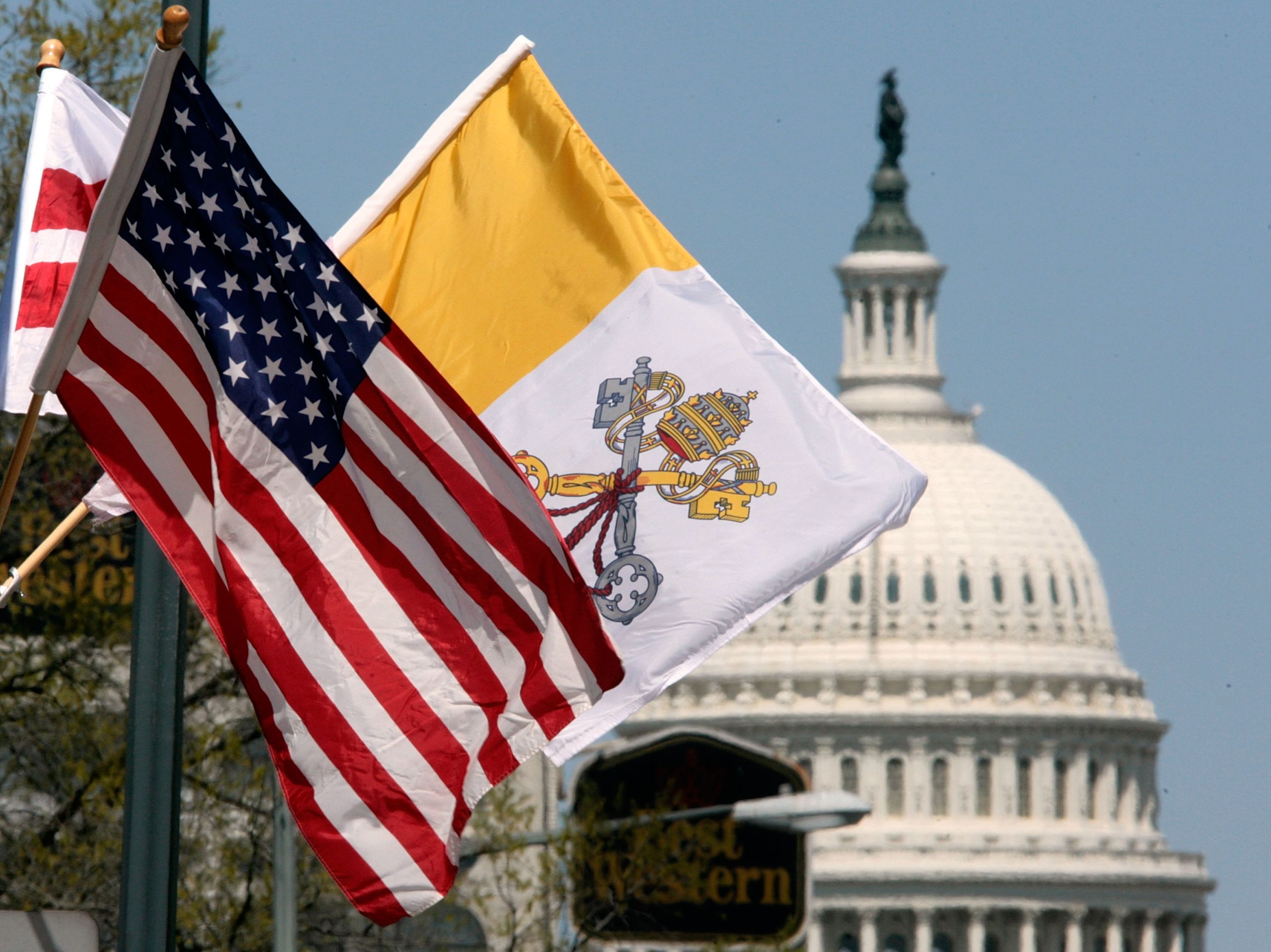
Papal Foundation approves record $15 million in grants for 2026
The Papal Foundation has approved more than $15 million in grants for 2026, its largest total to date, funding over 140 projects worldwide The Papal Foundation has approved more than $15 million in grants for 2026, marking the largest total in its 38-year history. The announcement came as Pope Leo XIV received members, trustees and stewards of the foundation at the Apostolic Palace at the conclusion of their annual pilgrimage. The Chicago-born pontiff thanked donors for their sustained financial backing of projects ranging from humanitarian aid to clerical education, telling them their generosity had enabled “countless people to experience in a concrete fashion the goodness and kindness of God in their own communities”. According to figures released by the foundation, the 2026 grants will support more than 140 projects across approximately 75 countries, continuing a steady increase in annual distributions in recent years. In 2023, the foundation allocated around $9.5 million to 114 projects in 57 countries, rising to roughly $14 million in 2025 for 116 projects in more than 60 countries. The latest total represents a further expansion rather than an isolated increase, with consistent growth in the foundation’s grant-making capacity. The foundation also reported a notable rise in new membership, with 25 families joining in the year since the election of Pope Leo XIV. Membership as a steward requires a contribution of at least $1 million, forming part of an endowment used to fund papal projects. The increase is viewed as a sign of renewed engagement among wealthy American Catholics following the election of the first pope born in the United States. During the audience, the Pope referred to his own experience of the foundation’s work during his time as Bishop of Chiclayo, stating: “I have already been aware of your work, especially during my years of service as Bishop of Chiclayo, where I saw first-hand the positive impact of the Foundation’s grants, as both the Diocese and a religious community were blessed to receive assistance on various projects, thanks to your generosity.” He continued by expressing gratitude for the organisation’s role in supporting the universal Church, saying: “I am, therefore, deeply grateful for your ongoing commitment to assist the Successor of Peter in his mission to care for the needs of the universal Church.” The Pope pointed in particular the role of the foundation in funding scholarships for priests and Religious from developing countries to study at pontifical universities in Rome. “Many priests and consecrated men and women have likewise been able to receive an advanced education from the Pontifical Universities in Rome that would otherwise not have been possible, forming them to be future leaders in the Church,” he said. The Pope also emphasised the wider spiritual dimension of charitable giving, stating: “All members of the Church, by virtue of our Baptism, share the responsibility to proclaim the Gospel today with words as well as with charitable deeds.” He added that “by funding projects, humanitarian aid and scholarships for people from around the world, the Papal Foundation participates in the Church’s ongoing evangelical mission”. Referring to the liturgical season, the Pope described Easter as a “time focusing on mission as well as peace” and recalled Christ’s words to the Apostles, “Peace be with you!” He told members that their work contributes not only to the Church’s mission but also to peace at local and regional levels. Concluding his remarks, the Pope asked for continued support and prayers, saying: “I ask for your continued prayers for my ministry as the Successor of Saint Peter and for the needs of the Church.” He added: “You will probably never meet everyone who has benefitted from your kindness, so in their name I express heartfelt appreciation.” The Papal Foundation, established in 1988 by Cardinal John Krol of Philadelphia, was created to provide direct financial support for the charitable priorities of the Pope. Based in Pennsylvania, it includes all United States cardinals as ex officio members and is governed by a board of lay trustees and bishops. Since its inception, it has distributed more than $250 million to projects around the world. Speculation that financial concerns may have influenced the election of Pope Leo XIV has been rejected by senior Church figures. Speaking in Rome at the presentation of a book examining relations between the United States and the Holy See, Cardinal Gerhard Ludwig Müller said: “Although Cardinal Reinhard Marx dedicated a full day to discussing the Holy See’s finances in the pre-conclave, this did not influence the final decision.” He added that the election of a pope “is based on different criteria”, stressing the spiritual nature of the process. During the pontificate of Pope Francis, contributions linked to Vatican causes experienced a noticeable decline, particularly in the years following the global financial crisis and during the Covid-19 pandemic. Reports of financial corruption within Vatican structures further weakened donor confidence, especially among American benefactors, while Pope Francis’s criticism of aspects of free market capitalism was also seen to have cooled enthusiasm in some quarters.
May 4, 2026
Pope Leo XIV’s first encyclical set for May 15 release
Pope Leo XIV is expected to publish his first encyclical on May 15, aligning it with landmark social teaching documents. The provisional text, Magnifica humanitas, is set to address artificial intelligence, global instability and the state of international law Pope Leo XIV’s first encyclical is expected to be signed and published soon, placing its release close to a date long associated with landmark papal social teaching documents. According to reports from the German Catholic news agency KNA, it will be signed on May 15. The text will be the first major teaching document of his pontificate. Circulating under the provisional title Magnifica humanitas , it is expected to address a range of issues, including artificial intelligence, international peace and what sources describe as a crisis in international law. Previous reports indicate that the document will set out the Pope’s initial response to these questions within the framework of Catholic social teaching. The encyclical follows earlier indications that the Holy See had been preparing a document focused specifically on artificial intelligence. At the beginning of February, reports pointed to work under way on a text examining the ethical and anthropological implications of emerging technologies. Pope Leo XIV has already spoken about the risks associated with technological development, warning of the dangers posed by “uncontrolled technology” and the importance of safeguarding human dignity. According to the same reports, the encyclical will also address geopolitical instability and the perceived weakening of international legal structures. By doing this, the document is expected to set out the Vatican’s response to the principal challenges facing humanity in the 21st century. The anticipated date of May 15 places the encyclical within a well-established tradition. On May 15, 1891, Pope Leo XIII issued Rerum Novarum , the foundational text of modern Catholic social doctrine, addressing the condition of workers during the industrial age. The same date was chosen in 1931 by Pope Pius XI for Quadragesimo Anno , which developed the Church’s teaching on social order and introduced the principle of subsidiarity. Thirty years later, on May 15, 1961, Pope John XXIII promulgated Mater et Magistra , focusing on economic justice and social development. The expected treatment of artificial intelligence would build on recent Vatican teaching. In January 2025, the Dicastery for the Doctrine of the Faith and the Dicastery for Culture and Education issued Antiqua et Nova , a joint note on “the relationship between artificial intelligence and human intelligence”. The document said AI could bring “important innovations” but warned that it also carried the danger of deepening inequality, manipulating public opinion and expanding “the instruments of war well beyond the scope of human oversight”. It added that artificial intelligence “should not be seen as an artificial form of human intelligence, but as a product of it”, and insisted that it “should be used only as a tool to complement human intelligence rather than replace its richness”. No official text has yet been released, and the title Magnifica humanitas remains provisional.
May 4, 2026
Cardinal Müller rejects claims Vatican finances influenced election of Pope Leo XIV
Cardinal Müller has dismissed speculation that financial concerns shaped the election of Pope Leo XIV Cardinal Gerhard Ludwig Müller has rejected claims that the Vatican’s financial situation influenced the election of Pope Leo XIV. The German cardinal made his remarks in Rome during the presentation of the new book Papi, Dollari e Guerre by the renowned Italian Vaticanista Massimo Franco, which examines the historical relationship between the United States and the Holy See. Speaking at the event, Cardinal Müller addressed speculation that concerns over Vatican finances may have played a decisive role in the election of the first American pope. “Although Cardinal Reinhard Marx dedicated a full day to discussing the Holy See’s finances in the pre-conclave, this did not influence the final decision,” Cardinal Müller said. His Eminence added that the choice of a pope “is based on different criteria.” The intervention comes one year after the conclave that elected Pope Leo XIV, a historic event given the longstanding assumption that a pontiff from the United States was unlikely. Cardinal Marx, who has been closely associated with Vatican economic reform and oversight, reportedly led a full day of discussions on financial issues during the general congregations preceding the conclave. These meetings, which take place before the formal voting begins, allow cardinals to exchange views on the challenges facing the Church. Despite the prominence of those discussions, Cardinal Müller insisted that they did not shape the final outcome. His remarks appeared to counter interpretations that the election reflected a strategic response to financial pressures or a desire to strengthen ties with American Catholic institutions. Franco’s book, presented at the same event, sets out the historical context of relations between the Vatican and the United States, including financial links that have developed over more than a century. According to the publisher’s summary, the work traces the role of American Catholic influence from the early twentieth century to the present day, using archival material and previously unpublished testimonies. The book refers to financial contributions from American benefactors during the pontificates of Pius XI and Pius XII, as well as support provided during and after the Second World War. It also examines the role of institutions such as the Papal Foundation, established during the pontificate of John Paul II, and the continuing presence of major Catholic organisations in the United States. The summary further notes that the most recent conclave marked “the end of Eurocentrism in an impoverished and divided Vatican”, while suggesting that the election of Pope Leo XIV should be understood within a broader historical and geopolitical framework. It also points to the significance of the Pontifical North American College in Rome, where it is claimed discussions among American cardinals took place prior to the conclave. Among those present at the book presentation were several figures from ecclesiastical, political and journalistic circles, including Archbishop Antonio Mennini and the former Italian prime minister Romano Prodi. Massimo Franco, the author, is a political journalist and commentator for Corriere della Sera . He has previously written on Italian and Vatican politics and has contributed to a range of international publications. His latest work continues that focus, examining the intersection of religion, diplomacy and finance.
May 1, 2026
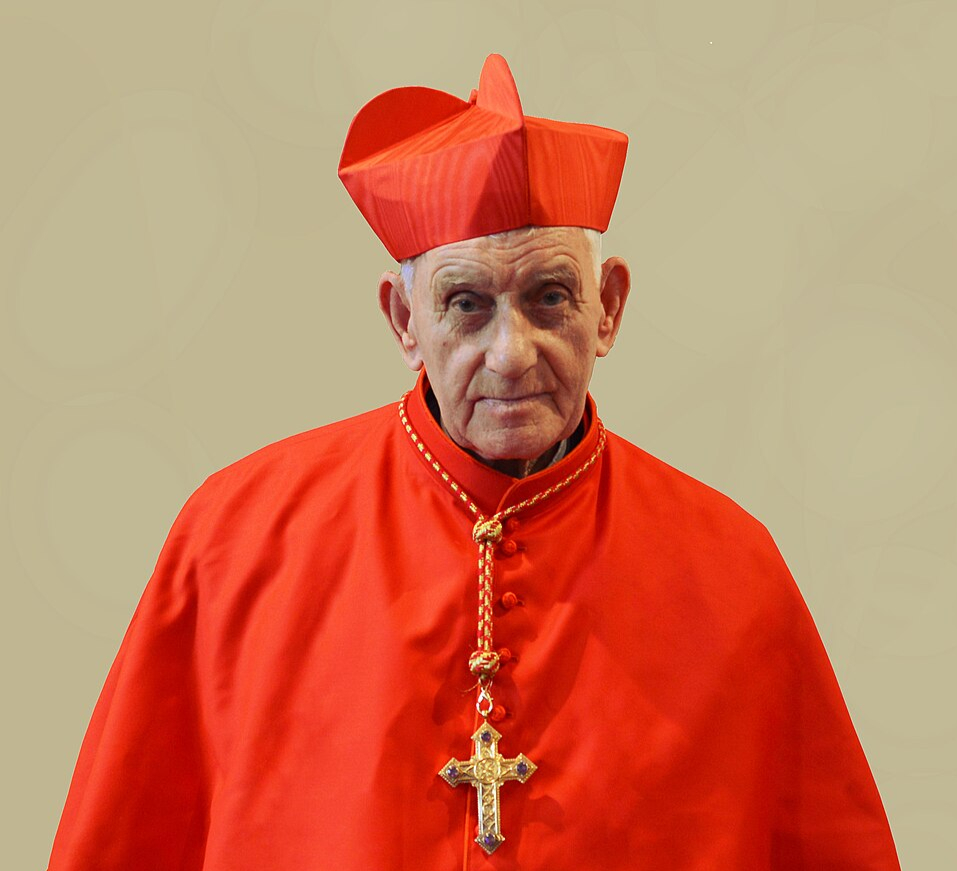
Pope Leo receives Cardinal Simoni in private Vatican audience after Easter appearance
Pope Leo received Cardinal Ernest Simoni in a private Vatican audience on April 27, marking their second meeting since Easter Sunday. The Albanian cardinal, once sentenced to death under communism, presented a relic the Albanian martyrs Pope Leo received Cardinal Ernest Simoni in a private audience at the Vatican on April 27, less than a month after their appearance together on Easter Sunday. The audience took place in the Hall of Popes and included around 40 members of the cardinal’s family. It marked the second notable encounter between the two men in recent weeks, following the Easter Sunday Urbi et Orbi blessing on April 5, when Cardinal Simoni stood alongside the cardinal protodeacon during the papal appearance from the central loggia of St Peter’s Basilica. Speaking afterwards to Vatican Media, Cardinal Simoni described the meeting in direct and emphatic terms. “All joy, all hope,” he said, describing the atmosphere of the encounter. He added: “It was an atmosphere of all joy, all hope, gazing upon the face of the Holy Father, which represents the face of Jesus, to proclaim to all men the news of Heaven, of peace, of brotherhood and of love for all the peoples of the world.” “Let us proclaim together for all the peoples of the world the peace that comes from Heaven,” Cardinal Simoni said. At the conclusion of the audience, Cardinal Simoni presented Pope Leo with a gift connected to the history of Catholic persecution in Albania. “Coming to Italy from Albania, my thoughts are with the martyrs,” he said, before offering “the cross and a relic of the Albanian martyrs who gave their lives for fidelity, for the love of Jesus, for the salvation of the Albanian people, to see all men smile upon Heaven”. A priest of the Archdiocese of Shkodra-Pult, he marked the 70th anniversary of his ordination earlier this month, on April 7, a milestone reached after a lifetime marked by persecution under Albania’s communist regime. Arrested on Christmas Eve 1963 for celebrating a Mass deemed illegal by the authorities, he was initially sentenced to death before the penalty was commuted to 25 years of forced labour. Released in 1981, he remained under suspicion and was still regarded by the regime as an “enemy of the people” until the collapse of communism in 1990 allowed him to resume public ministry. His testimony later came to wider attention during the papal visit to Albania in 2014, when Pope Francis listened to his account and referred to him as a “living martyr”. Two years later, he was created a cardinal in recognition of that witness. Despite his age, Cardinal Simoni has remained active in maintaining links with communities attached to the Traditional Latin Mass. He is a defender of the older liturgical form and has longstanding associations with traditionalist institutes, including regular visits to the International Seminary of the Institute of Christ the King Sovereign Priest at Gricigliano, near Florence. He has been present there for major liturgical celebrations, including the Feast of St Joseph, and has spent periods such as Holy Week with the community in recent years. During a Pontifical Latin Mass for the Summorum Pontificum Pilgrimage celebrated by Cardinal Raymond Burke in St Peter’s Basilica on October 25, 2025, Cardinal Simoni recited the prayer to St Michael the Archangel, describing it as a reminder that “the Devil exists, and the Church continues to fight”. The 2025 gathering represented a significant relaxation of restrictions placed on the Summorum Pontificum Pilgrimage. Following Traditionis Custodes , it was commonly understood that no prelates were permitted to celebrate Holy Mass in the Traditional rite for the 2021 and 2022 pilgrimages. In 2023 and 2024, the Traditional Latin Mass was prohibited entirely in St Peter’s Basilica for the pilgrimage. Instead, pilgrims had to content themselves with Eucharistic Benediction and the office of Sext at St Peter’s.
Apr. 28, 2026
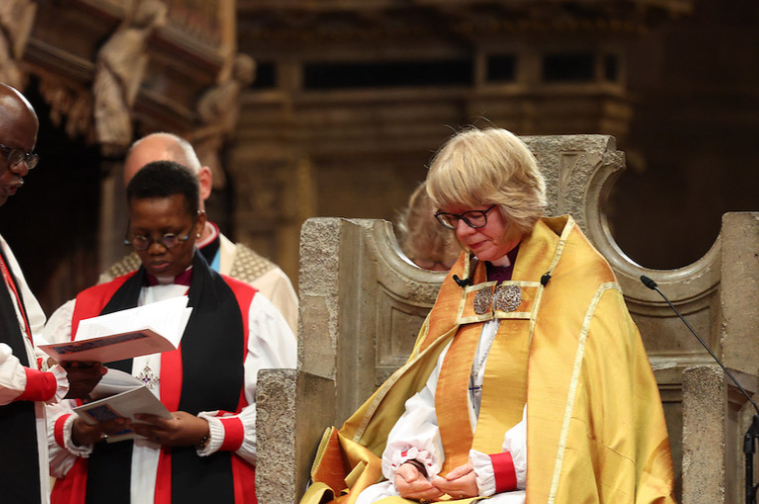
Pope Leo prays with Anglican leader Sarah Mullally at Vatican audience
Pope Leo has received Anglican leader Sarah Mullally at the Apostolic Palace, where the two prayed together and renewed calls for Christian unity despite continuing doctrinal divisions between the Catholic Church and the Anglican Communion Pope Leo received the head of the Anglican Communion, Sarah Mullally, in an audience on Monday at the Apostolic Palace, where the two prayed together in the Urban VIII Chapel during the Easter season. Welcoming the head of the Anglican Communion and her delegation, the Pope recalled the meeting between Pope Paul VI and Michael Ramsey sixty years ago, describing it as a moment that continues to shape relations between the two communions. His Holiness noted that the Archbishops of Canterbury and the Bishops of Rome have continued to meet and pray together since that encounter, adding: “I am pleased that today we continue this tradition.” The Pope also referred to the work of the Anglican Centre in Rome, established in the same period, and greeted its director, Bishop Anthony Ball, who represents the Archbishop of Canterbury to the Holy See. Speaking during Eastertide, Pope Leo repeated the greeting of the risen Christ, saying: “Peace be with you.” He told those present that this greeting “invites us not only to accept the Lord’s gift of peace, but also to be messengers of his peace,” adding: “I have often said that the peace of the risen Lord is ‘unarmed’. This is because he has always responded to violence and aggression unarmed, inviting us to do the same.” The Pope said that divisions between Christians affect their witness, stating: “While our suffering world is in deep need of Christ’s peace, divisions among Christians weaken our ability to be effective bearers of that peace.” His Holiness continued: “If we want the world to take our preaching to heart, therefore, we must be constant in our prayers and in our efforts to remove any stumbling blocks that hinder the proclamation of the Gospel.” Referring to the theological dialogue established following the 1966 meeting between Paul VI and Ramsey, the Pope recalled that both sides had committed themselves to seeking “the restoration of full communion in faith and sacramental life”. His Holiness said: “Certainly, this ecumenical journey has been complex. While much progress has been made on historically divisive issues, new problems have arisen in recent decades, making the path to full communion more difficult to discern.” The Pope added that the Anglican Communion is currently facing similar questions, saying: “I know that the Anglican Communion is also grappling with many of the same issues at present.” He added: “We must not allow these constant challenges to prevent us from seising every opportunity we can to proclaim Christ together to the world.” The Pope cited remarks made by Pope Francis to Anglican leaders in 2024, quoting: “It would be a scandal if, because of divisions, we failed to fulfil our common vocation to make Christ known.” His Holiness added: “For my part, I would add that it would also be a scandal if we did not continue to work to overcome our differences, however insurmountable they may seem.” Concluding the audience, Pope Leo thanked Mullally for her visit and said: “As we continue to walk together in friendship and dialogue, let us pray that the Holy Spirit … will guide our steps as, in prayer and humility, we seek that unity which is God’s will for all his disciples.” He added: “God bless you and your family.” The audience granted by Pope Leo to the head of the Anglican Communion, Sarah Mullally, is a tableau in contemporary ecumenical relations of courteous language, shared prayer and an appeal to unity set against unresolved doctrinal divisions. However, what it shows is the enduring byproduct of post-conciliar ecumenical practice and the Catholic Church’s dogmatic teaching on Holy Orders, authority and the nature of unity itself. While the meeting illustrates the continuation of a diplomatic and theological framework established in the wake of the Second Vatican Council, one which seeks visible fraternity with other Christian communities, it stops short of resolving the fundamental questions that divide them. It is a pattern that has endured for decades and which remains largely unchanged under the present pontificate. The language employed by Pope Leo, emphasising “unarmed” peace, shared witness and perseverance despite difficulty, fits squarely within what he has inherited. The optimism since 1966 for Anglicans was always constrained by the judgement articulated in Apostolicae Curae (1896), in which Pope Leo XIII declared Anglican orders “absolutely null and utterly void”. That teaching has never been rescinded, and it remains a decisive factor in any assessment of such encounters. Thus, the main question is what these meetings are intended to achieve. If full sacramental unity is not presently attainable, and if the doctrinal obstacles are, in some respects, widening rather than narrowing, then the purpose of continued high-level engagement requires clarification. Pope Leo’s own remarks acknowledged that “new problems have arisen in recent decades, making the path to full communion more difficult to discern”. This is a measured formulation; it points to developments within the Anglican Communion, above all the ordination of women and disputes over marriage and moral teaching, which have complicated, and in the eyes of some rendered obsolete, the earlier trajectory of dialogue. The Pope nevertheless insisted that such challenges should not prevent common witness. “We must not allow these constant challenges to prevent us from seising every opportunity we can to proclaim Christ together to the world,” he said. Yet it is precisely here that unease is expressed, as the use of the Urban VIII Chapel for joint prayer, while consistent with contemporary practice, would once have been approached with far greater caution, lest it give rise to confusion about the nature of ecclesial unity. Earlier magisterial teaching, notably that of Pope Pius XI in Mortalium Animos (1928), warned against forms of “pan-Christian” activity that might obscure the claim of the Catholic Church to be the one true Church. There is a risk that gestures intended as signs of fraternity may be interpreted as implying a unity that does not in fact exist. There are also more practical implications. The existence of the Personal Ordinariates, established to receive former Anglicans into full communion while preserving elements of their patrimony, rests on the premise that unity ultimately requires incorporation into the Catholic Church. Encounters such as this do not alter that structure, but they do raise questions about how it is to be understood within a broader ecumenical strategy that prioritises ongoing relationship over definitive resolution.
Apr. 28, 2026
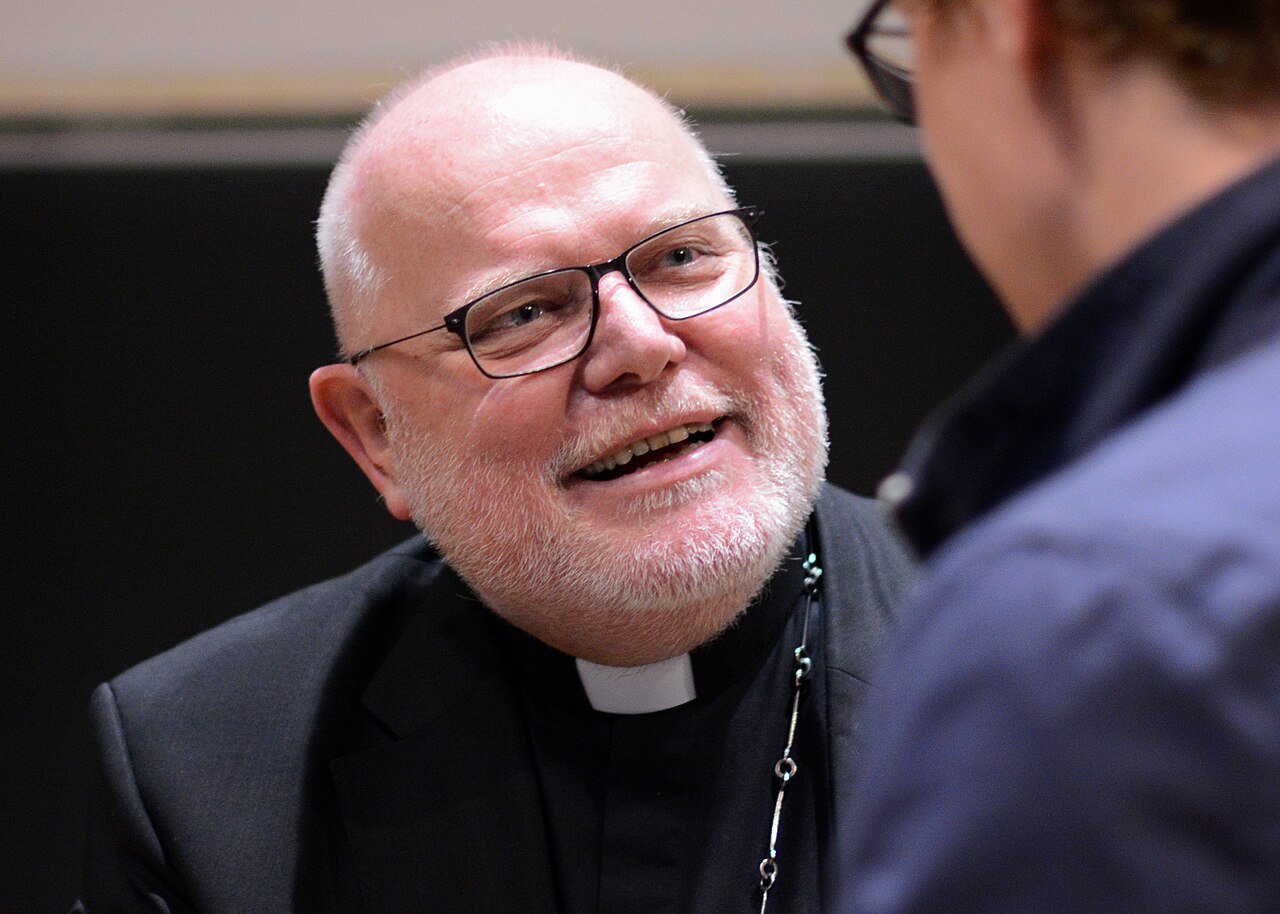
Pope Leo reaffirms opposition to blessing of same sex couples in face of Cardinal Marx’s directive
Pope Leo has reaffirmed that the Holy See does not approve the blessing of same sex couples, as Cardinal Marx advances new pastoral provisions in Munich. Pope Leo has reaffirmed that the Holy See does not approve the blessing of same sex couples, in remarks delivered to journalists on the return flight to Rome on April 23 following his recent apostolic journey to Africa. The Pope addressed the issue directly when asked about the divergence with developments in Germany after Cardinal Reinhard Marx confirmed new pastoral provisions permitting such blessings in his archdiocese. He cautioned against reducing ecclesial doctrinal questions to a single moral issue, stating: “First of all, I think it’s very important to understand that the unity or division of the Church should not revolve around sexual matters.” He added that “there are much greater, more important issues, such as justice, equality, freedom of men and women, freedom of religion”. Turning to the specific question, the Pope said: “The Holy See has made it clear that we do not agree with the formalised blessing of couples, in this case, homosexual couples … or couples in irregular situations, beyond what was specifically … allowed for by Pope Francis in saying all people receive blessings.” His Holiness emphasised that blessings given at the end of Mass or major liturgical celebrations are “for all people”, adding that Pope Francis’s phrase “Tutti, tutti, tutti” reflects that universal invitation. He warned that “to go beyond that today … can cause more disunity than unity”. The intervention follows confirmation earlier in the week, reported by AdVaticanum, that the Archdiocese of Munich and Freising will implement the guidelines Segen gibt der Liebe Kraft (“Blessing Gives Love Strength”) as a foundation for pastoral practice. The text, adopted by the German Bishops’ Conference and the Central Committee of German Catholics, is now to be applied across the archdiocese. In a letter to clergy and pastoral staff, Cardinal Marx wrote: “To all couples who love each other and seek a blessing from the Church for their partnership, I wish that they may feel God’s grace in this blessing.” The directive states that “no couple should be turned away” if they request such a blessing, and establishes that access is not to depend on the personal position of individual priests. The archdiocese has also announced that training sessions will begin in June to prepare clergy and lay pastoral workers to carry out the ceremonies. Those unwilling to perform the blessings themselves are expected to refer couples to another minister. Cardinal Marx acknowledged likely resistance, asking that the “theological meaning” of the practice be explained to those who “still struggle with this blessing”. The guidelines insist that such blessings are not equivalent to marriage, while stating that this distinction should not result in exclusion. “This does not mean that the blessing of a non sacramental union … pushes the couple to the margins of the community and the Church,” the text says, adding: “Couples should be welcomed in the heart of the community. Therefore, the Church asks God to bless and grant good things to these couples.” The developments in Munich come within the increasingly differing trajectory of the German synodal way. The Holy See has intervened on several occasions, including a 2021 declaration from the Congregation for the Doctrine of the Faith stating that the Church “does not have, and cannot have, the power to bless unions of persons of the same sex”.
Apr. 24, 2026