

France
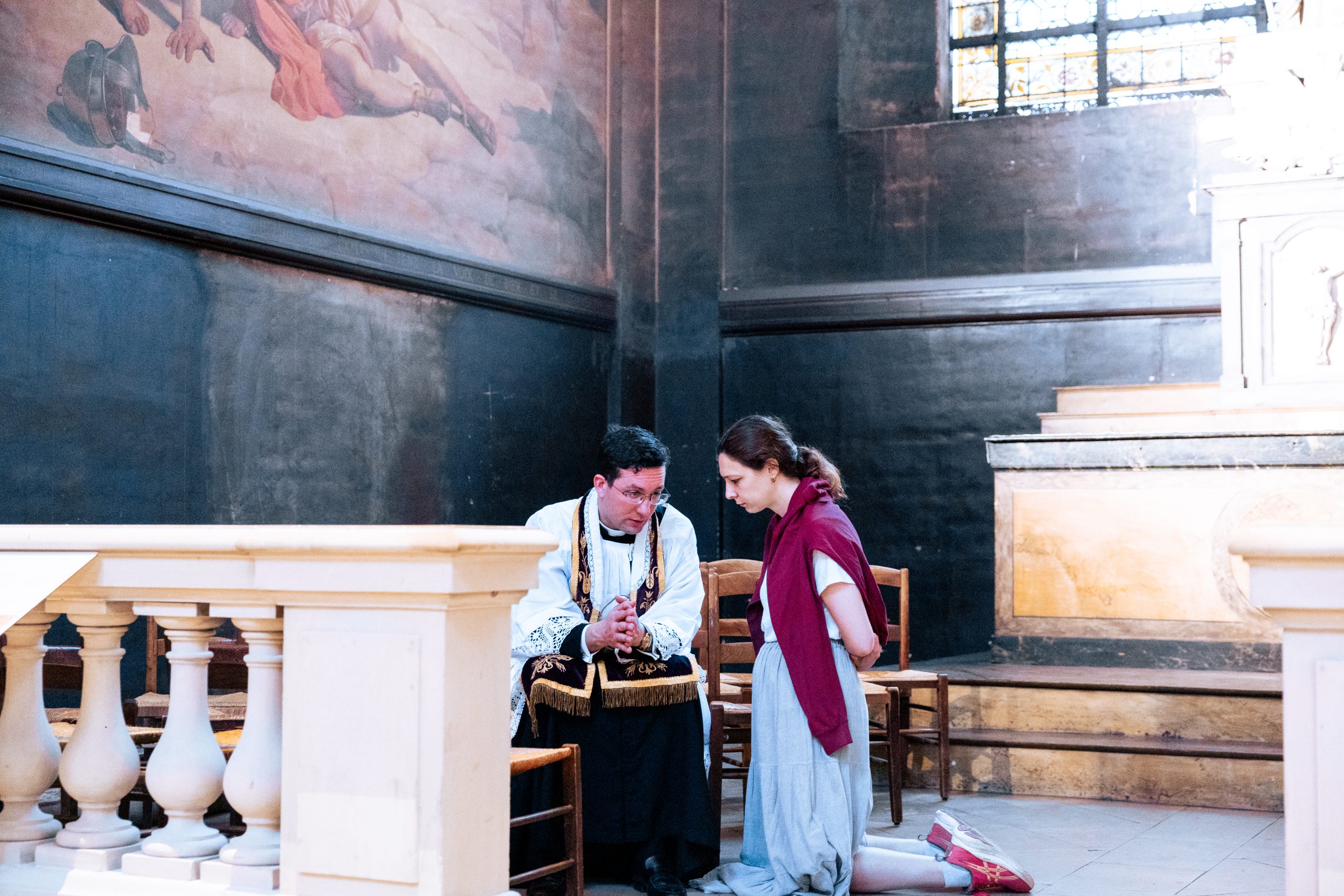
France drops plan to force priests to break seal of confession
France’s parliament has abandoned plans that would have required Catholic priests to report information heard in confession. The controversial proposal was removed from a child protection bill after opposition from bishops and concerns over religious freedom France’s parliament has abandoned controversial plans that would have forced Catholic priests to reveal information heard in the confessional. The National Assembly unanimously adopted the legislation on 1 June following weeks of debate over proposals to strengthen safeguarding measures in schools and extracurricular activities in the wake of the Bétharram abuse scandal. The affair, centred on the Notre-Dame de Bétharram school in south-west France, led to hundreds of allegations of physical, sexual and psychological abuse and intensified demands for stronger protections for children. While the bill ultimately passed with cross-party support, lawmakers removed a provision that had provoked strong opposition from the Catholic Church and concerns among legal experts over religious freedom. The original text would have required ministers of religion to report abuse against minors even when the information was obtained during sacramental confession. It stated that ministers of religion were subject to reporting obligations for information acquired “in the exercise of their ministry” and that no appeal to the seal of confession could exempt them from that duty. The French bishops mounted a public campaign against the proposal before it reached the Assembly chamber, warning that it threatened fundamental liberties protected by French law. In a statement issued ahead of the debate, the Conference of Bishops of France said it shared the determination of public authorities to combat violence against children but expressed “great concern” about elements of the legislation. The bishops said the text called into question “several fundamental freedoms”, including “freedom of conscience, professional secrecy, freedom of education or freedom of religion”. Bishop Jean-Marc Eychenne of Grenoble emerged as one of the leading critics of the measure. “The secrecy of confession is not a privilege for priests, but a right for the faithful,” the bishop said. After intense parliamentary discussions, deputies withdrew the clause before the final vote, allowing the wider legislation to proceed without the measure targeting the seal of confession. Lawmakers also removed a separate proposal that would have tightened state oversight of private schools operating under contract with the government, including many Catholic institutions. The outcome was welcomed by Church leaders, who stressed that their opposition was directed at the confessional provision rather than efforts to improve safeguarding. Bishop Matthieu Rougé of Nanterre said he was “very happy” that parliament had focused on what he described as the “real objectives” of protecting minors and combating violence in educational settings. Referring to the confession controversy, he suggested the issue had entered the debate in a “somewhat parasitic” way. The dispute nevertheless reopened a long-running argument in France over the relationship between Church teaching and state authority. Under Catholic canon law, the seal of confession is absolute. Canon 983 states that “the sacramental seal is inviolable”, and any priest who directly violates it incurs automatic excommunication. The Church teaches that a confessor can never reveal what has been disclosed during the sacrament, regardless of the circumstances. The principle has been formally protected since the Fourth Lateran Council in 1215 and has survived centuries of political upheaval, including the French Revolution and later anti-clerical campaigns that sought to remove the influence of the Church. Photo credit: Notre-Dame de Chrétienté
Jun. 3, 2026
Proposed law could force French priests to break seal of confession
France’s Catholic bishops have urged lawmakers to reject legislation that would require priests to break the seal of confession, stating that “the secrecy of confession is not a privilege for priests, but a right for the faithful” France’s Catholic bishops have urged lawmakers to reject a proposed law that would require priests to report abuse disclosed in confession. The intervention comes ahead of a debate in the National Assembly on 1 June on a bill intended to strengthen the protection of children and combat violence in schools following the Bétharram abuse scandal, which saw hundreds of complaints emerge against the Priests of the Sacred Heart of Jesus of Bétharram in relation to their school in Lestelle-Bétharram and led to allegations that former French Prime Minister François Bayrou had participated in a cover-up. The legislation, introduced by Renaissance deputy Violette Spillebout and supported by Paul Vannier of La France Insoumise, would significantly expand mandatory reporting obligations relating to violence against minors. A key provision states that ministers of religion would no longer be exempt from reporting information obtained in the exercise of their ministry. Paragraph 9 of the proposed legislation states: “Ministers of religion are not exempt with regard to information which they have become aware of in the exercise of their ministry.” The explanatory memorandum accompanying the bill goes further, stating that ministers of religion are subject to reporting obligations “even if they became aware of them in the course of their duties: no ‘seal of confession’ can prevent them from doing so”. In a statement issued before Monday’s debate, the Conference of Bishops of France said it shared the determination of public authorities to combat violence against children but expressed “great concern” about elements of the proposed legislation. The bishops said the text called into question “several fundamental freedoms” and appealed directly to parliamentarians to reconsider the measures before they come before the Assembly. According to the bishops, the proposal raises questions concerning “freedom of conscience, freedom of worship and respect for private life”, while also challenging long-established protections surrounding professional confidentiality and religious ministry. Bishop Jean-Marc Eychenne of Grenoble has emerged as one of the most outspoken critics of the proposal. “The secrecy of confession is not a privilege for priests, but a right for the faithful,” he said. Under the Code of Canon Law, a priest is absolutely forbidden from revealing anything heard during confession, regardless of the circumstances. Priests who directly violate the seal face the Church’s most severe penalties. The inviolability of confession has been recognised in Catholic practice since the early centuries of Christianity and was given formal expression by the Fourth Lateran Council in 1215, which ordered priests to maintain absolute secrecy regarding sins disclosed during confession. The principle has remained unchanged ever since. Under the Ancien Régime, French legal authorities generally recognised the special status of confessional secrecy and treated it as a protected professional confidence. Although tensions periodically arose between civil authorities and ecclesiastical institutions, the seal remained embedded in both legal and religious culture. The French Revolution transformed relations between Church and state. The Civil Constitution of the Clergy subordinated the Church to the revolutionary government and subjected priests to unprecedented state control. While revolutionary legislation did not directly abolish the seal of confession, the wider campaign against the Church created profound pressures on sacramental life and religious practice. During the nineteenth century and under the Napoleonic legal order, French law continued to recognise protections surrounding professional secrecy. The relationship between religious confidentiality and state authority remained the subject of debate, particularly as republican governments expanded their influence over public life. Those tensions resurfaced during the anti-clerical campaigns of the Third Republic, which introduced aggressive secularising measures and sought to reduce the influence of the Church in French society. Yet even during periods of intense conflict between Church and state, the confessional seal itself remained intact. More recently, the issue returned to national prominence following the publication of the Sauvé Report into clerical sexual abuse in 2021. The report recommended that the Church clarify that the secrecy of confession should not prevent the reporting of abuse against minors and vulnerable persons. The recommendation sparked a public confrontation between Church leaders and the French government after Archbishop Éric de Moulins-Beaufort, then president of the bishops’ conference, defended the inviolability of confession. Interior Minister Gérald Darmanin subsequently summoned the archbishop for discussions amid a national debate over the relationship between French law and canon law. Five years later, the dispute has returned to the National Assembly in an even more direct form. As deputies prepare to debate the bill, French bishops are warning that a measure introduced in response to abuse scandals could fundamentally alter the relationship between the state and one of the Catholic Church’s most closely guarded sacraments.
May 30, 2026

Paris Olympics performer Barbara Butch to direct installations inside Paris churches
Barbara Butch, the DJ and activist who used the Olympics opening ceremony in 2024 to mock Leonardo da Vinci’s Last Supper, is set to direct a series of immersive art installations inside churches across the French capital during this year’s Nuit Blanche festival Barbara Butch, the French DJ and activist who drew international controversy during the opening ceremony of the Paris 2024 Olympic Games, is to direct a series of artistic installations inside churches across Paris during this year’s Nuit Blanche festival. The all-night arts festival, due to take place on June 6 and 7, will feature immersive projects in several historic churches under Butch’s artistic direction, according to the French Christian outlet Tribune Chrétienne . One installation, titled Sous la peau du ciel (“Beneath the Skin of the Sky”), will be staged inside Saint-Laurent Church in the French capital’s 10th arrondissement. Organisers say visitors will be invited to leave recorded “wishes” over the telephone, which will then be combined with atmospheric sounds and digitally altered to create what has been described as “living and evolving sound material”. Festival material describes the work as “an invisible membrane stretched between human hearts and the atmosphere”, adding that visitors will encounter “a living, moving sonic material, made of dispersed intimacies and celestial energies”. The installation has resulted in criticism from some Catholics in France because of Butch’s involvement in the Paris Olympics opening ceremony. During the event on July 26, 2024, Butch appeared in a performance featuring drag artists and a banquet-style tableau which many viewers said resembled Leonardo da Vinci’s The Last Supper . The segment immediately drew accusations of blasphemy and disrespect towards Christianity. The French Bishops’ Conference said afterwards that the ceremony had included “scenes of derision and mockery of Christianity”. The controversy quickly spread beyond France, with Christian leaders and politicians across Europe, Latin America and the United States condemning the performance. The World Council of Churches said many Christians around the world had been “angered” by the spectacle. Outside Christianity, Iran’s Foreign Ministry summoned the French ambassador for the insulting representation of Jesus, a prophet in Islam. Paris 2024 organisers initially said the segment had been inspired by Leonardo da Vinci’s famous depiction of Christ and the Apostles. Thomas Jolly, the artistic director of the ceremony, later disputed that interpretation and said the scene had instead been inspired by pagan imagery linked to the Greek god Dionysus. Art historians subsequently pointed to similarities with The Feast of the Gods , a 17th-century painting by the Dutch artist Jan van Bijlert. Butch defended the performance in media interviews after the backlash. Speaking to French media, she rejected accusations that the ceremony had mocked Christianity and said critics had misunderstood the artistic intention behind the sequence. Following the controversy, Butch said she had received online abuse and threats. Her lawyer later confirmed that legal complaints had been filed. Born in Paris in 1981, Butch has built a career as a DJ and LGBT activist in France. She has publicly described herself as “a fat, Jewish, queer lesbian” and has campaigned on issues linked to body positivity and lesbian visibility. She first became known on the Paris club scene after performing at venues including Rosa Bonheur and La Machine du Moulin Rouge. In recent years she has also appeared on French television and was named “LGBTI personality of the year” in 2021 by the Association of LGBTI Journalists. Nuit Blanche, first launched by the City of Paris in 2002, regularly transforms public buildings, museums and churches into exhibition spaces for modern art installations and experimental performances. Churches across the French capital have frequently hosted concerts, sound exhibitions and light displays during previous editions of the festival.
May 18, 2026
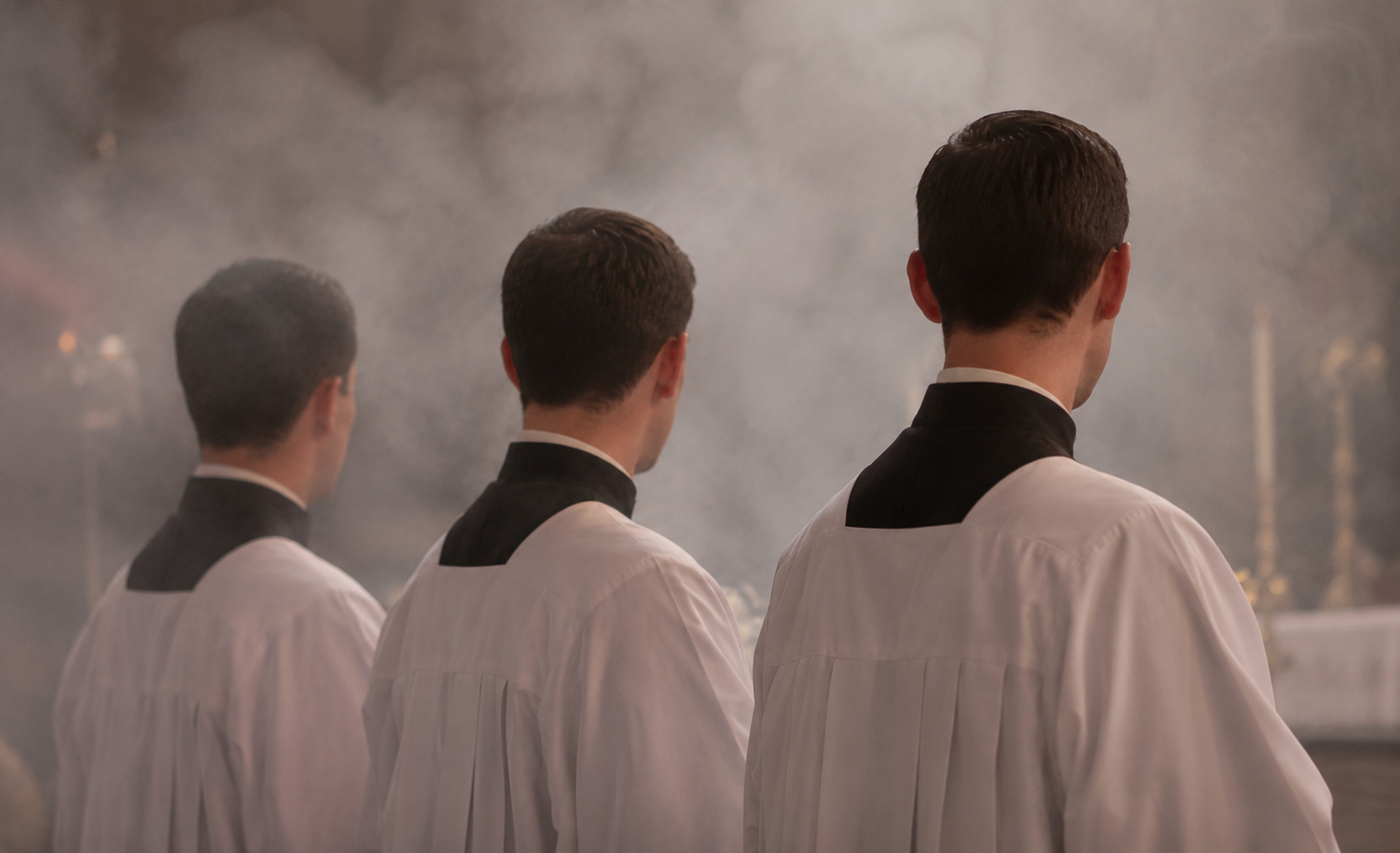
Three priests sent from Fréjus-Toulon to leave Diocese of Amiens
Three priests from the Diocese of Fréjus-Toulon will leave parishes in Amiens after disputes over cassocks, Latin liturgy and preaching led to divisions within local communities. Bishop Gérard Le Stang insisted the decision was not based on doctrinal or liturgical positions, but on the need to restore peace and communion The Diocese of Amiens has confirmed that three priests from the Diocese of Fréjus-Toulon will leave their parishes at the end of the current pastoral year after months of tensions within parish communities in northern France. In a communiqué issued at the end of last month, Bishop Gérard Le Stang of Amiens said Fathers François-Régis Favre, Éloi Legrand and Pierre-Marie Brochery would not remain beyond the one-year experimental agreement between the two dioceses. The priests arrived in September 2025 to serve the parishes of Notre-Dame de Brebières in Albert, Notre-Dame de l’Espérance in Bray-sur-Somme, Notre-Dame des Hauts de l’Ancre in Mailly-Maillet and Notre-Dame des Champs in Acheux. The bishop said the decision followed “a long period of reflection”, during which he consulted priests of the diocese, members of the episcopal council and parishioners holding “diverse opinions”. “I personally received these three priests throughout this year,” Bishop Le Stang said. “I was able to tell each one the objective reasons that lead me to end their ministry among us.” He thanked the priests for “their desire to serve the mission of the Church in our diocese” and praised “their concern for evangelisation, prayer, liturgy and formation”. The three priests became the focus of disputes within the parishes after introducing practices associated with more traditional expressions of Catholic life. Some parishioners objected to the wearing of cassocks, the use of Latin within the Novus Ordo Mass and preaching that emphasised doctrinal and moral teaching. One controversy centred on a refusal to permit a secular concert inside a church because of concerns about preserving the sacred character of the building. Complaints were also reportedly made about sermons addressing sin and moral decline in society. Bishop Le Stang insisted that the decision had not been taken because of the priests’ liturgical or doctrinal positions. “The decision I have made not to extend their welcome is in no way based on a certain number of criticisms directed against them,” he said, listing “wearing the cassock, Roman liturgy, concern for doctrinal and liturgical fidelity, exhortation to coherence in moral life, distinction between the cultic and the cultural”. Instead, he said it had become necessary “to acknowledge the conflict that had become established between them and a certain number of people, which was causing deep and lasting trouble in the communities, and dismay among many”. Bertrand Lejeune, communications officer for the Diocese of Amiens, told French Catholic media that the issue concerned parish relations rather than theology or liturgy. “It was a situation that seemed to have no resolution between some of the parishioners and priests, so the bishop chose not to renew their contracts in order to restore a sense of calm and peace,” he said. He added that reactions to the priests had been divided, with some parishioners welcoming their arrival enthusiastically while others regarded it as burdensome. From 1 September, the four parishes and the sanctuary of Notre-Dame de Brebières will be entrusted to Fr Louis-Pasteur Faye, vicar-general of the Diocese of Amiens and currently parish priest of Saint Simon du Molliennois. His appointment was made with the agreement of the diocesan administrator of Thiès in Senegal. In his communiqué, Bishop Le Stang instructed Fr Faye to work towards “renewed communion and fraternity among all”, encourage “the integration of all sensibilities and generations” and develop missionary initiatives connected to the Sainte Colette missionary field. He was also directed to strengthen youth and vocations ministry, continue Christian formation and ensure “the quality of liturgical and sacramental celebrations”. The bishop acknowledged that the dispute had caused pain throughout the local Church. “This pastoral situation has been painful for everyone – priests, deacon, Religious and laity,” he wrote. “I am also aware of how much it gives the feeling of a failure.” He called on parishioners to respond with “reflection, humility and prayer” and said he intended to visit the affected parishes in the coming months. The episode is likely to attract attention beyond Amiens because of the continuing scrutiny surrounding the Diocese of Fréjus-Toulon, long regarded as one of the most traditionally minded dioceses in France. Under Bishop Dominique Rey, who led the diocese from 2000 until 2025, Fréjus-Toulon became known for welcoming priests and religious communities attached to traditional liturgy, evangelisation and conservative theology at a time when many French dioceses were experiencing declining clergy numbers and falling Mass attendance. The diocese also drew concern from Rome over questions of governance, priestly formation and the rapid influx of different ecclesial communities. In 2022, the Vatican took the rare step of suspending ordinations planned for the diocese while an apostolic visitation was carried out. Bishop François Touvet was later appointed coadjutor bishop before succeeding Bishop Rey. Against that background, the arrival of the three priests in Amiens last year had been viewed by some Catholics as part of a broader effort to integrate clergy formed within more traditional pastoral environments into dioceses facing priest shortages. For now, the three priests are expected to return to Fréjus-Toulon, where Bishop Touvet will assign them to new ministries within the diocese.
May 7, 2026
Pope Leo expected to visit France in September
Pope Leo XIV is expected to visit France at the end of September, with Paris and Lourdes among the proposed destinations. The Vatican has yet to formally confirm the journey, which would follow the Pope’s June visit to Spain Pope Leo XIV is expected to visit France at the end of September in what would be his second visit to a European Union country outside Italy since his election last year. The proposed journey was announced by the French Bishops’ Conference on May 6, which said the Pope could travel to Paris and Lourdes, although the Vatican has yet to formally confirm the visit. The invitation was extended by Cardinal Jean-Marc Aveline, president of the bishops’ conference, in coordination with the Apostolic Nuncio, Archbishop Celestino Migliore, and was also supported by President Emmanuel Macron during a meeting with the Pope in Rome on April 10. In a statement issued by the conference, the bishops said: “The Catholic Church in France is preparing to welcome Leo XIV.” They added that, since his election one year ago, “several bishops” had invited the Pope to visit the country before Cardinal Aveline formally renewed the invitation on behalf of the episcopate. The statement said the proposed journey “could take place at the end of September” and noted that “on various occasions, Leo XIV has expressed the great esteem he holds for our country and its spiritual history”. Cardinal Aveline said he had held “several working sessions” with the Pope, including one last week, during which a draft programme was prepared. “His visit would be an opportunity to share with the Pope what our Church in France is experiencing and to let ourselves be encouraged by his words,” the cardinal said. The bishops added that the faithful were being asked “to support the preparation of this event through prayer” while awaiting the official announcement from the Holy See. The expected visit follows the publication of the programme for Pope Leo’s apostolic journey to Spain from June 6 to June 12, his first visit to the country as pontiff. During the six-day trip, he is scheduled to visit Madrid, Barcelona, Montserrat, Las Palmas de Gran Canaria and Santa Cruz de Tenerife. The itinerary includes meetings with King Felipe VI and Queen Letizia, Spain’s political authorities and the country’s bishops, along with Masses in Madrid, Barcelona and the Canary Islands. The Pope is also expected to visit migrants, prisoners, charity workers and young people during the journey. Among the principal events of the Spanish visit will be a Corpus Christi procession in Madrid, a gathering with the diocesan community at the Santiago Bernabéu Stadium and the inauguration of the Tower of Jesus Christ at Barcelona’s Basilica of the Holy Family. The Pope is also due to visit the Benedictine Abbey of Montserrat, which recently marked the millennium of the monastery’s foundation. The abbey remains closely associated with the history of Catalonia and the suffering of the Church during the Spanish Civil War, when a number of its monks were killed. France has received several papal visits in recent decades, including journeys by Pope John Paul II and Pope Benedict XVI. Pope Francis travelled to Marseille in 2023 and to Corsica in 2024, though neither was considered a full state visit to France.
May 7, 2026