

Dicastery For The Causes Of Saints
How the Church decides who becomes a saint
The canonisation process is now a structured system handled by Rome. Reforms have allowed more causes to move forward, but questions over scrutiny and rigour remain In a recent interview with Cardinal Marcello Semeraro, Daniel Beurthe explored a number of contested questions surrounding the modern canonisation process, particularly in the wake of post-conciliar reforms. Among the key themes discussed were longstanding criticisms that procedural changes have, in the eyes of some observers, diminished the traditional rigour once associated with the examination of causes, as well as the rationale behind the suppression of the office of the so-called “Devil’s Advocate”. For much of the Church’s early history, the recognition of saints was a local matter, exercised principally by bishops and, in some regions, by primates and patriarchs. Martyrs and confessors could be granted public ecclesiastical honour within the territories over which these authorities presided. Such recognition, however, did not extend beyond those local boundaries. Only the acceptance of a cultus by the Pope gave it universal force, since the Pope alone possesses authority over the whole Church. Even at this early stage, the distinction between local veneration and universal recognition was clearly understood, though not always consistently observed in practice. Over time, difficulties emerged within this decentralised system. Popular enthusiasm sometimes outpaced careful discernment, and in certain cases bishops were criticised for insufficiently rigorous inquiry into the lives of those whom they permitted to be honoured publicly. These tensions gradually prompted appeals to the Church, particularly in the medieval West, where the papacy was increasingly asked to intervene in order to ensure uniformity and credibility in such decisions. A significant moment in this development came in 993, when Pope John XV formally canonised Saint Ulrich of Augsburg, marking the first clear instance of a papal canonisation of a saint from outside Rome intended for the veneration of the universal Church. From the 11th century onwards, recourse to papal authority became more frequent, and the Roman Pontiffs began to assert a more direct role in regulating the recognition of sanctity. Figures such as Pope Urban II, Pope Calixtus II and Pope Eugene III insisted that claims of sanctity, including the verification of virtues and miracles, should be subjected to structured examination, often within the context of ecclesiastical councils. This was a decisive move away from purely local determination towards a more centralised and juridically grounded process, laying the foundations for later formal procedures. The transition to exclusive papal authority was gradual but decisive. One of the last known instances of canonisation carried out by a non-papal authority in the Western Church occurred in 1153, when the Archbishop of Rouen declared the sanctity of Walter of Pontoise. Within a generation, however, this practice had effectively ceased. In 1170 and 1173, Pope Alexander III issued decrees that strongly curtailed episcopal autonomy in this area, insisting that no one should be venerated as a saint without the authority of the Roman Church. This consolidation of authority was further developed under Pope Innocent III, whose pontificate saw the increasing elaboration of investigative procedures submitted to Rome. His involvement in canonisations reinforced the principle that such judgments required thorough examination at the highest level of the Church’s authority. Nevertheless, questions about the precise extent of papal reservation continued for some time, as earlier customs did not disappear immediately. A definitive settlement came in the 17th century under Pope Urban VIII, who formally reserved both canonisation and beatification to the Apostolic See. Through the apostolic letter Caelestis Hierusalem cives in 1634, and subsequent decrees in 1642, he established detailed norms governing the entire process. These measures not only centralised authority but also introduced a more systematic and regulated framework, addressing earlier inconsistencies and abuses. From this point forward, the recognition of saints became firmly embedded within the juridical structures of the Roman Curia. The system reached its classical form in the 18th century through the work of the eminent canonist Pope Benedict XIV. His monumental study, De Servorum Dei beatificatione et de Beatorum canonizatione , published between 1734 and 1738, synthesised existing legislation and practice into a comprehensive and authoritative guide. Lambertini’s work codified the procedures in a manner that would shape the Church’s approach for generations. These norms were later incorporated into the Code of Canon Law, ensuring their continued application into the modern era. The essential structure remained largely unchanged until the late 20th century, when reforms initiated under Pope Paul VI began to simplify certain aspects of the procedure, paving the way for the more comprehensive revisions enacted in 1983. Even so, the historical trajectory, from local episcopal recognition to exclusive papal authority, and from informal devotion to codified juridical process, remains fundamental to understanding how the Church has sought to discern and proclaim sanctity across the centuries. It is this background that lays the foundation of the current process. Prior to 1983, the early phases of a cause involved a series of diocesan inquiries. These included informative processes into the reputation for holiness and miracles, investigations to confirm the absence of illicit public cult, in accordance with the decrees of Pope Urban VIII, and examinations of the candidate’s writings. These inquiries could take place across multiple dioceses, depending on where witnesses or documents were located. Once completed, the findings were sealed and transmitted to Rome for further examination. At the Roman stage, the material was opened, translated where necessary, and organised into a formal dossier known as the positio . A cardinal relator was appointed to oversee the cause, and theologians were tasked with reviewing the writings of the Servant of God to ensure doctrinal soundness. Only after this scrutiny could the Congregation consider whether the cause might proceed. If no doctrinal impediments were found, the question of formally introducing the cause was debated in a meeting of the Congregation. A favourable decision led to the candidate being declared Venerable, following papal approval. This marked recognition that the individual had lived a life of heroic virtue, though public veneration remained prohibited at this stage. The demonstration of heroic virtue was itself the subject of extensive deliberation. It was examined across three successive congregations: ante-preparatory, preparatory and general, each requiring detailed reports and responses to the objections of the Promotor Fidei. Only after a majority of consultors and cardinals had resolved these objections could the Pope confirm the decree affirming heroic virtue. Miracles formed the next crucial stage. Their number and nature depended on the strength of the evidence already established. In cases supported by eyewitness testimony, fewer miracles were required; where evidence was indirect, more were demanded. Each alleged miracle underwent a process as exacting as that applied to virtues, including medical evaluations and theological assessments. The discussions again unfolded across multiple congregations, culminating in a decree confirming their authenticity. Only after both virtue and miracles had been established did the Congregation consider the question super tuto , whether it was safe to proceed to beatification. A favourable judgment led to the solemn beatification ceremony, at which the Pope authorised limited public veneration of the newly declared Blessed. This was accompanied by a papal brief and often by liturgical celebrations specific to the individual. Canonisation required further miracles attributed to the intercession of the Blessed after beatification. These too were subjected to the same layered scrutiny. Only then would the Pope issue a Bull of Canonisation, not merely permitting but commanding the universal veneration of the saint throughout the Church. The solemn proclamation, accompanied by a Pontifical High Mass, represented the definitive act of the process. The complexity of the system was reflected in its slowness, as causes could take decades or even centuries to complete, not least because the Congregation was limited in how many major questions it could consider at any given time. The same officials were required to participate in each stage, and the schedule of meetings was constrained. The result was a process that prioritised certainty over speed. In the modern period, reforms to the canonisation process were introduced in 1983 under Pope John Paul II through the apostolic constitution Divinus Perfectionis Magister . It retained the essential structure of investigating virtue and miracles but significantly altered the manner in which these elements were assessed. The responsibility of the diocesan bishop was expanded, and the role of the Dicastery for the Causes of Saints was streamlined. The Promotor Fidei was effectively replaced by a less adversarial role, and the number of formal congregations was reduced. Under the current system, a cause may be opened no sooner than five years after the candidate’s death, though this requirement can be waived. The diocesan phase focuses on collecting documentation and testimony, which are then transmitted to Rome. There, a relator works with theological experts to prepare a positio summarising the life and virtues of the Servant of God. This document is examined by a theological commission and subsequently by the cardinals and bishops of the dicastery. A favourable judgment leads to a decree of heroic virtue and the title Venerable. The verification of miracles remains essential, involving both scientific and theological commissions. However, the overall structure is less juridically complex than its predecessor, with fewer formal debates and a greater reliance on written documentation rather than adversarial proceedings. Beatification follows the recognition of a miracle, unless the candidate is a martyr, in which case the requirement may be waived. Canonisation requires a further miracle, examined through similar procedures. The final decision rests with the Pope, who, by the rite of canonisation, declares the individual a saint of the universal Church. Overall, the older system relied on a judicial model based on checks and balances, formal contradiction, multiple congregations, and the prominent role of the Promotor Fidei, whose task was to challenge the cause at every stage. In contrast, the contemporary process reduces the number of formal stages, removes the strictly adversarial structure, and places greater responsibility on diocesan investigations and the preparation of the positio . While scientific and theological scrutiny of miracles remains, the overall procedure is less cumbersome and more dependent on documentary synthesis. The modern reforms have enabled a far greater number of causes to be examined within a shorter timeframe, driven in part by practical considerations and the desire to present contemporary models of holiness. This shift has altered the balance between procedural thoroughness and efficiency, with the removal of certain institutional checks. These changes ultimately represent a continuing tension between rigour and accessibility that shapes the debate today.
May 2, 2026
Inside the Vatican’s canonisation process with Cardinal Semeraro
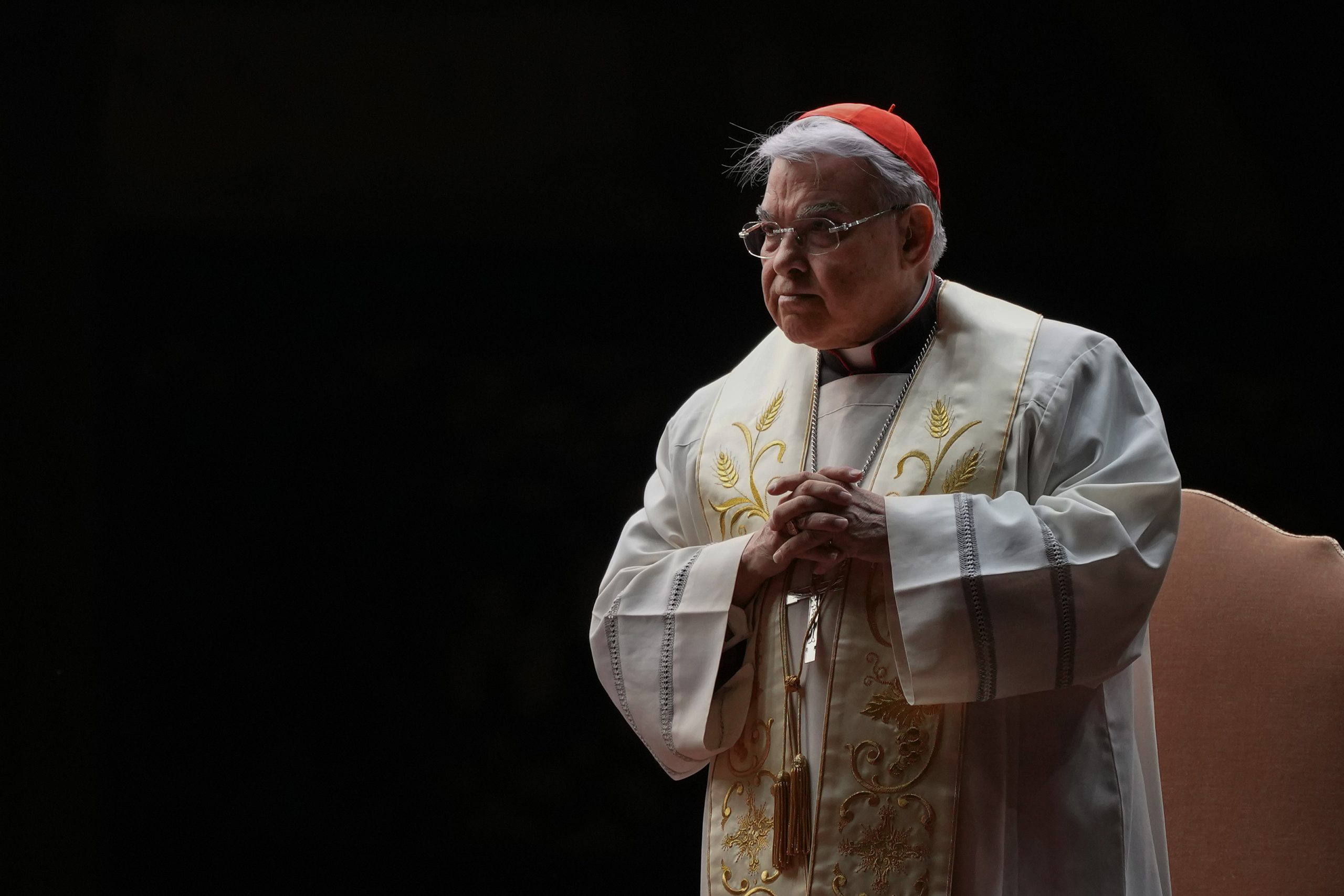
Cardinal Semeraro explains how the Vatican examines miracles, martyrdom and heroic virtue, defending the rigour of the canonisation process against criticism that it has become too fast In a quiet office in Rome, far from the crowds that gather in St Peter’s Square below, the Church’s understanding of holiness is subjected to some of its most exacting tests. Here, within the Dicastery for the Causes of Saints, reputations are sifted and claims of miracles scrutinised with a care and precision that belie the recent perception of swift modern canonisations. The prefect in charge, Cardinal Marcello Semeraro, soft spoken and clearly at ease with the weight of his responsibilities, has spent years at the centre of this process. Though prefect only since 2020, he brings with him more than a decade as a member of the dicastery. The cardinal is keen to stress the deep historical roots of his work. The procedures stretch back centuries, shaped significantly by reforms following the Council of Trent and later refined under Pope Paul VI and Pope John Paul II. Cardinal Semeraro described the most recent reforms of the procedures as “in the very last phase”, explaining that there was a need to streamline a process “that had become very problematic, very complicated, very complex”. He presented this streamlining not as a lowering of standards but as a practical correction to a system that had grown excessively burdensome, while insisting that the core nature of the work remains unchanged: “a long procedure in which one goes in search of the truth”. Earlier centuries placed heavy emphasis on miracles, as well as on widespread popular devotion. Over time, however, the Church shifted its focus. Today, the decisive criterion is what the cardinal called “heroic virtue”, a life lived in a way that stands out, not as theatrical heroism, but as a sustained and exemplary fidelity to the Christian life. “‘Heroic’ can be misunderstood,” he noted. “It simply means something beyond the ordinary. Something worthy of imitation.” The cardinal explained that before the Council of Trent the evaluation of sanctity rested above all on “the abundance of miracles” and widespread popular recognition, but after Trent the focus moved decisively to “the presence of a Christian life verified through the virtues, the theological virtues and the cardinal virtues”. Even though the miracle requirement and the esteem of the people of God remain necessary, the real work of the dicastery now centres on verifying this heroic virtue, a life that is “outside the ordinary, that is, a bit more than the others, in such a way that it can be imitated”. One of the most common criticisms of the modern canonisation process is that it has become too fast. The relatively swift canonisations of figures such as Pope St John Paul II or of younger figures like Carlo Acutis have fuelled this perception. The cardinal rejects the idea that speed has replaced rigour. The five year waiting period after death – it used to be 50 years, as laid out by Urban VIII in the 17th century, but was reduced after the Second Vatican Council – is not, he insists, about haste but about preserving evidence. “If we wait too long, witnesses die and memory fades. The process depends on living testimony.” On the much criticised shortening of the waiting period, Cardinal Semeraro was emphatic: historically it was necessary that “50 years had passed from death to begin the process”, but today “to begin the process it is required that the person has been dead at least five years”. Far from being rushed, the cardinal insists, many causes take decades. And while the formal office of the “devil’s advocate”, a Vatican official formerly mandated to argue against a candidate’s cause, has been abolished, its function has not disappeared. Instead, it has been expanded. “Today,” he explained, “we have entire commissions of historians and theologians whose task is precisely to test, to challenge, to falsify.” If even a single serious doubt emerges, the process halts until it can be resolved. If heroic virtue forms one path to sainthood, martyrdom remains its most ancient and, in many ways, most revered form. “The first saints were martyrs,” the cardinal said. “And in a sense, all sanctity is a participation in martyrdom.” Yet even here, the Church proceeds cautiously. Martyrdom, in its strict sense, requires death inflicted out of hatred for the faith: odium fidei. But modern cases are often more complex. Take Óscar Romero, whose assassination in 1980 raised questions about whether he died for political or religious reasons. The cardinal acknowledged the difficulty: “Often the motivations are mixed. But if the Christian witness is essential to the act, then martyrdom can be recognised.” His Eminence insisted on the classical, strict understanding of martyrdom: “We use the word martyrdom in the strictest, classical sense, where life is taken for a motive of the faith or strictly linked to the faith, because he is a Christian.” He gave concrete examples, the Ulma family in Poland, killed for sheltering Jews, and the Sicilian judge Rosario Livatino, killed because his Christian integrity made him incorruptible, to illustrate that even when the immediate trigger is not an explicit demand to renounce the faith, the act must still be “linked to the faith”. Anything less does not qualify. At the same time, the Church has developed new categories. Under Pope Francis, the notion of the offering of life, where a person freely gives their life for others without being killed explicitly for the faith, has been formally recognised. It reflects a broader attempt to capture the realities of modern witness. One of the more delicate issues for the dicastery is the status of non Catholic martyrs. Figures such as Dietrich Bonhoeffer are widely regarded as witnesses to Christ, yet cannot be canonised in the Catholic Church. “The Church recognises holiness outside her visible boundaries,” the cardinal said carefully. “But canonisation is an act for her own faithful. It is not within her competence to declare saints for other communities.” Nevertheless, there have been gestures towards broader recognition. Initiatives begun during the Great Jubilee of 2000 and renewed under Pope Francis have commemorated “new martyrs” from across Christian traditions. It remains, however, an acknowledgment rather than a formal declaration. If martyrdom is one path to sainthood, miracles remain another essential requirement, particularly for beatification and canonisation outside martyrdom cases. Here, the dicastery’s methods are strikingly empirical. Claims must be supported by rigorous medical documentation and are examined by panels of specialists, often seven or more doctors, whose task is not to prove divine intervention but to exclude any natural explanation. “The doctors must say only this,” the cardinal explained: “that, according to current medical knowledge, there is no explanation.” Advances in science have, if anything, made the process more demanding. Conditions once considered incurable may now have treatments, raising the bar for what counts as miraculous. Cases are debated intensely; some discussions, he noted, can last hours. What happens when troubling information emerges about a candidate for sainthood? The answer, again, is caution. Every cause undergoes exhaustive historical scrutiny. If credible doubts arise, whether about moral conduct or factual claims, the process is suspended. “Not cancelled,” the cardinal emphasised, “but stopped until clarity is reached.” Even after canonisation, the Church does not reverse its decisions. But the cardinal insisted that the thoroughness of the process makes serious errors exceedingly unlikely. The conversation turned to politics and whether someone with controversial political views could be canonised. Here, the cardinal distinguishes between political positions and ideologies. While the former do not in themselves exclude a candidate, ideologies fundamentally opposed to Christianity pose a deeper problem. “The question is always the person,” he said. “Their life, their conversion, their witness.” When asked if his dicastery would ever canonise a fascist, for example, the cardinal shook his head. Cardinal Semeraro replied that such a cause “can be technically excluded from the canonisation process”. He explained that Nazism and Fascism are not ordinary political parties but “an ideology, not a party”. For Cardinal Semeraro, ideologies such as Nazism, Fascism and Communism “are now considered de facto anti Christian”. Therefore, belonging to an ideology fundamentally opposed to Christianity constitutes a genuine obstacle to the recognition of heroic virtue. Looking ahead, Cardinal Semeraro has a strong sense of the kind of men and women he would like to see canonised. “What we need today,” he said, “are not figures who simply comfort us, but figures who make people ask: why do they live like this?” With more than 1,500 causes under examination, including some dating from the 15th century, the cardinal will have plenty to choose from.
May 1, 2026