

Cardinal Reinhard Marx
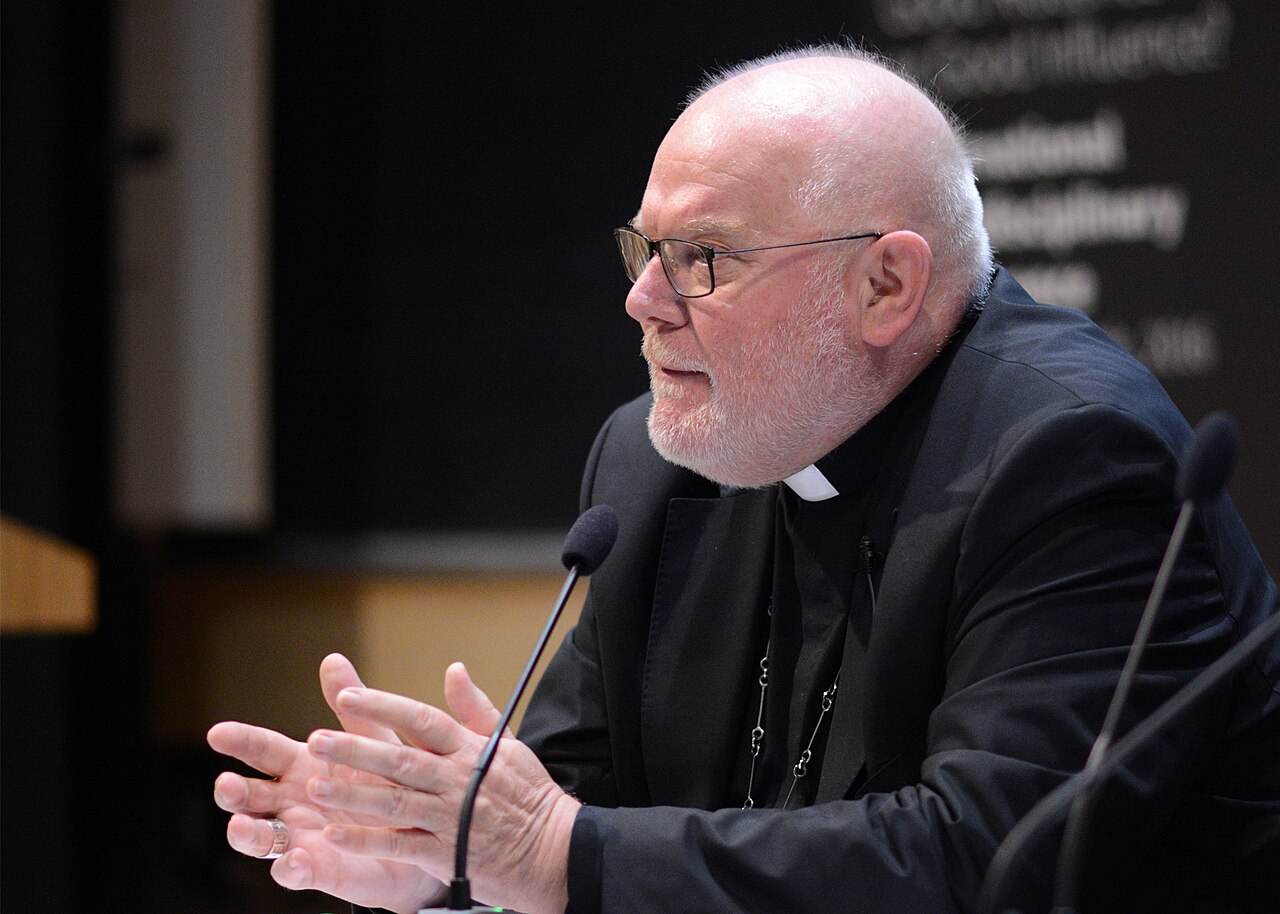
Cardinal Marx denounces “reactionary propaganda” over German Synodal Path
Cardinal Reinhard Marx has criticised what he called “reactionary propaganda” surrounding Germany’s Synodal Path, rejecting claims of a rupture with Rome and defending the direction of the German Church Cardinal Reinhard Marx has criticised what he described as “reactionary propaganda” directed against Germany’s Synodal Path. In an interview with Herder Korrespondenz , the Archbishop of Munich and Freising said that narratives portraying the German Church as moving towards rupture were being driven in a coordinated way, especially in the United States. “This is a social media phenomenon, and it applies to both politics and the Church,” he said, adding that he had raised the issue directly with Pope Francis and Pope Leo XIV. Cardinal Marx rejected suggestions that the Synodal Path risks breaking communion with Rome and defended the particular character of Catholic life in Germany. Referring to earlier concerns expressed in Rome about possible Protestant influence, he said: “I didn’t think that was fair,” insisting that the German Church’s development must be understood in light of its own historical experience. He acknowledged, however, that communication with the Vatican could have been handled differently as tensions emerged. “Perhaps we should have talked more amongst ourselves,” he said, suggesting that earlier and broader dialogue might have prevented misunderstandings from taking hold. The cardinal also pointed to the approach of Pope Leo XIV, saying the Pope had shown a willingness to listen to differing voices within the Church rather than act unilaterally. “He doesn’t simply want to decide something spontaneously, but is interested in the opinions of many different people,” Marx said, noting that the Pope has already received a number of German bishops in audience. Alongside his comments on the Synodal Path, Marx addressed the financial position of the Holy See, describing current difficulties as manageable. Writing in the same publication, he said that the situation does not amount to a structural crisis, but requires more effective coordination and oversight. He pointed to the complexity of Vatican finances, where multiple entities operate with separate reporting systems, and suggested that greater unity in administration would improve transparency. He noted that the central structures of the Church rely heavily on income from the Institute for the Works of Religion and the resources of Vatican City State, including the museums, while traditional sources such as Peter’s Pence are no longer sufficient on their own. Without such support, he indicated, it would be difficult to sustain the costs of the Roman Curia, the diplomatic service and the Church’s global communications. Marx confirmed that proposals are under consideration to strengthen fundraising and rationalise financial management, including the possible creation of a dedicated office for this purpose. He also referred to ongoing concerns over pension liabilities, noting that these issues reflect wider pressures faced by institutions internationally rather than a uniquely Vatican problem. The Synodal Path, launched in 2019 by the German bishops and lay representatives, has been the focus of sustained scrutiny from Rome, particularly over its discussions on authority, morality and Church governance. While the Vatican has repeatedly stressed the limits of national initiatives, German bishops have maintained that the process is intended as a contribution to the wider life of the universal Church rather than a departure from it. Image credit: By Dermot Roantree – Own work, CC BY-SA 4.0, https://commons.wikimedia.org/w/index.php?curid=115697769
May 4, 2026
German Synodal Way figures defend blessings guidance as Pope reiterates opposition
Leaders behind the German Synodal Way have defended new guidance permitting blessings for couples in irregular unions, as Pope Leo states that the Holy See does not support formalised blessings beyond those allowed under Fiducia supplicans The architects of the German Synodal Way have defended controversial guidelines permitting the blessing of couples in irregular unions, amid concerns raised by the Pope that such practices risk undermining ecclesial unity. The dispute centres on pastoral norms adopted in 2025 by the German Bishops’ Conference and the Central Committee of German Catholics (ZdK), which seek to provide a framework for blessing couples who are unable, or do not wish, to enter into a sacramental marriage. The initiative has now been taken up in several dioceses, most notably Munich and Freising, where Cardinal Reinhard Marx has instructed clergy to ensure that “no couple should be turned away” if they request a blessing. In a letter to clergy and pastoral workers, Cardinal Marx wrote: “To all couples who love each other and seek a blessing from the Church for their partnership, I wish that they may feel God’s grace in this blessing.” The archdiocese has confirmed that the guidelines, entitled Segen gibt der Liebe Kraft (“Blessing Gives Love Strength”), will form a “fundamental element” of pastoral practice. Training sessions are scheduled to begin in June to standardise how such blessings are carried out across parishes. The policy goes further than merely permitting individual priests to exercise discretion. Clergy unwilling to conduct the ceremonies themselves are not free to simply refuse; instead, they are expected to refer couples to another priest or pastoral worker. Bishop Georg Bätzing, who oversaw the introduction of the guidelines while serving as chairman of the German Bishops’ Conference, has defended their implementation. He said that although “there are differing views on this within the universal Church”, the practice as carried out in his Diocese of Limburg “serves the people” and “does not jeopardise the unity of the Church”. Limburg was among the first dioceses to publish the norms formally in its official gazette, signalling full adoption. Support has also come from the ZdK, which co-authored the document. Its president, Irme Stetter-Karp, said there was “no reason to withdraw the guidelines” and emphasised their limited scope. The aim, she said, was simply to encourage the provision of blessing ceremonies “for couples who do not wish to enter into a sacramental church marriage or for whom such a marriage is not an option”. She added: “No more and no less. There is no possibility of confusing it with the sacrament of marriage.” The dioceses of Cologne, Augsburg, Eichstätt, Passau and Regensburg have all declined to implement the document, arguing that it exceeds the provisions set out in Fiducia supplicans, the 2023 Vatican instruction on blessings. The bishops of the opposing diocese are led by notably more conservative bishops in comparison to others in the German bishops conference, with the exception of the diocese of Eichstätt, which is currently vacant after the 2025 resignation of Bishop Gregor Franz Hanke. Fiducia supplicans allowed for spontaneous, non-liturgical blessings of individuals in irregular situations, but drew a clear line against any form of ritual that might resemble a marriage ceremony or give the impression of endorsing a union contrary to Church teaching. Pope Leo was asked during a press conference on April 23 about the decision to permit such blessings in Munich. The Pontiff responded: “The Holy See has made it clear that we do not agree with the formalised blessing of couples, in this case, homosexual couples, as you asked, or couples in irregular situations, beyond what was specifically, if you will, allowed for by Pope Francis in saying all people receive blessings.” The Holy Father continued by distinguishing between general blessings and those directed at particular unions. “When a priest gives a blessing at the end of Mass, when the Pope gives a blessing at the end of a large celebration like the one we had today, they are blessings for all people,” he said, invoking his predecessor’s phrase “Tutti, tutti, tutti” to emphasise that all are welcome and called to conversion. The Archdiocese of Munich and Freising has described internal communications about the guidelines as “an internal memo”, and has not yet formally promulgated them in its official gazette. Other dioceses, including Osnabrück and Aachen, have taken that step, effectively committing themselves to the policy.
Apr. 29, 2026
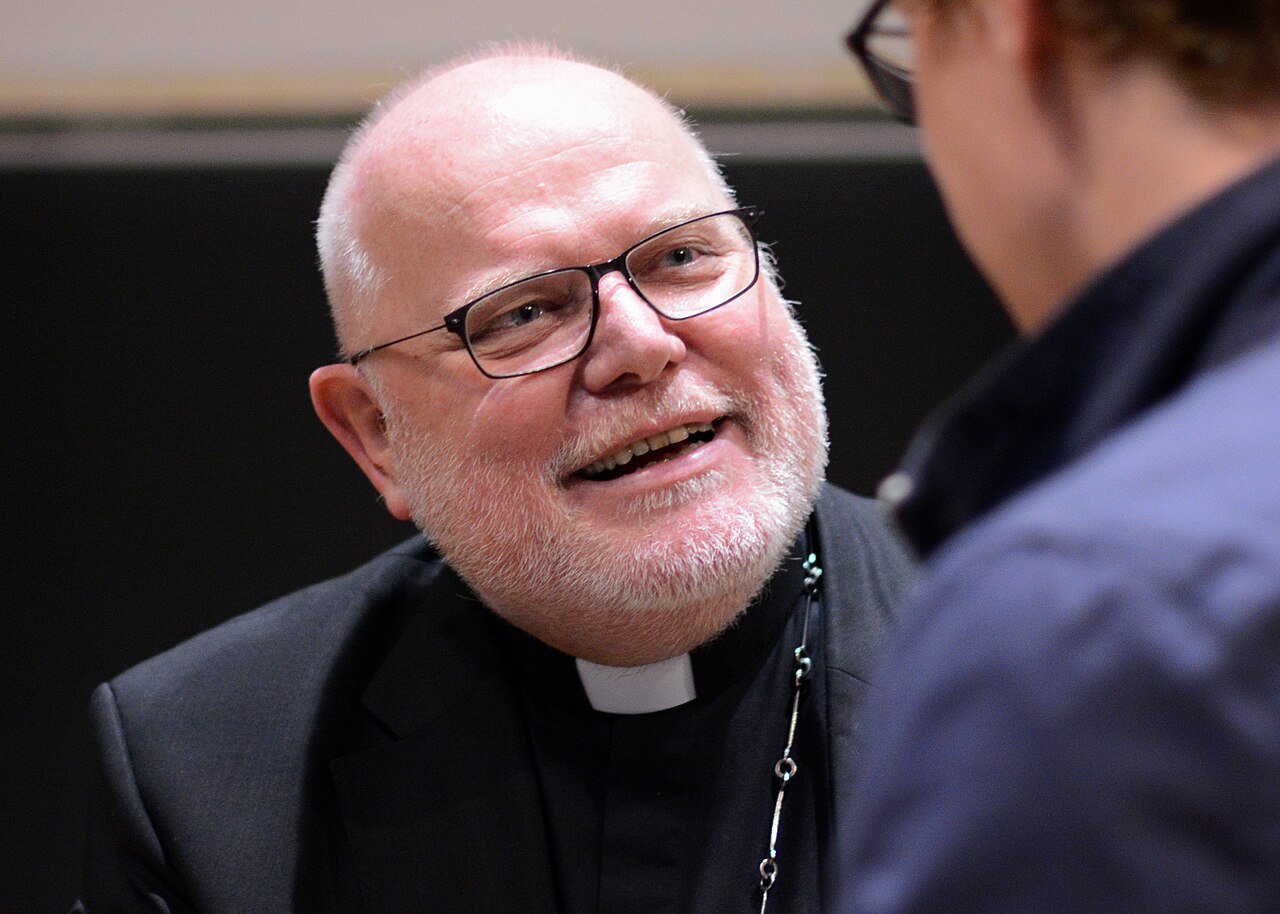
Pope Leo reaffirms opposition to blessing of same sex couples in face of Cardinal Marx’s directive
Pope Leo has reaffirmed that the Holy See does not approve the blessing of same sex couples, as Cardinal Marx advances new pastoral provisions in Munich. Pope Leo has reaffirmed that the Holy See does not approve the blessing of same sex couples, in remarks delivered to journalists on the return flight to Rome on April 23 following his recent apostolic journey to Africa. The Pope addressed the issue directly when asked about the divergence with developments in Germany after Cardinal Reinhard Marx confirmed new pastoral provisions permitting such blessings in his archdiocese. He cautioned against reducing ecclesial doctrinal questions to a single moral issue, stating: “First of all, I think it’s very important to understand that the unity or division of the Church should not revolve around sexual matters.” He added that “there are much greater, more important issues, such as justice, equality, freedom of men and women, freedom of religion”. Turning to the specific question, the Pope said: “The Holy See has made it clear that we do not agree with the formalised blessing of couples, in this case, homosexual couples … or couples in irregular situations, beyond what was specifically … allowed for by Pope Francis in saying all people receive blessings.” His Holiness emphasised that blessings given at the end of Mass or major liturgical celebrations are “for all people”, adding that Pope Francis’s phrase “Tutti, tutti, tutti” reflects that universal invitation. He warned that “to go beyond that today … can cause more disunity than unity”. The intervention follows confirmation earlier in the week, reported by AdVaticanum, that the Archdiocese of Munich and Freising will implement the guidelines Segen gibt der Liebe Kraft (“Blessing Gives Love Strength”) as a foundation for pastoral practice. The text, adopted by the German Bishops’ Conference and the Central Committee of German Catholics, is now to be applied across the archdiocese. In a letter to clergy and pastoral staff, Cardinal Marx wrote: “To all couples who love each other and seek a blessing from the Church for their partnership, I wish that they may feel God’s grace in this blessing.” The directive states that “no couple should be turned away” if they request such a blessing, and establishes that access is not to depend on the personal position of individual priests. The archdiocese has also announced that training sessions will begin in June to prepare clergy and lay pastoral workers to carry out the ceremonies. Those unwilling to perform the blessings themselves are expected to refer couples to another minister. Cardinal Marx acknowledged likely resistance, asking that the “theological meaning” of the practice be explained to those who “still struggle with this blessing”. The guidelines insist that such blessings are not equivalent to marriage, while stating that this distinction should not result in exclusion. “This does not mean that the blessing of a non sacramental union … pushes the couple to the margins of the community and the Church,” the text says, adding: “Couples should be welcomed in the heart of the community. Therefore, the Church asks God to bless and grant good things to these couples.” The developments in Munich come within the increasingly differing trajectory of the German synodal way. The Holy See has intervened on several occasions, including a 2021 declaration from the Congregation for the Doctrine of the Faith stating that the Church “does not have, and cannot have, the power to bless unions of persons of the same sex”.
Apr. 24, 2026
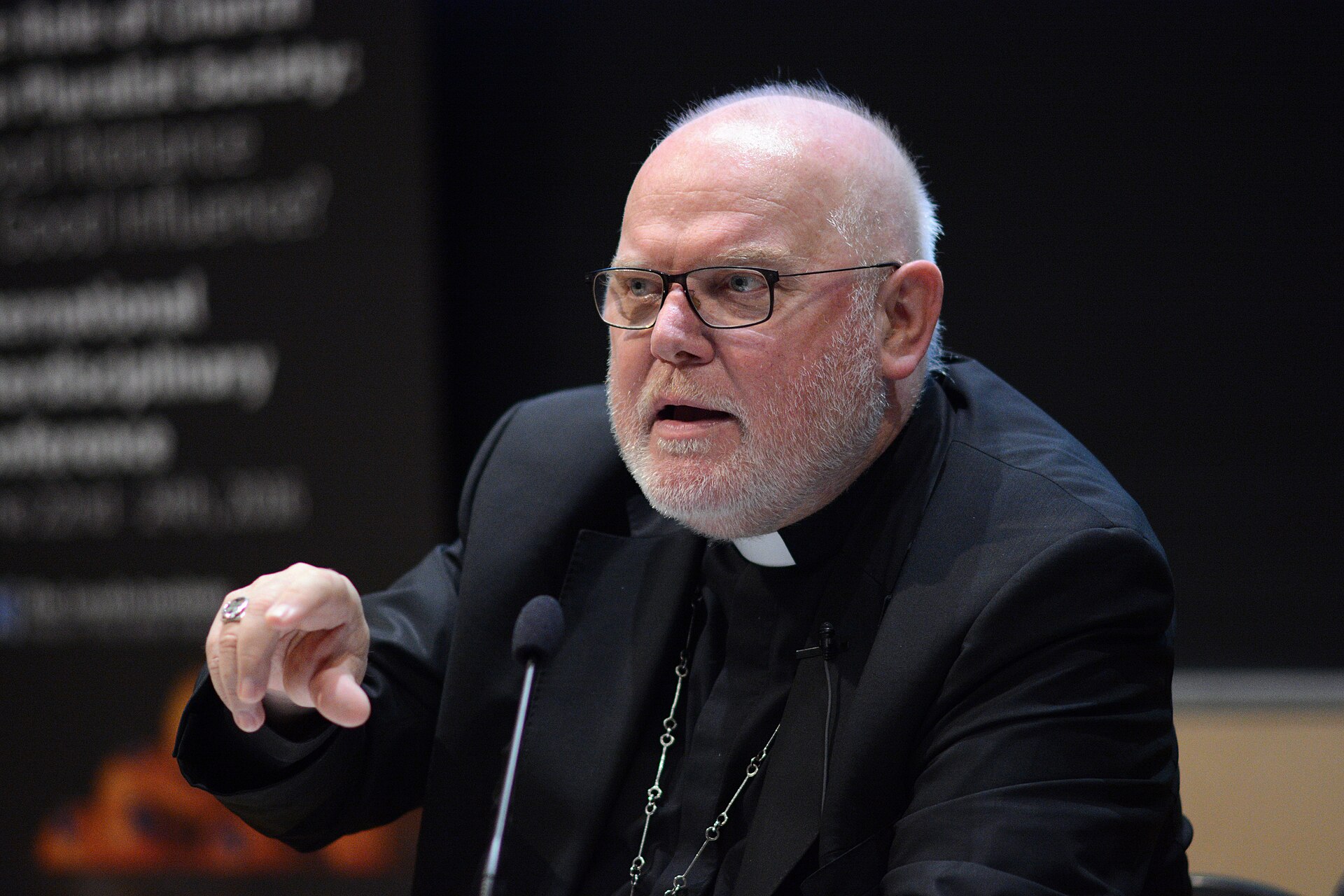
Cardinal Marx directs Munich priests to offer blessings to same-sex and irregular couples
Cardinal Reinhard Marx has instructed clergy in Munich to offer blessings to couples in irregular unions, including same-sex couples, under new diocesan guidelines based on Fiducia Supplicans Cardinal Reinhard Marx has instructed priests in Munich to offer blessings to couples in irregular unions, including same-sex couples and those who are divorced and civilly remarried. Cardinal Reinhard Marx has instructed priests in Munich to offer blessings to couples in irregular unions, including same-sex couples and those who are divorced and civilly remarried. According to guidance confirmed this week by the Archdiocese of Munich and Freising, all pastoral practice is to follow the guidelines Segen gibt der Liebe Kraft (“Blessing Gives Love Strength”), adopted last year by the Joint Conference of the German Bishops’ Conference and the Central Committee of German Catholics (ZdK), and now set to become a fundamental element of pastoral work across the archdiocese. In a letter to clergy and pastoral staff, Cardinal Marx wrote: “To all couples who love each other and seek a blessing from the Church for their partnership, I wish that they may feel God’s grace in this blessing.” The letter, confirmed by diocesan officials, sets out that “no couple should be turned away” if they request such a blessing. The archdiocese has also announced that training sessions for pastoral workers on how to conduct these blessing ceremonies will begin in June, in line with the new guidelines. These sessions are intended to standardise the practice across parishes and ensure that clergy and lay workers are prepared to implement the policy. Clergy who do not wish to perform such blessings themselves are not permitted simply to refuse. Instead, they are expected to refer couples to their dean or to another member of pastoral staff who is willing to carry out the ceremony. The directive is intended to ensure that access to blessings is not dependent on the personal views of individual priests. Cardinal Marx also addressed anticipated resistance, asking that the “theological meaning” of the blessings be explained to those who “still struggle with this blessing”. The guidance emphasises that the practice is to be understood within a broader pastoral framework rather than as a change to sacramental teaching. The document makes clear that such blessings are not equivalent to marriage. However, it adds that this distinction should not result in exclusion. “This does not mean that the blessing of a non-sacramental union, which in many cases is already a civil marriage, pushes the couple to the margins of the community and the Church,” the text states. It continues: “Couples should be welcomed in the heart of the community. Therefore, the Church asks God to bless and grant good things to these couples.” The guidelines also suggest that, “where necessary”, such blessings may serve as “a contribution to healing and reconciliation”. The blessing text was developed under Pope Francis’s declaration Fiducia Supplicans in December 2023, which permitted non-liturgical blessings of couples in irregular situations under certain conditions. According to the document, the guidelines are intended as an offer to “divorced and remarried individuals, couples of all gender identities and sexual orientations, as well as couples who, for other reasons, do not wish or cannot receive the sacrament of marriage”. At the time of their presentation, they were described as following “the pastoral approach of the pontificate of Pope Francis”. However, several dioceses, including Augsburg, Eichstätt, Cologne, Passau and Regensburg, have indicated that they do not use the guidelines. Blessings for same-sex couples are already a common practice in several German dioceses, and the Munich directive is expected to set a broader trend within the country’s Church structures. The introduction of formal guidelines indicates a move towards greater consistency in how such blessings are carried out.
Apr. 23, 2026