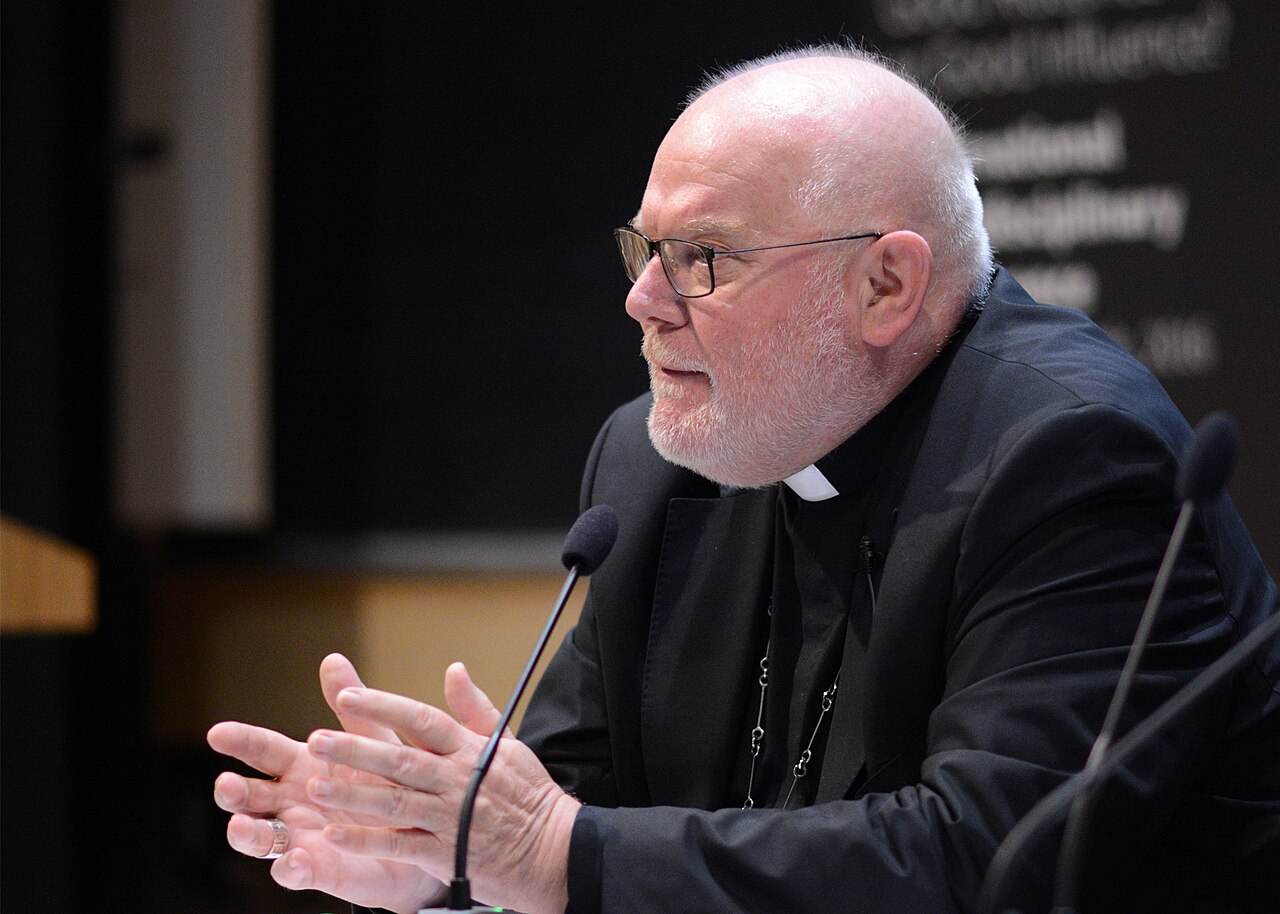
Cardinal Reinhard Marx has criticised what he described as “reactionary propaganda” directed against Germany’s Synodal Path.
In an interview with Herder Korrespondenz, the Archbishop of Munich and Freising said that narratives portraying the German Church as moving towards rupture were being driven in a coordinated way, especially in the United States. “This is a social media phenomenon, and it applies to both politics and the Church,” he said, adding that he had raised the issue directly with Pope Francis and Pope Leo XIV.
Cardinal Marx rejected suggestions that the Synodal Path risks breaking communion with Rome and defended the particular character of Catholic life in Germany. Referring to earlier concerns expressed in Rome about possible Protestant influence, he said: “I didn’t think that was fair,” insisting that the German Church’s development must be understood in light of its own historical experience.
He acknowledged, however, that communication with the Vatican could have been handled differently as tensions emerged. “Perhaps we should have talked more amongst ourselves,” he said, suggesting that earlier and broader dialogue might have prevented misunderstandings from taking hold.
The cardinal also pointed to the approach of Pope Leo XIV, saying the Pope had shown a willingness to listen to differing voices within the Church rather than act unilaterally. “He doesn’t simply want to decide something spontaneously, but is interested in the opinions of many different people,” Marx said, noting that the Pope has already received a number of German bishops in audience.
Alongside his comments on the Synodal Path, Marx addressed the financial position of the Holy See, describing current difficulties as manageable. Writing in the same publication, he said that the situation does not amount to a structural crisis, but requires more effective coordination and oversight. He pointed to the complexity of Vatican finances, where multiple entities operate with separate reporting systems, and suggested that greater unity in administration would improve transparency.
He noted that the central structures of the Church rely heavily on income from the Institute for the Works of Religion and the resources of Vatican City State, including the museums, while traditional sources such as Peter’s Pence are no longer sufficient on their own. Without such support, he indicated, it would be difficult to sustain the costs of the Roman Curia, the diplomatic service and the Church’s global communications.
Marx confirmed that proposals are under consideration to strengthen fundraising and rationalise financial management, including the possible creation of a dedicated office for this purpose. He also referred to ongoing concerns over pension liabilities, noting that these issues reflect wider pressures faced by institutions internationally rather than a uniquely Vatican problem.
The Synodal Path, launched in 2019 by the German bishops and lay representatives, has been the focus of sustained scrutiny from Rome, particularly over its discussions on authority, morality and Church governance. While the Vatican has repeatedly stressed the limits of national initiatives, German bishops have maintained that the process is intended as a contribution to the wider life of the universal Church rather than a departure from it.
Image credit: By Dermot Roantree – Own work, CC BY-SA 4.0, https://commons.wikimedia.org/w/index.php?curid=115697769