

Cardinal M Ller
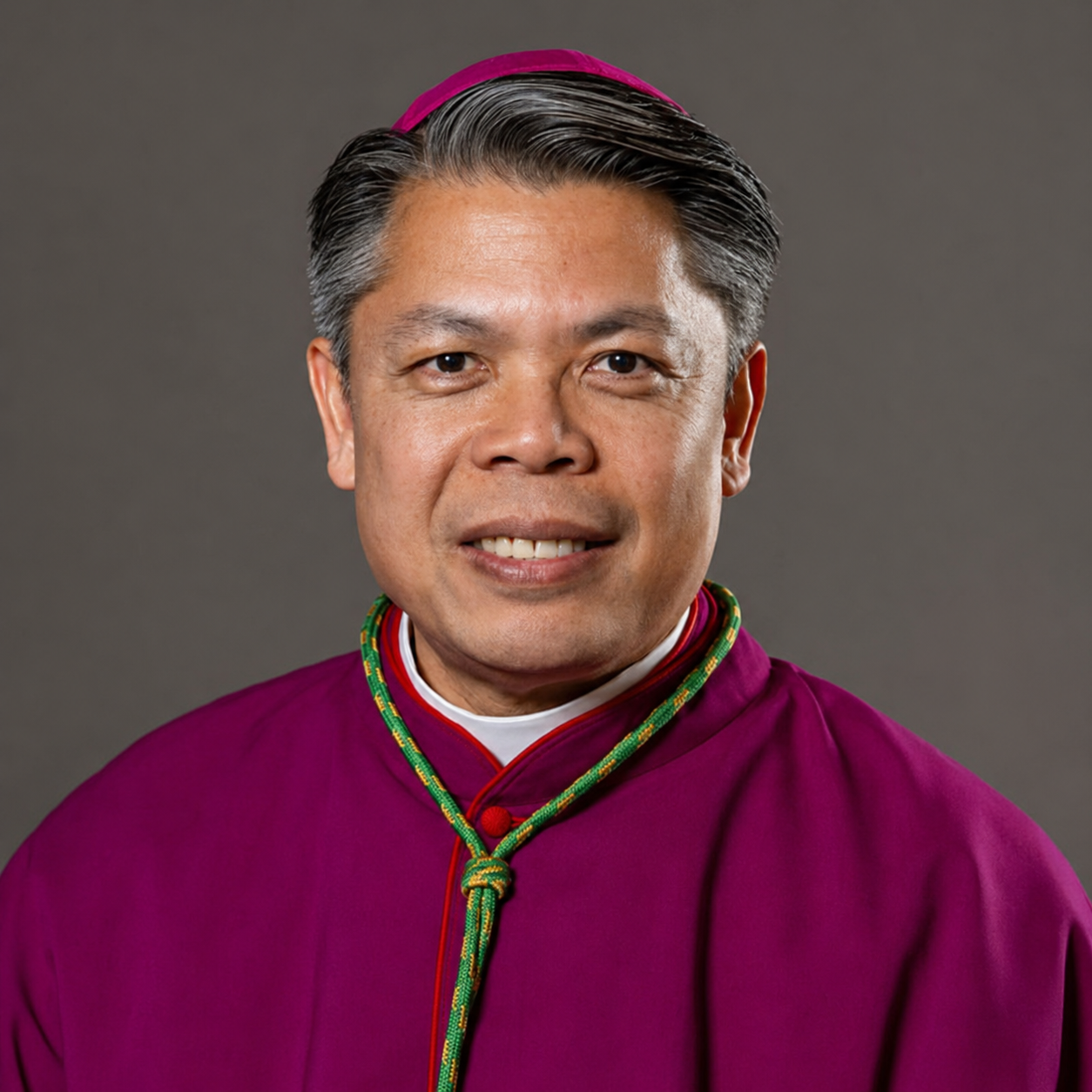
Phoenix auxiliary bishop attacks anti-synodality book backed by Cardinal Müller
Bishop Peter Dai Bui of Phoenix has sharply criticised The Trojan Horse in the Catholic Church, a book backed by Cardinal Gerhard Müller which argues that the Synod on Synodality seeks to undermine the Church’s hierarchical structure Bishop Peter Dai Bui, auxiliary bishop of the Diocese of Phoenix, has written a scathing criticism of the book The Trojan Horse in the Catholic Church , published by the lay group Catholics for Catholics (CforC). The Trojan Horse in the Catholic Church is written under the pseudonym “Father Enoch” by a priest-author, with Cardinal Gerhard Müller writing the foreword. The book, written in the form of a two-part essay entitled “Replacing the Hierarchical Structure of the Church” and “Overturning the Moral Order”, seeks to explain how the Synod on Synodality is intended to undermine the governing hierarchy of the Church. In the book, Fr Enoch writes that “the first goal of the Synod is to invert the hierarchical structure of the Church as instituted by her Founder and our Saviour, Jesus Christ” because it “undercuts the authority or sacred power with which He endowed the Apostles and their successors in office, the bishops: to teach, to govern, and to sanctify”. Fr Enoch argues that this attempt to overturn the hierarchy of the Church found its roots in the pontificate of Pope Francis. He writes that during the Francis era it appeared that “nothing had changed in the Vatican”, while in fact “a quiet revolution had been taking place”. Fr Enoch argues that this revolution originated in the 2014 Synod on the Family and the subsequent 2016 Apostolic Exhortation Amoris Laetitia , reaching a crescendo in the 2023 Synod on Synodality. Fr Enoch takes issue with the term “synodality”, quoting Cardinal Burke saying that it has “no history in the doctrine of the Church and for which there is no reasonable definition”. He also argues that “the hierarchical structure of the early Church [was] deeply embedded already in the early second century”, making its removal contrary to Christianity. The second part of the book focuses on the “homosexual agenda”, particularly Amoris Laetitia , Fiducia Supplicans and various actions taken by the German Synodal Way. The essay is a damning assessment of the pontificate of Pope Francis, portraying much of it as a “push for the homosexualist agenda”. In his response, Bishop Peter Dai Bui argues that synodality is “as old as Emmaus, as old as the Council of Jerusalem, where the apostles and the whole community gathered to discern together and wrote”. He specifically uses the example of Emmaus as an illustration of synodality, where the two disciples were “trying to make sense of a catastrophe they could not yet name”. Bishop Dai Bui defends synodality as not being a challenge to the deposit of faith, which “cannot be subject to revision by any synod, any council, or any pope”, but rather as the Church asking itself how to “walk with human beings whose lives are complicated, wounded and often far from the fullness of what the Church proclaims?” On Catholics for Catholics specifically, the article claims that it is “not a theological institute and it holds no magisterial standing”. It also argues that Cardinal Müller’s reflections are “contested by others who were present in the same room”. Responding to the criticism, Catholics for Catholics pointed to what it described as the contradiction of a bishop criticising the opinions of a lay group while defending synodality as an exercise in listening to the laity. John Yep, president of Catholics for Catholics, stated: “Why is the bishop reprimanding us as lay Catholics trying to defend the Faith?” He also pointed out that while Catholics for Catholics is not a theological institute, “the former head of the Doctrine of the Faith, Cardinal Gerhard Müller, as well as its very accomplished author, would most definitely qualify as theologians who carry weight.” Referencing the bishop’s use of the story of Emmaus, Yep commented: “If Jesus Christ would have received that ‘Synod Report’ [the final report of Study Group 9, which addressed homosexual behaviour] on the road to Emmaus, he would have said the same thing – or worse – than what he told the two disciples when they erred in their understanding. ‘O Stulti!’, Christ said, which literally means ‘O stupid or foolish ones.’ I wonder if Christ would say the same thing today to any bishop promoting this new ‘synodal Church.’” Catholics for Catholics, with the assistance of its supporters, has been able to send a copy of The Trojan Horse in the Catholic Church to every bishop in the United States and to more than a quarter of the country’s priestly population. Yep argued that Bishop Bui’s attempt to discredit the book had resulted in greater support, adding: “For that, we are grateful.” Bishop Peter Dai Bui was appointed auxiliary bishop of Phoenix by Pope Leo XIV in December 2025 and received episcopal consecration the following February. A native of Vietnam, his family fled the country after the war and arrived in the United States when he was a child. He was ordained a priest in 2003 and was initially a member of the Legionaries of Christ. He later left the congregation and was incardinated into the Diocese of Phoenix in 2009.
May 14, 2026
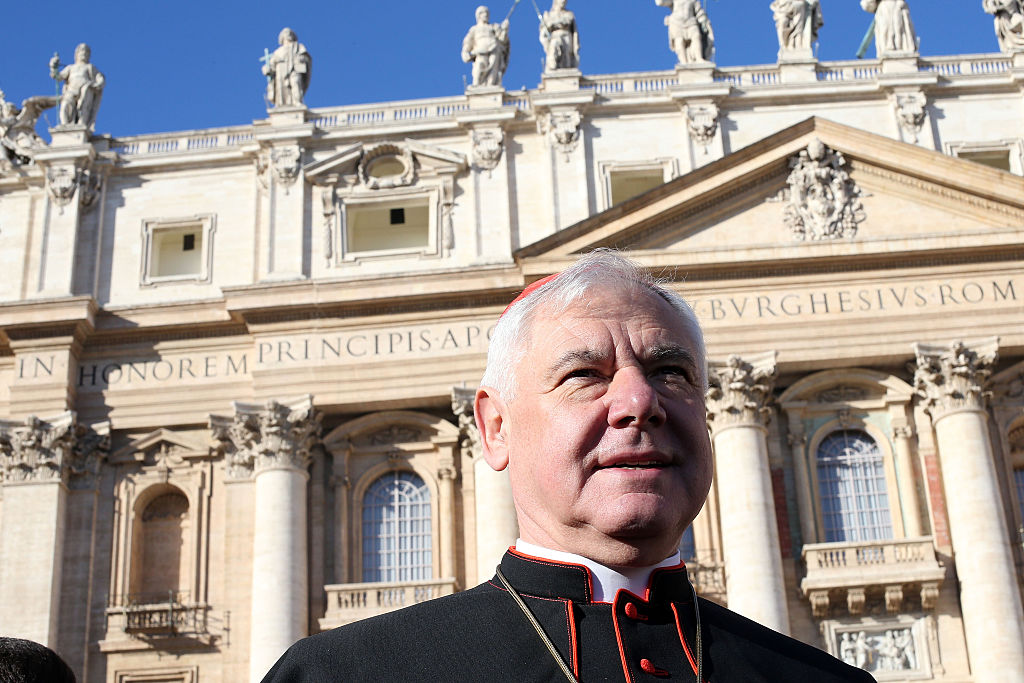
Cardinal Müller rejects claims Vatican finances influenced election of Pope Leo XIV
Cardinal Müller has dismissed speculation that financial concerns shaped the election of Pope Leo XIV Cardinal Gerhard Ludwig Müller has rejected claims that the Vatican’s financial situation influenced the election of Pope Leo XIV. The German cardinal made his remarks in Rome during the presentation of the new book Papi, Dollari e Guerre by the renowned Italian Vaticanista Massimo Franco, which examines the historical relationship between the United States and the Holy See. Speaking at the event, Cardinal Müller addressed speculation that concerns over Vatican finances may have played a decisive role in the election of the first American pope. “Although Cardinal Reinhard Marx dedicated a full day to discussing the Holy See’s finances in the pre-conclave, this did not influence the final decision,” Cardinal Müller said. His Eminence added that the choice of a pope “is based on different criteria.” The intervention comes one year after the conclave that elected Pope Leo XIV, a historic event given the longstanding assumption that a pontiff from the United States was unlikely. Cardinal Marx, who has been closely associated with Vatican economic reform and oversight, reportedly led a full day of discussions on financial issues during the general congregations preceding the conclave. These meetings, which take place before the formal voting begins, allow cardinals to exchange views on the challenges facing the Church. Despite the prominence of those discussions, Cardinal Müller insisted that they did not shape the final outcome. His remarks appeared to counter interpretations that the election reflected a strategic response to financial pressures or a desire to strengthen ties with American Catholic institutions. Franco’s book, presented at the same event, sets out the historical context of relations between the Vatican and the United States, including financial links that have developed over more than a century. According to the publisher’s summary, the work traces the role of American Catholic influence from the early twentieth century to the present day, using archival material and previously unpublished testimonies. The book refers to financial contributions from American benefactors during the pontificates of Pius XI and Pius XII, as well as support provided during and after the Second World War. It also examines the role of institutions such as the Papal Foundation, established during the pontificate of John Paul II, and the continuing presence of major Catholic organisations in the United States. The summary further notes that the most recent conclave marked “the end of Eurocentrism in an impoverished and divided Vatican”, while suggesting that the election of Pope Leo XIV should be understood within a broader historical and geopolitical framework. It also points to the significance of the Pontifical North American College in Rome, where it is claimed discussions among American cardinals took place prior to the conclave. Among those present at the book presentation were several figures from ecclesiastical, political and journalistic circles, including Archbishop Antonio Mennini and the former Italian prime minister Romano Prodi. Massimo Franco, the author, is a political journalist and commentator for Corriere della Sera . He has previously written on Italian and Vatican politics and has contributed to a range of international publications. His latest work continues that focus, examining the intersection of religion, diplomacy and finance.
May 1, 2026