

C Ne
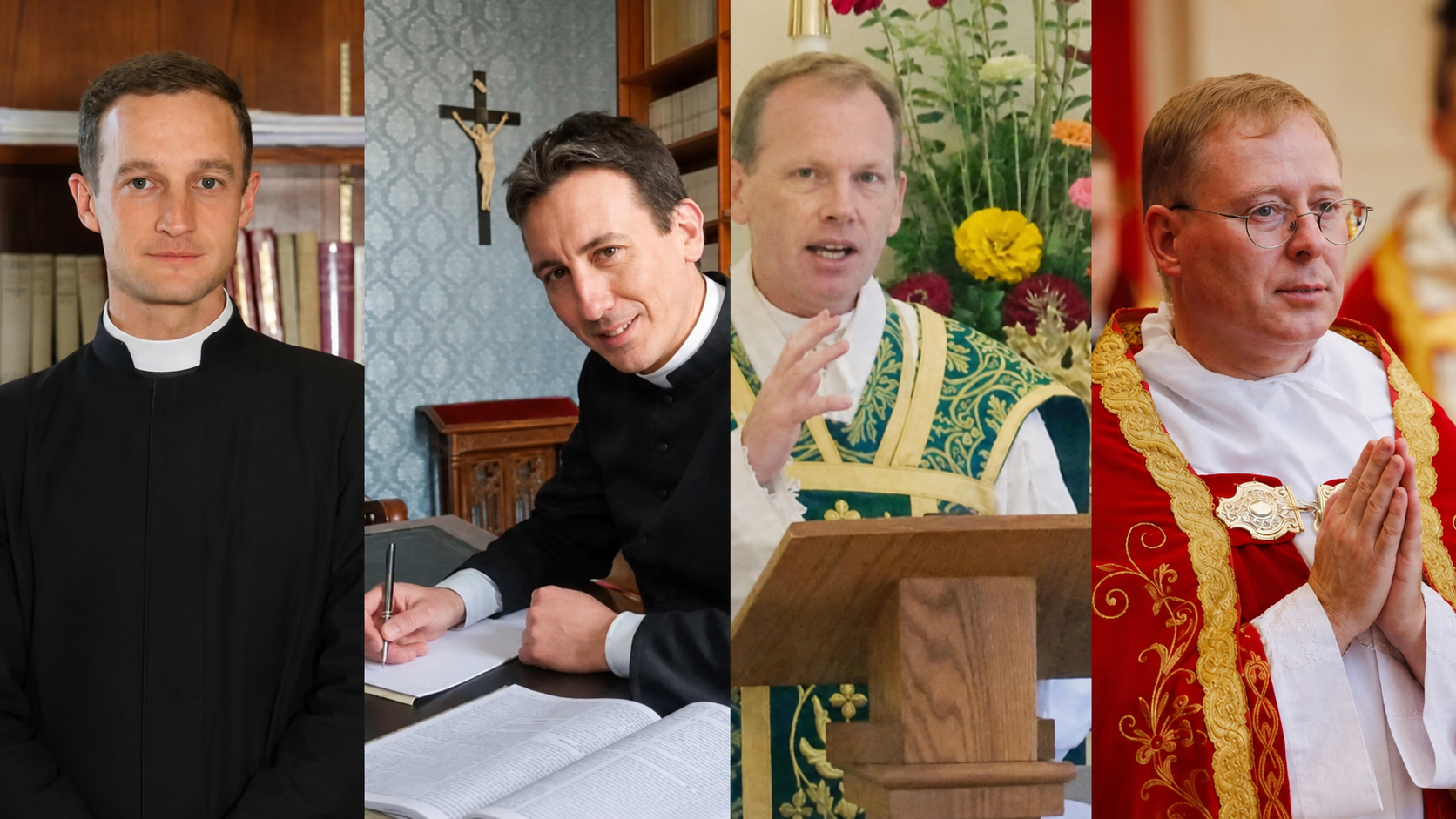
SSPX announces names of four priests to be consecrated bishops at Écône
The SSPX has announced the names of four priests who will be consecrated bishops at Écône on July 1, saying the move is intended to preserve the traditional sacraments during what it described as an “unprecedented crisis of the Faith” The Society of Saint Pius X has announced the names of the priests who will be consecrated bishops at Écône on July 1. In a communiqué issued from the SSPX General House in Menzingen on May 26, Father Davide Pagliarani, the Superior General of the society, said the names of the four priests had been presented to Pope Leo XIV “together with certain explanations necessary for a proper understanding of this step”. The statement said the episcopal consecrations would take place “in a spirit of respect towards the supreme authority of the universal Church” and insisted that the move did not represent “a denial of, refusal of, or challenge to the supreme, full, and immediate power of jurisdiction of the Vicar of Christ over the universal Church”. “The ceremony of July 1st will have no other purpose than to ensure the continued administration of the sacraments of Holy Orders and Confirmation, together with those sacramentals reserved to bishops, according to the traditional rite of the Holy Roman Church and the immemorial Faith,” the communiqué said. It added: “The episcopacy to be received by these priests is therefore conceived solely as a service rendered to souls and to the Church during this unprecedented crisis of the Faith.” The four priests named for consecration are Father Pascal Schreiber, rector of the SSPX seminary in Zaitzkofen, Germany; Father Michael Goldade, rector of St Thomas Aquinas Seminary in Dillwyn, Virginia; Father Michel Poinsinet de Sivry, Superior of the Benelux District; and Father Marc Hanappier, professor of theology at the society’s American seminary. Father Schreiber, 53, was born in Switzerland and ordained in 1998 after studies at the seminaries of Zaitzkofen and Écône. After assignments in Germany and Switzerland, he spent more than a decade directing SSPX schools before becoming Swiss District Superior in 2016. Since 2020 he has served as rector of the German seminary. Father Goldade, 45, comes from St Marys, Kansas, one of the principal centres of the SSPX in the United States. Ordained in 2004, he worked in Michigan and Connecticut before becoming prior of the large Kansas City apostolate. He was appointed rector of St Thomas Aquinas Seminary in Virginia in 2023. Father Poinsinet de Sivry, 42, was ordained in 2008 and worked in schools and apostolates in France before being appointed head of the Benelux District in 2022. The communiqué noted his work at Saint Nicolas du Chardonnet in Paris, the church occupied by traditionalists since 1977. The youngest of the four, Father Hanappier, 36, was ordained in 2013 and currently teaches metaphysics and dogmatic theology in Virginia. Before joining the seminary faculty he worked in schools in France and spent a year in Scotland improving his English while assisting in parish ministry. The SSPX was founded in 1970 by Archbishop Lefebvre, the former Superior General of the Holy Ghost Fathers, after disputes over the reforms which followed the Second Vatican Council. Tensions with Rome escalated throughout the 1970s and 1980s, culminating in the consecration of four bishops at Écône on June 30, 1988. Pope John Paul II declared at the time that the consecrations constituted “a schismatic act”, and Lefebvre and the four bishops incurred automatic excommunication. Archbishop Lefebvre defended his actions by arguing that extraordinary measures were necessary to preserve the traditional priesthood and sacraments. Relations between Rome and the SSPX improved under Pope Emeritus Benedict XVI, who lifted the excommunications of the surviving bishops in 2009 and opened doctrinal talks with the society. Pope Francis later granted SSPX priests faculties to validly hear confessions and allowed local bishops to delegate them to witness marriages under certain conditions. Image: The four priests to be ordained bishop by the Society of St Pius X. From left to right: Father Marc Hanappier, Father Michel Poinsinet de Sivry, Father Michael Goldade and Father Pascal Schreiber. Image: The four priests to be consecrated bishops by the Society of Saint Pius X. From left to right: Father Marc Hanappier, Father Michel Poinsinet de Sivry, Father Michael Goldade and Father Pascal Schreiber.
May 26, 2026
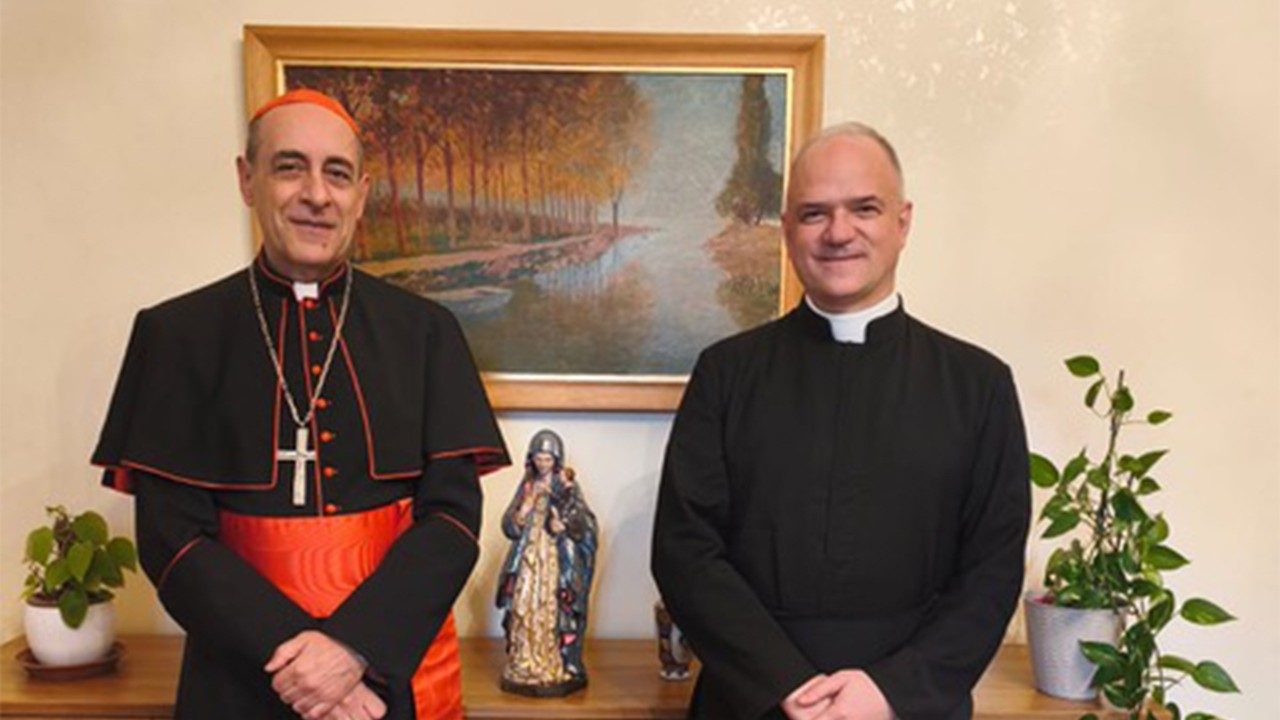
SSPX rejects Cardinal Fernández warning over July consecrations
The Society of St Pius X has issued a forceful public response to Cardinal Víctor Manuel Fernández’s warning that planned episcopal consecrations without papal approval would constitute “a schismatic act”, arguing that the Society is acting out of necessity for the “salvation of souls” The Society of St Pius X has issued a forceful response to Cardinal Fernández’s warning that planned episcopal consecrations without papal approval would constitute “a schismatic act”, arguing that the Society is acting out of necessity for the “salvation of souls” and therefore incurs no automatic excommunication under canon law. The response was published on 15 May by the Society’s official in-house news service, through Fr Jean-Michel Gleize, the French professor at the seminary at Écône who took part in doctrinal discussions with Rome between 2009 and 2011. The intervention follows a statement issued two days earlier by Cardinal Víctor Manuel Fernández, prefect of the Dicastery for the Doctrine of the Faith, who warned that the episcopal consecrations announced by the SSPX “do not have the corresponding pontifical mandate”. Cardinal Fernández said: “This gesture will constitute ‘a schismatic act’ (John Paul II, Ecclesia Dei, n. 3), and ‘formal adherence to the schism constitutes a grave offense against God and entails the excommunication established by Church law’.” The cardinal added that the Holy Father was praying that the Society’s leaders would “retrace their steps regarding the very serious decision they have taken”. Fr Gleize’s reply interpreted the Vatican declaration as confirmation that Pope Leo XIV will refuse to grant authorisation for the consecrations expected to take place on July 1. “The novelty that appears in this declaration from Rome,” Fr Gleize wrote, “is that the episcopal consecrations scheduled for July 1st will not be ‘accompanied by the corresponding papal mandate’. Coming from a Prefect of a Vatican dicastery, this remark is quite clearly an attempt to convey to the Society that Pope Leo XIV will refuse to authorise the consecrations.” Fr Gleize based much of his argument on Canons 1323 and 1324 of the 1983 Code of Canon Law, maintaining that a person acting out of necessity, or under the sincere belief that such necessity exists, is not subject to automatic penalties. Quoting canon law directly, Fr Gleize argued that a person who violates a law “out of necessity, or to avoid serious harm, is not punishable by any penalty”, provided the act is not “intrinsically evil or causes harm to souls”. He further contended that even if Church authorities judged the act objectively wrong, “the penalty of latae sententiae is not incurred” where the accused acted in good faith under a perceived necessity. “In other words,” Fr Gleize wrote, “even if one admits that there is no real necessity to justify the act, the mere fact that the perpetrator committed the act driven by what he believed to be a real necessity is sufficient to excuse him from the crime.” The SSPX professor insisted that the Society’s intention remained the good of the Church rather than rebellion against papal authority. “This is why it disregards this application of ecclesiastical law that would accuse it of a crime and impose the corresponding penalty,” Fr Gleize stated. “Why? Simply because ecclesiastical law cannot be applied to the detriment of the salvation of souls.” Fr Gleize added: “In all reality, there is no wrongdoing, no schism on the part of the Fraternity. But only the same zeal which remains unchanged, even if it takes on paradoxical forms in the eyes of the world, for the glory of God and the salvation of souls.” The response concluded with an unusually confrontational passage directed at senior churchmen associated with more progressive currents in the Church. “Excommunicated? But by whom?” Fr Gleize asked. “By those who receive the blessing of a schismatic woman, the Archbishop of Canterbury, Sarah Mullally? By those who authorise the blessing of Fiducia Supplicans? And who kneel before Pachamama?” Cardinal Fernández’s statement had drawn immediate comparisons with events preceding the 1988 consecrations carried out by Archbishop Marcel Lefebvre at Écône without papal mandate. Shortly before those consecrations, Cardinal Bernardin Gantin, then prefect of the Congregation for Bishops, issued a formal canonical warning to Archbishop Lefebvre declaring that such an act would incur automatic excommunication. “Since on June 15, 1988 you stated that you intended to ordain four priests to the episcopate without having obtained the mandate of the Supreme Pontiff,” Cardinal Gantin wrote, “I myself convey to you this public canonical warning.” His Eminence added: “If you should carry out your intention as stated above, you yourself and also the bishops ordained by you shall incur ipso facto excommunication latae sententiae reserved to the Apostolic See.” Archbishop Lefebvre nevertheless proceeded with the consecrations on June 30, 1988, leading Pope St John Paul II to issue the motu proprio Ecclesia Dei, which described the act as schismatic. The SSPX has long disputed that interpretation, insisting that Archbishop Lefebvre acted in a state of necessity amid what the Society viewed as a profound doctrinal and liturgical crisis in the Church following the Second Vatican Council. The latest public exchange between Cardinal Fernández and Fr Gleize now appears to indicate that tensions between Rome and the Society are entering a new and potentially decisive phase ahead of the proposed July consecrations. Photo credit: Dicastery for the Doctrine of the Faith
May 17, 2026
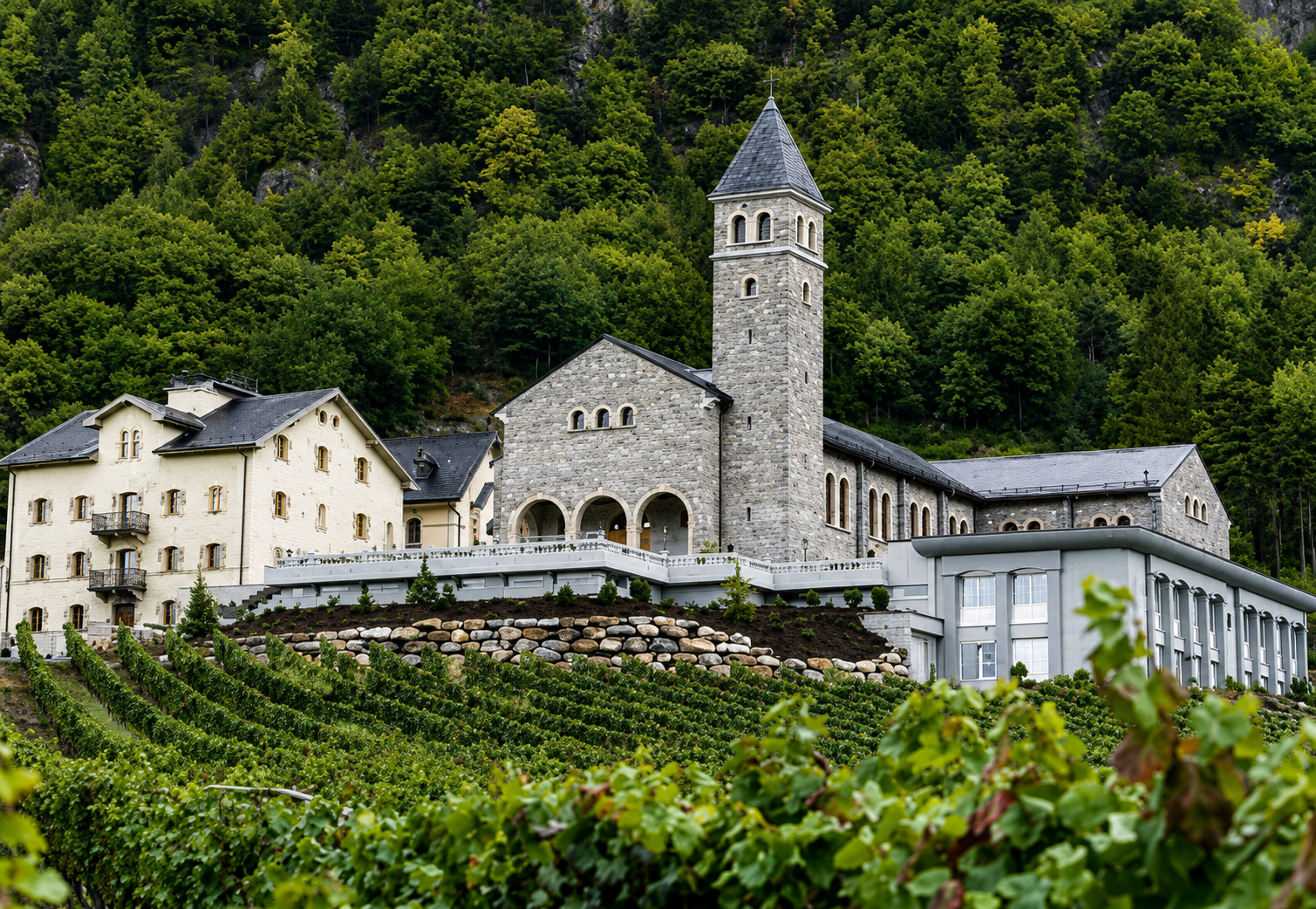
SSPX website reveals details of July consecrations and compulsory registration system
The Society of St Pius X has opened official registration for pilgrims wishing to attend the priestly ordinations and episcopal consecrations at Écône this summer, with organisers insisting that registration will be compulsory “for security reasons”. A new multilingual website launched by the seminary authorities says: “Access to the ceremonies is reserved for registered attendees. […] The Society of St Pius X has opened official registration for pilgrims wishing to attend the priestly ordinations and episcopal consecrations at Écône this summer, with organisers insisting that registration will be compulsory “for security reasons”. A new multilingual website launched by the seminary authorities says: “Access to the ceremonies is reserved for registered attendees. Please complete your registration below.” The ceremonies, which will take place from June 29 to July 2 at the International Seminary of Saint Pius X in Switzerland, are expected to attract thousands of faithful from across Europe and beyond. Visitors are asked to register according to their category, including “Faithful”, “Clergy”, “Organised Group” and “Press / Media”. The website describes the gathering as four “days of grace” centred on the priestly ordinations and episcopal consecrations in the “majestic setting of the Écône meadow”. A countdown clock on the homepage marked 43 days remaining before the ceremonies at the time of publication. The programme published by the organisers provides one of the clearest indications yet of the scale and detailed planning surrounding the event. Priestly ordinations will begin on Monday, June 29, with a Pontifical Mass of Ordination scheduled for 9am in the meadow at Écône, followed by first blessings from the newly ordained priests and Pontifical Vespers with Benediction of the Blessed Sacrament. The following day will include a series of first Masses celebrated by the newly ordained priests at various locations around the seminary grounds. The schedule published online includes Masses to be celebrated by Fr Bunge, Fr Braun, Fr Richter and Fr Hernanz. The episcopal consecrations themselves are due to take place on Wednesday, July 1, beginning at 9am, followed later in the day by Pontifical Vespers and Benediction. A final Pontifical Mass celebrated by one of the newly consecrated bishops is scheduled for Thursday, July 2. The website also includes a dedicated section titled “Our Future Bishops”, inviting visitors to “discover the priests who will receive episcopal consecration at Écône” and to “support them with your prayers and encouragement”. No further official details about the candidates for episcopal consecration had been published in the section at the time of writing. The launch of the portal appears intended not only to organise pilgrim access but also to coordinate accommodation and transport for the large international crowds expected to travel to the Swiss Alps. The organisers have published accommodation listings under sections marked “Private hosts” and “Partner hosts”, while a dedicated carpooling system allows pilgrims to offer or request transport. Users are instructed to create accounts in order to participate in the ride-sharing system, which allows searches “by city”. The seminary authorities have also published extensive logistical guidance under a “Plan my visit” section, including travel information, maps and practical instructions for pilgrims attending the ceremonies. The scale of the preparations points to the significance of the upcoming consecrations for the Society of St Pius X, founded by Archbishop Marcel Lefebvre in 1970. Écône has occupied a central place in the history of the Society since Archbishop Lefebvre established the seminary there following the reforms after Vatican II. The Swiss seminary became internationally known in 1988 when Archbishop Lefebvre consecrated four bishops without papal mandate alongside Bishop Antonio de Castro Mayer, prompting Rome to declare that the bishops involved had incurred automatic excommunication. The Vatican later lifted the excommunications of the surviving bishops in 2009 under Pope Benedict XVI, although the Society’s canonical situation within the Church remains unresolved. The forthcoming consecrations have already attracted widespread interest internationally, particularly because episcopal consecrations at Écône remain comparatively rare and historically significant events in the life of the Society. The new registration system now makes clear that attendance at the ceremonies will be tightly controlled through advance accreditation and organised access procedures. Image credit: DICI – http://www.dici.org/wp-content/uploads/2011/04/econe_11.jpg, CC BY-SA 4.0, https://commons.wikimedia.org/w/index.php?curid=53945183
May 16, 2026
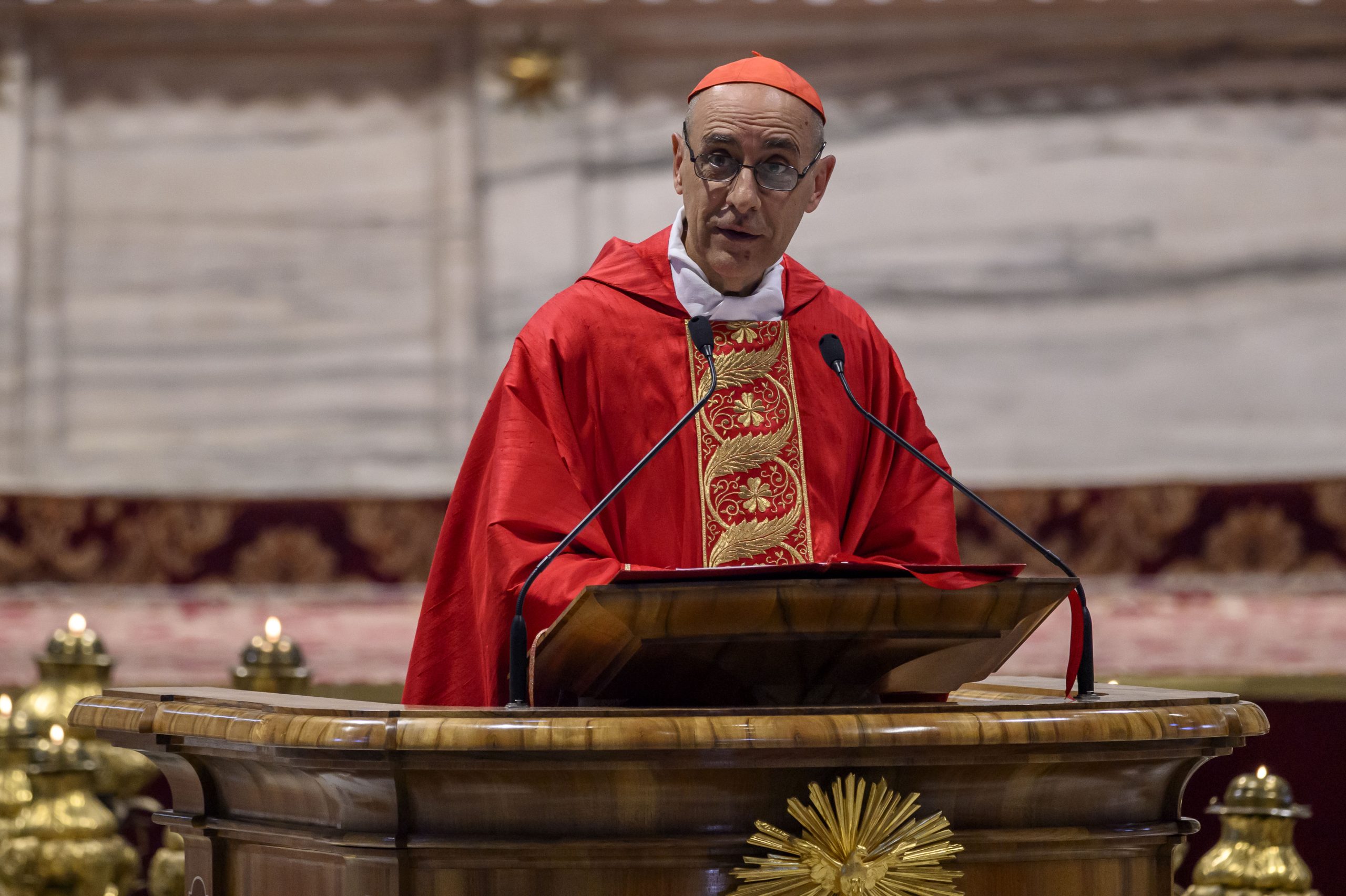
Cardinal Fernández releases statement on SSPX episcopal consecrations
Cardinal Víctor Manuel Fernández, Prefect of the Dicastery for the Doctrine of the Faith, has released a statement warning that planned episcopal consecrations by the Society of St Pius X risk constituting “a schismatic act” Cardinal Víctor Manuel Fernández has warned that the Society of St Pius X risks committing “a schismatic act” through episcopal consecrations without papal approval, in the first public intervention since the meeting with the SSPX on 12 February. In a statement released by the Dicastery for the Doctrine of the Faith on 13 May, the prefect said the planned SSPX episcopal ordinations “do not have the corresponding pontifical mandate” and reiterated the penalties attached under canon law to such an action. “The episcopal ordinations announced by the Priestly Society of Saint Pius X do not have the corresponding pontifical mandate,” Cardinal Fernández said. “This gesture will constitute ‘a schismatic act’ (John Paul II, Ecclesia Dei , n. 3), and ‘formal adherence to the schism constitutes a grave offense against God and entails the excommunication established by Church law’ ( ibid ., 5c; cf. Pontifical Council for Legislative Texts, Explanatory Note , 24 August 1996).” The statement concluded: “The Holy Father continues in his prayers to ask the Holy Spirit to enlighten the leaders of the Priestly Society of Saint Pius X so that they retrace their steps regarding the very serious decision they have taken.” The intervention followed reports earlier on Wednesday morning by Vatican correspondent Nico Spuntoni in the Italian newspaper Il Giornale that the Dicastery for the Doctrine of the Faith was preparing a text concerning the Society and the limits of its relationship with Rome. While no formal canonical decree has yet been issued, Cardinal Fernández’s statement closely resembles the warning sent to Archbishop Marcel Lefebvre shortly before the episcopal consecrations at Écône in 1988. On 17 June 1988, Cardinal Bernardin Gantin, prefect of the Congregation for Bishops, issued a public canonical warning to Lefebvre after the French archbishop announced that he intended to consecrate four bishops without pontifical mandate. “Since on June 15, 1988 you stated that you intended to ordain four priests to the episcopate without having obtained the mandate of the Supreme Pontiff as required by Canon 1013 of the 1983 Code of Canon Law, I myself convey to you this public canonical warning,” Cardinal Gantin wrote. His Eminence continued: “If you should carry out your intention as stated above, you yourself and also the bishops ordained by you shall incur ipso facto excommunication latae sententiae reserved to the Apostolic See in accordance with Canon 1382.” The letter concluded with a direct appeal to Lefebvre “in the name of Jesus Christ” to reconsider what it described as a grave act against the unity of the Church. Furthermore, the statement’s citation of a 1996 explanatory note issued by the Pontifical Council for the Interpretation of Legislative Texts recalls one of the strongest Vatican texts ever published on the canonical status of the SSPX. The 1996 document stated that the 1988 consecrations represented “the consummation of a progressive global situation of a schismatic character” and said that “the whole Lefebvrian movement is to be held schismatic”. It added: “As long as there are no changes which may lead to the re-establishment of this necessary communion, the whole Lefebvrian movement is to be held schismatic, in view of the existence of a formal declaration by the Supreme Authority on this matter.” The explanatory note also addressed Catholics attending SSPX chapels and clergy belonging to the Society. It distinguished between occasional attendance at SSPX liturgies and what it called “formal adherence to the schism”. According to the document, such adherence involved “a free and informed agreement with the substance of the schism” together with an external manifestation of separation from ecclesial communion. The text said that in the case of SSPX priests and deacons “there seems no doubt that their ministerial activity in the ambit of the schismatic movement is a more than evident sign” of formal adherence. The SSPX was founded in 1970 by Archbishop Lefebvre, a former superior general of the Holy Ghost Fathers and one of the leading conservative critics of Vatican II. Tensions between the Society and Rome escalated throughout the 1970s and 1980s over liturgical reform, ecumenism, collegiality and religious liberty. The crisis culminated on 30 June 1988 when Lefebvre consecrated four bishops at Écône without papal approval. The Holy See responded by declaring that Lefebvre, Bishop Antônio de Castro Mayer and the four newly consecrated bishops had incurred automatic excommunication. Two days after the consecrations, Pope St John Paul II issued the motu proprio Ecclesia Dei adflicta , describing the consecrations as “a schismatic act”. Relations improved significantly under Pope Emeritus Benedict XVI. In 2009 he lifted the excommunications of the four bishops as part of an attempt to facilitate reconciliation, though the Society’s canonical status remained unresolved. Pope Francis later granted SSPX priests faculties to validly hear confessions during the Year of Mercy, later extending the provision indefinitely. Local bishops were also authorised under certain conditions to delegate SSPX priests to witness marriages. Despite those concessions, doctrinal discussions between Rome and the Society have remained stalled for years, particularly over the interpretation of Vatican II and the authority of post-conciliar reforms. The Vatican statement issued on Wednesday is the first direct intervention from the doctrinal dicastery since the 12 February meeting with SSPX superior Fr Davide Pagliarani, which the dicastery described as “cordial and sincere”. The DDF reiterated that the ordination of bishops without a mandate from the Roman Pontiff would entail “a decisive rupture of ecclesial communion”, namely “a schism”, with “grave consequences for the Society as a whole”, the dicastery noted. For that reason, it proposed suspending the episcopal ordinations announced for 1 July 2026, which had been declared without papal approval. However, the SSPX rejected the proposal in a communiqué and decided to proceed with the episcopal consecrations.
May 13, 2026