

Vincent Van Gogh
The troubled faith of Vincent van Gogh
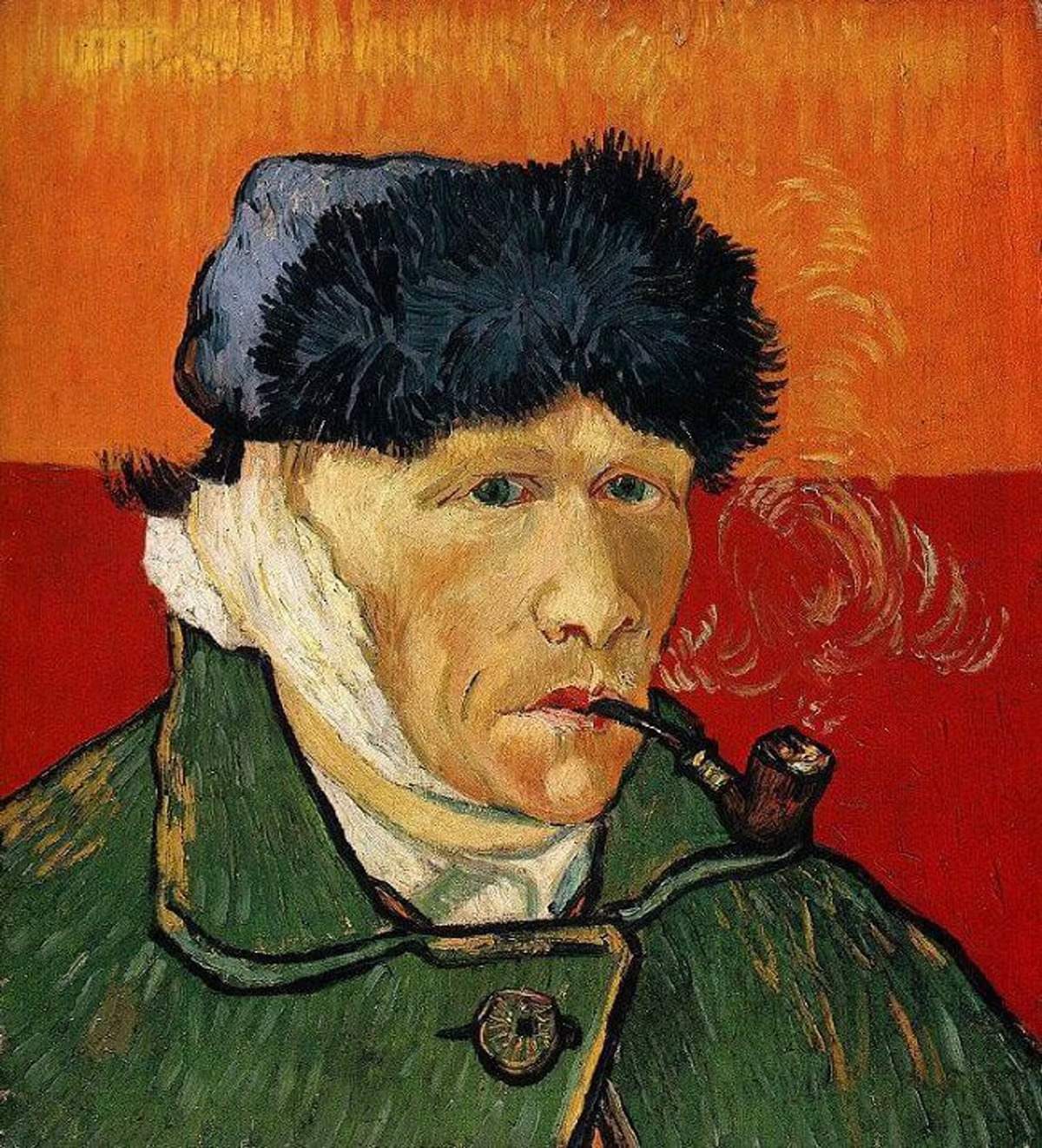
Vincent van Gogh is rarely remembered as a man of religion. However, Oscar Yuill finds that there is more than a touch of faith in the Dutch master’s life and work Sunflowers on fridge magnets, starry skies on tote bags, nighttime cafés on t-shirts: the man who sold just one painting during his lifetime ( The Red Vineyard ) is now a commercial phenomenon and arguably the most recognised and ubiquitous artist in the history of Western painting. I mean, of course, Vincent van Gogh. Biographically speaking, however, most people do not know much about him except that he cut off his ear and, shortly thereafter, shot himself. We feel little need to pry any further; it is enough that Gogh sates our appetite for the suffering artiste, an appetite that has been rumbling away since Goethe’s Sorrows of Young Werther and the Sturm und Drang of Beethoven’s late symphonies and string quartets. Indeed, if Vincent’s mind could be “heard”, especially during his year-long stay at the Saint-Paul de Mausole psychiatric hospital, it would sound, perhaps, like Beethoven’s Grosse Fugue , which was also slated by contemporary critics. But this Vincent of the popular imagination is a half-truth, and an unfair one. He was not driven by absinthe, but by faith. There are signs this is changing, but faith, especially Christian faith, has long been anathema to the mainstream artistic and cinematic industries. I suspect many galleries would sooner admit to asbestos in the ceiling than write a museum card that did not describe the West’s historical faith as though it were an Ecuadorian shrunken head. I have been to many van Gogh exhibitions. They usually consist of luscious reproductions, sometimes originals, of only the secular favourites: Sunflowers , Starry Night , Wheatfield with Crows , etc. One gallery in London promised a “retina-battering, virtual-reality post-Impressionist extravaganza”. None of them covered the central moral and aesthetic wellsprings of the artist’s heart. None of them, that is, featured Pietà (which can be found in “Room 2” of the Vatican Museum), The Raising of Lazarus , or Parable of the Sower . Vincent’s early letters read like sermons by the Church Fathers. “Hold on to what you have,” he wrote to his brother, the aptly named Theo. “I long so fervently for the goal you know of. But how can I attain it? … It takes so much hard work to become a Christian labourer and a preacher of the Gospel and a sower of the Word.” He spoke from experience. Long before he took up the brush, Gogh slept in barns, subsisting on bread, water and wine, and preached the Good News to coal miners in the Belgian Borinage. “I want to be bound to Christ with unbreakable bonds,” he wrote elsewhere, “to be sorrowful yet always rejoicing. To live in and for Christ, to be one of the poor in His Kingdom, steeped in the leaven, filled with his spirit, impelled by His love, reposing in the Father.” These are not the words of an agnostic; they are the words of a fanatic. But this excess de zèle soon brought him to the attention of the Evangelisation Council of the Dutch Reformed Church, which promptly expelled him from its hierarchy (such as it was). The whole affair left him deeply wounded. Nor was it the last time he would be ostracised and scapegoated. Gone sour on organised religion, his letters hereafter shift tonally from the supernatural to the natural. If the contemporary secular world finds it so easy to overlook his faith, it is because he himself chose to step back from it. Not, however, inwardly. His faith was too deep simply to vanish along with the religious subject matter of his youth. Rather, it found a gentler, subtler expression in even his most famous paintings. Consider Café Terrace at Night . I have myself been to this café, now rather a grotty tourist trap, in Arles. Gogh’s rendering appears to be little more than a post-Impressionist gloss on an otherwise perfectly naturalistic scene. But upon closer inspection, the painting is nearly medieval in its rich symbolism. Twelve people are seated around an enigmatic thirteenth figure (the waiter), and to the left, by the door, stands a shadowy figure all in black. It has been suggested that the waiter is Christ, the twelve His disciples, and the shadow Judas. The window behind the waiter even forms a cross. It is difficult to unsee this interpretation. Another example: I have always wondered whether Wheatfield with Crows , one of his last paintings, at once so dark and so hopeful, is not in fact Golgotha. The wheat is swept up in a strong wind as though something of incalculable magnitude has just occurred: “And behold, the curtain of the temple was torn in two, from top to bottom; and the earth shook, and the rocks were split” (Matt. 27:51). The three paths suggest a cross or the Trinity; and the way the middle path peters out into a distant point under the light of the moon (or cloud?) suggests an eschatological peace. Wishful thinking or no, it is reasonable to believe that the fiery missionary of Borinage was at work to the end. Faith informs a person in more ways than one, and certainly in more ways than the obvious. “Try,” says Gogh, “to grasp the essence of what the great artists, the serious masters, say in their masterpieces, and you will again find God in them. One man has written or said it in a book, another in a painting.” He could never have known that he would rank among those masters; he had no reason to suppose the future would resurrect him, much less celebrate him. But then, as he said: “The nature of every true son does indeed bear some resemblance to that of the son who was dead and came back to life.” Though deeply flawed, alcoholic, self-harming, capricious, there was, I am convinced, something of the saint in that red-headed Dutchman. He was like a child, indeed was frequently bullied by the children of whichever village he happened to be staying in, and thus closer to God. He saw things no one else saw, and “inscaped” them (to use Manley Hopkins’s terminology) in ways no one else could. Van Gogh will never be canonised. But despite being such a messy, pipe-smoking, absinthe-sodden wastrel, he can, in the manner of a saint, help us get a little closer to that mysterious beauty at the heart of human suffering.
May 11, 2026