

Vetus Ordo
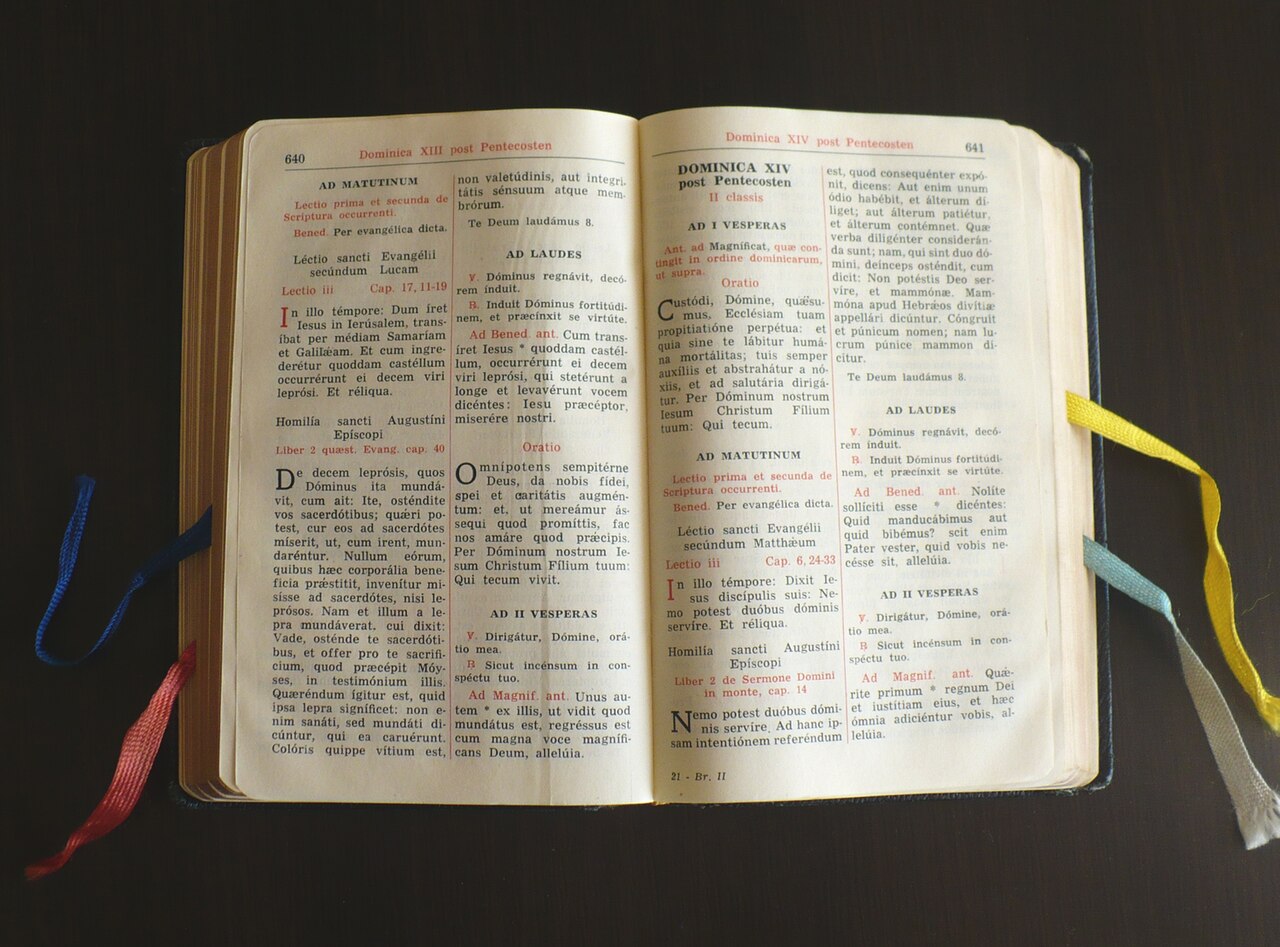
Inside Introíbo: the free Latin Mass app turning phones into missals
A new app designed to help Catholics navigate the Traditional Latin Mass has been downloaded thousands of times within days of launch. Built by convert Holden Cole, Introíbo includes the full 1962 Missal, Divine Office, rosary, traditional calendar and more, all completely free and available offline In recent years there has been a sustained and growing interest in the Traditional Latin Mass. Cradle Catholics and converts alike have found a depth and beauty in the older form of the liturgy that stands in contrast to the perhaps well-intentioned, if misguided, reforms erroneously inspired by the Second Vatican Council which have, in some places, turned liturgy into entertainment. This transformation of the liturgy into entertainment is an attempt to be “relevant” in the modern world. However, relevance, meaning to be closely connected or associated with modernity, is precisely what many people crossing the threshold of a church seek to avoid. There is little attraction in getting up on a Sunday morning to hear more of the contemporary culture that is corrosive to the human heart. If schools, media and workplaces already provide a steady diet of “progressiveness”, why would people want to go to church for more of the same? For many, the Latin Mass is the antithesis of this progressiveness. However, those who begin attending the Latin Mass often find themselves plunged into something radically different. The ancient, yet new, liturgy can be difficult to follow, conducted in another language and according to a different calendar. While the mystery and subtlety entice the would-be Mass attender, the sound catechesis that once helped the faithful enter into these mysteries has been lost through generational neglect. Fortunately, the new generation of converts to the ancient liturgy has brought with it a healthy dose of convert’s zeal, inspiring new ways of introducing the Traditional Latin Mass to the next generation. One such example is the app Introíbo , which offers users the complete 1962 Missal, the Divine Office, the rosary in Latin, the Stations of the Cross and the traditional calendar all in one place. Designed for practical use, the app automatically opens each day to the liturgical feast and its rank, the season, the properly observed traditional calendar, the day’s penitential observance and a psalm verse in both Latin and English. From there, users can access the Mass, including the full Ordinary of the 1962 Roman Missal with the proper texts for every day of the liturgical year, alongside the Roman Canon in parallel Latin and English text. The app also includes an examination of conscience and a library of traditional prayers. There is even a small school for learning ecclesiastical Latin through the prayers themselves, as well as spiritual practices drawn from the saints. Holden Cole, the app’s creator, is himself a convert, having recently celebrated three years since his reception into the Church. Initially attending a Novus Ordo Mass, he was first introduced to the older form of the liturgy by the Priestly Fraternity of St Peter in Florida. “I completely fell in love with the Latin Mass,” Cole explains. “Since then I’ve gone every Sunday, sometimes several times a week if I can. It is the thing that has most deepened my Catholic faith.” His motivation for building the app was born primarily out of necessity. “I was looking for something useful, something that had the Mass prayers on a phone and could help me appreciate the Latin more deeply.” Despite having no publicity team behind him, Cole’s app has been an immediate success, having been downloaded 3,500 times in its first week. He remains ambitious about its future and is keen to continue devoting his time to the project. “It doesn’t feel like work when I’m doing it. It’s more a labour of love.” There is still more he hopes to add, explaining: “The app is still a work in progress. I still have a roadmap I’m working through with ideas for future features.” Perhaps most remarkably, Cole has kept the app free, with no adverts or tracking, and has made it fully available offline. His hope is simply that others might have their faith enriched by the ancient liturgy that has so enriched his own. Readers who wish to find out more or download the app themselves should visit: introiboapp.com
May 20, 2026
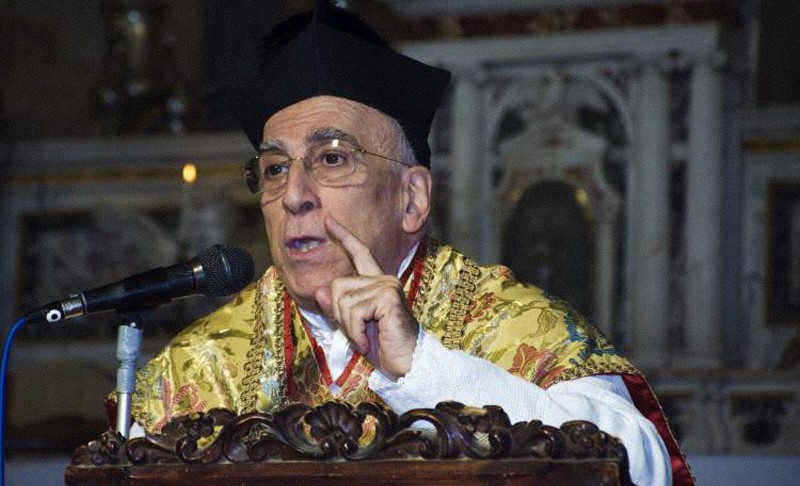
Monsignor Bux: ‘The crisis of the liturgy is the crisis of the Church’
Monsignor Nicola Bux speaks to AdVaticanum about the SSPX, Traditionis Custodes, the “reform of the reform”, women’s ordination, Anglicanism and what he describes as the Church’s liturgical and doctrinal crisis under the post-conciliar era Monsignor Nicholas Bux is a priest and theologian whose work has spanned academia, pastoral ministry and service to the Roman Curia. Born in Bari, southern Italy, in 1947 into a modest family, he studied at the Pontifical Gregorian University before being ordained in 1975 by Archbishop Anastasio Ballestrero, the Discalced Carmelite archbishop later known for overseeing the first modern scientific examination of the Shroud of Turin in 1978. A specialist in Eastern liturgy and sacramental theology, he obtained a doctorate at the Pontifical Oriental Institute and went on to teach in his native Bari, Jerusalem and Rome. His service to the Holy See began under Pope John Paul II, who appointed him a consultant to the Congregation for the Causes of Saints and the Congregation for the Doctrine of the Faith. A collaborator of Cardinal Joseph Ratzinger, later Pope Benedict XVI, he contributed to synodal preparations and Eucharistic texts, and later served during Benedict XVI’s pontificate in roles connected to synodal assemblies and papal liturgies. AV: Monsignor Bux, since leaving Rome and your responsibilities in the Roman Curia, what have you been doing? How have you been spending your time? Are there any particular projects, writings or pastoral activities you are currently working on? How did your work and apostolate develop following the resignation of Pope Benedict XVI, particularly during the pontificate of Pope Francis? Monsignor Nicholas Bux: After concluding my collaboration with the Congregation for the Doctrine of the Faith and the Office for the Liturgical Celebrations of the Supreme Pontiff upon Benedict XVI’s resignation, I continued working until 2019 with the Congregation for the Causes of Saints and until 2021 with the Congregation for Divine Worship. Having reached the age limit for teaching theology in a faculty, I have continued giving conferences in Italy and abroad, and publishing on topics related to Eastern liturgy, ecclesiology and ecumenism. During the pontificate of Pope Francis, in which the Magisterium experienced a serious crisis, I devoted myself to explaining the reasons why one must remain in the Church, resisting despotic forms and avoiding the mistake of placing oneself outside it. By dying within the Church – like the grain of wheat that falls to the earth – one contributes to overcoming the crisis and renewing it. Together with theologian friends, we promoted the Scuola Ecclesia Mater, an Italian network of clerics and laity, with study sessions and spiritual exercises. Along with Cardinals Caffarra, Brandmüller, Burke and Sarah, we continue to advance the idea and practice of the “reform of the reform” of the liturgy and the Church according to the thought of Pope Benedict, as well as the international Summorum Pontificum pilgrimage at the end of October in Rome. I can say, in light of the Pope’s latest address to the French bishops, that we were right. AV: Looking back on the years spent in the Curia, particularly your service at the Dicastery for Divine Worship and the Discipline of the Sacraments, what were the most significant challenges or moments you faced? NB: In 2009, after a plenary meeting of the Congregation that had decided to propose to the Pope the inclusion in the Missal of certain rites from the Vetus Ordo Missae – for example, the Offertory, to be used ad libitum – the news was leaked by someone, and an alarm was sounded by those who feared an attack on the post-conciliar liturgical reform, so everything was stopped. Another issue we began to address was that of mega-concelebrations. The rite of concelebration promulgated by Paul VI in 1965 prescribed no more than 50 concelebrants so that they could “stand around the altar”, even if not all could immediately touch the altar table and pronounce the words of consecration over the bread and wine. These are the intention and external action required for a true concelebration and simultaneous consecration. Otherwise, saying “This is my body … this is the chalice …” does not correspond – to use the liturgists’ terms – to the truth of the sign, because one should say “That is my body …” These are the conditions for the validity of a concelebrated Mass, so that it is sacramental and not merely a ceremony, as Pius XII affirmed. The limit set by Paul VI has disappeared in the current Missal, so doubts arise about the validity of the celebration when the number of concelebrants overflows the presbyteral area or when it takes place outdoors in enormous spaces, where non-liturgical equipment of the concelebrants is added – hats, sunglasses, water bottles and cameras. AD: You were in the Curia during the period of negotiations with the Priestly Society of Saint Pius X (SSPX). In light of the Society’s recent decision to proceed with episcopal consecrations without a papal mandate, what is your current judgment on the SSPX? NB: Setting aside the good intentions of individuals, over time the Society has lost the vital sap of Catholic thought, as already happened with the Orthodox. Catholic thought flows only if one remains united to the main tree, despite the weakening of the Magisterium. Otherwise, one arrives at a museum-like conception of Tradition. One can understand the fears, but it is not justified to remove oneself from the Church in order to self-preserve. The organic development of doctrine, to use the expression of the new Doctor Saint John Henry Newman, is thus lacking. The Church is a mother and one must allow oneself to be corrected, because a true Christian must accept dying, and at the time established by God, will be reborn to new life, as has happened with the charisms of the Saints. Where Peter is, there is the Church: one cannot disregard this visible principle of unity willed by Jesus Christ, in relation to the invisible one, which is the Holy Spirit. AV: Pope Leo XIV recently sent a letter, through Cardinal Parolin, to the French bishops, urging them to find “generous” pastoral solutions for communities attached to the Traditional Latin Mass ahead of their plenary assembly. What does this letter indicate about the current pontificate’s approach to the Traditional Latin Mass, and how do you interpret its tone in light of Traditionis Custodes? NB: The antiquior usus of the Mass has resisted for over sixty years; this is the reality and we must take note of it, just as Saint Pius V did with rites that were over two hundred years old at the time of the Tridentine reform. With this realism, Benedict XVI stated: “What earlier generations held as sacred, remains sacred and great for us too, and it cannot be all of a sudden entirely forbidden or even considered harmful. It behooves all of us to preserve the riches which have grown in the faith and prayer of the Church, and to give them their proper place” (Summorum Pontificum, 10). It seems to me that Pope Leo wants to recover this “gaze” and has invited the French bishops and the faithful of Christian communities – traditional or not – to look at each other fraternally. It seems to me that the Pope wants, in an Augustinian way, to let consensus mature from within the ecclesial community: bishops, priests and faithful. I am certain that gradually, in this way, the other episcopates will be led to do the same in their dioceses. AV: Does accepting the Second Vatican Council require Catholics to accept the post-Vatican II liturgical reform in its current form? NB: The liturgy is the epiphany of the Church, which gathered solemnly in the Second Vatican Council, celebrated it constantly in the form then in force during its sessions, thus becoming an integral part of that infallible Magisterium, as stated in the Catechism of the Catholic Church (cf. 891). When the Church gathers in Council, it performs a liturgical act because it places itself in adoring listening to God. For this reason, Benedict XVI, in his address to the Roman Curia on December 22, 2005, invited us to read the event as “reform in the continuity of the one subject Church.” With this gaze towards God, the Council elaborated as its first document the liturgical constitution Sacrosanctum Concilium, and Paul VI established a Consilium to implement it. However, one cannot identify the Council tout court with the work of the Consilium, because it was not without defects. Cardinal Ratzinger observed: “Anyone who thinks that not everything in this reform has been successful, and that some things are modifiable or even need revision, is not for that reason an enemy of the Council.” Therefore, the equation does not hold: accepting the validity of the Second Vatican Council means accepting the liturgical reform that would express the reality of the liturgy intimately linked to the vision of the Church in Lumen Gentium, as the text distributed by Cardinal Roche at the Consistory last January seems to suggest. Instead, Benedict XVI intended to apply the Liturgical Constitution, safeguarding “legitimate diversities” – that is, the pluralism of rites – and, at the same time, “the substantial unity of the Roman rite” (SC 38). With the motu proprio Summorum Pontificum, he restored the ancient Roman rite, which had never been juridically abrogated. AV: How do you assess the current liturgical crisis in the Church, and what steps do you believe are necessary for authentic liturgical renewal and a true “reform of the reform”? NB: The Holy Father placed the Liturgy on the agenda of the Consistory, proposing to the Cardinals an in-depth historical, theological and pastoral reflection “to preserve the healthy tradition and yet open the way to legitimate progress” (SC 23). To preserve tradition and progress legitimately, one must understand the nature of the liturgy. “The crisis of the Liturgy, and therefore of the Church, in which we continue to find ourselves,” affirmed Benedict XVI, “is due only to a minimal extent to the difference between the old and new liturgical books.” It is becoming ever clearer that, behind all the controversies, a profound dissent has emerged concerning the essence of liturgical celebration, its derivation, its representative and its correct form. At first, Paul VI was convinced that the liturgical reform had translated and supported the indications of the Liturgical Constitution. But arbitrary experimentation continued, which sharpened the nostalgia for the ancient rite. Thus, in the Bull Apostolorum Limina for the proclamation of the 1975 Holy Year, regarding liturgical renewal, he stated: “We consider it extremely opportune that this work be re-examined and receive new developments.” John Paul II, in the apostolic letter Vicesimus quintus annus of 1988, spoke openly of “erroneous applications.” Now, the Dicastery, before anything else, if it wants to render a service to all Catholics, must have the courage to clarify the causes, promoting the study and full publication of the documents of the Consilium for the implementation of the Constitution on the Sacred Liturgy, preserved in its archive. This is a wish addressed to the Holy Father in the book La liturgia non è uno spettacolo, co-authored by myself and Saverio Gaeta. I believe we must proceed with the “reform of the reform” proposed several times by Joseph Ratzinger, which begins “from the presence of the sacred in hearts, from the liturgy and its mystery”. In truth, there are already signs: the spread of Eucharistic adoration, receiving Communion kneeling and on the tongue, rediscovering the traditional liturgy in which silence and the Mystery of the Lord’s Presence in His Church prevail, beginning from its heart, which is the Eucharist, the Divine and indeed “Sacred Liturgy”. What would happen if the priest’s orientation ad Deum or towards the Cross were permitted during the Eucharistic Liturgy of the Mass, as the clearest sign of continuity with the apostolic tradition and that of the East? This rebirth of the sacred is the condition for the renewal of the Church. Monsignor Bux and John Paul II AV: Turning to ecumenism, the Church of England has just installed Sarah Mullally as the first female Archbishop of Canterbury. In your view, what does this development mean for today’s Catholic-Anglican relations, especially regarding apostolic succession, the ordination of women and the possibility of true theological convergence? NB: There is a contradiction: on the one hand, at least 700 Anglican pastors are welcomed into the Catholic Church – a sign of the profound crisis of the Anglican Communion, which in Great Britain records only 2 per cent Sunday attendance – while on the other hand, a congratulatory message from the Pope is sent for the installation of the so-called primate Sarah Mullally. “So-called” first of all because her office is null, as she is a woman who, according to Catholic teaching, cannot be ordained to the priesthood; then, as a member of the Anglican Communion, her ordination is invalid – otherwise one would not understand why we established Ordinariates to re-ordain bishops and priests coming from it. Finally, because she is not effectively the Primate of Canterbury, since two-thirds of Anglicans do not recognise her as such. It is true that, as Christians, we are united in baptism, but we do not agree on everything that belongs to Christ, John Paul II said to German Protestants in November 1980, primarily on the sacraments. Has no one at the Council for Christian Unity noticed this and told the Pope? Do they not realise that, with such behaviour, many Catholic faithful are scandalised? If one really did not want to tell the truth, it would have been better not to send any message at all. AD: The Church continues to face a serious vocation crisis in many parts of the West. A common response has been the creation of “pastoral units” or groupings of parishes to address the shortage of priests. Do you see this as a real solution, or does it risk becoming an illusion that simply masks a strategic retreat from the traditional understanding of priestly ministry in the Church? NB: Since the post-conciliar period, the number of priests has decreased dramatically, and today in Europe about 10 per cent of the baptised go to Mass. Among the causes are the crisis of the family and the failure to transmit Catholic thought in catechesis to the younger generations. It was also a mistake to admit girls to altar service in place of the “little clergy”, the nursery of vocations. Then, despite the immense paper production by the Italian Bishops’ Conference on the urgency of announcing the Gospel to those far away, instead of strengthening capillary presence in the territories, they invented “pastoral units” – a fig leaf to cover the strategic retreat due to the shortage of priests. When will it be understood that so-called “pastoral care” begins from the deep unity of the Church, which in turn is nourished by the diversity and identity of individuals and groups that together constitute Tradition – and that innovation occurs only from within it? Isn’t that precisely what the word “Tradition” indicates? AV: In contemporary debate, there is often talk of adapting the liturgy and ecclesial institutions “to man” and “to the times”, but these expressions are rarely accompanied by a clear explanation of what is really meant by “man” or “times” in light of the Church’s perennial mission and the deposit of faith. What is your theological evaluation of this approach? NB: In the Second Vatican Council’s liturgical constitution (SC 48), there is mention of the need to adapt the liturgy to the needs of our times (cf. also 1, 4, 107, 110), but it is never explained exactly what these are. The discussions among the conciliar fathers in the three drafts leading to the final version provide no further information on these expressions. In a positive sense, it could mean that we need to present the Gospel in ever new ways in every age. In a negative sense, it could mean that our age is so unique that we must adapt the Gospel and divine worship to it – that is, to ourselves. Perhaps, in the post-conciliar liturgical reform, this second interpretation prevailed, but without reflection, as if it were something obvious and therefore required no explanation. Thus, the “legitimate progress” that was to be balanced by “healthy tradition” (SC 23) has become a “pathological search for novelty”, just as Cardinal Roche notes in the text distributed at the Consistory. AV: Monsignor Bux, thank you very much for being so generous with your time and for your years of priestly ministry.
May 7, 2026
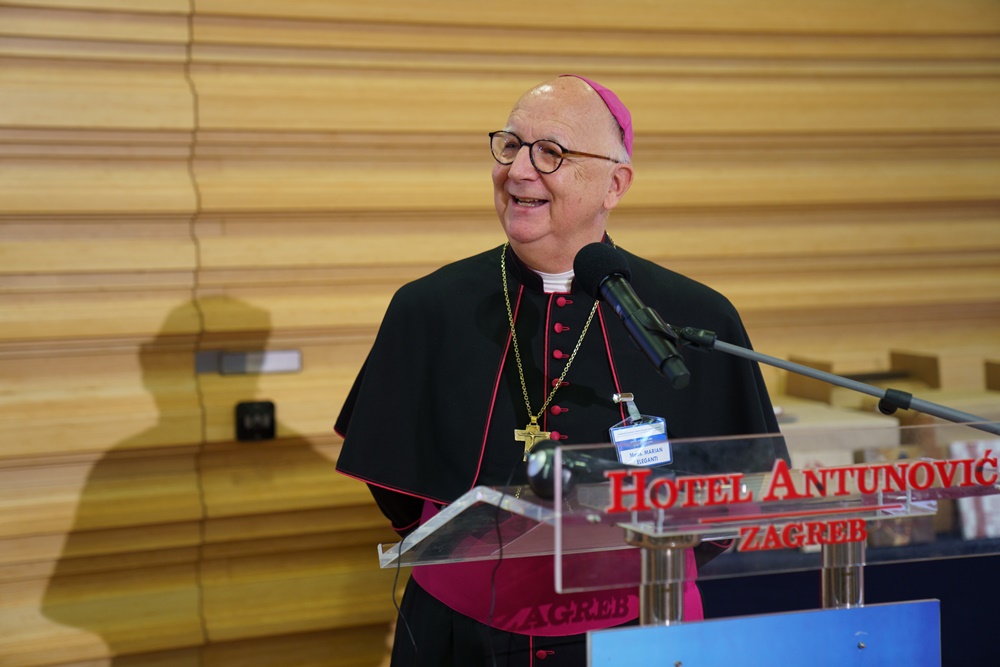
Bishop Eleganti on the old rite, Islam and the future of the Church
Bishop Marian Eleganti speaks to AdVaticanum on the appeal of the traditional liturgy, Islam and the Society of St Pius X. Eleganti addresses the fallout of the Second Vatican Council, the place of the old rite and the pertinent questions facing the Church in the West The Benedictine Bishop Marian Eleganti, former Abbot of St Otmarsberg Abbey and auxiliary bishop of the Diocese of Chur until 2021, is well known for his defence of the truth and beauty of Catholicism in the face of an increasingly hostile West. A principled churchman, he has often paid the price for adhering to his conscience, stepping down as the Swiss bishops’ youth bishop in 2018 due to disagreements with other bishops at the 2018 Youth Synod and offering his resignation in 2021 at the age of 65, a full ten years before the mandatory retirement age for bishops. In this interview, he sits down with AdVaticanum to reflect on his years of priestly ministry and to offer his erudite analysis of the challenges facing the Church in the twenty-first century. He addresses Islam, the Society of St Pius X, the liturgy and the fallout of the Second Vatican Council with the characteristic clarity that has made him a much respected voice within the Church. AV: Your Excellency, you were born in 1955 and have recounted serving as an enthusiastic altar boy in the traditional rite in your childhood before being retrained for the Novus Ordo. You have described the post-conciliar liturgical intervention as “a rather violent, provisional reconstruction of the Holy Mass… associated with great losses that need to be addressed”, noting differences especially in the prayers, postures, and ad orientem orientation. Young Catholics today, who often know little about the texts of Vatican II, are increasingly drawn to the Tridentine rite for its beauty and transcendence. In your view, what specific elements of the ancient liturgy address the spiritual hunger of this generation, and how would you respond to claims that restricting the Traditional Latin Mass is necessary for ecclesial unity? +ME: I believe that the appeal of the Old Liturgy for young people lies primarily in several key aspects. Firstly, its focus, and the centrality, on God or Christ, rather than on the community. The general orientation of everyone (the congregation and the priest) is towards Him. Another is the palpable reverence associated with the encounter with the transcendent God or the present Christ. There is also the stillness and silence, reminiscent of the worship of the Lamb in the Book of Revelation. I believe people are also drawn to the solemnity and dignity of the vestments, liturgical objects, and the altar, as well as the overall design of the sanctuary. Finally, Gregorian chant, which has been a trend for some time, even in secular circles. Reverence, faith, prayer, love, and inner devotion or participation have their roots in the heart. They can be found just as easily in the Novus Ordo. I am the same person in any rite. How I stand before God and celebrate Him is decided within me. It is not the form that makes me devout. Devotion is either present or it is not, regardless of the form. The inner self then also takes on the proper mode of expression; it does not work the other way around. I kneel because I am devout; I am not devout because I kneel. If a form becomes associated with false thinking, it can become a divisive force and a question of “to be or not to be”, which a rite never is. Every form has advantages and disadvantages, and the wise person distinguishes without doing wrong. Why did Jesus call the outwardly righteous Pharisees whitewashed tombs? The discrepancy between what is inside and what is outside can be very great, whatever form it takes. AV: Building on your recent calls (including in early 2026 reflections) for renewed study of the liturgical crisis under a new pontificate, such as the marginalisation of the tabernacle and overemphasis on the “meal character”, do you see a path for restoring wider access to the Tridentine rite beyond the restrictions of Traditionis Custodes? What concrete pastoral measures would you recommend to bishops to allow the old liturgy to flourish again as a living treasure? +ME: We have so many rites in the Catholic Church. We should accept them for what they are: mere rites. We must infuse every rite with love and devotion; otherwise, it misses its mark. The Old and New Rites, as such, have nothing to do with whether we recognise the Council or not, or how we deal with its texts or reforms. These questions are not to be resolved at the level of the rites. Whether the New Mass corresponds to the vision of the Council Fathers who inspired it is a historical question. The answer may vary. Why don’t we simply give hearts the freedom to pray as they wish and to honour God as they like, without disqualifying any person or rite? The Church must set the framework for this. That is not a problem. Rites are not absolute. In a validly administered sacrament, the believer always finds God, regardless of the rite, provided, of course, that the sacraments are celebrated as the Church prescribes and with the inner attitude and dignity I have described above. AV: Your Excellency, you have described the post-Vatican II era as bringing “an indescribable decline in the practice and knowledge of the faith, widespread liturgical formlessness and arbitrariness” instead of the expected “springtime”. Official statistics from the Annuario Pontificio 2026 and Annuarium Statisticum Ecclesiae 2024 confirm a 13-year decline in priestly vocations that has accelerated recently, with major seminarians worldwide falling from 106,495 in 2023 to 103,604 in 2024 (a 2.72% drop), following prior yearly declines, with Europe seeing particularly sharp losses and a net global priest decrease of 734 between 2022 and 2023 despite Catholic population growth. What, in your view, are the specific post-conciliar developments or practices that have contributed to the excesses and loss of the sacred, and how should they now be corrected within the life of the Church? +ME: On the topic of the Old Rite, we must remember the causes of this phenomenon do not lie in the Novus Ordo. The Council Fathers had intended a modest liturgical reform. Excesses, lack of form, trivialisation of the sacred, liturgical disobedience, community-centredness, the absence of priests, or even a hostility towards priests, are phenomena of the post-conciliar era that cannot be attributed to the Council’s texts, any more than post-conciliar heretical tendencies can. The worst of all evils is the practical irrelevance of God in our society and the turning away from Christianity, which has been replaced by ideologies or other forces that have an extremely destructive effect on everything that was once sacred to the so-called Christian West. Nothing better has taken its place. This is becoming increasingly clear. AV: Specifically, focusing on vocations, this multi-year decline has hit Europe and the Americas hardest, with empty seminaries and ageing clergy in many places, while Africa and Asia show some growth. What would you propose to reverse it? +ME: There are many young converts and those seeking baptism. They want to build Christian marriages and families. This is where we need to invest our efforts. We must impart knowledge of the faith to children and young people, provide them with support, and introduce them to the sacraments; we must accompany young families. As a parish priest, I would begin by celebrating Holy Mass as deeply and beautifully as possible, accompanied by brief catechesis. Following the liturgy: fellowship, love, and joy; parents forming friendships, children getting to know one another and playing together. People and charisms gather around every devout priest. With Holy Mass at the centre of life, the Church begins to renew itself. If the priest is a bride in love, the community he gathers around him will soon be the same. This brings an unimaginable momentum. AV: In your October 2025 article “Homosexuality in Society and in the Church: An Elephant in the Room”, you identified the “widespread homosexuality in the clergy and its significance in the abuse crisis” as the ignored “elephant in the room”, calling it a phenomenon sui generis with negative consequences that must be named, while noting that silence renders other prevention efforts incomplete. What pastoral experience or observations led you to this conclusion, and do you think enough is being addressed openly despite earlier calls for psychological screening? +ME: This is not a matter of my own subjective impressions or pastoral experience, but of pure statistics. I wrote to Pope Leo XIV about this. All Church studies on abuse show a disproportionately high number of male victims. It does little good to turn a blind eye to this. There is a factual correlation, without implying that clergy with a homosexual orientation are predestined to commit abuse because of their orientation. The same applies to heterosexuals. There are also many cases of sexual abuse outside the Church, but society primarily focuses on and is scandalised by those within the clergy. To sin means: I could have acted differently, but everyone has their own preferences. AV: As auxiliary bishop emeritus of the Church in Switzerland, you have witnessed the challenges of secularisation in the country. What is your current assessment of the state of the faith in Switzerland, and are there any emerging Swiss “hotspots” of renewal among younger generations rediscovering the faith? +ME: Generally speaking, I give the Swiss very poor marks when it comes to their spiritual life and their connection to the Church. While most of them have been baptised, they have never truly become disciples of Jesus. I say this merely as an observation. It may not necessarily be their own fault. That said, there are genuine hotspots of faith. As the bishop for youth, I was right in the thick of it. Even today, I rejoice in the growth of these hotspots. AV: Your Excellency, you have been clear in your statements that the SSPX’s planned episcopal consecrations on 1 July 2026, without papal mandate, would constitute a “schismatic act” rupturing visible unity with the Pope, citing issues of autonomy, non-incardinated priests, and self-positioning as the true Church. What is the current attitude towards the SSPX within Switzerland? Do you perceive growing support for the SSPX among the faithful? +ME: The Society of St Pius X has gone to great lengths to justify its decision, both internally and externally. Many faithful simply love the traditional liturgy without truly identifying with the Society’s ideology. They are, in fact, often put off by what they sometimes encounter in parishes. I would not say that there is growing support for the Society of St Pius X among the faithful. AV: On the broader European scene, Cardinal Gerhard Müller has recently described mass migration from Islamic countries into Europe as posing significant challenges to integration, warning of risks such as cultural strain, potential social conflict, and growing Muslim influence in public life if not managed carefully. Your Grace, how do you assess the compatibility of large-scale Islamic immigration with preserving Europe’s Christian identity? What role should the Catholic Church play in addressing this, balancing the Gospel’s call to charity and welcome with a realistic consideration of the demographic, religious, and social shifts underway? +ME: Islam, not just so-called Islamism, is, by its very nature, an anti-Christian religion, in theory and in practice. Christianity has never fared well under Islamic rule. This remains true today. Wherever Islam holds sway, Christianity is being decimated to the point of near extinction. I consider Islam incompatible with the Western idea of freedom and the secular state. Ultimately, only the numerical balance will decide which of the two, Christianity or Islam, will disappear and perish or remain in a state of tolerance. Even secular political entities like the European Union exhibit anti-Christian traits today. Due to Islam’s incompatibility with the Christian idea of the separation of state and politics and church and religion (“Render unto Caesar what is Caesar’s, and unto God what is God’s”), I consider Islam to be incompatible with the Judeo-Christian tradition of the West, which still strongly shapes our thinking and political system. The more Muslims are naturalised into our societies, the worse it could become unless Christ converts them and sets them free. AV: And finally, Your Excellency, could you offer your thoughts on the recent scandal in the Diocese of Chur, Switzerland, where three people shared the Eucharist with their pets? +ME: I cannot understand why the Holy Eucharist is celebrated in connection with the blessing of animals. Animals do not belong in a sacred space. They can be blessed outside the church, if one wishes. It is simply terrible that the sacraments, above all the Holy Mass, are no longer understood. The Holy Eucharist is viewed by many as a mere symbol and treated accordingly. But it is the Body of Christ, that is, the living, mysteriously present Person of the Lord. It causes me great pain to hear of such profanations. AV: Thank you, Your Excellency, for your continued dedication to the Church.
Apr. 30, 2026
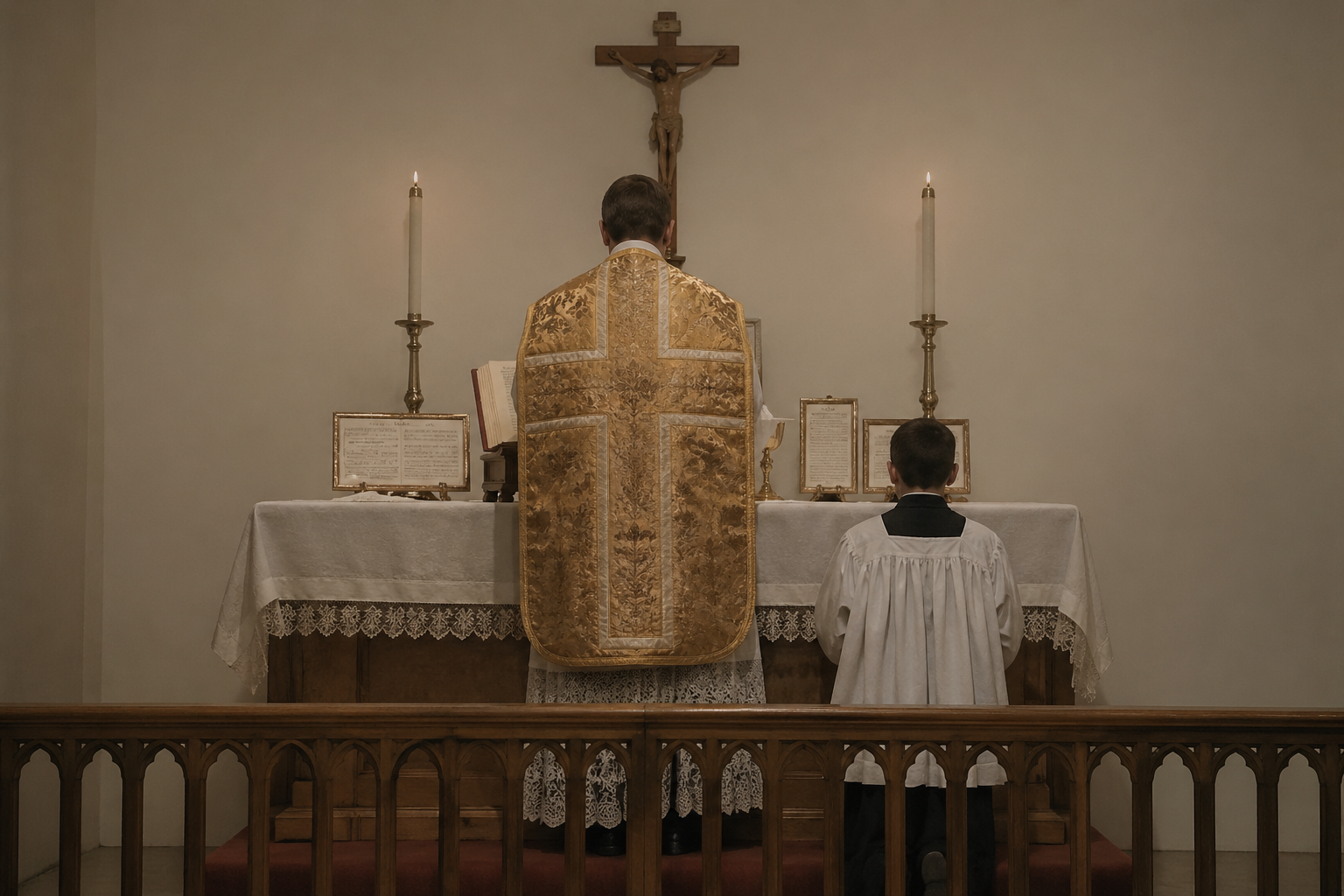
Vatican examines appeal over Charlotte liturgical restrictions
The Vatican has confirmed it is reviewing a formal appeal over liturgical decisions in the Diocese of Charlotte, including restrictions placed on the Traditional Latin Mass The Vatican has confirmed that it is reviewing a formal appeal concerning liturgical decisions taken by Bishop Michael Martin in the Diocese of Charlotte, according to a letter issued by the Dicastery for Divine Worship and the Discipline of the Sacraments. The letter, dated 16 February, states that the dicastery has “received a hierarchical recourse” regarding the bishop’s “apparent refusal” to respond to “requests concerning liturgical matters”. It adds: “The Dicastery will proceed to examine the Acta, which have been assigned protocol number 369/25.” The appeal itself was filed on 9 February. The acknowledgement confirms that the case has formally entered the Vatican’s administrative process, though no indication has been given as to how long the review may take or what outcome may follow. The appeal arises after a series of liturgical measures introduced in Charlotte over the past year. Most notably, Bishop Martin ordered that the Traditional Latin Mass be discontinued at parish churches in the diocese and restricted to a single location outside the city. Changes have also been implemented at parish level. Directives issued within the diocese have included the removal of altar rails and kneelers used for the reception of Holy Communion. These measures prompted concern among clergy, and in January a group of diocesan priests submitted a dubia to the Dicastery for Legislative Texts, questioning the legal basis of the restrictions. Additional controversy followed the circulation of draft liturgical norms, which proposed limits on the use of Latin, the celebration of Mass ad orientem, and certain traditional vestments and practices. The Diocese of Charlotte later stated that the text was a draft and had been revised after feedback. The Vatican body now examining the recourse is headed by Cardinal Arthur Roche, who has overseen the implementation of liturgical policy following Traditionis Custodes. The dicastery’s role includes adjudicating disputes concerning the application of liturgical law and responding to appeals submitted through hierarchical recourse. Such recourse allows clergy or lay faithful to challenge administrative acts they believe have been improperly handled or insufficiently addressed at diocesan level. The procedure involves the submission of documentation, which is then reviewed by the competent dicastery in Rome. No further details about the substance of the appeal have been released beyond the brief description contained in the Vatican letter. The document has, however, circulated widely in recent days. The Diocese of Charlotte has not issued a further statement in response to the Vatican’s acknowledgement of the case.
Apr. 29, 2026
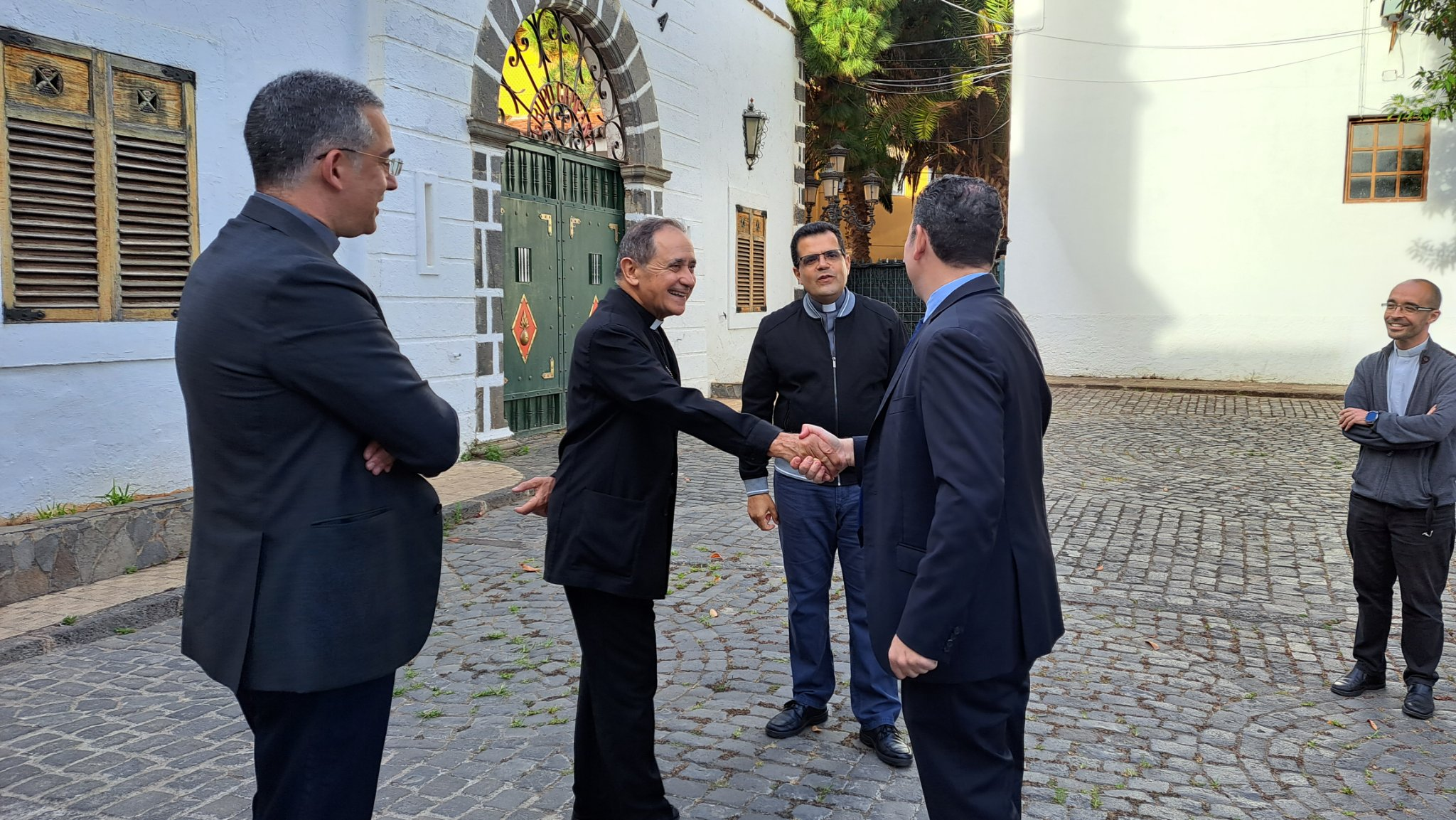
Interview: Archbishop Arrieta on retirement, Pope Leo and Order of Malta reforms
Archbishop Arrieta speaks to AdVaticanum on his retirement, his first impressions of Pope Leo XIV, the Order of Malta, and the ongoing canonical tensions surrounding the SSPX Archbishop Juan Ignacio Arrieta Ochoa de Chinchetru, Secretary of the Dicastery for Legislative Texts, has reached the age of 75, the mandatory retirement age for a bishop, on April 10. To mark the milestone, the Spanish canonist sat down with AdVaticanum to reflect on nearly two decades of service as secretary across three pontificates, his plans for retirement, and the evolving work of the dicastery. He shared his impressions of Pope Leo XIV as he approaches the anniversary of his election, offered a candid assessment of the irregular situation of the Society of St Pius X, and evaluated the 2021 reform of Book VI of the Code of Canon Law, as well as addressing current canonical questions regarding the Sovereign Military Order of Malta, liturgical unity under Traditionis Custodes, and the dubia from priests of the Diocese of Charlotte. Born on April 10, 1951 in Vitoria, Spain, Archbishop Arrieta was ordained a priest of Opus Dei in 1977. A distinguished academic and jurist, he helped establish the faculty of canon law at the Pontifical University of the Holy Cross in Rome, where he has taught for many years. Appointed Secretary of the then Pontifical Council for Legislative Texts by Pope Benedict XVI in 2007, he was ordained a titular bishop in 2008. AdVaticanum: Your Excellency, having just turned 75 and therefore being at the point of submitting your resignation in accordance with canon 401 §1, many in the Church are curious about the next chapter for a canonist of your stature who has served the Dicastery for nearly two decades. After such an intense period of service in the Roman Curia, what would you most like to do in retirement? Archbishop Juan Ignacio Arrieta Ochoa de Chinchetru: We will have to take things one step at a time, always trusting in divine providence. As for me, I have always been involved in the field of canon law, both in the Roman Curia and at the university. I plan to continue living in Rome, also because I am a member of various commissions and working groups within the Roman Curia. Furthermore, if possible, I intend to spend more time in the academic environment, continuing my studies and publications on canon law. I am still teaching courses on canon law and Vatican law, both at the Faculty of Canon Law of the Pontifical University of the Holy Cross and at the Faculty of St Pius X in Venice: two institutions I have seen come into being and to which I feel particularly attached. God willing, in the near future I will be able to carry out these teaching duties with greater peace of mind and collaborate with both faculties. Furthermore, I hope to be able to devote myself a little more to pastoral work, which I have missed for many years. AV: As Secretary since your appointment in 2007, spanning the final years of St John Paul II’s pontificate, the entire Benedict XVI era, the full Francis pontificate, and now the early months under Pope Leo XIV, you have had a uniquely continuous vantage point on the work of what was then the Pontifical Council and is now the Dicastery for Legislative Texts. In your view, what are the most significant shifts you have witnessed in the dicastery’s day to day functioning? +JA: In a way, the major changes the dicastery has undergone in recent years are also reflected in the changes to its name over the years. At the beginning of John Paul II’s pontificate, the dicastery was called the “Pontifical Council for the Interpretation of the Code of Canon Law”; it was later renamed the “Pontifical Council for the Interpretation of Legislative Texts”, because, starting in 1990, it also had to deal with the Eastern Code of Canon Law in addition to that of the Latin Church. Subsequently, it was renamed more generally the “Pontifical Council for Legislative Texts”, since the role of “interpreting” universal laws had become rather secondary, and the dicastery devoted itself more to revising the universal norms of the Church or to offering consultative opinions on normative documents of the Holy See or of the Episcopal Conferences. Now, however, the name is “Dicastery for Legislative Texts”, and while retaining all the other functions it had in the past, most of its time is devoted to assisting bishops and superiors in the application of canon law in light of new circumstances arising throughout the world. This is very interesting work, because canon law is a body of law in force throughout the world and is confronted with the legal systems of every country in the world, as well as with vastly different cultures and sensibilities. AV: Having served under several Popes, what are your first impressions of working with Pope Leo XIV? +JA: In addition to his personal qualities, his profound spirituality, practical mind and missionary heart, the Pope has a particular fondness for institutional and orderly governance. I believe this stems from his experience leading a religious institute with a long standing tradition within the Church and a widespread presence throughout the world. Furthermore, I believe that, with regard to his style of governance and, in particular, his attitude towards justice and the law, we must appreciate the fact that the Pope received a university education as a canonist and, above all, that he did not limit himself to studying canon law, but had to teach it as a professor of canon law in Peru and, for some time, also practised it as an ecclesiastical judge in the courts. He therefore possesses a very concrete and comprehensive experience of the law that not everyone has, ranging from the purely theoretical to the didactic, and to the practical exercise and application of the law in the service of justice. AV: The SSPX continues to occupy a unique and, for many, pastorally sensitive place in the Church, with the announcement of the July 1 episcopal consecrations. With the recent proposal from the Dicastery for the Doctrine of the Faith for a structured theological dialogue aimed at identifying “minimum requirements” for full communion and a possible canonical status, contingent on suspending the announced July 2026 episcopal ordinations without papal mandate, what is your canonical assessment of the current irregular situation of the Society? +JA: For me, this is a very painful matter, especially because during Pope Benedict’s time I had the opportunity to familiarise myself with their situation and to meet with some of their superiors on several occasions. They feel the need for ministers to celebrate certain sacraments, but I believe it was a grave mistake to have presented this matter as an imposition on the Holy See, announcing directly, as if it were a fait accompli, that they intended to carry out episcopal ordinations. This is the attitude of those who, from the outset, consider themselves outside the Church, a stance that contradicts their own awareness that they do not possess ecclesiastical jurisdiction. In fact, when they had to impose disciplinary sanctions for certain conduct by some of their priests, they turned to the Congregation for the Doctrine of the Faith, which granted them the authority to do so. Moreover, Pope Francis had directly granted their priests the authority to hear confessions worldwide and issued instructions so that diocesan bishops could grant them the authority to assist at weddings, thereby ensuring that the marriages would not be invalid for the Catholic Church due to a lack of canonical form. Now all of this risks being compromised, which is a heavy responsibility for those who decide not to obey the Pope’s instructions. AV: Your Excellency, you personally spearheaded much of the work on the 2021 revision of Book VI of the Code (Pascite gregem Dei), which updated sanctions to better address contemporary situations such as clerical abuse, the attempted ordination of women, and offences against the sacraments. With several years of application now behind us, how do you evaluate the effectiveness of these changes in practice? +JA: The dicastery’s reform of Book VI of the Code has been one of the primary tasks since the pontificate of Pope Benedict, who, drawing on his many years of experience as Prefect of the Congregation for the Doctrine of the Faith, was well aware of the practical limitations of the 1983 Code of Canon Law, which, in fact, was rarely enforced. It was the future Pope Benedict who laid the groundwork for effectively combating child abuse beginning with the promulgation of the Curia’s 1988 law, the apostolic constitution Pastor Bonus. He was the one who promoted, in the final years of John Paul II’s pontificate, the new penal regulations against abuse, assuming jurisdiction over the matter within the Congregation for the Doctrine of the Faith, which he himself presided over, because the local episcopate was not managing it effectively. However, the reform of canon penal law required more in depth work, because it was necessary to overcome the prejudices and naivety of the immediate post conciliar period, which had in fact influenced the drafting of the penal norms promulgated in the 1983 Code. Now the principle of criminal legality has been explicitly restored, along with the duty of the ecclesiastical authority to act, without thereby losing the necessary humanity that the penal law of the Catholic Church necessarily entails. VA: The reforms of the Sovereign Military Order of Malta initiated under Pope Francis, particularly the appointment of a special delegate, the drafting of a new constitutional charter, and the emphasis on the Order’s religious character, have raised interesting canonical questions about the relationship between a sovereign subject of international law and the Holy See. Some observers have described it as the Vatican effectively “regulating another country”. Canonically speaking, how do you understand the Holy See’s authority over the Order in light of its dual nature as both a lay religious institute and a sovereign entity? +JA: I have little information on this subject, apart from some theoretical reading and study: I am unfamiliar with the practical realities and concrete needs, so I cannot offer an opinion. I have always believed that, in Church law, concrete situations cannot be resolved with “off the shelf” solutions, but must be tailored to fit, like a suit. Since the Church is a spiritual reality, in which it is the Holy Spirit who moves the initiatives of Christians, “copy and paste” or cookie cutter solutions are of little use; therefore, it is necessary to go through an evaluation by the authority that gives the appropriate legal form in accordance with the flexibility inherent in Church law. With that in mind, it has always seemed to me that, from a legal standpoint, the solution under canon law regarding the institution you mention should have begun with the recognition of its international legal personality and, within the framework of that formal recognition, resolved the religious issues and the remaining matters of various kinds. More specifically, since this is an entity that many countries recognise as sovereign, I believe greater consideration should have been given to the instrument of a concordat: a concordat between the Holy See and the Order, similar to those signed with many countries, would have provided a formal framework consistent with how it is actually perceived in the international arena, and within that framework, the various spiritual and charitable issues raised by this important entity could have been resolved with realism and practicality, etc. AV: A question frequently raised by faithful Catholics attached to the Vetus Ordo concerns how recent liturgical norms, such as those in Traditionis Custodes and its dubia, are to be reconciled with the broader canonical framework for divine worship and the rights of the faithful. From your perspective, how does one provide a clear and authoritative interpretation that safeguards both the unity of the Roman Rite and the legitimate spiritual needs of the faithful who find deeper nourishment in the earlier form? +JA: It seems to me that the Holy Father is fully aware of all these experiences and that he seeks to address them in the best possible way by appealing to everyone’s sense of unity and sensitivity, so that we may coexist with expressions of diversity that do not undermine unity and respect for authority. I believe that promoting unity is one of the central themes we find in the Pope’s words throughout these months of his pontificate. It is not permissible, however, to use the banner of the liturgy to shatter unity or the reverence due to legitimate ecclesiastical authority. Balance is needed. It is important to move forward while respecting the rights of the Christian faithful, and at the same time, we must obey and share in the spirit of unity. AV: Your Excellency, on January 5, 2026, thirty one priests of the Diocese of Charlotte, roughly one quarter of the active clergy and two thirds of them pastors, submitted a formal dubia to this dicastery seeking clarification on whether Bishop Martin’s practices, which explicitly permitted or even favoured by universal liturgical law, such as the use of altar rails, kneelers and prie dieux for the reception of Holy Communion, as announced in the bishop’s pastoral letter of December 17, 2025. The dubia raise fundamental questions about the limits of a diocesan bishop’s liturgical authority in relation to the rights of the faithful and the stability of universal norms. As the dicastery’s Secretary responsible for the authentic interpretation of ecclesiastical law, what is your canonical assessment of the core issues presented in this dubia? +JA: For several years now, our dicastery has been publishing on its website the various opinions and consultations we are asked to provide, omitting, of course, any personal references, whenever we believe they may be of general use to the Church. For us, it is also a way to engage with the legal world and with new situations arising in various parts of the world, seeking to stimulate studies and in depth analysis of specific aspects of canon law. Regarding individual cases, however, as is logical, we are bound to maintain absolute confidentiality, also out of respect for the individuals involved. AV: Thank you very much for your time, Your Excellency, and for your many years of service to the Church.
Apr. 27, 2026
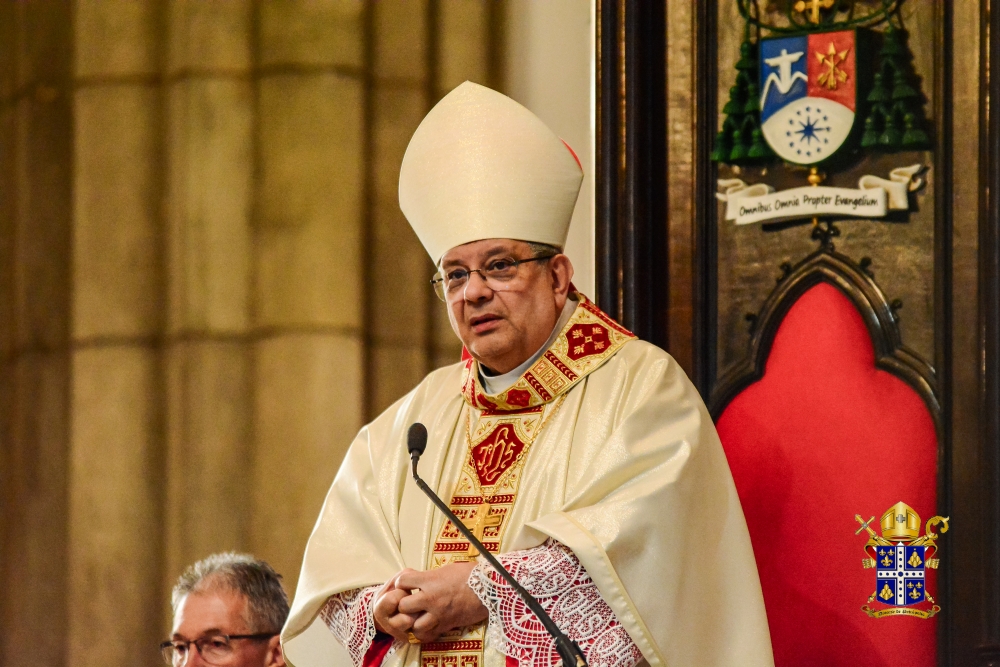
Brazilian bishop says young Catholics drawn to tradition have a place in the Church
A Brazilian bishop has said young Catholics drawn to traditional practices such as kneeling for Communion and wearing veils have a legitimate place in the Church, describing such expressions as part of Catholicism’s natural diversity rather than a rupture. A Brazilian bishop has said that young Catholics drawn to more traditional forms of worship have a legitimate place in the Church, insisting that such expressions are part of the inherent diversity of Catholic life rather than a rupture within it. Speaking at a press conference during the 62nd General Assembly of the National Conference of Bishops of Brazil in Aparecida, São Paulo, Bishop Joel Portella Amado of Petrópolis addressed questions about the resurgence of interest among younger Catholics in older liturgical customs. Responding to a question from a journalist with Rede Vida TV about “a return of a certain Catholic traditionalism in Masses”, the bishop acknowledged visible signs of this trend, including “young people who kneel to receive communion, who wear veils”, adding that “it is possible to perceive this in the Masses”. He said that such developments should be understood within the broader context of contemporary religious life in Brazil, particularly among younger generations. Referring to census data from 2022, he noted the large number of 19-39 year olds who do not profess a religious belief. “It’s not that they don’t believe in God,” he said. “The evangelical side calls them ‘unchurched’. I prefer this expression. They believe in God in heaven, but they don’t have a mediation on earth, a path to the Church.” Within this context, Bishop Amado indicated that the attraction to more traditional forms of worship may arise from a wider search for meaning. “In times of emptiness, we start searching, we look for things, even in some historical realities that this youth did not experience,” he said. The remarks came as part of a wider briefing on the ecclesial and socio-cultural issues discussed by the Brazilian bishops during their annual assembly, which has brought together prelates from across the country to consider pastoral priorities and challenges facing the Church. Bishop Amado, who serves as president of the CNBB’s Commission for the Doctrine of the Faith, emphasised that diversity in liturgical expression is not only permissible but intrinsic to Catholicism itself. “Does it have the right to be this way? Yes, because Catholicism is plural by nature, even more so in a profoundly plural world,” he said. At the same time, he cautioned against any tendency to elevate one form of expression above others or to impose personal preferences on the wider Church. “While there is a right to live and express one’s faith in one’s own way, according to one’s own personality, on the other hand, in the name of love and brotherhood, one cannot impose this on others or believe that only one is right,” he said. The bishop’s comments come amid an ongoing conversation within the global Church about the place of traditional practices in contemporary Catholic life, particularly in the years following the liturgical reforms of the twentieth century and subsequent debates over their implementation. While the early signs of Pope Leo XIV’s approach to the TLM suggest not a dramatic reversal of his predecessor’s policy, they do point to a deliberate attempt to reframe the question in terms of unity, discipline and synodality. What is emerging is a repositioning of the issue within a broader vision aimed at removing ideological conflict and quietly adjusting the tone. There has been no explicit indication that a formal or stable resolution for the traditional Latin Mass is imminent. Yet, indirectly, there has been a perceptible shift towards a more inclusive use of the Vetus Ordo, one that corresponds to the language of synodality. This began with the granting of extensions for the TLM in parishes in Texas and Ohio, and became most notable when the Catholic Bishops’ Conference of England and Wales informed its members that Rome would “be generous” in granting dispensations from restrictions on the older liturgy. While there was a response from the CDW, owing to the media frenzy surrounding it, indicating that there had been no reversal, the tone shifted following the promulgation of Traditionis Custodes under Pope Francis. Further clarity has come through the remarks of Cardinal Pietro Parolin after he sent a letter to the French bishops on behalf of Pope Leo concerning the TLM. Speaking to Advaticanum’s Vatican correspondent the following day, Cardinal Parolin articulated what appears to be the governing principle behind the Pope’s thinking. “I think we all share this, this, let’s say, assessment that the Pope gives, right?” he said. “In the sense that the liturgy must not become a source of conflict and division among us. It will be necessary to find the formula, well, this I believe, it will be necessary to find the formula that can meet legitimate needs. But I believe that, well, this can happen without turning the liturgy into a battlefield.” The insistence on avoiding conflict, while acknowledging “legitimate needs”, encapsulates the present moment. Yet the significance of these developments cannot be understood solely in terms of the TLM alone. Sources have told Advaticanum that many cardinals and bishops expect a forthcoming document on the liturgy, following an anticipated encyclical on artificial intelligence. According to these curial sources, the document is likely to address reverence and ritual integrity in the ordinary form of the Roman Rite, as well as the complex issue of inculturation. Such a move would confirm that the Pope’s concern is with the quality and unity of Catholic worship as a whole. This broader approach helps to explain why the Pope is moving more quickly on liturgical matters than had been expected. Rather than allowing the question to remain a point of ongoing contention, he appears intent on integrating it into a wider programme of ecclesial governance. His recent appointments, including figures such as Archbishop Randozza, Bishop Ioanne and Bishop Marin to senior curial roles within the Dicastery for Legislative Texts, the Dicastery for Bishops and the office of the Papal Almoner, have been noted as administratively capable prelates. In the bigger picture, while public attention has often focused on Cardinal Arthur Roche as the figure associated with restrictions on the TLM, it is widely understood that Archbishop Vittorio Francesco Viola played a decisive role in shaping that policy, working in collaboration with the lay theologian Andrea Grillo. Within the Dicastery for Divine Worship and the Discipline of the Sacraments, it is increasingly evident that the office of secretary has, in practice, exercised a level of influence that at times appears to rival, if not quietly supersede, that of the prefect. The question of Archbishop Viola’s and Cardinal Roche’s future therefore assumes a significance that goes beyond personnel. His first five-year term as secretary is due to conclude in May. Whether Pope Leo chooses to renew that mandate, reassign him within the Curia, or appoint him to a diocesan see will offer a clear indication of the direction in which liturgical policy is likely to develop. Sources close to Advaticanum suggest that an extension is expected, not least because of his relatively low profile in the English-speaking press, which has allowed him to operate without attracting sustained public scrutiny.
Apr. 23, 2026