

Valley Of The Fallen
Vatican accepts monks’ appeal over Valle de Cuelgamuros plans
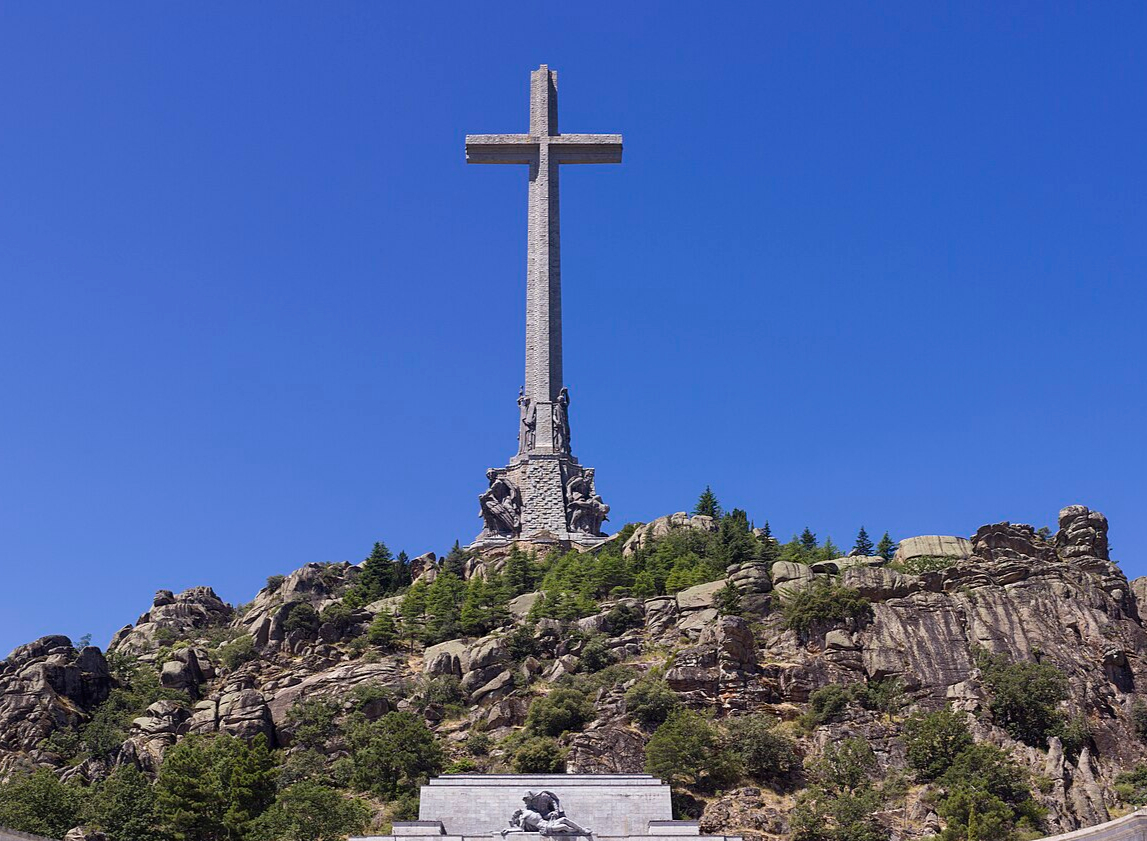
The Vatican has accepted an appeal from Benedictine monks at Valle de Cuelgamuros against government plans, with ministers claiming an agreement with Cardinal José Cobo and the Vatican, while bishops deny any sign-off The Vatican has formally accepted an appeal lodged by the Benedictine monks of the Valle de Cuelgamuros against plans to “re-signify” the historic and religious monument. Pedro Sánchez administration’s initiative, officially titled “La base y la cruz” (The Base and the Cross), emerged as the winner of an international architectural competition. The winning proposal envisions transforming parts of the complex, including the entrance atrium, the side chapels dedicated to Marian devotions along the nave, and the Chapel of the Blessed Sacrament near the main altar. The formal presentation of the project is scheduled for June 2026, deliberately timed to coincide with the anticipated apostolic visit of Pope Leo XIV to Spain. However, Minister Félix Bolaños has claimed that an accord was reached with Cardinal José Cobo of Madrid and the Vatican, declaring: “we reached the agreement with Cardinal Cobo and with the Vatican.” The Spanish Episcopal Conference has, however, pushed back strongly. Monsignor Francisco César García Magán, secretary general and auxiliary bishop of Toledo, stated after the bishops’ 129th plenary assembly that “the Vatican has not been a signatory, there has been no signatory from the Vatican”, and he repeated on several occasions that “no representative of the Vatican has signed”. This is similar to the Archdiocese of Madrid’s statement from March 2025, which clarified that Cardinal Cobo had acted only as a designated interlocutor within an ecclesial commission, without a formal mandate from Rome over the pontifical basilica. Cardinal Cobo has consistently maintained that neither he nor the Archdiocese of Madrid holds canonical authority over the Basilica of the Holy Cross or the Benedictine community. He has insisted that ultimate responsibility rests solely with the Holy See. The Benedictine monks argue that the alleged agreement lacks proper ecclesiastical authority because it was advanced by Cardinal Cobo without the direct involvement of the monastery’s prior or the Holy See, which retains direct jurisdiction over this pontifical basilica, elevated by Pope John XXIII in 1960. The monks have raised particular objections to changes planned for the entrance atrium, a space integral to their liturgical life that has hosted major ceremonies, including priestly ordinations. One such ordination took place there in October of last year, with Cardinal Cobo himself in attendance. Church officials emphasise that canonical norms protecting consecrated spaces remain fully in force, prohibiting any uses unrelated to worship until authorised works can legitimately begin. Further complications surround the status of the Benedictine community. Former prior Santiago Cantera was removed from his post last year amid reported government pressure and internal ecclesiastical decisions. Parallel legal challenges have also emerged. Appeals have been lodged citing procedural deficiencies, including the absence of required licences from the San Lorenzo de El Escorial town hall and the Community of Madrid. Monsignor Luis Argüello, president of the Spanish Episcopal Conference, has called for renewed dialogue. He urged both the government and the Benedictine community to reach “a reasonable and satisfactory agreement for both parties.” His intervention notably made no reference to any prior agreement involving Cardinal Cobo. As of April, the Vatican’s acceptance of the monks’ appeal has moved the entire dispute into a structured canonical process that runs alongside ongoing proceedings in the Spanish courts. The government continues to insist it will begin work on the surroundings and parts of the basilica in June. The Valle de Cuelgamuros, with its massive underground Basilica of the Holy Cross and the world’s tallest Christian cross, remains one of Spain’s most symbolically charged locations. It combines profound religious significance as a consecrated pontifical basilica with its complex historical and political role as a burial site for tens of thousands from both sides of the Spanish Civil War. Pedro Sánchez has taken an interest in the memorial site since the beginning of his time in office, commenting in August 2018, just months after his election, that it should be a “resting place” for those buried there and “a civil cemetery.” In 2022, under the Democratic Memory Law (Ley de Memoria Democrática), Sánchez’s government changed the name from “Valle de los Caídos” (Valley of the Fallen) to “Valle de Cuelgamuros” (the geographical area in which it is located). However, Sánchez’s minority government is coming under increasing pressure from a growing conservative bloc. Among those voters, typically characterised by Vox and People’s Party supporters, there is strong opposition to government intervention at the site and significant criticism of what is seen as his attempts to politicise a religious and historical monument.
Apr. 27, 2026