

Traditionis Custodes
SSPX superior: consecrations ‘even more necessary in 2026’
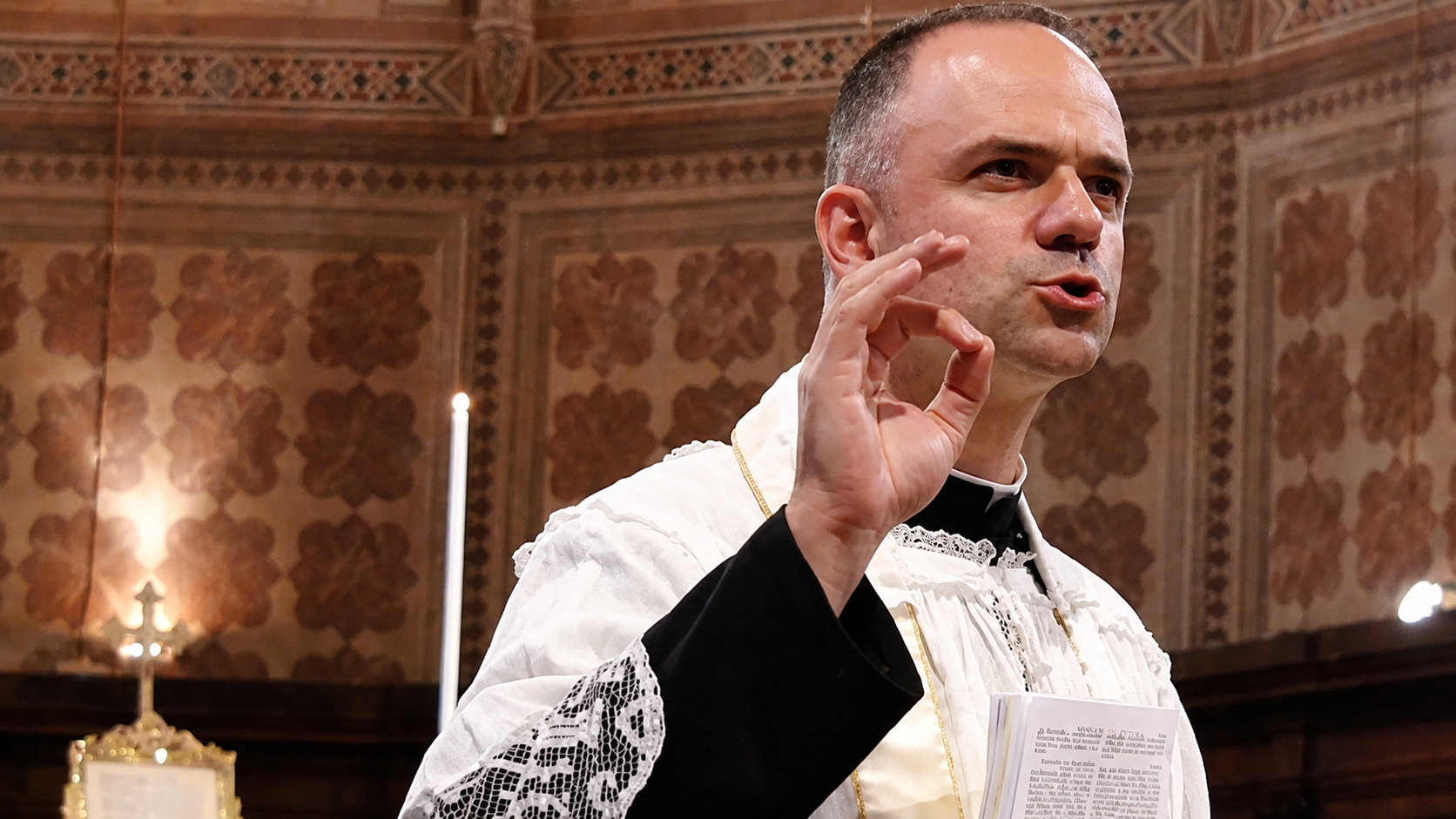
SSPX superior: consecrations ‘even more necessary in 2026’ The Society of St Pius X has defended its decision to proceed with episcopal consecrations this summer, with its Superior General warning that any declaration of excommunication or schism against the Society “would be objectively unjust”. In a letter addressed to SSPX priests ahead of the consecrations due to take place at Écône on 1 July, Fr Davide Pagliarani said the “state of necessity” invoked by Archbishop Marcel Lefebvre in 1988 was “even more evident in 2026”. “While the state of necessity could already be invoked in 1988, this state of necessity is, unfortunately, even more evident in 2026,” he wrote. The text, dated 7 March and released publicly by the Society on 21 May, was accompanied by an introduction from the SSPX Secretary General, Fr Foucauld le Roux, who said the purpose of publishing the letter was to help clergy and faithful prepare spiritually for the ceremony. “This text does not revisit the question of the consecrations themselves, but is devoted to recalling the spirit in which they must be prepared for and lived,” Fr le Roux wrote. The publication of the letter comes four months after the SSPX announced that bishops would again be consecrated at its seminary in Switzerland, the site of Archbishop Lefebvre’s consecrations in June 1988. Those consecrations, carried out without papal mandate, led Rome to declare that Archbishop Lefebvre, Bishop Antonio de Castro Mayer and the four newly consecrated bishops had incurred automatic excommunication. Although the excommunications of the surviving bishops were lifted by Pope Benedict XVI in 2009, the Society remains canonically irregular and without official status in the Church. In his latest letter, Fr Pagliarani repeatedly insisted that the SSPX was acting out of fidelity to the Catholic Church rather than separation from it. “The Society is nothing more than a means of remaining faithful to the Church,” he wrote. “If we are taking exceptional measures today to preserve the faith, the Holy Sacrifice of the Mass, and the priesthood, it is because we want the whole Catholic Church – and every soul without distinction – to be able to benefit freely from them one day. All this belongs to the Church, and we are only its guardians.” Fr Pagliarani also directly addressed the prospect of fresh sanctions from Rome, stating that the Society neither desired nor celebrated such a development. “If we come to be declared excommunicated and schismatic, this would not mean that we seek such a sanction or rejoice in it, for it would be objectively unjust,” he wrote. Furthermore, Fr Pagliarani wrote: “It is one thing to rejoice in receiving a new humiliation to offer to God, and it is quite another to rejoice in an evil and an objective injustice that causes scandal to the whole Church.” The SSPX superior urged members to avoid bitterness and resentment during the controversy surrounding the consecrations, warning against triumphalism and hostility towards Church authorities. “We must always show kindness,” he wrote. “When there is no understanding on the other side, when there is not even a willingness to listen to what we have to say and understand our reasons, it is very easy – humanly speaking – to fall into resentment.” He added that members should remain “firm and gentle at the same time”, “especially towards the hierarchy of the Catholic Church”. The letter contains repeated references to charity and suffering, including a lengthy citation from St John’s Gospel. “It is with this same charity that, now more than ever, we must love souls and Holy Mother Church, even if its official representatives were to declare us excommunicated and schismatic once again,” Fr Pagliarani wrote, before quoting John 16:1-4: “They will put you out of the synagogues: yea, the hour cometh, that whosoever killeth you, will think that he doth a service to God.” Fr Pagliarani also rejected accusations that the SSPX had become a “parallel Church”, arguing instead that the Society existed to safeguard Catholic tradition until it could once again flourish throughout the wider Church. “We ask nothing for ourselves,” he wrote. “Our only reward will be to see one day Holy Mother Church reclaim her Traditions.” The Superior General described the debate surrounding the consecrations as “providential”, saying the issue had provoked concern throughout the Catholic Church. “The announcement on 2 February left no one in the Catholic Church indifferent,” he wrote. “Almost everyone feels concern and the need to express their approval or disapproval.” He added: “Sometimes words, opinions, and simple statements are no longer enough. They must be accompanied by meaningful actions that Divine Providence can use to shake consciences – and even the Church herself.” Fr Pagliarani concluded his letter by urging members and faithful to prepare for the consecrations through prayer and devotion to the Blessed Virgin Mary. “It is with these sentiments and this charity that we must prepare for the ceremony on 1 July,” he wrote, “and strive to prepare all the faithful under our care.” The tensions between the Vatican and the SSPX stem from the Second Vatican Council. Relations improved significantly during the pontificate of Pope Benedict XVI, who lifted the excommunications of the SSPX bishops and expanded permission for the celebration of the Traditional Latin Mass through Summorum Pontificum in 2007. Under Pope Francis, however, tensions between Rome and traditionalist groups deepened following the publication of Traditionis Custodes in 2021, which imposed major restrictions on the old rite of Mass. Despite those disputes, Pope Francis granted SSPX priests faculties to hear confessions during the Jubilee Year of Mercy before extending them indefinitely, while also allowing local bishops to delegate SSPX priests to witness marriages. Image credit: SSPX
May 22, 2026
Interview: Archbishop Arrieta on retirement, Pope Leo and Order of Malta reforms
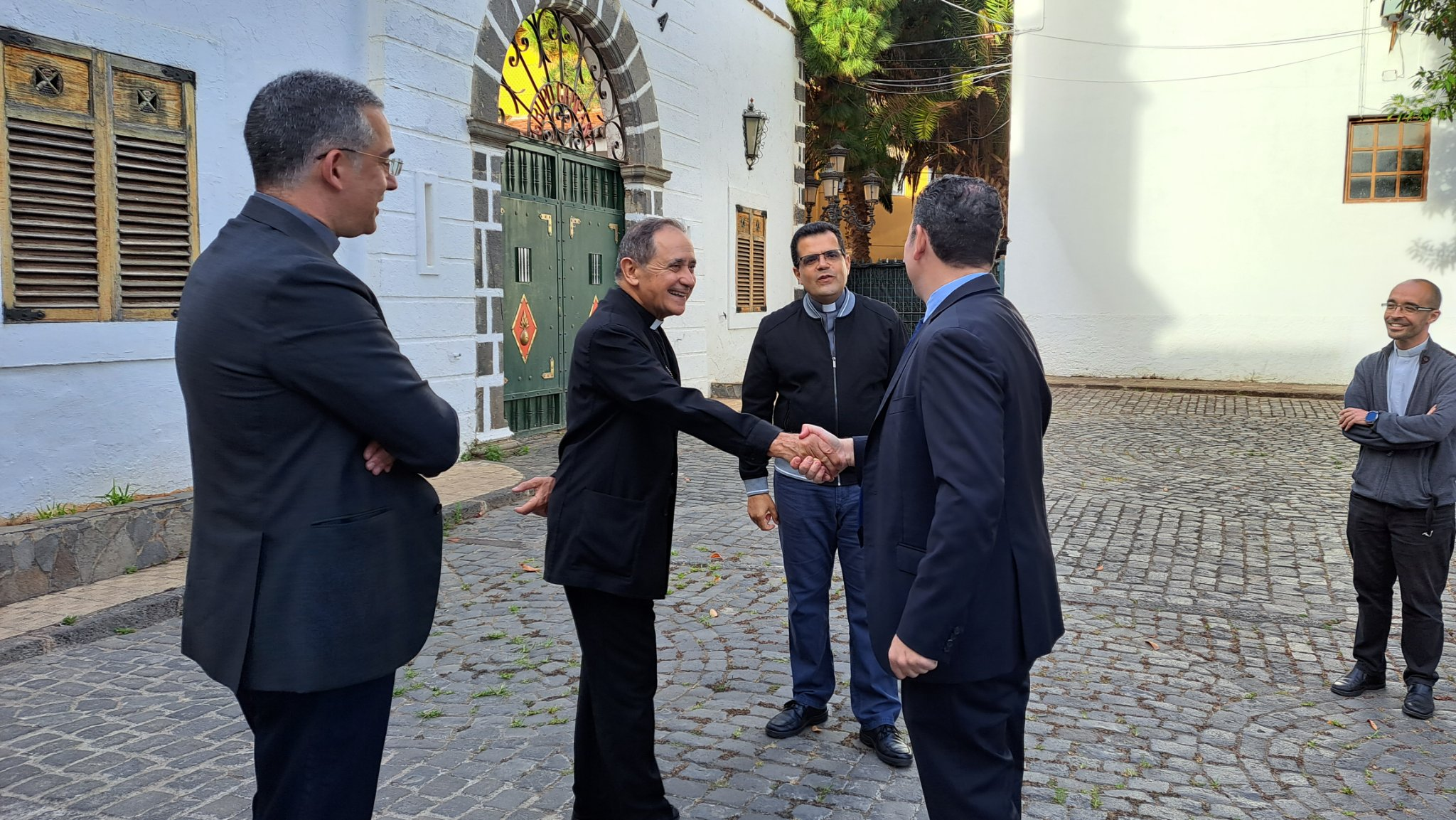
Archbishop Arrieta speaks to AdVaticanum on his retirement, his first impressions of Pope Leo XIV, the Order of Malta, and the ongoing canonical tensions surrounding the SSPX Archbishop Juan Ignacio Arrieta Ochoa de Chinchetru, Secretary of the Dicastery for Legislative Texts, has reached the age of 75, the mandatory retirement age for a bishop, on April 10. To mark the milestone, the Spanish canonist sat down with AdVaticanum to reflect on nearly two decades of service as secretary across three pontificates, his plans for retirement, and the evolving work of the dicastery. He shared his impressions of Pope Leo XIV as he approaches the anniversary of his election, offered a candid assessment of the irregular situation of the Society of St Pius X, and evaluated the 2021 reform of Book VI of the Code of Canon Law, as well as addressing current canonical questions regarding the Sovereign Military Order of Malta, liturgical unity under Traditionis Custodes, and the dubia from priests of the Diocese of Charlotte. Born on April 10, 1951 in Vitoria, Spain, Archbishop Arrieta was ordained a priest of Opus Dei in 1977. A distinguished academic and jurist, he helped establish the faculty of canon law at the Pontifical University of the Holy Cross in Rome, where he has taught for many years. Appointed Secretary of the then Pontifical Council for Legislative Texts by Pope Benedict XVI in 2007, he was ordained a titular bishop in 2008. AdVaticanum: Your Excellency, having just turned 75 and therefore being at the point of submitting your resignation in accordance with canon 401 §1, many in the Church are curious about the next chapter for a canonist of your stature who has served the Dicastery for nearly two decades. After such an intense period of service in the Roman Curia, what would you most like to do in retirement? Archbishop Juan Ignacio Arrieta Ochoa de Chinchetru: We will have to take things one step at a time, always trusting in divine providence. As for me, I have always been involved in the field of canon law, both in the Roman Curia and at the university. I plan to continue living in Rome, also because I am a member of various commissions and working groups within the Roman Curia. Furthermore, if possible, I intend to spend more time in the academic environment, continuing my studies and publications on canon law. I am still teaching courses on canon law and Vatican law, both at the Faculty of Canon Law of the Pontifical University of the Holy Cross and at the Faculty of St Pius X in Venice: two institutions I have seen come into being and to which I feel particularly attached. God willing, in the near future I will be able to carry out these teaching duties with greater peace of mind and collaborate with both faculties. Furthermore, I hope to be able to devote myself a little more to pastoral work, which I have missed for many years. AV: As Secretary since your appointment in 2007, spanning the final years of St John Paul II’s pontificate, the entire Benedict XVI era, the full Francis pontificate, and now the early months under Pope Leo XIV, you have had a uniquely continuous vantage point on the work of what was then the Pontifical Council and is now the Dicastery for Legislative Texts. In your view, what are the most significant shifts you have witnessed in the dicastery’s day to day functioning? +JA: In a way, the major changes the dicastery has undergone in recent years are also reflected in the changes to its name over the years. At the beginning of John Paul II’s pontificate, the dicastery was called the “Pontifical Council for the Interpretation of the Code of Canon Law”; it was later renamed the “Pontifical Council for the Interpretation of Legislative Texts”, because, starting in 1990, it also had to deal with the Eastern Code of Canon Law in addition to that of the Latin Church. Subsequently, it was renamed more generally the “Pontifical Council for Legislative Texts”, since the role of “interpreting” universal laws had become rather secondary, and the dicastery devoted itself more to revising the universal norms of the Church or to offering consultative opinions on normative documents of the Holy See or of the Episcopal Conferences. Now, however, the name is “Dicastery for Legislative Texts”, and while retaining all the other functions it had in the past, most of its time is devoted to assisting bishops and superiors in the application of canon law in light of new circumstances arising throughout the world. This is very interesting work, because canon law is a body of law in force throughout the world and is confronted with the legal systems of every country in the world, as well as with vastly different cultures and sensibilities. AV: Having served under several Popes, what are your first impressions of working with Pope Leo XIV? +JA: In addition to his personal qualities, his profound spirituality, practical mind and missionary heart, the Pope has a particular fondness for institutional and orderly governance. I believe this stems from his experience leading a religious institute with a long standing tradition within the Church and a widespread presence throughout the world. Furthermore, I believe that, with regard to his style of governance and, in particular, his attitude towards justice and the law, we must appreciate the fact that the Pope received a university education as a canonist and, above all, that he did not limit himself to studying canon law, but had to teach it as a professor of canon law in Peru and, for some time, also practised it as an ecclesiastical judge in the courts. He therefore possesses a very concrete and comprehensive experience of the law that not everyone has, ranging from the purely theoretical to the didactic, and to the practical exercise and application of the law in the service of justice. AV: The SSPX continues to occupy a unique and, for many, pastorally sensitive place in the Church, with the announcement of the July 1 episcopal consecrations. With the recent proposal from the Dicastery for the Doctrine of the Faith for a structured theological dialogue aimed at identifying “minimum requirements” for full communion and a possible canonical status, contingent on suspending the announced July 2026 episcopal ordinations without papal mandate, what is your canonical assessment of the current irregular situation of the Society? +JA: For me, this is a very painful matter, especially because during Pope Benedict’s time I had the opportunity to familiarise myself with their situation and to meet with some of their superiors on several occasions. They feel the need for ministers to celebrate certain sacraments, but I believe it was a grave mistake to have presented this matter as an imposition on the Holy See, announcing directly, as if it were a fait accompli, that they intended to carry out episcopal ordinations. This is the attitude of those who, from the outset, consider themselves outside the Church, a stance that contradicts their own awareness that they do not possess ecclesiastical jurisdiction. In fact, when they had to impose disciplinary sanctions for certain conduct by some of their priests, they turned to the Congregation for the Doctrine of the Faith, which granted them the authority to do so. Moreover, Pope Francis had directly granted their priests the authority to hear confessions worldwide and issued instructions so that diocesan bishops could grant them the authority to assist at weddings, thereby ensuring that the marriages would not be invalid for the Catholic Church due to a lack of canonical form. Now all of this risks being compromised, which is a heavy responsibility for those who decide not to obey the Pope’s instructions. AV: Your Excellency, you personally spearheaded much of the work on the 2021 revision of Book VI of the Code (Pascite gregem Dei), which updated sanctions to better address contemporary situations such as clerical abuse, the attempted ordination of women, and offences against the sacraments. With several years of application now behind us, how do you evaluate the effectiveness of these changes in practice? +JA: The dicastery’s reform of Book VI of the Code has been one of the primary tasks since the pontificate of Pope Benedict, who, drawing on his many years of experience as Prefect of the Congregation for the Doctrine of the Faith, was well aware of the practical limitations of the 1983 Code of Canon Law, which, in fact, was rarely enforced. It was the future Pope Benedict who laid the groundwork for effectively combating child abuse beginning with the promulgation of the Curia’s 1988 law, the apostolic constitution Pastor Bonus. He was the one who promoted, in the final years of John Paul II’s pontificate, the new penal regulations against abuse, assuming jurisdiction over the matter within the Congregation for the Doctrine of the Faith, which he himself presided over, because the local episcopate was not managing it effectively. However, the reform of canon penal law required more in depth work, because it was necessary to overcome the prejudices and naivety of the immediate post conciliar period, which had in fact influenced the drafting of the penal norms promulgated in the 1983 Code. Now the principle of criminal legality has been explicitly restored, along with the duty of the ecclesiastical authority to act, without thereby losing the necessary humanity that the penal law of the Catholic Church necessarily entails. VA: The reforms of the Sovereign Military Order of Malta initiated under Pope Francis, particularly the appointment of a special delegate, the drafting of a new constitutional charter, and the emphasis on the Order’s religious character, have raised interesting canonical questions about the relationship between a sovereign subject of international law and the Holy See. Some observers have described it as the Vatican effectively “regulating another country”. Canonically speaking, how do you understand the Holy See’s authority over the Order in light of its dual nature as both a lay religious institute and a sovereign entity? +JA: I have little information on this subject, apart from some theoretical reading and study: I am unfamiliar with the practical realities and concrete needs, so I cannot offer an opinion. I have always believed that, in Church law, concrete situations cannot be resolved with “off the shelf” solutions, but must be tailored to fit, like a suit. Since the Church is a spiritual reality, in which it is the Holy Spirit who moves the initiatives of Christians, “copy and paste” or cookie cutter solutions are of little use; therefore, it is necessary to go through an evaluation by the authority that gives the appropriate legal form in accordance with the flexibility inherent in Church law. With that in mind, it has always seemed to me that, from a legal standpoint, the solution under canon law regarding the institution you mention should have begun with the recognition of its international legal personality and, within the framework of that formal recognition, resolved the religious issues and the remaining matters of various kinds. More specifically, since this is an entity that many countries recognise as sovereign, I believe greater consideration should have been given to the instrument of a concordat: a concordat between the Holy See and the Order, similar to those signed with many countries, would have provided a formal framework consistent with how it is actually perceived in the international arena, and within that framework, the various spiritual and charitable issues raised by this important entity could have been resolved with realism and practicality, etc. AV: A question frequently raised by faithful Catholics attached to the Vetus Ordo concerns how recent liturgical norms, such as those in Traditionis Custodes and its dubia, are to be reconciled with the broader canonical framework for divine worship and the rights of the faithful. From your perspective, how does one provide a clear and authoritative interpretation that safeguards both the unity of the Roman Rite and the legitimate spiritual needs of the faithful who find deeper nourishment in the earlier form? +JA: It seems to me that the Holy Father is fully aware of all these experiences and that he seeks to address them in the best possible way by appealing to everyone’s sense of unity and sensitivity, so that we may coexist with expressions of diversity that do not undermine unity and respect for authority. I believe that promoting unity is one of the central themes we find in the Pope’s words throughout these months of his pontificate. It is not permissible, however, to use the banner of the liturgy to shatter unity or the reverence due to legitimate ecclesiastical authority. Balance is needed. It is important to move forward while respecting the rights of the Christian faithful, and at the same time, we must obey and share in the spirit of unity. AV: Your Excellency, on January 5, 2026, thirty one priests of the Diocese of Charlotte, roughly one quarter of the active clergy and two thirds of them pastors, submitted a formal dubia to this dicastery seeking clarification on whether Bishop Martin’s practices, which explicitly permitted or even favoured by universal liturgical law, such as the use of altar rails, kneelers and prie dieux for the reception of Holy Communion, as announced in the bishop’s pastoral letter of December 17, 2025. The dubia raise fundamental questions about the limits of a diocesan bishop’s liturgical authority in relation to the rights of the faithful and the stability of universal norms. As the dicastery’s Secretary responsible for the authentic interpretation of ecclesiastical law, what is your canonical assessment of the core issues presented in this dubia? +JA: For several years now, our dicastery has been publishing on its website the various opinions and consultations we are asked to provide, omitting, of course, any personal references, whenever we believe they may be of general use to the Church. For us, it is also a way to engage with the legal world and with new situations arising in various parts of the world, seeking to stimulate studies and in depth analysis of specific aspects of canon law. Regarding individual cases, however, as is logical, we are bound to maintain absolute confidentiality, also out of respect for the individuals involved. AV: Thank you very much for your time, Your Excellency, and for your many years of service to the Church.
Apr. 27, 2026
Archbishop Gänswein on Benedict and Francis relationship
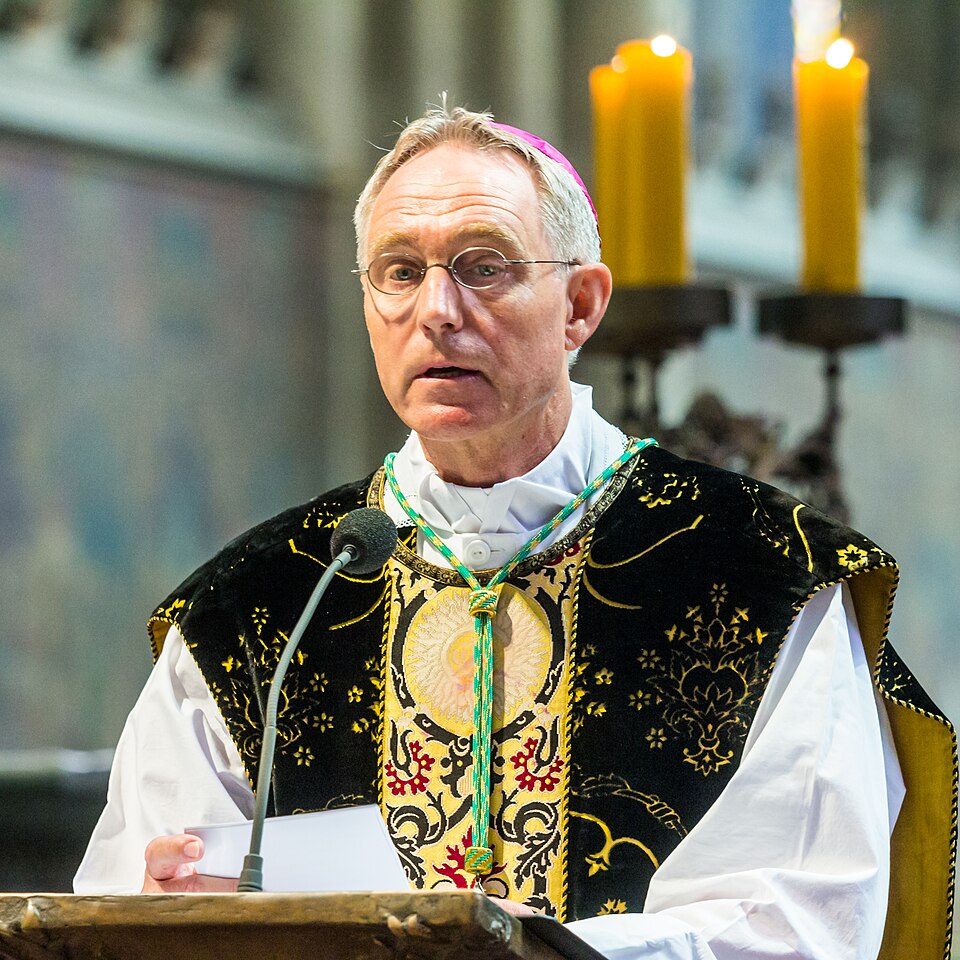
In an interview with La Repubblica, Pope Benedict’s longtime personal secretary discusses Benedict XVI and Pope Francis’s relationship, including tensions over the traditional Mass Archbishop Georg Gänswein has said that Pope Emeritus Benedict XVI never criticised the restrictions imposed on the traditional Mass by Pope Francis, despite being personally troubled by them. In an interview published by La Repubblica on April 20, Archbishop Gänswein, who served for years as Benedict’s personal secretary, said: “Benedict never commented on Pope Francis’s motu proprio Traditionis custodes. In my book I wrote that when we read L’Osservatore Romano [about Traditionis custodes], Benedict’s heart grew heavy. That is true, but I am the one saying it, not him.” The archbishop, now Apostolic nuncio in Lithuania, also spoke at length about the unprecedented coexistence of two popes following Benedict’s resignation in 2013. “There was only one Pope. The other was still called Pope, but he was in reality the Pope Emeritus. That is a very important difference,” he said. He added that Pope Emeritus Benedict XVI himself took visible steps to mark the distinction, removing elements of papal dress and adopting a simpler presentation, even as he retained the title “Pope Emeritus”, which Gänswein confirmed “he chose himself”. Responding to claims that the resignation had been shaped by scandal, Gänswein rejected any link to the Vatileaks scandal or other controversies. “None of what you have recalled had anything to do with it. Neither Vatileaks, nor the so called ‘gay lobbies’, nor anything else. The resignation was the fruit of deep reflection and intense prayer. The Pope put the question to his conscience and then made his decision.” He recalled the moment of the conclave that elected Francis, describing how he saw the white smoke from his office before going to the Sala Regia. “Then the door opened and from a distance I saw the cardinals congratulating the new Pope. Almost at once, the name Jorge Mario Bergoglio spread through the entire hall like wildfire.” When he met the newly elected Pope, Gänswein said Francis spoke first: “I would like to meet Benedict. Can you help me?” The first meeting between the two men took place at Castel Gandolfo on March 23, 2013. Gänswein said the encounter was marked by mutual deference. “When they entered the chapel, Pope Benedict wanted to let Pope Francis go first, but Francis refused. The same thing happened with the prie-dieu.” He added that Pope Emeritus Benedict XVI had prepared a box of documents relating to the Vatileaks inquiry, which he handed over personally. “He wanted to explain the contents to Francis and tell him what he thought. He did it in writing, as usual, and put everything inside.” Archbishop Gänswein confirmed that Pope Francis chose not to reside in the Apostolic Palace after his election. “The Pope told me to find him something else,” he said, admitting that he initially did not take the request seriously. He later understood the decision more clearly when Francis explained: “I have never lived in such large rooms. I want to live in smaller ones.” The Pope subsequently remained at the Casa Santa Marta. The interview also addressed perceptions of tension between the two pontificates. Archbishop Gänswein said reports of sustained opposition organised around Benedict were exaggerated. “From what I experienced, the real situation was greatly exaggerated.” He acknowledged that “there were some observations about Francis’s behaviour and choices”, but added: “It is perfectly normal to comment on a Pope’s decisions; it is not in itself forbidden.” Reflecting on his own position, Archbishop Gänswein referred to a remark he had made about carrying the “mark of Cain”. He clarified: “I did say that, but in general, not with reference to Pope Francis.” He added that Benedict’s figure “aroused both friends and enemies”, and that his own association with the former Pope had remained a defining factor. Archbishop Gänswein also described the personal relationship that developed between the two popes in more ordinary terms. He pointed to small gestures, including visits and the exchange of gifts, as evidence of a cordial rapport. “One could sense it, atmospherically, so to speak, from the climate that had been created between them,” he said, noting that such gestures were “signs of mutual attention”. He also gave a detailed account of the moment following Benedict’s death, when Francis arrived at the Mater Ecclesiae Monastery. “Pope Francis had told me: ‘When the hour comes, please call me directly.’ I did so on my mobile phone. Shortly afterwards the Pope arrived.” Archbishop Gänswein said: “Francis blessed his predecessor, then sat down beside him, remained in silence for a few minutes, and then we all prayed together.” Asked about a comparison between recent popes, Gänswein declined to offer a clear characterisation of the current pontificate beyond noting the significance of the name. “That is a difficult question at the moment,” he said. “But the name Leo itself already says something, don’t you think?” The remarks of Archbishop Georg Gänswein over recent years, taken together with testimony from those close to Pope Emeritus Benedict XVI, suggest a more restrained relationship than some accounts presented during the years of his retirement alongside Pope Francis. The evidence increasingly suggests that the relationship may have been difficult, even if this was never publicly acknowledged by Pope Emeritus Benedict XVI himself. His silence, long interpreted as serene acquiescence, now appears as an act of discipline intended to avoid any impression of a divided papacy. The clearest point of tension concerns the motu proprio Traditionis custodes, which reversed the more permissive framework established by Benedict for the older form of the Roman rite in Summorum Pontificum. Archbishop Gänswein said in an interview with Die Tagespost on January 20, 2023: “It was very hard. I believe that reading the new motu proprio broke Pope Benedict’s heart because his intention had been to help all those who had found their home in the traditional Mass, to find inner peace, liturgical peace, so that they would abandon the position of Archbishop Lefebvre.” That judgement, offered by the man who knew Benedict most intimately in his final years, corresponds to a known priority of Benedict’s pontificate: the reconciliation of those attached to the older liturgy. Sources close to Archbishop Gänswein and to Pope Emeritus Benedict XVI have further confirmed this, telling AdVaticanum that the promulgation of Traditionis custodes “caused [Benedict] pain”. That pain was not expressed publicly. Instead, Pope Emeritus Benedict XVI maintained the silence he had promised upon his resignation. More significant, and less often discussed, is the way Archbishop Gänswein’s own position further complicates the picture. Once Prefect of the Papal Household, he was effectively sidelined and later sent to Germany and then the Baltics as nuncio. The same sources told AdVaticanum that Pope Emeritus Benedict XVI made both formal and informal requests that his secretary be allowed to remain in the Vatican. They said: “There wasn’t an actual relationship. Sometimes Benedict asked favours of Francis to keep Gänswein in the Vatican and not remove him, both formally and informally.” These requests, it is said, went unanswered. This asymmetry is also discernible in reflections offered by the papal biographer Peter Seewald in an interview with Nico Spuntoni. Seewald contrasted the widely remembered homily delivered by then Cardinal Ratzinger at the funeral of Pope St John Paul II with the more restrained tone of the rites following Benedict’s own death. “We all remember the warm words that Cardinal Ratzinger spoke at the requiem for John Paul II,” he said. “But no one remembers Bergoglio’s words at the requiem for Benedict XVI. They were as cold as the whole ceremony, which had to be rather brief so as not to honour his predecessor too much. At least that was my impression.” Pressed on whether such a judgement was too severe, Seewald continued: “I mean, how does one manifest friendship? With a mere statement in words, or by living it?” He pointed to differences “in temperament, culture, intellect and above all in the direction of the pontificates”, adding that Benedict had promised obedience and “remained silent so as not to give the slightest impression of wanting to interfere in his successor’s governance”. That silence, he suggested, was not without consequence. “Benedict trusted Francis. But he was bitterly disappointed several times.” Historically, the coexistence of a reigning Pope and a Pope Emeritus was itself without precedent in the modern Church. Pope Emeritus Benedict XVI sought to define that relationship through withdrawal, discretion and loyalty. His intention was to remove himself entirely from the exercise of authority. Yet the very novelty of the situation meant that every gesture and every silence acquired a significance beyond the personal.
Apr. 23, 2026