

Spanish Bishops Conference
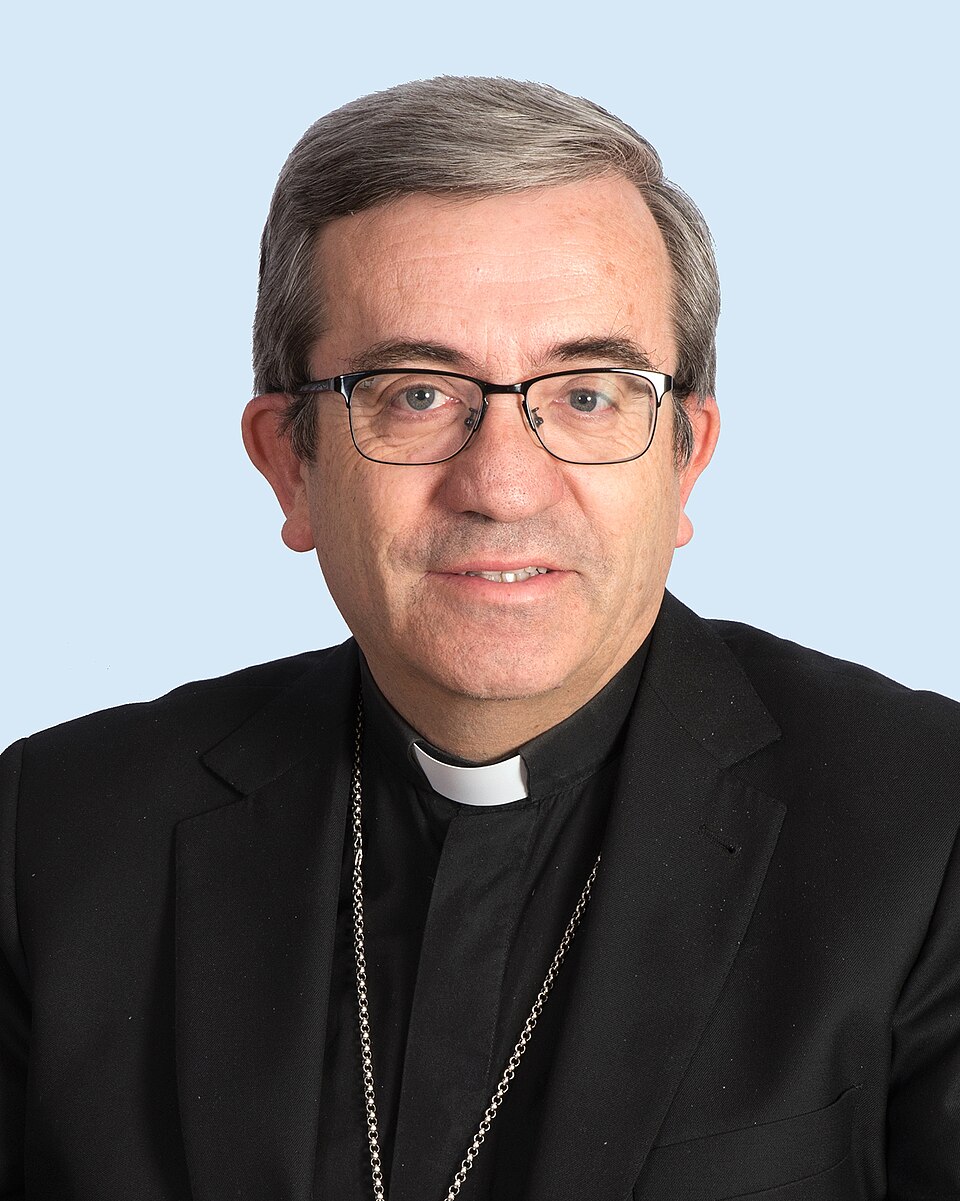
Archbishop Argüello issues Corpus Christi reminder on who may receive Communion
Archbishop Luis Argüello, president of the Spanish Bishops’ Conference, has reiterated that Catholics living in a new conjugal relationship following the breakdown of a valid sacramental marriage cannot receive Holy Communion The president of the Spanish Bishops’ Conference has reminded Catholics that those living in a new conjugal relationship following the breakdown of a valid marriage cannot receive Holy Communion. Archbishop Luis Argüello of Valladolid made the remarks in a pastoral message for Corpus Christi in which he reflected on the Eucharist and the dispositions required to receive it worthily. “When a marital relationship has broken down and those who were part of that marriage are living a new conjugal relationship,” Communion cannot be received, the archbishop said. Archbishop Argüello said those in such circumstances remained members of the Church, but that “this breaking of the Sacrament of the Covenant prevents Eucharistic communion”. “They may participate in the celebration, as well as in the life of the Church in many ways, but receiving Holy Communion is not possible,” the president of the Bishops’ Conference said. The Archbishop of Valladolid issued the message as Catholics in Spain prepare to celebrate Corpus Christi later this month. In the reflection, published as part of his diocesan pastoral programme for the first half of June, Argüello also referred to other situations which he said were incompatible with receiving Communion. These included “participating in a sinful relationship”, as well as abuses committed against others “whether in the economic or labour sphere, or in the psychological or emotional sphere”. He also referred to those publicly defending positions contrary to Christian morality. “In those cases, we cannot approach Communion without a firm decision to change our lives, making reparation for the damage caused by our situation of sin,” the archbishop said. Archbishop Argüello said the inability to receive Communion should encourage Catholics to seek a resolution consistent with the Church’s teaching on both marriage and the Eucharist. “The pain of not receiving Communion should awaken the desire to seek a solution that respects the meaning of the two sacraments at stake: Matrimony and the Eucharist,” Archbishop Argüello said. The intervention comes as Archbishop Luis Argüello prepares to accompany Pope Leo XIV during the pontiff’s apostolic visit to Spain from 6 to 12 June. Archbishop Argüello, who was elected president of the Spanish Bishops’ Conference in 2024, has become one of the most prominent voices in the Spanish Church. His election was widely viewed as signalling a more doctrinally direct approach from the episcopal conference following the presidency of Cardinal Juan José Omella. Catholic teaching holds that a valid sacramental marriage is indissoluble. For that reason, those who enter a new conjugal relationship while a previous sacramental marriage remains valid are ordinarily unable to receive the Eucharist. The issue received renewed attention during and after the Synods on the Family convened by Pope Francis and following the publication of the apostolic exhortation Amoris Laetitia in 2016. Archbishop Argüello’s latest remarks, however, amounted to a straightforward restatement of the Church’s doctrine.
Jun. 2, 2026

Spain’s religious orders turn to professional investment managers
Religious orders and dioceses across Spain are increasingly turning to professional investment managers and ethically screened funds as ageing communities, falling vocations and rising maintenance costs force Catholic institutions to modernise their finances Spain’s religious orders are increasingly turning to professional investment managers and ethical funds as declining vocations, ageing communities and rising maintenance costs force Catholic institutions to modernise the way they manage their finances. According to Bloomberg News, the change was evident during a seminar held at the Theological Institute of Religious Life in Madrid, where members of religious congregations met bankers and financial advisers to discuss investment strategies, artificial intelligence and the economic uncertainty caused by Donald Trump’s second term in the White House. The gathering is indicative of a shift taking place across the Spanish Church, which has traditionally relied on donations, rental income and a system allowing taxpayers to allocate 0.7 per cent of their income tax to the Catholic Church. But falling numbers in religious life and growing financial pressures have led many dioceses and congregations to professionalise the management of their assets. Figures published by the Spanish bishops’ conference show the number of men and women in religious orders in Spain fell by around 45 per cent between 2014 and 2024. The number of priests has also continued to decline during the same period, though recent years have seen a small increase in the number of seminarians. Many religious communities possess valuable property portfolios, including schools, hospitals, convents and apartments in major cities, but these assets have not always been managed with profitability in mind. Guillermo Vanrell, head of finance and administration for a diocese in eastern Spain, said he was struck by the outdated state of Church administration when he first entered the role more than a decade ago. “I hadn’t seen an Olivetti typewriter since I was a kid,” he said, recalling how receipts were still being produced manually. He said diocesan investments had been concentrated in fixed-term deposits and banking products with little long-term strategy behind them. Since then, he has worked to modernise accounting systems and restructure investments while monitoring financial markets more closely. The scale of Church assets can vary widely between religious institutions. Smaller congregations often struggle with limited resources, while larger orders may oversee international portfolios worth hundreds of millions of euros. Many institutions must also navigate both civil and canon law obligations, particularly where schools, hospitals and heritage properties are concerned. The growing complexity of Church finances led CaixaBank and the Universidad Pontificia Comillas in Madrid to establish Spain’s first postgraduate programme dedicated to the administration of ecclesiastical property and religious institutions. Some congregations have been forced to make difficult decisions about properties they can no longer afford to maintain. The owners of Hospital La Milagrosa in Madrid sought outside advice when the cost of modernising the hospital became unsustainable. The religious order eventually reached an agreement with the Vithas Group, which now manages the hospital and has pledged to invest €30 million in renovations, while the congregation retained ownership of the property itself. As Church institutions become more active investors, Vatican guidance has increasingly shaped how Catholic organisations approach financial markets. In 2022 the Pontifical Academy of Social Sciences published Mensuram Bonam , a document setting out “faith-consistent investing” guidelines for Catholic institutions following a series of financial scandals linked to Vatican finances. The document warned against investments in industries connected to weapons, pornography, contraception and addictive products while encouraging support for businesses linked to sustainability, human dignity and social responsibility. María Canel, who oversees the finances of the Religiosas de la Pureza de María near Barcelona, said there had once been “a fear of investing”, but that attitude had changed significantly. She recalled rejecting a fund after discovering that it included investments linked to the arms industry despite assurances that it complied with Catholic social teaching. The demand for ethically screened investments has contributed to the growth of explicitly Catholic funds in Spain. According to financial advisers, around a dozen such funds now operate in the country with combined assets worth approximately €650 million. Many are linked to major banking groups including Santander, Sabadell and Ibercaja, although independent firms also operate within the sector. Earlier this year the Vatican Bank, working alongside Morningstar, launched two equity indices designed to comply with Catholic ethical principles. Companies listed within the indices include Deutsche Telekom, ASML, Apple, Nvidia and Tesla.
May 21, 2026