

Sons Of The Most Holy Redeemer
Sons of the Most Holy Redeemer declare new position on the papacy
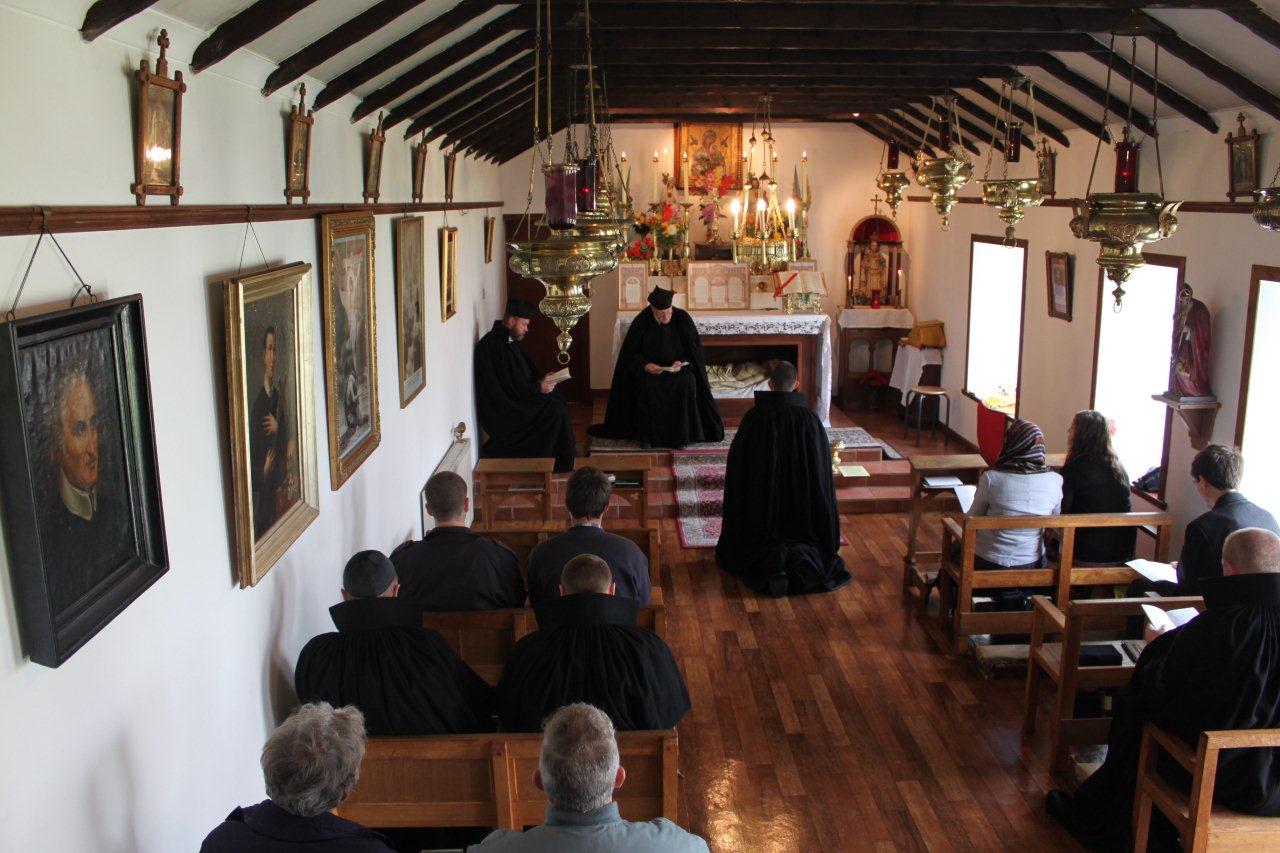
The Sons of the Most Holy Redeemer, a traditionalist community previously associated with the SSPX and later reconciled with Rome, has formally rejected the current papacy and called for an “imperfect general council” The Sons of the Most Holy Redeemer (FSSR) have publicly rejected the validity of the current papacy in a 21-page letter which describes a “spiritual catastrophe” in the Church since the Second Vatican Council. The community issued the document on 2 May, setting out a sustained critique of developments in doctrine, liturgy and governance in the Catholic Church over recent decades. In the letter, addressed to the faithful, the priests and brothers claim that the crisis stems from a long-term infiltration within the Church’s structures. “The problem is, as St Pius X warned, that the structures of the Catholic Church have been infiltrated by men of a different non-Catholic religion,” they wrote. “They use the Catholic name, they occupy the Catholic buildings, they know the Catholic culture. From the outside they look to be Catholics, but they do not profess the Catholic Faith as taught through the centuries.” The statement continues: “In reality, they have been formed as revolutionaries committed to the condemned Freemasonic heresies of Religious Liberty, Religious Indifference and False Ecumenism. Their infiltration has struck a lethal wound to the Catholic religion; they have brought about a major schism from the Mystical Body. We must stand firmly with the Catholic Church and move well away from the camouflage of its counterfeit.” The community argues that the effects of this alleged infiltration became fully visible in the period following the Second Vatican Council, held between 1962 and 1965. “Since the Second Vatican Council, the apparent Popes have caused a spiritual catastrophe of the greatest imaginable proportions,” the letter states. It adds that “new doctrinal, moral, liturgical, and disciplinary decisions since Vatican II cannot be accepted because they contradict what came before.” Despite the severity of its criticisms, the community insists that it does not consider itself to be separating from the Church. “Our Faith has not changed. Holding the True Faith of our Fathers, we will continue to offer the True Mass. We will worship the True God. And we will work for an Imperfect General Council to bring about the triumph of Christ’s One, Holy, Catholic and Apostolic Church,” the letter states. The monks further emphasise this point, writing: “We are not saying that we should leave the Catholic Church. The Catholic Church is the Ark of Salvation, the Mystical Body of Christ, the Bride without spot or wrinkle. We cling to her with all our strength. But we must recognise that the institutional structures that claim to be the Catholic Church have been infiltrated.” The declaration goes on to set out practical conclusions drawn from these claims, including a refusal to recognise the authority of the current pontiff. “We must do what Catholics have always done in times of crisis: we must hold fast to the Faith as it has always been taught. We must give no juridical recognition to those who have departed from it, including Leo XIV and his bishops,” the text states. Since 1999, the FSSR community has been based on Papa Stronsay, a small island in the Orkney archipelago off the north coast of Scotland. They also have one house in the United States and previously had another in New Zealand. The group traces its origins to the Society of St Pius X, itself founded in 1970 by Archbishop Marcel Lefebvre amid disputes over the interpretation and implementation of the Second Vatican Council. In 2008, the community sought reconciliation with Rome and was received into full communion during the pontificate of Pope Emeritus Benedict XVI. The declaration issued by the Sons of the Most Holy Redeemer on Papa Stronsay is the culmination of a trajectory that has been evident for some time. On 16 October last year, the group published “An Open Letter to the Catholic Bishops, Priests, Religious and Faithful” which took issue with various actions taken by Rome under Pope Francis, including Amoris Laetitia , Traditionis Custodes and Fiducia Supplicans . The recent letter marks a decisive break and makes the prospect of reconciliation considerably more difficult. Leaving little ambiguity, it states: “Since the Second Vatican Council, the apparent Popes have caused a spiritual catastrophe of the greatest imaginable proportions,” the priests and brothers write, adding that “new doctrinal, moral, liturgical, and disciplinary decisions since Vatican II cannot be accepted because they contradict what came before.” They conclude by saying: “We must give no juridical recognition to those who have departed from it, including Leo XIV and his bishops.” What has now emerged publicly confirms what some had already suspected. The community’s current position goes beyond that of the Society of St Pius X, which, despite its longstanding criticisms of Vatican II, has consistently stopped short of denying the legitimacy of the Pope. The Papa Stronsay declaration represents a further step, one that places the group closer to sedevacantist or quasi-sedevacantist currents. This shift had been anticipated in reporting from within traditionalist circles. It was unlikely that the Transalpine Redemptorists would rejoin the Society of St Pius X. Instead, sources within the Society suggested that the community was moving towards a more radical alignment, potentially situating itself within what has sometimes been described as the “sedevacantist” orbit. It is also believed that the group has received conditional ordinations from Bishop Pierre Roy, a former priest of the Society of St Pius X who is now a sedevacantist bishop. Bishop Roy himself has advocated the convocation of an ‘Imperfect General Council’ to resolve what he perceives to be a crisis in the Church. The community has explicitly called for an ‘Imperfect General Council’, a gathering of bishops who, in their view, have preserved the true faith. The idea has been referenced in external interviews. In remarks to a New Zealand outlet, Father Michael Mary indicated support for such a proposal, suggesting that the community sees this as a practical path forward in the absence of recognised ecclesial authority.
May 3, 2026