

Rerum Novarum
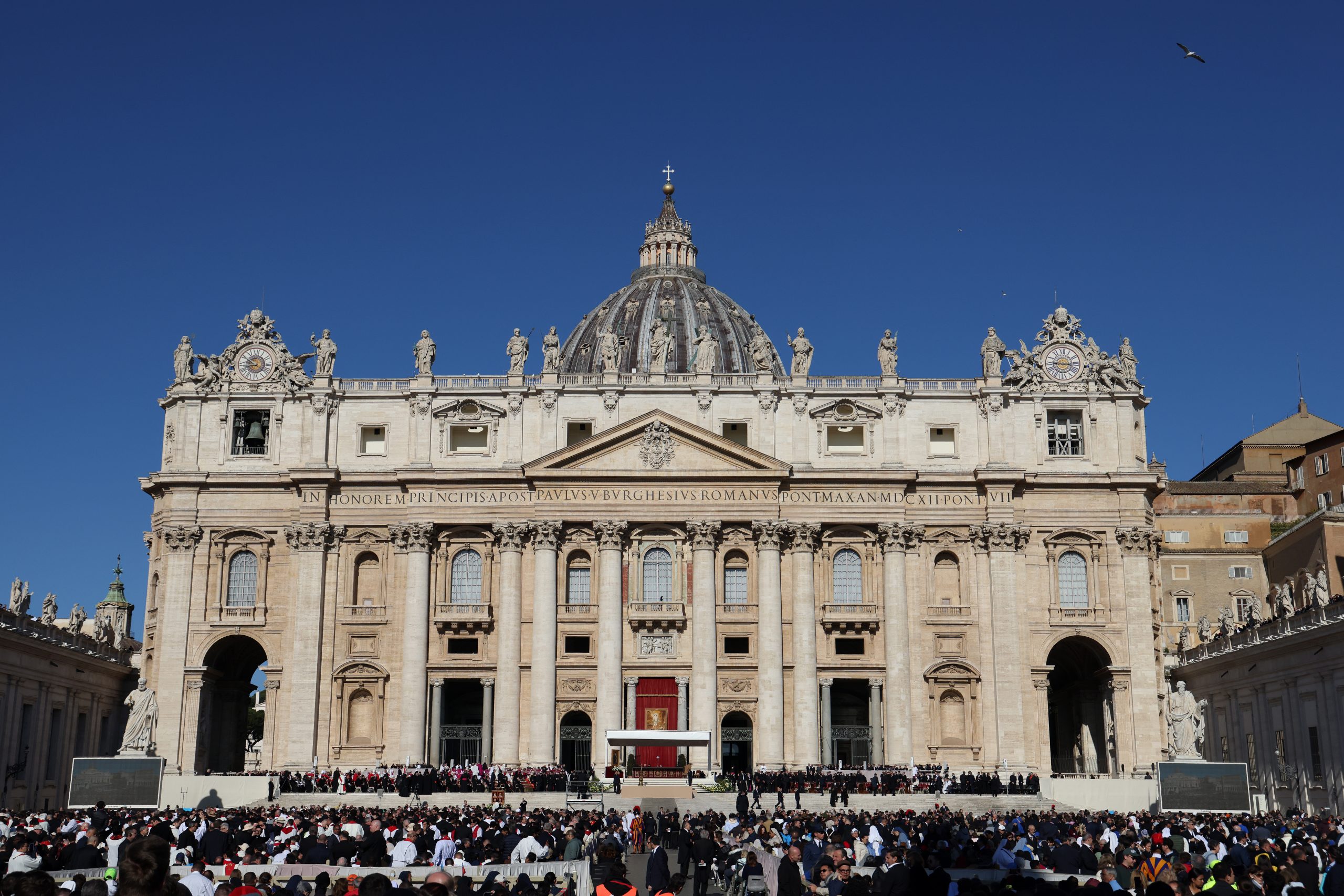
Global reactions pour in after Pope Leo XIV’s AI encyclical
Politicians, bishops and technology leaders across the United States, Britain and Canada have begun responding to Pope Leo XIV’s first encyclical, Magnifica Humanitas The first international reactions to Pope Leo XIV’s inaugural encyclical have begun to emerge less than 24 hours after its publication, with bishops, politicians and technology figures across the United States, Britain and Canada welcoming the document’s warnings about the dangers posed by artificial intelligence. The encyclical, Magnifica Humanitas, was released by the Vatican on 25 May and is already being compared to Pope Leo XIII’s landmark 1891 social encyclical Rerum Novarum, which addressed the upheavals of the Industrial Revolution. Pope Leo XIV deliberately dated the text 15 May to coincide with the 135th anniversary of the earlier document. One of the strongest official political reactions came from the United States ambassador to the Holy See, Brian Burch, who praised the Vatican’s intervention in the growing global debate surrounding AI. “We welcome the Holy See’s important contribution to the subject of artificial intelligence,” Burch said. “The Vatican’s moral leadership on technology and human dignity contributes meaningfully to the global conversation on AI.” Burch said the United States shared the Holy See’s commitment to ensuring that artificial intelligence “serves humanity and upholds fundamental values”, while also defending the Trump administration’s emphasis on innovation and American leadership in the sector. “The United States is likewise committed to exporting American AI technologies built on principles of transparency, security and human flourishing, ensuring the world benefits from AI systems that reflect democratic values rather than authoritarian control,” he said. David Sacks, the technology investor and former White House AI adviser, also responded publicly to the encyclical, agreeing with the Pope’s argument that AI should remain a tool at the service of humanity rather than become an instrument of “domination or exclusion”. Writing on X, however, Sacks questioned how governments could be trusted with increased regulatory authority over artificial intelligence. “If we hand governments sweeping power over AI development in the name of safety, how do we prevent it from being used to censor, surveil and control citizens, as Orwell foretold in 1984?” he wrote. “This is the real alignment problem. The oldest questions of human nature and authority don’t disappear in the AI age. They become newly relevant.” The encyclical also drew praise from Democratic Senator Chris Murphy of Connecticut, who said Pope Leo XIV had articulated growing concerns about the social and moral effects of artificial intelligence. “AI threatens to undermine the basic building blocks of humanity as it seeks to replace our most basic functions, like creativity, friendship and critical thinking,” Murphy wrote, describing the Pope’s warning against monopolisation of AI technologies by powerful corporations as “really important”. Catholic bishops throughout the English-speaking world moved quickly to welcome the document, presenting it as a major contribution to Catholic social teaching at a moment of rapid technological change. Archbishop Paul S. Coakley of Oklahoma City, president of the United States Conference of Catholic Bishops, said the Church in the United States received the encyclical “with gratitude and praise”. “It is a powerful reminder that no technology can replace a child of God, and all technology should be placed at the service of helping humanity thrive,” he said. Drawing parallels with Rerum Novarum, Archbishop Coakley said Pope Leo XIV had shone “the light of the Gospel and the tradition of the Church” on the opportunities and dangers created by artificial intelligence. “The Pope calls us to never lose sight of the inherent dignity of all human life and the moral imperative for technology to support peace and the common good rather than the limited interests of a few,” he said. The Archbishop also revealed that the US bishops’ conference had already tasked its doctrine committee with coordinating the Church’s response to developments in artificial intelligence. In England and Wales, Archbishop Richard Moth, president of the bishops’ conference, and the Archbishop of Westminster described the encyclical as “an important contribution to integral human development during a time of considerable change”. “One of the first interventions of Pope Leo since he was elected Pope was to draw attention to the profound challenges AI will bring to humanity,” Archbishop Moth said. The Archbishop of Westminster noted that the Church’s social teaching tradition since Rerum Novarum offered substantial guidance for navigating technological and economic upheaval. “We must respond to these, placing the centrality of humanity above all else, most especially the solidarity that is needed if we are to seek peace among peoples,” he said. “Pope Leo reminds us that ‘more powerful does not necessarily mean better.’” Archbishop Moth warned that technology “must not be used to embed unjust economic systems and abuses of power, but must always be at the service of human development”. He also disclosed that the Bishops’ Conference of England and Wales had established a working group to study the encyclical and examine the ethical issues generated by artificial intelligence. Other American bishops issued similar statements within hours of publication. Bishop Michael Burbidge of Arlington said the encyclical was especially welcome “in this time of tremendous social and technological change”. “I encourage all to join me over the coming days in reading Magnifica Humanitas in its entirety and prayerfully considering all that the Holy Father shares,” Bishop Burbidge said. Archbishop Richard Henning of Boston described the document as “timely and important”, while Archbishop Nelson Pérez of Philadelphia encouraged Catholics to reflect on its “vital message” concerning the protection of human dignity during rapid technological development. Bishop William Koenig of Wilmington, Delaware, said the encyclical drew upon the wisdom of Catholic social teaching to ensure that technological progress remained directed towards “human flourishing”. The Canadian Conference of Catholic Bishops also welcomed the document, saying it offered guidance for protecting the human person during “a profound epochal shift”. The bishops highlighted the encyclical’s call for “a civilization of love founded on justice, dialogue and shared responsibility” as an alternative to what the Vatican described as “the culture of power and war”. However, a more critical reaction came from the Bishop Emeritus of Tyler, Bishop Joseph Strickland, who published a lengthy critique arguing that Magnifica Humanitas risked placing excessive emphasis on social structures and human flourishing at the expense of sin, repentance and salvation. While acknowledging the encyclical’s “strong and important” rejection of transhumanism and its warnings about “AI warfare, exploitation, digital manipulation and technological domination”, Bishop Strickland said the document devoted comparatively little attention to “original sin, concupiscence, personal repentance, moral culpability, judgment, hell, penance, or the eternal destiny of the soul”. Bishop Strickland argued that “the roots of evil begin to appear primarily structural rather than spiritual” and warned that the encyclical’s repeated calls for a “civilization of love” risked sounding “less like the fruit of conversion to Christ and more like a global humanitarian project centred on fraternity, solidarity, inclusion and peace”. The former Bishop of Tyler said many Catholics would find the document “deeply unsettling” because “the entire framework is subtly shifting: from God-centredness to man-centredness, from salvation to human flourishing, from sin to systems”. He concluded by warning against “religious humanism” and insisting that “the answer remains what it has always been: Jesus Christ, King of kings and Lord of lords.”
May 26, 2026

Magnifica Humanitas offers a window into Leo XIV’s moral compass
Magnifica Humanitas is far more than an encyclical on artificial intelligence. Michael Haynes finds that Pope Leo XIV’s first major text offers a window into the moral vision shaping his pontificate With the launch of his first encyclical there is now no doubt that Leo’s choice of regnal name and entire papacy is centred around what he sees as a pivotal moment for the future of the Church and humanity. “Artificial intelligence needs to be disarmed,” said Leo XIV while launching Magnifica Humanitas today. “This moment needs words capable of attracting attention, of awakening consciences.” This is not to say that Leo opposes the seemingly relentless drive of artificial intelligence (AI) or the wider technological development of the modern world. While AI cannot be deemed “morally neutral”, Leo urged that “it must be at the service of all and the common good”. In short, this could be taken as a summation of the entire encyclical : a plea for the pursuit of the common good. It is certainly written as a response to AI and describes itself as being in the “age of AI”. But it is much wider than AI itself, as Leo appeared to launch his pontificate anew. Just as during his address to the College of Cardinals last May he outlined his papal priorities, in Magnifica Humanitas Leo revealed his deeper concerns about wider society. Given the length of the encyclical, no single analysis can justly summarise all that it contains, but one key element to examine first is what the text reveals about the Pontiff’s moral compass and his view of addressing crises in the Church and wider secular society. Far from being a mere appeal from another cleric for some generically responsible behaviour, this time regarding AI, Leo delved into the entire foundation of societal life. For Leo, the link between his encyclical and his namesake’s Rerum Novarum is palpable. “Like the earlier Leo, I feel entrusted to look upon another huge transformation with eyes of faith, with lucidity of reason, with openness to mystery, and with cries of the poor and the earth resounding in my heart,” he commented during the launch event. This is why Magnifica Humanitas does not deal briefly and solely with AI, but instead uses the topic to launch into a wider schooling of society about improving standards of behaviour and acting in a more Christian manner while seeking the common good. Leo’s assessment of how to preserve humanity from the dangers posed by AI is to attempt a ground-up re-education of society with God at the centre. In part this explains the considerable length of the text, which will have disappointed those looking for a return to briefer tomes. Of the 245 paragraphs and 224 footnotes, Pope Francis is cited 54 times, Benedict XVI 16 times, John Paul II nearly 40 times, and the Second Vatican Council 13 times. St Augustine also features throughout, with a quotation drawn from J.R.R. Tolkien. The tone is a mixture of different elements. Firstly, it is undeniably clear that Leo is seeking to address the result of many years of increasingly anti-Catholic secularism. “We live at a time of significant spiritual and cultural blindness,” he stated. In order to resolve this crisis, a crisis which then spills over into the use of AI, Leo urges society to return to elements intrinsic to Christian civilisation, such as pursuing the common good. “In the era of artificial intelligence, when human dignity is threatened by new forms of dehumanization, ours is the pressing duty to remain profoundly human,” he writes. “We must lovingly safeguard the grandeur of humanity bestowed upon us and revealed in its fullness in Christ, the splendour of which no machine can ever replace.” His approach to how best to use AI thus necessarily involves a quasi-catechesis on the re-Christianisation of society. Leo decried how “the risk of dehumanization — of building a future that excludes God and reduces the other to a means — is an ancient and ever-new temptation that today takes on a technical guise”. Should AI and wider technological development continue in the line of the Tower of Babel, then all will suffer, Leo argued. “Babel thus reveals the limits of any effort that, however grandiose, arises from self-affirmation, sacrifices human dignity for efficiency and aspires to reach heaven without God’s blessing.” “What saves humanity,” he added later in the encyclical, “is the divine love that descends into the most fragile point of our history and renews it from within.” The Pontiff urged all readers to recognise “the harmony that arises when all persons assume their own role and recognize that their strength comes from the Lord”. Such lines present a decidedly Christian tone to the text, if perhaps not a stridently or overtly Catholic one. It reads as Leo’s heartfelt appeal to the world at large to act in a more polite, respectful and ultimately Christian manner. “In order to protect the human person in the age of artificial intelligence, I believe that today we must once again reflect on the common good, the universal destination of goods, subsidiarity, solidarity and social justice,” wrote Leo, having noted that “a city founded on the common good implies, first and foremost, building on a firm relationship with God”. At other times the text seems less unabashedly Catholic than a papal encyclical ought confidently to appear. In large part this is due to the Pope’s reiteration of his predecessor’s text Dignitas Infinita regarding human dignity, and an underlying tone in the text which appears to orient the Pope’s proposed societal changes as being chiefly desirable because they benefit man, rather than being linked to a conversion of hearts and minds to Catholicism. Assuredly, in certain sections the Pope notes the importance of having God at the foundation of activity, but in others a far more secular tone is present. Modern teaching on human dignity tends to upend traditional teaching, generally remaining silent on supernatural dignity and then elevating natural dignity. For a more detailed analysis on the topic than is possible here, see this correspondent’s article and book on the topic. Citing this teaching on human dignity, Leo writes that it is this which “requires us to shape the way we live together, including our economic and political choices, and the makeup of our cities”. Yet such an aspect is also very much in line with Leo’s papal style: avoiding polemics, and outwardly remaining calm as he seeks to find common ground with all in an apparent attempt to defuse tensions and foster peaceful dialogue. This does not stop him from once again decrying abortion and euthanasia. Nor did Leo feel restrained in making a bold statement declaring that the Church’s longstanding teaching on a “just war” is “now outdated” since “humanity possesses far more effective and capable tools for promoting human life and resolving conflicts, such as dialogue, diplomacy and forgiveness”. Indeed, this latter point places his repeated calls for peace in a new light, given that, for Leo, it appears that armed conflict can no longer be justified, a pronouncement which is not supported either by Scripture or Tradition. For an encyclical billed as being solely about AI, the text delivers far more than that. It reads as a window into Leo’s moral and social views and thus into the style and priorities of his pontificate. Vaticanists waiting for a “tell” on Leo have finally been granted an inside look. Leo highlights the Christian foundation of society before noting that only Christianity can lead society and mankind to truly flourish. He then moves to address questions relating to the common good, alongside topics likely to interest more secular readers, including his passionate appeals regarding armed conflict and the growing use of AI in fuelling the global war industry. But in closing he returns once more to his overtly Christian theme, emphasising the importance of prayer in sustaining any endeavour aimed at fostering a better society in pursuit of the common good. “The spirituality that we need,” he wrote, “is a Eucharistic spirituality, that is, a spirituality of ecclesial unity in love.” Leo urged society to recognise the beauty that comes not from AI’s takeover of the world, or even man himself through transhumanism, but from the frailty of humanity which must rely upon God for everything. “Our rule,” he concluded, “must be the acceptance of human limitations as a natural and positive reality, and should be characterized by shared responsibility and a language characterized by the Gospel.” Michael Haynes is an English journalist in the Holy See Press Corps. He serves as Vatican Correspondent and Analyst for Pelican+ , while readers can follow him at Per Mariam and on X @MLJHaynes .
May 25, 2026