

Our Lady
May: the month of Mary
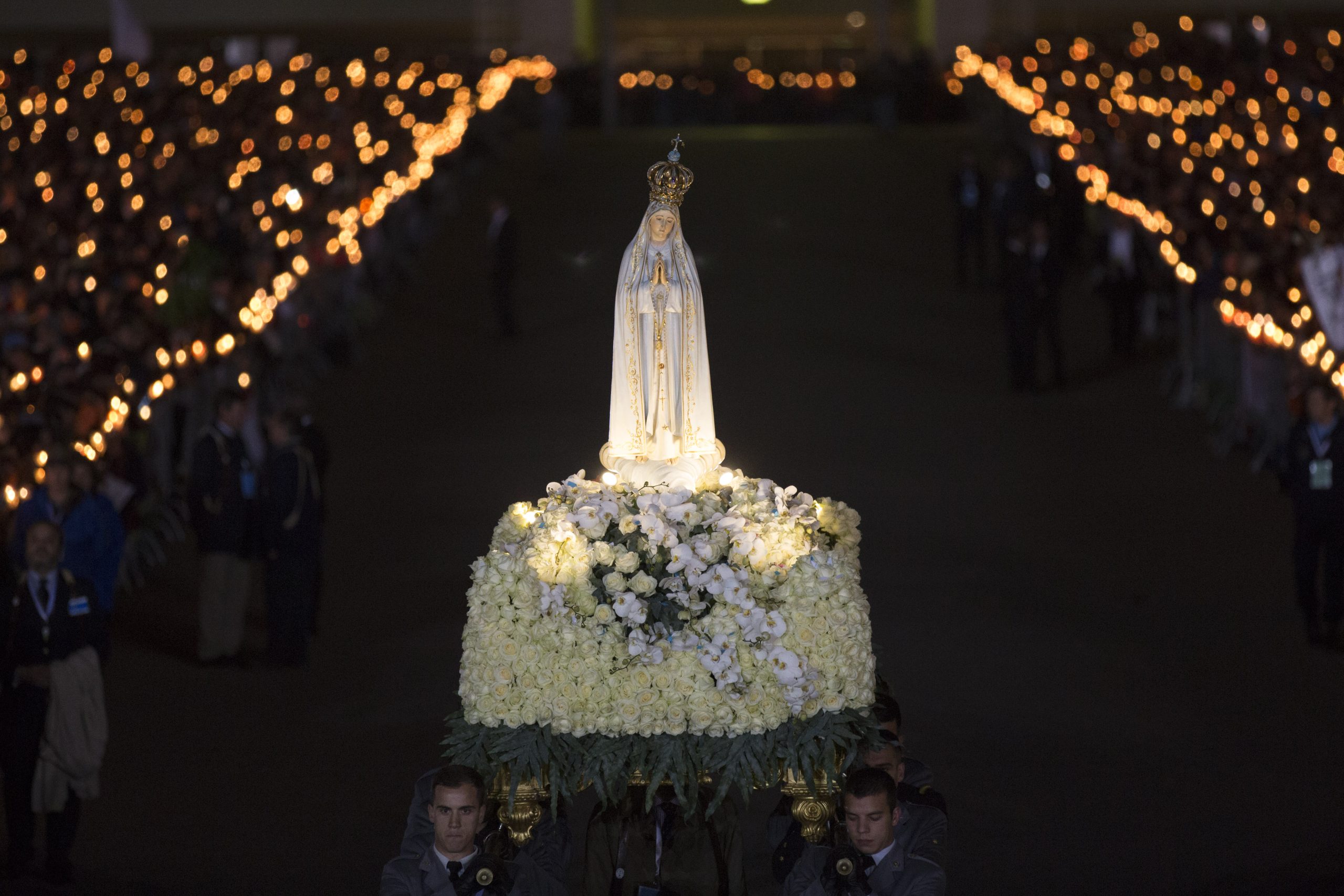
The Church has long dedicated the month of May to Mary. Br René Stockman, former Superior General of the Congregation of the Brothers of Charity, reflects on how Catholics can use the month to renew their devotion to Our Lady and let her example transform their lives It remains a pious devotion to honour Mary in a special way during the month of May. Pilgrimages, praying the rosary together, reciting her litany, giving a special place to a statue of Mary: these are time-honoured customs that we would do well to uphold. Even in the most austere church, a statue of Mary will never be missing. The presence of debates on whether or not to officially recognise the title of Mary as Co-Redemptrix says something about the importance she had in the work of salvation. Even if it is not desirable to enshrine this in dogma, we can hardly deny her cooperation. There is only one person who may bear the title of Mother of God, because she brought the God-man Jesus into the world at the Incarnation. From this, a rich popular devotion has developed around the person of Mary, and countless images of her have been created. Pilgrimages to Lourdes, Fatima and other places where Mary once appeared continue to draw large crowds, and there we encounter the most diverse people. This is not a matter that attracts only simple, devout souls, or the sick who hope for a cure. It is striking that dioceses, which struggle to keep their parishes alive, with church closures and the repurposing of churches as an almost logical consequence, see remarkable success in their Marian shrines. After all, it is there that they can most easily and directly reach their faithful. Just as Mary was once the link between heaven and earth, she continues to connect us today. Here she certainly deserves a renewed understanding of her title as Mary Mediatrix. Mary enables people who are completely estranged from their church and parish life to reconnect with the faith through her. She never intended to be the end goal, but always the path to her Son: through Mary to Jesus. What St Louis de Montfort emphasised in his devotion to Mary at the end of the seventeenth century, Pope St John Paul II sought to depict on his coat of arms with the “M” of Mary pointing to the “cross” of Jesus. “Totus tuus,” entirely yours, was his motto, also a phrase from that same St Louis de Montfort with which he sought to express his total devotion to Jesus through Mary. The fact that the Reformation criticised the place Mary occupied in the Church – and that Vatican II therefore cautiously devoted only a chapter to Mary in its constitution “Lumen Gentium” and did not grant her a separate document – had precisely to do with the danger of forgetting Mary’s proper place and placing her alongside or even above her Son. That is why the expression “through Mary to Jesus” is the best formulation one can conceive of when speaking of Mary in our life of faith. From this we come to the question of what Mary can and may still mean today in our life of faith and, more broadly, in our lives as such. This will, of course, be interpreted by each person in their own way, but we may already cite a number of words and virtues that are particularly applicable to her. At the Annunciation, we encounter Mary as the devout woman who is open to the word of the Lord, listens to it patiently and manages to give this totally unexpected event a central place in her life. Her “yes” will sound to many today like a threat to personal freedom, and a curtailment of the self-determination that has become so important to so many. It puts an end to the myth that we can have total control over the course of our lives. We must indeed dare to take our lives into our own hands, actively participate in social life and strive to respond positively to the expectations placed upon us, but at the same time we must remain open to the unexpected that, as it were, befalls us, and discover new perspectives and challenges within it. In the language of faith, this means that, like Jesus himself, we must constantly ask ourselves what God’s will is in our lives, and realise that what unexpectedly befalls us may well be precisely what God is asking of us at that moment. Mary teaches us to recognise God’s hand in our lives and not to flee from events that occur outside our plans. People, circumstances and even setbacks can be placed in our path to help us discover our true calling. But often we only see in hindsight the positive impact this unexpected event has had on our lives. Mary accepts without seeing everything and without even understanding everything, but she trusts that God will not abandon her. Mary receives a special mission when she learns that she will become the Mother of God, but that does not affect her humility; quite the contrary. She calls herself the humble handmaid who lets it be done “according to Thy word.” Is humility not the most threatened virtue, and is the world not being damaged by people who consider themselves better than others? The pride and lust for power that stem from this are corrupting our society, and we see the consequences of this on both the micro and macro levels. What we see magnified in today’s tyrants, we also see all around us and, in all honesty, must often recognise in ourselves as well, or at least the tendency towards it. Pride, envy and arrogance are the dangerous trio that claim so many victims today. There is only one remedy capable of countering this: namely, humility, the antithesis of pride. With her boundless humility, Mary brings us back to the human being as we were created by God and of whom He said it was good. She helps us on our way to restoring the broken harmony within us and to truly becoming what we were created to be and what we are called to be: human beings in whom the likeness of God’s image may rise up within us. At the foot of her Son’s cross, Mary receives the commission to become the mother of all who wish to walk with Him. She is a mother who does not flee from suffering but excels in compassion. Entering St Peter’s Basilica in Rome, the first thing one encounters is Michelangelo’s famous Pietà. Beyond the immense artistic value of this sculpture, it radiates above all the compassion of a woman who takes her dead son into her arms and wordlessly calls on us to become compassionate people as well. Extreme suffering can only be eased by the presence of fellow human beings who do not abandon those who are suffering. The greatest suffering experienced by the elderly stems from the feeling that they no longer matter in society and have been abandoned by everyone. It is a loneliness that leads them to the desperate question of whether they are still wanted in this society and whether it would not be better to end their lives. When, as a child, I regularly visited an elderly great-aunt at the nursing home where she lived, I was deeply moved by an even older woman whom I always saw sitting with a rosary in her hand and who told me that Mary was her only comfort. In addition to the example of compassion that Mary radiates, she has evidently taken very seriously the mission she received from her Son to become the mother of many, of all, and has given and continues to give shape to this in many ways. For that elderly woman who had no one left, there was only Mary, who remained close to her in a mystical way and kept her company. The encounter with that woman left a deep impression on me and also strengthened my devotion to Mary. Perhaps this month of May can be an excellent opportunity to give Mary a place in our lives in a renewed way. Through Mary to Jesus.
May 5, 2026