

Monsignor Michael Nazir Ali
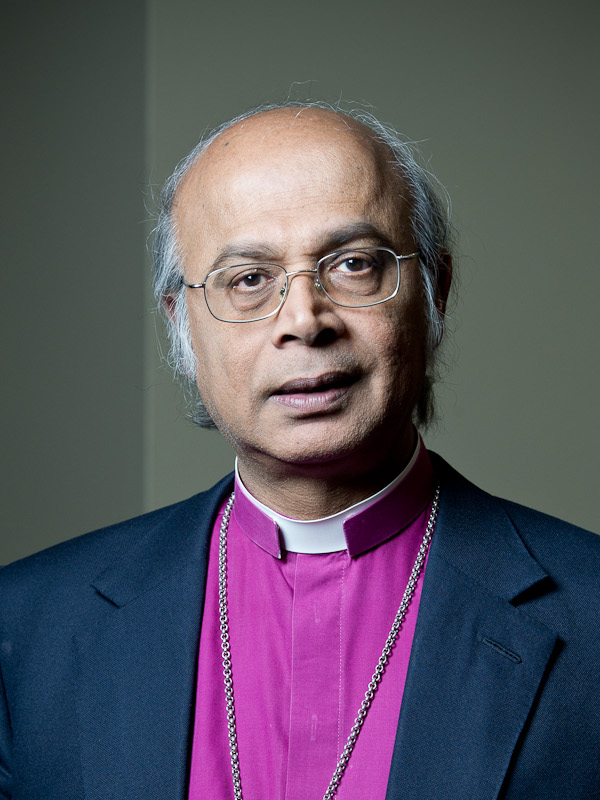
Monsignor Nazir-Ali: Henry Nowak case shows Britain has lost its moral compass
Monsignor Michael Nazir-Ali has told AdVaticanum that the murder of Henry Nowak and the police response point to a wider “loss of a moral compass in society”, warning against political correctness, rule-book policing and the abandonment of conscience Monsignor Michael Nazir-Ali has described the murder of Henry Nowak and the police’s failure to attend to the victim as a result of a “loss of a moral compass in society”. Speaking to AdVaticanum , the Pakistani-born British Catholic priest and former Anglican bishop said that this loss had imposed a “necessity, therefore, of going by the rule book rather than using one’s conscience”. He also lamented “political correctness”, which has caused an “inability to use our common sense” and a reliance on “‘woke’ nostrums”. The murder of Henry Nowak has sent shock waves through Britain and beyond, particularly because of the police’s treatment of the 18-year-old in the final moments of his life. Nowak was stabbed by Vickrum Digwa five times on his return from a night out in Southampton at the end of last year. Digwa’s brother, Gurpreet Digwa, called the emergency services, where he lied to the police and repeatedly told them that Digwa had been the victim of a racial attack. Digwa then contacted his parents and hid the knife used to kill Nowak with his mother. When police arrived, they spoke with Digwa before attending to Nowak. They then arrested Nowak and handcuffed him. Nowak repeatedly told the officers, “I can’t breathe”, and said nine times that he had been stabbed. One of the arresting officers responded by saying, “I don’t think you have, mate.” Nowak stopped responding before officers called emergency services, a call made two minutes and 48 seconds into the body-camera recording depicting the events. While many have called for calm in the wake of the murder, questions have been raised about what led to Nowak’s death, particularly police guidance on responding to issues relating to race relations. Under particular scrutiny is a document produced by the National Police Chiefs’ Council which says that “producing equality of policing outcomes… does not mean treating everyone ‘the same’”. Hampshire Police, responsible for policing Southampton, has also come under scrutiny. In 2020, the force spent nearly £1 million ($1.34 million) on compulsory race training. Hampshire Police also published its own Race Action Plan covering 2024 to 2026. The criticism centres on the idea that police may have been quicker to appear “anti-racist” than to assess the realities of the crime, and that they may have taken Digwa and his family’s allegations of racism more seriously than Nowak’s fatal injuries. The Prime Minister, Sir Keir Starmer, has refuted the idea that “two-tier policing”, where police give preferential treatment to ethnic minorities, exists. He has also called for the words of Henry’s father, Mark Nowak, to be respected. After the sentencing of Digwa, Mark Nowak stated that “we do not want his death to be used to create further division, hatred or tension. We want his story to make our streets safer for everyone.” Another controversy surrounding the case is Digwa being in possession of a kirpan, a Sikh ceremonial knife that is one of the five articles of faith for practising Sikhs. Digwa was carrying two knives: a small one, which most would reasonably describe as a kirpan, and a 21-centimetre dagger, which was used to kill Nowak. Digwa described both as kirpans, but leaders of the Sikh community, who have unanimously condemned the murder, said the second blade was not a kirpan. Under UK law, a kirpan may be carried for religious, ceremonial, sporting or historical reasons. However, a kirpan can become an offensive weapon if it is used unlawfully, with the decision over appropriateness resting with the courts. Responding to the controversy surrounding the possession of a kirpan , Monsignor Nazir-Ali said: “The Sikh community is rightly appalled by what this person may have brought down upon them.” He continued: “They have disowned his actions, but they now need to make sure that their religious obligation to wear a kirpan is carried out in such a way as to render the religious object harmless to others.” Monsignor Nazir-Ali is well known for his ability to address contentious issues with finesse and common sense. He has worked to promote positive relations between Islam and Christianity, while also warning that some extremist Muslims seek both “victimhood and domination”. He has also described multiculturalism as “newfangled and insecurely founded”. Much of his ability to address controversial issues centres on his deep understanding of different cultures. Born in Pakistan, just two years after the Partition of India, he was raised in both Christian and Muslim contexts. At 15, he began to identify as a Christian and was received into the Anglican Church of Pakistan at the age of 20. He studied for Anglican ministry at Cambridge and married a Scottish woman, Valerie Cree, in 1970. He is a hyperpolyglot, with knowledge of English, Arabic, Persian, Punjabi, Urdu, Hindi, Greek, Hebrew, Aramaic, Syriac and Latin. Monsignor Nazir-Ali was received into the Catholic Church by the then Ordinary of the Personal Ordinariate of Our Lady of Walsingham, Monsignor Keith Newton, on 29 September 2021. He was ordained priest by Cardinal Vincent Nichols on 30 October 2021 at Our Lady of the Assumption and St Gregory Catholic Church in London. He was made a Monsignor in 2022 by Pope Francis. Image credit: Oxtrad – Own work, CC BY-SA 4.0, https://commons.wikimedia.org/w/index.php?curid=79306197
Jun. 4, 2026