

Mater Populi Fidelis
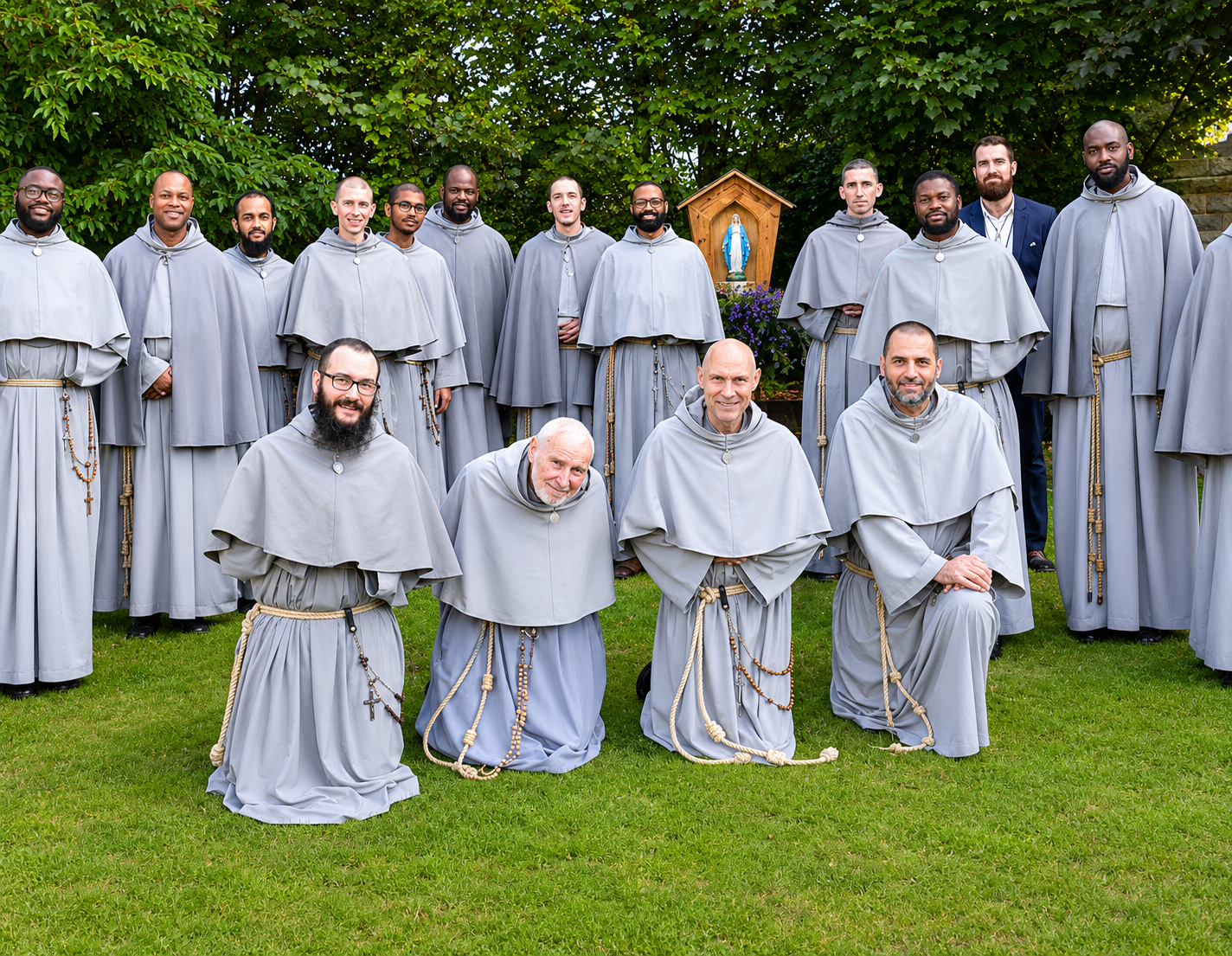
Inside the dissolution of the Marian Franciscans
What led to the dissolution of the Marian Franciscans? As the community ceases to exist as a canonical entity, sources close to the friars point to events in Scotland The Marian Franciscans have been dissolved after Bishop Philip Egan of Portsmouth approved a request by the friars to suppress the community. The decision follows a vote by members of the Family of Mary Immaculate and St Francis on 27 April to seek dissolution after what they described as a period of discernment about their future in the United Kingdom. In a statement issued on 27 May, the friars said: “Despite growth in numbers and apostolic activity, it was not possible to secure the practical and canonical support needed for formation, sponsorship, and future priestly ordinations.” They added that “a range of options was explored” but none provided “a workable path” for the community to continue “in its present form”. The friars said the decision “is not the result of, or a reaction to, any single incident or series of incidents”, but arose from “broader questions about the future viability of the community and its mission in the UK”. Bishop Egan confirmed in a statement that he had accepted the request “after serious and careful consideration”. “The appropriate canonical and practical steps are now being taken,” he said. The bishop added that the friars intend “to join another association with a similar charism and in the coming months to relocate”. The Family of Mary Immaculate and St Francis was established in the Diocese of Portsmouth after Bishop Egan welcomed the friars in November 2014. The community assumed responsibility for St Mary’s Parish in Gosport and, in 2018, Bishop Egan formally erected the association. The friars subsequently established a second house in the diocese and developed apostolates that included parish ministry, retreats, preaching, publishing and online evangelisation. The community also ministered in London, including at Tyburn Convent. In 2022, members of the community relocated to the Diocese of Dunkeld after receiving the support of Bishop Stephen Robson. The move included Marian Franciscan sisters, and plans were explored for the acquisition of a friary, convent and chapel. Those plans came to an end in February this year when Bishop Andrew McKenzie informed the community that the proposed property purchase would not be ratified and that they would have to leave the diocese. The friars said supporters had credited the community with encouraging conversions, vocations, Marian devotion and greater participation in the sacramental life of the Church. Last year Fr Serafino Lanzetta, one of the community’s leading members, criticised the Vatican document Mater Populi Fidelis . He said the text represented “a significant downgrade” in the presentation of Mary’s role in salvation history and organised a filial appeal asking Pope Leo XIV to reconsider the document. Following the dissolution, the friars said priests incardinated in the Diocese of Portsmouth would be permitted to continue their apostolate at three existing locations within the diocese, including an Ordinariate church. Elsewhere, the community’s apostolates and activities will come to an end when the Marian Franciscans cease to exist as a canonical entity on 1 June. The friars and sisters will no longer remain members of the community, and transitional arrangements are being made through the Friends of the Marian Franciscans charitable trust. Bishop Egan acknowledged that the decision would be “a cause of sadness and concern for many people who have valued the ministry, prayer and pastoral presence of the friars”. He said the Diocese of Portsmouth “recognises with gratitude the ministry of the Marian Franciscans, and the prayer, generosity and friendship offered to them by the lay faithful and others who have supported the community over the years”. The bishop asked Catholics to “pray for the members of the community as they discern the next steps, and for all those who have been supported by their ministry”. The friars said the dissolution “marks the end of a distinctive chapter in contemporary Catholic life in the United Kingdom”, while expressing hope that “the spiritual fruits associated with it will endure and may one day return to Britain in a new form”. Neither the Marian Franciscans nor the Diocese of Portsmouth wished to comment further beyond their public statements. However, sources familiar with the situation suggested that the tensions which ultimately led to the community’s dissolution cannot be understood solely through the brief statements issued by the friars and the diocese. One source close to the community told Advaticanum that readers should be “reading between the lines” of the friars’ announcement. From this publication’s understanding, the issues stemmed from Scotland rather than Portsmouth. Several people familiar with events in Scotland pointed to difficulties that emerged after the arrival of Bishop Andrew McKenzie in the Diocese of Dunkeld. When the Marian Franciscans relocated part of their apostolate to Dundee in 2022 they had the support of Bishop Stephen Robson, who welcomed the friars and sisters and explored plans for a permanent home for the community. Those plans came to an abrupt halt in February 2025 when Bishop McKenzie informed the community that a previously discussed property acquisition would not proceed and that they would eventually have to leave the diocese, although the deadline was later extended until October 2026. From this publication’s understanding, Bishop McKenzie wanted an excuse to remove the community. Advaticanum has learned that concerns raised with diocesan authorities in Scotland included allegations of overly rigid attitudes among some members and questions surrounding the ages of certain novices and sisters entering religious life. The Diocese of Dunkeld has not publicly commented on such claims and has never publicly detailed the reasons behind its decision regarding the property purchase or the community’s future in the diocese. The developments followed years of uncertainty for communities attached to the traditional Latin Mass after Pope Francis issued Traditionis Custodes in 2021, placing new restrictions on celebrations of the older form of the Roman Rite. The Marian Franciscans later said that diocesan authorisation for celebrations of the traditional liturgy had become more restricted. While there were growing congregations, baptisms, Marian devotions and increasing numbers of young families at the community’s apostolates, the future of the institute remained unresolved. On 27 April this year, the friars voted to petition for dissolution, and on 24 May Bishop Egan issued the decree approving the suppression of the association.
Jun. 1, 2026