

Liturgy
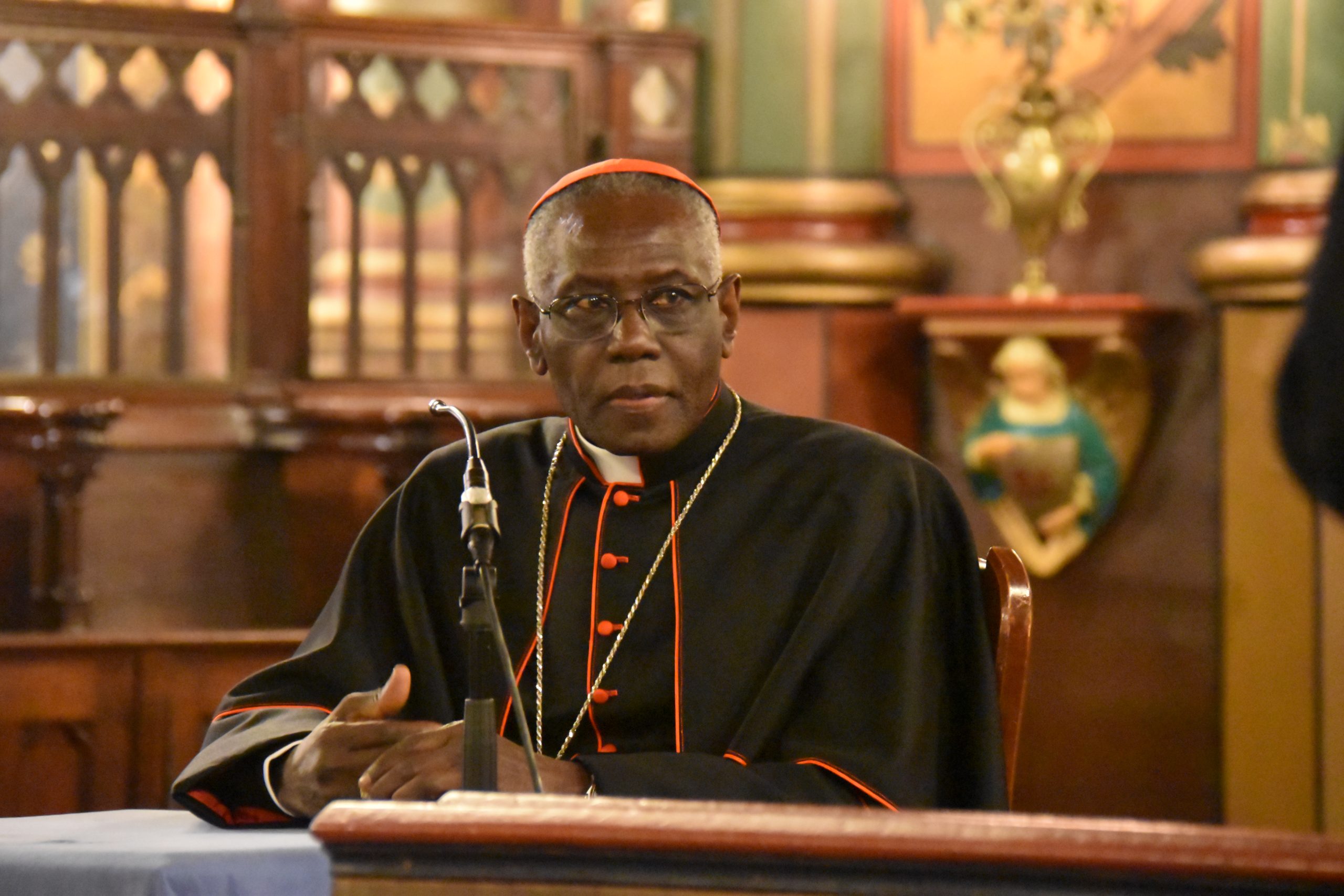
Cardinal Sarah says liturgy has been reduced to ‘mere entertainment’
Cardinal Robert Sarah has called for “clarifications” to parts of the interpretation of Vatican II in order to prevent readings that represent “a break with the faith”. The former prefect of the Congregation for Divine Worship and the Discipline of the Sacraments also warned against liturgy becoming “mere entertainment” and said the Church must resist pressure to conform to the modern world Cardinal Robert Sarah has said that parts of the interpretation of the Second Vatican Council require “clarifications” in order to prevent readings that represent “a break with the faith”. In a lengthy interview published by the French Catholic magazine La Nef on May 4, the former prefect of the Congregation for Divine Worship and the Discipline of the Sacraments said certain conciliar texts had produced “divergent, even opposing, interpretations”, particularly concerning religious freedom, ecumenism, collegiality and the relationship between the Church and the modern world. “A council must be read within the continuity of the faith as it has always been,” Cardinal Sarah said. “Where certain texts have given rise to divergent, even opposing, interpretations, it is legitimate to call for a deeper examination in order to avoid readings that represent a break with the faith.” His Eminence added: “The Church has nothing to fear from clarity.” The Guinean cardinal said he favoured “clarifications rather than corrections”, arguing that the interpretation of the Council belonged to the Magisterium and had already been “largely initiated” by Pope St John Paul II and Pope Benedict XVI. He also warned against treating the Council “as one judges a political programme”. Speaking about Pope Francis, Cardinal Sarah said it was “sometimes necessary” for cardinals to exercise “discernment regarding a period in the life of the Church”, while insisting that criticism of a pontificate must always be carried out “with fear of God, with love for the Church, and without ever falling into irreverence”. “A cardinal is not a courtier,” His Eminence said. “Before God, he is a servant of truth and a collaborator of the Apostolic See.” Without directly criticising Francis personally, Cardinal Sarah suggested that aspects of the previous pontificate had generated uncertainty among Catholics. “A pontificate always leaves a mixed legacy: pastoral insights, spiritual emphases, but also sometimes areas of unease or confusion,” he said, adding that he had spoken privately to Francis to express concerns “that practical ambiguity might obscure doctrinal clarity”. The cardinal said that “an era can leave wounds of confusion” and argued that the duty of pastors was “to help restore to the Church a clearer, more peaceful and more theological message”. Cardinal Sarah repeatedly returned to the theme of secularisation within the Church itself, describing the spread of what he called a “modern form of paganism”. “When faith is reduced to sociological language, liturgy to mere entertainment, morality to perpetual negotiation, and the Church to an institution that must adapt to the desires of the times, then something of paganism returns,” His Eminence said. Cardinal Sarah identified “the effacement of the sense of sin”, “discomfort with the affirmation of revealed truth” and “the trivialisation of the liturgy” as signs of an internal spiritual crisis. “When God is no longer primary, even in the Church, everything else is corrupted,” he said. Cardinal Sarah also warned against what he described as the Church’s growing “fear of displeasing the world”, saying that ambiguity was increasingly preferred “to clarity” and “communication to contemplation”. He added: “The world does not expect the Church to repeat its words; it expects it to open Heaven to it.” On the question of the liturgy, Cardinal Sarah rejected what he described as a “war of sensibilities”, insisting that the issue could not be reduced to factions competing for victory within the Church. “The liturgy belongs to the Church, not to political parties,” he said. “The real question is: how can we restore to the entire Catholic liturgy its sacred dignity, its continuity, its orientation towards God?” The 80 year old cardinal has long been associated with the traditional wing of the Church, so his comments should be read in the light of the restrictions imposed on the Traditional Latin Mass and the impending episcopal consecrations of the Society of Saint Pius X. He described the Society’s planned July 1 episcopal consecrations as “objectively serious”, warning that they would further damage ecclesial unity. “Fidelity to Tradition cannot be separated from hierarchical communion,” he said. However, the cardinal has acknowledged that “doctrinal questions” and tensions had accumulated over decades, adding that “truth and charity must go hand in hand”. Cardinal Sarah also reflected on the wider crisis facing western civilisation, describing Europe as “deeply wounded” and increasingly detached from Christianity and even “the most fundamental anthropological truths”. Yet he argued that the collapse of cultural certainties was leading some people back towards religion. “In Europe, we are seeing an increase in adult baptisms and returns to the faith,” the cardinal said. “When cultural securities crumble, some souls rediscover that God alone remains.” Asked about the priorities of Leo XIV, Cardinal Sarah declined to speak directly for the Pope, but said the new pontificate appeared focused on “peace, unity, mission” and “the Church’s doctrinal responsibility”. Having turned 80 shortly after the 2025 conclave, Cardinal Sarah is no longer a cardinal elector and it is now extremely unlikely that he could ever become Pope. However, as has perhaps been seen most clearly in recent years through Hong Kong’s Cardinal Zen, who is 94, cardinals can continue to exert influence long after the age of 80. Cardinal Zen flew to Rome before the conclave that elected Pope Leo to participate in the General Congregations, the pre-conclave meetings of cardinals in which views on the direction of the Church are expressed, where he warned against reforms he considered damaging. If Cardinal Sarah remains in good health, he is likely to continue using his voice to advocate for the traditionalist wing of the Church for years to come.
May 10, 2026