

Legionaries Of Christ
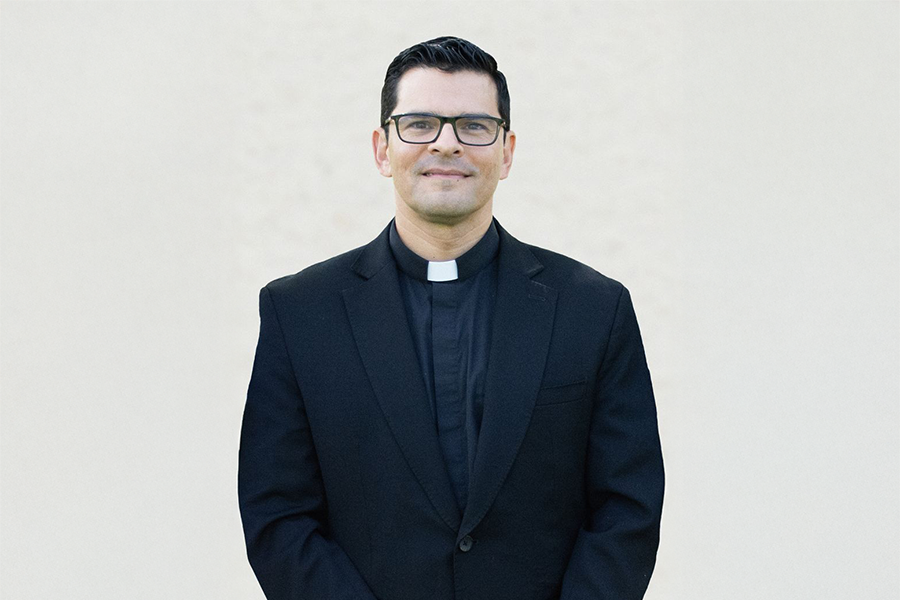
New general director of Legionaries of Christ says the congregation has “much to contribute”
The new general director of the Legionaries of Christ has said the congregation still has “much to contribute and give” to the Church as it continues its process of renewal The new general director of the Legionaries of Christ has said the congregation still has “much to contribute and give” to the Church as it continues a long process of renewal after the crimes of its late founder. Fr Carlos Gutiérrez López, who was elected general director in February, said the congregation had spent recent years strengthening safeguarding standards, working with civil and canonical authorities and responding to victims of abuse. Interviewed by ACI Prensa, he said the painful reckoning over Fr Marcial Maciel’s crimes had forced the Legionaries to confront deep failures within the institute. “Since we began facing this reality, although it was very painful, it also opened our eyes: there was a lot of work to do,” Fr Carlos said. “In recent years we have been working hard to meet standards, following the documents issued by the Church, collaborating with canonical and civil authorities.” The Legionaries of Christ was founded in Mexico in 1941 by and today has more than 1,300 members worldwide, including just over 1,000 priests, according to figures published in the Annuario Pontificio . That growth was overshadowed by revelations concerning Maciel, who died in 2008. In 2006, the Congregation for the Doctrine of the Faith ordered him to withdraw from public ministry and live a life of prayer and penance following allegations of sexual abuse. Subsequent Vatican investigations found that he had abused seminarians and minors over decades while leading what the Holy See later described as “a life devoid of scruples and genuine religious sentiment”. Fr Gutiérrez, 51, said the revelations surrounding the founder had profoundly affected his own vocation. Ordained a priest in 2009, he entered ministry as the scale of Maciel’s misconduct was emerging publicly. “It was definitely something very strong, something that left all of us very perplexed, frightened, and also disillusioned,” he said. “That meant for me a very deep process of reflection in which I had to ask why I was giving my life to God and also the question: why remain here?” He said the congregation no longer regarded Maciel as a spiritual or moral reference point. “Definitely, the founder is no longer a spiritual reference point, a moral reference point for us,” he said. “That reference point, I saw, had always been Our Lord Jesus Christ.” The Legionaries embarked on an extensive Vatican-supervised reform process after Maciel’s downfall. In 2010, following an apostolic visitation ordered by Pope Benedict XVI, the Holy See directed the congregation to revise its constitutions, review the exercise of authority and improve the formation of seminarians and priests. Particular attention was given to abuses of power and conscience, which had enabled Maciel to conceal his conduct for years. Fr Gutiérrez said the process had transformed the institute’s internal structures and culture. “The Church accompanied us throughout a whole process of renewal,” he said. “We reviewed constitutions, we reviewed many of the norms we had been living in within the congregation, the style of apostolate we carried out. In short, it was an entire review that lasted many years.” The congregation has also attempted to present itself as a model of transparency in safeguarding. In 2019, it published a global report detailing abuse cases within the Legionaries from its foundation until that year, including accusations against Maciel and other priests. Annual “Truth, Justice and Healing” reports have since updated the figures and outlined safeguarding measures. Fr Gutiérrez said the Legionaries had worked to establish professional safeguarding teams in the countries where they operate. “These are things that we priests cannot do alone,” he said. “We need specialists — psychologists, lawyers, and so on — to help us truly be very serious in complying with these standards.” He also referred to an audience with Pope Leo XIV earlier this year in which the Pope reportedly stressed that authority in the Church must be exercised as service rather than domination. Fr Gutiérrez said he had been struck by the Pope’s call to approach people “with a respectful and compassionate gaze”. “What they share with me is something sacred, and I have to respect that sacredness,” he said, reflecting on his experience in leadership roles within the congregation. Questions remain, however, over whether the Legionaries can separate their present identity from the legacy of their founder. Fr Gutiérrez acknowledged the issue directly, describing it as “a valid question”. He said the congregation had spent years discerning its authentic charism after the Vatican instructed it to re-examine the basis of its mission. “The charism, I believe, is something we have been discovering,” he said. “It is nothing other than forming apostles to transmit the love of Christ, to form apostles and also send them to evangelise the world and help the Church in this evangelisation.” The Legionaries continue to oversee a substantial international network through Regnum Christi. According to statistics released by the congregation, the movement includes more than 21,000 adult and youth lay members, alongside consecrated women and lay consecrated men. Its educational institutions include 139 schools and 14 universities educating more than 150,000 students. Despite the continuing shadow of the Maciel scandal, the Legionaries have continued to attract vocations. The congregation says more than 250 minor seminarians are currently in formation worldwide. Fr Gutiérrez said he hoped the congregation could continue to serve the Church while remaining conscious of the failures of its past. “Seeing how the Legion was responding, I said: ‘Well, I also want to help the Church with my priesthood to move this congregation forward,’” Fr Carlos Gutiérrez said. Photo credit: Legionaries of Christ website
May 9, 2026