

Immigration
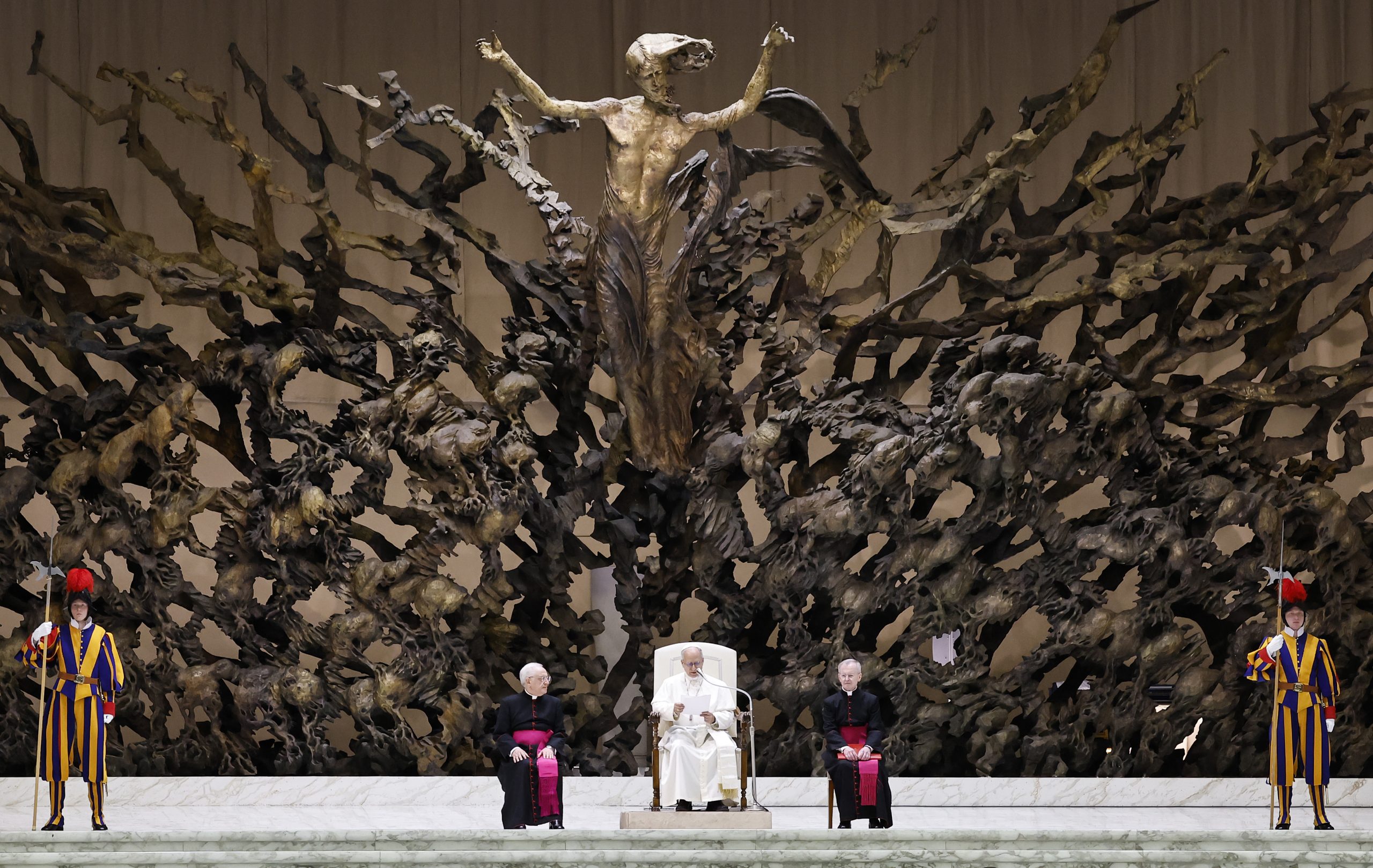
Pope Leo XIV appoints outspoken immigration bishop to conservative West Virginia diocese
Pope Leo XIV has appointed Bishop-Designate Evelio Menjivar-Ayala to lead the Diocese of Wheeling-Charleston in West Virginia. The Salvadoran-born bishop, who entered the United States illegally as a teenager after fleeing civil war, has become one of the most prominent episcopal voices on immigration in America Bishop-Designate Evelio Menjivar-Ayala has drawn fresh attention to the increasingly vocal role being played by senior Catholic clergy in the United States over immigration policy. The Salvadoran-born bishop-designate of Wheeling-Charleston, who arrived in the United States illegally as a teenager after fleeing civil war in El Salvador, said in an interview with The Guardian following his appointment by Pope Leo XIV that he would continue defending migrants and speaking publicly about immigration despite the political hostility towards undocumented immigrants in America. Speaking to The Guardian shortly after the announcement of his appointment, Bishop Menjivar-Ayala said: “I will keep talking about people’s reality, defending immigrants and fighting for fair treatment for them.” Bishop Menjivar-Ayala explained the Church’s involvement in the immigration debate in explicitly moral and religious terms. “We are not approaching this from a partisan political standpoint, but from a moral one,” the bishop said. “Morality is not something that pertains solely to one’s private life, but also to how I treat others, how I conduct my public life, how I perform my work, and how I engage with society.” Bishop Menjivar-Ayala added that the Church’s teaching on immigration was rooted directly in scripture, saying that “the prophets denounce the mistreatment of the poor, foreigners, widows, and orphans”, before referring to Christ’s identification with the vulnerable in the Gospel of St Matthew. The bishop-designate has become one of the more prominent episcopal voices criticising the administration’s deportation agenda. Earlier this year he condemned immigration raids and what he described as “highly visible operations of questionable legality that go far beyond mere immigration enforcement”. Born in El Salvador during the country’s brutal civil war, the bishop-designate has recalled witnessing violence near the Sumpul River massacre in Chalatenango while still a child. His family later fled the region before he eventually attempted to migrate to the United States to join relatives already living there. According to his interview, he was turned back during earlier attempts before finally crossing the border near San Ysidro hidden in the boot of a smuggler’s car. Reflecting on the experience, the bishop said: “I don’t recommend it. You risk your own life.” After arriving in California, he worked a series of manual and low-paid jobs while studying English and continuing his education. He later moved to Maryland, where he began working within the Church before entering seminary formation. Speaking more broadly about civic participation and political life, the bishop-designate encouraged Catholics not to withdraw from public engagement despite growing social divisions in the United States. “We can all do something,” Bishop Menjivar-Ayala said. “We need to use the opportunities we have to take action.” The bishop added that people should “not be afraid” to defend their rights, show solidarity and participate in public life, insisting that “participation in political and social life is important for change to happen”. Ordained a priest for the Archdiocese of Washington in 2004, he became an American citizen two years later. In 2022, Pope Francis appointed him an auxiliary bishop in Washington. Speaking about his own experiences as an immigrant, Bishop Menjivar-Ayala said: “I’ve lived through that story. I am part of the history of migration in the United States, and at the same time, it’s very hopeful to know that I’m also part of the story of overcoming adversity.” Bishop Menjivar-Ayala succeeds Bishop Mark Brennan, who has led the Diocese of Wheeling-Charleston through a prolonged period of recovery after the scandal surrounding former Bishop Michael Bransfield. Bishop Bransfield was accused of financial and sexual misconduct and was later ordered to repay substantial sums to the diocese following a Vatican investigation. The appointment of Bishop Evelio Menjivar-Ayala is an eyebrow-raising decision by Pope Leo XIV because auxiliary bishops in Washington have traditionally emerged from one of the most politically engaged and ideologically progressive episcopal environments in the United States. Bishop Menjivar-Ayala himself became known nationally for his outspoken criticism of immigration enforcement operations and his defence of undocumented migrants while serving as an auxiliary bishop in the capital. His transfer to the Diocese of Wheeling-Charleston is a sharp contrast, as West Virginia remains one of the whitest states in America, with one of the country’s lowest percentages of foreign-born residents and a comparatively small Hispanic Catholic population. The decision to appoint a Salvadoran-born bishop so publicly associated with immigration advocacy has therefore inevitably led to questions about the message Rome intends to send through the appointment. Bishop Menjivar-Ayala himself appeared to acknowledge the symbolic dimension of the move when he said: “The fact that they are sending me to a state where there aren’t many immigrants means a lot because it shows that immigrants have the ability to adapt, to embrace a new way of life, to adjust to a new environment.”
May 11, 2026