

Humanae Vitae
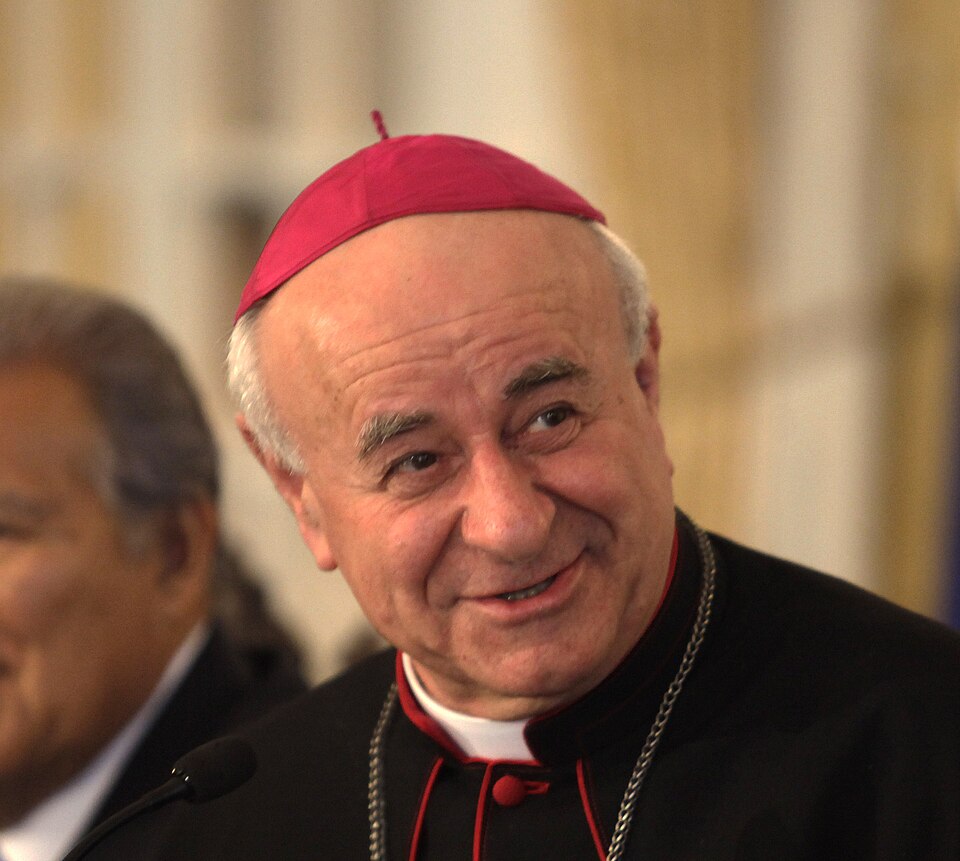
Archbishop Paglia says Pope Francis wanted ‘necessary updates’ to Humanae Vitae
Retired Archbishop Vincenzo Paglia has said Pope Francis believed Humanae Vitae required “necessary updates” to address modern questions surrounding sexuality Retired Archbishop Vincenzo Paglia has said Pope Francis believed Humanae Vitae required “necessary updates” to address modern questions surrounding sexuality. Archbishop Paglia, the former president and grand chancellor of the Pontifical Academy for Life, said in a lengthy interview published by the Italian website Settimana News that the late pontiff had personally asked him to prepare a text ahead of the 50th anniversary of Pope Paul VI’s 1968 encyclical banning artificial contraception. “Pope Francis felt the need to adapt the doctrine to the new times,” Archbishop Paglia said. “He asked me to prepare a text that would highlight its prophecy, while also highlighting some necessary updates.” “I prepared a text for him, drafted with the collaboration of a group of theologians,” the archbishop said. “He greatly appreciated it, asking me to continue the research, which resulted in subsequent texts.” The archbishop made the remarks while reflecting on the Synods on the Family held in 2014 and 2015, which discussed homosexuality, Communion for divorced and remarried Catholics, and what he called “irregular situations”. “The themes of the two synodal assemblies are well known,” Archbishop Paglia said. “The topic of homosexuality, then questions relating to marriage and ‘irregular’ situations, and the topic of the Eucharist for divorced and remarried people.” Archbishop Paglia also defended the reforms made under Francis to the Pontifical John Paul II Institute for Marriage and Family Sciences, which was restructured in 2019 following the promulgation of new statutes by the Vatican. The archbishop said the old institute had been based on “a static and immutable vision of natural law” and an “essentialist and ahistorical paradigm”. “The situation of the John Paul II Institute presented even greater challenges,” he said. “It was an institution strongly focused on marital morality.” Archbishop Paglia said Pope Francis asked him to reorganise both the John Paul II Institute and the Pontifical Academy for Life because “both of these institutions of the Holy See needed to be rethought”. According to Archbishop Paglia, the institutions had become centres of resistance to the direction set by Francis after the publication of Amoris Laetitia in 2016. “The Pontifical Academy and the JPII Institute had thus become, so to speak, loci of pronounced doctrinal resistance to papal teaching,” he said. The archbishop went further, saying: “The task entrusted to me was, therefore, to restore the ability of these two institutions to listen to the living magisterium, so that they might accompany the reform the Pope desired.” The reforms at the John Paul II Institute led to the removal of several professors associated with the theological vision of Pope St John Paul II, who established the institute in 1981 following the Synod on the Family. Archbishop Paglia acknowledged the scale of the changes. “Opponents understood correctly: a very profound reform was at stake,” he said. Throughout the interview, Archbishop Paglia repeatedly criticised what he described as “moralistic” approaches to Catholic theology. “At the time, both institutions were characterised by a strongly moralistic emphasis,” he said. “Pope Francis disliked what he called ‘armchair theology’, abstract and disconnected from pastoral care.” He also criticised the language of “non-negotiable values”, saying it carried “a strong moralistic connotation”. “Reducing such a delicate and complex subject to the application of a doctrinal algorithm of morality and discipline imposes a vision of human reality alien to the actual forms of consciousness and the real conditions of experience,” he said. Archbishop Paglia also spoke about broadening the membership of the Pontifical Academy for Life to include economists, engineers, experts in robotics and artificial intelligence, as well as non-Catholics and non-believers. “Until then, the academics had been exclusively Catholic ethicists and moral theologians,” Archbishop Paglia said. “We also included members from other Christian and religious traditions, as well as non-religious professionals and thinkers.” The archbishop also said the academy sought to widen discussion of life issues beyond abortion and euthanasia. “It was a matter of understanding [life] in all its richness,” he said, “not only in its biological and chronological dimension, from the beginning to the end of existence”. He recalled tensions with American pro-life groups after proposing a conference linking opposition to abortion with gun control. “I envisioned a conference that would simultaneously oppose abortion and address gun control in schools,” he said. “Well, the proposal was rejected.” Archbishop Paglia also referred to the publication in 2024 of The Joy of Life: A Journey of Theological Ethics , which he described as “the most mature fruit of this journey of reflection”. “It also included reflection on the updating of Humanae Vitae ,” Archbishop Paglia said. The reforms to the John Paul II Institute and the Pontifical Academy for Life were among the most controversial of Archbishop Paglia’s tenure. The archbishop, however, insisted they reflected Francis’s desire for “a theology capable of penetrating the depths of culture, history, and people’s lives”. During his presidency, he was also criticised for comments which appeared to give tacit support to assisted suicide. Speaking at the Perugia Journalism Festival in 2023, the archbishop said: “Personally, I would not practise assisted suicide, but I understand that legal mediation can constitute the greatest common good concretely possible in the conditions in which we find ourselves.” Two books which questioned Catholic teaching on matters of life were produced by the institute under Paglia’s leadership, leading renowned papal biographer George Weigel to comment that the institute was betraying “the intention of the saint and scholar who founded it”. It is also not the first time the archbishop has appeared to soften the teaching of Humanae Vitae on human sexuality. In May 2023, he said that “the recognition of the unbreakable connection between married love and generation in Humanae Vitae does not mean that every marital act must necessarily bear fruit”. He added: “We are facing epochal challenges. In the Sixties, the ‘pill’ was considered a total evil. Today, we face even greater dangers. All human life is at risk if we don’t stop spiralling conflict, the arms race, and the destruction of the environment.” The removal of Archbishop Paglia as president and grand chancellor of the Pontifical Academy for Life, and the appointment of his successors, Cardinal Baldassare Reina as grand chancellor and Renzo Pegoraro as president, was one of the first changes to the Curia under Pope Leo XIV. Paglia reached the mandatory retirement age of 80 on 21 April 2025, the day of Pope Francis’s death, so the change was not unexpected and had likely been arranged under the previous pontificate.
May 29, 2026